
Biochemistry Introduction of Macromolecules Notes Courtesy of Keeley
Biochemistry Introduction of Macromolecules Notes Courtesy of Keeley Lowery- Carroll High School AP® and Pre-AP® are registered trademarks of the College Board. © Laying the Foundation. TM 2007
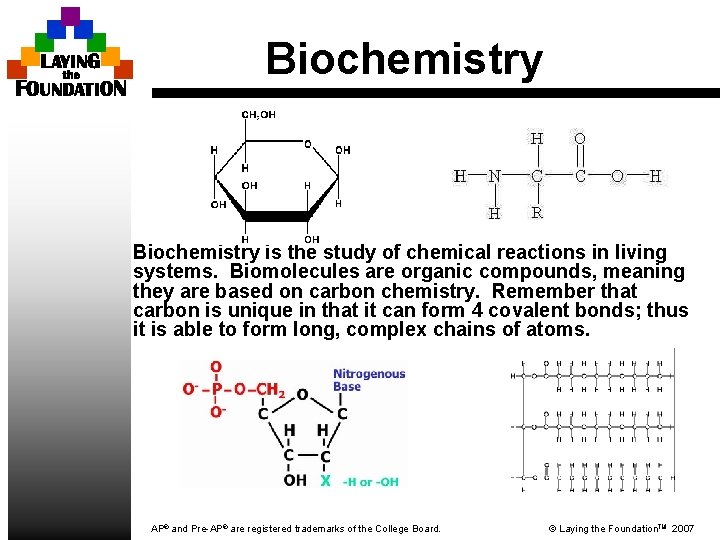
Biochemistry is the study of chemical reactions in living systems. Biomolecules are organic compounds, meaning they are based on carbon chemistry. Remember that carbon is unique in that it can form 4 covalent bonds; thus it is able to form long, complex chains of atoms. AP® and Pre-AP® are registered trademarks of the College Board. © Laying the Foundation. TM 2007
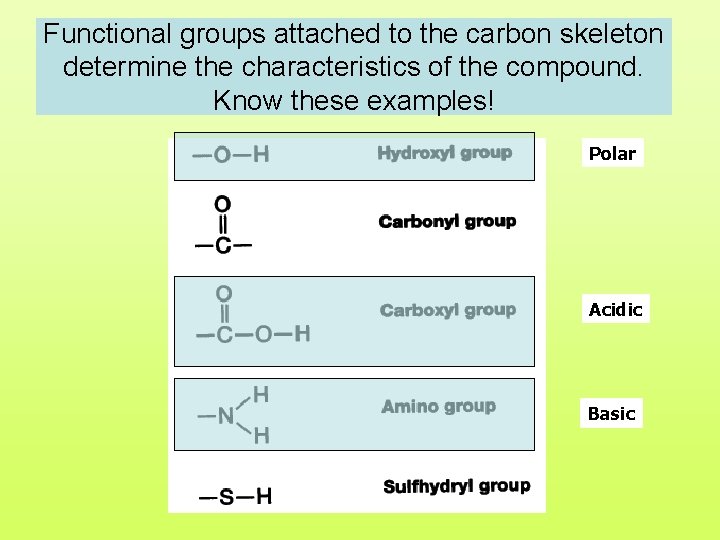
Functional groups attached to the carbon skeleton determine the characteristics of the compound. Know these examples! Polar Acidic Basic
Organic Substances Organic substances, macromolecules, or biomolecules make up all living things. The four groups of substances are carbohydrates lipids proteins nucleic acids
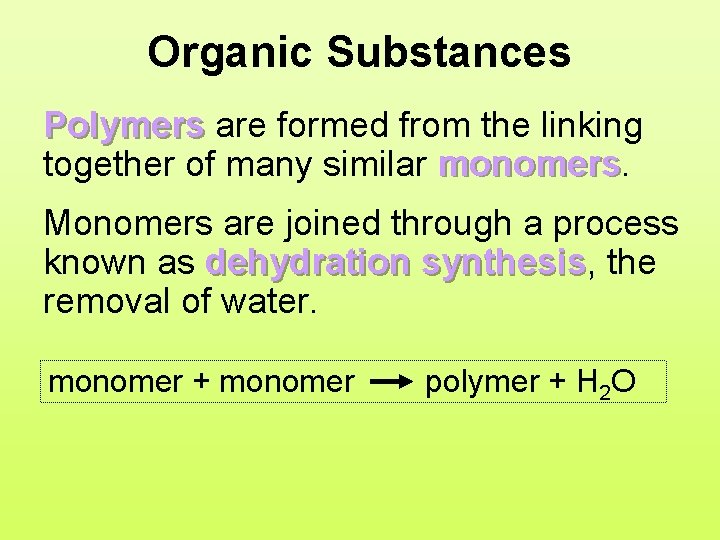
Organic Substances Polymers are formed from the linking together of many similar monomers Monomers are joined through a process known as dehydration synthesis, synthesis the removal of water. monomer + monomer polymer + H 2 O
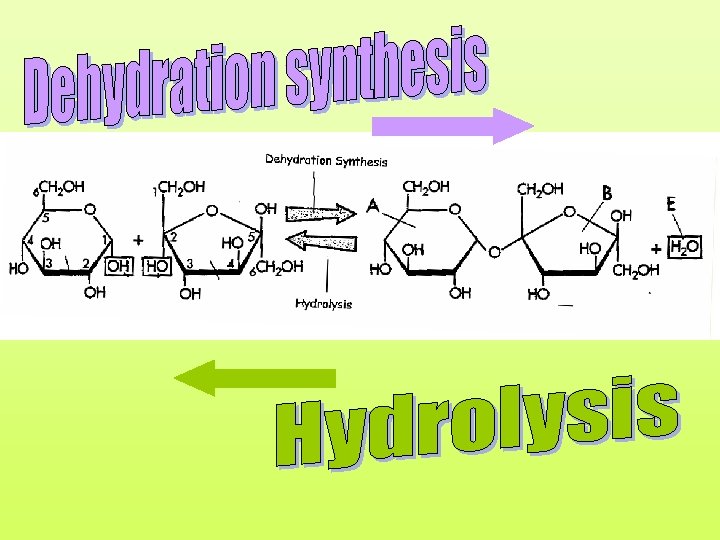
Organic Substances Hydrolysis is the breaking of the bonds between monomers in a polymer by adding water. This process is necessary in digestion so that molecules can be small enough to be absorbed and transported into the cell. polymer + H 2 O monomer + monomer
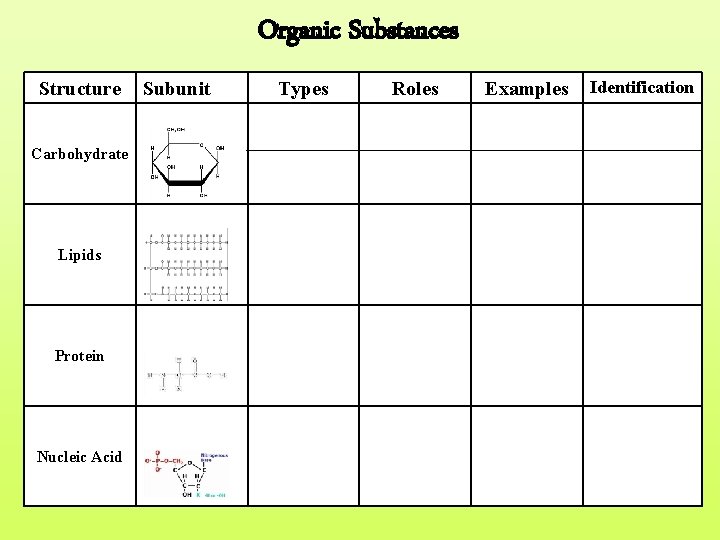
Organic Substances Structure Carbohydrate Lipids Protein Nucleic Acid Subunit Types Roles Examples Identification
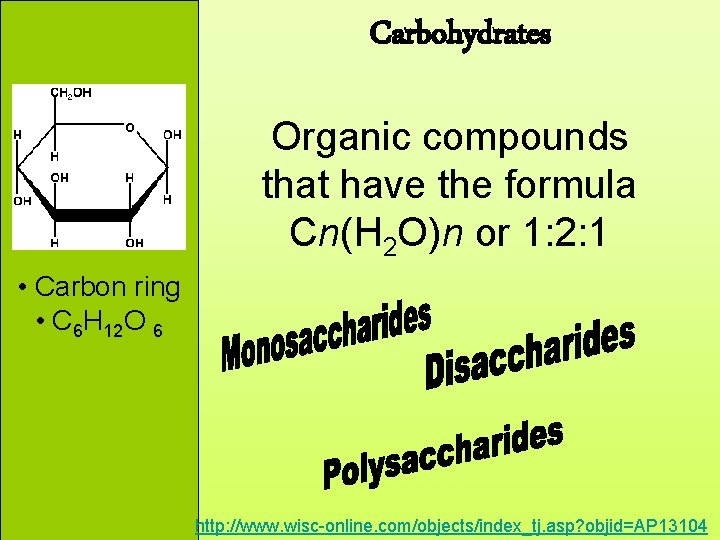
Carbohydrates Organic compounds that have the formula Cn(H 2 O)n or 1: 2: 1 • Carbon ring • C 6 H 12 O 6 http: //www. wisc-online. com/objects/index_tj. asp? objid=AP 13104
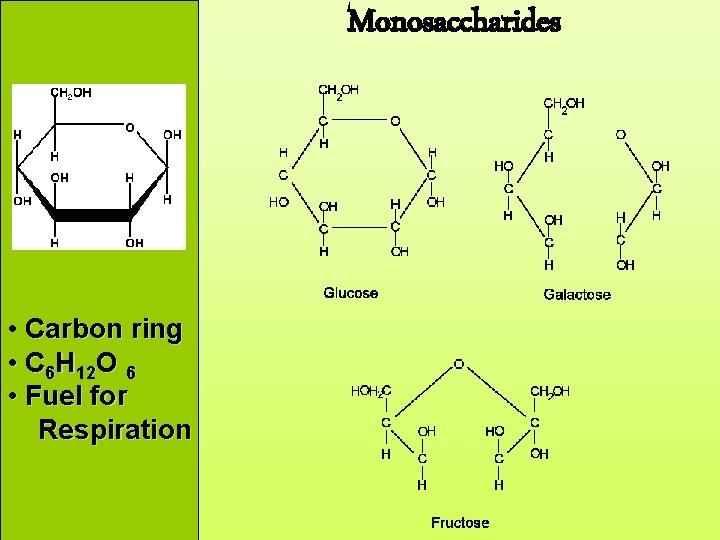
Monosaccharides • Carbon ring • C 6 H 12 O 6 • Fuel for Respiration
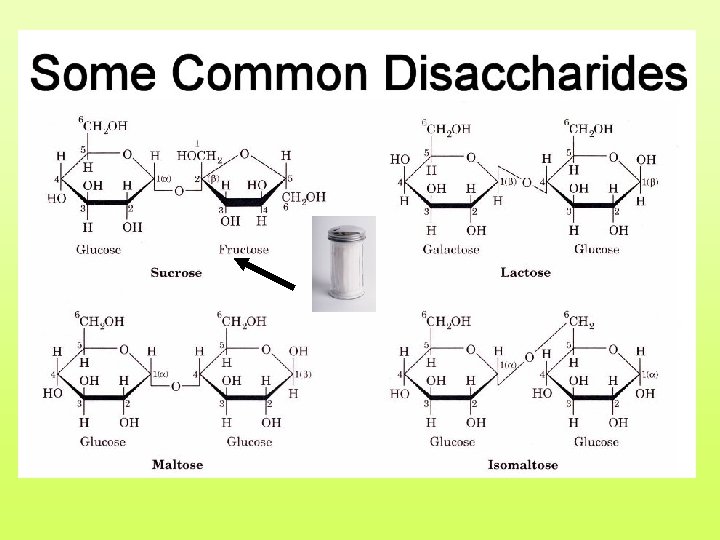
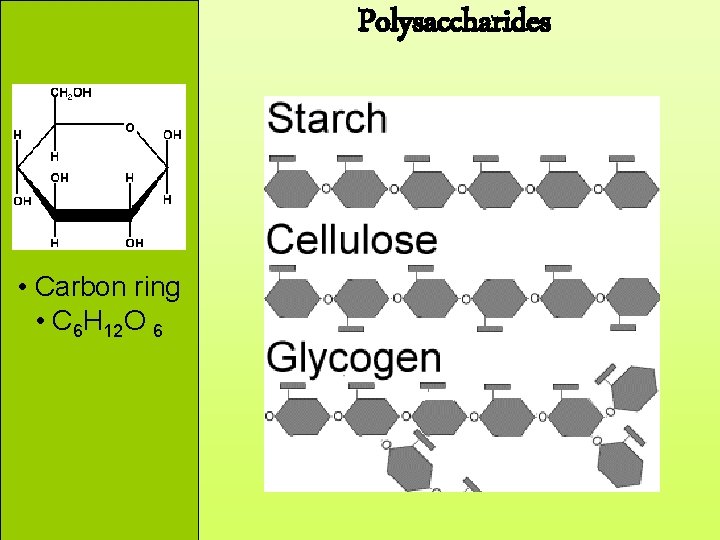
Polysaccharides • Carbon ring • C 6 H 12 O 6
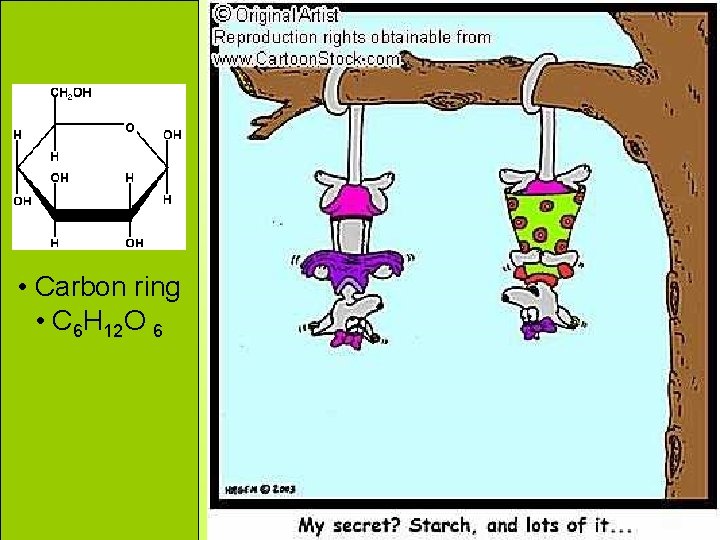
Polysaccharides • Carbon ring • C 6 H 12 O 6 A storage molecule found in plants. Plants store sugars in the form of starch for later use.
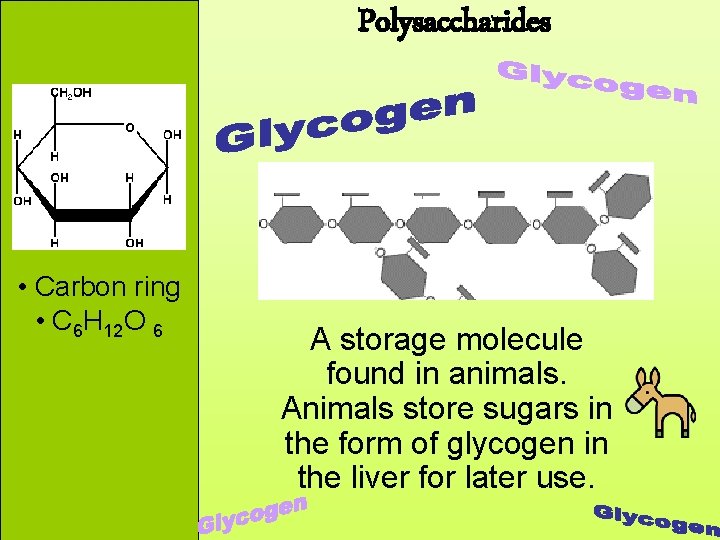
Polysaccharides • Carbon ring • C 6 H 12 O 6 A storage molecule found in animals. Animals store sugars in the form of glycogen in the liver for later use.
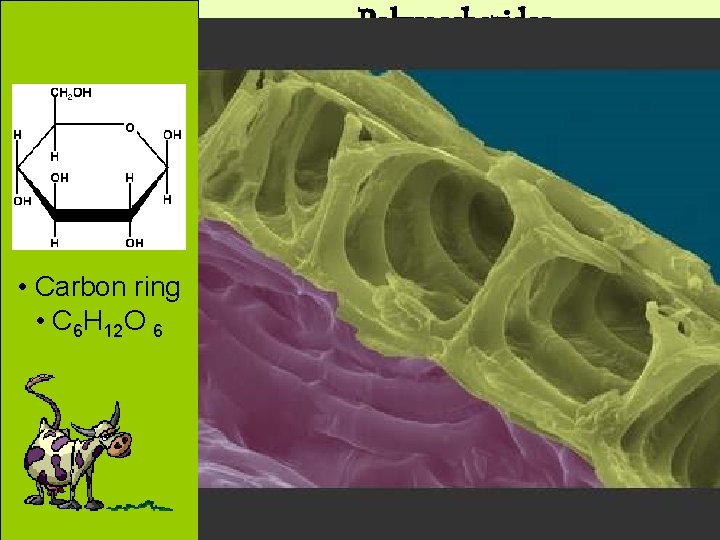
Polysaccharides • Carbon ring • C 6 H 12 O 6 • A major component in cell walls. The cellulose enables the plants to have rigid cell walls which allows them to have sturdy trunks and branches. • Only a few organisms have the enzymes necessary for digesting cellulose.
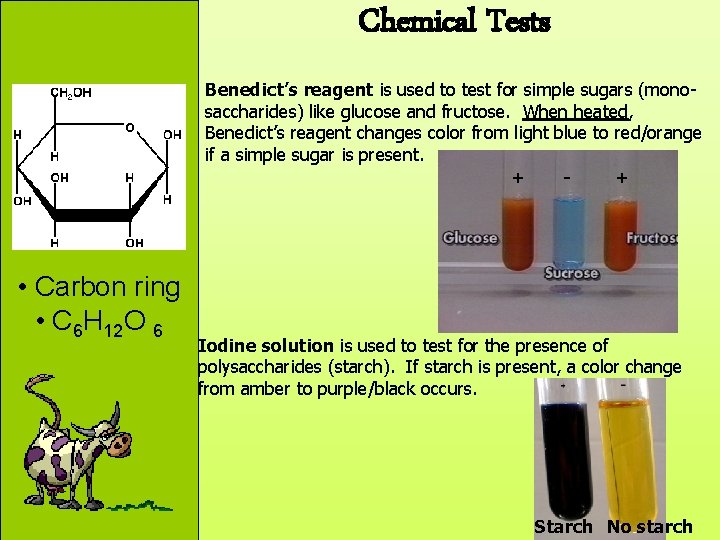
Chemical Tests Benedict’s reagent is used to test for simple sugars (monosaccharides) like glucose and fructose. When heated, Benedict’s reagent changes color from light blue to red/orange if a simple sugar is present. + + • Carbon ring • C 6 H 12 O 6 Iodine solution is used to test for the presence of polysaccharides (starch). If starch is present, a color change from amber to purple/black occurs. Starch No starch
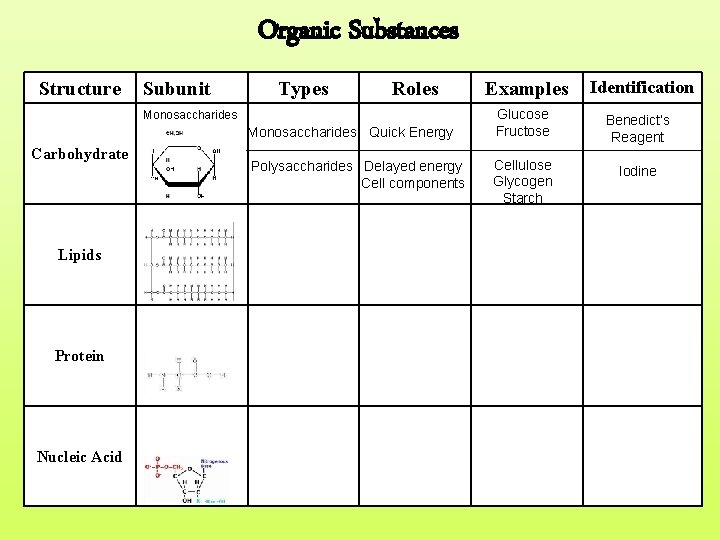
Organic Substances Structure Subunit Types Roles Monosaccharides Quick Energy Carbohydrate Lipids Protein Nucleic Acid Polysaccharides Delayed energy Cell components Examples Identification Glucose Fructose Benedict’s Reagent Cellulose Glycogen Starch Iodine
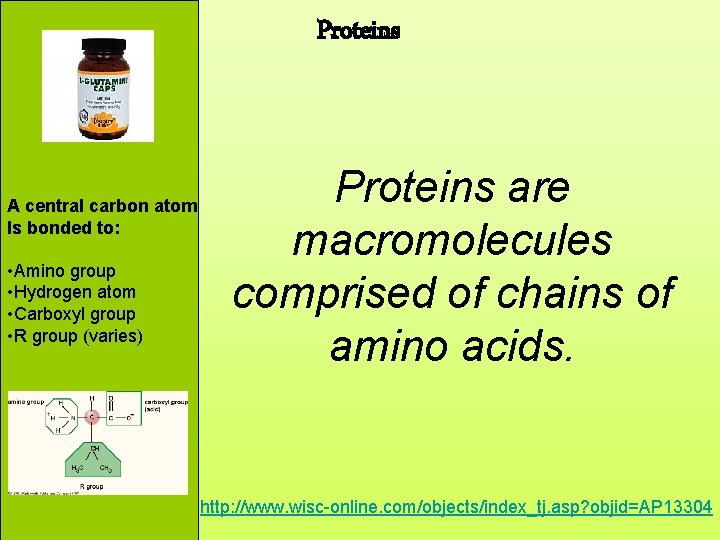
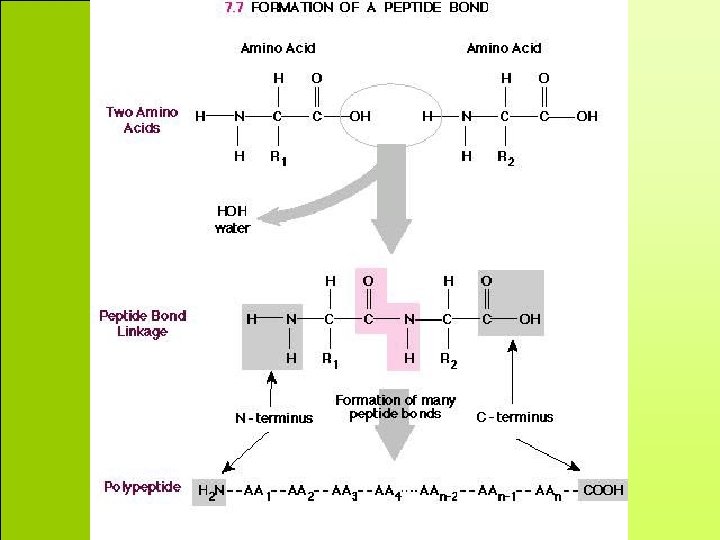
Proteins A central carbon atom Is bonded to: • Amino group • Hydrogen atom • Carboxyl group • R group (varies) Proteins are macromolecules comprised of chains of amino acids. http: //www. wisc-online. com/objects/index_tj. asp? objid=AP 13304
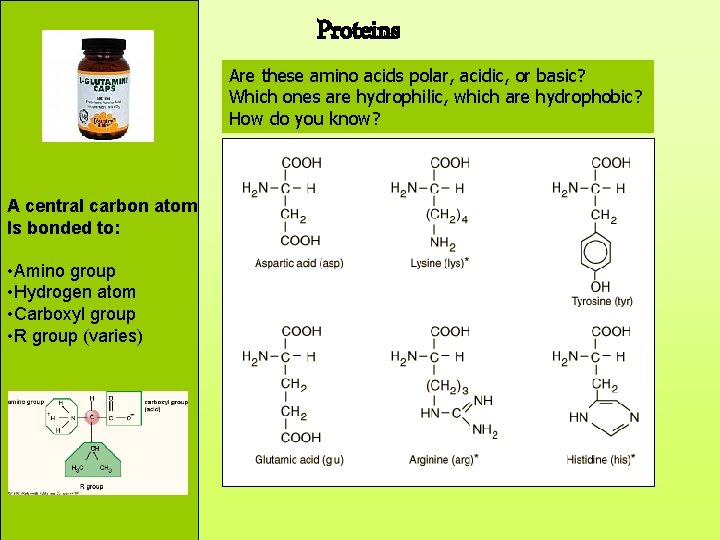
Proteins Are these amino acids polar, acidic, or basic? Which ones are hydrophilic, which are hydrophobic? How do you know? A central carbon atom Is bonded to: • Amino group • Hydrogen atom • Carboxyl group • R group (varies) Amino Group. R Group Carboyxl Group
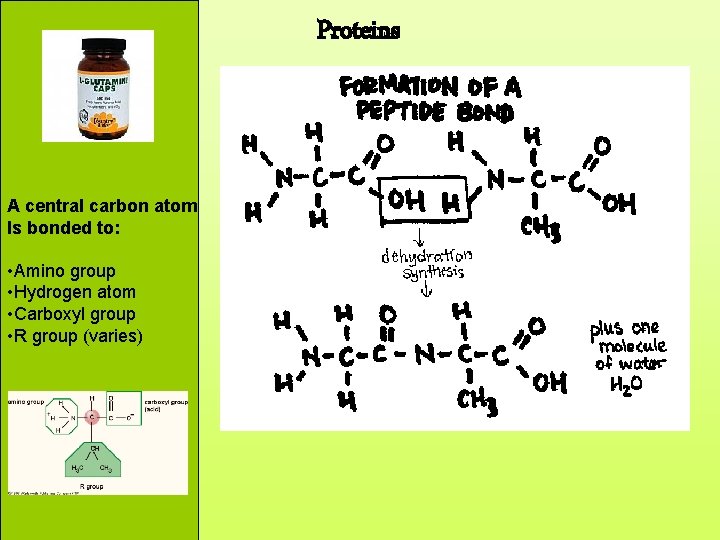
Proteins A central carbon atom Is bonded to: • Amino group • Hydrogen atom • Carboxyl group • R group (varies)
Proteins
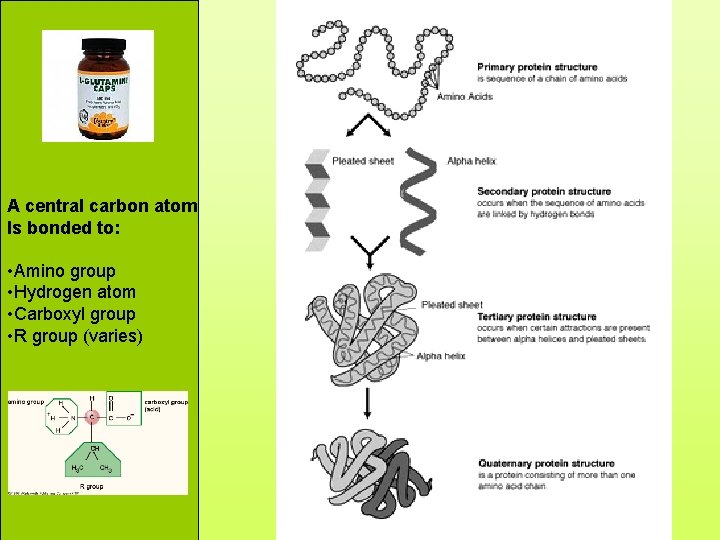
Proteins A central carbon atom Is bonded to: • Amino group • Hydrogen atom • Carboxyl group • R group (varies)
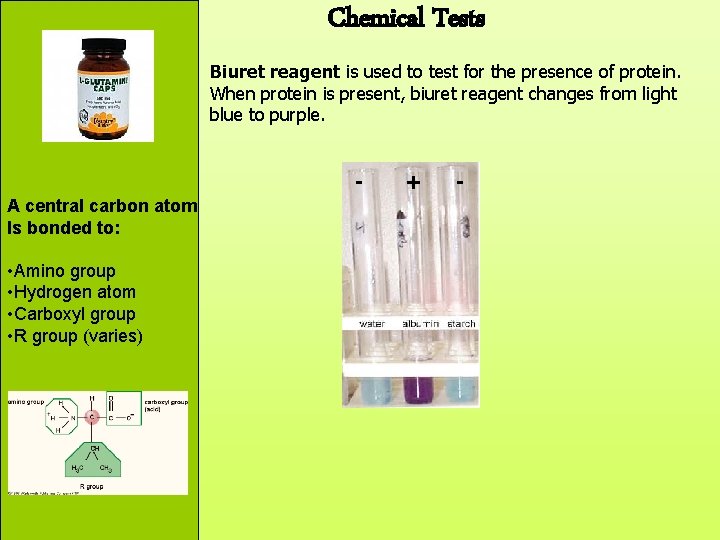
Chemical Tests Biuret reagent is used to test for the presence of protein. When protein is present, biuret reagent changes from light blue to purple. A central carbon atom Is bonded to: • Amino group • Hydrogen atom • Carboxyl group • R group (varies) + -
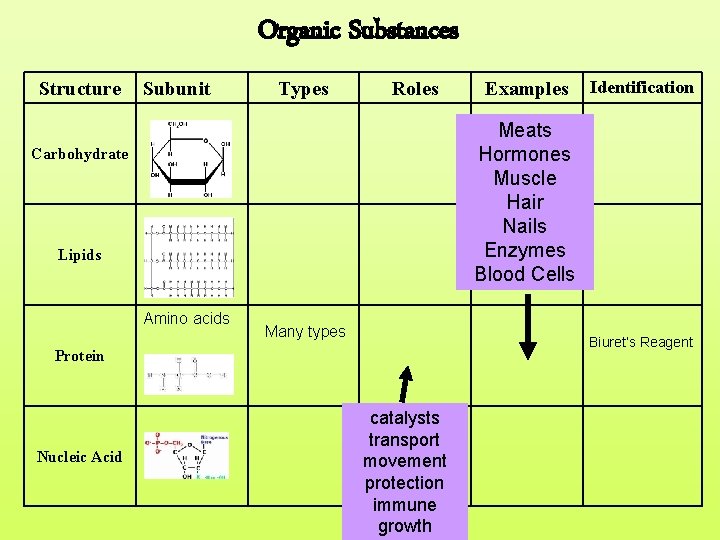
Organic Substances Structure Subunit Types Roles Identification Meats Hormones Muscle Hair Nails Enzymes Blood Cells Carbohydrate Lipids Amino acids Many types Biuret’s Reagent Protein Nucleic Acid Examples catalysts transport movement protection immune growth
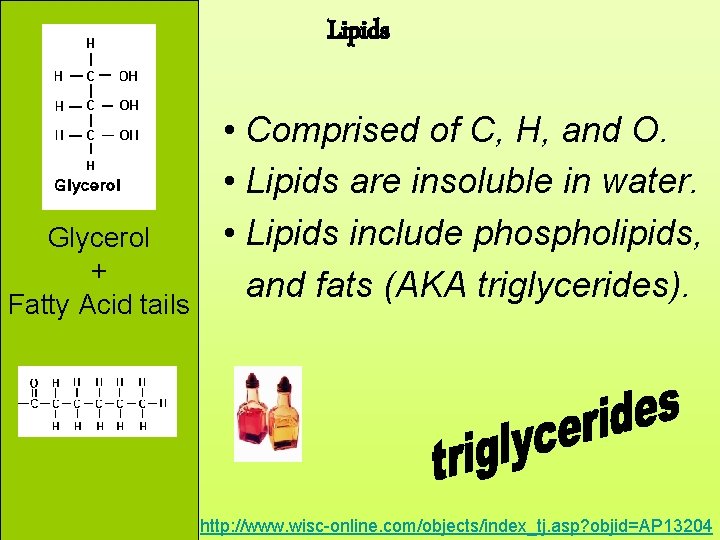
Lipids Glycerol + Fatty Acid tails • Comprised of C, H, and O. • Lipids are insoluble in water. • Lipids include phospholipids, and fats (AKA triglycerides). http: //www. wisc-online. com/objects/index_tj. asp? objid=AP 13204
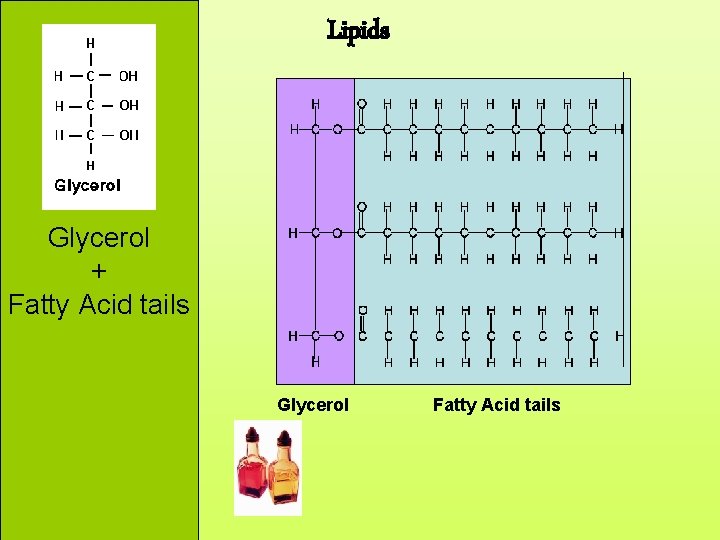
Lipids Glycerol + Fatty Acid tails Glycerol Fatty Acid tails
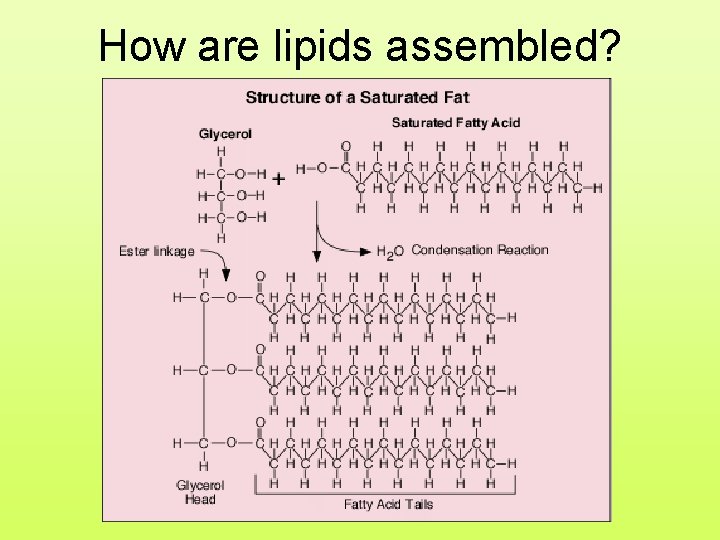
How are lipids assembled?
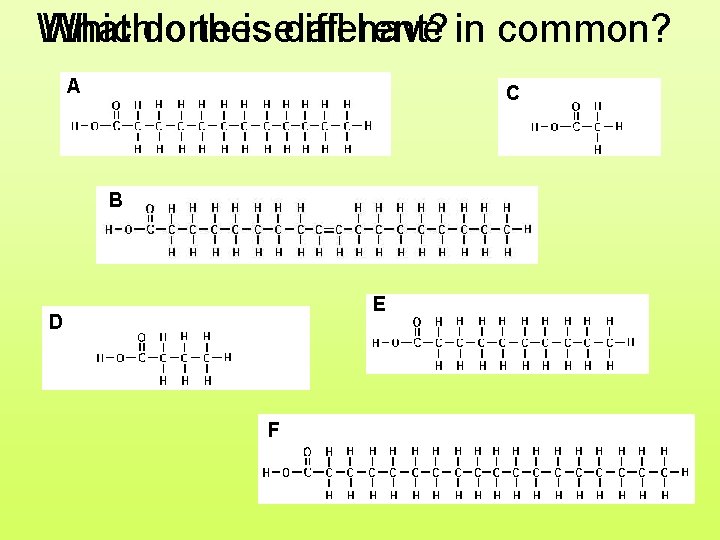
What Whichdo one these is different? all have in common? A C B E D F
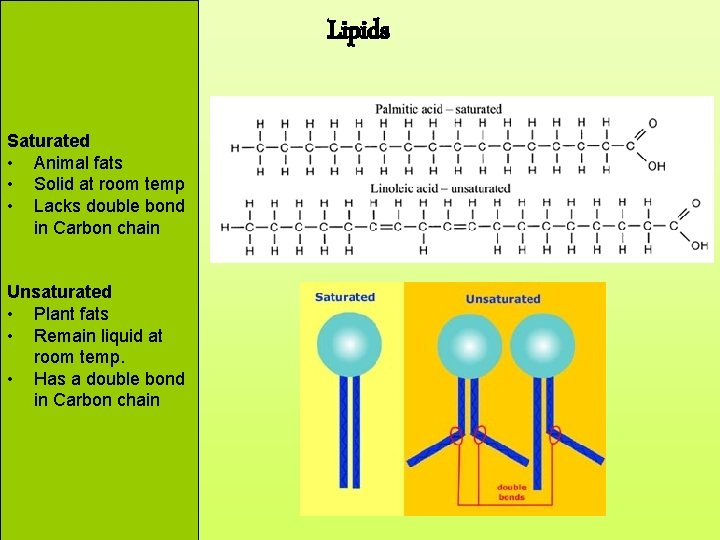
Lipids Saturated • Animal fats • Solid at room temp • Lacks double bond in Carbon chain Unsaturated • Plant fats • Remain liquid at room temp. • Has a double bond in Carbon chain
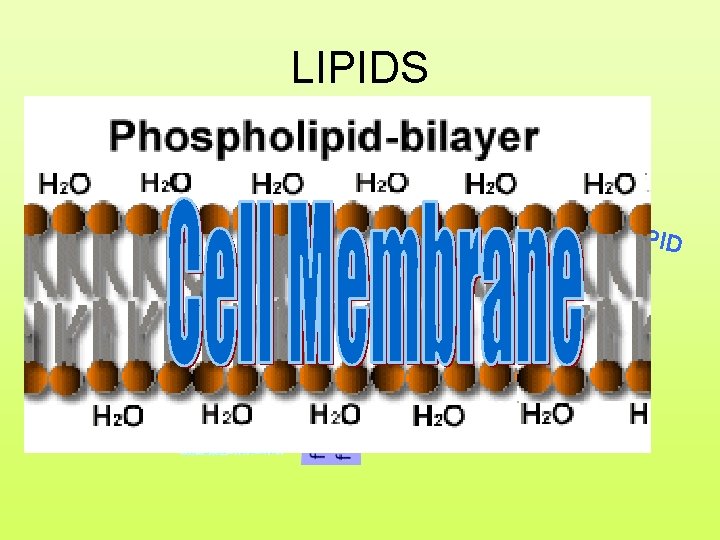
LIPIDS “PHO SPHO ”LIPID
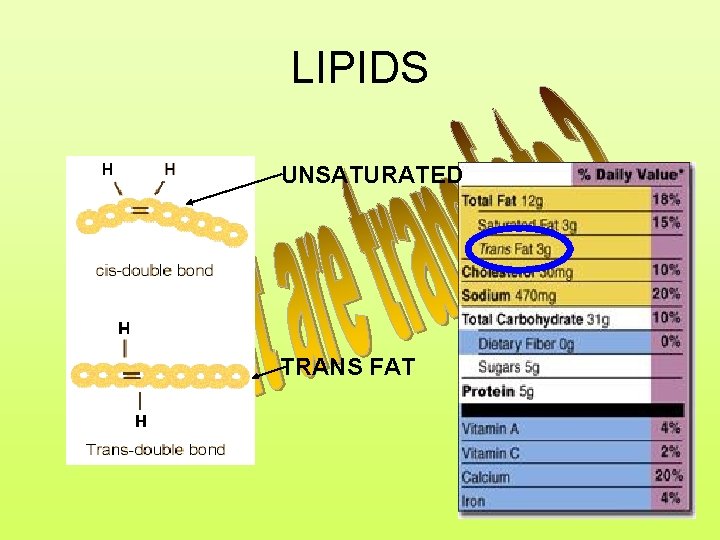
LIPIDS UNSATURATED TRANS FAT
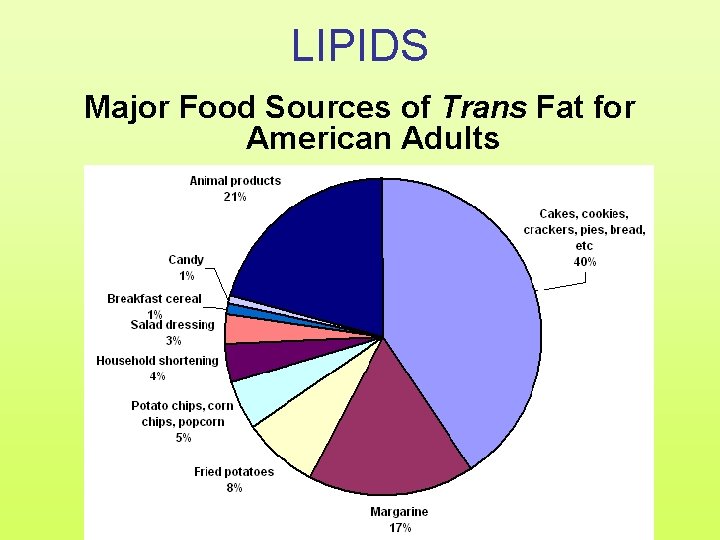
LIPIDS Major Food Sources of Trans Fat for American Adults
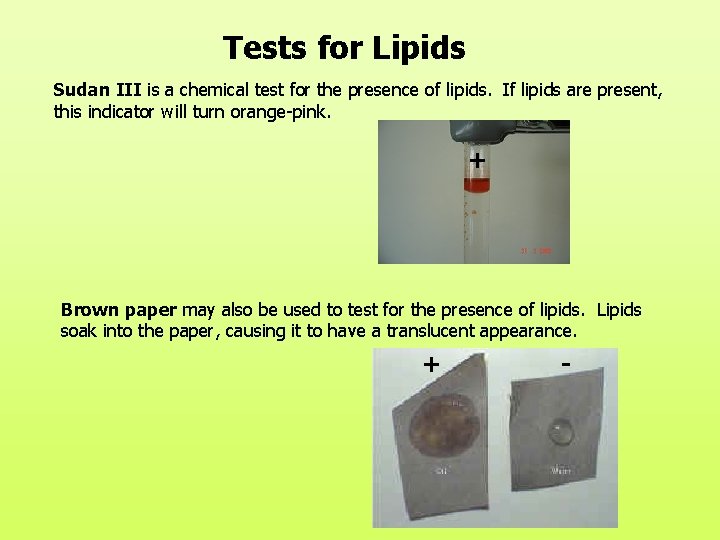
Tests for Lipids Sudan III is a chemical test for the presence of lipids. If lipids are present, this indicator will turn orange-pink. + Brown paper may also be used to test for the presence of lipids. Lipids soak into the paper, causing it to have a translucent appearance. + -
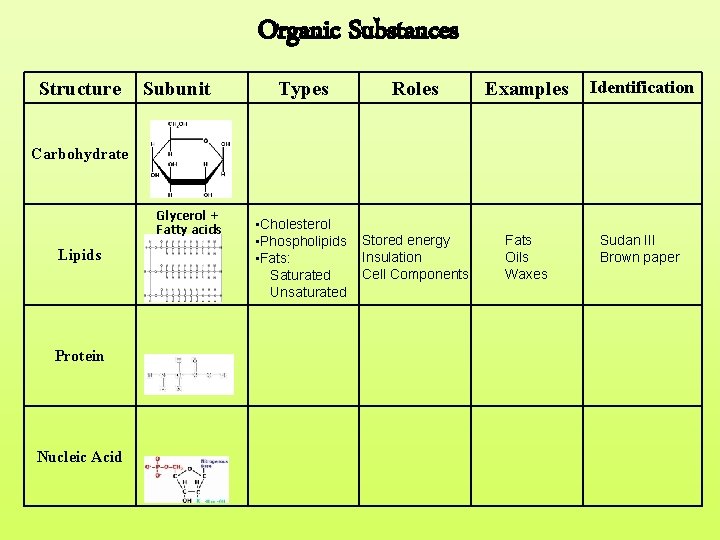
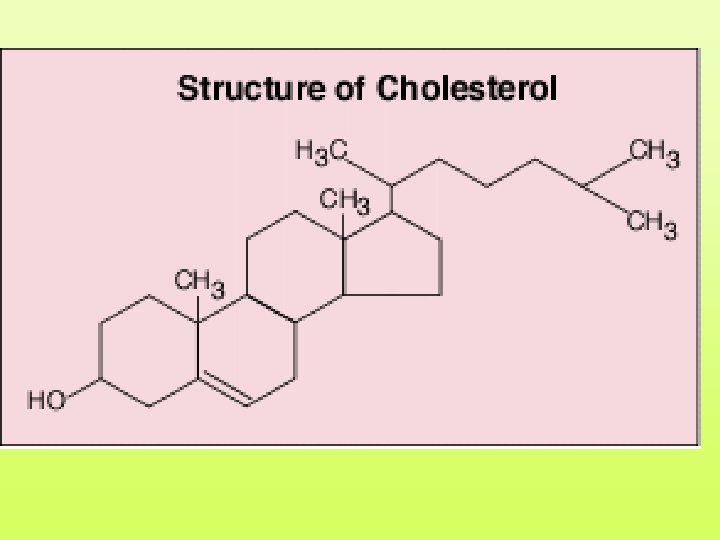
Organic Substances Structure Subunit Types Roles Examples Identification • Cholesterol • Phospholipids • Fats: Saturated Unsaturated Stored energy Insulation Cell Components Fats Oils Waxes Sudan III Brown paper Carbohydrate Glycerol + Fatty acids Lipids Protein Nucleic Acid
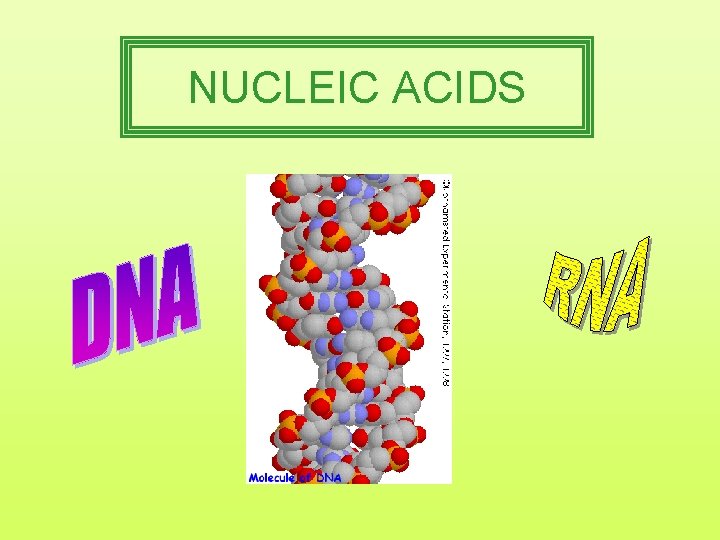
NUCLEIC ACIDS
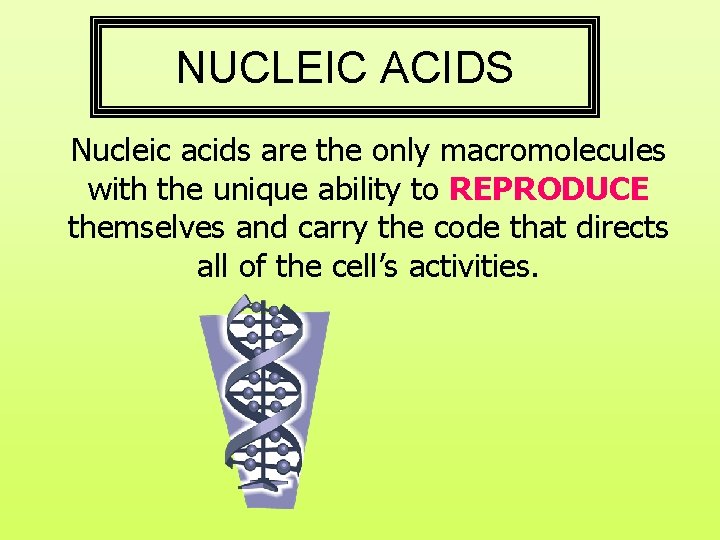
NUCLEIC ACIDS Nucleic acids are the only macromolecules with the unique ability to REPRODUCE themselves and carry the code that directs all of the cell’s activities.
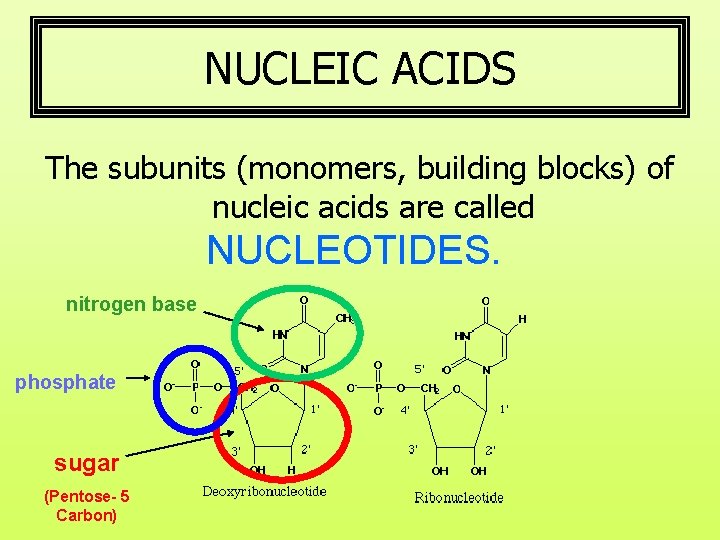
NUCLEIC ACIDS The subunits (monomers, building blocks) of nucleic acids are called NUCLEOTIDES. nitrogen base phosphate sugar (Pentose- 5 Carbon)
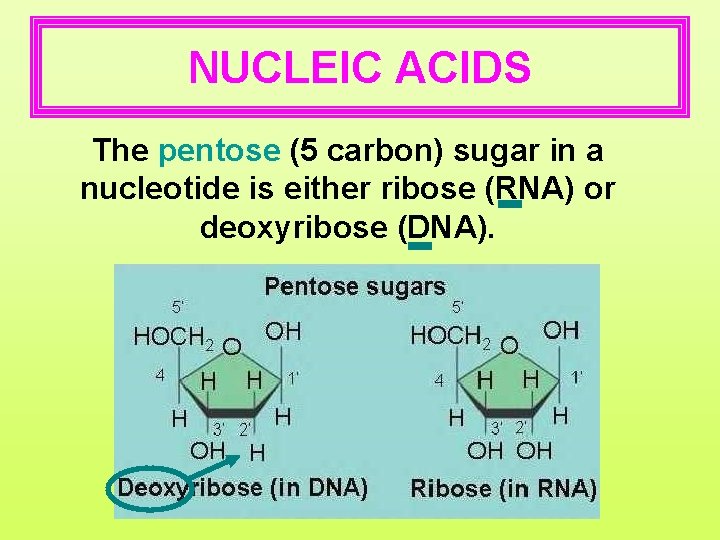
NUCLEIC ACIDS The pentose (5 carbon) sugar in a nucleotide is either ribose (RNA) or deoxyribose (DNA).
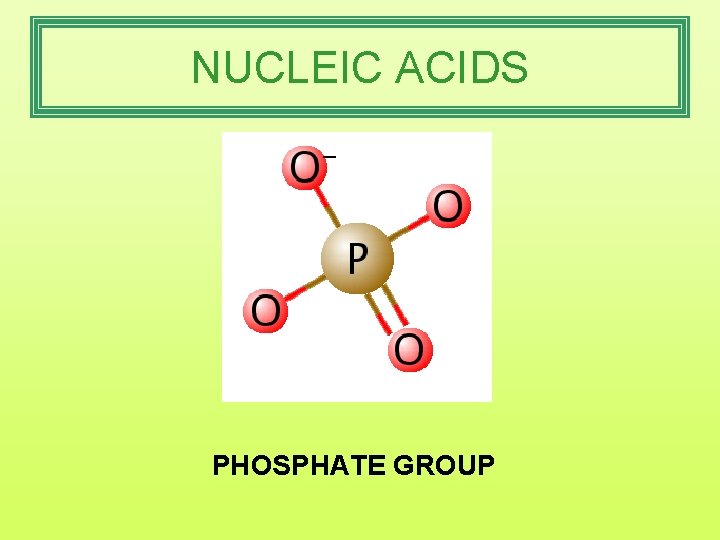
NUCLEIC ACIDS PHOSPHATE GROUP
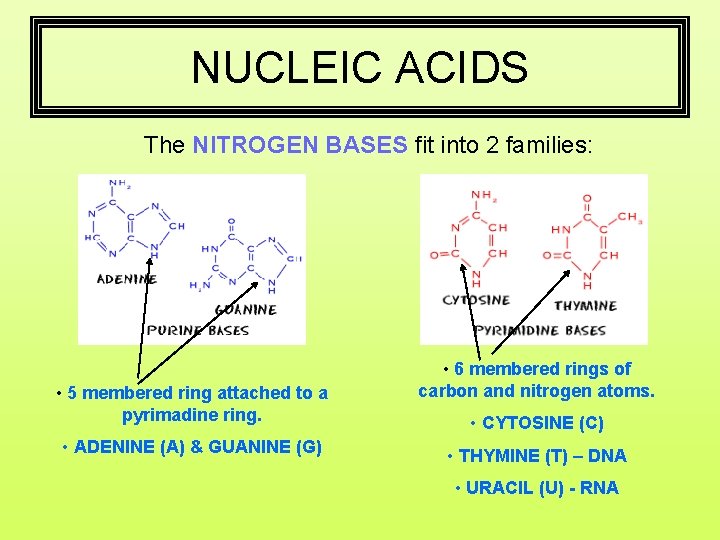
NUCLEIC ACIDS The NITROGEN BASES fit into 2 families: • 5 membered ring attached to a pyrimadine ring. • ADENINE (A) & GUANINE (G) • 6 membered rings of carbon and nitrogen atoms. • CYTOSINE (C) • THYMINE (T) – DNA • URACIL (U) - RNA
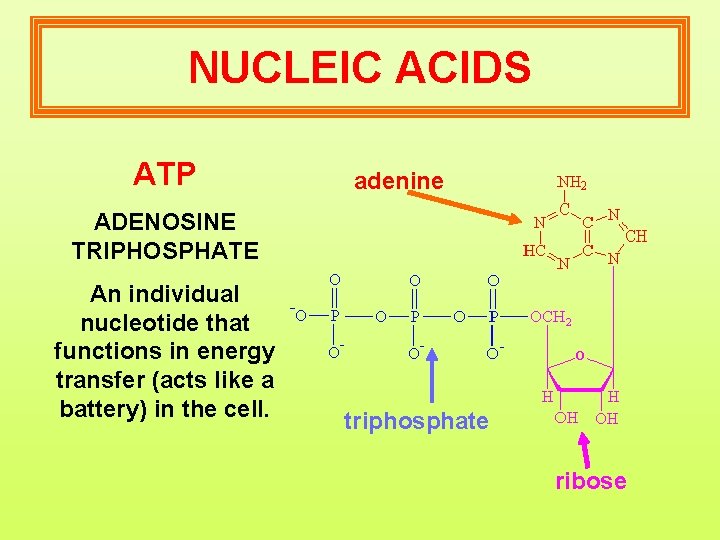
NUCLEIC ACIDS ATP adenine ADENOSINE TRIPHOSPHATE An individual nucleotide that functions in energy transfer (acts like a battery) in the cell. triphosphate ribose
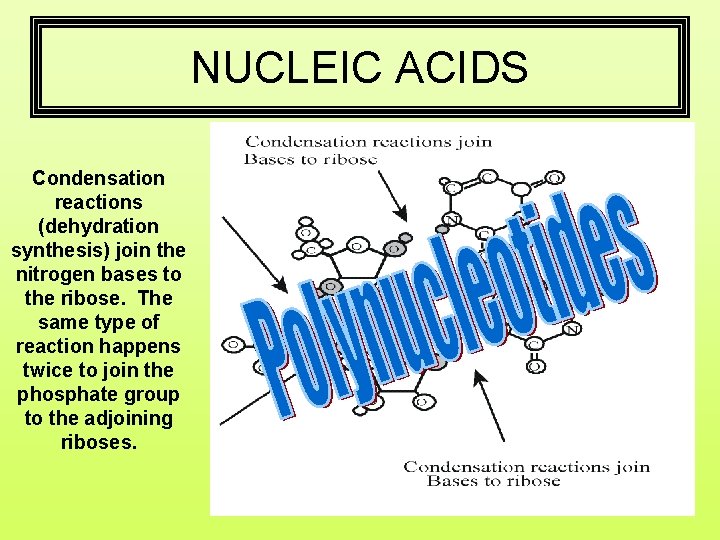
NUCLEIC ACIDS Condensation reactions (dehydration synthesis) join the nitrogen bases to the ribose. The same type of reaction happens twice to join the phosphate group to the adjoining riboses.
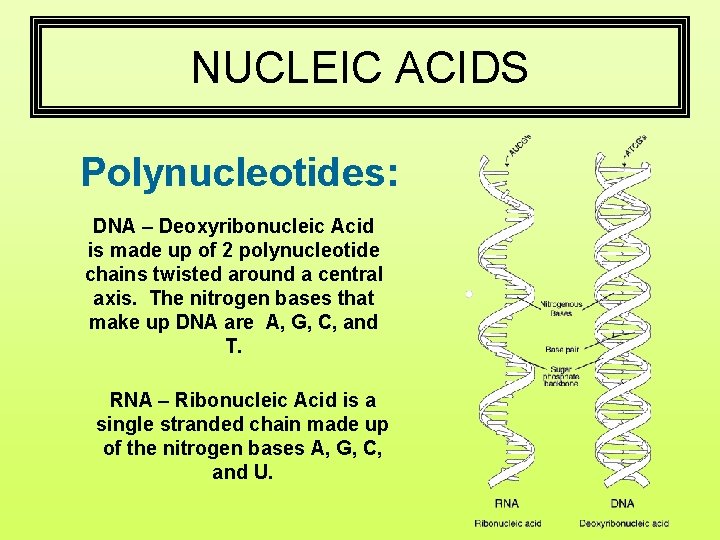
NUCLEIC ACIDS Polynucleotides: DNA – Deoxyribonucleic Acid is made up of 2 polynucleotide chains twisted around a central axis. The nitrogen bases that make up DNA are A, G, C, and T. RNA – Ribonucleic Acid is a single stranded chain made up of the nitrogen bases A, G, C, and U.
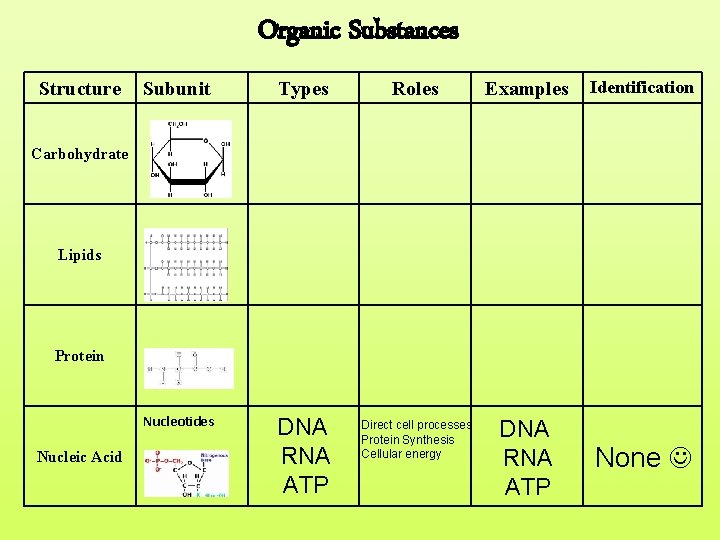
Organic Substances Structure Subunit Types Roles Examples Identification Nucleotides DNA RNA ATP Direct cell processes Protein Synthesis Cellular energy DNA RNA ATP None Carbohydrate Lipids Protein Nucleic Acid
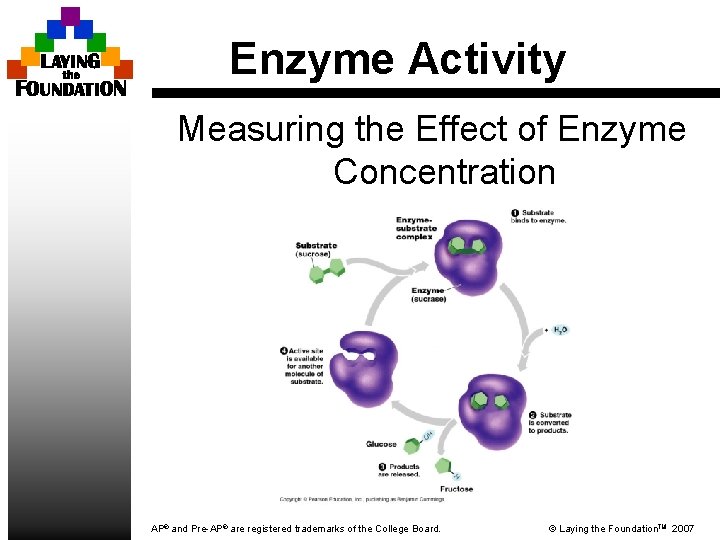
Enzyme Activity Measuring the Effect of Enzyme Concentration AP® and Pre-AP® are registered trademarks of the College Board. © Laying the Foundation. TM 2007
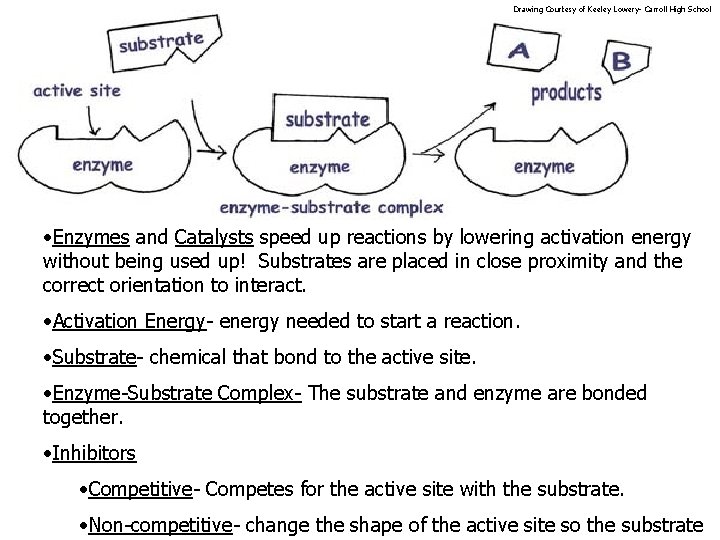
Drawing Courtesy of Keeley Lowery- Carroll High School • Enzymes and Catalysts speed up reactions by lowering activation energy without being used up! Substrates are placed in close proximity and the correct orientation to interact. • Activation Energy- energy needed to start a reaction. • Substrate- chemical that bond to the active site. • Enzyme-Substrate Complex- The substrate and enzyme are bonded together. • Inhibitors • Competitive- Competes for the active site with the substrate. the Foundation 2007 • Non-competitivethe ofshape the active site© Laying so the substrate AP and Pre-AP are change registered trademarks the Collegeof Board. ® ® TM
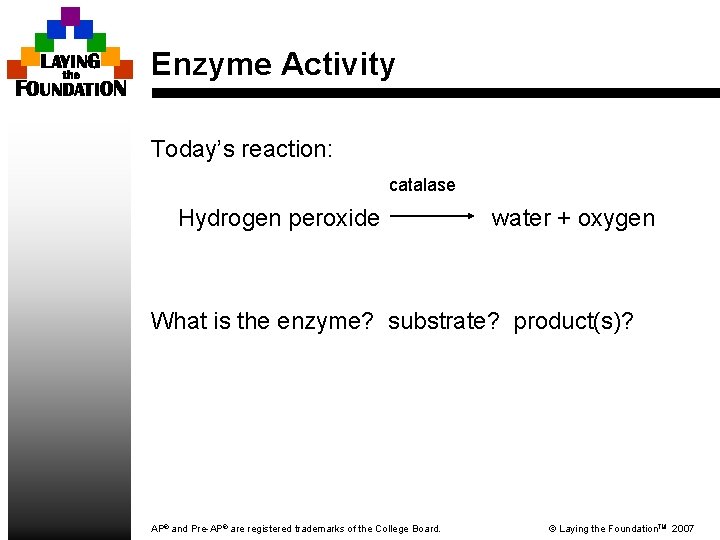
Enzyme Activity Today’s reaction: catalase Hydrogen peroxide water + oxygen What is the enzyme? substrate? product(s)? AP® and Pre-AP® are registered trademarks of the College Board. © Laying the Foundation. TM 2007
- Slides: 48