
Biochemistry Chemical Reactions in Biological Systems Law of

Biochemistry Chemical Reactions in Biological Systems • Law of Conservation of Energy
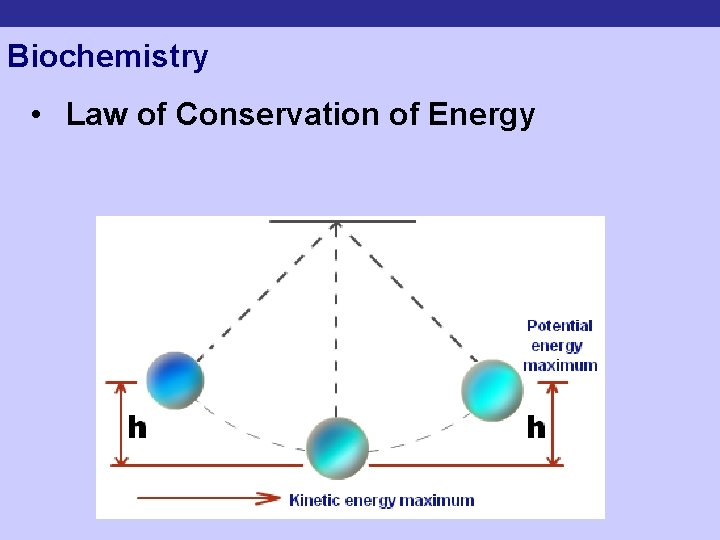
Biochemistry • Law of Conservation of Energy
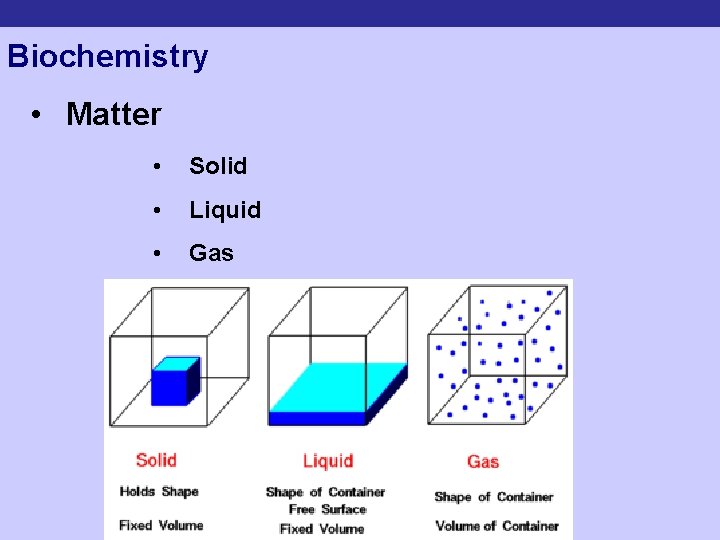
Biochemistry • Matter • Solid • Liquid • Gas

Biochemistry • Matter • Melting Point • Boiling Point
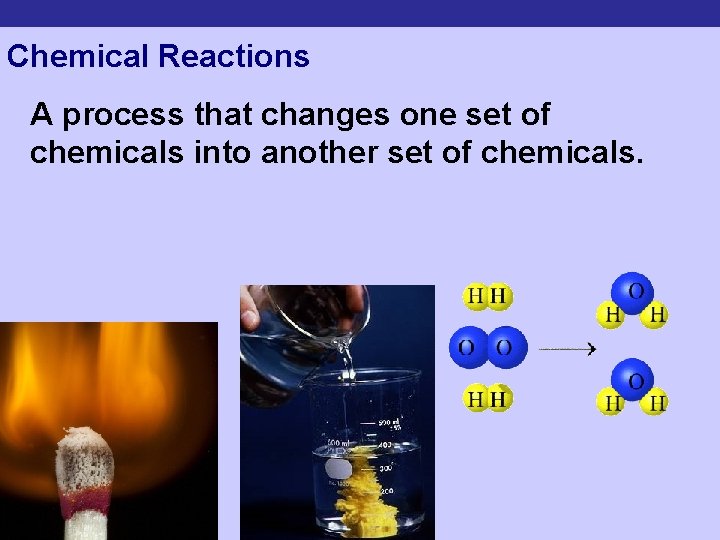
Chemical Reactions A process that changes one set of chemicals into another set of chemicals. Copyright Pearson Prentice Hall
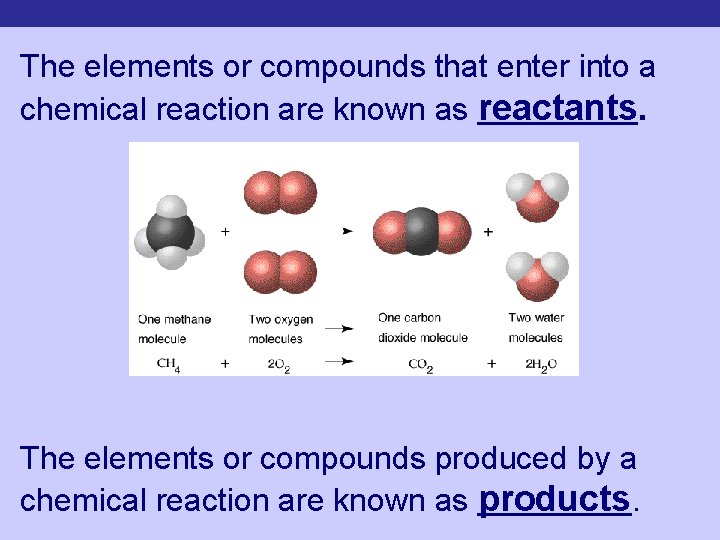
The elements or compounds that enter into a chemical reaction are known as reactants. The elements or compounds produced by a chemical reaction are known as products.
Energy Changes Exothermic Reactions • Chemical reactions that release energy often occur spontaneously. Endothermic Reactions • Chemical reactions that absorb energy will not occur without a source of energy.
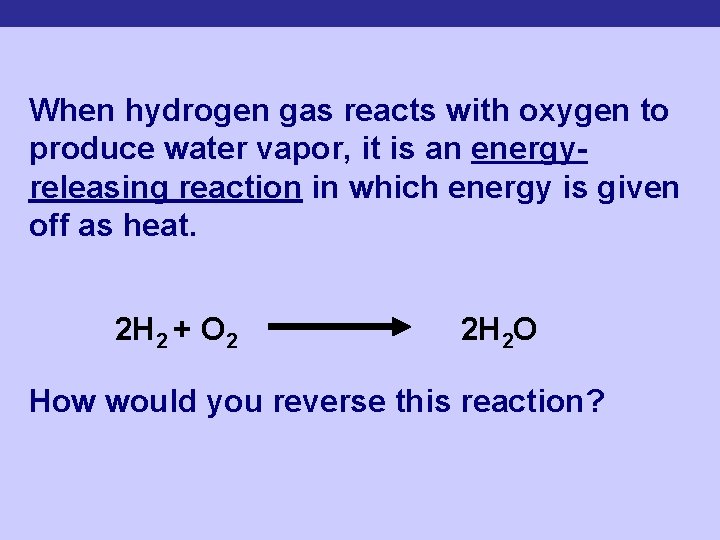
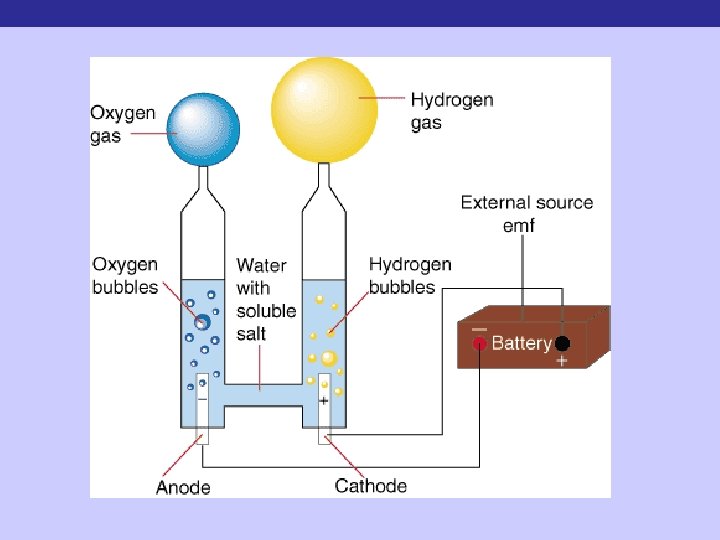
When hydrogen gas reacts with oxygen to produce water vapor, it is an energyreleasing reaction in which energy is given off as heat. 2 H 2 + O 2 2 H 2 O How would you reverse this reaction?
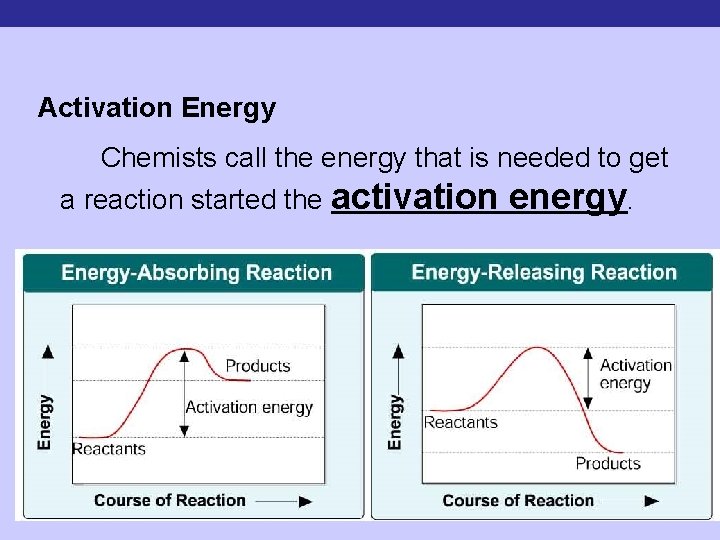
Activation Energy Chemists call the energy that is needed to get a reaction started the activation energy.
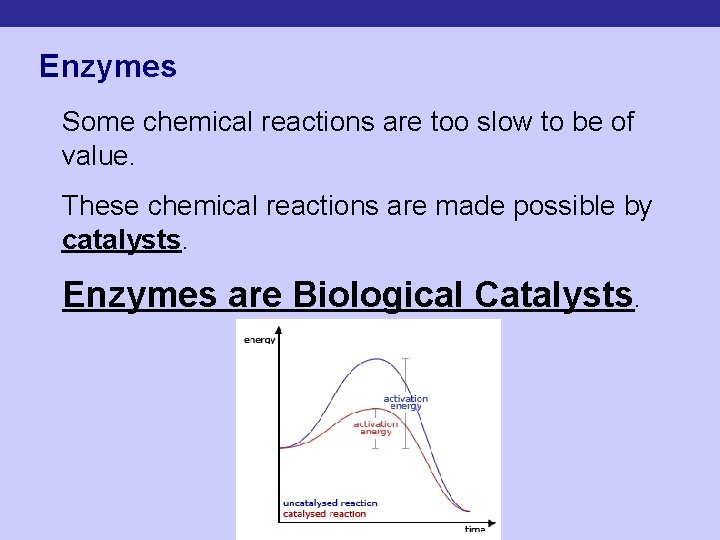
Enzymes Some chemical reactions are too slow to be of value. These chemical reactions are made possible by catalysts. Enzymes are Biological Catalysts.
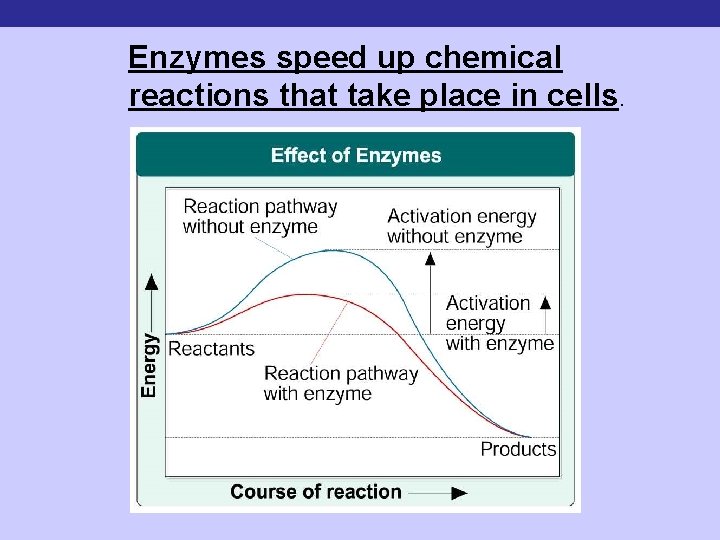
Enzymes speed up chemical reactions that take place in cells.
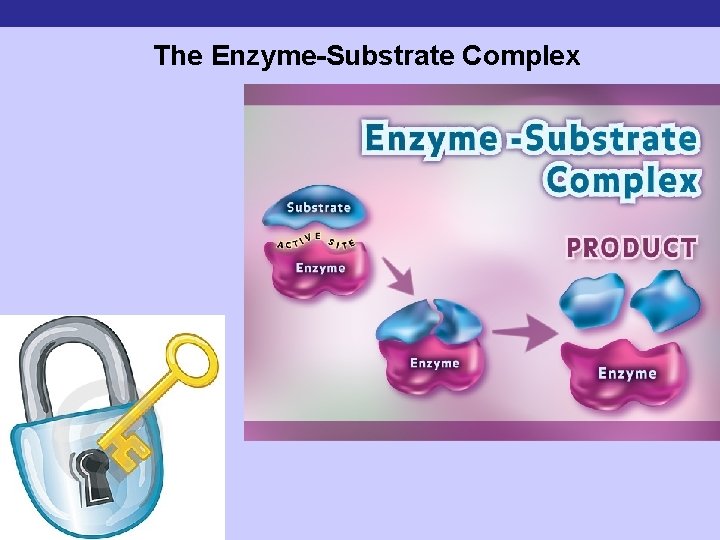
The Enzyme-Substrate Complex
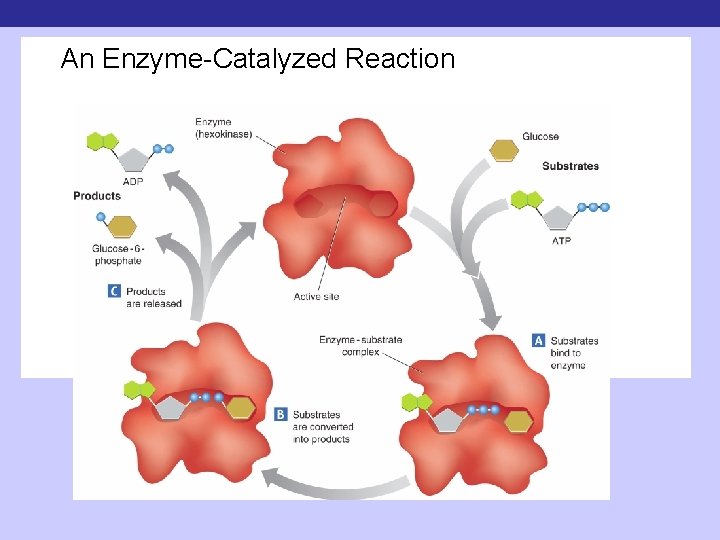
An Enzyme-Catalyzed Reaction
Regulation of Enzyme Activity –p. H values –Changes in temperature –Enzyme or substrate concentrations
Quiz 5 -1
The elements or compounds produced by a chemical reaction are known as a. reactants. b. enzymes. c. products. d. waste.
Chemical reactions always involve a. catalysts. b. enzymes. c. changes in energy. d. changes in the atomic number of the reactants.
The factor that prevents many energy-releasing reactions from occurring at relatively low temperatures is called a. catalytic energy. b. chemical bond energy. c. enzyme energy. d. activation energy.
Which of the following statements is true? a. All proteins are enzymes. b. All enzymes are catalysts. c. All catalysts are enzymes. d. All catalysts are proteins.
What happens to an enzyme after the reaction it catalyzes has taken place? a. The enzyme is destroyed, and the cell must make another. b. The enzyme holds on to the product until another enzyme removes it. c. The enzyme is unchanged and ready to accept substrate molecules. d. The enzyme changes shape so it can accept a different kind of substrate.
- Slides: 22