
Biochemistry ATOMS the smallest unit of an element
Biochemistry

ATOMS Ø the smallest unit of an element.
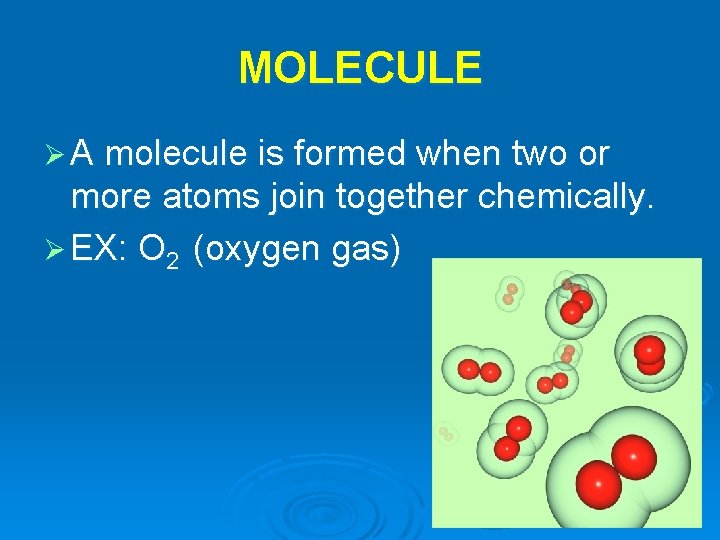
MOLECULE Ø A molecule is formed when two or more atoms join together chemically. Ø EX: O 2 (oxygen gas)
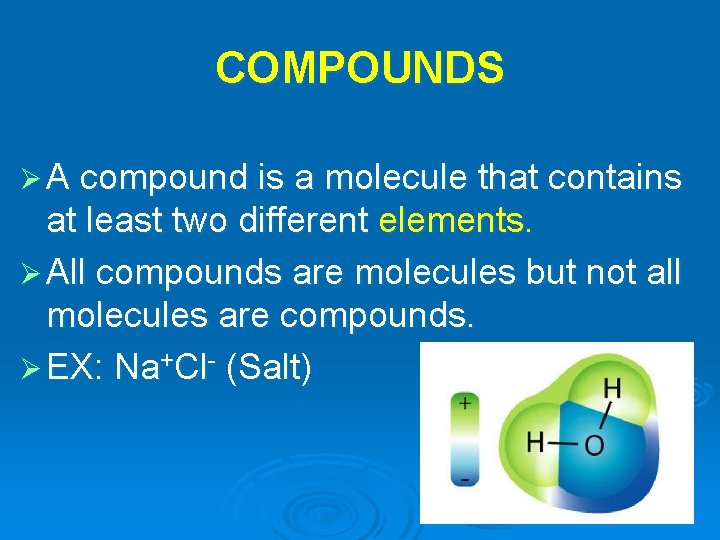
COMPOUNDS Ø A compound is a molecule that contains at least two different elements. Ø All compounds are molecules but not all molecules are compounds. Ø EX: Na+Cl- (Salt)
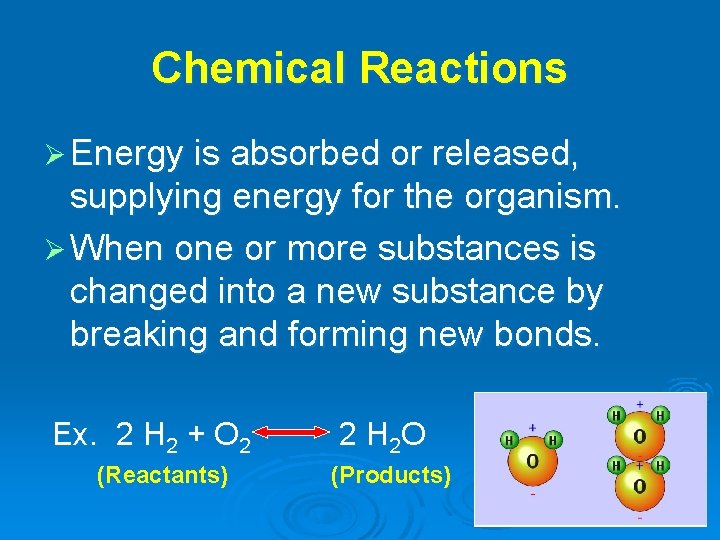
Chemical Reactions Ø Energy is absorbed or released, supplying energy for the organism. Ø When one or more substances is changed into a new substance by breaking and forming new bonds. Ex. 2 H 2 + O 2 (Reactants) 2 H 2 O (Products)
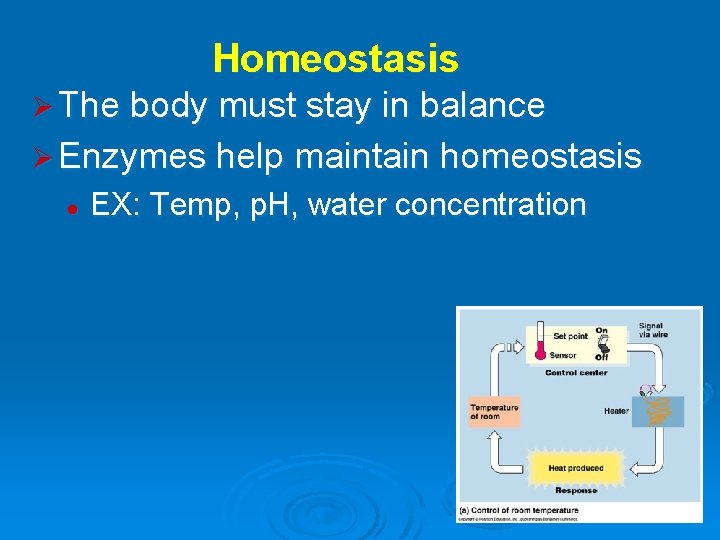
Homeostasis Ø The body must stay in balance Ø Enzymes help maintain homeostasis l EX: Temp, p. H, water concentration
Acids, Bases and p. H Ø Acids: lose hydrogen H+ in water • Ex: Orange juice , vinegar and lemons • 0 -6. 99 Ø Bases: loses oxygen and hydrogen in water OH • 7. 01 -14 • Ex: Soap, egg whites and baking soda Ø p. H: Concentration of hydrogen in solution, scale of 0 -14
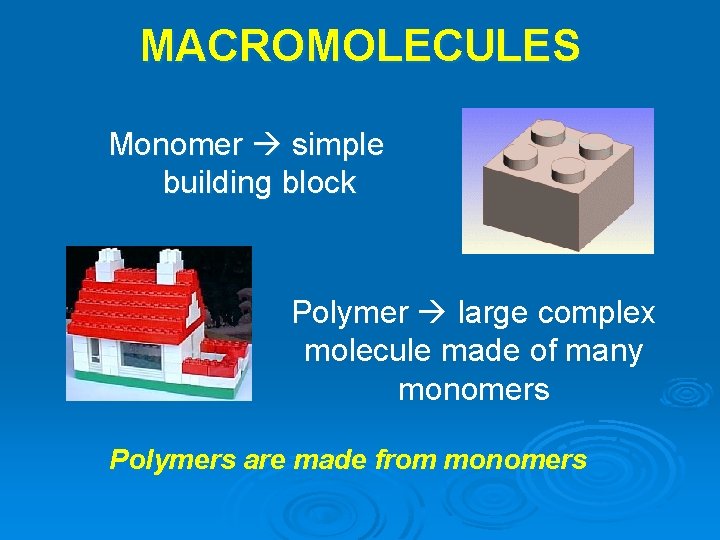
MACROMOLECULES Monomer simple building block Polymer large complex molecule made of many monomers Polymers are made from monomers
4 main polymers found in living things Ø Carbohydrates • Starches, sugars, and cellulose Ø Lipids • Phospholipids Ø Nucleic Acid • DNA: Deoxyribonucleic Acid • RNA: Ribonucleic Acid Ø Proteins • Amino Acids • Enzymes
Carbohydrates Ø Group of chemicals that includes sugars, starch and cellulose. Used for short term energy storage l Simple sugars are the easiest substance for your body to breakdown. l Stored as glycogen, in muscles if not used quickly l
Carbohydrates Ø 3 Types 1. Monosaccharide (one sugar) 2. Disaccharide (two sugars) 3. Polysaccharide (many sugars) Ex: Plant starch or animal glycogen • Consist of C, H, and O in a 1: 2: 1 ratio Example: Glucose (C 6 H 12 O 6)
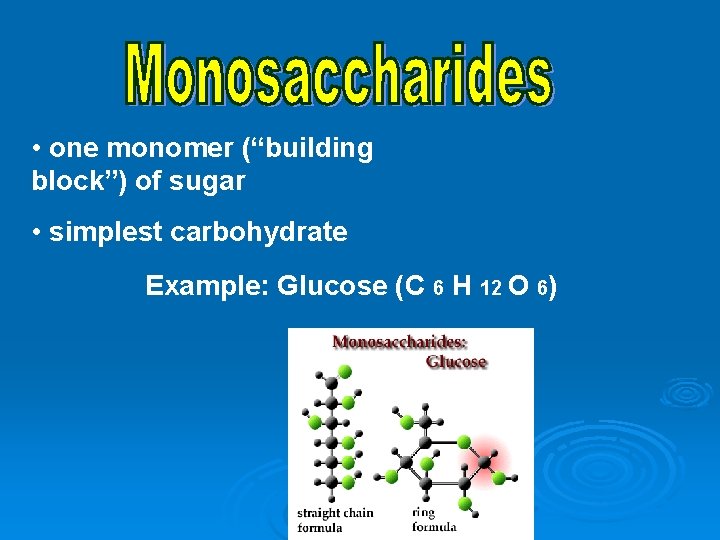
• one monomer (“building block”) of sugar • simplest carbohydrate Example: Glucose (C 6 H 12 O 6)
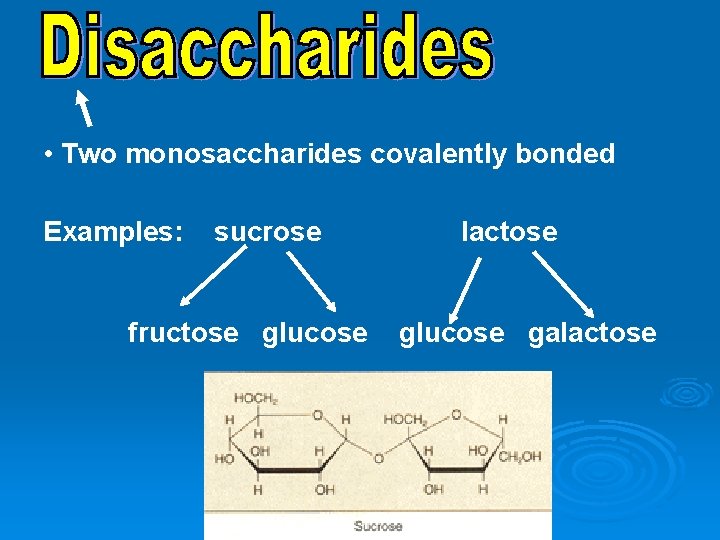
• Two monosaccharides covalently bonded Examples: sucrose fructose glucose lactose glucose galactose
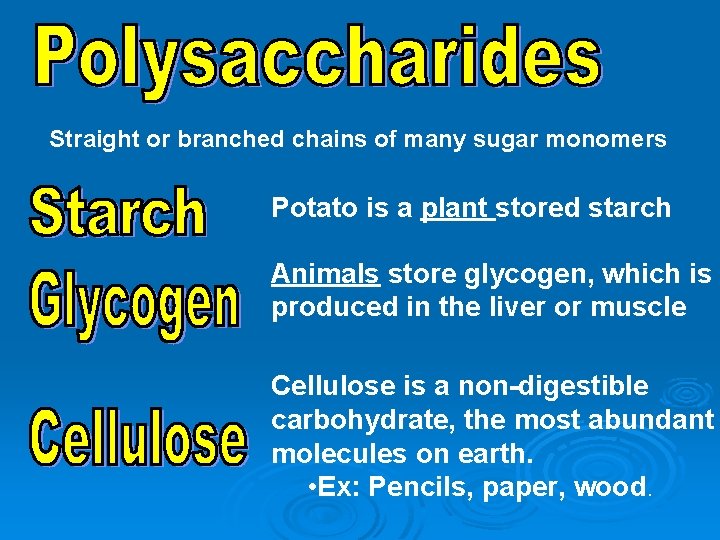
Straight or branched chains of many sugar monomers Potato is a plant stored starch Animals store glycogen, which is produced in the liver or muscle Cellulose is a non-digestible carbohydrate, the most abundant molecules on earth. • Ex: Pencils, paper, wood.
Lipids Ø Fats, oils, waxes, phospholipids, and steroids. Used for long term energy storage Ø Fats act as an insulator Ø Waxes act as a water repellant Ø Keep leaves from drying out Ø Make ducks feathers waterproof Ø
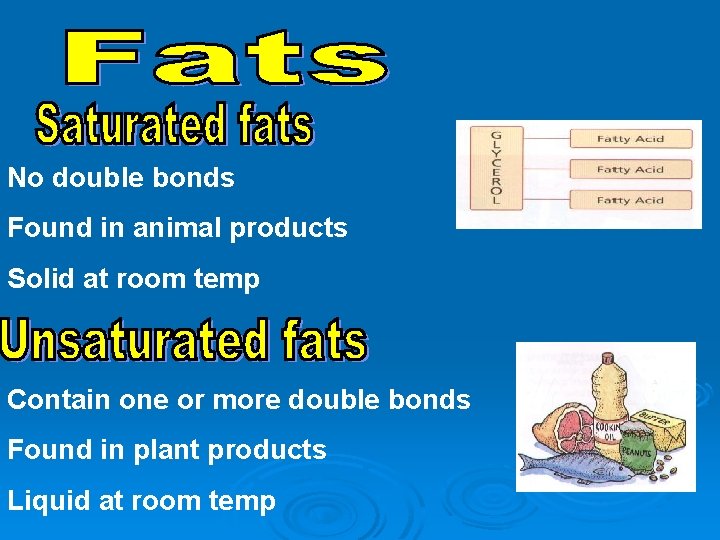
No double bonds Found in animal products Solid at room temp Contain one or more double bonds Found in plant products Liquid at room temp
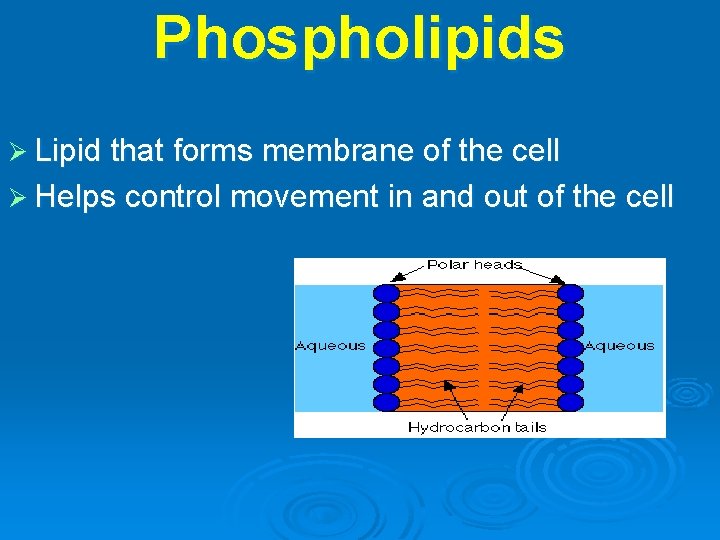
Phospholipids Ø Lipid that forms membrane of the cell Ø Helps control movement in and out of the cell
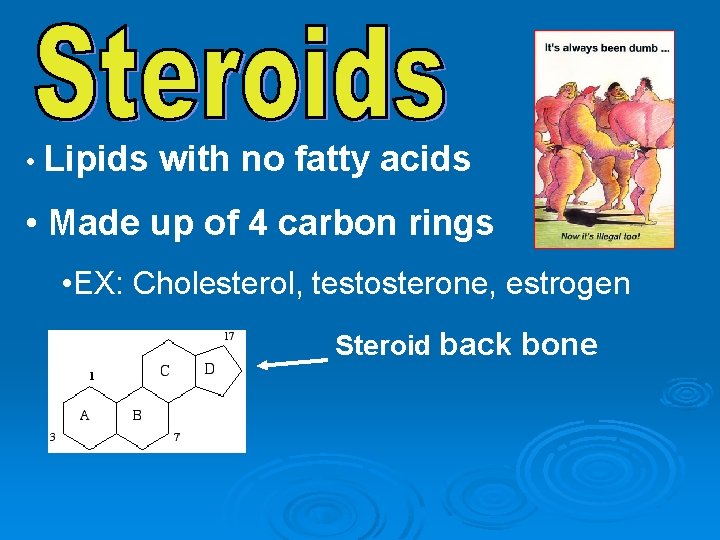
• Lipids with no fatty acids • Made up of 4 carbon rings • EX: Cholesterol, testosterone, estrogen Steroid back bone
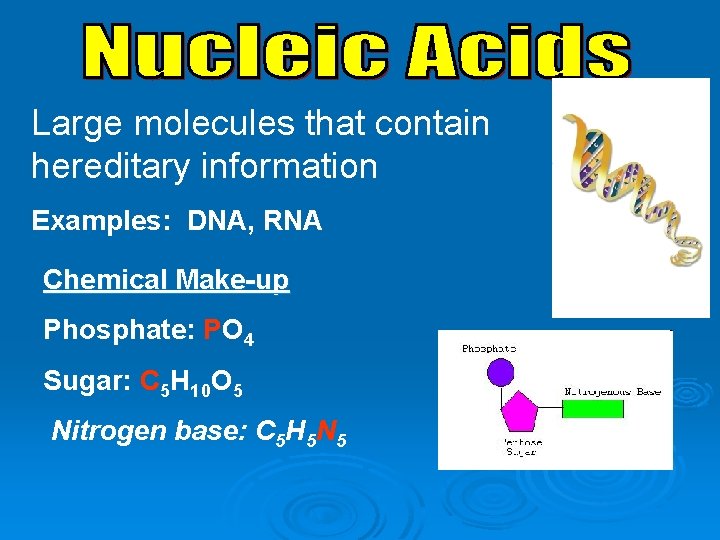
Large molecules that contain hereditary information Examples: DNA, RNA Chemical Make-up Phosphate: PO 4 Sugar: C 5 H 10 O 5 Nitrogen base: C 5 H 5 N 5
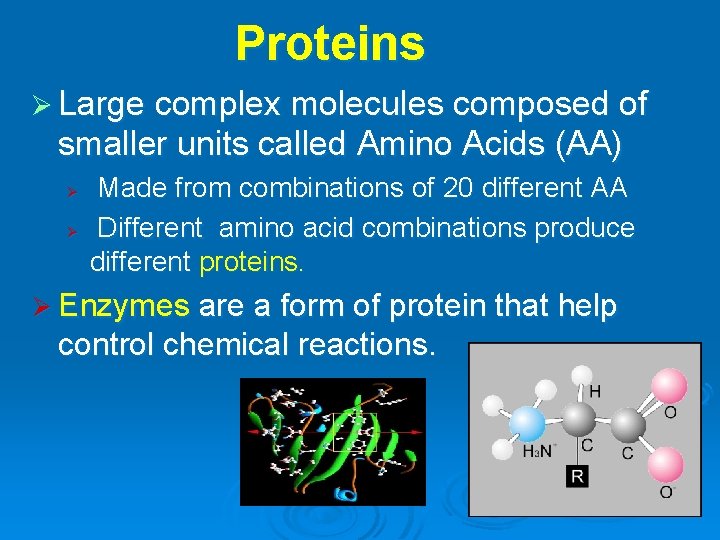
Proteins Ø Large complex molecules composed of smaller units called Amino Acids (AA) Ø Ø Made from combinations of 20 different AA Different amino acid combinations produce different proteins. Ø Enzymes are a form of protein that help control chemical reactions.
Proteins that act as catalysts: (Speed up rate of reaction by making atoms move faster) Any Substance that the enzyme works on The place on the enzyme that the substrate fits into
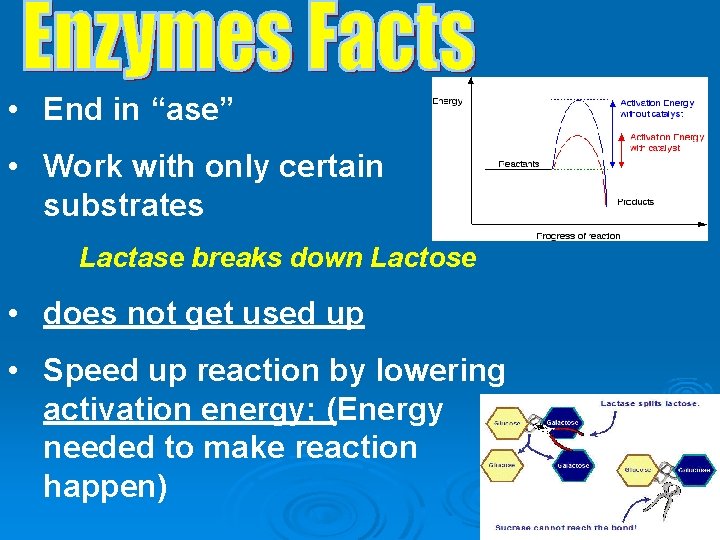
• End in “ase” • Work with only certain substrates Lactase breaks down Lactose • does not get used up • Speed up reaction by lowering activation energy; (Energy needed to make reaction happen)
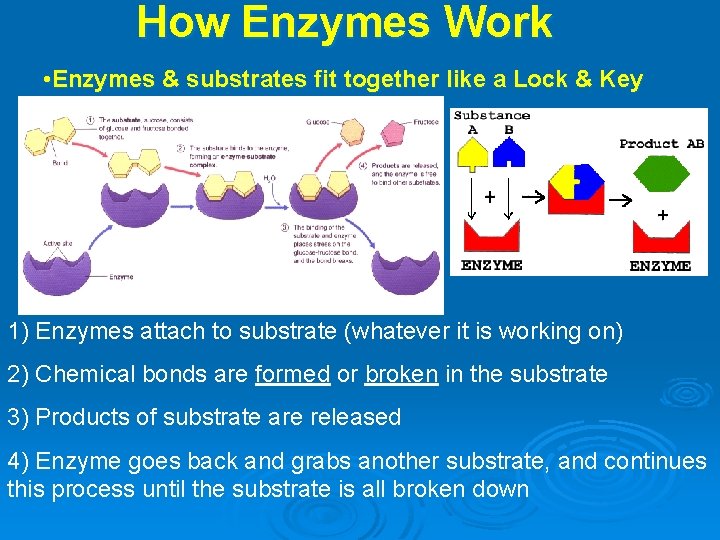
How Enzymes Work • Enzymes & substrates fit together like a Lock & Key 1) Enzymes attach to substrate (whatever it is working on) 2) Chemical bonds are formed or broken in the substrate 3) Products of substrate are released 4) Enzyme goes back and grabs another substrate, and continues this process until the substrate is all broken down
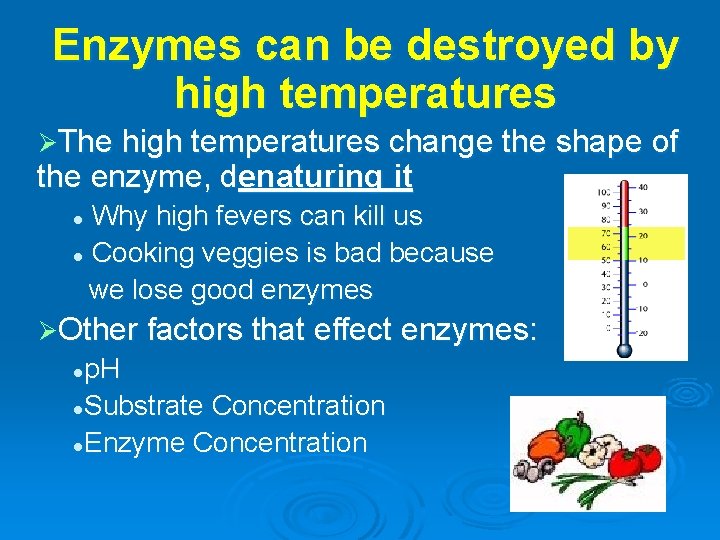
Enzymes can be destroyed by high temperatures ØThe high temperatures change the shape of the enzyme, denaturing it Why high fevers can kill us l Cooking veggies is bad because we lose good enzymes l ØOther factors that effect enzymes: p. H l. Substrate Concentration l. Enzyme Concentration l
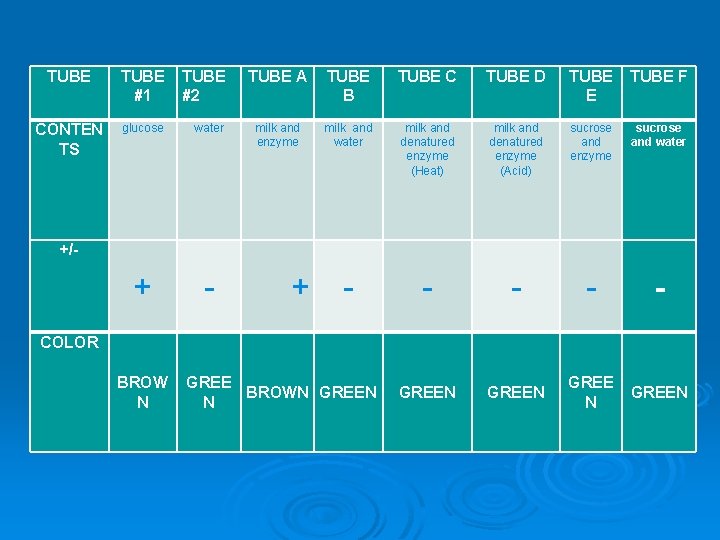
TUBE #1 TUBE #2 CONTEN TS glucose water + - TUBE A TUBE B TUBE C TUBE D TUBE E TUBE F milk and enzyme milk and water milk and denatured enzyme (Heat) milk and denatured enzyme (Acid) sucrose and enzyme sucrose and water - - - GREEN GREEN +/- + COLOR BROW N GREE BROWN GREEN N
- Slides: 25