
Biochemical Pathways Photosynthesis Cellular Respiration Capturing Energy u
Biochemical Pathways Photosynthesis & Cellular Respiration
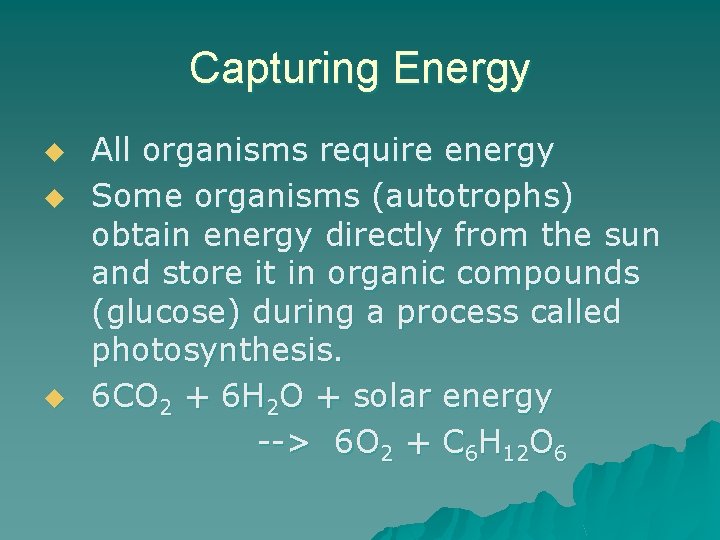
Capturing Energy u u u All organisms require energy Some organisms (autotrophs) obtain energy directly from the sun and store it in organic compounds (glucose) during a process called photosynthesis. 6 CO 2 + 6 H 2 O + solar energy --> 6 O 2 + C 6 H 12 O 6

Energy for Life Processes u u Energy is the ability to do work. Work for a cell includes growth & repair, active transport across cell membranes, reproduction, synthesis of cellular products, etc.
Energy for life processes cont. u u u Autotrophs or producers convert sunlight, CO 2, and H 2 O into glucose (their food). Plants, algae, blue-green cyanobacteria, and some deep water bacteria, are producers or autotrophs. Only 10% of the Earth’s 40 million species are autotrophs.
Energy for life processes cont. u u Other autotrophs use inorganic compounds instead of sunlight to make food; process known as chemosynthesis. Producers make food for themselves and heterotrophs or consumers that cannot make food for themselves.
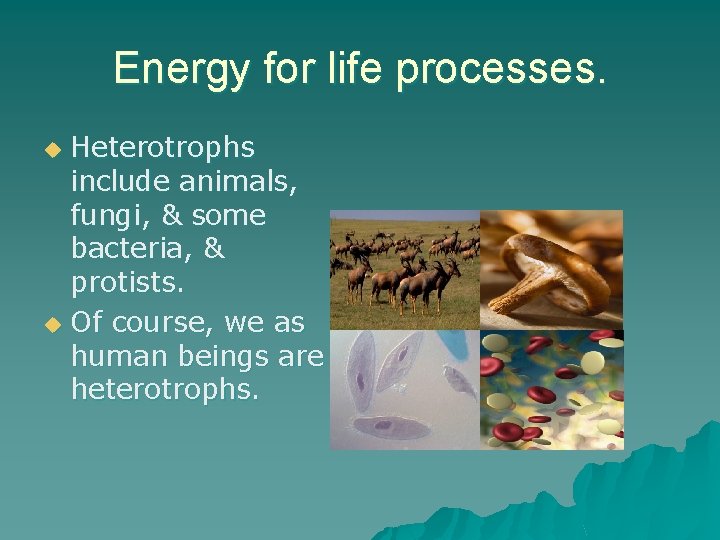
Energy for life processes. Heterotrophs include animals, fungi, & some bacteria, & protists. u Of course, we as human beings are heterotrophs. u
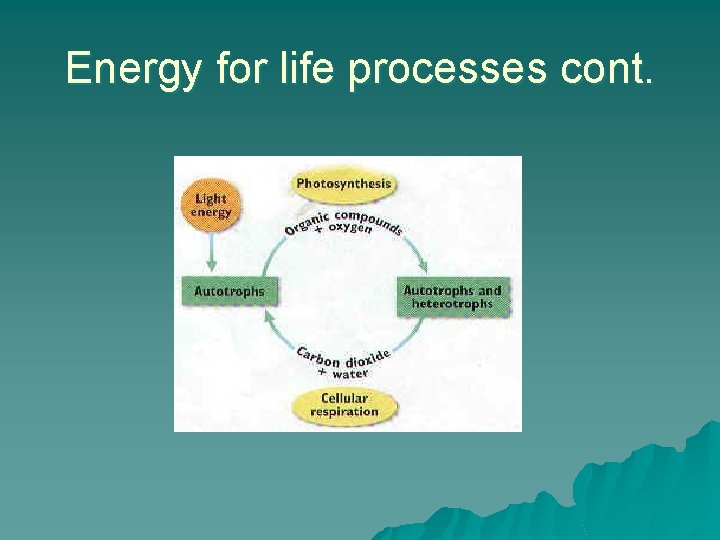
Energy for life processes cont.
Biochemical Pathways u u u Photosynthesis and cellular respiration are biochemical pathways. Biochemical pathways are a series of reactions where the product of one reaction is the reactant of the next. Only autotrophs are capable of photosynthesis.
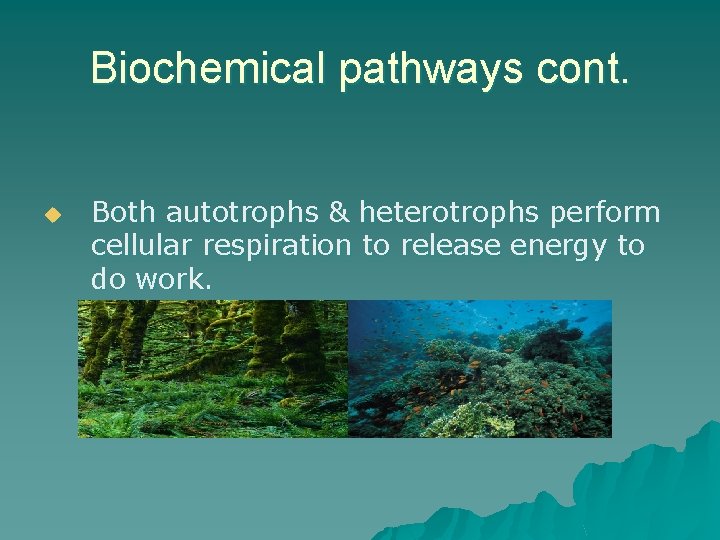
Biochemical pathways cont. u Both autotrophs & heterotrophs perform cellular respiration to release energy to do work.
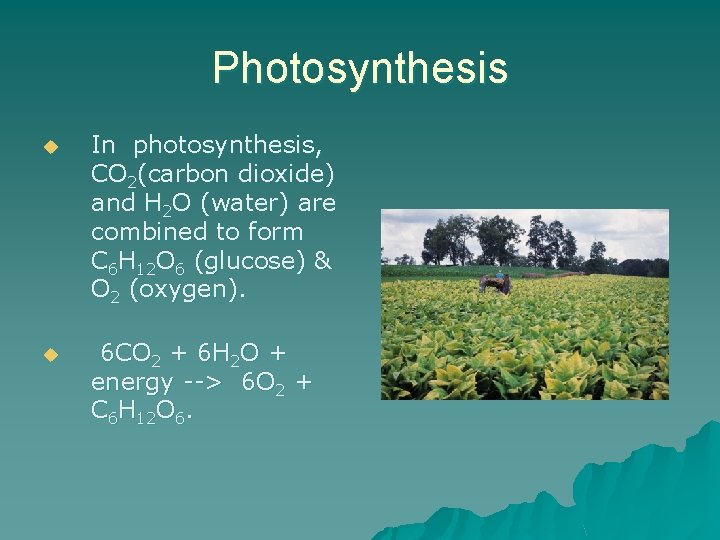
Photosynthesis u In photosynthesis, CO 2(carbon dioxide) and H 2 O (water) are combined to form C 6 H 12 O 6 (glucose) & O 2 (oxygen). u 6 CO 2 + 6 H 2 O + energy --> 6 O 2 + C 6 H 12 O 6.
Cellular Respiration u u In cellular respiration, O 2 (oxygen) is used to burn C 6 H 12 O 6 (glucose) & release CO 2(carbon dioxide), H 2 O (water), and energy. Usable energy released in cellular respiration is called adenosine triphosphate or ATP.
Light Absorption in Chloroplasts u u u Chloroplasts in plant & algal cells absorb light energy from the sun during the light. dependent reactions Photosynthetic cells may have thousands of chloroplasts. Chloroplasts are double membrane organelles with the an inner membrane folded into disc-shaped sacs called thylakoids.
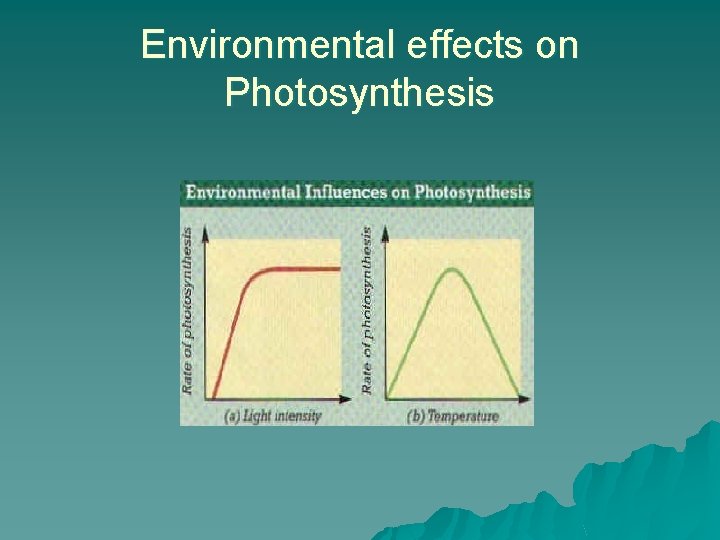
Environmental effects on Photosynthesis
Summation u Photosynthesis, the capturing of energy only occurs in plants, cyanobacteria and algae. u Respiration, the releasing of energy, occurs in all life on earth. u The equations for respiration and cellular respiration are reciprocal. In one direction, it is photosynthesis, in the other, cellular respiration.
- Slides: 14