
Biochemical Pathways How they are affected by mutations

Biochemical Pathways How they are affected by mutations.

Biochemical Pathways All biochemical pathways are catalysed by enzymes. l The coding for these enzymes is controlled by a gene. l If an organism has a faulty gene, it may not be able to make the enzyme. l
Biochemical Pathways l This means that the biochemical pathway would stop at that point and there would be an accumulation of the chemical prior to the faulty enzyme.
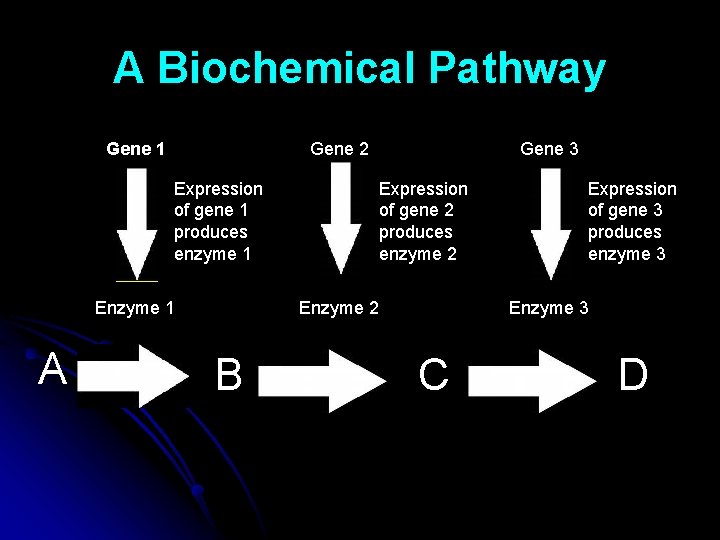
A Biochemical Pathway Gene 1 Gene 2 Expression of gene 1 produces enzyme 1 Enzyme 1 A Gene 3 Expression of gene 2 produces enzyme 2 Enzyme 2 B Expression of gene 3 produces enzyme 3 Enzyme 3 C D

Diseases of Inborn Errors of Metabolism
Phenylketonuria - PKU This is a serious disease, which if left untreated, can result in severe mental retardation. l It results from a defect in the enzyme E 1 that converts phenylalanine to tyrosine. l This results in an accumulation of phenylalanine and other minor metabolic products in the body. l
Phenylketonuria - PKU People with this disease are lightly pigmented, although there is usually enough tyrosine in their diets to allow them to make melanin. l All babies in NZ are tested for PKU at birth, and if it is present the children are put on a strict diet which can prevent the effects. l
Phenylketonuria - PKU This diet greatly reduces the amount of phenylalanine accumulated. l Phenylalanine is one of the essential amino acids, which is not made by the body, so it can be controlled by diet. l A small amount of phenylalanine has to be given to maintain normal growth. l

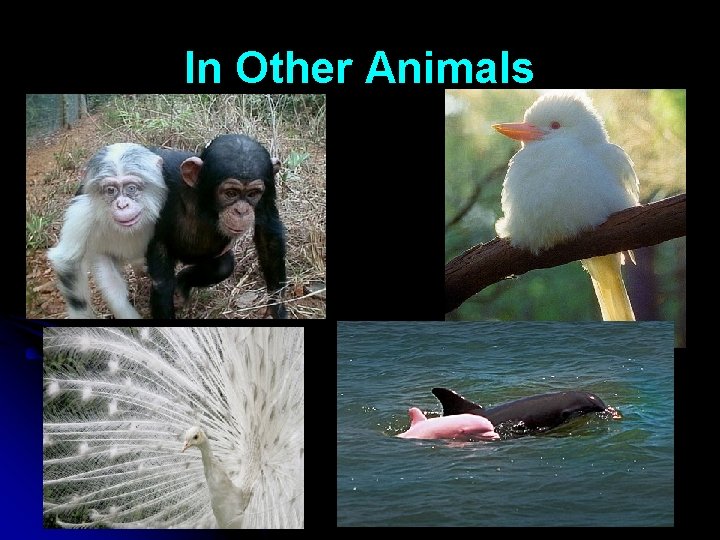
Albinism The most common type of Albinism is due to lack of the enzyme E 3 that makes melanin from tyrosine. l Because Albino people cannot make melanin, they have white hair and pink eyes, and their eyes and skin are very sensitive to sunlight. l Albinism is widespread in the animal kingdom. (rats, rabbits, snakes, birds) l
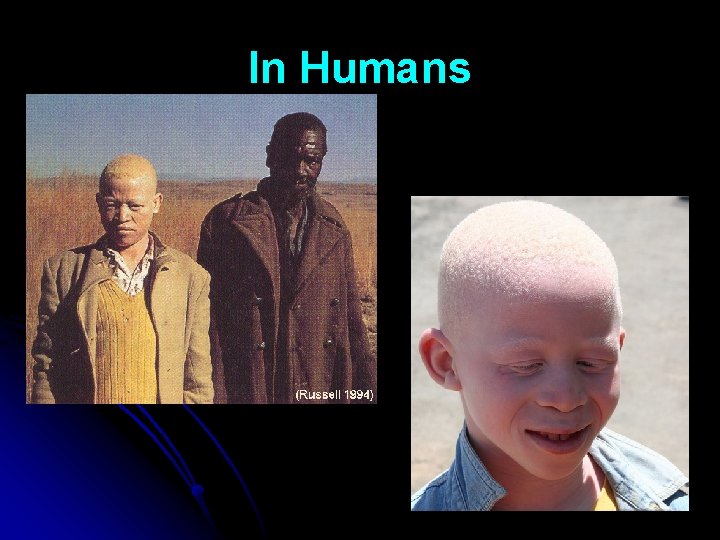
In Humans
In Other Animals
Alkaptonuria This is due to lack of enzyme E 4 that processes homogentisic acid. l Its absence means that homogentisic acid accumulates in the tissues. l People with this condition appear normal as children, but are detected when their nappies start turning black l
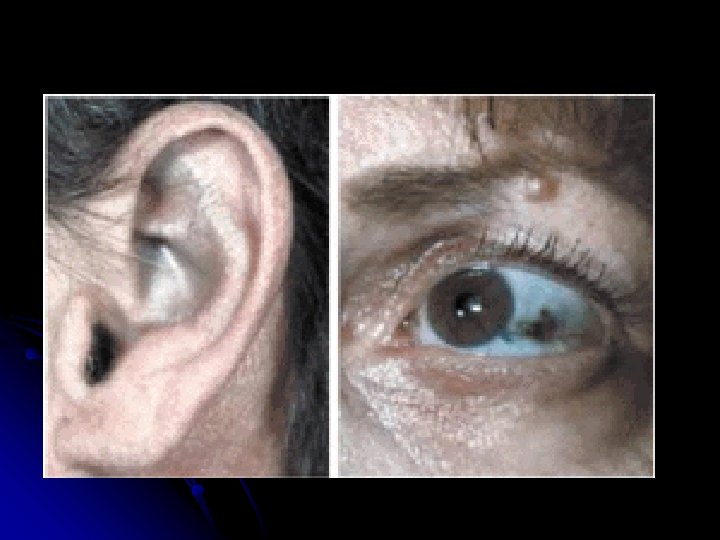
Alkaptonuria As they grow, they develop a blue-black discolouration of the ears, whites of the eyes, tips of the nose, and other areas where cartilage is just under the skin. l Their urine turns black after exposure to sunlight for several hours. l They often have severe arthritis, caused by accumulation of the metabolite in the cartilage of the joints. l
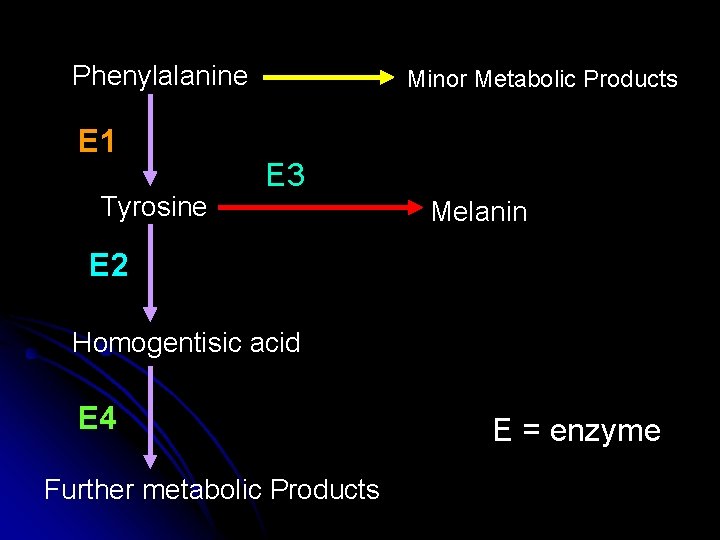
Phenylalanine E 1 Tyrosine Minor Metabolic Products E 3 Melanin E 2 Homogentisic acid E 4 Further metabolic Products E = enzyme
- Slides: 17