
Biochemical markers Color Index Important Extra Information Doctors

Biochemical markers – Color Index: § Important. § Extra Information. § Doctors slides. 436 Biochemistry team
Objectives : v Comprehend the importance & diagnostic qualities of various biomarkers. v Understand the importance of different biomarkers in the diagnosis, treatment, & follow up of a disease. v Recognize the types of biomarkers & their use in specific diseases such as heart, cancer, liver, kidney, & pancreatic diseases.
What is biomarkers? • A biological molecule found in blood , and other body fluids, or tissues that indicates a normal or abnormal process such as a disease or a condition. • A biomarker is measured to follow up a disease or treatment. Diagnosis & Prognosis • Diagnosis: Identification of a disease from its signs and symptoms. • Prognosis: The future outcome of a disease. . *ﻫﻨﺎﻙ ﺇﺧﺘﻼﻓﺎﺕ ﺑﻴﻦ ﺳﻼﻳﺪﺯ ﺍﻟﻄﻼﺏ ﻭﺍﻟﻄﺎﻟﺒﺎﺕ

Most common body fluids (Samples) for measurement of biomarkers are : 1. Serum 2. Plasma 3. Urine What is the difference between Serum and Plasma ? They are the same , but plasma has coagulation factors and serum has no coagulation factors. Biomarkers can be either : Plasma specific Tissue specific 436 Biochemistry team
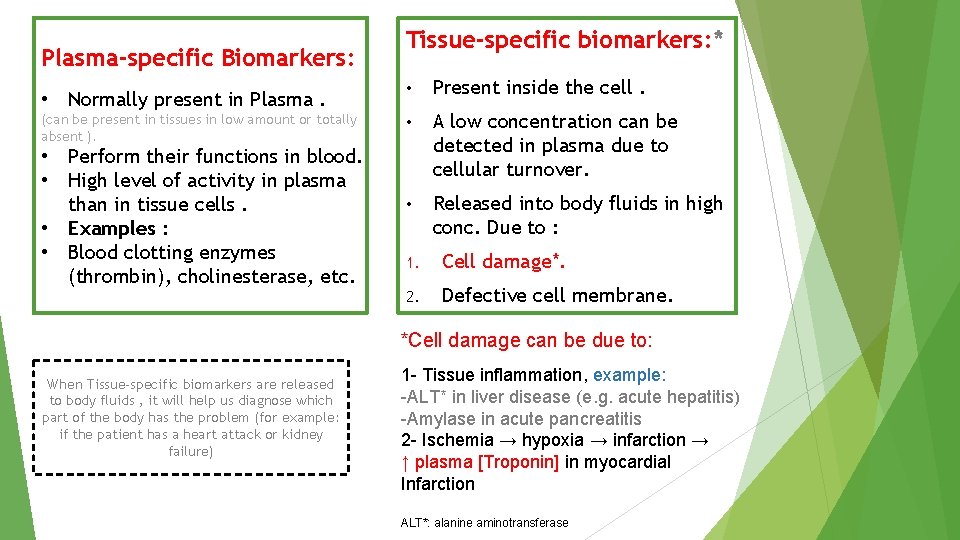
Plasma-specific Biomarkers: • Normally present in Plasma. (can be present in tissues in low amount or totally absent ). • Perform their functions in blood. • High level of activity in plasma than in tissue cells. • Examples : • Blood clotting enzymes (thrombin), cholinesterase, etc. Tissue-specific biomarkers: * • Present inside the cell. • A low concentration can be detected in plasma due to cellular turnover. • Released into body fluids in high conc. Due to : 1. Cell damage*. 2. Defective cell membrane. *Cell damage can be due to: When Tissue-specific biomarkers are released to body fluids , it will help us diagnose which part of the body has the problem (for example: if the patient has a heart attack or kidney failure) 1 - Tissue inflammation, example: -ALT* in liver disease (e. g. acute hepatitis) -Amylase in acute pancreatitis 2 - Ischemia → hypoxia → infarction → ↑ plasma [Troponin] in myocardial Infarction ALT*: alanine aminotransferase
Intracellular enzymes are present only in their cells of origin Some are secretory enzymes are secreted by: salivary glands, gastric mucosa and pancreas In disease: plasma levels of secretory enzymes increase when their cells are damaged The diagnosis of organ disease is done by measurement of enzymes of that tissue ( ) ﻋﻨﺪ ﺗﺸﺨﻴﺺ ﺍﻟﻤﺮﺽ ﻳﺘﻢ ﻗﻴﺎﺱ ﺍﻻﻧﺰﻳﻤﺎﺕ ﻓﻲ ﺍﻻﻧﺴﺠﺔ
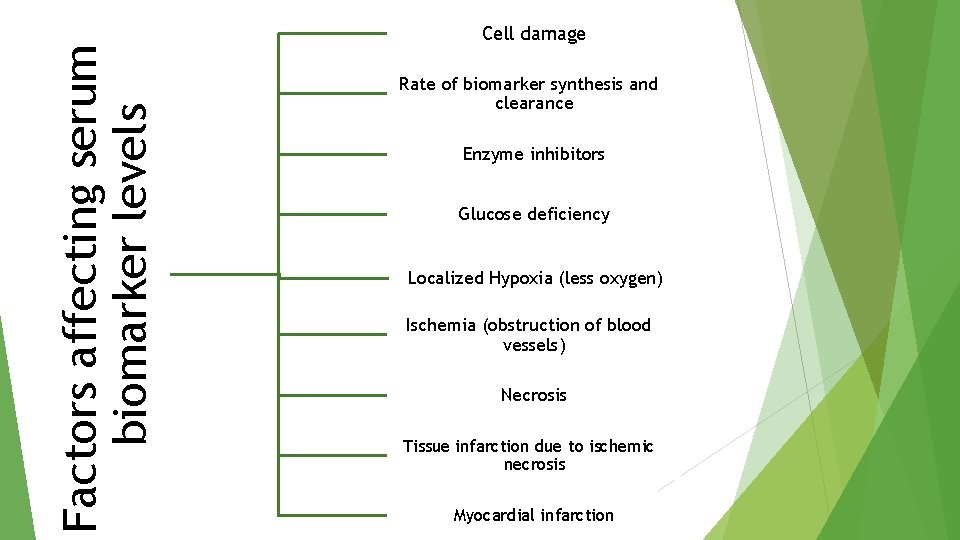
Factors affecting serum biomarker levels Cell damage Rate of biomarker synthesis and clearance Enzyme inhibitors Glucose deficiency Localized Hypoxia (less oxygen) Ischemia (obstruction of blood vessels) Necrosis Tissue infarction due to ischemic necrosis Myocardial infarction
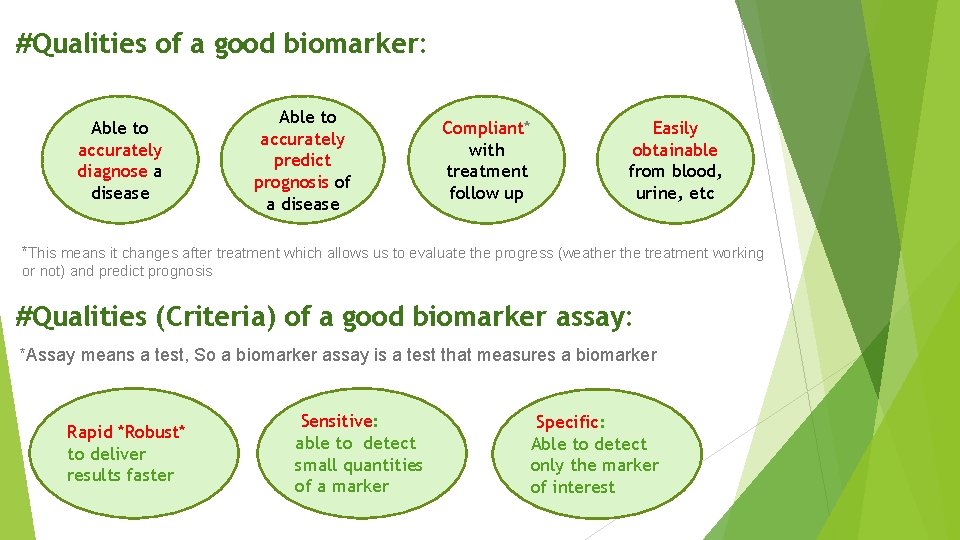
#Qualities of a good biomarker: Able to accurately diagnose a disease Able to accurately predict prognosis of a disease Compliant* with treatment follow up Easily obtainable from blood, urine, etc *This means it changes after treatment which allows us to evaluate the progress (weather the treatment working or not) and predict prognosis #Qualities (Criteria) of a good biomarker assay: *Assay means a test, So a biomarker assay is a test that measures a biomarker Rapid *Robust* to deliver results faster Sensitive: able to detect small quantities of a marker Specific: Able to detect only the marker of interest
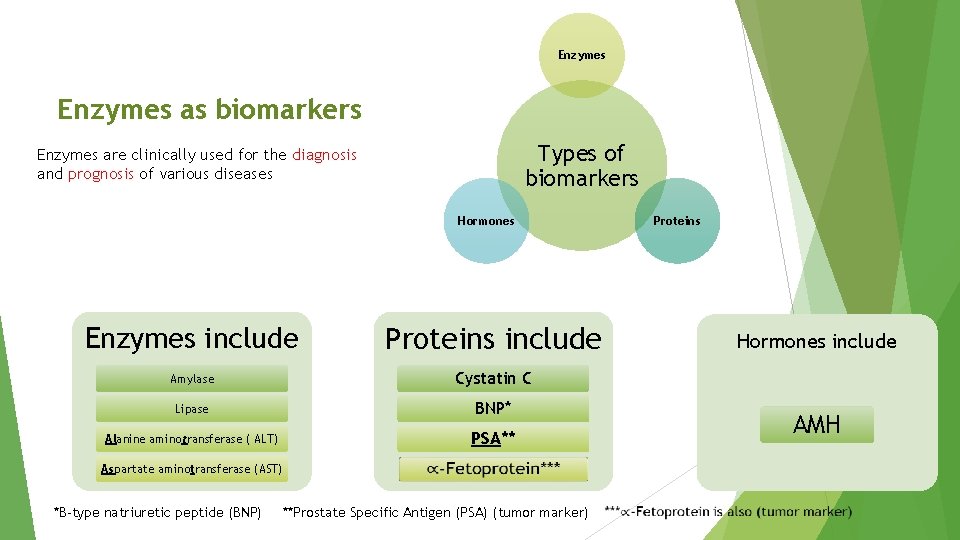
Enzymes as biomarkers Types of biomarkers Enzymes are clinically used for the diagnosis and prognosis of various diseases Hormones Enzymes include Proteins include Amylase Cystatin C Lipase BNP* Alanine aminotransferase ( ALT) PSA** Aspartate aminotransferase (AST) *B-type natriuretic peptide (BNP) **Prostate Specific Antigen (PSA) (tumor marker) Proteins Hormones include AMH
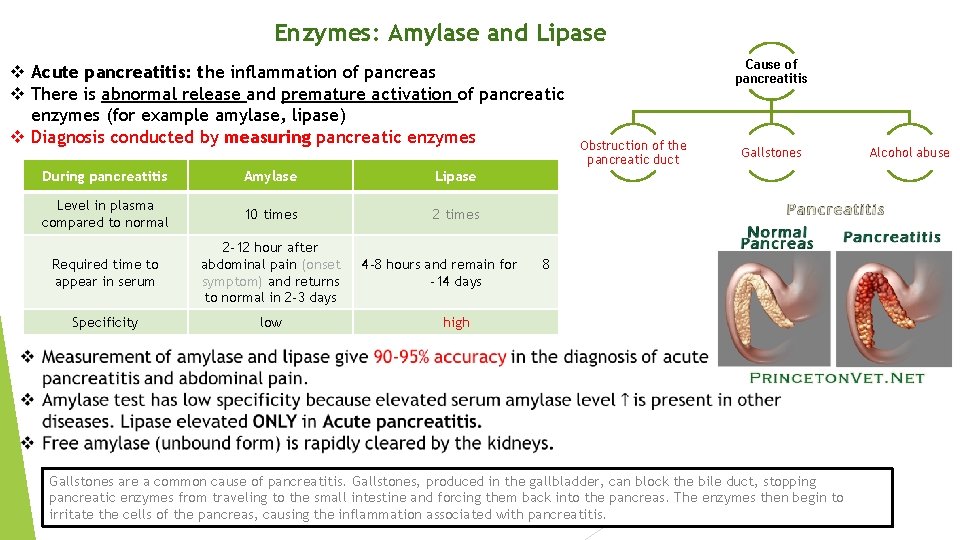
Enzymes: Amylase and Lipase v Acute pancreatitis: the inflammation of pancreas v There is abnormal release and premature activation of pancreatic enzymes (for example amylase, lipase) v Diagnosis conducted by measuring pancreatic enzymes During pancreatitis Amylase Lipase Level in plasma compared to normal 10 times 2 times Required time to appear in serum 2 -12 hour after abdominal pain (onset symptom) and returns to normal in 2 -3 days Specificity low 4 -8 hours and remain for -14 days Cause of pancreatitis Obstruction of the pancreatic duct Gallstones 8 high Gallstones are a common cause of pancreatitis. Gallstones, produced in the gallbladder, can block the bile duct, stopping pancreatic enzymes from traveling to the small intestine and forcing them back into the pancreas. The enzymes then begin to irritate the cells of the pancreas, causing the inflammation associated with pancreatitis. Alcohol abuse
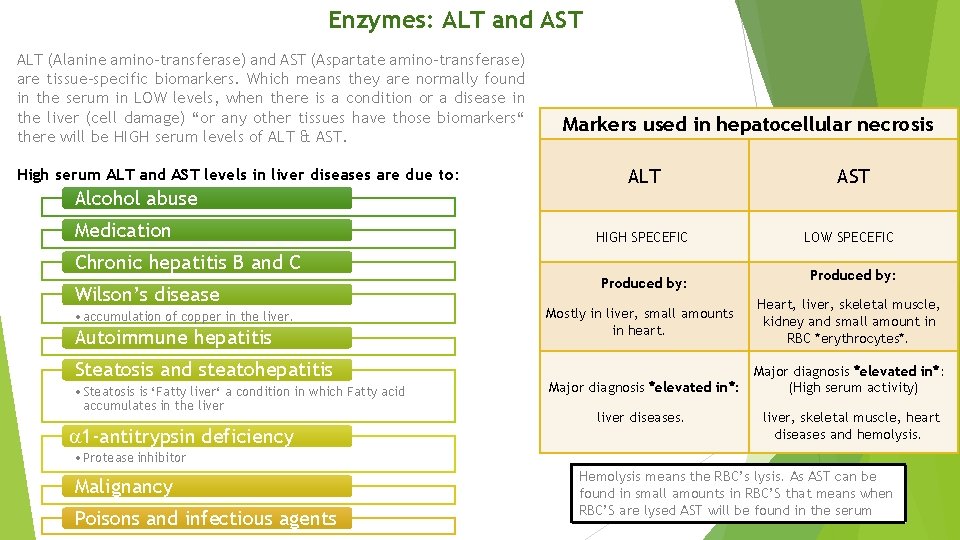
Enzymes: ALT and AST ALT (Alanine amino-transferase) and AST (Aspartate amino-transferase) are tissue-specific biomarkers. Which means they are normally found in the serum in LOW levels, when there is a condition or a disease in the liver (cell damage) “or any other tissues have those biomarkers“ there will be HIGH serum levels of ALT & AST. High serum ALT and AST levels in liver diseases are due to: Alcohol abuse Medication Markers used in hepatocellular necrosis ALT HIGH SPECEFIC Chronic hepatitis B and C Wilson’s disease • accumulation of copper in the liver. Autoimmune hepatitis Steatosis and steatohepatitis • Steatosis is ‘Fatty liver‘ a condition in which Fatty acid accumulates in the liver a 1 -antitrypsin deficiency Produced by: Mostly in liver, small amounts in heart. AST LOW SPECEFIC Produced by: Heart, liver, skeletal muscle, kidney and small amount in RBC *erythrocytes*. Major diagnosis *elevated in*: (High serum activity) liver diseases. liver, skeletal muscle, heart diseases and hemolysis. • Protease inhibitor Malignancy Poisons and infectious agents Hemolysis means the RBC’s lysis. As AST can be found in small amounts in RBC’S that means when RBC’S are lysed AST will be found in the serum
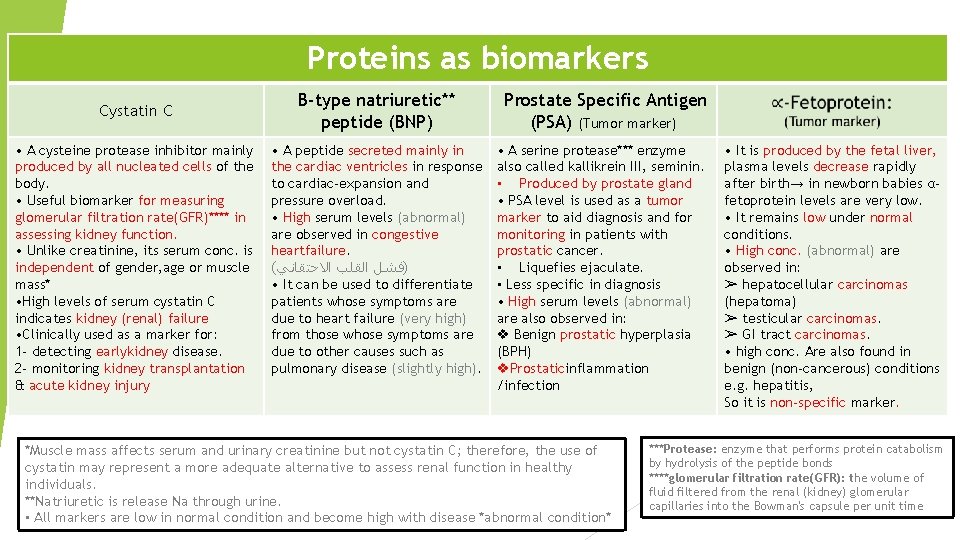
Proteins as biomarkers Cystatin C • A cysteine protease inhibitor mainly produced by all nucleated cells of the body. • Useful biomarker for measuring glomerular filtration rate(GFR)**** in assessing kidney function. • Unlike creatinine, its serum conc. is independent of gender, age or muscle mass* • High levels of serum cystatin C indicates kidney (renal) failure • Clinically used as a marker for: 1 - detecting earlykidney disease. 2 - monitoring kidney transplantation & acute kidney injury B-type natriuretic** peptide (BNP) • A peptide secreted mainly in the cardiac ventricles in response to cardiac-expansion and pressure overload. • High serum levels (abnormal) are observed in congestive heartfailure. ( )ﻓﺸﻞ ﺍﻟﻘﻠﺐ ﺍﻻﺣﺘﻘﺎﻧﻲ • It can be used to differentiate patients whose symptoms are due to heart failure (very high) from those whose symptoms are due to other causes such as pulmonary disease (slightly high). Prostate Specific Antigen (PSA) (Tumor marker) • A serine protease*** enzyme also called kallikrein ІІІ, seminin. • Produced by prostate gland • PSA level is used as a tumor marker to aid diagnosis and for monitoring in patients with prostatic cancer. • Liquefies ejaculate. • Less specific in diagnosis • High serum levels (abnormal) are also observed in: v Benign prostatic hyperplasia (BPH) v. Prostaticinflammation /infection *Muscle mass affects serum and urinary creatinine but not cystatin C; therefore, the use of cystatin may represent a more adequate alternative to assess renal function in healthy individuals. **Natriuretic is release Na through urine. • All markers are low in normal condition and become high with disease *abnormal condition* • It is produced by the fetal liver, plasma levels decrease rapidly after birth→ in newborn babies αfetoprotein levels are very low. • It remains low under normal conditions. • High conc. (abnormal) are observed in: ➢ hepatocellular carcinomas (hepatoma) ➢ testicular carcinomas. ➢ GI tract carcinomas. • high conc. Are also found in benign (non-cancerous) conditions e. g. hepatitis, So it is non-specific marker. ***Protease: enzyme that performs protein catabolism by hydrolysis of the peptide bonds ****glomerular filtration rate(GFR): the volume of fluid filtered from the renal (kidney) glomerular capillaries into the Bowman's capsule per unit time
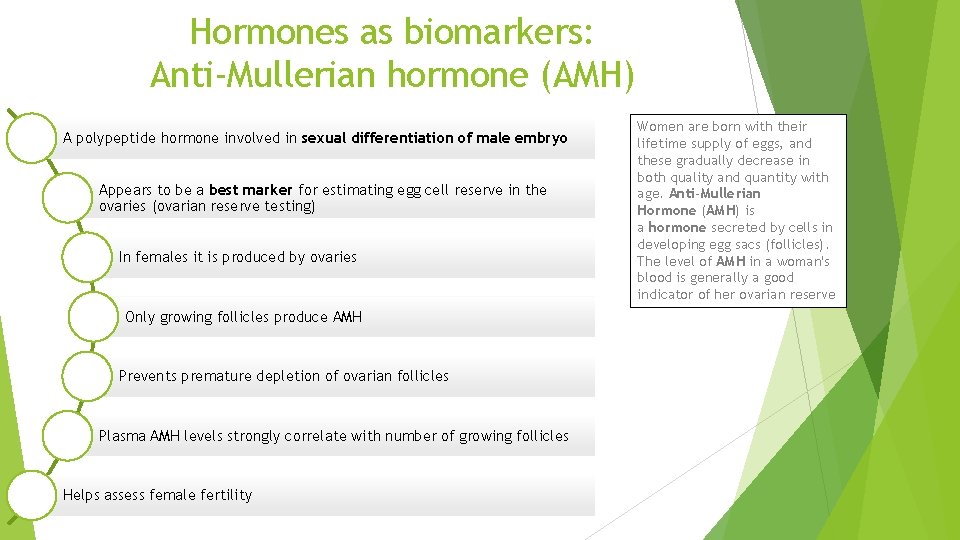
Hormones as biomarkers: Anti-Mullerian hormone (AMH) A polypeptide hormone involved in sexual differentiation of male embryo Appears to be a best marker for estimating egg cell reserve in the ovaries (ovarian reserve testing) In females it is produced by ovaries Only growing follicles produce AMH Prevents premature depletion of ovarian follicles Plasma AMH levels strongly correlate with number of growing follicles Helps assess female fertility Women are born with their lifetime supply of eggs, and these gradually decrease in both quality and quantity with age. Anti-Mullerian Hormone (AMH) is a hormone secreted by cells in developing egg sacs (follicles). The level of AMH in a woman's blood is generally a good indicator of her ovarian reserve
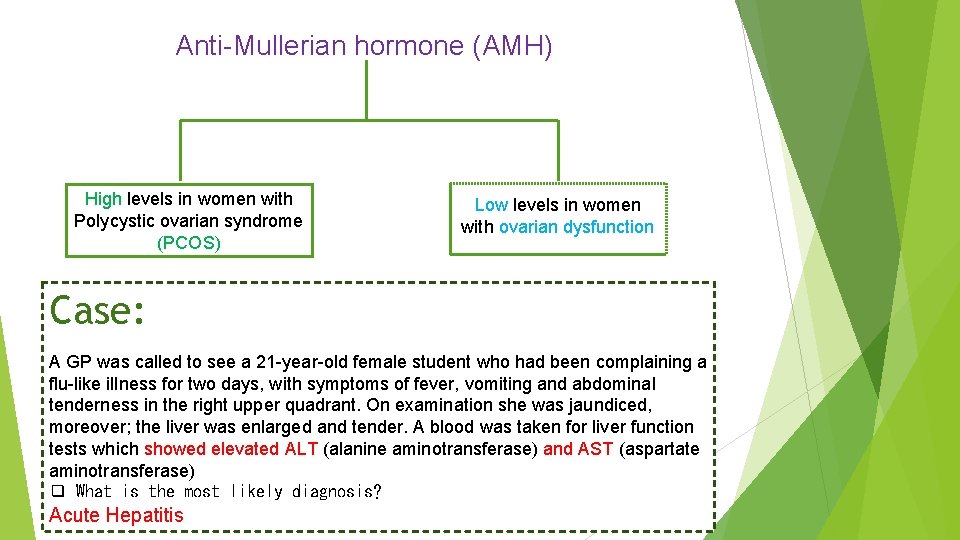
Anti-Mullerian hormone (AMH) High levels in women with Polycystic ovarian syndrome (PCOS) Low levels in women with ovarian dysfunction Case: A GP was called to see a 21 -year-old female student who had been complaining a flu-like illness for two days, with symptoms of fever, vomiting and abdominal tenderness in the right upper quadrant. On examination she was jaundiced, moreover; the liver was enlarged and tender. A blood was taken for liver function tests which showed elevated ALT (alanine aminotransferase) and AST (aspartate aminotransferase) ❑ What is the most likely diagnosis? Acute Hepatitis
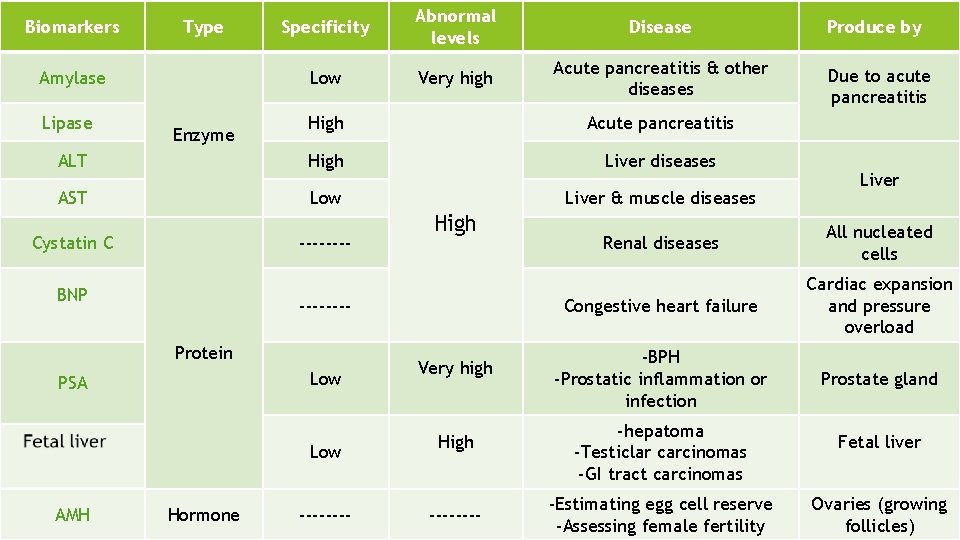
Biomarkers Type Amylase Lipase Specificity Abnormal levels Disease Low Very high Acute pancreatitis & other diseases High Acute pancreatitis ALT High Liver diseases AST Low Liver & muscle diseases Enzyme Cystatin C ---- BNP -------Protein Low PSA Low AMH High Hormone ---- Very high High ---- Produce by Due to acute pancreatitis Liver Renal diseases All nucleated cells Congestive heart failure Cardiac expansion and pressure overload -BPH -Prostatic inflammation or infection Prostate gland -hepatoma -Testiclar carcinomas -GI tract carcinomas -Estimating egg cell reserve -Assessing female fertility Fetal liver Ovaries (growing follicles)

- Slides: 17