
Biochem Block Handout 6 Protein Structure 1 o
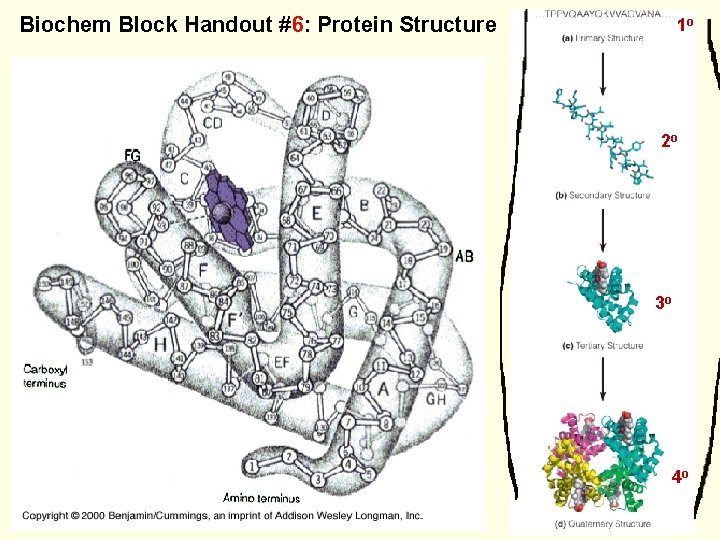
Biochem Block Handout #6: Protein Structure 1 o 2 o 3 o 4 o
Protein Structure Levels: Definitions • 1º (primary) structure: sequence of aa’s • 2º (secondary) structure: local folding of a polymer to form a regular, repeating structure (local 3 -D) • 3º (tertiary) structure: how the 2º structures fit together (global 3 -D) • 4º (quaternary) structure: interactions between separate folded polypeptides ex. Hemoglobin • Proteins are held together by H-bonding interactions and other noncovalent interactions
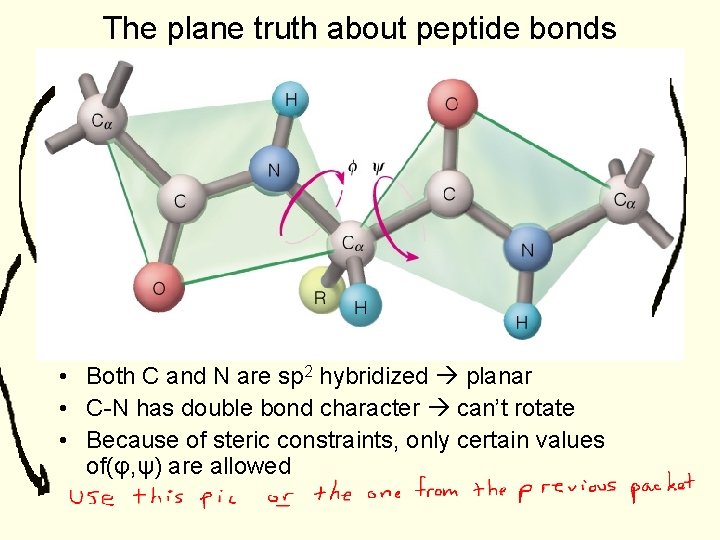
The plane truth about peptide bonds • Both C and N are sp 2 hybridized planar • C-N has double bond character can’t rotate • Because of steric constraints, only certain values of(φ, ψ) are allowed
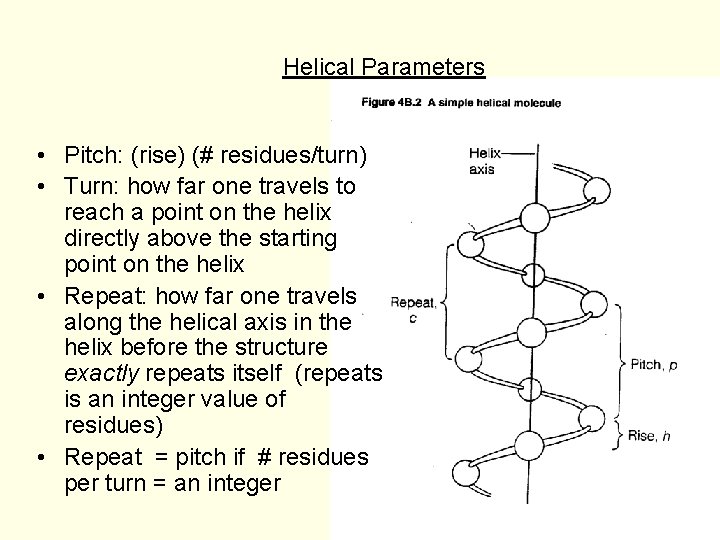
Helical Parameters • Pitch: (rise) (# residues/turn) • Turn: how far one travels to reach a point on the helix directly above the starting point on the helix • Repeat: how far one travels along the helical axis in the helix before the structure exactly repeats itself (repeats is an integer value of residues) • Repeat = pitch if # residues per turn = an integer

α-helix 1. 2. 3. 4. 5. H-bonds between residues separated by 3 aa. C=O of aa #1 bonds with H-N of aa #5, aa #2 with #6, etc. H-bonds between carbonyl oxygen and hydrogen of amide nitrogen 3. 6 residues per turn rise (vertical height between residues) = 1. 5Ǻ pitch = (# residues / turn) x (rise) = 5. 4 Ǻ. This is the vertical distance of a turn as traveled along the helical axis.
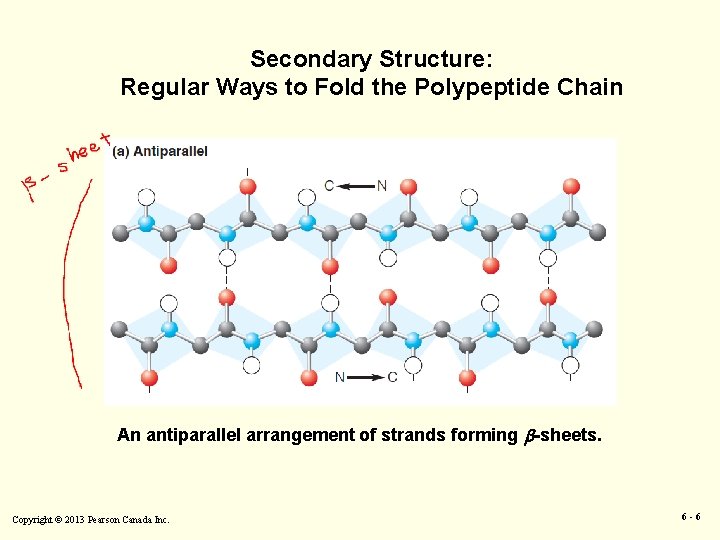
Secondary Structure: Regular Ways to Fold the Polypeptide Chain An antiparallel arrangement of strands forming b-sheets. Copyright © 2013 Pearson Canada Inc. 6 -6
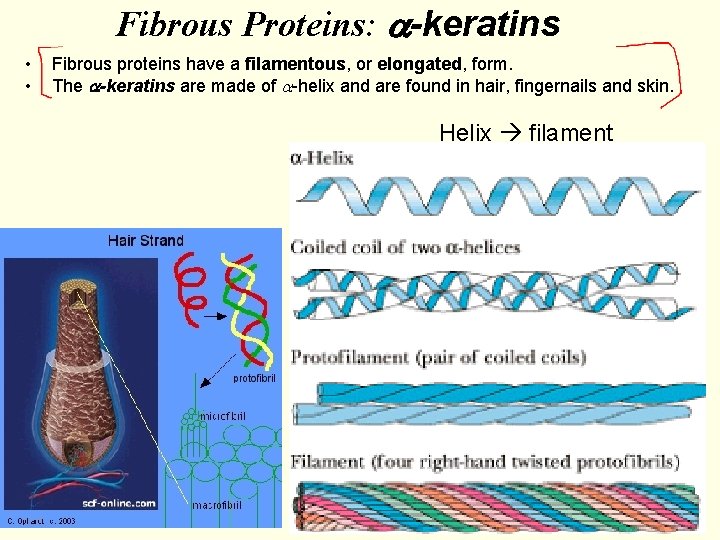
Fibrous Proteins: a-keratins • • Fibrous proteins have a filamentous, or elongated, form. The a-keratins are made of a-helix and are found in hair, fingernails and skin. Helix filament 1 -7
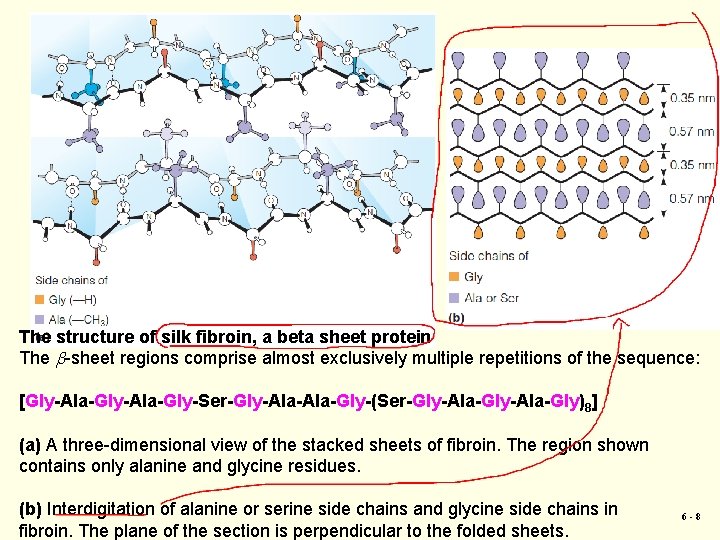
The structure of silk fibroin, a beta sheet protein The b-sheet regions comprise almost exclusively multiple repetitions of the sequence: [Gly-Ala-Gly-Ser-Gly-Ala-Gly-(Ser-Gly-Ala-Gly)8] (a) A three-dimensional view of the stacked sheets of fibroin. The region shown contains only alanine and glycine residues. (b) Interdigitation of alanine or serine side chains and glycine side chains in fibroin. The plane of the section is perpendicular to the folded sheets. 6 -8
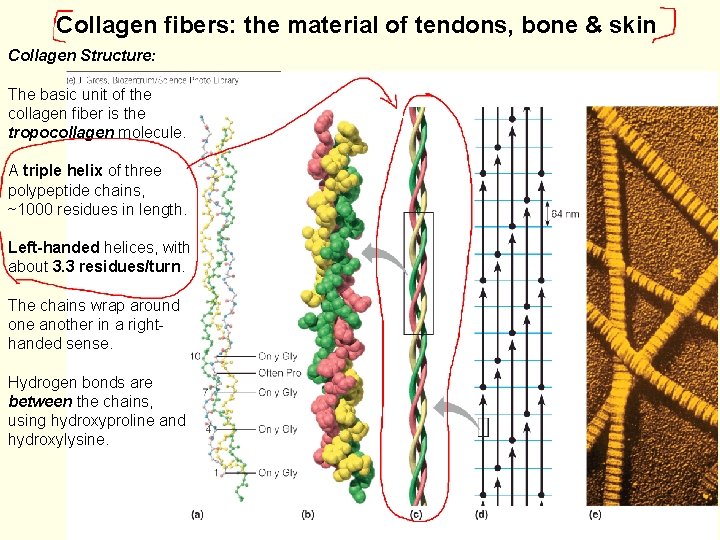
Collagen fibers: the material of tendons, bone & skin Collagen Structure: The basic unit of the collagen fiber is the tropocollagen molecule. A triple helix of three polypeptide chains, ~1000 residues in length. Left-handed helices, with about 3. 3 residues/turn. The chains wrap around one another in a righthanded sense. Hydrogen bonds are between the chains, using hydroxyproline and hydroxylysine. 6 -9
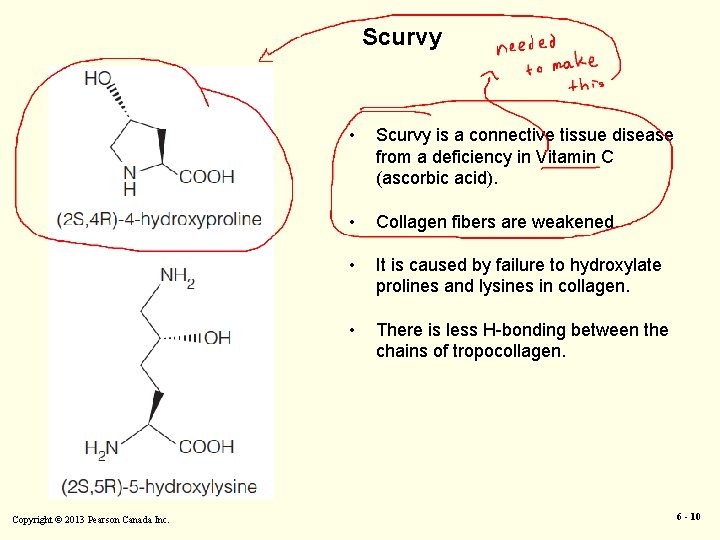
Scurvy Copyright © 2013 Pearson Canada Inc. • Scurvy is a connective tissue disease from a deficiency in Vitamin C (ascorbic acid). • Collagen fibers are weakened. • It is caused by failure to hydroxylate prolines and lysines in collagen. • There is less H-bonding between the chains of tropocollagen. 6 - 10
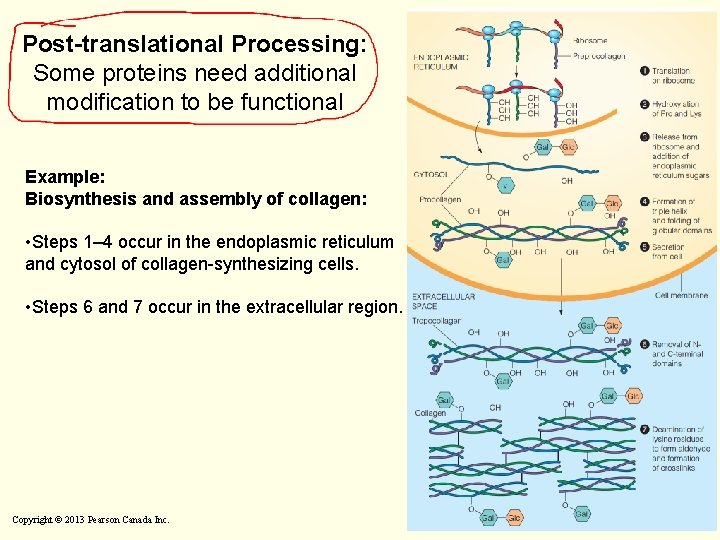
Post-translational Processing: Some proteins need additional modification to be functional Example: Biosynthesis and assembly of collagen: • Steps 1– 4 occur in the endoplasmic reticulum and cytosol of collagen-synthesizing cells. • Steps 6 and 7 occur in the extracellular region. Copyright © 2013 Pearson Canada Inc. 6 - 11
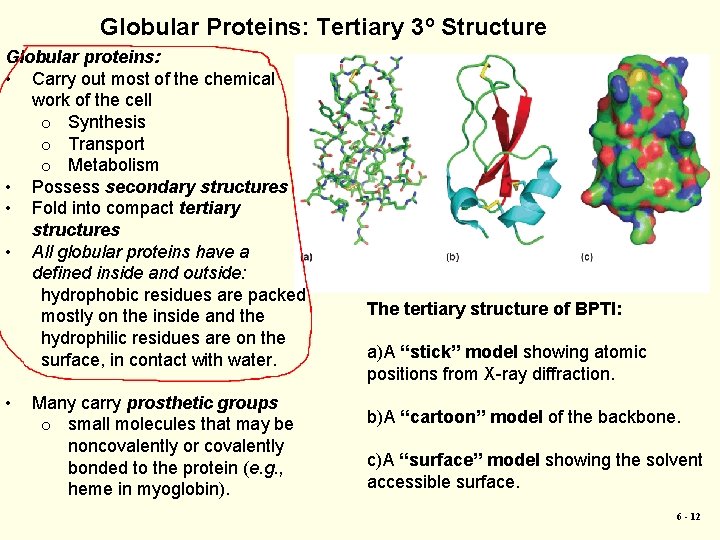
Globular Proteins: Tertiary 3 o Structure Globular proteins: • Carry out most of the chemical work of the cell o Synthesis o Transport o Metabolism • Possess secondary structures • Fold into compact tertiary structures • All globular proteins have a defined inside and outside: hydrophobic residues are packed mostly on the inside and the hydrophilic residues are on the surface, in contact with water. • Many carry prosthetic groups o small molecules that may be noncovalently or covalently bonded to the protein (e. g. , heme in myoglobin). The tertiary structure of BPTI: a)A “stick” model showing atomic positions from X-ray diffraction. b)A “cartoon” model of the backbone. c)A “surface” model showing the solvent accessible surface. 6 - 12
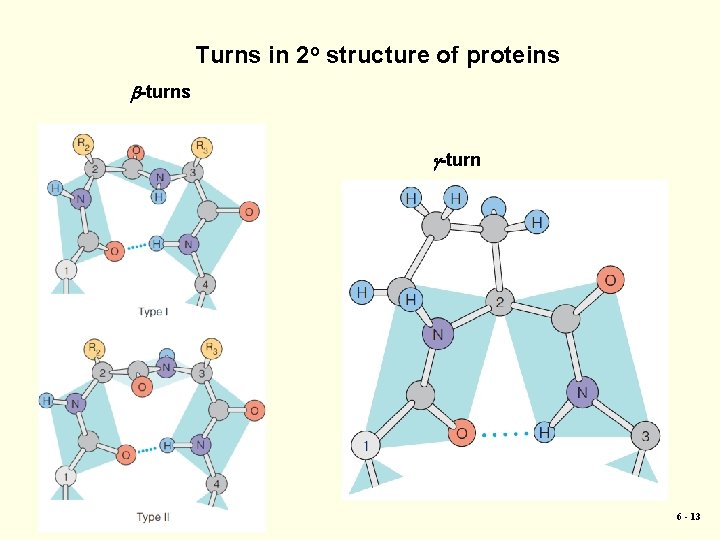
Turns in 2 o structure of proteins b-turns g-turn 6 - 13
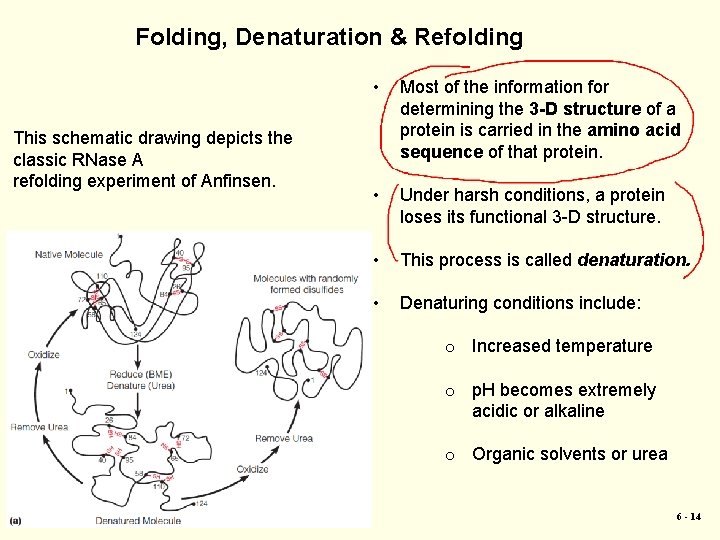
Folding, Denaturation & Refolding This schematic drawing depicts the classic RNase A refolding experiment of Anfinsen. • Most of the information for determining the 3 -D structure of a protein is carried in the amino acid sequence of that protein. • Under harsh conditions, a protein loses its functional 3 -D structure. • This process is called denaturation. • Denaturing conditions include: o Increased temperature o p. H becomes extremely acidic or alkaline o Organic solvents or urea 6 - 14
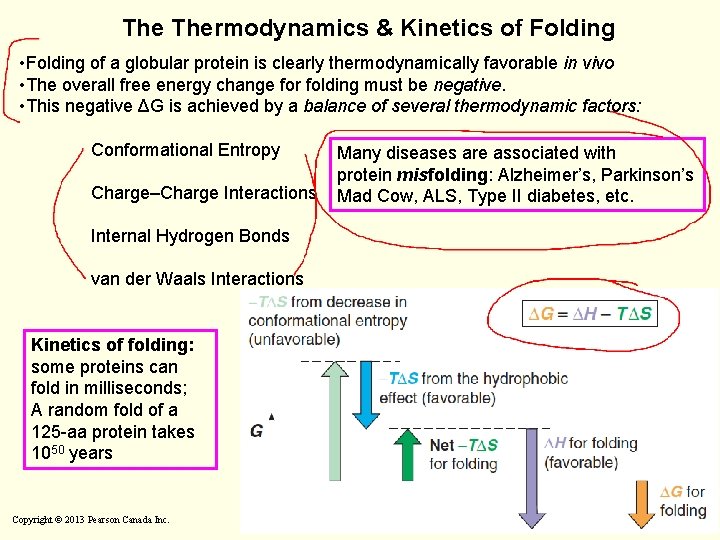
The Thermodynamics & Kinetics of Folding • Folding of a globular protein is clearly thermodynamically favorable in vivo • The overall free energy change for folding must be negative. • This negative ΔG is achieved by a balance of several thermodynamic factors: Conformational Entropy Charge–Charge Interactions Many diseases are associated with protein misfolding: Alzheimer’s, Parkinson’s Mad Cow, ALS, Type II diabetes, etc. Internal Hydrogen Bonds van der Waals Interactions Kinetics of folding: some proteins can fold in milliseconds; A random fold of a 125 -aa protein takes 1050 years Copyright © 2013 Pearson Canada Inc. 6 - 15
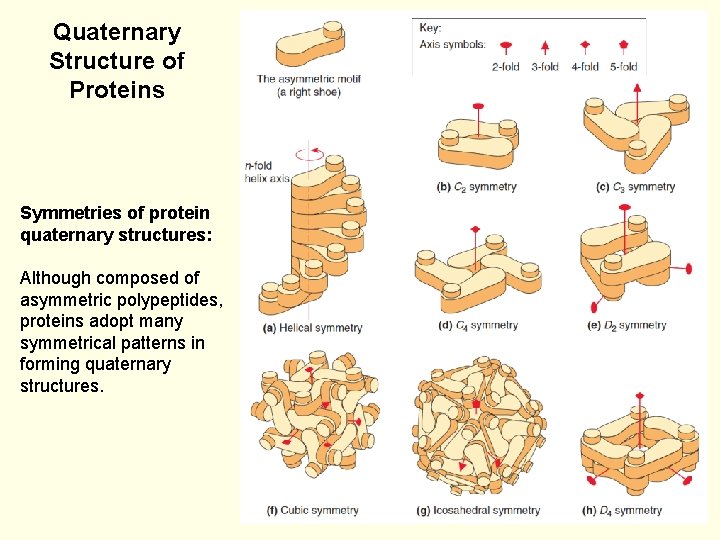
Quaternary Structure of Proteins Symmetries of protein quaternary structures: Although composed of asymmetric polypeptides, proteins adopt many symmetrical patterns in forming quaternary structures. 6 - 16
- Slides: 16