
Bioavailability and Bioequivalence Bioavailability 2 Introduction Therapeutic effectiveness
Bioavailability and Bioequivalence

Bioavailability 2
Introduction § Therapeutic effectiveness of a drug depends upon the ability of the dosage form to deliver the medicament to its site of action at a rate and amount sufficient to elicit the desired pharmacological response § This attribute of the dosage form is referred to as physiological availability, biological availability or bioavailability § It is defined as the rate and extent (amount) of absorption of unchanged drug from its dosage form. 3
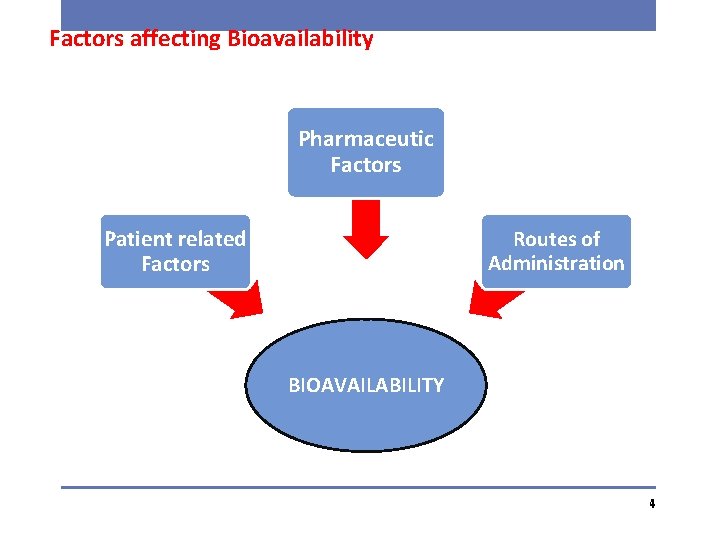
Factors affecting Bioavailability Pharmaceutic Factors Patient related Factors Routes of Administration BIOAVAILABILITY 4
5
Objectives of Bioavailability Studies § Primary stages of development of a suitable dosage form for a new drug entity to obtain evidence of its therapeutic utility § Determination of influence of factors affecting drug absorption § Development of new formulations of the existing drugs § Control of quality of a drug product during the early stages of marketing in order to determine the influence of processing factors, storage and stability on drug absorption § Comparison of availability of a drug substance from different dosage forms or from the same dosage form produced by different manufacturers 6
Drawbacks of Using Oral Solution as a Standard § Limits the pharmacokinetic treatment to one-compartment model only. It cannot applied two-compartment kinetics and all pharmacokinetic parameters cannot be assessed § Differentiation between the fraction of dose unabsorbed and that metabolized is difficult § If the rate of oral absorption is not sufficiently greater than the rate of elimination, the true elimination rate constant cannot be computed. 8
9
Single Dose versus Multiple Dose Studies(Preferred) § Accurately reflects the manner in which the drug will be used clinically § Easy to predict the peak & valley characteristics of drug since the bioavailability is determined at steady-state § Small inter-subject variability is observed in such a study which allows use of fewer subjects. Requires collection of fewer blood samples § Better evaluation of the performance of a controlledrelease formulation is possible § Nonlinearity in pharmacokinetics, if present, can be easily detected 10
Limitations § Tedious (requires prolonged monitoring of subjects) requires more time to complete § Costly § Poor compliance by subjects § Greater exposure of subjects to the test drug, increasing the potential for adverse reactions Human Volunteers—Healthy Subjects versus Patients § Study should be carried out in patients for whom the drug is intended, as they will be benefited from the study § Patients are generally preferred in multiple dose bioavailability studies 11
Advantages § Reflects better therapeutic efficacy of a drug. § Drug absorption pattern in disease states can be evaluated § Avoids the ethical quandary of administering drugs to healthy subjects Disease, other drugs, physiologic changes, etc. may modify the drug absorption pattern Disadvantages § Establishing a standard set of conditions necessary for a study is difficult with patients as volunteers Such studies are therefore usually performed in young volunteers (20 to 40 years) 12
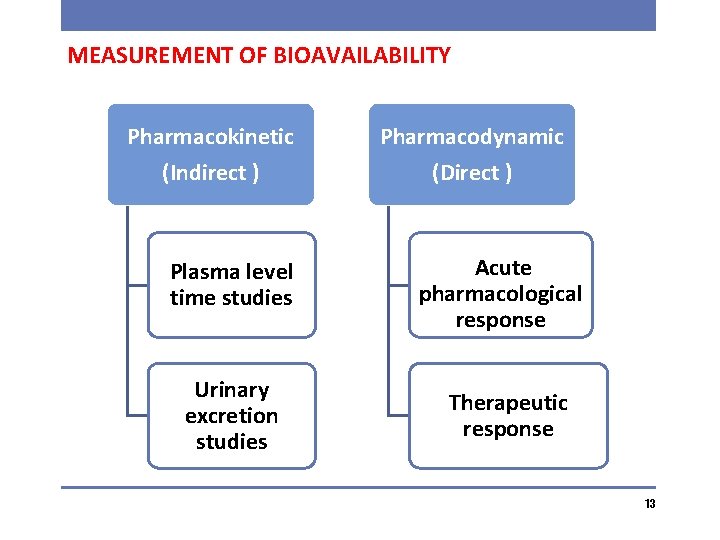
MEASUREMENT OF BIOAVAILABILITY Pharmacokinetic (Indirect ) Plasma level time studies Urinary excretion studies Pharmacodynamic (Direct ) Acute pharmacological response Therapeutic response 13
PHARMACOKINETIC METHODS Based on the assumptions ØPharmacokinetic profile reflects therapeutic effectiveness of a drug ØTwo dosage forms that exhibit superimposable plasma level-time profile or urinary excretion rate versus time result in identical therapeutic activity Plasma Level—Time Studies Single Dose § In single dose study blood samples are collected for 2 to 3 biological half-lives after drug administration § I. V dose sampling should start within 5 minutes of drug administration and subsequent samples taken at 15 minute intervals. 14
§ At least 3 sample points should be taken if the drug follows one-compartment kinetics & 5 to 6 points if it fits two-compartment model to describe disposition process § Oral dose at least 3 points should be taken on the ascending part of the curve for accurate determination of Ka § The points for disposition or descending phase of the curve must be taken in a manner similar to that for IV dose § Bioavailability is determined using Cmax , Tmax , AUC 15
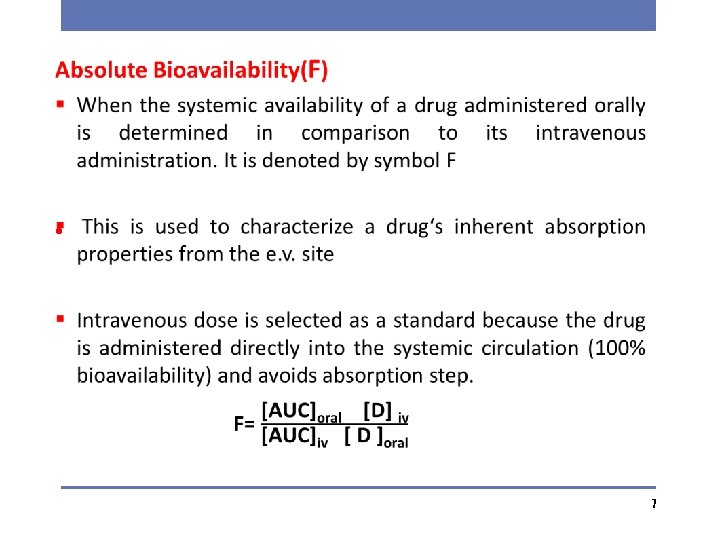
![The extent of bioavailability can be determined by following equations: [AUC]oral x [D] iv](http://slidetodoc.com/presentation_image_h/103cc141f4fef5701f4907fa496faa0b/image-16.jpg "The extent of bioavailability can be determined by following equations: [AUC]oral x [D] iv")
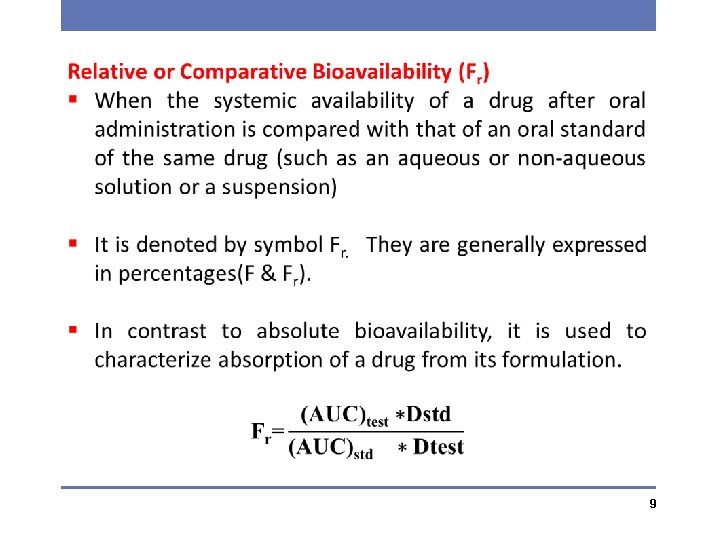
The extent of bioavailability can be determined by following equations: [AUC]oral x [D] iv F = ---------------[AUC]iv x [ D ]oral [ AUC]test *D std Fr = ---------------[ AUC]std * Dtest where D stands for dose administered 16
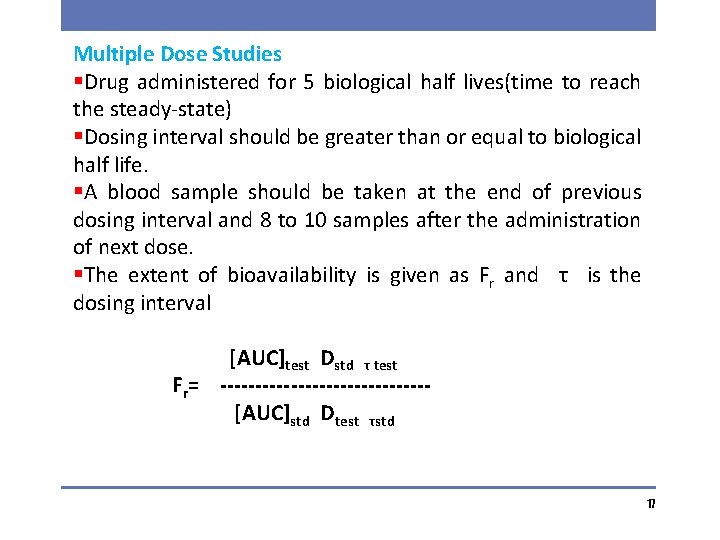
Multiple Dose Studies §Drug administered for 5 biological half lives(time to reach the steady-state) §Dosing interval should be greater than or equal to biological half life. §A blood sample should be taken at the end of previous dosing interval and 8 to 10 samples after the administration of next dose. §The extent of bioavailability is given as Fr and τ is the dosing interval [AUC]test Dstd τ test Fr= ---------------[AUC]std Dtest τstd 17
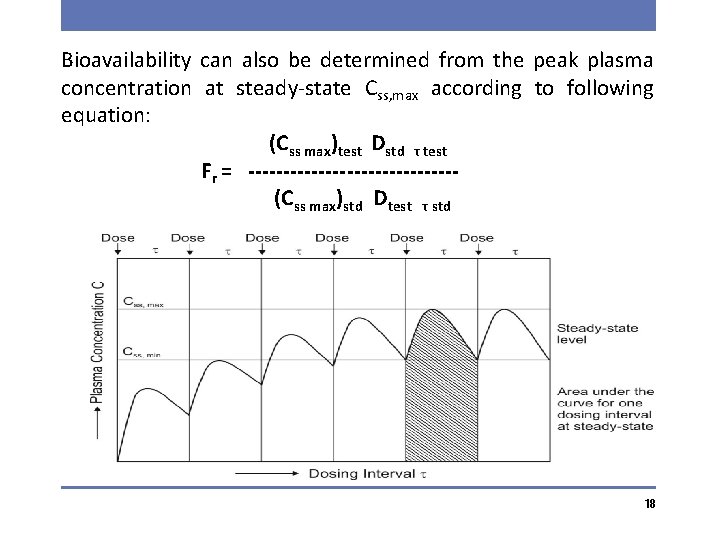
Bioavailability can also be determined from the peak plasma concentration at steady-state Css, max according to following equation: (Css max)test Dstd τ test Fr = ---------------(Css max)std Dtest τ std 18
Urinary Excretion Studies § It is based on the principle that the urinary excretion of unchanged drug is directly proportional to the plasma concentration of drug § Bioavailability using urinary excretion data is valid if at least 20% of administered dose is excreted unchanged in the urine § This is widely used for drugs extensively excreted in urine or if urine as site of action. Method ØDrug is administered to the patient ØCollection of urine for 7 biological half lives 19
ØAnalysis of unchanged drug Ø Determination of amount of drug excreted in each interval and cumulative amount of drug excreted § Estimation of bioavailability by urinary excretion method is shows high degree of variability & is less reliable than plasma studies. But is used in conjunction with blood level data for confirmatory purposes § Bioavailability can also be determined for a few drugs by assay of biologic fluids theophylline- salivary excretion , cephalosporin in CSF and bile 20
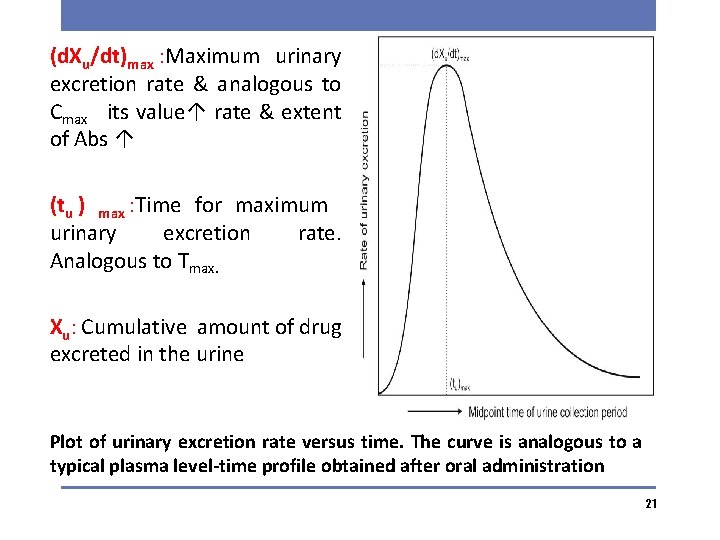
(d. Xu/dt)max : Maximum urinary excretion rate & analogous to Cmax its value↑ rate & extent of Abs ↑ (tu ) max : Time for maximum urinary excretion rate. Analogous to Tmax. Xu: Cumulative amount of drug excreted in the urine Plot of urinary excretion rate versus time. The curve is analogous to a typical plasma level-time profile obtained after oral administration 21
![§ The extent of bioavailability is given by [Xu∞]oral D iv F = -----------[Xu∞]iv](http://slidetodoc.com/presentation_image_h/103cc141f4fef5701f4907fa496faa0b/image-22.jpg "§ The extent of bioavailability is given by [Xu∞]oral D iv F = -----------[Xu∞]iv")
§ The extent of bioavailability is given by [Xu∞]oral D iv F = -----------[Xu∞]iv D oral [Xu∞]test D std Fr = ------------[Xu∞]std D test § Bioavailability multiple dose study at steady state is given by this equation where (Xu, ss) is the amount of drug excreted unchanged at steady-state (Xu ss)test Dstd τ test Fr= ------------(Xu ss)std Dtest τstd 22
Determination of Area Under the Curve (AUC) § It reflects the total amount of active drug which reaches the systemic circulation [AUC] = F * D 0/clearance § It is independent of route of administration and elimination process as long as it does not changes § AUC is directly proportional to dose Planimeter § It consists of an arm attached to a rotating wheel which moves a dial with the movement of the arm. § The dial is equipped with vernier calipers to ensure accurate reading on the dial. The arm traces the curve to obtain the dial reading. § The reading is converted into the area by using a factor obtained by tracing the arm over a square of known area. 23
COUNTING SQUARES § Total number of squares enclosed by the plasma concentration-time curve, plotted on a regular rectilinear graph paper are counted § Graph paper containing 20 square/ linear-inch is used with a group of small squares that can be grouped together into few large squares § The area of each square is determined using relationship Area= (height)(width) with units of Conc. on Y-axis and time on X-axis. § Count the whole squares and squares that are 50% covered AUC= (No. of squares) (area of one square) 24
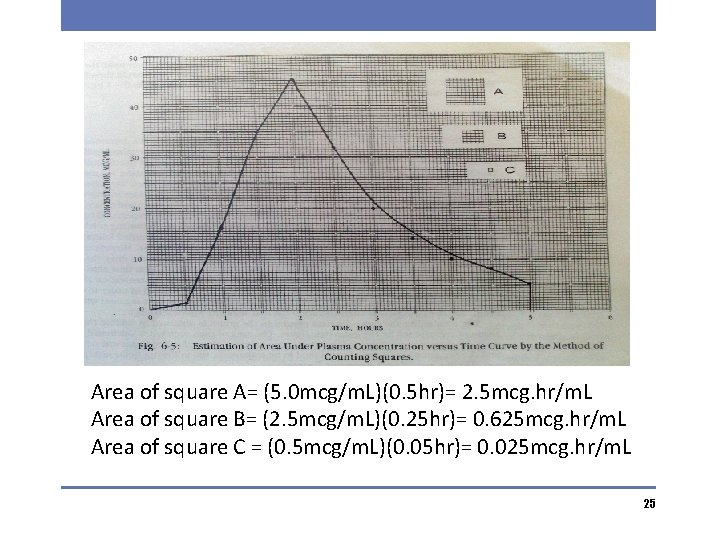
Area of square A= (5. 0 mcg/m. L)(0. 5 hr)= 2. 5 mcg. hr/m. L Area of square B= (2. 5 mcg/m. L)(0. 25 hr)= 0. 625 mcg. hr/m. L Area of square C = (0. 5 mcg/m. L)(0. 05 hr)= 0. 025 mcg. hr/m. L 25
Trapezoidal Rule Method § In plasma Conc-time plot, the adjacent Conc data points are joined with straight lines and a perpendicular is drawn from these two concentration points to X-axis, one obtains a geometric figure § Since plot yields one or two triangles and the remaining figures tend to be trapezoids hence the name trapezoidal rule § The area of each segment is calculated by using formula Area of triangle = (0. 5) (height) (base) Area of a trapezoid =(0. 5) (base) (the sum of the two parallel sides) 26
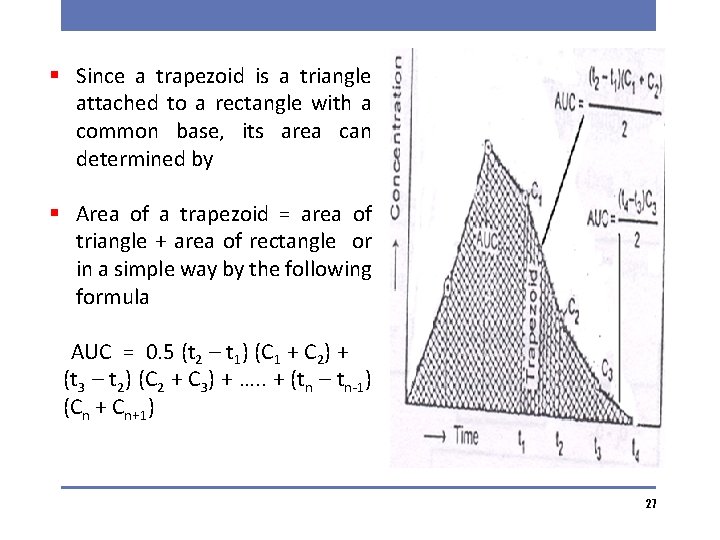
§ Since a trapezoid is a triangle attached to a rectangle with a common base, its area can determined by § Area of a trapezoid = area of triangle + area of rectangle or in a simple way by the following formula AUC = 0. 5 (t 2 – t 1) (C 1 + C 2) + (t 3 – t 2) (C 2 + C 3) + …. . + (tn – tn-1) (Cn + Cn+1) 27

Cutting & Weighing § This method involves using two graphs one to plot the data another graph paper to be used as a reference § The graph papers used must be identical in all respects & scales used must also be identical. § The curve is then carefully cut and weight determined the weight of the curve is W 1 & area AUC 1 is proportional to the weight of graph paper § The area of the standard graph paper is calculated using the relationship Area= (length) (height) § Ex. Y-axis Conc. (0 to 100 mcg/ml) & X-axis time (0 to 14 hours) then the area of this graph AUC 2 is (100 mcg/ml) (14 hours) = 1400 mcg. hr/ml & its weight W 2 28
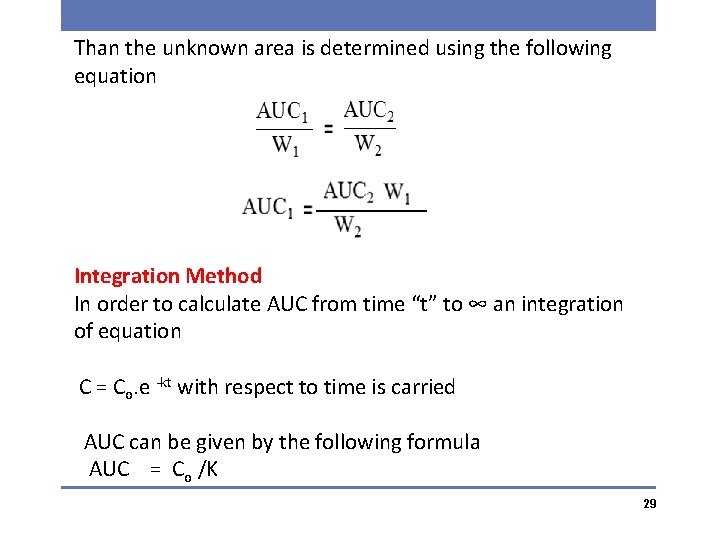
Than the unknown area is determined using the following equation Integration Method In order to calculate AUC from time “t” to ∞ an integration of equation C = Co. e -kt with respect to time is carried AUC can be given by the following formula AUC = Co /K 29
PHARMACODYNAMIC METHODS Acute Pharmacological Response § PK methods are inaccurate or non-reproducible, acute pharmacological effect like ECG or EEG readings, pupil diameter, etc. is related to the time course of a given drug. § Bioavailability is determined by construction of pharmacological effect-time curve as well as dose-response graphs. § The method requires measurement of responses for at least 3 biological half-lives Disadvantages § The pharmacological response tends to be more variable and accurate correlation between measured response and drug Conc. is difficult. § Observed response may be due to an active metabolite whose concentration is not considered for the pharmacological effect. 30
Therapeutic Response Method § Method is based on observing the clinical response to a drug formulation given to patients suffering from disease for which it is intended to be used Limitations: ØImproper quantification of observed response. ØAssumes that physiological status of the patient does not change significantly over the duration of study. ØA patient who required the drug for disease would be able to receive only single dose of drug every week or for a few days. ØDrug -drug interaction. 31
In vitro-in vivo correlation (IVIVC) 32
§ In vitro dissolution alone will be insufficient to predict its therapeutic efficacy § Correlation between in-vitro dissolution & in-vivo bioavailability must be established to predict its therapeutic efficacy § IVIVC is mathematical model that describes the relationship between an in-vitro property (rate and extent of dissolution) of a dosage form and an in-vivo response (plasma drug concentration or amount of drug absorbed) § Objective of developing IVIVC is to enable the dissolution test to serve as a alternate for in vivo bioavailability studies 33
Applications § To ensure batch-to-batch consistency in therapeutic efficacy of a drug product based in vitro test § To develop a new dosage form with desired in-vivo performance § Validating dissolution specifications & development of bio- waiver guidelines § To estimate the magnitude of the error in predicting the invivo bioavailability results from in-vitro dissolution data 34
Approaches § Establishing a linear relationship between the in vitro and the in vivo parameters § Using data from previous in-vivo studies to modify the invitro to develop IVIVC Correlations § Based on urinary excretion data: dissolution parameter are related to urinary drug parameters § Based on pharmacological response : acute pharmacological effect such as LD 50 is related to any of the dissolution parameters. § Statistical moments theory: releate MDT to MRT 35
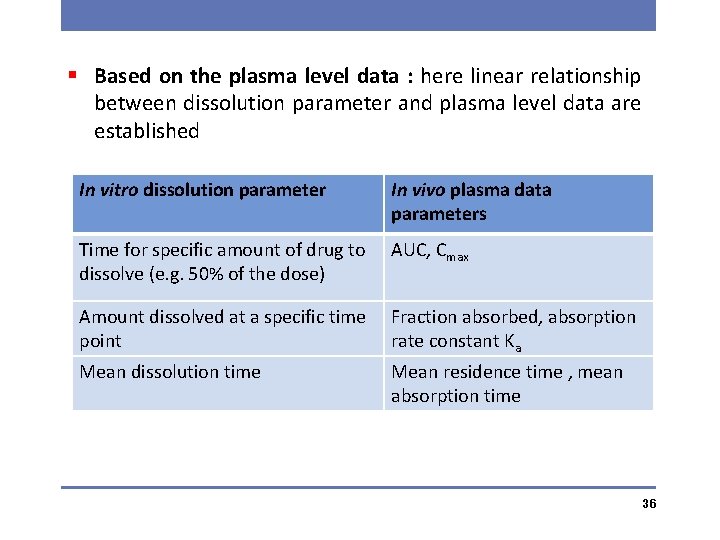
§ Based on the plasma level data : here linear relationship between dissolution parameter and plasma level data are established In vitro dissolution parameter In vivo plasma data parameters Time for specific amount of drug to dissolve (e. g. 50% of the dose) AUC, Cmax Amount dissolved at a specific time point Fraction absorbed, absorption rate constant Ka Mean dissolution time Mean residence time , mean absorption time 36
LEVELS OF CORRELATION Level A § Highest category correlation representing point- to- point relationship between in vitro and in- vivo parameters § In vitro dissolution & in- vivo absorption rate curves are superimposable § In vitro dissolution curve serves as a alternate for in vivo testing & can accurately predict its therapeutic efficacy Level B § Not a point-to-point correlation utilizing principles of statistical moment analysis § Here mean dissolution time is compared to either the mean residence time or in vivo dissolution time. 37
§ Cannot justify changes in manufacturing or modification in formula based on level B correlation § In vitro data cannot be used for in-vivo quality control standards Level C § It is a single point correlation. Relates one dissolution time point (T 50%) to one PK parameter such as AUC, Tmax , Cmax § Useful as guide in formulation development or QC Multiple level C § Correlation involving one or several PK parameter to the amount of drug dissolved at various time point 38
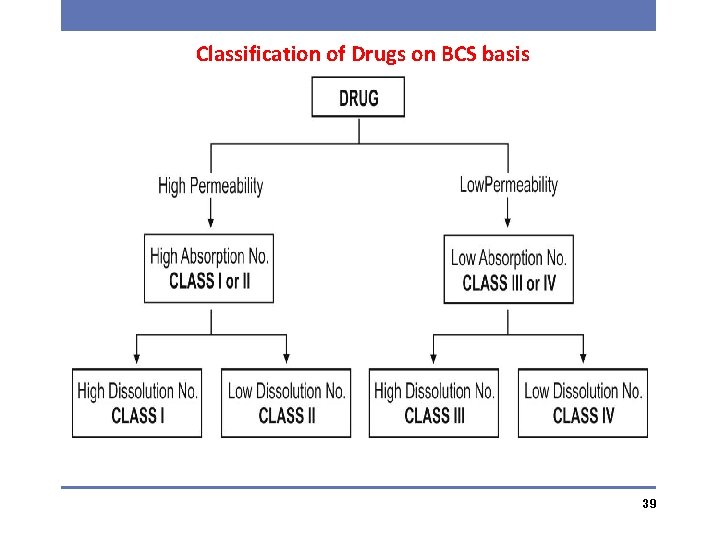
Classification of Drugs on BCS basis 39
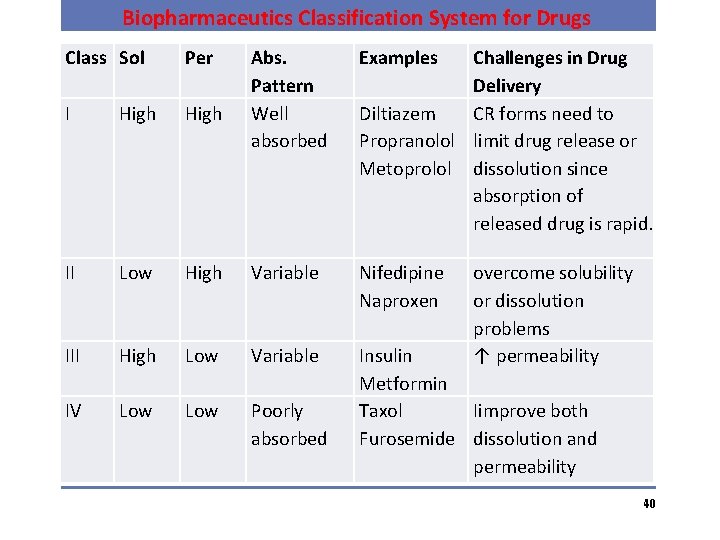
Biopharmaceutics Classification System for Drugs Class Sol Per Abs. Pattern Well absorbed Examples I High II Low III IV Challenges in Drug Delivery Diltiazem CR forms need to Propranolol limit drug release or Metoprolol dissolution since absorption of released drug is rapid. High Variable Nifedipine Naproxen High Low Variable Low Poorly absorbed Insulin Metformin Taxol Iimprove both Furosemide dissolution and permeability overcome solubility or dissolution problems ↑ permeability 40
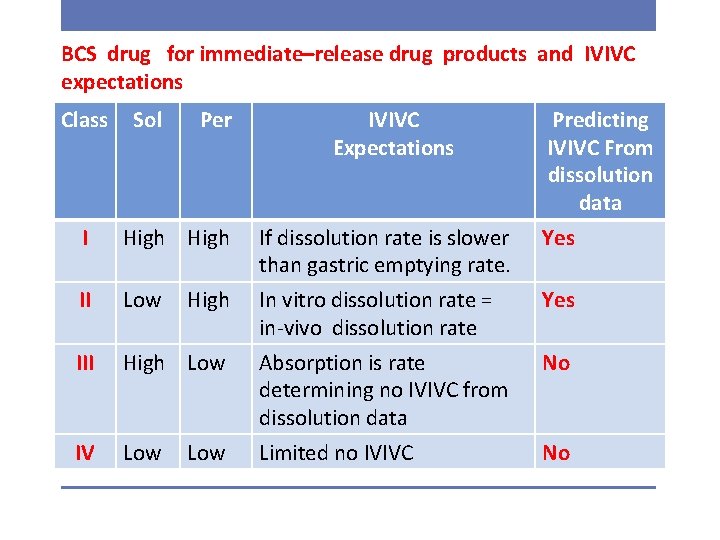
BCS drug for immediate–release drug products and IVIVC expectations Class Sol Per IVIVC Expectations Predicting IVIVC From dissolution data I High If dissolution rate is slower than gastric emptying rate. II Low In vitro dissolution rate = Yes in-vivo dissolution rate III High Low Absorption is rate determining no IVIVC from dissolution data No IV Low Limited no IVIVC No High Low Yes

Bioequivalence Studies 42
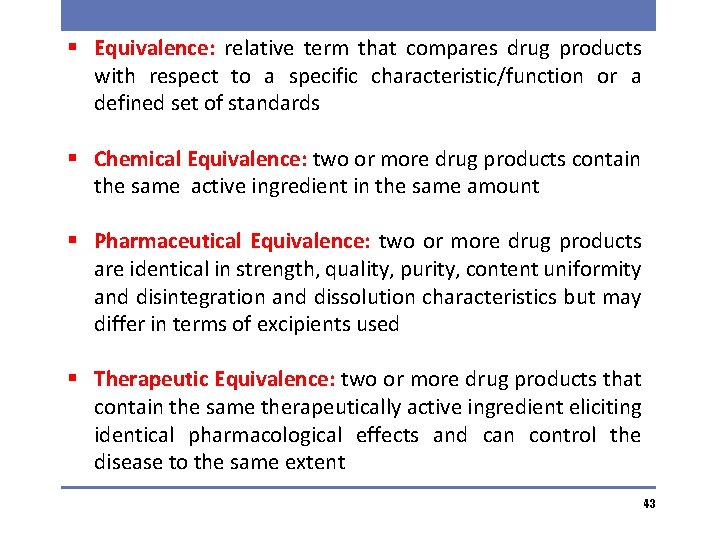
§ Equivalence: relative term that compares drug products with respect to a specific characteristic/function or a defined set of standards § Chemical Equivalence: two or more drug products contain the same active ingredient in the same amount § Pharmaceutical Equivalence: two or more drug products are identical in strength, quality, purity, content uniformity and disintegration and dissolution characteristics but may differ in terms of excipients used § Therapeutic Equivalence: two or more drug products that contain the same therapeutically active ingredient eliciting identical pharmacological effects and can control the disease to the same extent 43
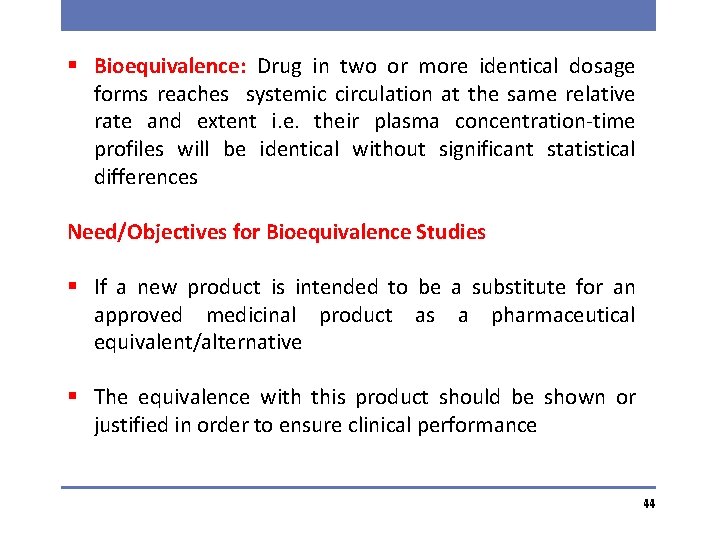
§ Bioequivalence: Drug in two or more identical dosage forms reaches systemic circulation at the same relative rate and extent i. e. their plasma concentration-time profiles will be identical without significant statistical differences Need/Objectives for Bioequivalence Studies § If a new product is intended to be a substitute for an approved medicinal product as a pharmaceutical equivalent/alternative § The equivalence with this product should be shown or justified in order to ensure clinical performance 44
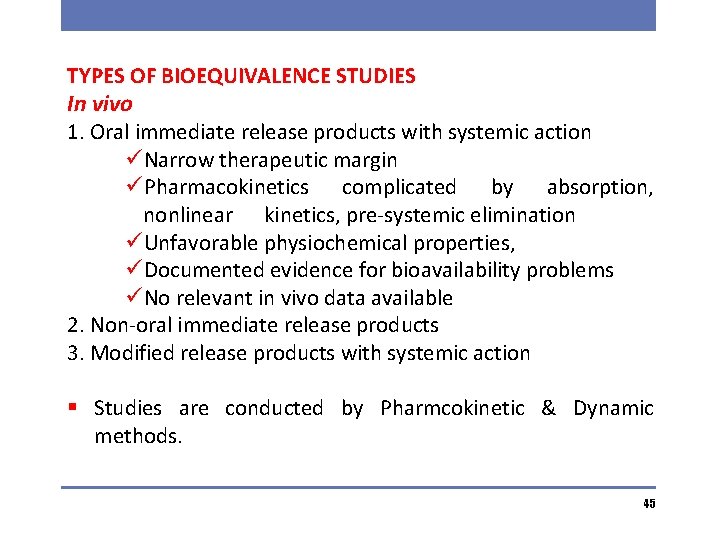
TYPES OF BIOEQUIVALENCE STUDIES In vivo 1. Oral immediate release products with systemic action üNarrow therapeutic margin üPharmacokinetics complicated by absorption, nonlinear kinetics, pre-systemic elimination üUnfavorable physiochemical properties, üDocumented evidence for bioavailability problems üNo relevant in vivo data available 2. Non-oral immediate release products 3. Modified release products with systemic action § Studies are conducted by Pharmcokinetic & Dynamic methods. 45
In vitro § Bio-wavers: In vitro studies, i. e. , dissolution studies can be used as alternate to in vivo bioequivalence under certain circumstances § New drug product differs only in strength of the active substance it contains, provided all the following conditions hold ü Pharmacokinetics are linear. ü The qualitative composition is the same. ü The ratio between active substance and excipients is the same or the ratio between the excipients is the same ü Both products are produced by the same manufacturer at the same production site 46
§ The drug product has been slightly reformulated or manufacturing method, slightly modified without affecting bioavailability § The drug product meets all the following requirements üIt is in solution or solubilized form üActive ingredient is in the same concentration as the approved drug product üThe product contains no excipients that effect absorption of the drug § An acceptable IVIVC with similar in vitro dissolution rate as approved medicinal product § The product is intended for topical administration, oral administration but not intended to be absorbed 47
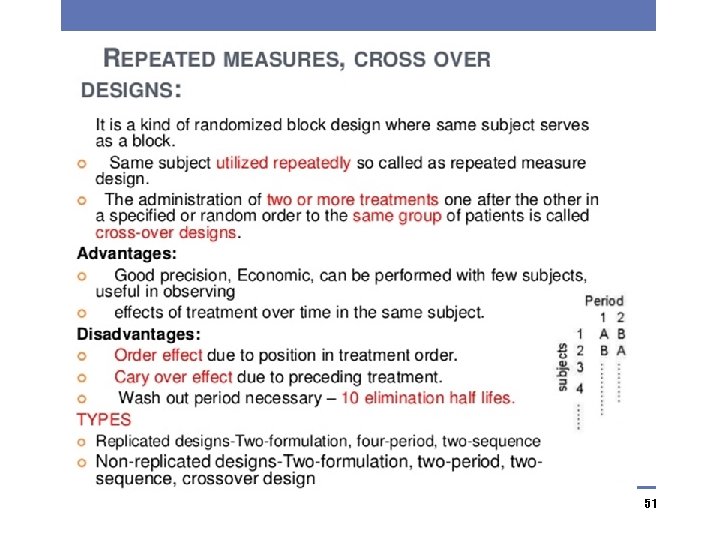
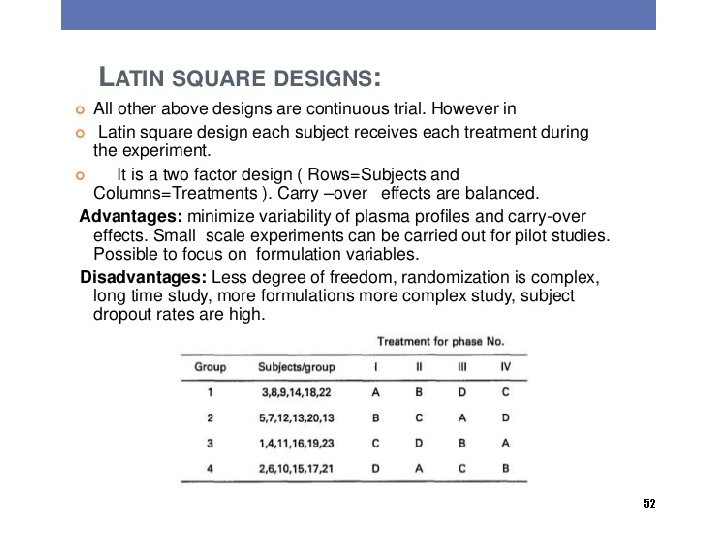
Experimental Study Design § The basic design for the study is determined by: ü The scientific questions to be answered ü The nature of the reference material and the dosage form to be tested, ü The availability of analytical methods Benefit–risk & ethical considerations with regard to testing in humans. Types of Design ü Completely Randomized design. ü Randomized Block design. ü Repeated Measures, Cross over And Carryover designs. ü Latin Square design. 48
Completely Randomized Design § All treatments are randomly allocated among all subjects. § Method of randomization: ü Label all subjects with some number of digits(1 -20) ü Randomly select non repeating numbers from these labels ü Subject them for the first treatment and then repeat for all other treatment § Advantages ü Easy to construct. ü Can done with number of treatments and subjects. ü Simple to analyze with variable sample sizes for each treatment § Disadvantages is applicable limited treatments with homogenous subjects 49
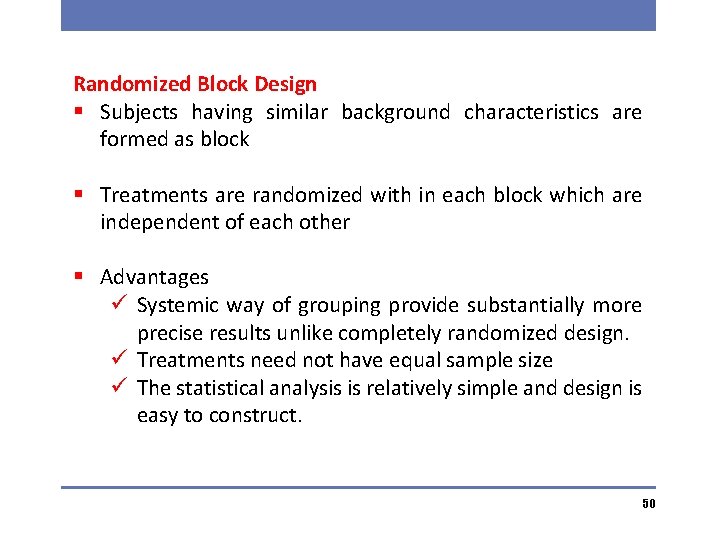
Randomized Block Design § Subjects having similar background characteristics are formed as block § Treatments are randomized with in each block which are independent of each other § Advantages ü Systemic way of grouping provide substantially more precise results unlike completely randomized design. ü Treatments need not have equal sample size ü The statistical analysis is relatively simple and design is easy to construct. 50
51
52

Methods for Enhancement of Bioavailability 53
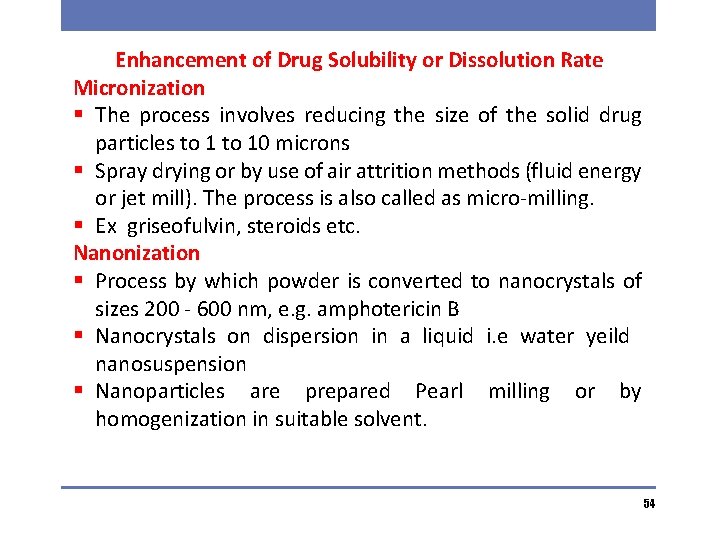
Enhancement of Drug Solubility or Dissolution Rate Micronization § The process involves reducing the size of the solid drug particles to 10 microns § Spray drying or by use of air attrition methods (fluid energy or jet mill). The process is also called as micro-milling. § Ex griseofulvin, steroids etc. Nanonization § Process by which powder is converted to nanocrystals of sizes 200 - 600 nm, e. g. amphotericin B § Nanocrystals on dispersion in a liquid i. e water yeild nanosuspension § Nanoparticles are prepared Pearl milling or by homogenization in suitable solvent. 54
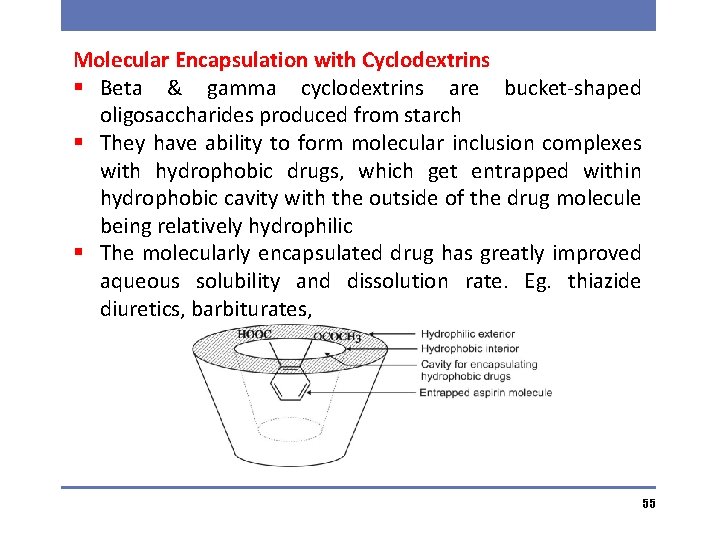
Molecular Encapsulation with Cyclodextrins § Beta & gamma cyclodextrins are bucket-shaped oligosaccharides produced from starch § They have ability to form molecular inclusion complexes with hydrophobic drugs, which get entrapped within hydrophobic cavity with the outside of the drug molecule being relatively hydrophilic § The molecularly encapsulated drug has greatly improved aqueous solubility and dissolution rate. Eg. thiazide diuretics, barbiturates, 55
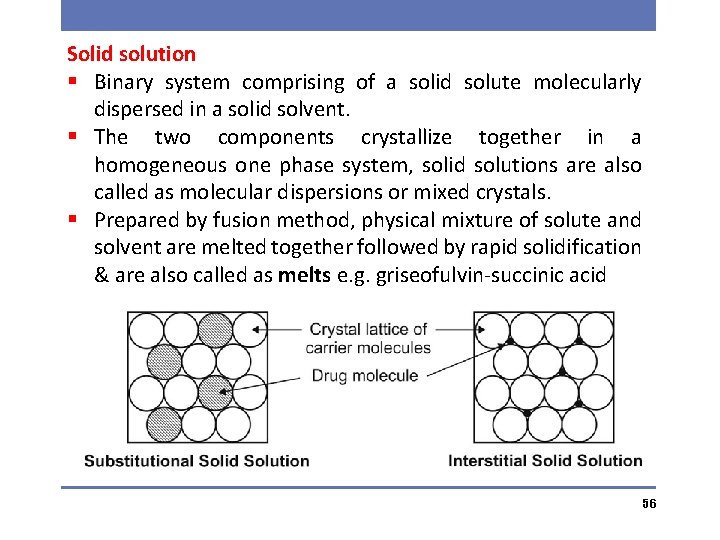
Solid solution § Binary system comprising of a solid solute molecularly dispersed in a solid solvent. § The two components crystallize together in a homogeneous one phase system, solid solutions are also called as molecular dispersions or mixed crystals. § Prepared by fusion method, physical mixture of solute and solvent are melted together followed by rapid solidification & are also called as melts e. g. griseofulvin-succinic acid 56
§ If the diameter of solute molecules is less than 60% of diameter of solvent molecules or its volume less than 20% of solvent molecule, the solute molecule can be accommodated within the intermolecular spaces of solvent molecules e. g. digitoxin-PEG 6000 § Such homogeneous transparent brittle system are called as glass solution § Carriers that form glassy structure are citric acid, urea, PVP and PEG and sugars such as dextrose, sucrose etc § This system when exposed to water, the soluble carrier dissolves rapidly leaving the insoluble drug in a state of microcrystalline dispersion or at molecular level 57

Eutectic Mixtures § Intimately blended physical mixture of two crystalline components that are prepared by fusion method § Eutectic melts differ from solid solutions in that the fused melt of solute-solvent show complete miscibility but negligible solid-solid solubility § When exposed to water, the soluble carrier dissolves leaving the drug in a microcrystalline state which solubilizes rapidly 58
Solid Dispersions § Prepared by solvent or co-precipitation method & dispersions are called as co-evaporates or co-precipitates. § The solute and the solid carrier solvent are dissolved in a common volatile liquid solvent § The liquid solvent is removed by evaporation under reduced pressure or by freeze-drying which results in amorphous precipitation of solute in a crystalline carrier e. g. amorphous sulphathiazole in crystalline urea § But in solid solutions/eutectics the drug is precipitated crystalline form. 59
§ Carriers used are same as for eutectics or solid solutions. With glassy materials, the dispersions formed are called as glass dispersions or glass suspensions § The method is suitable for thermolabile substances § Since the carrier is hydrophilic and the drug is hydrophobic, it is difficult to find a common solvent to dissolve both components Disadvantages § higher cost of processing, use of large quantities of solvent, difficulty in complete removal of solvent, etc § The product is often soft, waxy and possesses poor compressibility and flowability 60
§ Since the carrier is hydrophilic and the drug is hydrophobic, it is difficult to find a common solvent to dissolve both § The product is often soft, waxy and with poor compressibility and flowability Supercritical Fluid Recrystallization: § Nanosizing and solubilisation technology § Supercritical fluids (e. g. carbon dioxide) are fluids at critical temperature and critical pressure can assume the properties of both a liquid and a gas. § At near-critical temperatures, SCFs are highly compressible, with altered density and mass transport characteristics of a fluid § Drug particles are solubilised within SCF & recrystallised at greatly reduced particle sizes. 61

Thank You 62
- Slides: 62