
BIOASSAY OF VASOPRESSIN Afsar Fathima M Pharm CONTENTS

BIOASSAY OF VASOPRESSIN Afsar Fathima M. Pharm
CONTENTS Introduction of Vasopressin Mechanism of action Uses Adverse effects Definition of bioassay Procedure
INTRODUCTION OF VASOPRESSIN It is a peptide hormone that is secreted by the posterior lobe of the pituitary gland, which constricts blood vessels, raises blood pressure, stimulates intestinal motility, and reduces the excretion of urine. It has a vasopressor action i. e. , can stimulate contraction of arteries and capillaries. Hence the name "VASOPRESSIN. " Also called anti-diuretic hormone(ADH).
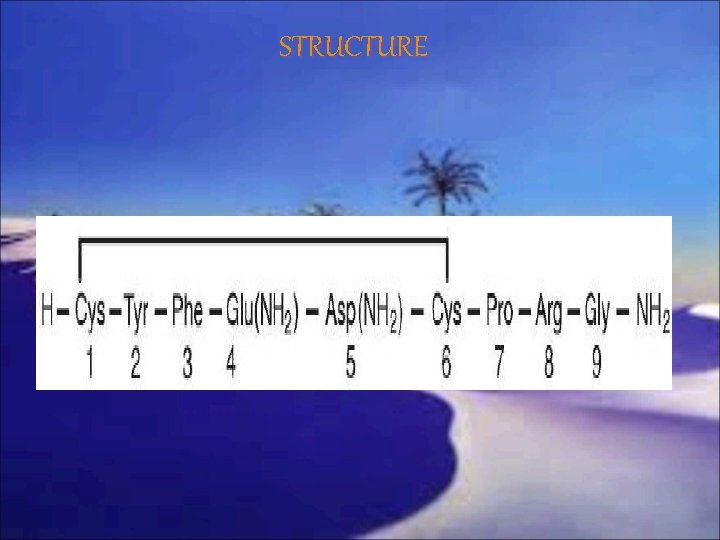
STRUCTURE
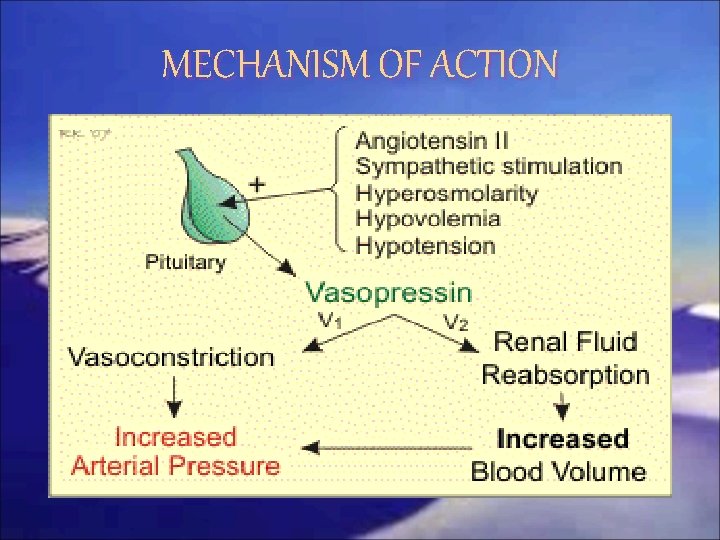
MECHANISM OF ACTION
USES Diabetes insipidus Anti-diuretic activity Polyuria Vasopressin has been used to treat memory deficits due to aging, Alzheimer's disease and amnesia Improves attention, retention and recall.
ADVERSE EFFECTS Nausea Head ache Tremors Sweating Diarrhoea Cardiac arrest Ischaemia
BIOASSAY DEFINITION Bioassay is defined as estimation of the concentration or potency of a substance by measuring its biological response in a living system. PRINCIPLE Potency of vasopressin injection is determined by comparing test activity with that of standard preparation of vasopressin.
STANDARD PREPARATION o It is a dried acetone extract of posterior lobes of pituitary gland of oxen or any other suitable preparation. Standard unit: Specific pressor activity corresponding to that yielded by 0. 0005 gm of standard preparation (20 units/ml).
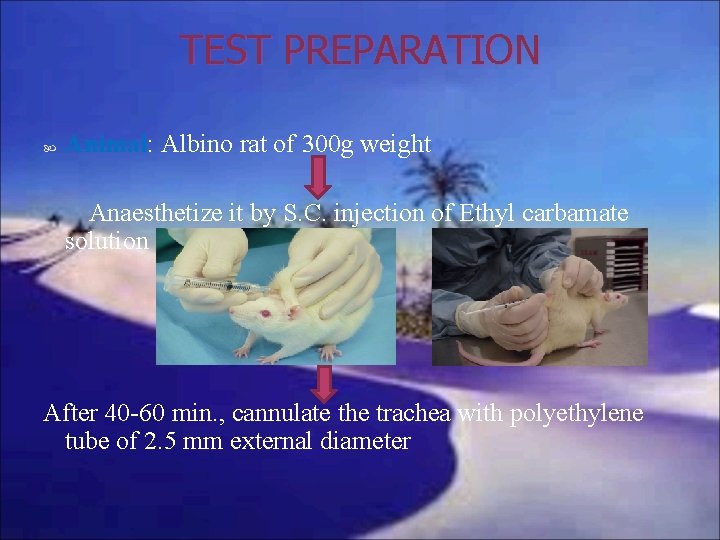
TEST PREPARATION Animal: Albino rat of 300 g weight Anaesthetize it by S. C. injection of Ethyl carbamate solution After 40 -60 min. , cannulate the trachea with polyethylene tube of 2. 5 mm external diameter
Dissect carotid artery for cannulation Cannulate femoral vein close to inguinal ligament by the following process: Retract abdominal muscles to expose the inguinal ligament and superficial prudental vein to one side Dissect femoral vein towards inguinal ligament from corresponding artery
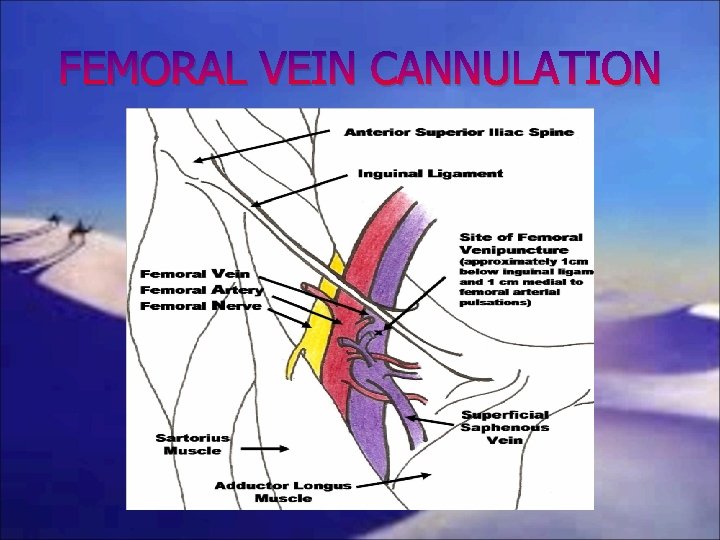
FEMORAL VEIN CANNULATION
Tie a short polyethylene cannula (1 mm external diameter) into femoral vein by two ligatures Joined by short piece of rubber tubing to 1 ml burette with an attached thistle funnel containing saline solution Fix a wet cotton swab & tie to cover the incision and cannula
Inject 200 U heparin in saline solution/100 g body weight Connect carotid artery cannula with mercury manometer (2 -3 mm internal diameter) Inject all solutions through venous cannula by 1 ml syringe A suitable hypotensive agent is given into tail vein to produce a constant basal pressure of 50 torr
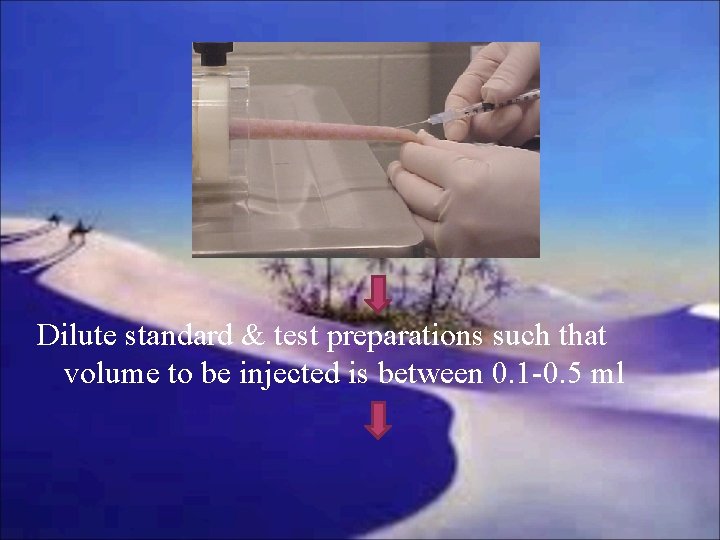
Dilute standard & test preparations such that volume to be injected is between 0. 1 -0. 5 ml
Choose 2 doses of standard so that lower dose produces 30 torr B. P. & higher produces 50 torr B. P. i. e. , ratio of doses should be 3: 5 Select test doses according to standard doses Doses are added at intervals of 3 -5 min. in a random order Record rise in B. P. in response to each dose.
METHOD-2 Anaesthetize healthy cat with volatile anaesthetic agent Insert a tracheal tube for artificial respiration Expose spinal cord from behind by removing second cervical vertebrae Destroy brain by passing suitable instrument through foramen magnum
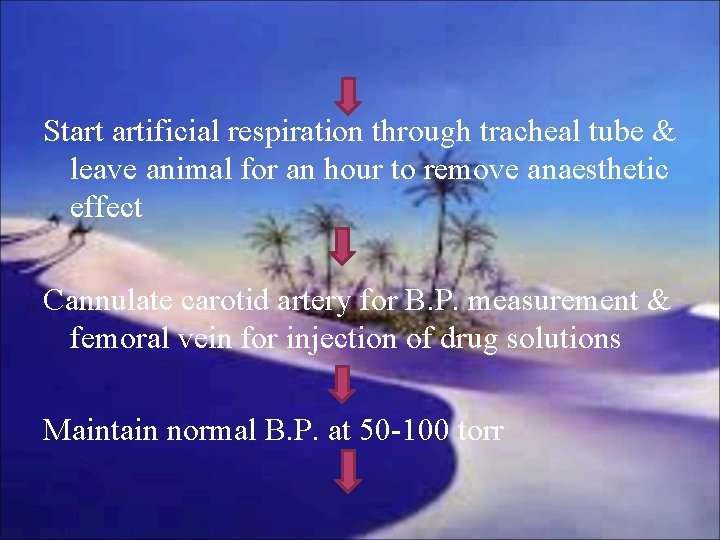
Start artificial respiration through tracheal tube & leave animal for an hour to remove anaesthetic effect Cannulate carotid artery for B. P. measurement & femoral vein for injection of drug solutions Maintain normal B. P. at 50 -100 torr
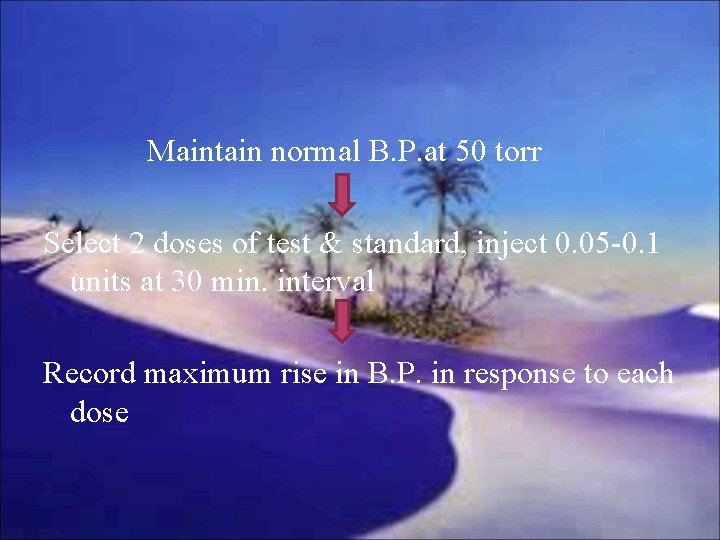
Maintain normal B. P. at 50 torr Select 2 doses of test & standard, inject 0. 05 -0. 1 units at 30 min. interval Record maximum rise in B. P. in response to each dose
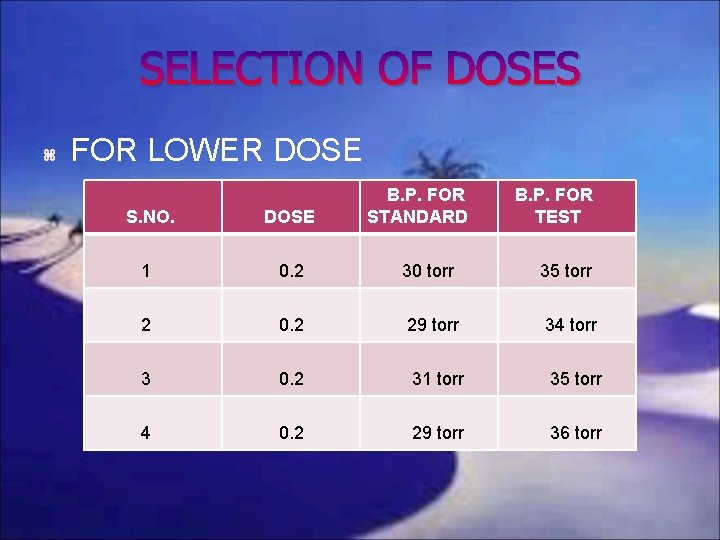
SELECTION OF DOSES FOR LOWER DOSE B. P. FOR STANDARD B. P. FOR TEST S. NO. DOSE 1 0. 2 30 torr 35 torr 2 0. 2 29 torr 34 torr 3 0. 2 31 torr 35 torr 4 0. 2 29 torr 36 torr
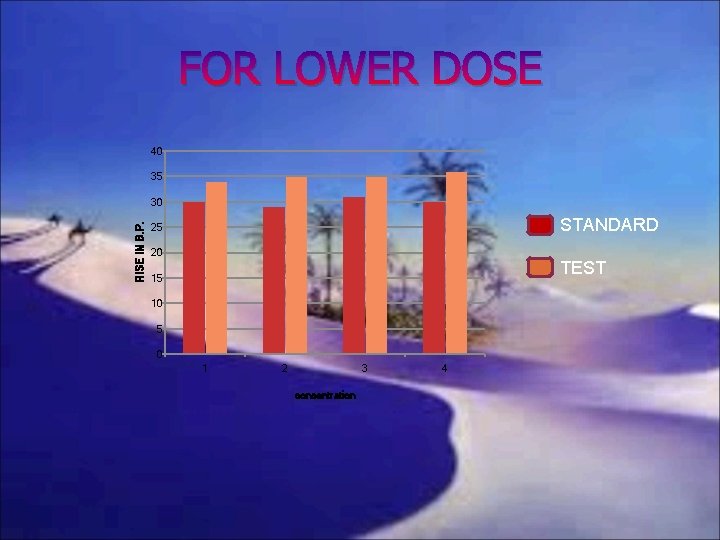
FOR LOWER DOSE 40 35 RISE IN B. P. 30 STANDARD 25 20 TEST 15 10 5 0 1 2 3 concentration 4
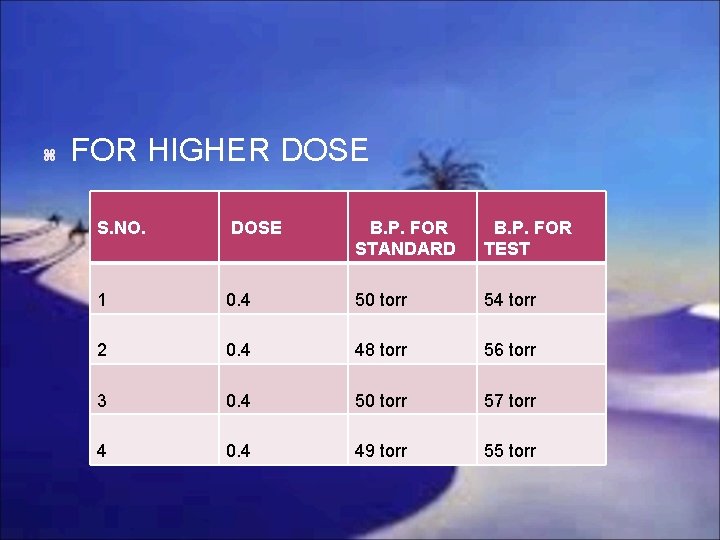
FOR HIGHER DOSE S. NO. DOSE B. P. FOR STANDARD B. P. FOR TEST 1 0. 4 50 torr 54 torr 2 0. 4 48 torr 56 torr 3 0. 4 50 torr 57 torr 4 0. 4 49 torr 55 torr
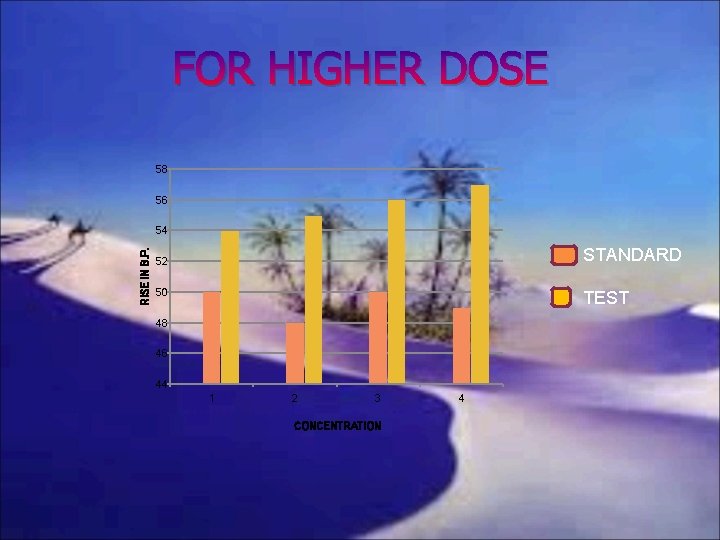
FOR HIGHER DOSE 58 56 RISE IN B. P. 54 STANDARD 52 50 TEST 48 46 44 1 2 3 CONCENTRATION 4
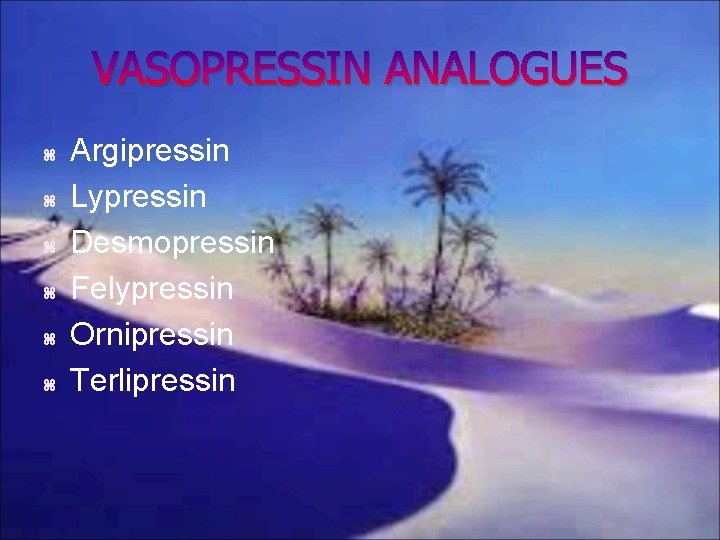
VASOPRESSIN ANALOGUES Argipressin Lypressin Desmopressin Felypressin Ornipressin Terlipressin
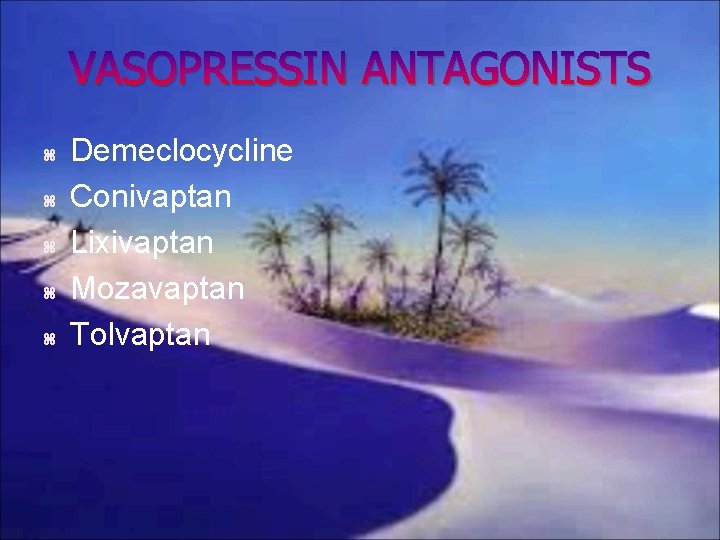
VASOPRESSIN ANTAGONISTS Demeclocycline Conivaptan Lixivaptan Mozavaptan Tolvaptan
REFERENCES INDIAN PHARMACOEPIA 1996 VOL ІІІ Pharmabuzz journal July 2011 Rang & Dale’s text book of pharmacology Goodmen and Gillmen

- Slides: 27