
Bioassay and bioanalytical approaches to chemical detection in
Bioassay and bioanalytical approaches to chemical detection in water samples Michael Denison, Thomas Young, Candace Bever Superfund Research Center UC Davis CLU-IN Seminar || June 27, 2016
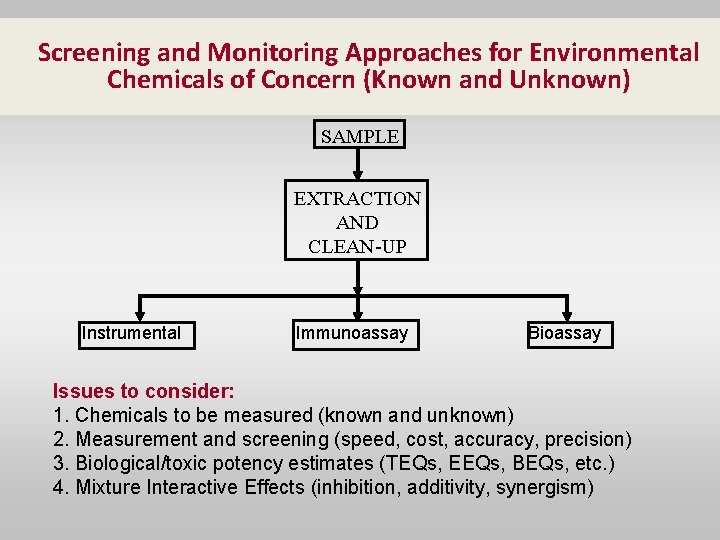
Screening and Monitoring Approaches for Environmental Chemicals of Concern (Known and Unknown) SAMPLE EXTRACTION AND CLEAN-UP Instrumental Immunoassay Bioassay Issues to consider: 1. Chemicals to be measured (known and unknown) 2. Measurement and screening (speed, cost, accuracy, precision) 3. Biological/toxic potency estimates (TEQs, EEQs, BEQs, etc. ) 4. Mixture Interactive Effects (inhibition, additivity, synergism)
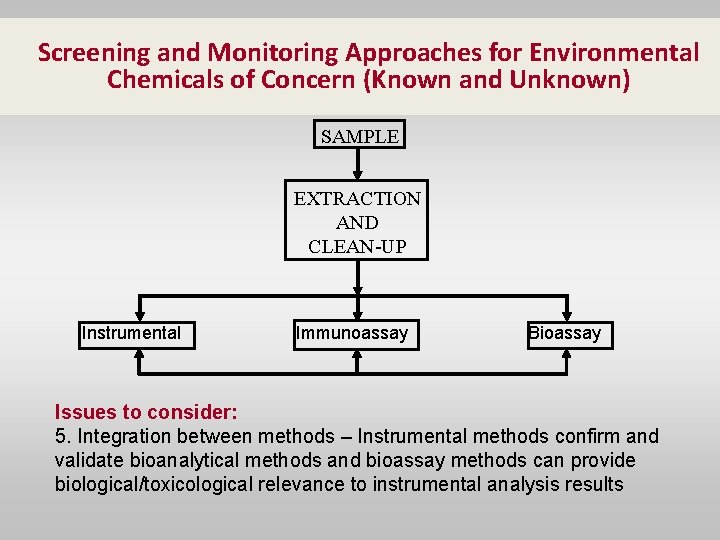
Screening and Monitoring Approaches for Environmental Chemicals of Concern (Known and Unknown) SAMPLE EXTRACTION AND CLEAN-UP Instrumental Immunoassay Bioassay Issues to consider: 5. Integration between methods – Instrumental methods confirm and validate bioanalytical methods and bioassay methods can provide biological/toxicological relevance to instrumental analysis results
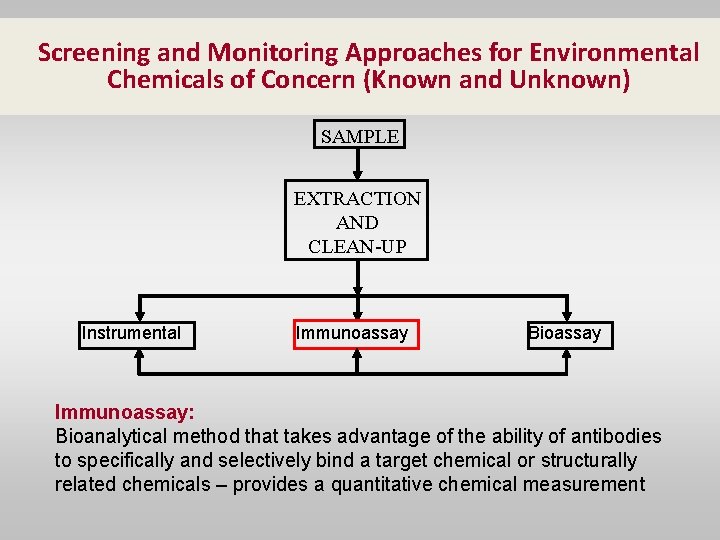
Screening and Monitoring Approaches for Environmental Chemicals of Concern (Known and Unknown) SAMPLE EXTRACTION AND CLEAN-UP Instrumental Immunoassay Bioassay Immunoassay: Bioanalytical method that takes advantage of the ability of antibodies to specifically and selectively bind a target chemical or structurally related chemicals – provides a quantitative chemical measurement
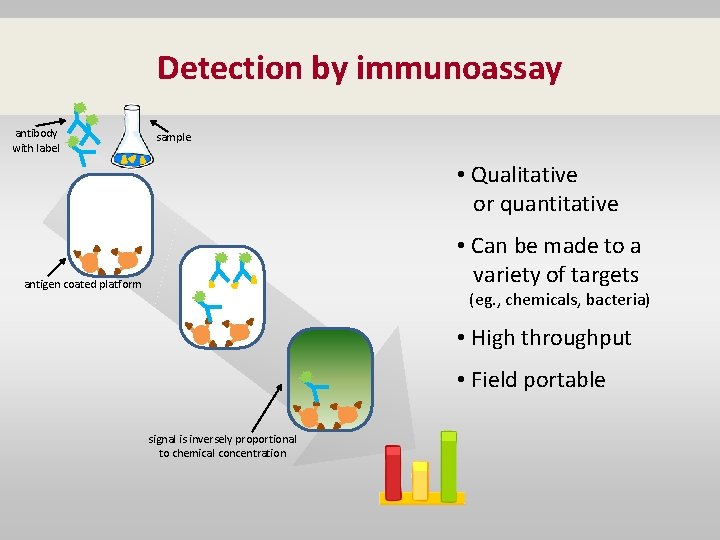
Detection by immunoassay antibody with label sample • Qualitative or quantitative • Can be made to a variety of targets antigen coated platform (eg. , chemicals, bacteria) • High throughput • Field portable signal is inversely proportional to chemical concentration
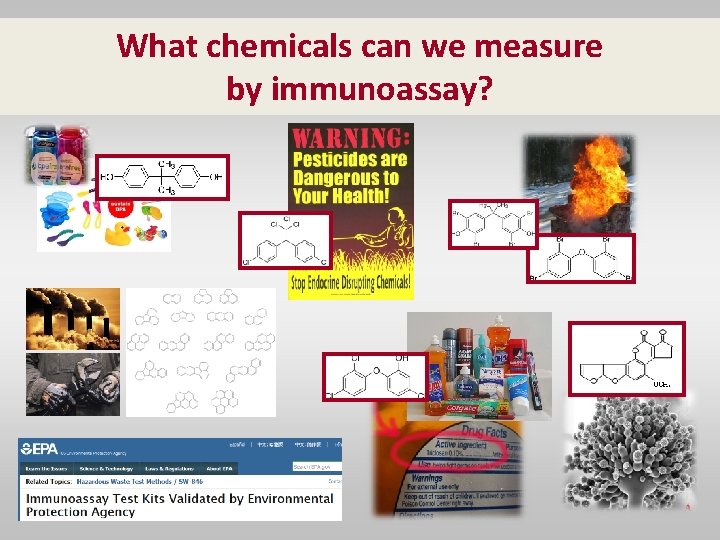
What chemicals can we measure by immunoassay?
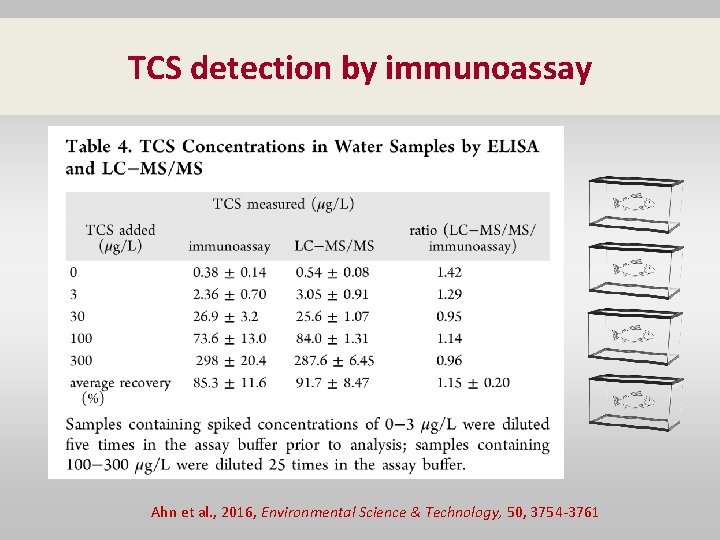
TCS detection by immunoassay Ahn et al. , 2016, Environmental Science & Technology, 50, 3754 -3761
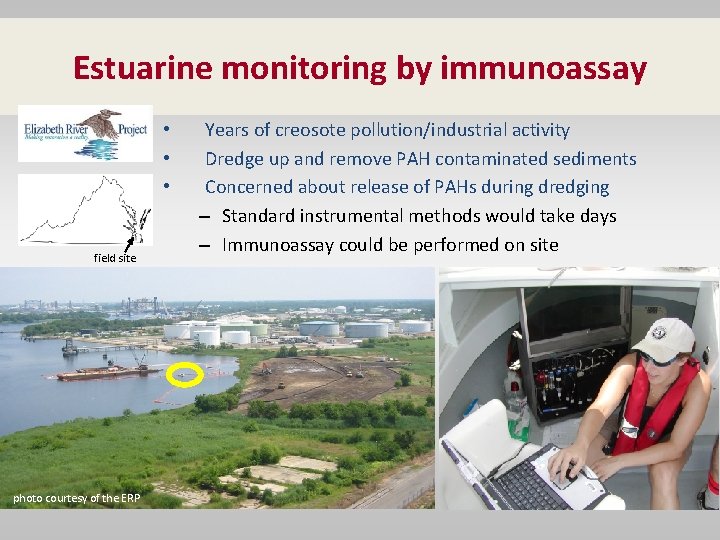
Estuarine monitoring by immunoassay • • • field site photo courtesy of the ERP Years of creosote pollution/industrial activity Dredge up and remove PAH contaminated sediments Concerned about release of PAHs during dredging – Standard instrumental methods would take days – Immunoassay could be performed on site
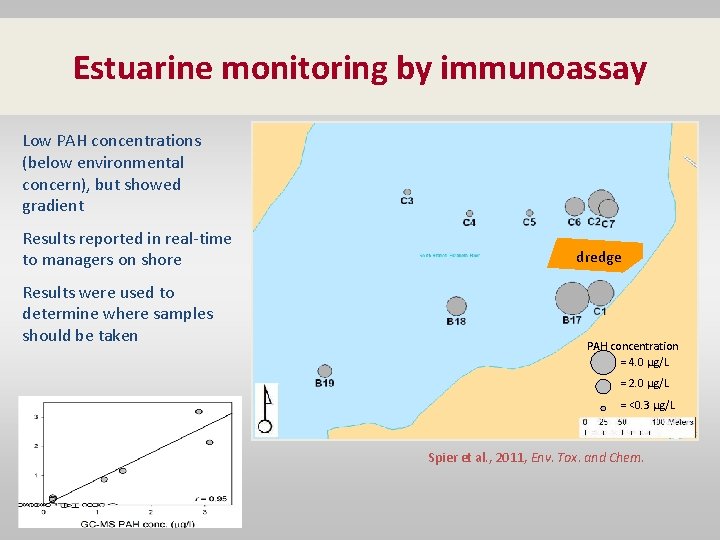
Estuarine monitoring by immunoassay Low PAH concentrations (below environmental concern), but showed gradient Results reported in real-time to managers on shore Results were used to determine where samples should be taken dredge PAH concentration = 4. 0 μg/L = 2. 0 μg/L = <0. 3 μg/L Spier et al. , 2011, Env. Tox. and Chem.
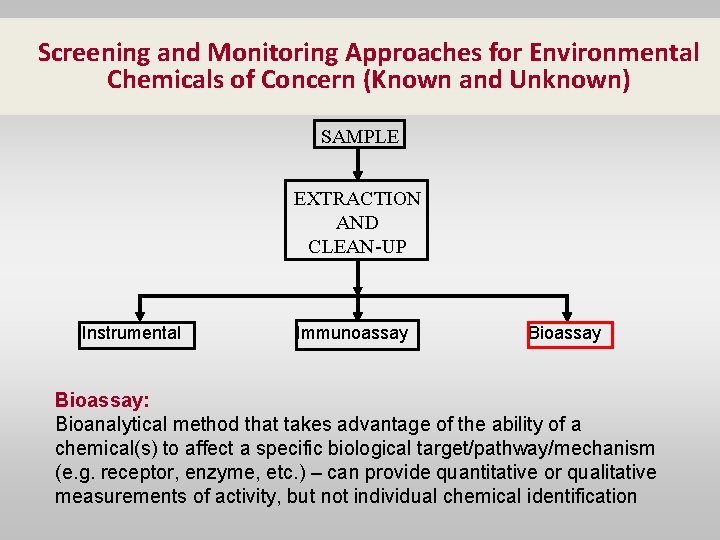
Screening and Monitoring Approaches for Environmental Chemicals of Concern (Known and Unknown) SAMPLE EXTRACTION AND CLEAN-UP Instrumental Immunoassay Bioassay: Bioanalytical method that takes advantage of the ability of a chemical(s) to affect a specific biological target/pathway/mechanism (e. g. receptor, enzyme, etc. ) – can provide quantitative or qualitative measurements of activity, but not individual chemical identification
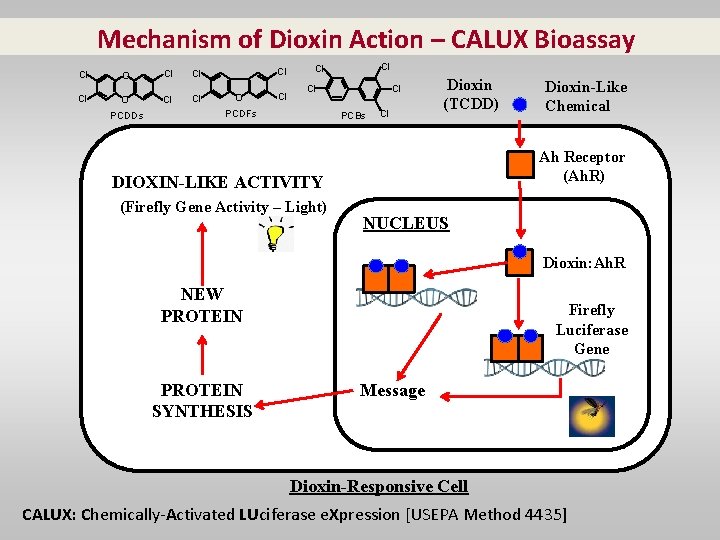
Mechanism of Dioxin Action – CALUX Bioassay Cl O Cl Cl PCDDs Cl O Cl Cl PCDFs Cl PCBs Cl Dioxin (TCDD) Ah Receptor (Ah. R) DIOXIN-LIKE ACTIVITY (Firefly Gene Activity – Light) Dioxin-Like Chemical NUCLEUS Dioxin: Ah. R NEW PROTEIN SYNTHESIS Protein Firefly Luciferase Gene Message Dioxin-Responsive Cell CALUX: Chemically-Activated LUciferase e. Xpression [USEPA Method 4435]

CALUX Cell Bioassay Procedure CALUX Cells Plated Into 96 -Well Microplates Chemicals or Extracts Added to Each Well and Incubated for 24 Hours Wells are Washed, Cells Lysed, and Luciferase Activity Measured in a Microplate Luminometer
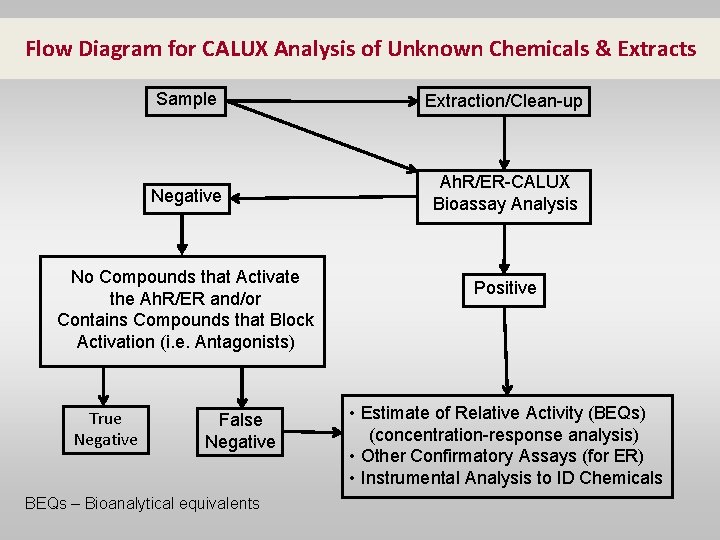
Flow Diagram for CALUX Analysis of Unknown Chemicals & Extracts Sample Extraction/Clean-up Negative Ah. R/ER-CALUX Bioassay Analysis No Compounds that Activate the Ah. R/ER and/or Contains Compounds that Block Activation (i. e. Antagonists) True Negative False Negative BEQs – Bioanalytical equivalents Positive • Estimate of Relative Activity (BEQs) (concentration-response analysis) • Other Confirmatory Assays (for ER) • Instrumental Analysis to ID Chemicals
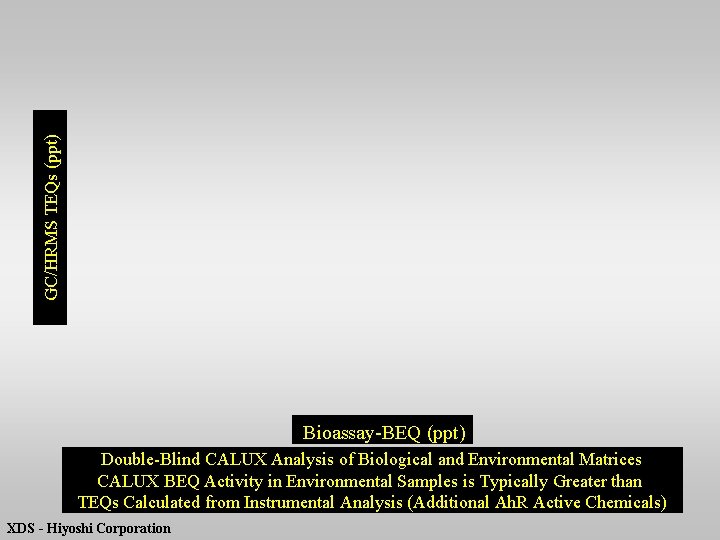
GC/HRMS TEQs (ppt) ) Bioassay-BEQ (ppt) Double-Blind CALUX Analysis of Biological and Environmental Matrices CALUX BEQ Activity in Environmental Samples is Typically Greater than TEQs Calculated from Instrumental Analysis (Additional Ah. R Active Chemicals) XDS - Hiyoshi Corporation
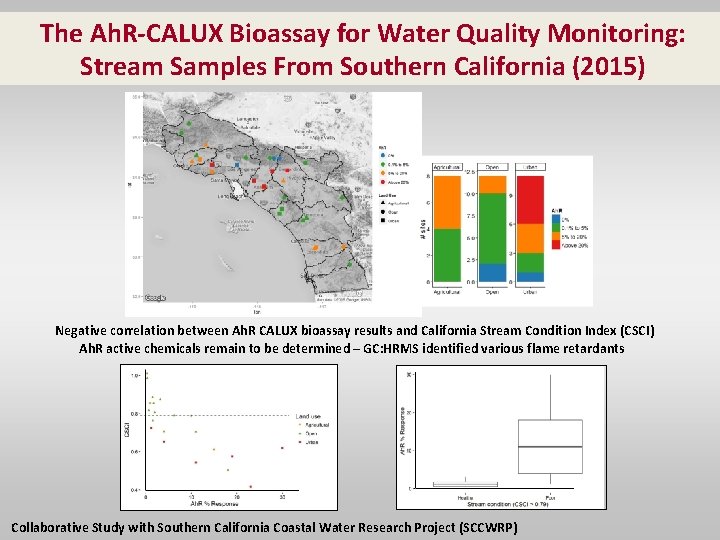
The Ah. R-CALUX Bioassay for Water Quality Monitoring: Stream Samples From Southern California (2015) Negative correlation between Ah. R CALUX bioassay results and California Stream Condition Index (CSCI) Ah. R active chemicals remain to be determined – GC: HRMS identified various flame retardants Collaborative Study with Southern California Coastal Water Research Project (SCCWRP)
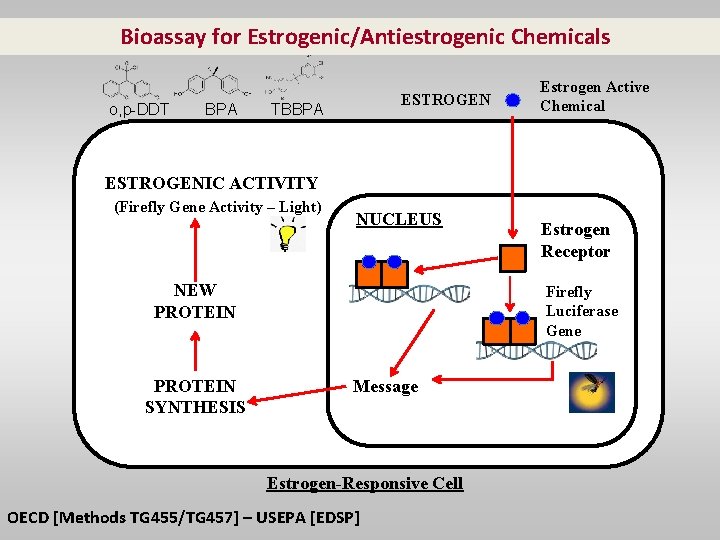
Bioassay for Estrogenic/Antiestrogenic Chemicals o, p-DDT BPA ESTROGEN TBBPA Estrogen Active Chemical ESTROGENIC ACTIVITY (Firefly Gene Activity – Light) NEW PROTEIN SYNTHESIS NUCLEUS Protein Message Estrogen-Responsive Cell OECD [Methods TG 455/TG 457] – USEPA [EDSP] Estrogen Receptor Firefly Luciferase Gene
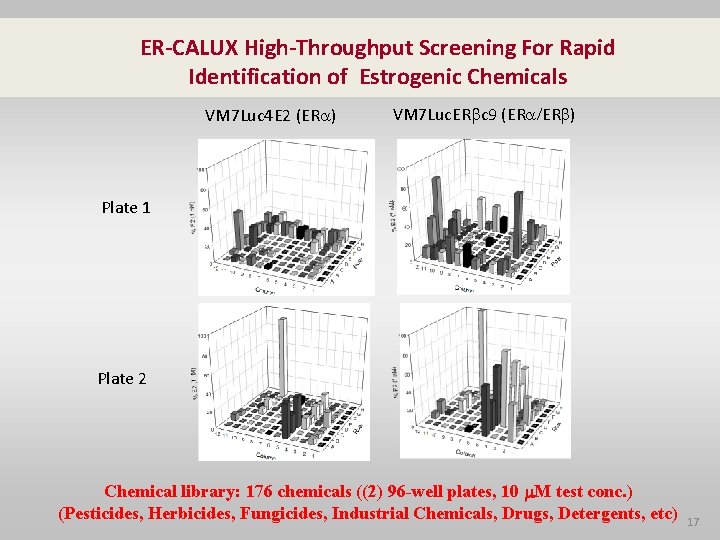
ER-CALUX High-Throughput Screening For Rapid Identification of Estrogenic Chemicals VM 7 Luc 4 E 2 (ERa) VM 7 Luc. ERbc 9 (ERa/ERb) Plate 1 Plate 2 Chemical library: 176 chemicals ((2) 96 -well plates, 10 m. M test conc. ) (Pesticides, Herbicides, Fungicides, Industrial Chemicals, Drugs, Detergents, etc) 17
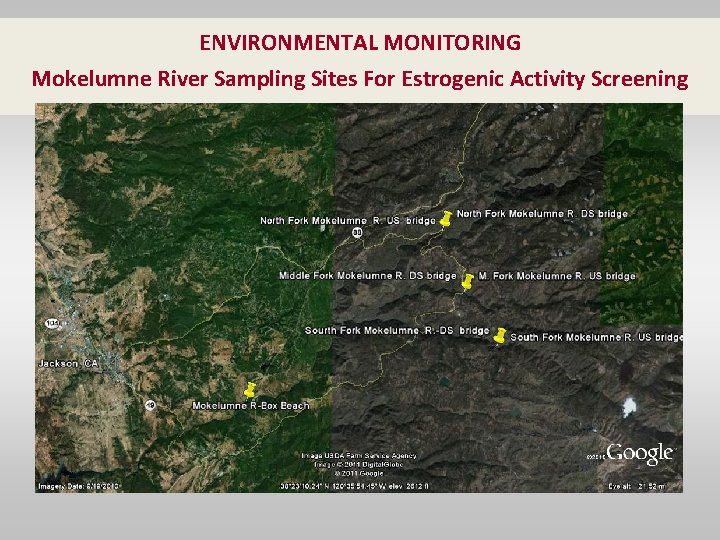
ENVIRONMENTAL MONITORING Mokelumne River Sampling Sites For Estrogenic Activity Screening
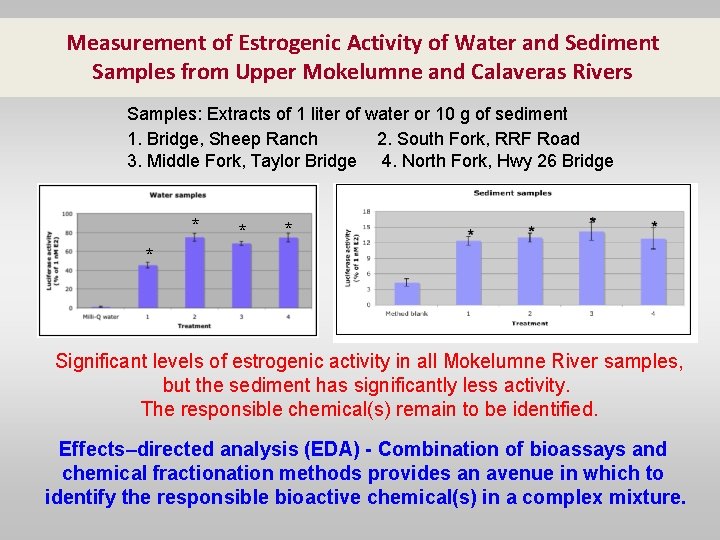
Measurement of Estrogenic Activity of Water and Sediment Samples from Upper Mokelumne and Calaveras Rivers Samples: Extracts of 1 liter of water or 10 g of sediment 1. Bridge, Sheep Ranch 2. South Fork, RRF Road 3. Middle Fork, Taylor Bridge 4. North Fork, Hwy 26 Bridge * * Significant levels of estrogenic activity in all Mokelumne River samples, but the sediment has significantly less activity. The responsible chemical(s) remain to be identified. Effects–directed analysis (EDA) - Combination of bioassays and chemical fractionation methods provides an avenue in which to identify the responsible bioactive chemical(s) in a complex mixture.
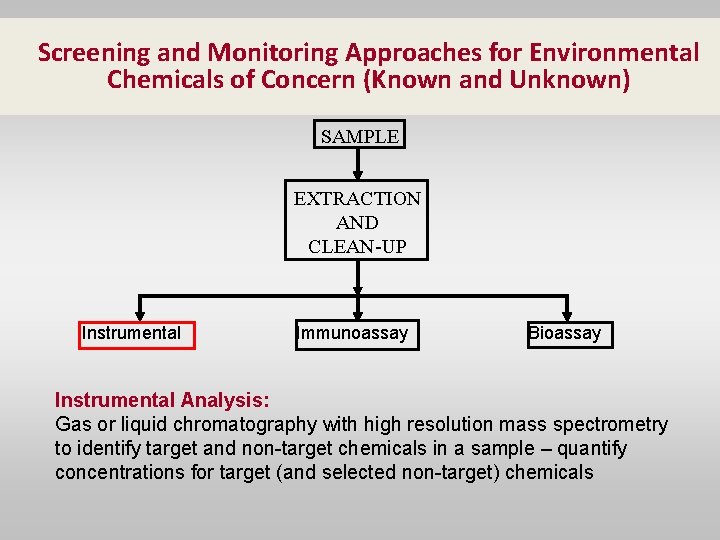
Screening and Monitoring Approaches for Environmental Chemicals of Concern (Known and Unknown) SAMPLE EXTRACTION AND CLEAN-UP Instrumental Immunoassay Bioassay Instrumental Analysis: Gas or liquid chromatography with high resolution mass spectrometry to identify target and non-target chemicals in a sample – quantify concentrations for target (and selected non-target) chemicals
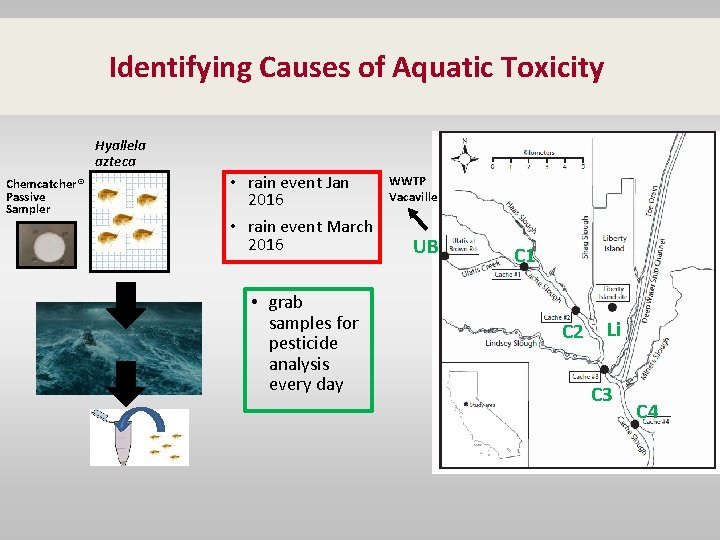
Identifying Causes of Aquatic Toxicity Hyallela azteca Chemcatcher® Passive Sampler • rain event Jan 2016 • rain event March 2016 • grab samples for pesticide analysis every day WWTP Vacaville UB C 1 C 2 Li C 3 C 4
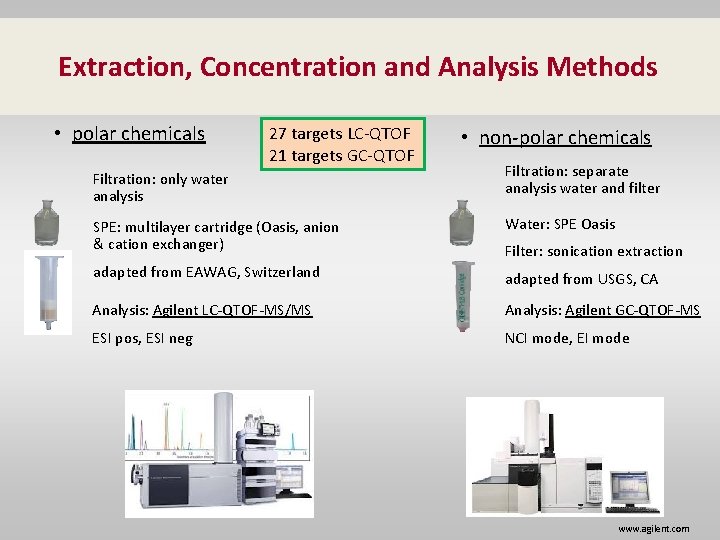
Extraction, Concentration and Analysis Methods • polar chemicals 27 targets LC-QTOF 21 targets GC-QTOF • non-polar chemicals Filtration: only water analysis Filtration: separate analysis water and filter SPE: multilayer cartridge (Oasis, anion & cation exchanger) Water: SPE Oasis adapted from EAWAG, Switzerland adapted from USGS, CA Analysis: Agilent LC-QTOF-MS/MS Analysis: Agilent GC-QTOF-MS ESI pos, ESI neg NCI mode, EI mode Filter: sonication extraction www. agilent. com
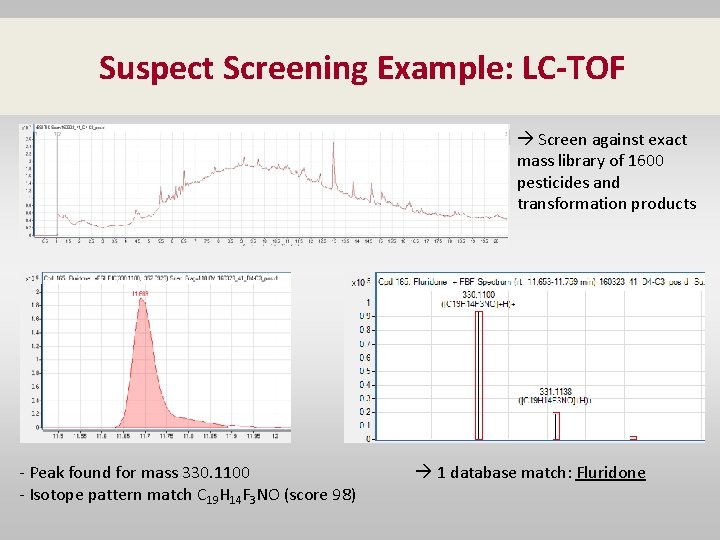
Suspect Screening Example: LC-TOF Screen against exact mass library of 1600 pesticides and transformation products - Peak found for mass 330. 1100 - Isotope pattern match C 19 H 14 F 3 NO (score 98) 1 database match: Fluridone
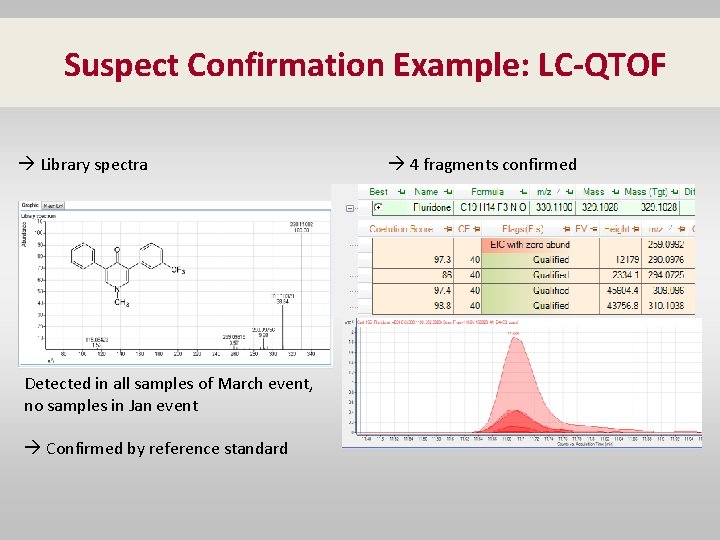
Suspect Confirmation Example: LC-QTOF Library spectra Detected in all samples of March event, no samples in Jan event Confirmed by reference standard 4 fragments confirmed
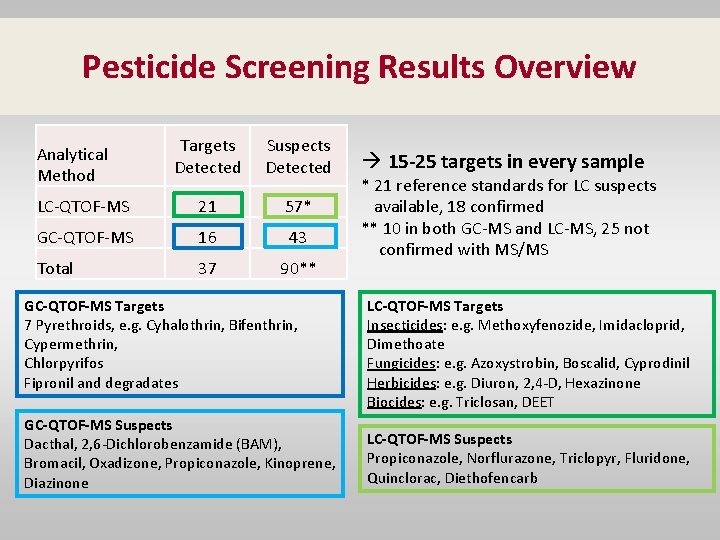
Pesticide Screening Results Overview Targets Detected Suspects Detected LC-QTOF-MS 21 57* GC-QTOF-MS 16 43 Total 37 90** Analytical Method GC-QTOF-MS Targets 7 Pyrethroids, e. g. Cyhalothrin, Bifenthrin, Cypermethrin, Chlorpyrifos Fipronil and degradates GC-QTOF-MS Suspects Dacthal, 2, 6 -Dichlorobenzamide (BAM), Bromacil, Oxadizone, Propiconazole, Kinoprene, Diazinone 15 -25 targets in every sample * 21 reference standards for LC suspects available, 18 confirmed ** 10 in both GC-MS and LC-MS, 25 not confirmed with MS/MS LC-QTOF-MS Targets Insecticides: e. g. Methoxyfenozide, Imidacloprid, Dimethoate Fungicides: e. g. Azoxystrobin, Boscalid, Cyprodinil Herbicides: e. g. Diuron, 2, 4 -D, Hexazinone Biocides: e. g. Triclosan, DEET LC-QTOF-MS Suspects Propiconazole, Norflurazone, Triclopyr, Fluridone, Quinclorac, Diethofencarb
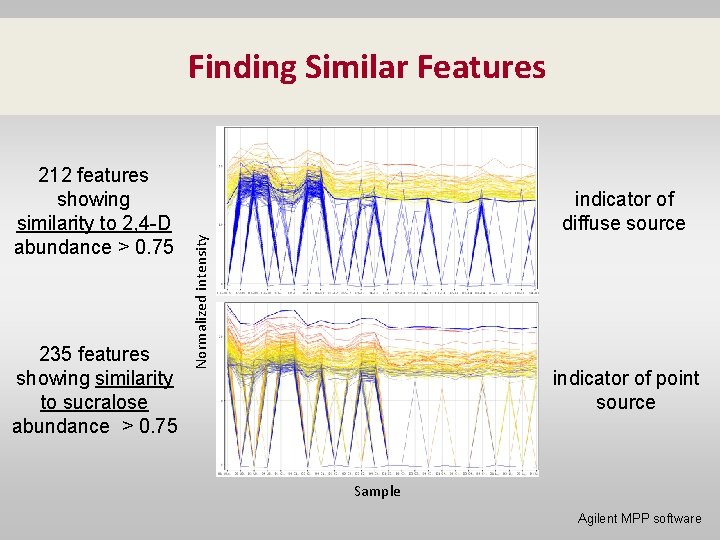
Finding Similar Features 235 features showing similarity to sucralose abundance > 0. 75 indicator of diffuse source Normalized intensity 212 features showing similarity to 2, 4 -D abundance > 0. 75 indicator of point source Sample Agilent MPP software
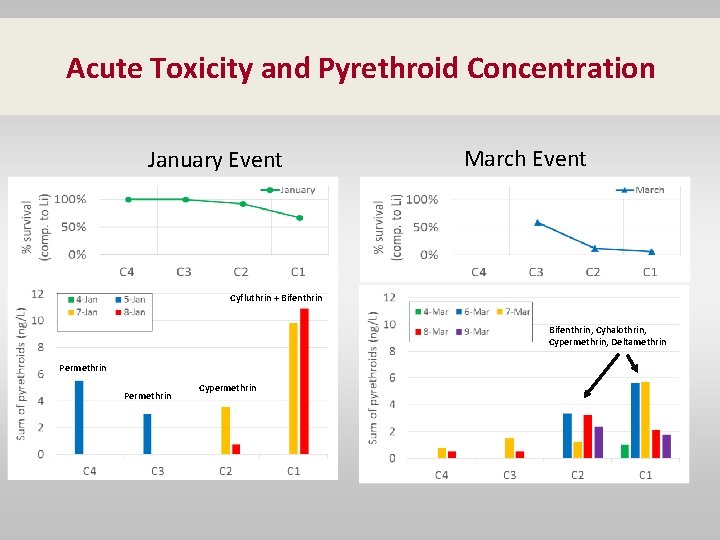
Acute Toxicity and Pyrethroid Concentration January Event March Event Cyfluthrin + Bifenthrin, Cyhalothrin, Cypermethrin, Deltamethrin Permethrin Cypermethrin
Conclusion and Outlook • Broad scope suspect/non-target screening finds many more compounds than those on a typical target list • Significance of non-target analytes being confirmed by toxicity correlations and genomic profiling • Statistical analysis can group molecular features to provide information regarding contaminant sources, similar fate processes • With over 100 detected pesticides from varied classes, mixture toxicity likely important—bioassays can help!
CALUX Technology Transfer • Technology Transfer: CALUX cell lines and reporter plasmids have been provided to more than 200 laboratories in 28 countries for research, screening and monitoring purposes • Regulatory Acceptance: Ah. R-CALUX - US EPA (Method 4435) for DLCs in environmental matrices (2007) ER-CALUX - Organization of Economic Cooperation and Development (2012) (OECD Test Method 455/457) - estrogenic/antiestrogenic chemicals - USEPA (endocrine disruptor Screening Program) • Commercialization: Xenobiotic Detection Systems (Durham, NC) – developing and using bioassays International commercial/governmental licensing agreements (US, Germany, Japan, Belgium, Poland, China, Chile) – monitoring applications • International Workshops on Bioassays for Monitoring Water (2015 -2016) [Australia, USA, Malaysia] – Drinking water, water reuse, water treatment
Acknowledgments FUNDING: Bruce Hammock Shirley Gee Isaac Pessah Guochun He Jane Rogers Jennifer Brennan COMMUNITY PARTNERS • Elizabeth River Project • Southern California Coastal Water Research Project (SCCWRP) • Upper Mokelumne River Watershed Council and Central Sierra Resource Conservation & Development
- Slides: 30