
Bioaccumulation and Biomagnification Tracing Pollution Through An Ecosystem
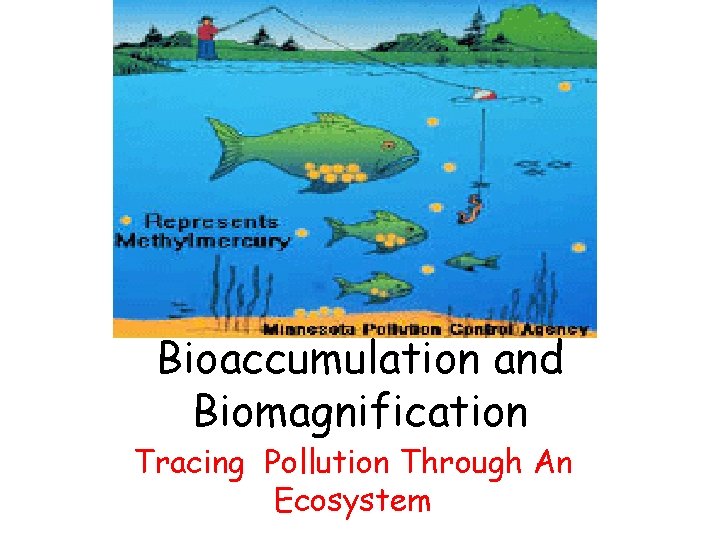
Bioaccumulation and Biomagnification Tracing Pollution Through An Ecosystem
Pests and Pesticides
4 Types of Pesticides • Herbicides : kills plants • Insecticides : kills insects • Fungicides : kills fungi • Bactericides : kills bacteria
Pesticides • First generation pesticides – found to be toxic to humans – polluted water and soil – NOT biodegradable (able to break down naturally) • Second generation pesticides – generally man made organic chemicals – They were less toxic to humans – More biodegradable
Pesticides • some of these chemicals are fat soluble and become stored within animal tissues. • This creates a problem known as bioaccumulation.
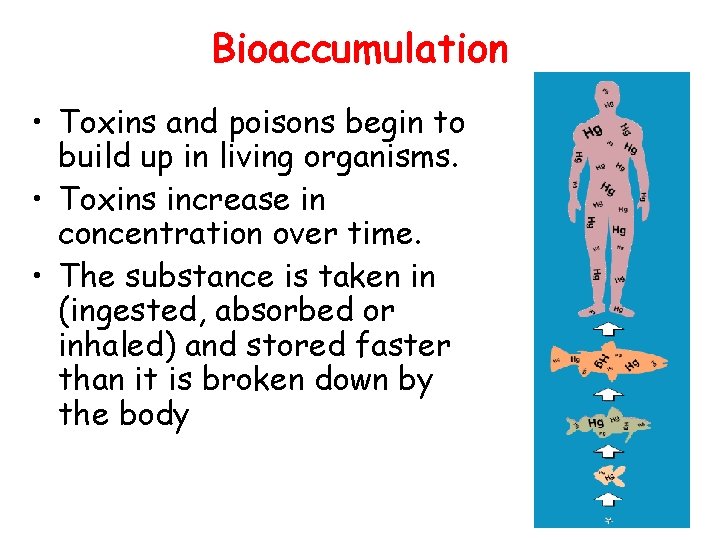
Bioaccumulation • Toxins and poisons begin to build up in living organisms. • Toxins increase in concentration over time. • The substance is taken in (ingested, absorbed or inhaled) and stored faster than it is broken down by the body
Bioaccumulation Examples: • DDT (and other pesticides) • Methyl Mercury (and other industrial pollution) Effects: • Cancer and Birth Defects, • Changes in body chemistry
An example… DDT • Benefits – Low toxicity for humans – Highly effective against insects – Easy and cheap to manufacture • Problems – Remains active in the environment for a long time – Causes shell thinning in birds and other reproductive problems • Status – Banned for use in North America since the 1970’s – Still used in the 3 rd World to fight malaria (carried by mosquitoes) – Saves 1000’s of human lives each year
Biomagnification – process that results in the build-up of a chemical in an organism at higher levels than are found in its prey. – occurs when a chemical becomes more and more concentrated as it moves up a food chain – Eating contaminated food “magnifies” the effect of bioaccumulation.
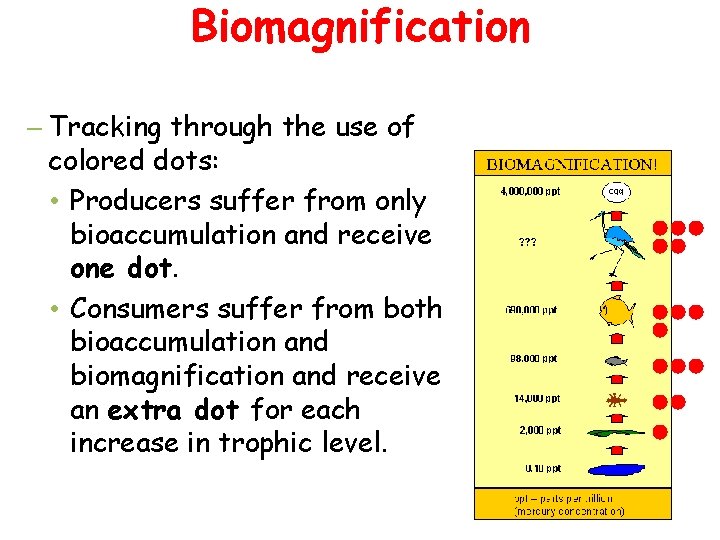
Biomagnification – Tracking through the use of colored dots: • Producers suffer from only bioaccumulation and receive one dot. • Consumers suffer from both bioaccumulation and biomagnification and receive an extra dot for each increase in trophic level.
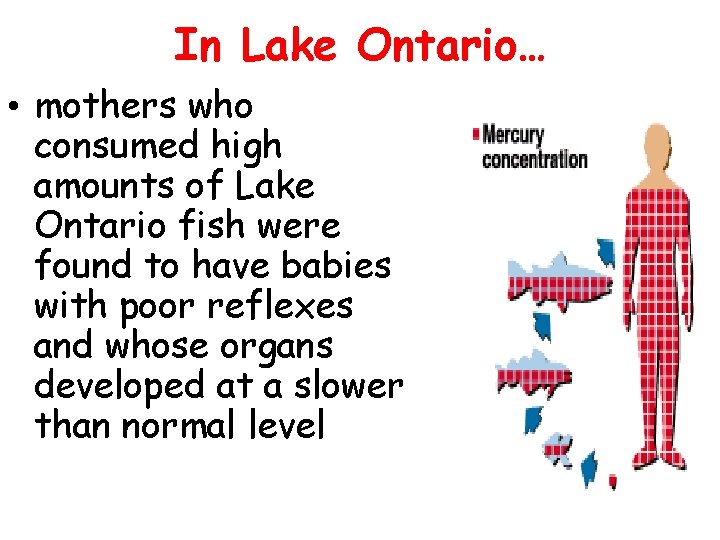
In Lake Ontario… • mothers who consumed high amounts of Lake Ontario fish were found to have babies with poor reflexes and whose organs developed at a slower than normal level

YOUR TASK • DDT Case Study. Read Article and Answer questions
- Slides: 12