
Bio II Forensics DNA A REVIEW DNA molecules
Bio II: Forensics
DNA (A REVIEW) � DNA molecules are found in the nucleus of cells in the human body in chromosomes. � People have 23 pairs of chromosomes, with an allele for each trait on each chromosome. �So, 2 alleles for each trait � Junk DNA is the non-coding portion of DNA that contains different DNA sequences in different people. �Most of the DNA in members of the same species is identical.
� Within junk DNA, sequences are repeated multiple times, and the number of times varies among individuals (called VNTR’s) �Some are 9 -80 bases in length �Some are only 2 -5 bases in length and are becoming the preferred sequences for analysis. (called STR’s)
� In a human population, these differences among the junk DNA of individuals are called polymorphisms. �DNA Fingerprinting is a technique that was developed for isolating and analyzing these variable areas. �Developed in 1984 �appears as a pattern of bands on X-ray film.
� VNTR and STR data are analyzed for � (a) tissue matching and � (b) inheritance matching. � Population genetics is the study of variation in genes among groups of individuals. � Probability calculations are used to determine the chance of a random person would having the same allele as � (a) a suspect in a crime or � (b) an alleged father in a paternity case.
� A perpetrator may leave biological evidence, such as saliva, blood, hair, skin, or semen at a crime scene. � is individual evidence � may be trace evidence � In 1993 the polymerase chain reaction (PCR) technique was invented. It generates multiple copies of DNA evidence when there is only a small amount available.
1. Use disposable gloves and collection 2. 3. 4. 5. instruments. Avoid physical contact, talking, sneezing, and coughing in the evidence area. Air-dry evidence and put it into new paper bags or envelopes. If evidence cannot be dried, freeze it. Keep evidence cool and dry during transportation and storage.
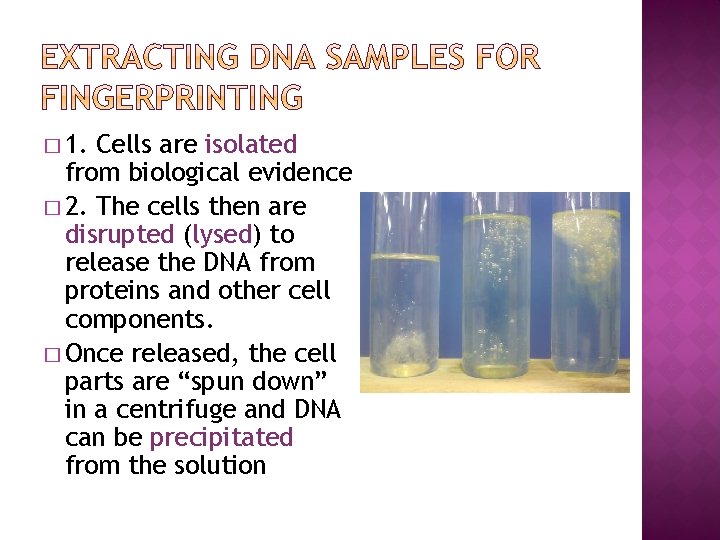
� 1. Cells are isolated from biological evidence � 2. The cells then are disrupted (lysed) to release the DNA from proteins and other cell components. � Once released, the cell parts are “spun down” in a centrifuge and DNA can be precipitated from the solution
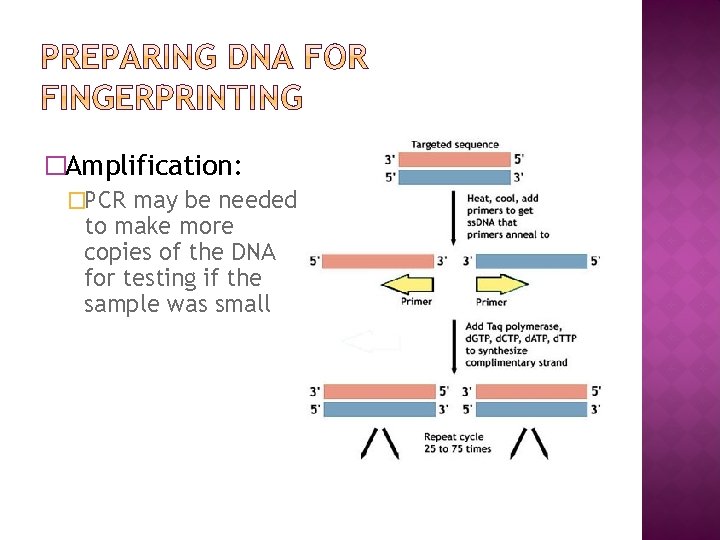
�Amplification: �PCR may be needed to make more copies of the DNA for testing if the sample was small
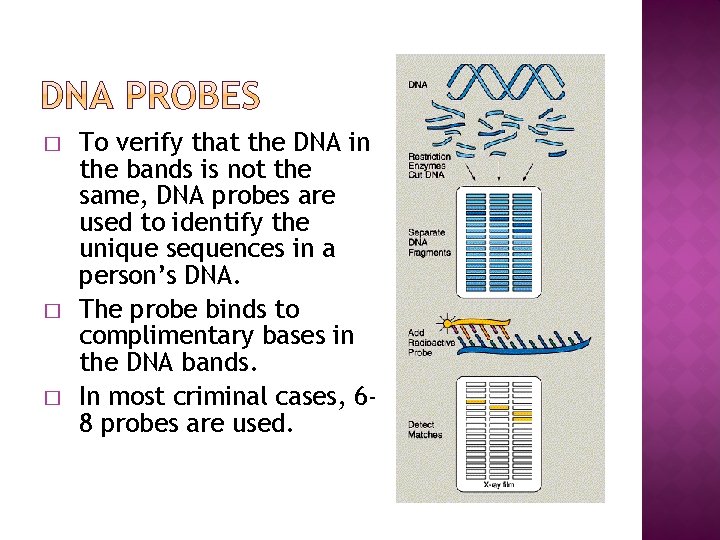
� � � To verify that the DNA in the bands is not the same, DNA probes are used to identify the unique sequences in a person’s DNA. The probe binds to complimentary bases in the DNA bands. In most criminal cases, 68 probes are used.
� Band position, width, and probe binding are significant in matching samples of DNA. � DNA fingerprinting can �(a) match crime scene DNA with a suspect, �(b) determine maternity, paternity, or match to another relative, �(c) eliminate a suspect, �(d) free a falsely imprisoned individual, and �(e) identify human remains.
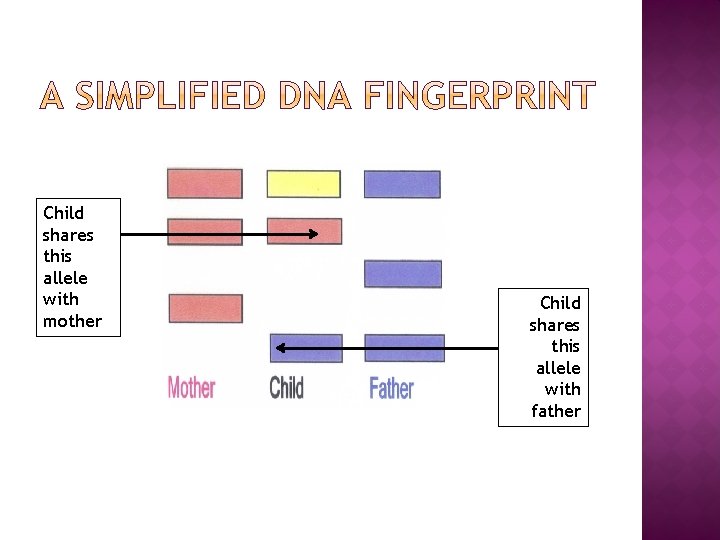
Child shares this allele with mother Child shares this allele with father
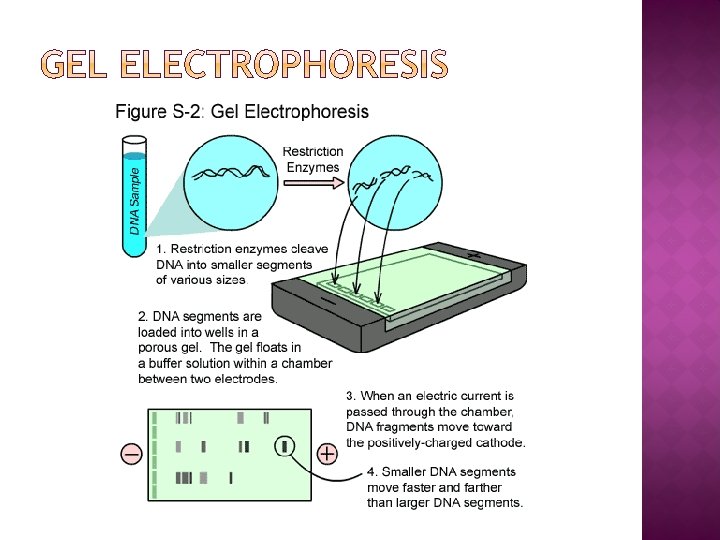
�Polymerase chain reaction (PCR) for DNA amplification has largely eliminated the problem resulting from the tiny samples usually available. �DNA evidence must be collected carefully to avoid contamination with other DNA. �DNA analysis involves extraction, electrophoresis, and visualization. �DNA profiles are kept by police agencies in electronic databases.
- Slides: 14