
Bio 449 Lecture 21 Respiratory Physiology II Mechanics
Bio 449 Lecture 21 – Respiratory Physiology II Mechanics of ventilation Pressure and pumps Thoracic cavity Intrapleural pressure Inspiration and expiration Alveolar gas composition Atmospheric gases Partial pressures Effects of ventilation pattern Anatomical dead space Alveolar gases Lectures 21 -22: Lectures 23 -24: Terms to Know Thoracic cavity Diaphragm Pleural membrane Intrapleural fluid Compliance Inhalation External intercostals Internal intercostals Partial pressure Tidal volume Anatomical dead space Minute ventilation Alveolar ventilation Readings Chapter 17 Chapter 16, pages 547 -558 Chapter 18 Oct. 27, 2010
Mechanics of ventilation Pressure and pumps
Thoracic cavity
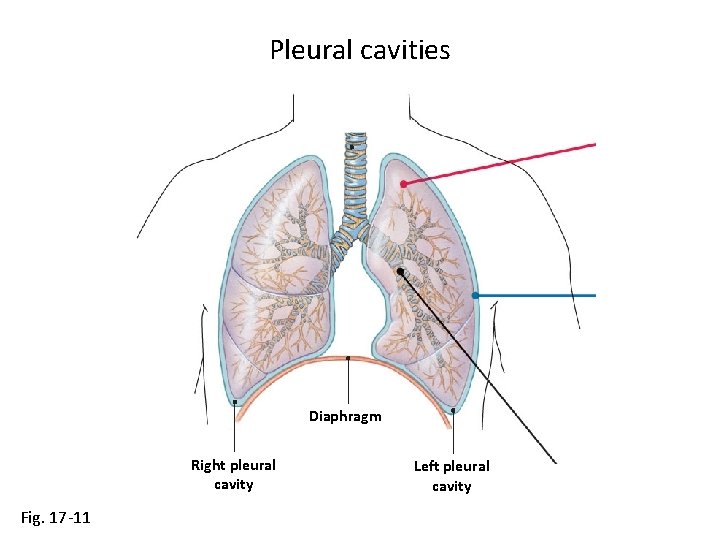
Pleural cavities Diaphragm Right pleural cavity Fig. 17 -11 Left pleural cavity
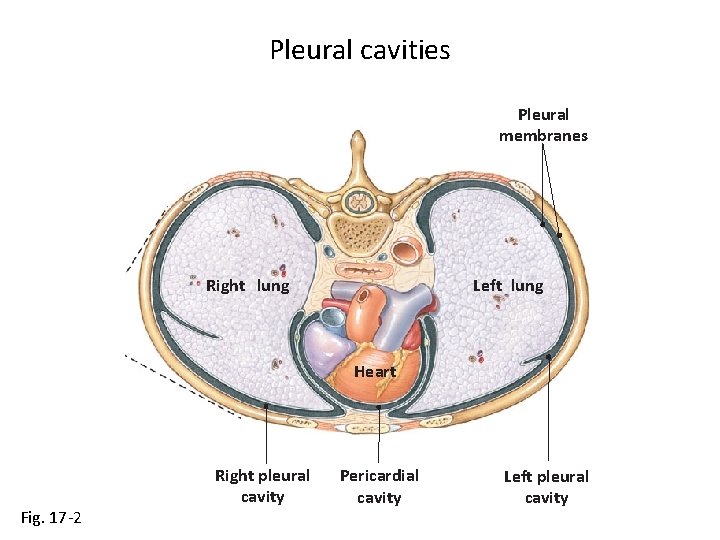
Pleural cavities Pleural membranes Right lung Left lung Heart Fig. 17 -2 Right pleural cavity Pericardial cavity Left pleural cavity
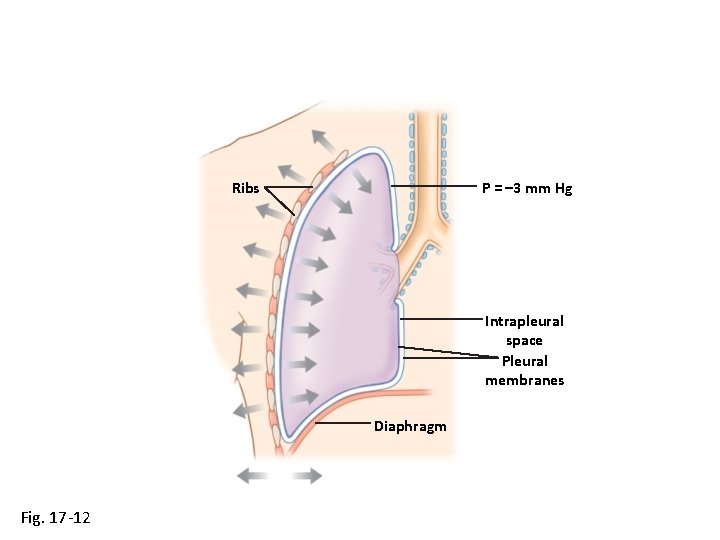
P = – 3 mm Hg Ribs Intrapleural space Pleural membranes Diaphragm Fig. 17 -12
Inspiration and expiration
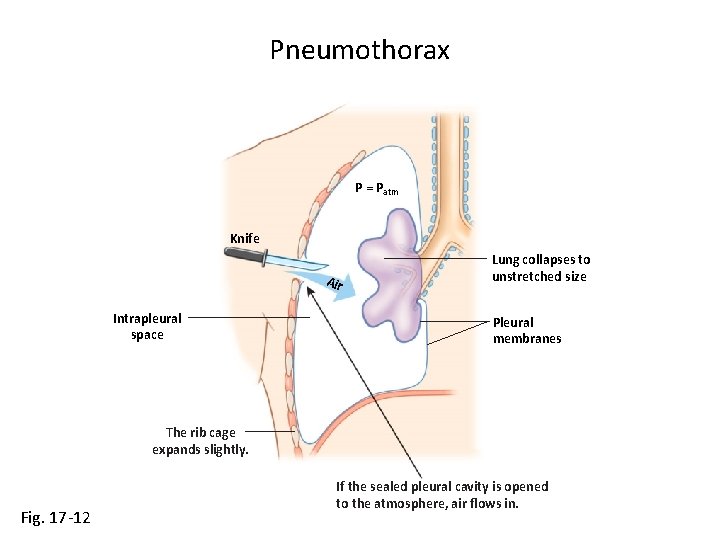
Pneumothorax P = Patm Knife Air Intrapleural space Lung collapses to unstretched size Pleural membranes The rib cage expands slightly. Fig. 17 -12 If the sealed pleural cavity is opened to the atmosphere, air flows in.
Alveolar gas composition Atmospheric gases
Partial pressures
Alveolar ventilation
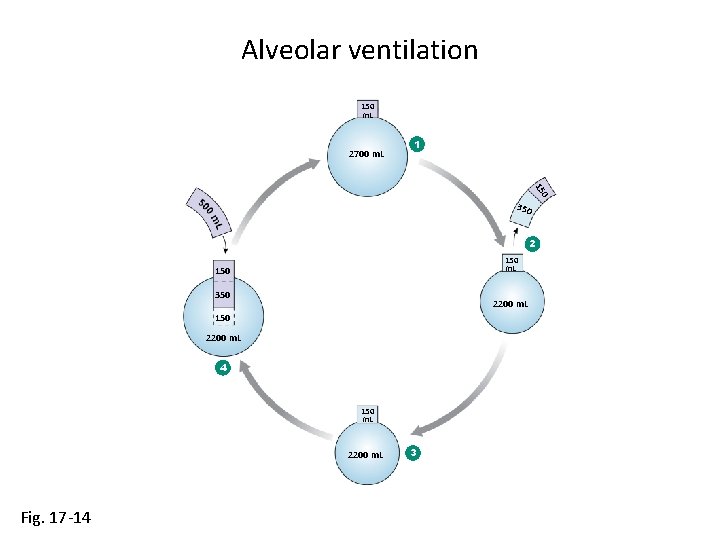
Alveolar ventilation 150 m. L 2700 m. L 1 0 15 350 2 150 m. L 150 350 2200 m. L 150 2200 m. L 4 150 m. L 2200 m. L Fig. 17 -14 3
Alveolar gases
- Slides: 13