
Bio 449 Lecture 12 Sensory Physiology IV Vision
Bio 449 Lecture 12 - Sensory Physiology IV Vision - the eye Gross structure and function Focusing mechanism Photoreceptors Structure Transduction of light Integration of receptor signals Terms to Know Sep. 22, 2010 Terms to Know Rod Cone Inner segment Outer segment Lamellae Rhodopsin Retinal Opsin Transducin Phosphodiesterase (PDE) Guanosine monophosphate (GMP) Cornea Sclera Lens Iris Ciliary muscles Zonular fibers Retina Fovea Optic nerve Bipolar cells Horizontal cells Ganglion cells Lectures 10 -12: Lectures 13 -14: Readings Chapter 10, pages 349 -379 Chapters 6 & 7
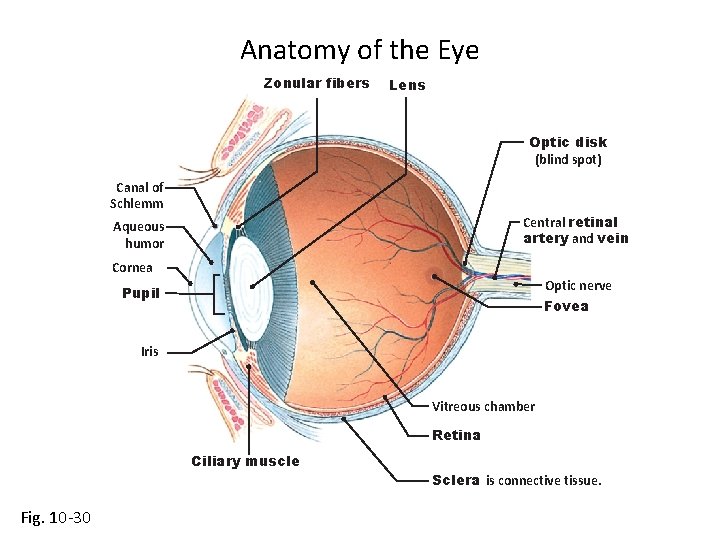
Anatomy of the Eye Zonular fibers Lens Optic disk (blind spot) Canal of Schlemm Central retinal artery and vein Aqueous humor Cornea Optic nerve Pupil Fovea Iris Vitreous chamber Retina Ciliary muscle Fig. 10 -30 Sclera is connective tissue.
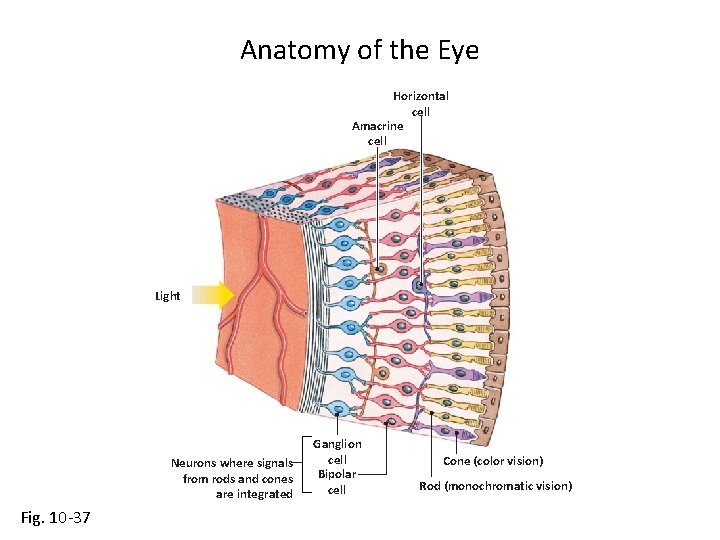
Anatomy of the Eye Horizontal cell Amacrine cell Light Neurons where signals from rods and cones are integrated Fig. 10 -37 Ganglion cell Bipolar cell Cone (color vision) Rod (monochromatic vision)
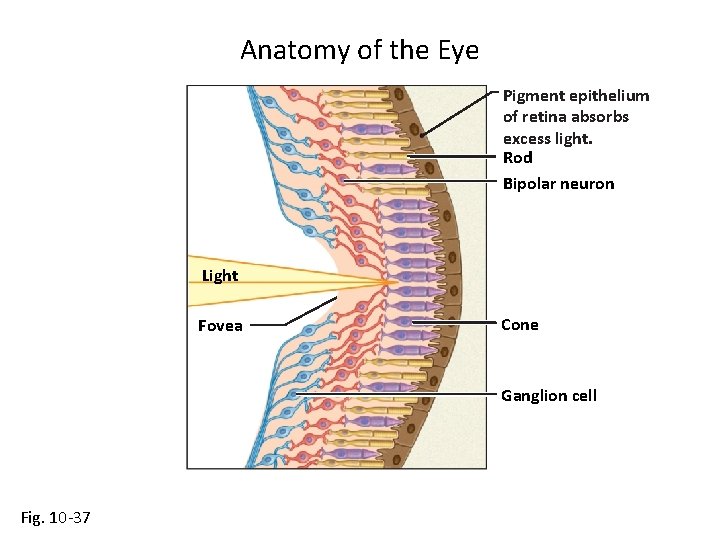
Anatomy of the Eye Pigment epithelium of retina absorbs excess light. Rod Bipolar neuron Light Fovea Cone Ganglion cell Fig. 10 -37
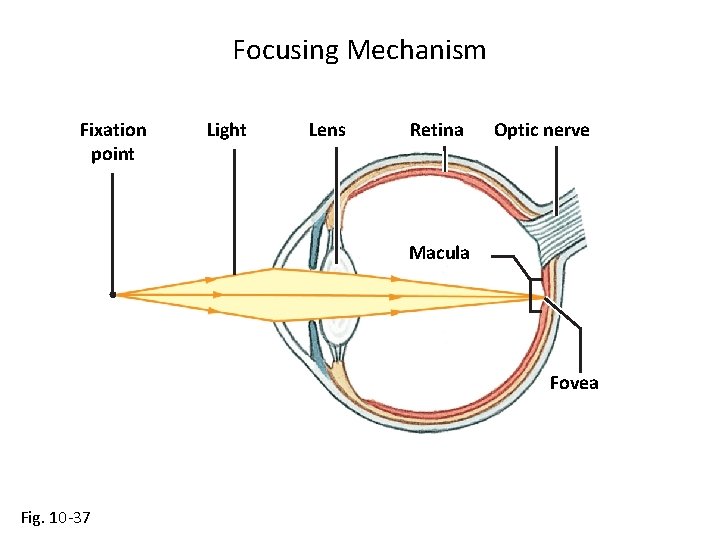
Focusing Mechanism Fixation point Light Lens Retina Optic nerve Macula Fovea Fig. 10 -37
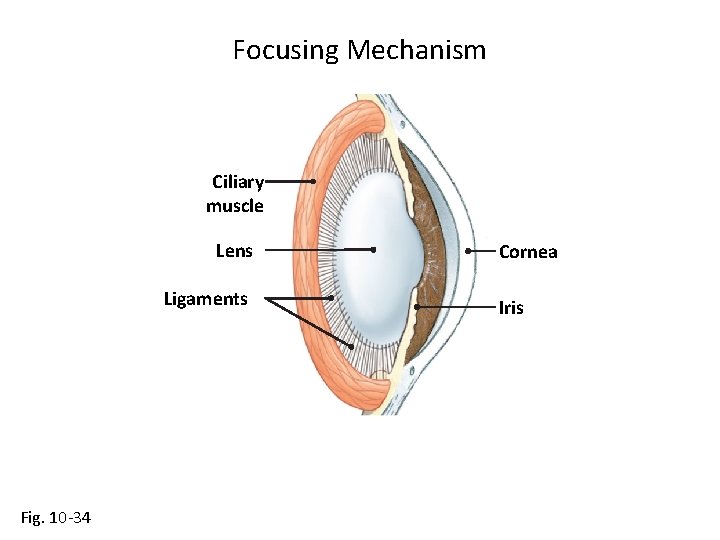
Focusing Mechanism Ciliary muscle Lens Ligaments Fig. 10 -34 Cornea Iris
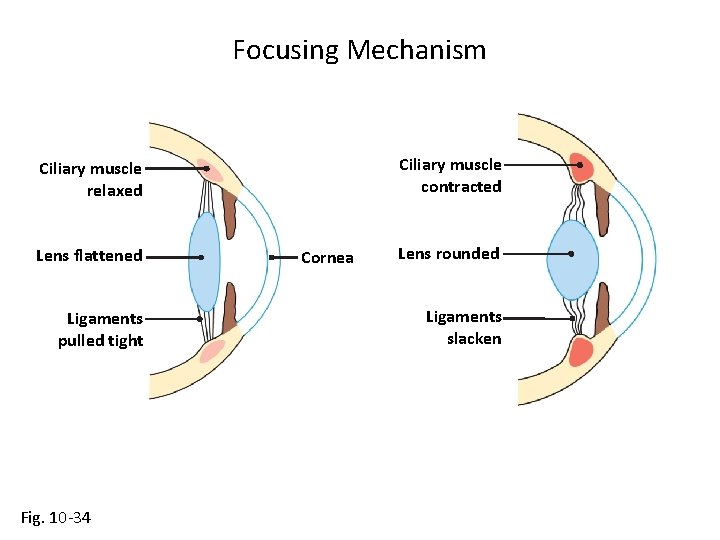
Focusing Mechanism Ciliary muscle contracted Ciliary muscle relaxed Lens flattened Ligaments pulled tight Fig. 10 -34 Cornea Lens rounded Ligaments slacken
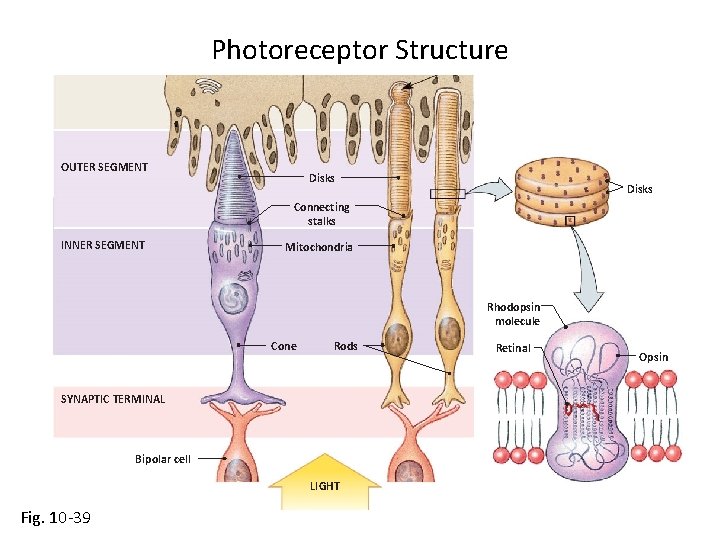
Photoreceptor Structure OUTER SEGMENT Disks Connecting stalks INNER SEGMENT Mitochondria Rhodopsin molecule Cone Rods SYNAPTIC TERMINAL Bipolar cell LIGHT Fig. 10 -39 Retinal Opsin
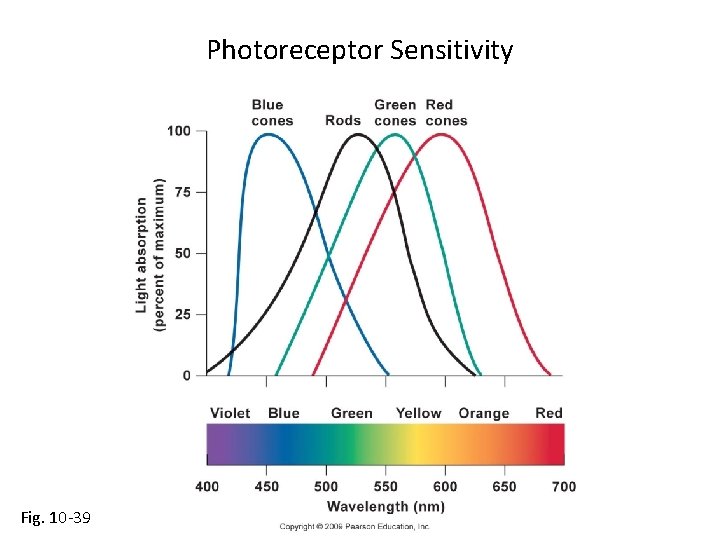
Photoreceptor Sensitivity Fig. 10 -39
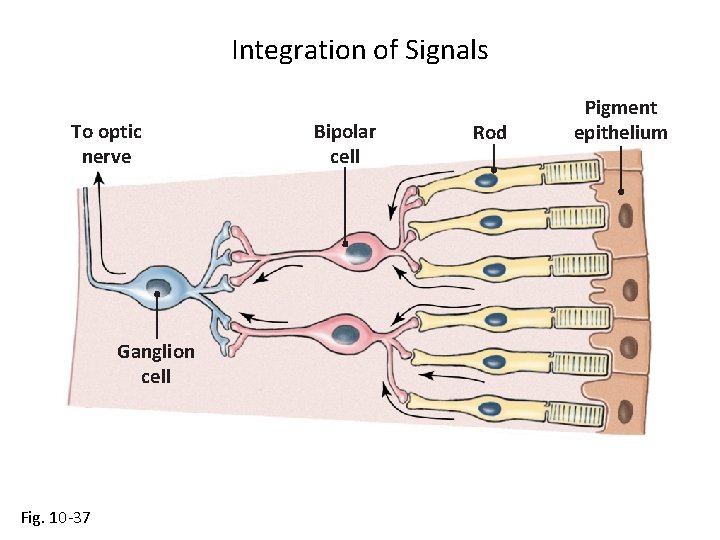
Integration of Signals To optic nerve Ganglion cell Fig. 10 -37 Bipolar cell Rod Pigment epithelium
- Slides: 10