
BIO 431 HEALTH MICROBIOLOGY B DIAGNOSTIC MICROBIOLOGY AND
BIO 431 HEALTH MICROBIOLOGY
B- DIAGNOSTIC MICROBIOLOGY AND IMMUNOBIOLOGICAL METHODS Diagnostic methods used in health microbiology: I-Classical diagnostic methods II- Molecular diagnostic methods
• The microbiologist plays a critical role in the diagnosis of agents that cause infectious diseases. This area of microbiology is called diagnostic or clinical-microbiology.
• Clinical laboratories can develop, isolate and diagnose the most common pathogenic bacteria within 48 hours after sampling.
• Immunological and molecular methods can also be used in the diagnosis of many pathogens without culturing the organism.
• These methods are particularly important in the diagnosis of viral and protozoal infections, which are difficult to diagnose due to difficulties in cultivating the agent.
I- Classic diagnostic methods for microbial development • Isolation of Pathogens from Clinical Samples • Diagnostic Methods Due to Microbial Development • Antimicrobial Drug Sensitivity Tests • Security in Microbiology Laboratory
I- Immunology and Clinical diagnostic methods Immunoassays for Infectious Diseases Polyclonal and Monoclonal Antibodies In vitro Antigen-Antibody Reactions: Serology agglutination Fluorescent Antibodies Enzyme Bound Immunosorbent Assay and Radioimmunassay • Immunoblot Methods • • •
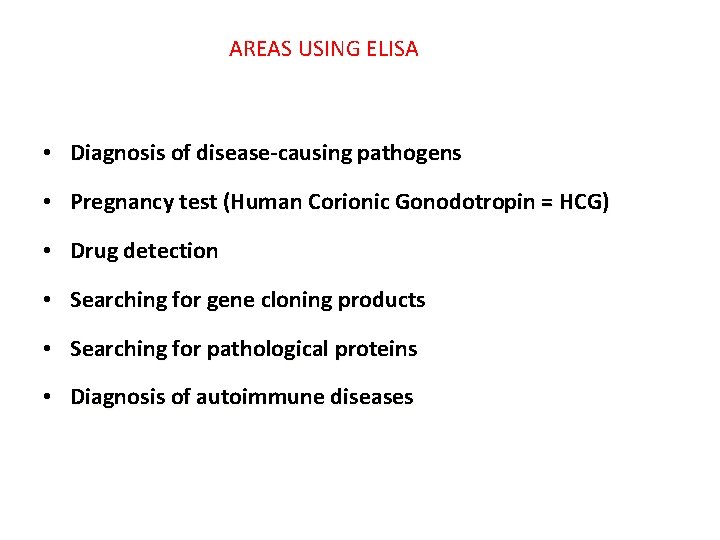
AREAS USING ELISA • Diagnosis of disease-causing pathogens • Pregnancy test (Human Corionic Gonodotropin = HCG) • Drug detection • Searching for gene cloning products • Searching for pathological proteins • Diagnosis of autoimmune diseases
- Slides: 9