
BIO 3308 MICROBIOLOGY 1 Chapter 1 Microbial Life
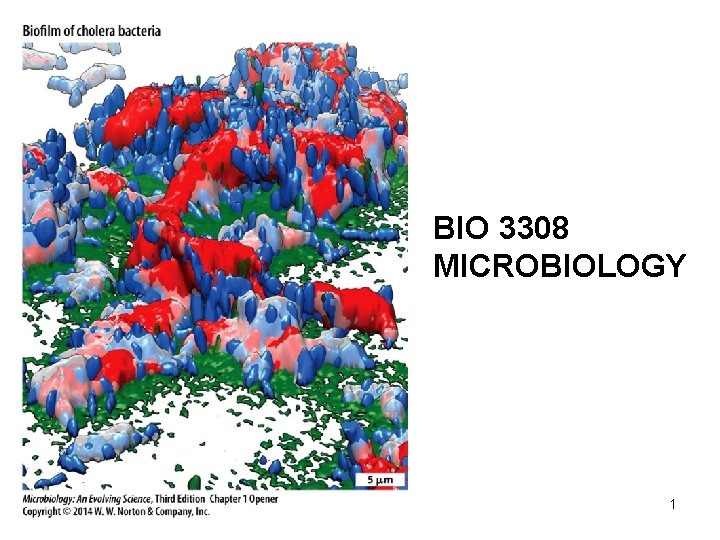
BIO 3308 MICROBIOLOGY 1
Chapter 1 Microbial Life: Origin and Discovery 2
What will we study? Modules: 1. 2. 3. 4. 5. 6. Introduction, history, microscopy Cell structure and function Growth and development Metabolism Genetics and molecular regulation Human-microbe interactions 3

What is a microorganism? What is a microorganism (microbe)? • Living organisms that can only be seen through a microscope • Less than about 1 mm across – 10 -3 meters (1 mm) to 10 -7 meters (0. 1 micrometer (micron)) 4

What Is a Microbe? Microorganisms Cellular Acellular Viruses Prokaryotic (bacteria, archaea) Eukaryotic (algae, protists, fungi) 5
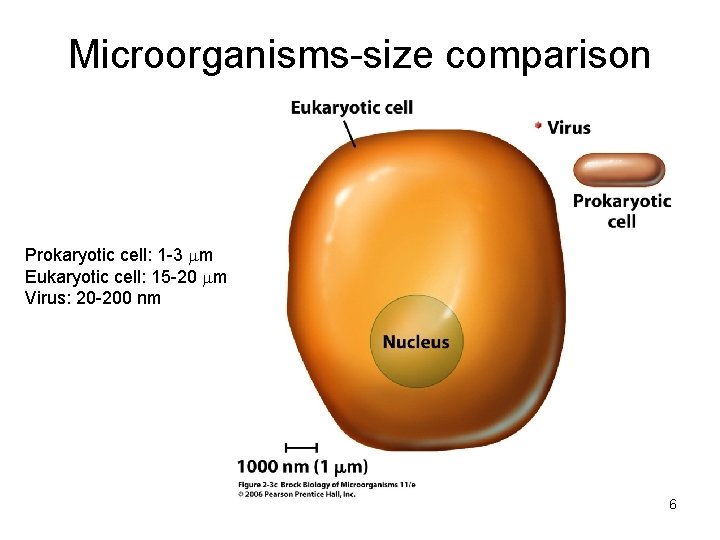
Microorganisms-size comparison Prokaryotic cell: 1 -3 mm Eukaryotic cell: 15 -20 mm Virus: 20 -200 nm 6
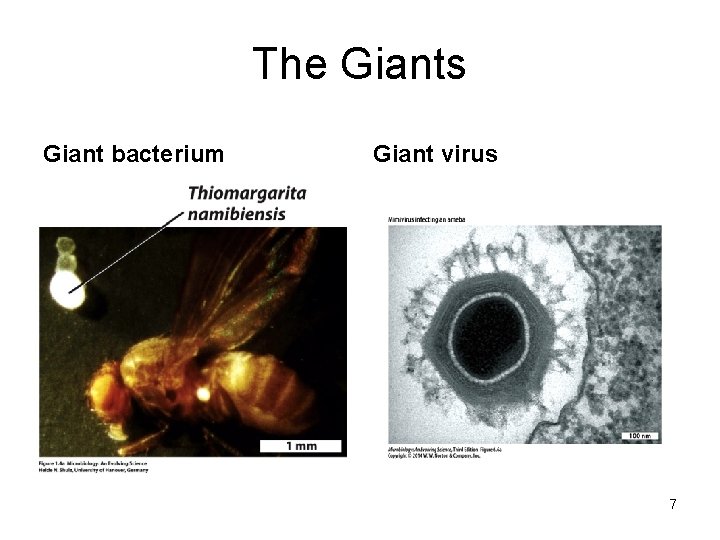
The Giants Giant bacterium Giant virus 7
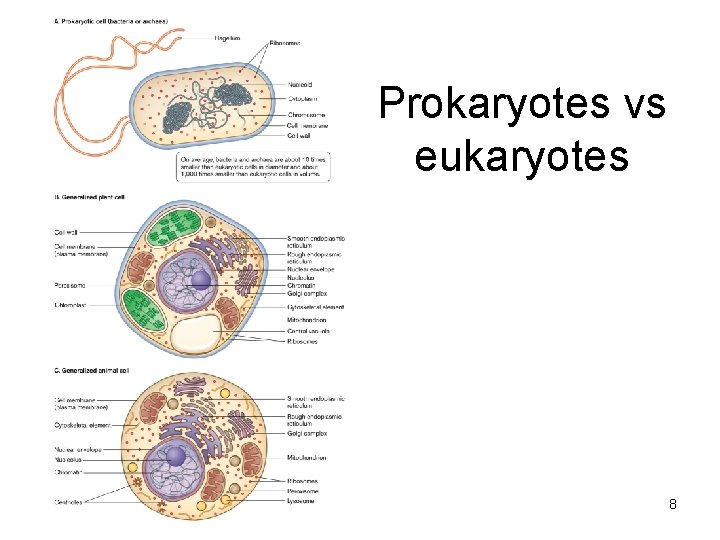
Prokaryotes vs eukaryotes 8

Bacteria with a nucleus? Gemmata obscuriglobus 9
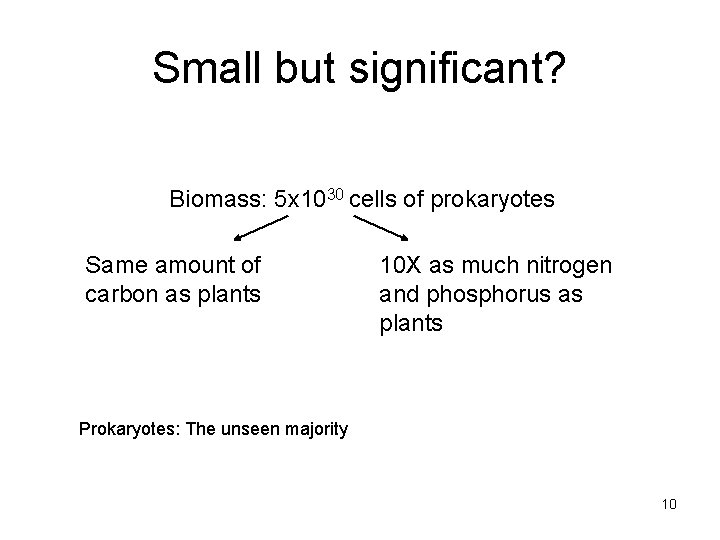
Small but significant? Biomass: 5 x 1030 cells of prokaryotes Same amount of carbon as plants 10 X as much nitrogen and phosphorus as plants Prokaryotes: The unseen majority 10
Where do we find prokaryotes? 11
Current issues in Microbiology? 12
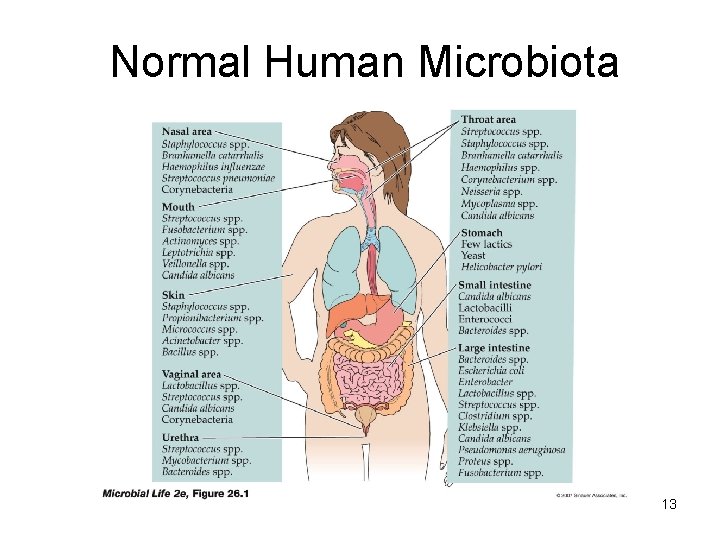
Normal Human Microbiota 13
Human beings as symbionts • ~ number of human cells: 1013 • ~ number of prokaryotes on and in humans: 1014 14
Prokaryotes: The bad, the good • Some numbers: – Many species of bacteria known (millions? ) – ~ 170 are pathogenic • All bacteria. No archaea. 15
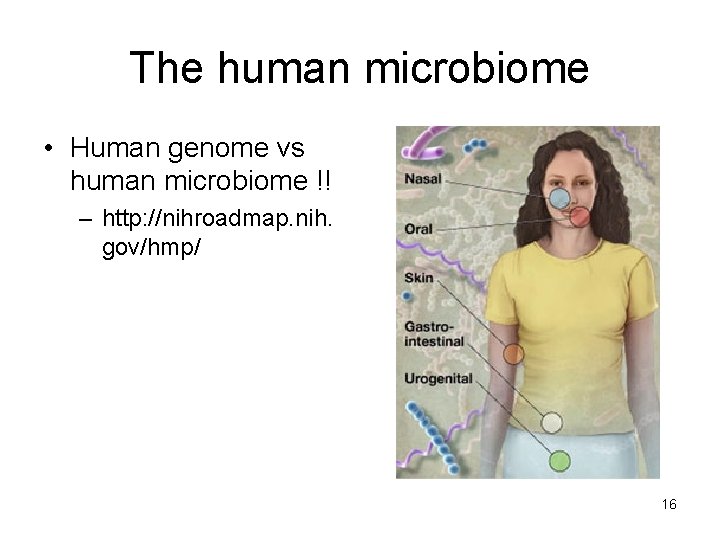
The human microbiome • Human genome vs human microbiome !! – http: //nihroadmap. nih. gov/hmp/ 16
- Slides: 16