
Bio 2201 Unit 2 Biodiversity Virus A Viruses
Bio 2201 Unit 2 – Biodiversity - Virus
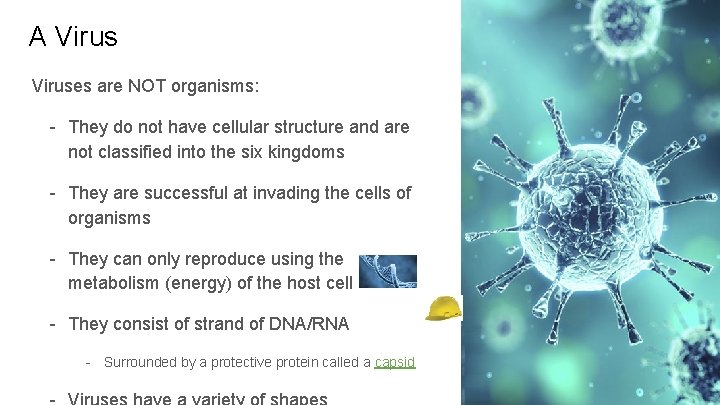
A Viruses are NOT organisms: - They do not have cellular structure and are not classified into the six kingdoms - They are successful at invading the cells of organisms - They can only reproduce using the metabolism (energy) of the host cell - They consist of strand of DNA/RNA - Surrounded by a protective protein called a capsid
A virus - Cannot replicate without a host - Origin is thought to be fragments of nucleic acid which had escaped from their original cell - Survives by becoming a parasite on specific hosts. - This suggests that viruses and their hosts probably evolved together - This would make a virus and a host more closely related than a particular virus with
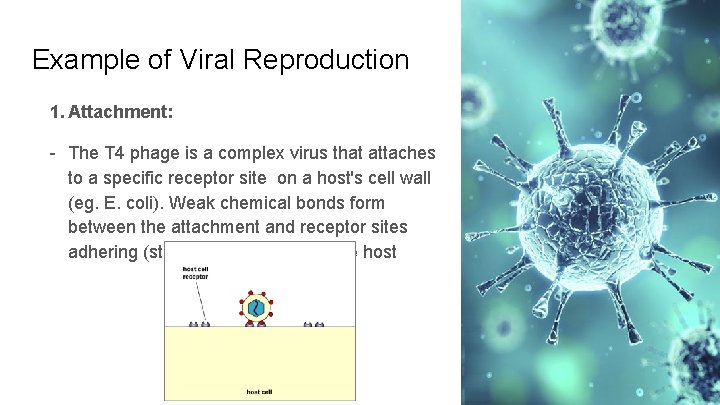
Example of Viral Reproduction 1. Attachment: - The T 4 phage is a complex virus that attaches to a specific receptor site on a host's cell wall (eg. E. coli). Weak chemical bonds form between the attachment and receptor sites adhering (sticking to) the virus to the host
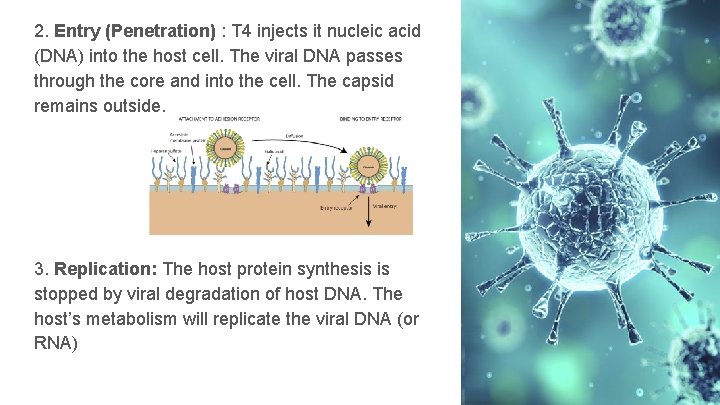
2. Entry (Penetration) : T 4 injects it nucleic acid (DNA) into the host cell. The viral DNA passes through the core and into the cell. The capsid remains outside. 3. Replication: The host protein synthesis is stopped by viral degradation of host DNA. The host’s metabolism will replicate the viral DNA (or RNA)
4. Assembly: Spontaneous assembly of new virus particles occurs. 5. Lysis and Release: The host cell plasma membrane and cell wall lyses (breaks open) releasing the new virus particles. The host cell dies.
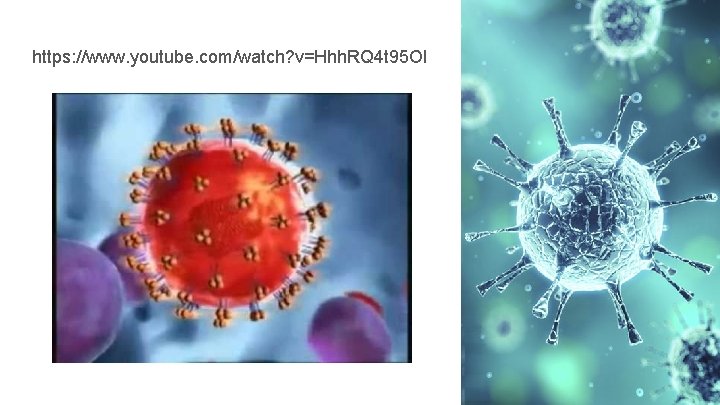
https: //www. youtube. com/watch? v=Hhh. RQ 4 t 95 OI
- Slides: 7