
Bio 1108 Reproductive System Male and Female Anatomy
Bio 1108 Reproductive System Male and Female Anatomy
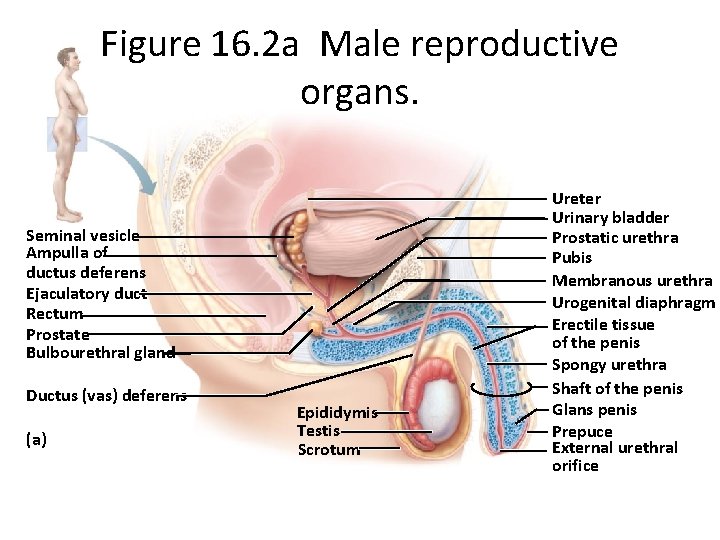
Figure 16. 2 a Male reproductive organs. Seminal vesicle Ampulla of ductus deferens Ejaculatory duct Rectum Prostate Bulbourethral gland Ductus (vas) deferens (a) Epididymis Testis Scrotum Ureter Urinary bladder Prostatic urethra Pubis Membranous urethra Urogenital diaphragm Erectile tissue of the penis Spongy urethra Shaft of the penis Glans penis Prepuce External urethral orifice
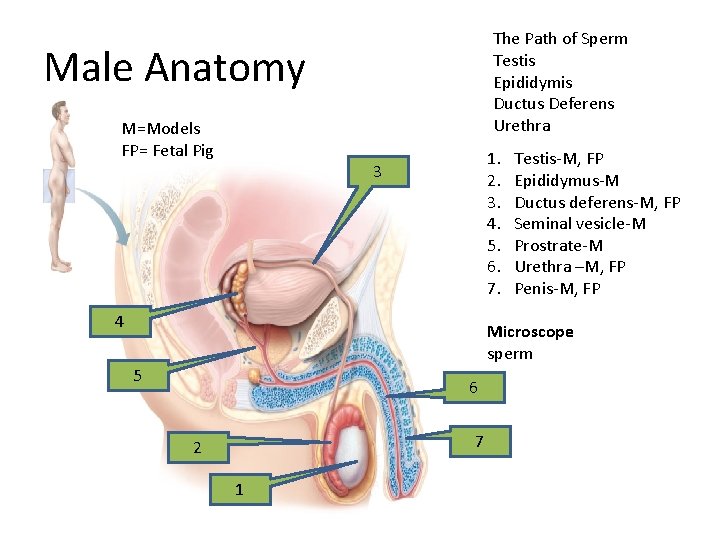
The Path of Sperm Testis Epididymis Ductus Deferens Urethra Male Anatomy M=Models FP= Fetal Pig 1. 2. 3. 4. 5. 6. 7. 3 4 Testis-M, FP Epididymus-M Ductus deferens-M, FP Seminal vesicle-M Prostrate-M Urethra –M, FP Penis-M, FP Microscope sperm 5 6 7 2 1
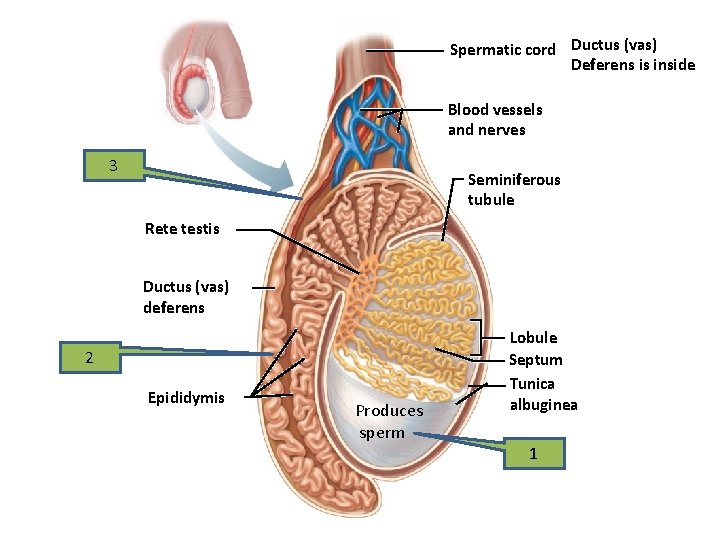
Spermatic cord Ductus (vas) Deferens is inside Blood vessels and nerves 3 Seminiferous tubule Rete testis Ductus (vas) deferens 2 Epididymis Produces sperm Lobule Septum Tunica albuginea 1
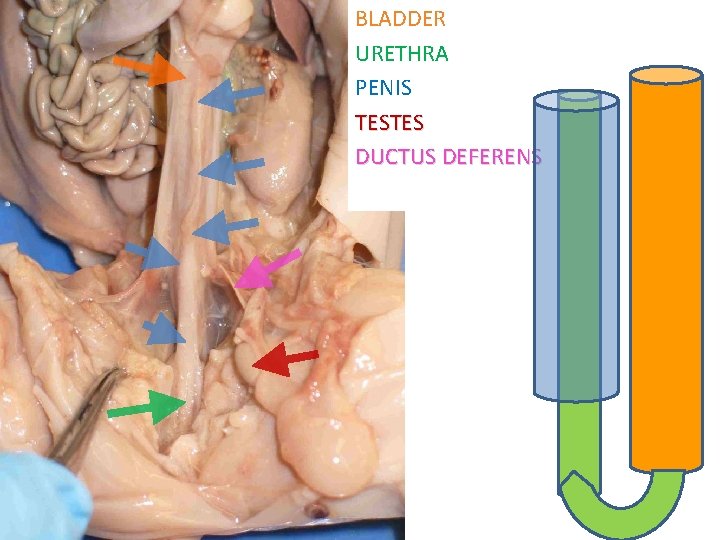
BLADDER URETHRA PENIS TESTES DUCTUS DEFERENS
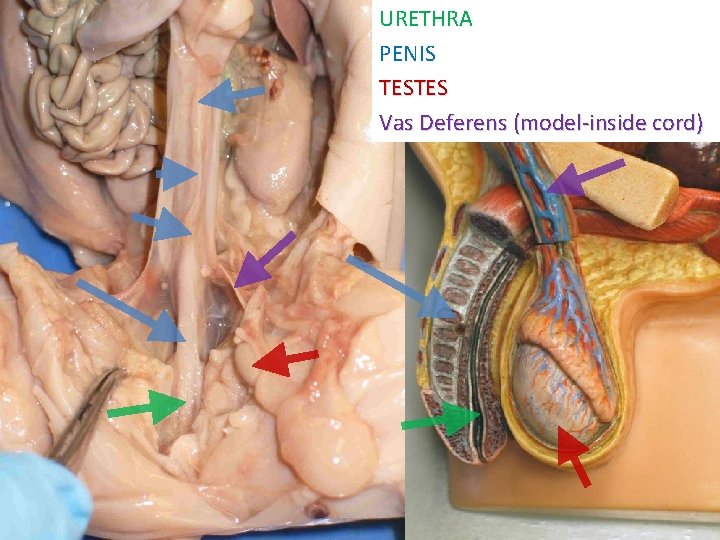
URETHRA PENIS TESTES Vas Deferens (model-inside cord)
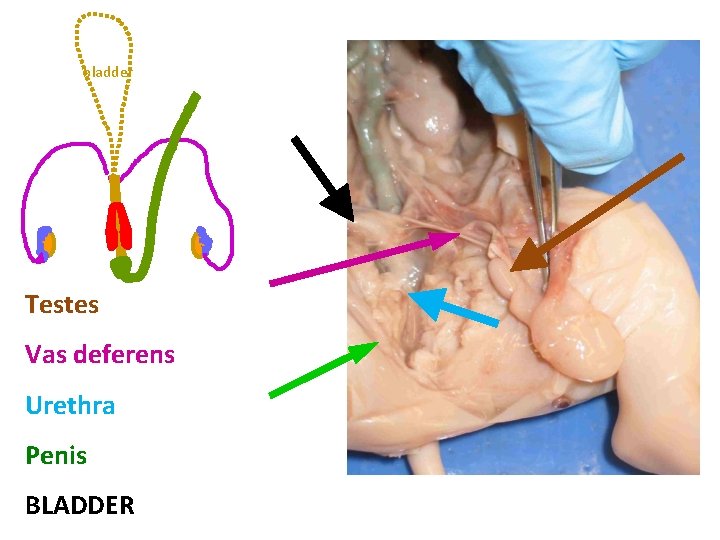
bladder Testes Vas deferens Urethra Penis BLADDER
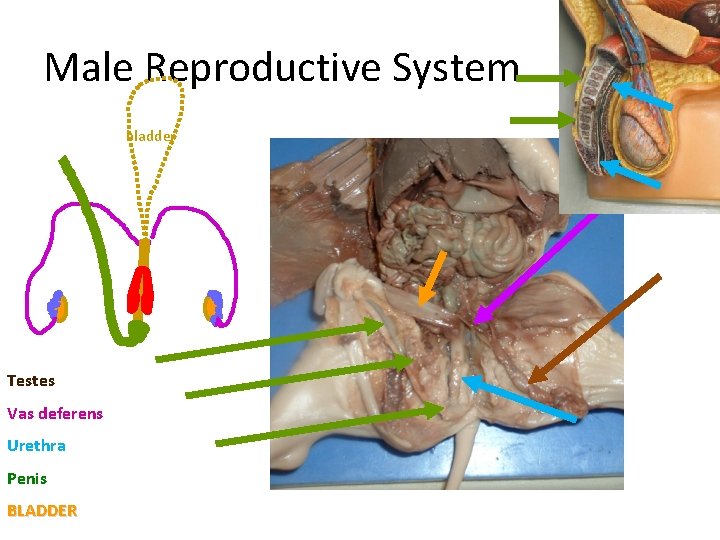
Male Reproductive System bladder Testes Vas deferens Urethra Penis BLADDER
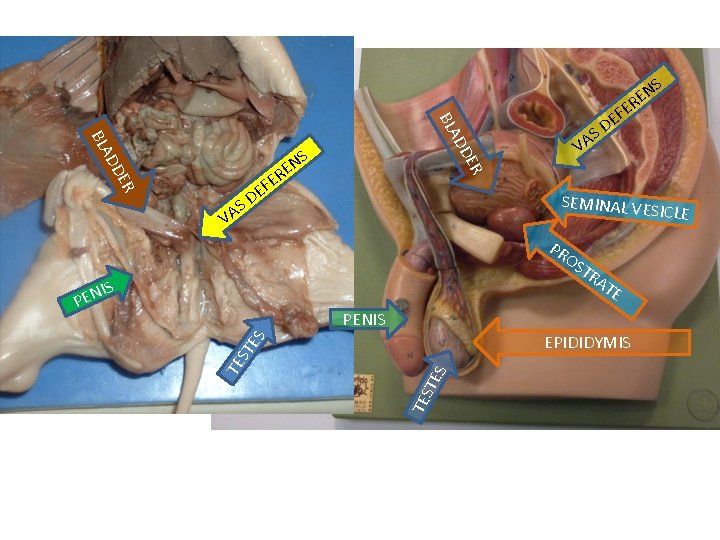
S S R EN R FE S VA ER E DD BLA E F DE E D S VA SEMINAL VE SICLE PR OS TR A TE S I PENIS ES EPIDIDYMIS TES ST TE N RE
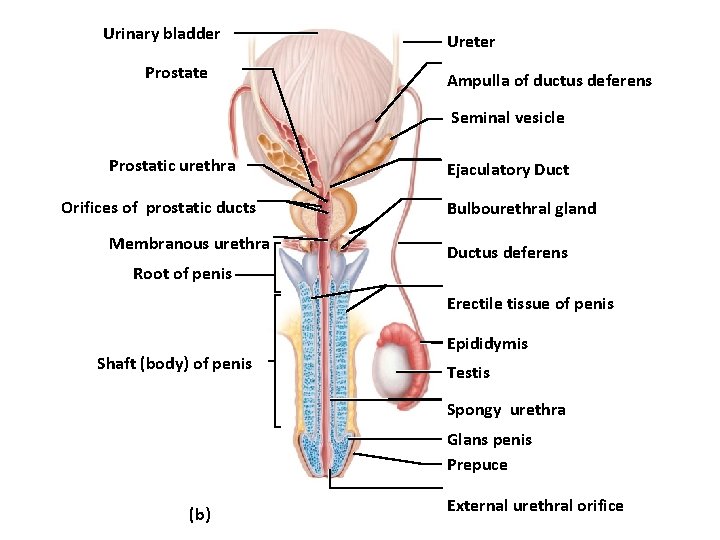
Urinary bladder Prostate Ureter Ampulla of ductus deferens Seminal vesicle Prostatic urethra Orifices of prostatic ducts Membranous urethra Root of penis Ejaculatory Duct Bulbourethral gland Ductus deferens Erectile tissue of penis Shaft (body) of penis Epididymis Testis Spongy urethra Glans penis Prepuce (b) External urethral orifice
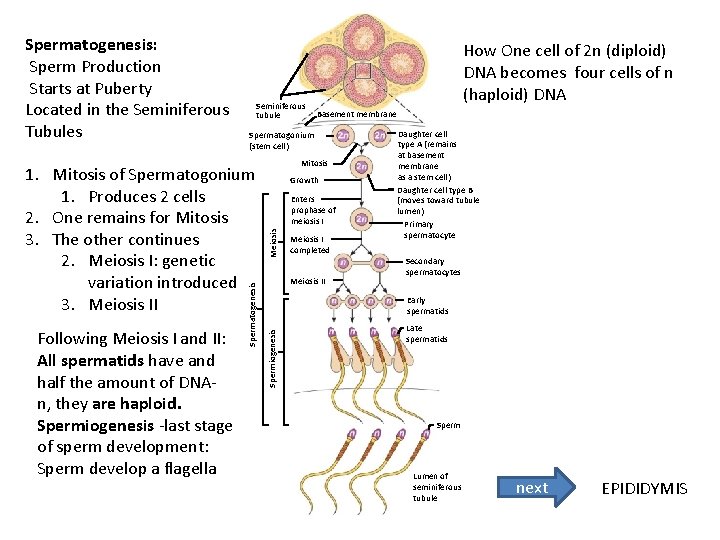
Seminiferous tubule Spermatogenesis Basement membrane Mitosis Growth Enters prophase of meiosis I Meiosis 1. Mitosis of Spermatogonium 1. Produces 2 cells 2. One remains for Mitosis 3. The other continues 2. Meiosis I: genetic variation introduced 3. Meiosis II Following Meiosis I and II: All spermatids have and half the amount of DNAn, they are haploid. Spermiogenesis -last stage of sperm development: Sperm develop a flagella How One cell of 2 n (diploid) DNA becomes four cells of n (haploid) DNA Spermatogonium (stem cell) Meiosis I completed Meiosis II Daughter cell type A (remains at basement membrane as a stem cell) Daughter cell type B (moves toward tubule lumen) Primary spermatocyte Secondary spermatocytes Early spermatids Spermiogenesis Spermatogenesis: Sperm Production Starts at Puberty Located in the Seminiferous Tubules Late spermatids Sperm Lumen of seminiferous tubule next EPIDIDYMIS

Figure 16. 5 Structure of sperm. Plasma membrane Neck Tail Midpiece Head Axial filament of tail (a) Distal centriole Mitochondria Acrosome Nucleus Proximal centriole (b)
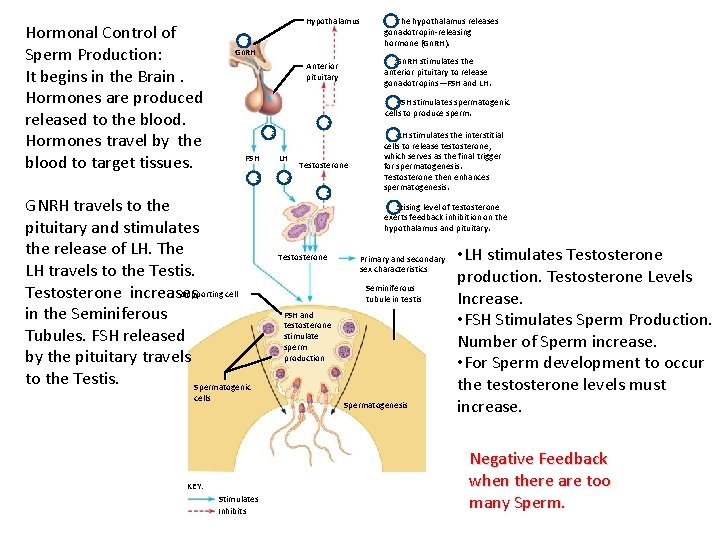
Hormonal Control of Sperm Production: It begins in the Brain. Hormones are produced released to the blood. Hormones travel by the blood to target tissues. Hypothalamus 1 Gn. RH 2 Gn. RH stimulates the anterior pituitary to release gonadotropins—FSH and LH. Anterior pituitary FSH 3 GNRH travels to the pituitary and stimulates the release of LH. The LH travels to the Testis. Supporting cell Testosterone increases in the Seminiferous Tubules. FSH released by the pituitary travels to the Testis. Spermatogenic cells 3 FSH stimulates spermatogenic cells to produce sperm. 5 2 LH Testosterone 4 5 1 The hypothalamus releases gonadotropin-releasing hormone (Gn. RH). 4 LH stimulates the interstitial cells to release testosterone, which serves as the final trigger for spermatogenesis. Testosterone then enhances spermatogenesis. 5 Rising level of testosterone exerts feedback inhibition on the hypothalamus and pituitary. Testosterone Primary and secondary sex characteristics Seminiferous tubule in testis FSH and testosterone stimulate sperm production Spermatogenesis KEY: Stimulates Inhibits • LH stimulates Testosterone production. Testosterone Levels Increase. • FSH Stimulates Sperm Production. Number of Sperm increase. • For Sperm development to occur the testosterone levels must increase. Negative Feedback when there are too many Sperm.
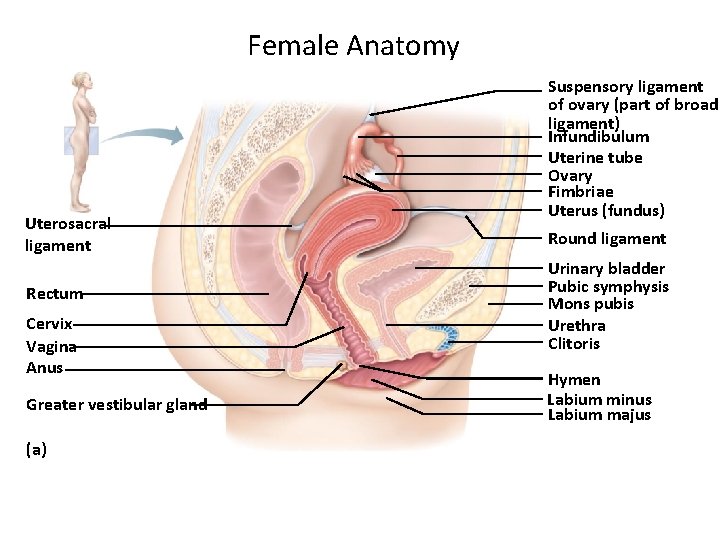
Female Anatomy Uterosacral ligament Rectum Cervix Vagina Anus Greater vestibular gland (a) Suspensory ligament of ovary (part of broad ligament) Infundibulum Uterine tube Ovary Fimbriae Uterus (fundus) Round ligament Urinary bladder Pubic symphysis Mons pubis Urethra Clitoris Hymen Labium minus Labium majus
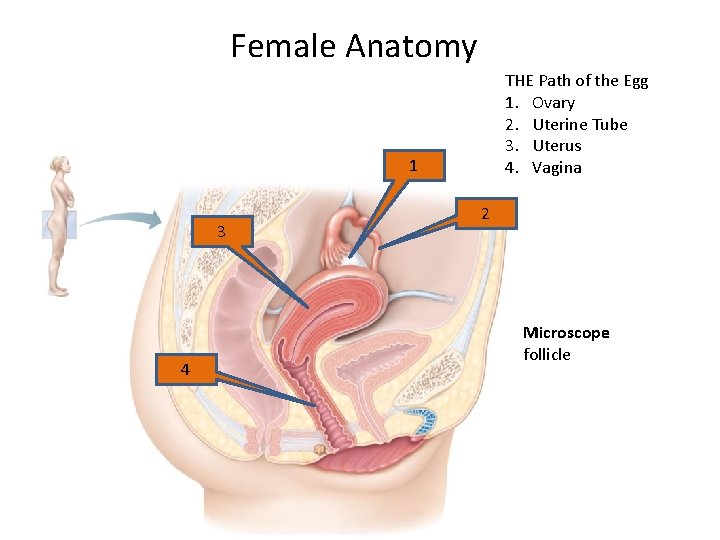
Female Anatomy THE Path of the Egg 1. Ovary 2. Uterine Tube 3. Uterus 4. Vagina 1 3 4 2 Microscope follicle
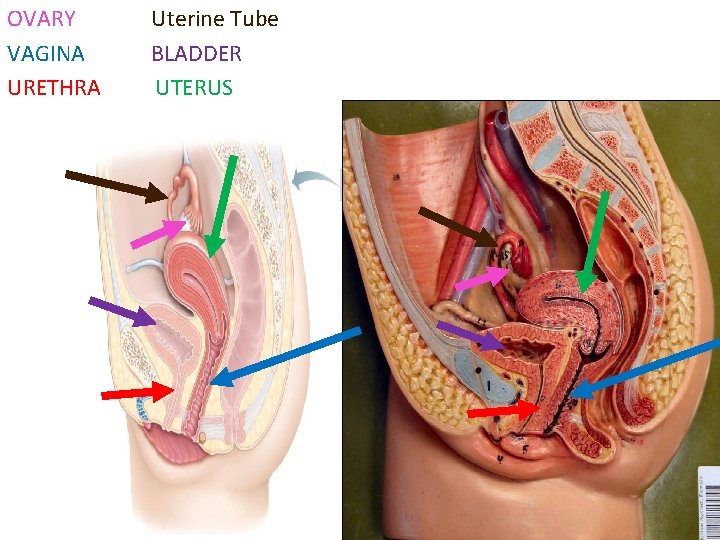
OVARY VAGINA URETHRA Uterine Tube BLADDER UTERUS
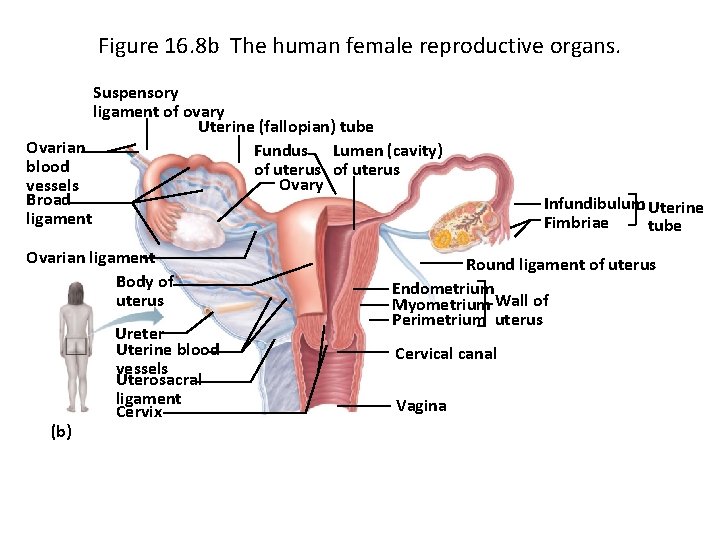
Figure 16. 8 b The human female reproductive organs. Suspensory ligament of ovary Uterine (fallopian) tube Ovarian Fundus Lumen (cavity) blood of uterus Ovary vessels Broad ligament Ovarian ligament Body of uterus (b) Ureter Uterine blood vessels Uterosacral ligament Cervix Infundibulum Uterine Fimbriae tube Round ligament of uterus Endometrium Myometrium Wall of Perimetrium uterus Cervical canal Vagina
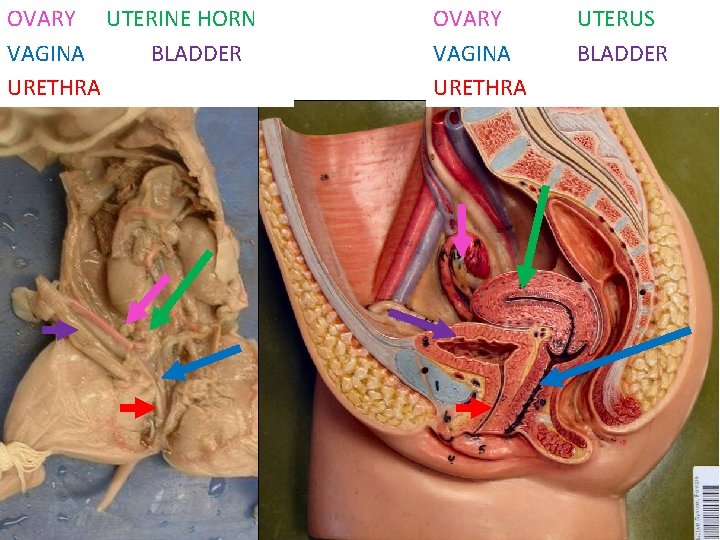
OVARY UTERINE HORN VAGINA BLADDER URETHRA OVARY VAGINA URETHRA UTERUS BLADDER
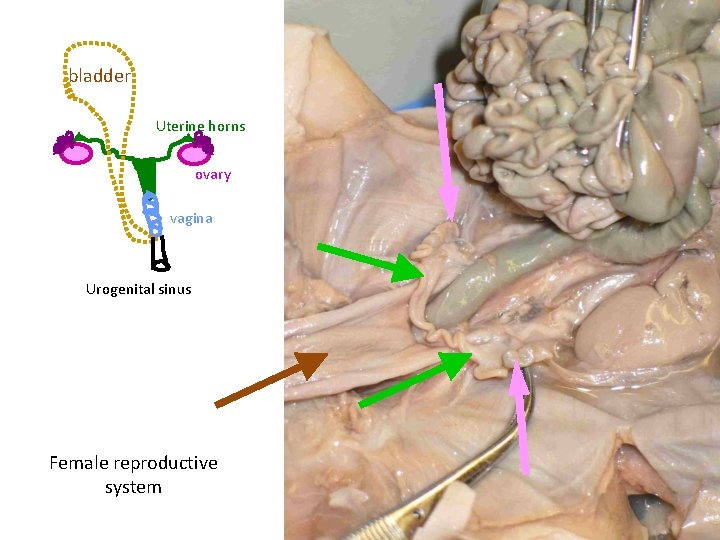
bladder Uterine horns ovary vagina Urogenital sinus Female reproductive system
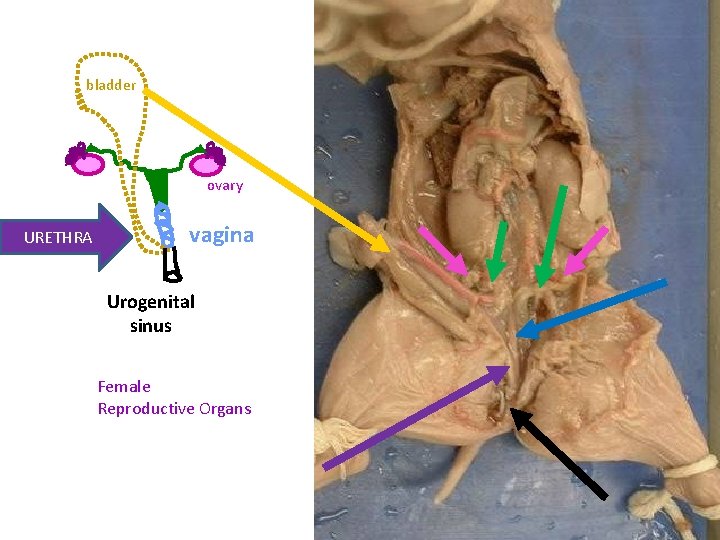
bladder ovary URETHRA vagina Urogenital sinus Female Reproductive Organs
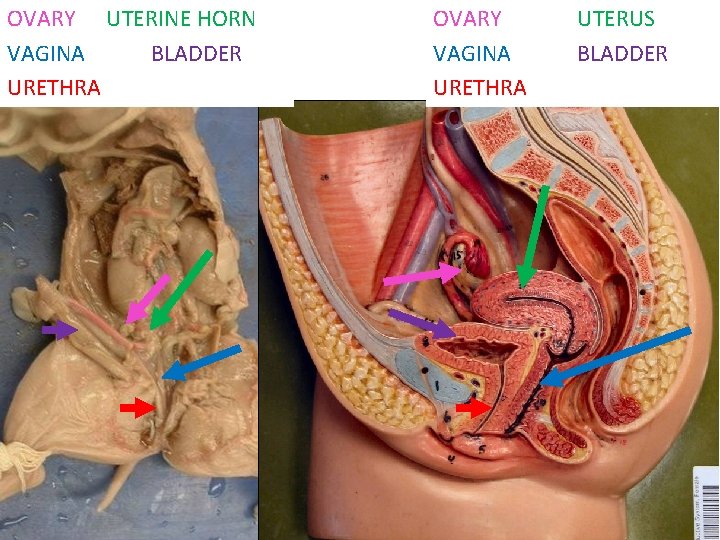
OVARY UTERINE HORN VAGINA BLADDER URETHRA OVARY VAGINA URETHRA UTERUS BLADDER
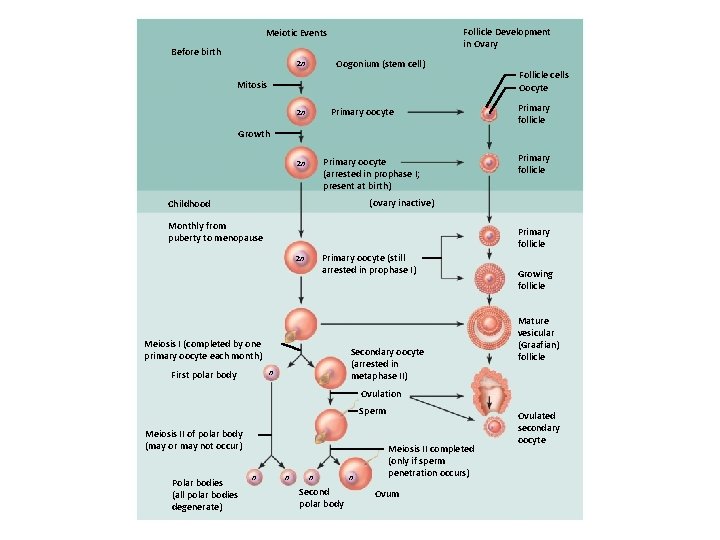
Follicle Development in Ovary Meiotic Events Before birth Oogonium (stem cell) 2 n Mitosis Primary oocyte 2 n Follicle cells Oocyte Primary follicle Growth Primary oocyte (arrested in prophase I; present at birth) 2 n Primary follicle (ovary inactive) Childhood Monthly from puberty to menopause Primary follicle Primary oocyte (still arrested in prophase I) 2 n Meiosis I (completed by one primary oocyte each month) Secondary oocyte (arrested in metaphase II) n First polar body Growing follicle Mature vesicular (Graafian) follicle Ovulation Sperm Meiosis II of polar body (may or may not occur) Polar bodies (all polar bodies degenerate) n n n Second polar body n Meiosis II completed (only if sperm penetration occurs) Ovum Ovulated secondary oocyte
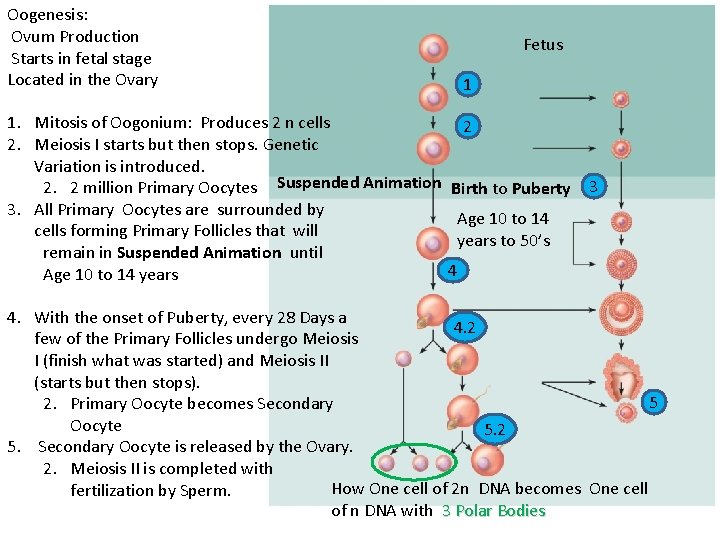
Oogenesis: Ovum Production Starts in fetal stage Located in the Ovary 1. Mitosis of Oogonium: Produces 2 n cells 2. Meiosis I starts but then stops. Genetic Variation is introduced. 2. 2 million Primary Oocytes Suspended Animation 3. All Primary Oocytes are surrounded by cells forming Primary Follicles that will remain in Suspended Animation until Age 10 to 14 years Fetus 1 2 Birth to Puberty 3 Age 10 to 14 years to 50’s 4 4. With the onset of Puberty, every 28 Days a 4. 2 few of the Primary Follicles undergo Meiosis I (finish what was started) and Meiosis II (starts but then stops). 5 2. Primary Oocyte becomes Secondary Oocyte 5. 2 5. Secondary Oocyte is released by the Ovary. 2. Meiosis II is completed with How One cell of 2 n DNA becomes One cell fertilization by Sperm. of n DNA with 3 Polar Bodies
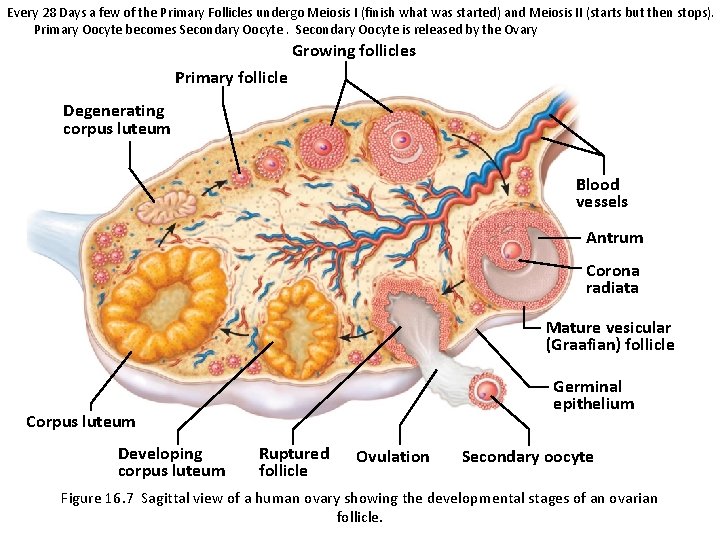
Every 28 Days a few of the Primary Follicles undergo Meiosis I (finish what was started) and Meiosis II (starts but then stops). Primary Oocyte becomes Secondary Oocyte is released by the Ovary Growing follicles Primary follicle Degenerating corpus luteum Blood vessels Antrum Corona radiata Mature vesicular (Graafian) follicle Germinal epithelium Corpus luteum Developing corpus luteum Ruptured follicle Ovulation Secondary oocyte Figure 16. 7 Sagittal view of a human ovary showing the developmental stages of an ovarian follicle.
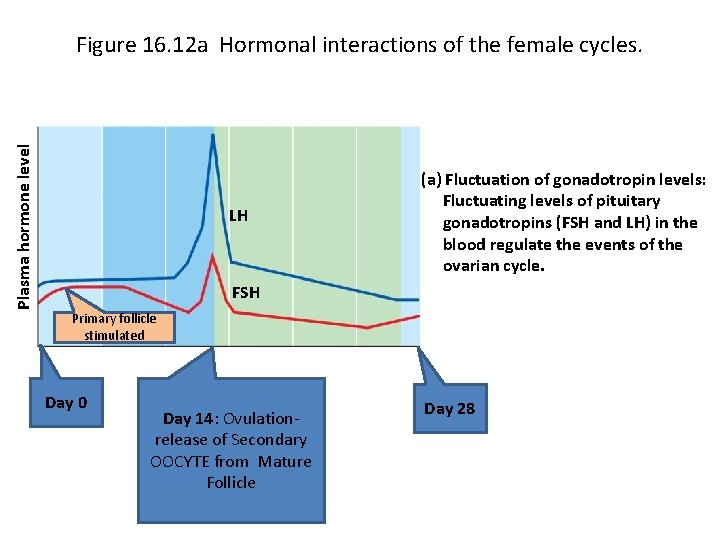
Plasma hormone level Figure 16. 12 a Hormonal interactions of the female cycles. LH (a) Fluctuation of gonadotropin levels: Fluctuating levels of pituitary gonadotropins (FSH and LH) in the blood regulate the events of the ovarian cycle. FSH Primary follicle stimulated Day 0 Day 14: Ovulationrelease of Secondary OOCYTE from Mature Follicle Day 28
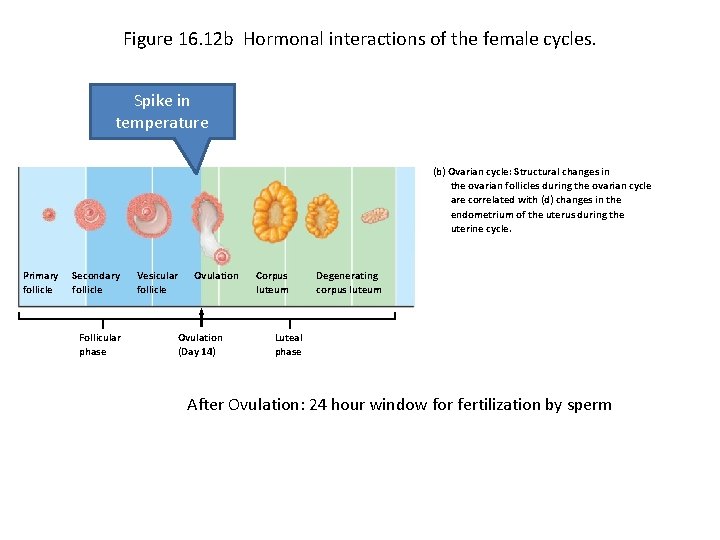
Figure 16. 12 b Hormonal interactions of the female cycles. Spike in temperature (b) Ovarian cycle: Structural changes in the ovarian follicles during the ovarian cycle are correlated with (d) changes in the endometrium of the uterus during the uterine cycle. Primary follicle Secondary follicle Follicular phase Vesicular follicle Ovulation (Day 14) Corpus luteum Degenerating corpus luteum Luteal phase After Ovulation: 24 hour window for fertilization by sperm
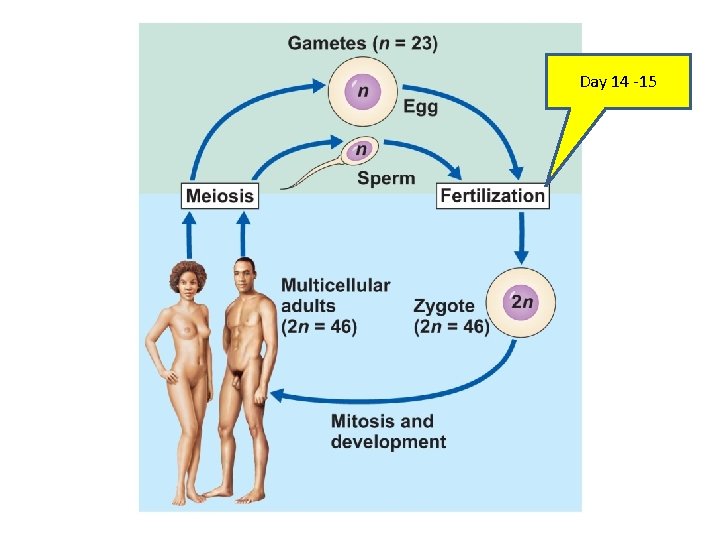
Day 14 -15
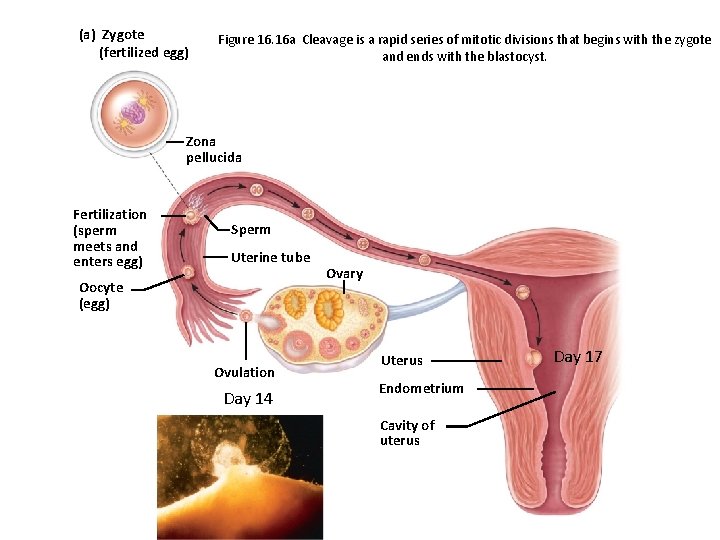
(a) Zygote (fertilized egg) Figure 16. 16 a Cleavage is a rapid series of mitotic divisions that begins with the zygote and ends with the blastocyst. Zona pellucida Fertilization (sperm meets and enters egg) Sperm Uterine tube Oocyte (egg) Ovulation Day 14 Ovary Uterus Endometrium Cavity of uterus Day 17
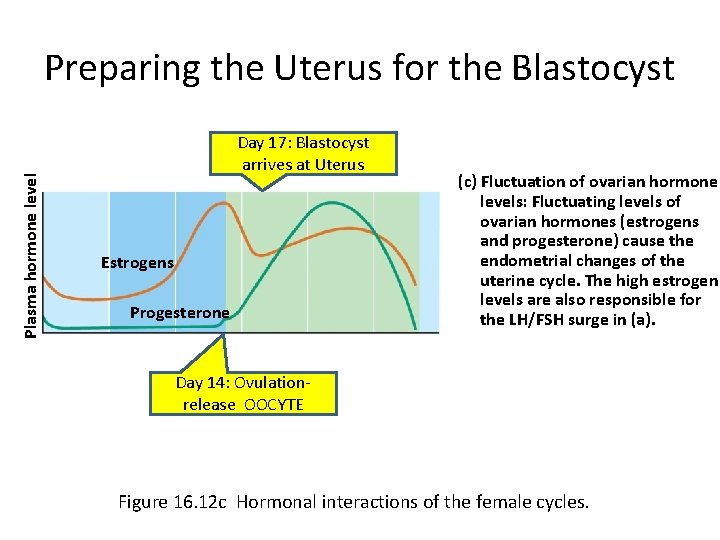
Plasma hormone level Preparing the Uterus for the Blastocyst Day 17: Blastocyst arrives at Uterus Estrogens Progesterone (c) Fluctuation of ovarian hormone levels: Fluctuating levels of ovarian hormones (estrogens and progesterone) cause the endometrial changes of the uterine cycle. The high estrogen levels are also responsible for the LH/FSH surge in (a). Day 14: Ovulationrelease OOCYTE Figure 16. 12 c Hormonal interactions of the female cycles.
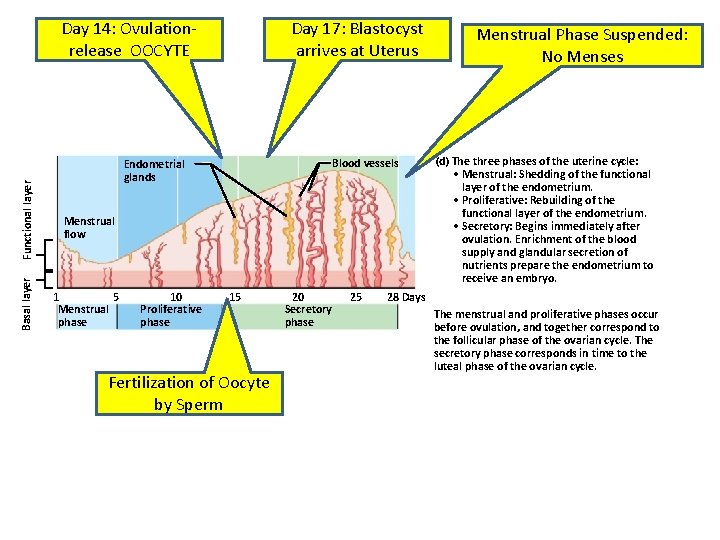
Basal layer Functional layer Day 14: Ovulationrelease OOCYTE Day 17: Blastocyst arrives at Uterus Blood vessels Endometrial glands Menstrual flow 1 5 Menstrual phase 10 Proliferative phase 15 Fertilization of Oocyte by Sperm 20 Secretory phase 25 Menstrual Phase Suspended: No Menses (d) The three phases of the uterine cycle: • Menstrual: Shedding of the functional layer of the endometrium. • Proliferative: Rebuilding of the functional layer of the endometrium. • Secretory: Begins immediately after ovulation. Enrichment of the blood supply and glandular secretion of nutrients prepare the endometrium to receive an embryo. 28 Days The menstrual and proliferative phases occur before ovulation, and together correspond to the follicular phase of the ovarian cycle. The secretory phase corresponds in time to the luteal phase of the ovarian cycle.
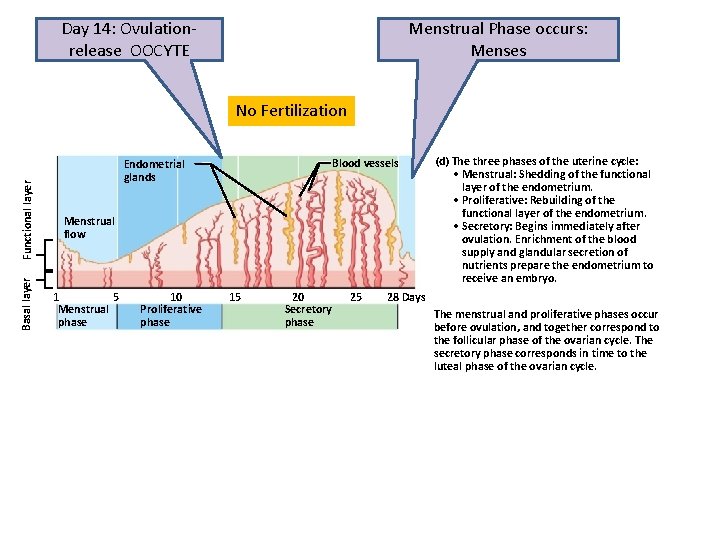
Day 14: Ovulationrelease OOCYTE Menstrual Phase occurs: Menses Basal layer Functional layer No Fertilization Blood vessels Endometrial glands Menstrual flow 1 5 Menstrual phase 10 Proliferative phase 15 20 Secretory phase 25 (d) The three phases of the uterine cycle: • Menstrual: Shedding of the functional layer of the endometrium. • Proliferative: Rebuilding of the functional layer of the endometrium. • Secretory: Begins immediately after ovulation. Enrichment of the blood supply and glandular secretion of nutrients prepare the endometrium to receive an embryo. 28 Days The menstrual and proliferative phases occur before ovulation, and together correspond to the follicular phase of the ovarian cycle. The secretory phase corresponds in time to the luteal phase of the ovarian cycle.
- Slides: 31