
Binomial Tree Adapted from Kevin Wayne Bk is
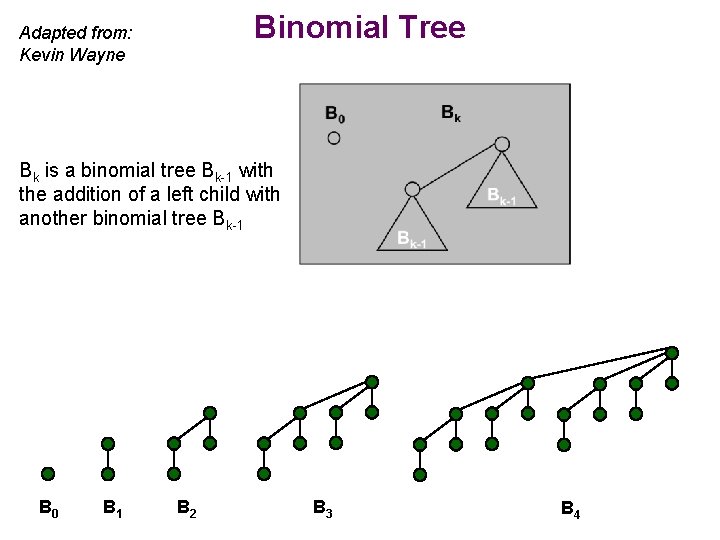
Binomial Tree Adapted from: Kevin Wayne Bk is a binomial tree Bk-1 with the addition of a left child with another binomial tree Bk-1 B 0 B 1 B 2 B 3 B 4
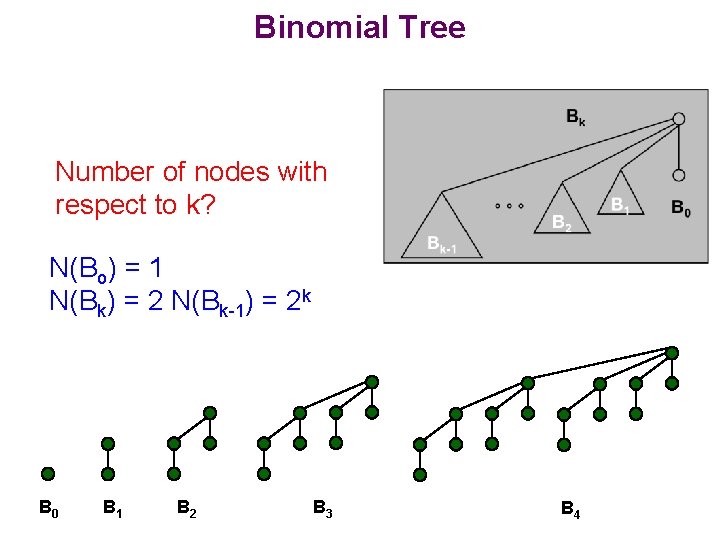
Binomial Tree Number of nodes with respect to k? N(Bo) = 1 N(Bk) = 2 N(Bk-1) = 2 k B 0 B 1 B 2 B 3 B 4
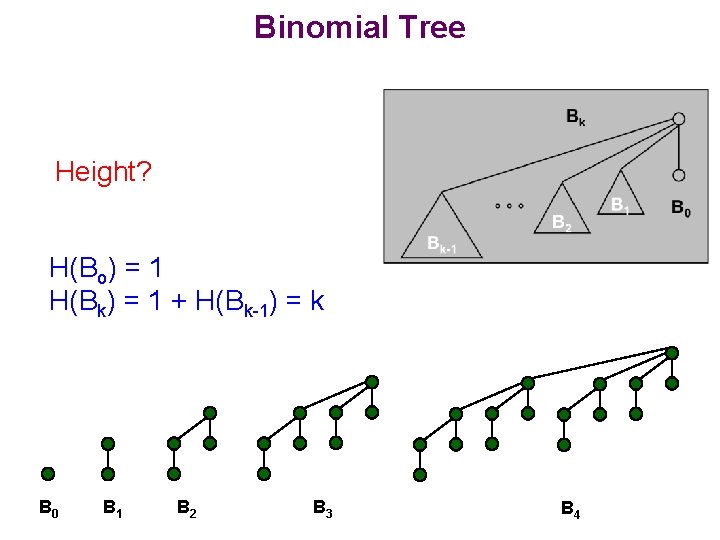
Binomial Tree Height? H(Bo) = 1 H(Bk) = 1 + H(Bk-1) = k B 0 B 1 B 2 B 3 B 4
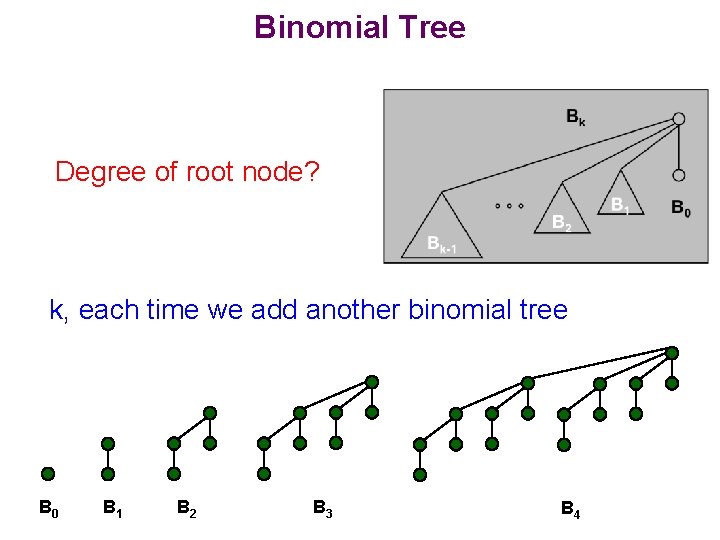
Binomial Tree Degree of root node? k, each time we add another binomial tree B 0 B 1 B 2 B 3 B 4
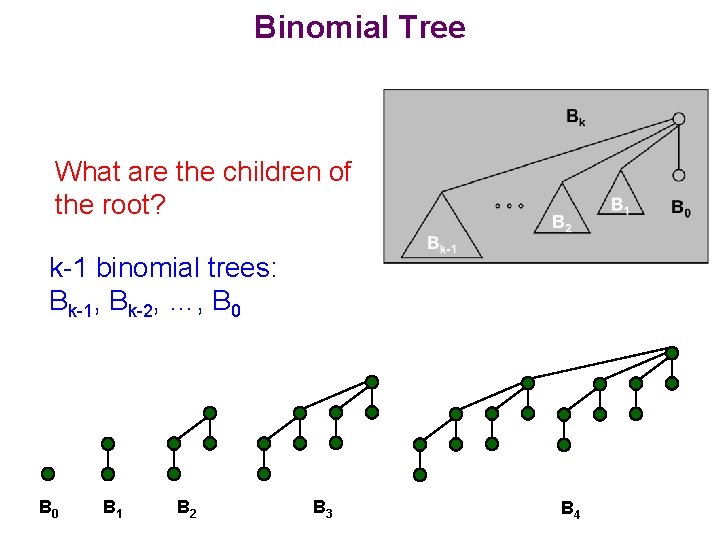
Binomial Tree What are the children of the root? k-1 binomial trees: Bk-1, Bk-2, …, B 0 B 1 B 2 B 3 B 4
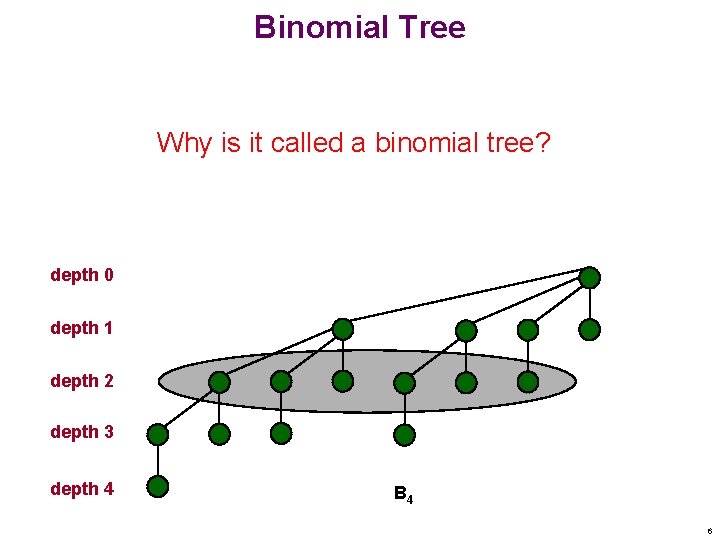
Binomial Tree Why is it called a binomial tree? depth 0 depth 1 depth 2 depth 3 depth 4 B 4 6
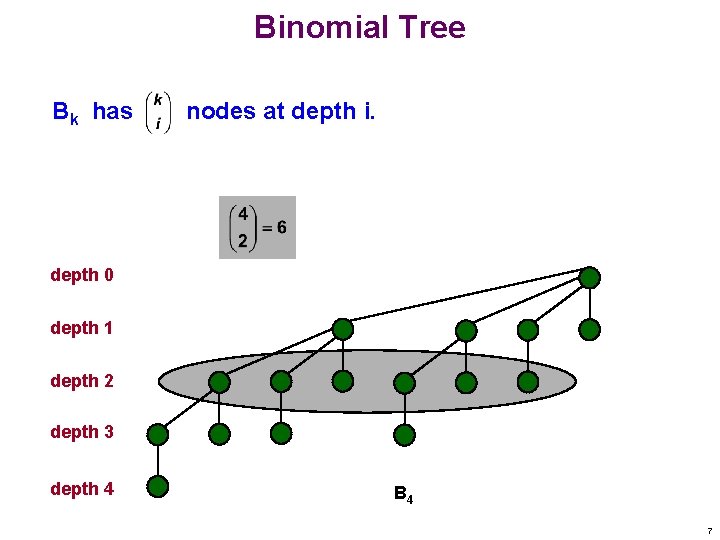
Binomial Tree Bk has nodes at depth i. depth 0 depth 1 depth 2 depth 3 depth 4 B 4 7
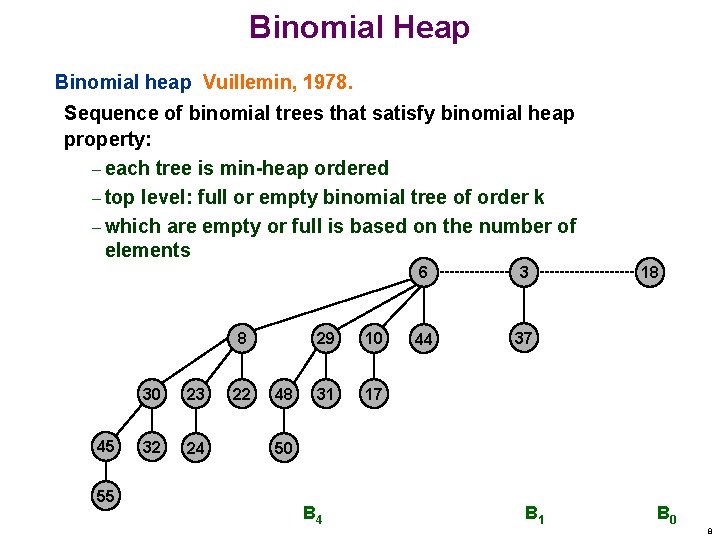
Binomial Heap Binomial heap Vuillemin, 1978. Sequence of binomial trees that satisfy binomial heap property: – each tree is min-heap ordered – top level: full or empty binomial tree of order k – which are empty or full is based on the number of elements 8 45 55 30 23 32 24 22 48 29 10 31 17 6 3 44 37 18 50 B 4 B 1 B 0 8
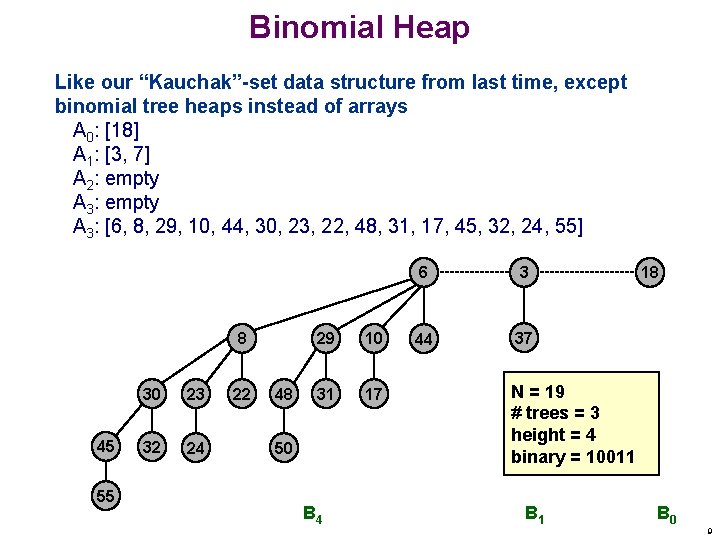
Binomial Heap Like our “Kauchak”-set data structure from last time, except binomial tree heaps instead of arrays A 0: [18] A 1: [3, 7] A 2: empty A 3: [6, 8, 29, 10, 44, 30, 23, 22, 48, 31, 17, 45, 32, 24, 55] 8 45 55 30 23 32 24 22 48 29 10 31 17 50 B 4 6 3 44 37 18 N = 19 # trees = 3 height = 4 binary = 10011 B 0 9
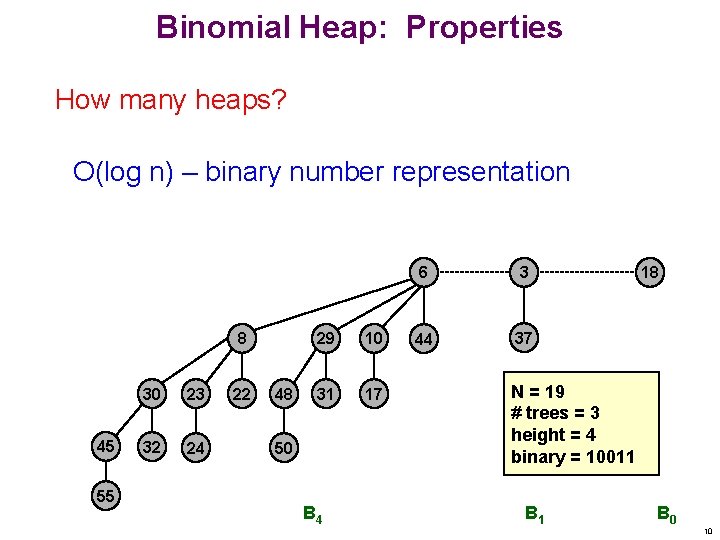
Binomial Heap: Properties How many heaps? O(log n) – binary number representation 8 45 55 30 23 32 24 22 48 29 10 31 17 50 B 4 6 3 44 37 18 N = 19 # trees = 3 height = 4 binary = 10011 B 0 10
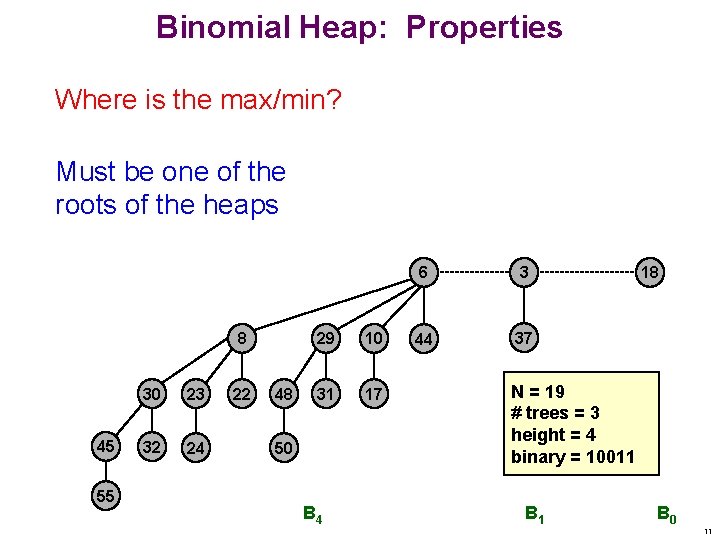
Binomial Heap: Properties Where is the max/min? Must be one of the roots of the heaps 8 45 55 30 23 32 24 22 48 29 10 31 17 50 B 4 6 3 44 37 18 N = 19 # trees = 3 height = 4 binary = 10011 B 0 11
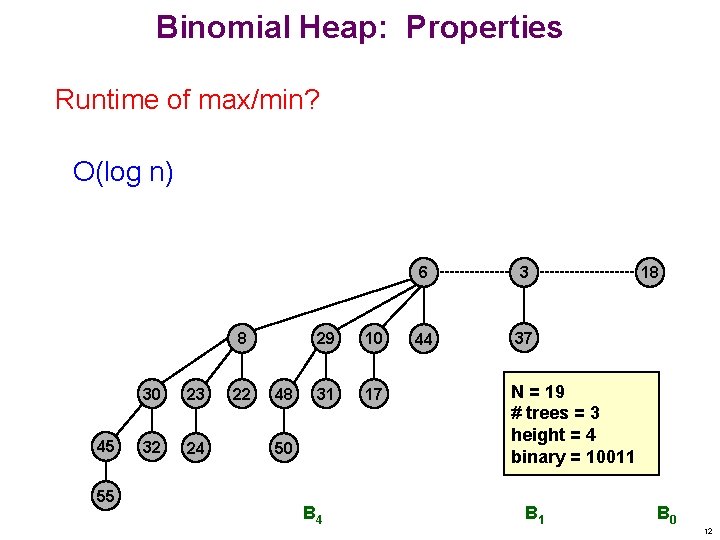
Binomial Heap: Properties Runtime of max/min? O(log n) 8 45 55 30 23 32 24 22 48 29 10 31 17 50 B 4 6 3 44 37 18 N = 19 # trees = 3 height = 4 binary = 10011 B 0 12
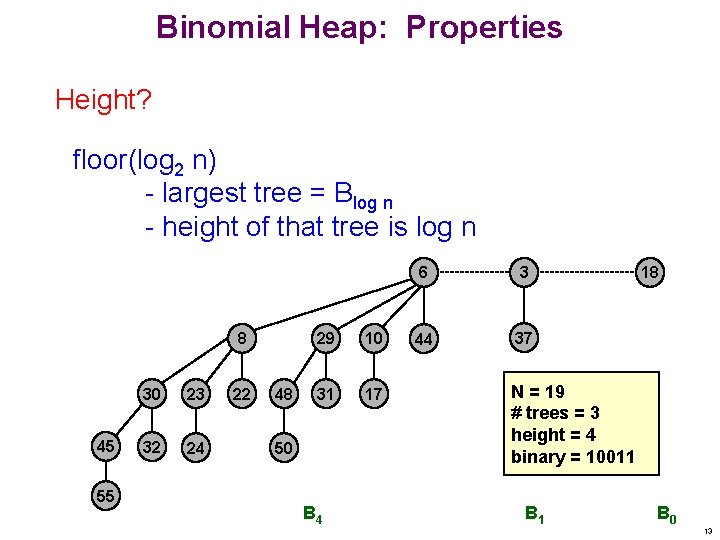
Binomial Heap: Properties Height? floor(log 2 n) - largest tree = Blog n - height of that tree is log n 8 45 55 30 23 32 24 22 48 29 10 31 17 50 B 4 6 3 44 37 18 N = 19 # trees = 3 height = 4 binary = 10011 B 0 13
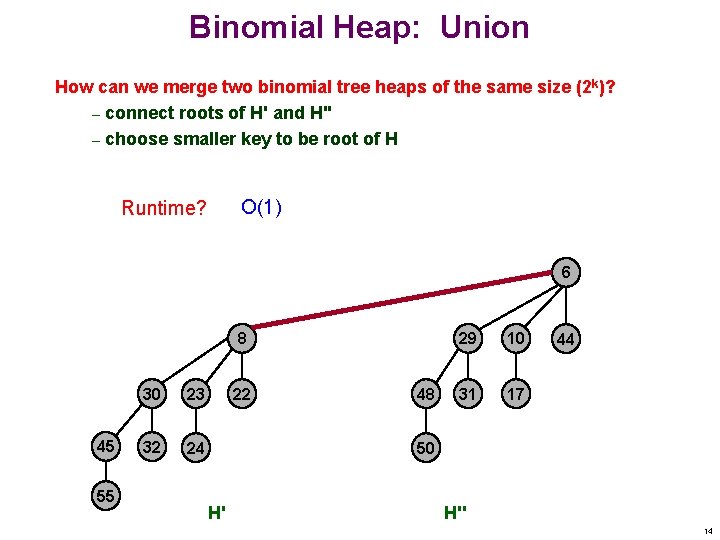
Binomial Heap: Union How can we merge two binomial tree heaps of the same size (2 k)? – connect roots of H' and H'' – choose smaller key to be root of H O(1) Runtime? 6 8 45 55 30 23 32 24 22 48 29 10 31 17 44 50 H' H'' 14
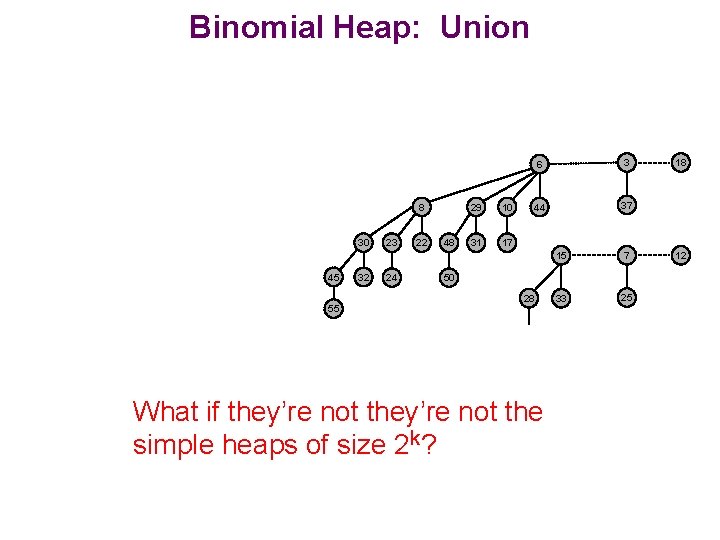
Binomial Heap: Union 8 30 45 55 32 23 24 22 48 29 10 31 17 6 3 44 37 15 7 33 25 50 28 What if they’re not the simple heaps of size 2 k? 18 12
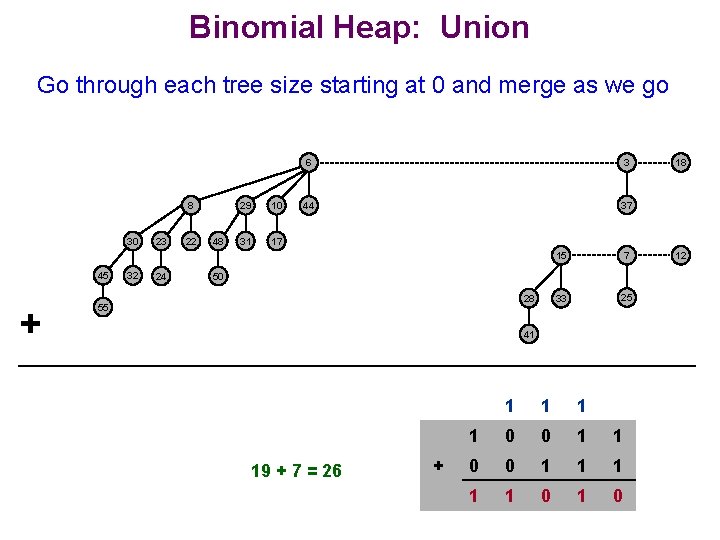
Binomial Heap: Union Go through each tree size starting at 0 and merge as we go 8 30 45 + 32 23 24 22 48 29 10 31 17 6 3 44 37 15 7 33 25 50 28 55 41 19 + 7 = 26 + 1 1 0 0 1 1 1 1 1 0 18 12
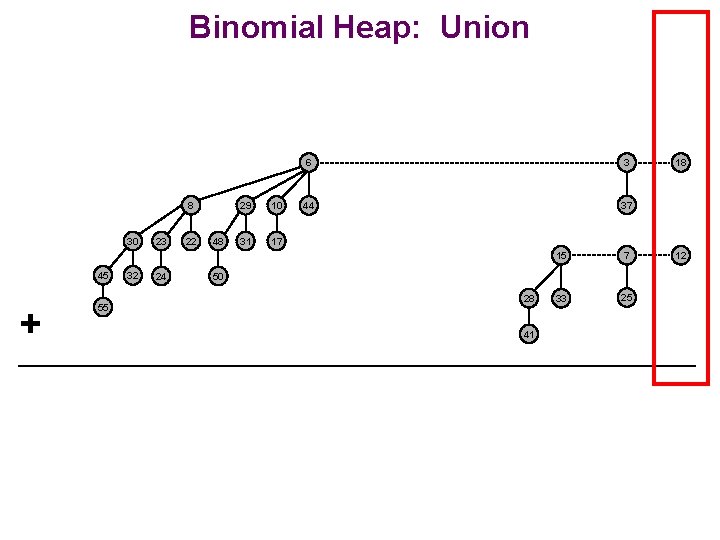
Binomial Heap: Union 8 30 45 + 55 32 23 24 22 48 29 10 31 17 6 3 44 37 15 7 33 25 50 28 41 18 12
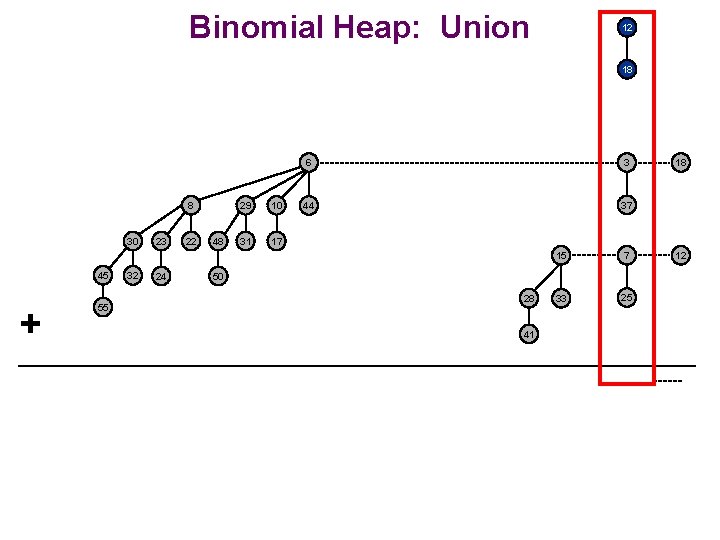
Binomial Heap: Union 12 18 8 30 45 + 55 32 23 24 22 48 29 10 31 17 6 3 44 37 15 7 33 25 50 28 41 18 12
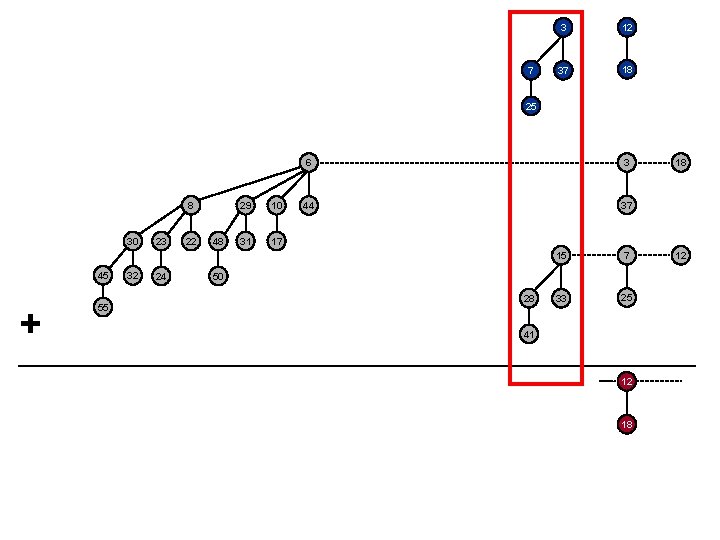
7 3 12 37 18 25 8 30 45 + 55 32 23 24 22 48 29 10 31 17 6 3 44 37 15 7 33 25 50 28 41 12 18 18 12
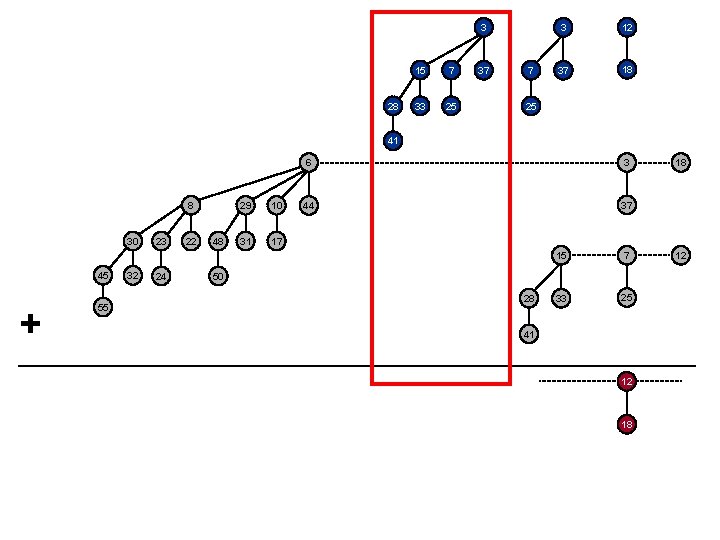
3 28 15 7 33 25 37 7 3 12 37 18 25 41 8 30 45 + 55 32 23 24 22 48 29 10 31 17 6 3 44 37 15 7 33 25 50 28 41 12 18 18 12
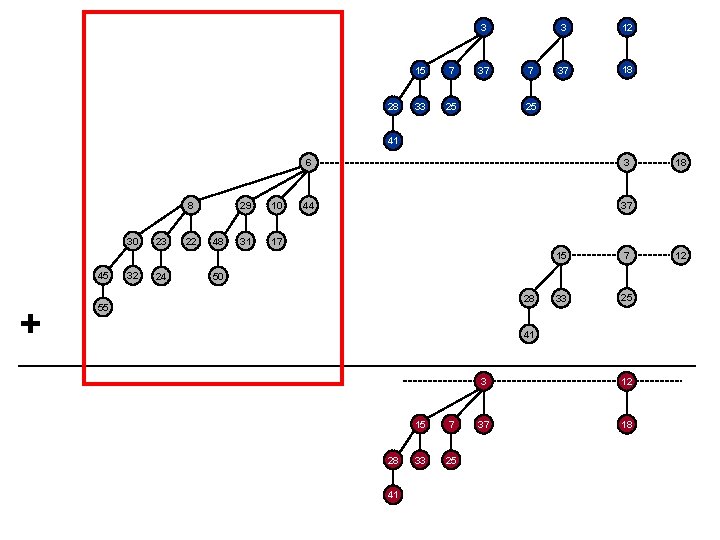
3 28 15 7 33 25 37 7 3 12 37 18 25 41 8 30 45 + 32 23 24 22 48 29 10 31 17 6 3 44 37 15 7 33 25 50 28 55 41 28 41 15 7 33 25 3 12 37 18 18 12
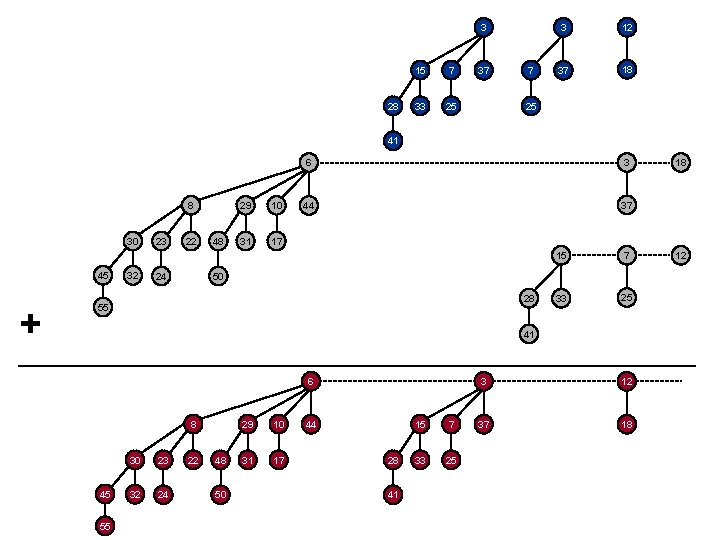
3 28 15 7 33 25 37 7 3 12 37 18 25 41 8 30 45 + 32 23 22 24 48 29 10 31 17 6 3 44 37 15 7 33 25 50 28 55 41 6 8 45 55 30 23 32 24 22 48 50 29 10 31 17 44 28 41 15 7 33 25 3 12 37 18 18 12
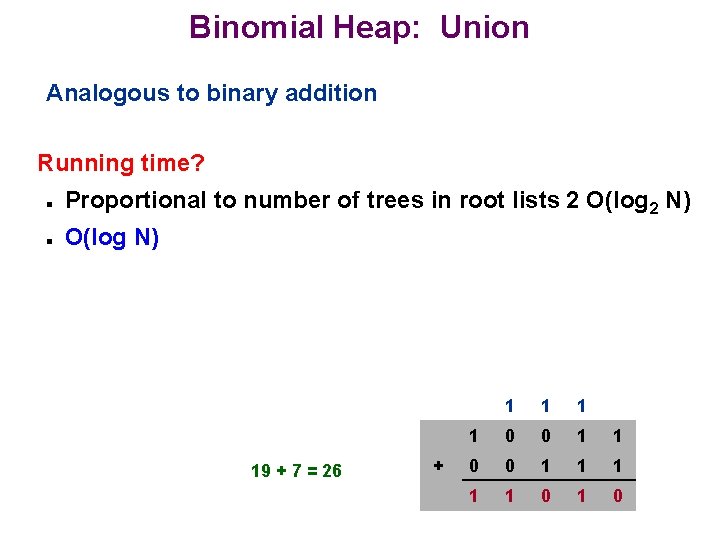
Binomial Heap: Union Analogous to binary addition Running time? n n Proportional to number of trees in root lists 2 O(log 2 N) O(log N) 19 + 7 = 26 + 1 1 0 0 1 1 1 1 1 0
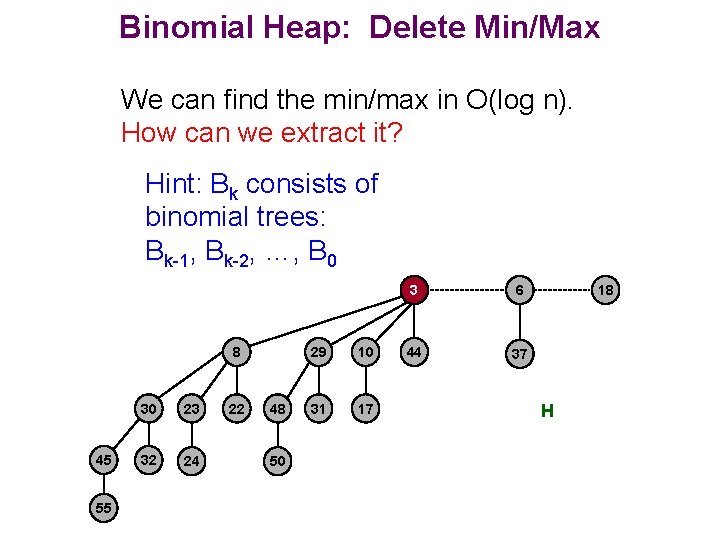
Binomial Heap: Delete Min/Max We can find the min/max in O(log n). How can we extract it? Hint: Bk consists of binomial trees: Bk-1, Bk-2, …, B 0 8 45 55 30 23 32 24 22 48 50 29 10 31 17 3 6 44 37 18 H
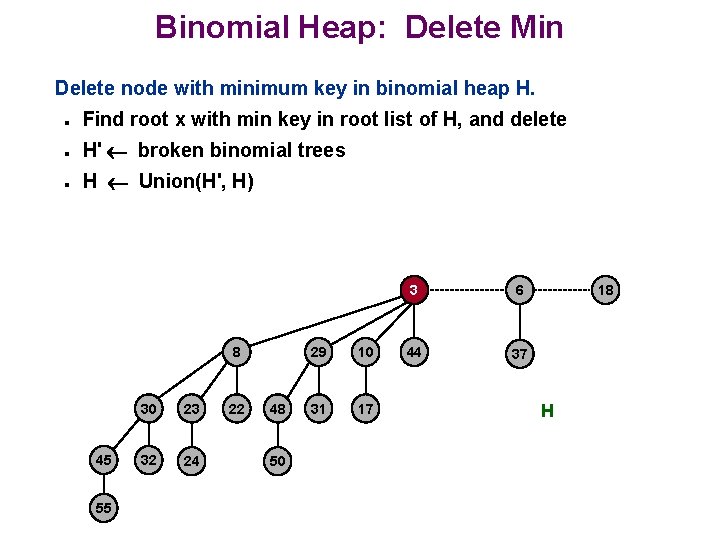
Binomial Heap: Delete Min Delete node with minimum key in binomial heap H. n Find root x with min key in root list of H, and delete n H' broken binomial trees n H Union(H', H) 8 45 55 30 23 32 24 22 48 50 29 10 31 17 3 6 44 37 18 H
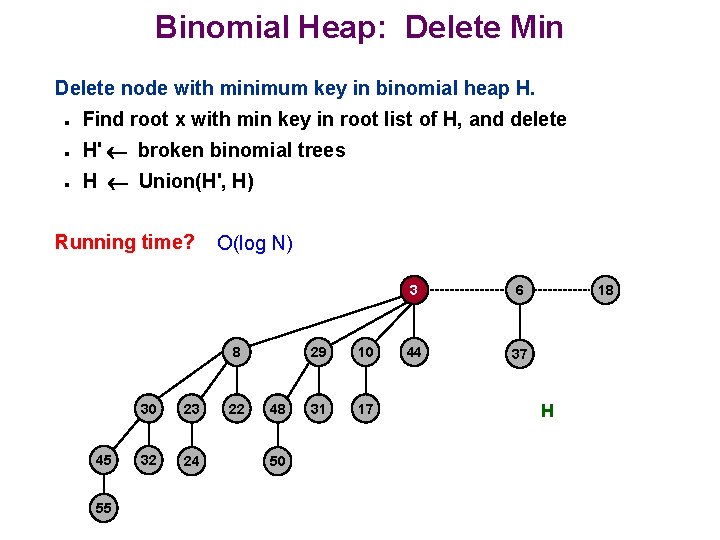
Binomial Heap: Delete Min Delete node with minimum key in binomial heap H. n Find root x with min key in root list of H, and delete n H' broken binomial trees n H Union(H', H) Running time? O(log N) 8 45 55 30 23 32 24 22 48 50 29 10 31 17 3 6 44 37 18 H
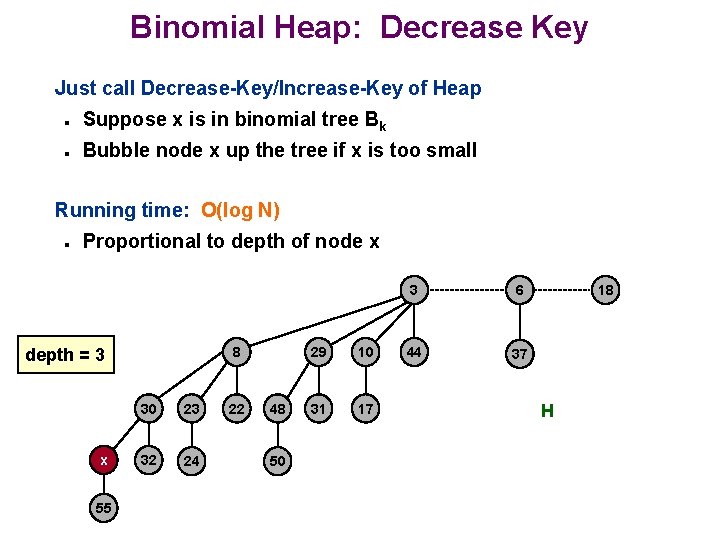
Binomial Heap: Decrease Key Just call Decrease-Key/Increase-Key of Heap n n Suppose x is in binomial tree Bk Bubble node x up the tree if x is too small Running time: O(log N) n Proportional to depth of node x 8 depth = 3 x 55 30 23 32 24 22 48 50 29 10 31 17 3 6 44 37 18 H
Binomial Heap: Delete node x in binomial heap H n Decrease key of x to - n Delete min Running time: O(log N)
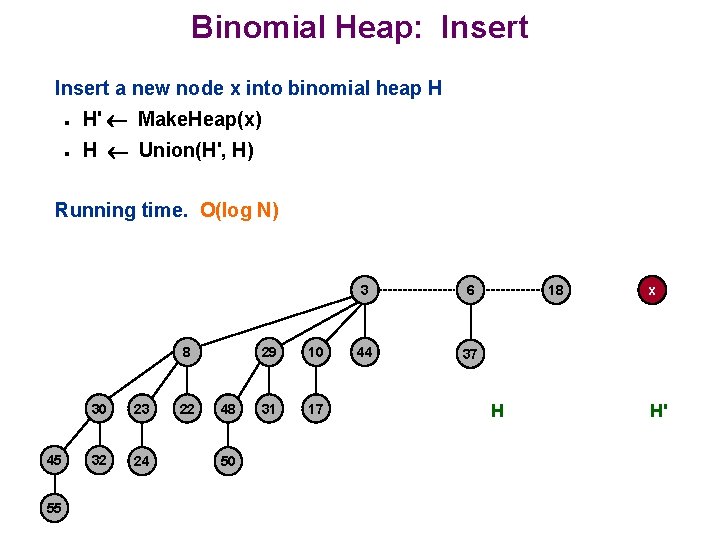
Binomial Heap: Insert a new node x into binomial heap H n H' Make. Heap(x) n H Union(H', H) Running time. O(log N) 8 45 55 30 23 32 24 22 48 50 29 10 31 17 3 6 44 37 18 H x H'
Build-Heap Call insert n times Runtime? O(n log n) Can we get a tighter bound?
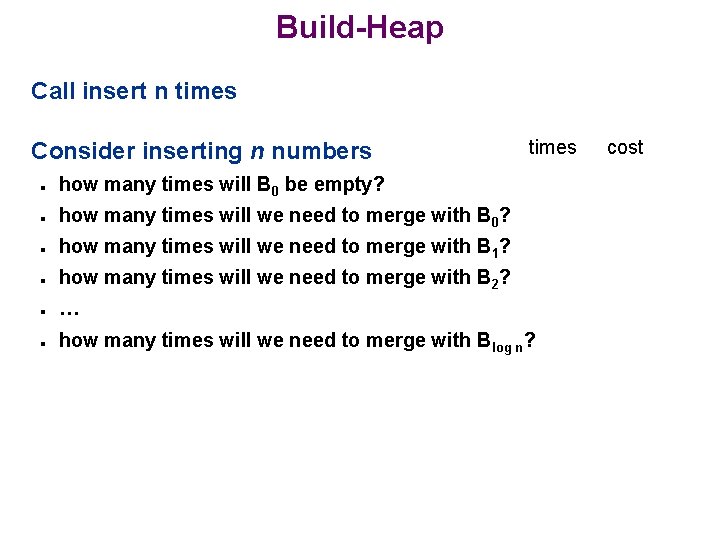
Build-Heap Call insert n times Consider inserting n numbers n how many times will B 0 be empty? n how many times will we need to merge with B 0? n how many times will we need to merge with B 1? n how many times will we need to merge with B 2? n n times … how many times will we need to merge with Blog n? cost
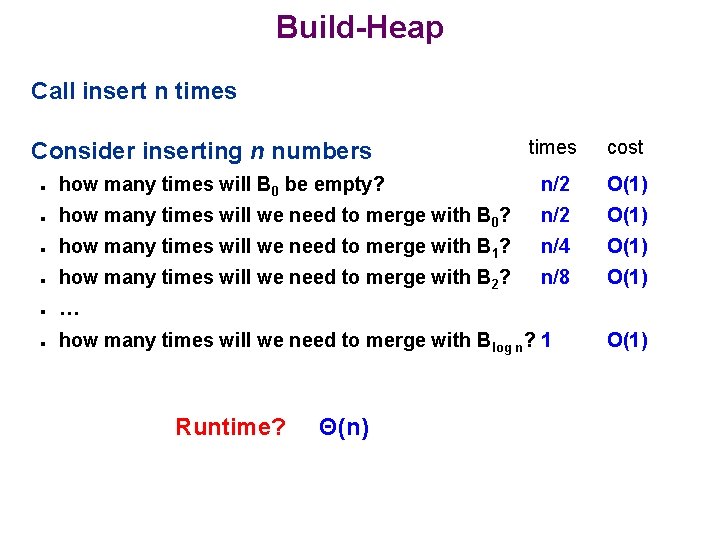
Build-Heap Call insert n times Consider inserting n numbers times cost n how many times will B 0 be empty? n/2 O(1) n how many times will we need to merge with B 0? n/2 O(1) n how many times will we need to merge with B 1? n/4 O(1) n how many times will we need to merge with B 2? n/8 O(1) n n … how many times will we need to merge with Blog n? 1 Runtime? Θ(n) O(1)
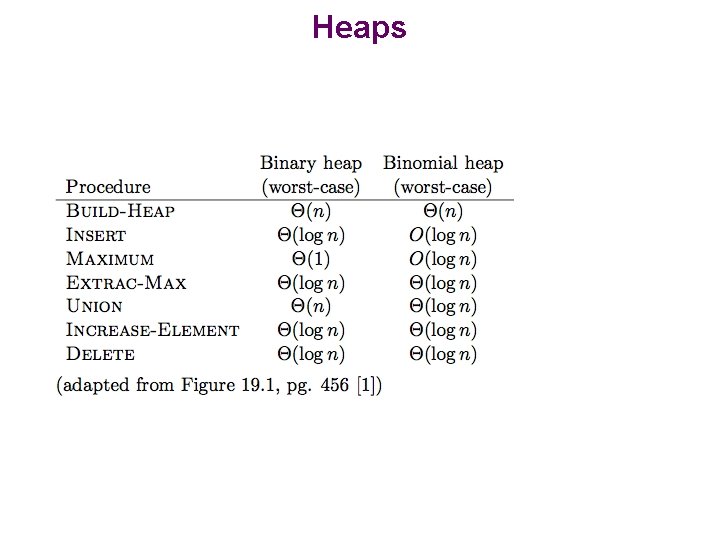
Heaps
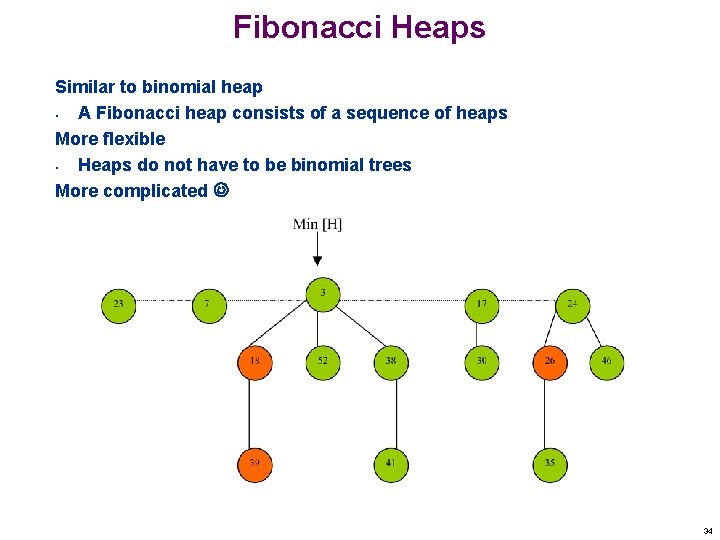
Fibonacci Heaps Similar to binomial heap • A Fibonacci heap consists of a sequence of heaps More flexible • Heaps do not have to be binomial trees More complicated 34
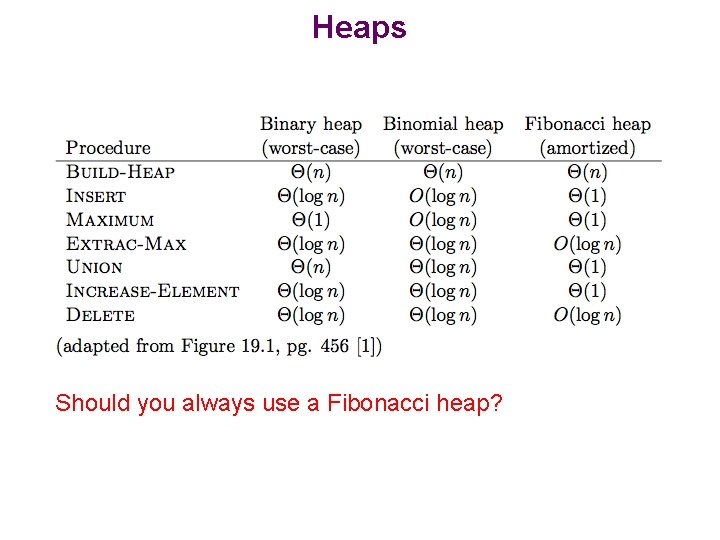
Heaps Should you always use a Fibonacci heap?
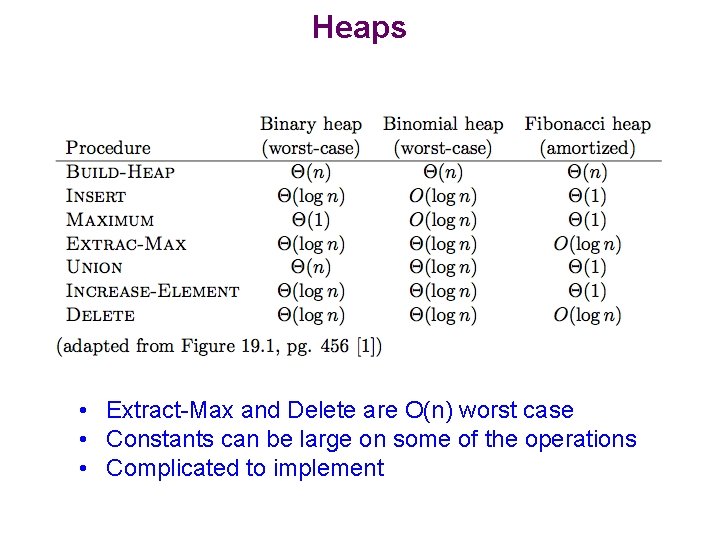
Heaps • Extract-Max and Delete are O(n) worst case • Constants can be large on some of the operations • Complicated to implement
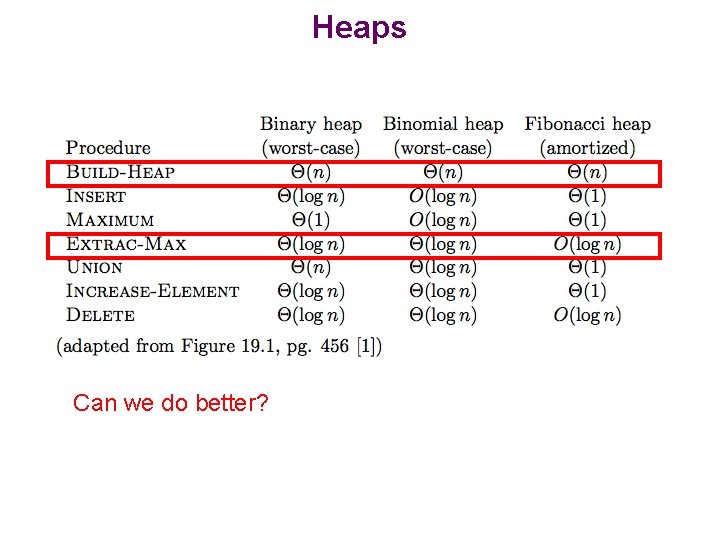
Heaps Can we do better?
- Slides: 37