
Binomial Nomenclature Rules for Naming Organisms All names
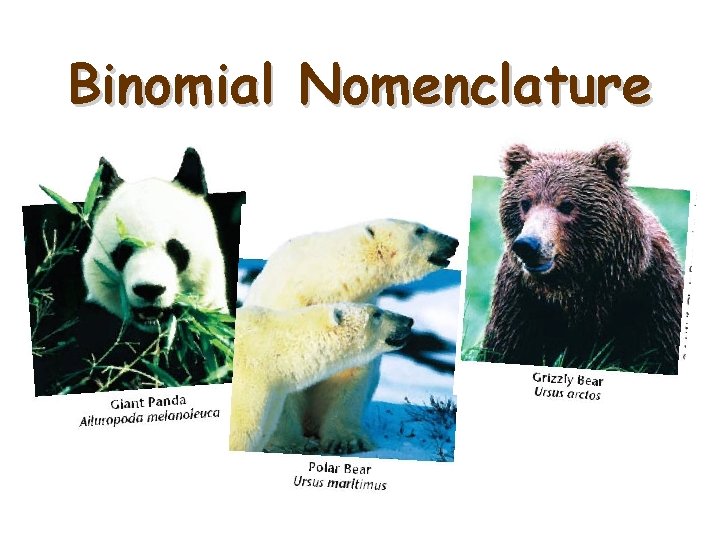
Binomial Nomenclature
Rules for Naming Organisms • All names must be approved by International Naming Congresses (International Zoological Congress) • This prevents duplicated names
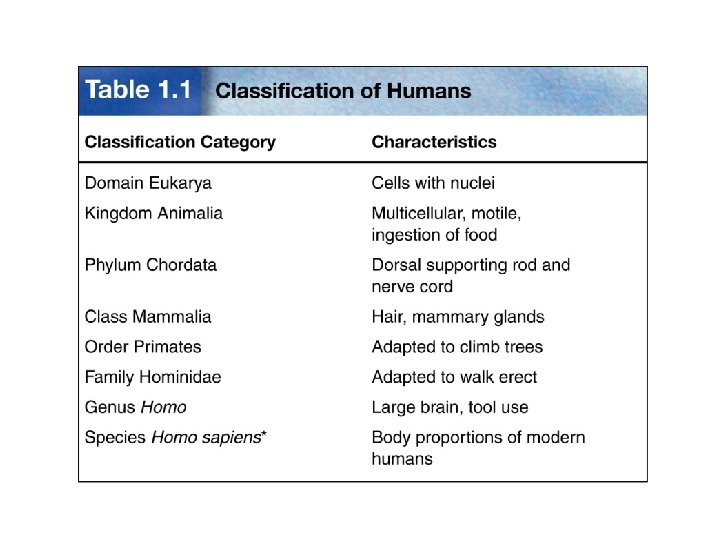
Organizing Organisms • There is a hierarchy of groups (taxa) from most general to most specific • Domain, Kingdom, Phylum*, Class, Order, Family, Genus, species, subspecies – *Division is used instead of Phylum when talking about plants
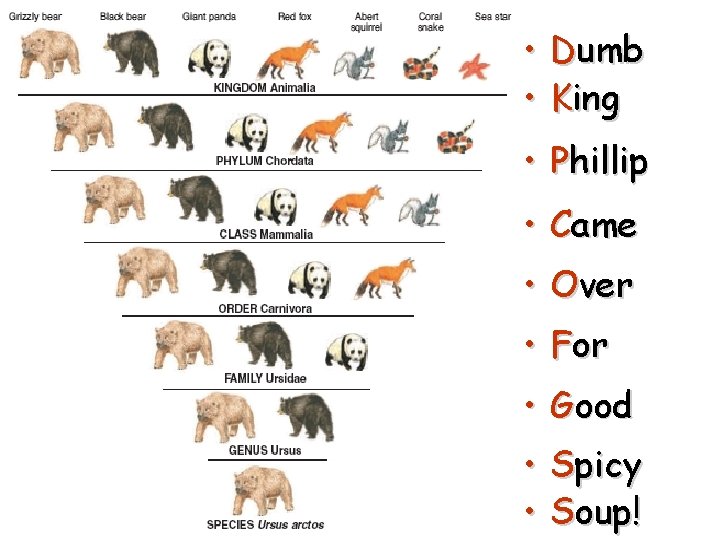
• Dumb • King • Phillip • Came • Over • For • Good • Spicy • Soup!
Domains • Broadest, most generalized group • Three domains • 1. Archaea and 2. Eubacteria are unicellular prokaryotes (no nucleus or membrane-bound organelles)
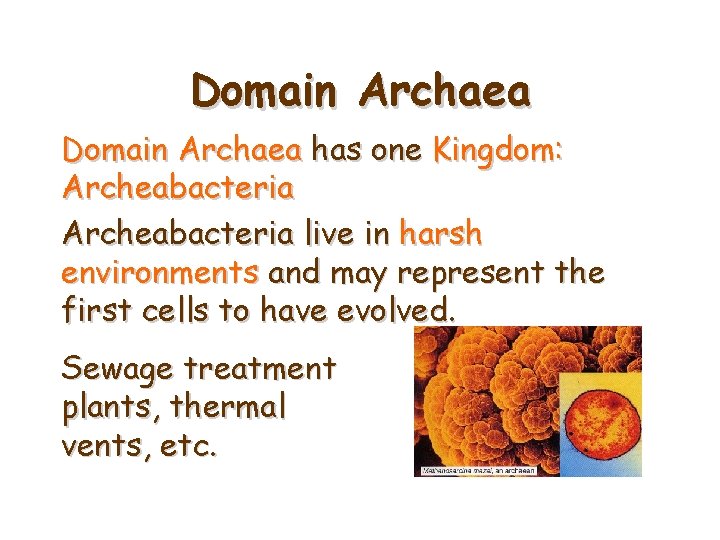
Domain Archaea has one Kingdom: Archeabacteria live in harsh environments and may represent the first cells to have evolved. Sewage treatment plants, thermal vents, etc.
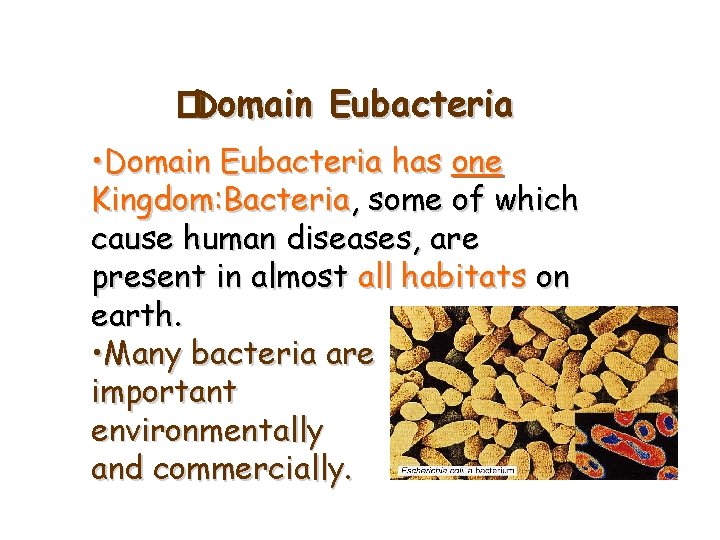
� Domain Eubacteria • Domain Eubacteria has one Kingdom: Bacteria, some of which cause human diseases, are present in almost all habitats on earth. • Many bacteria are important environmentally and commercially.
Domain Eukarya § Domain Eukarya is the largest domain § It is split into 4 Kingdoms: • Kingdom Protista • Kingdom Fungi • Kingdom Plantae • Kingdom Animalia
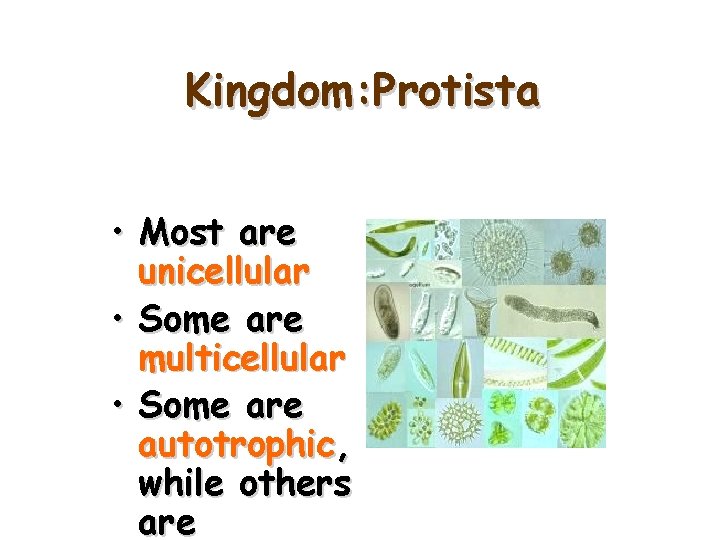
Kingdom: Protista • Most are unicellular • Some are multicellular • Some are autotrophic, while others are
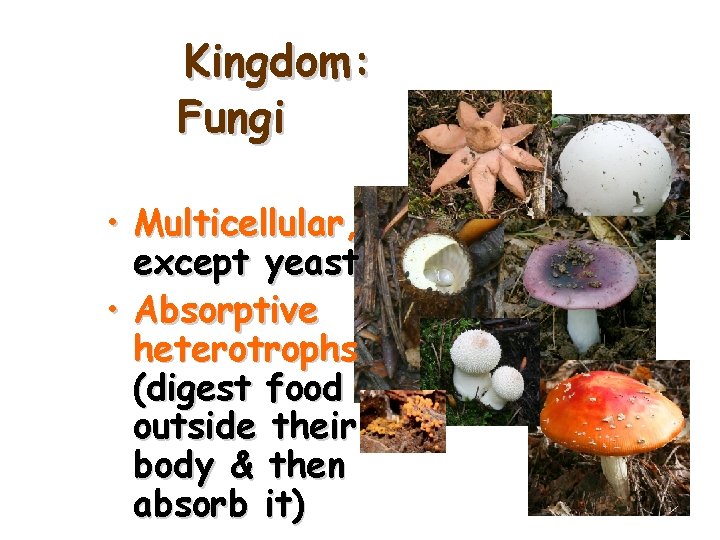
Kingdom: Fungi • Multicellular, except yeast • Absorptive heterotrophs (digest food outside their body & then absorb it)
- Slides: 11