
Binaural Evoked Potentials in Young Normal Hearing Adults
Binaural Evoked Potentials in Young Normal Hearing Adults: Objective Measures of the Binaural System Charlotte Vercammen, Jan Wouters, Astrid van Wieringen & Tom Francart Experimental ORL, Dept. Neurosciences University of Leuven
Scope § Introduction § § Binaural Hearing Auditory Evoked Potentials § Methodology § Results § Conclusion
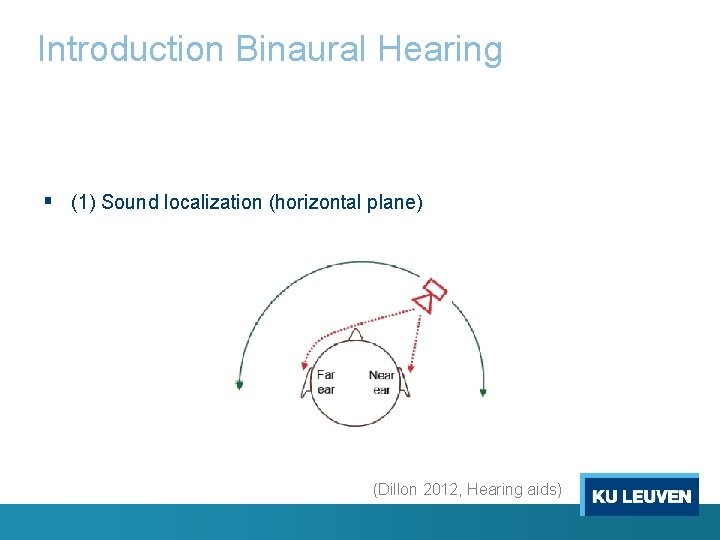
Introduction Binaural Hearing § (1) Sound localization (horizontal plane) (Dillon 2012, Hearing aids)
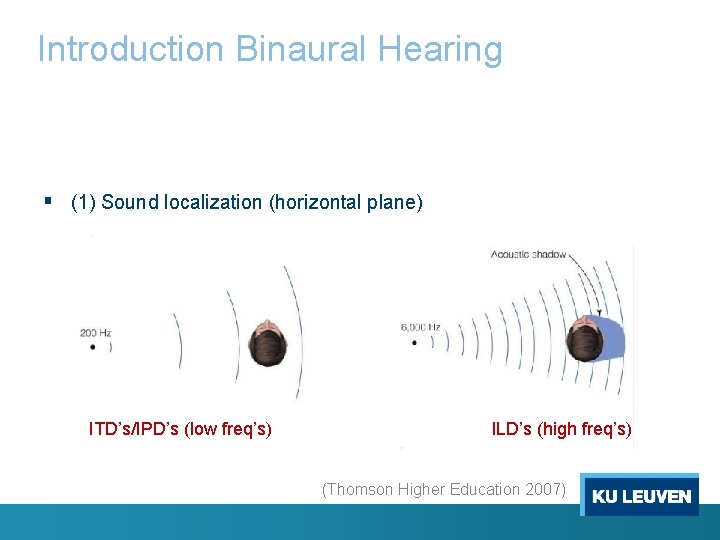
Introduction Binaural Hearing § (1) Sound localization (horizontal plane) ITD’s/IPD’s (low freq’s) ILD’s (high freq’s) (Thomson Higher Education 2007)
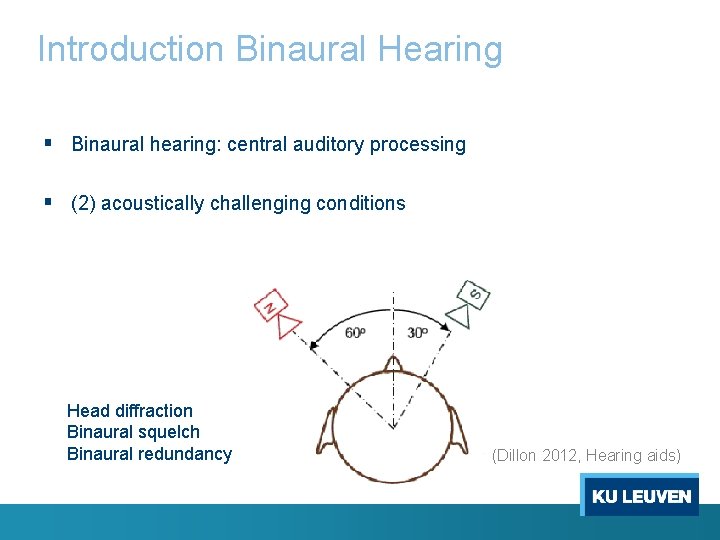
Introduction Binaural Hearing § Binaural hearing: central auditory processing § (2) acoustically challenging conditions Head diffraction Binaural squelch Binaural redundancy (Dillon 2012, Hearing aids)
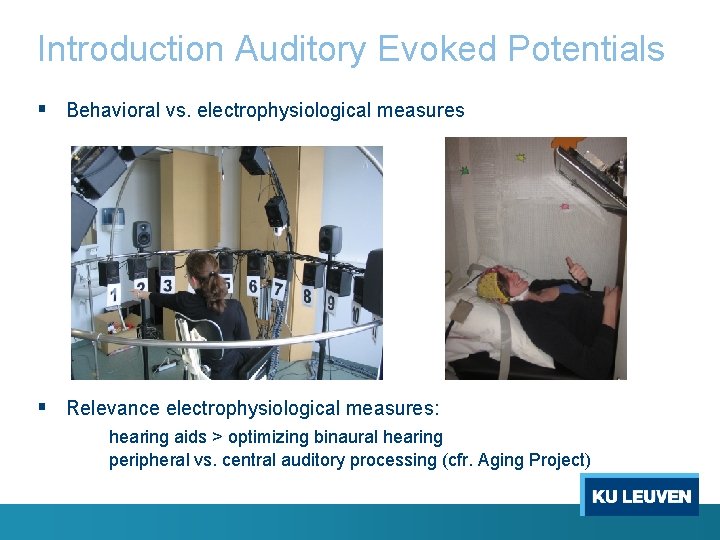
Introduction Auditory Evoked Potentials § Behavioral vs. electrophysiological measures § Relevance electrophysiological measures: hearing aids > optimizing binaural hearing peripheral vs. central auditory processing (cfr. Aging Project)
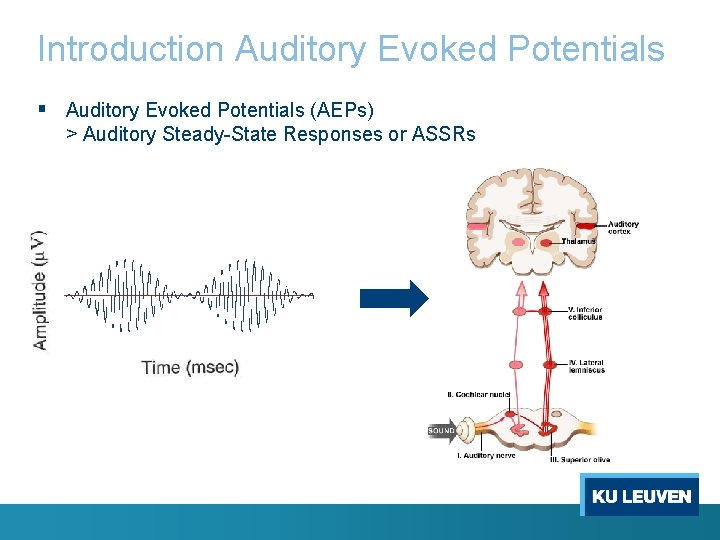
Introduction Auditory Evoked Potentials § Auditory Evoked Potentials (AEPs) > Auditory Steady-State Responses or ASSRs
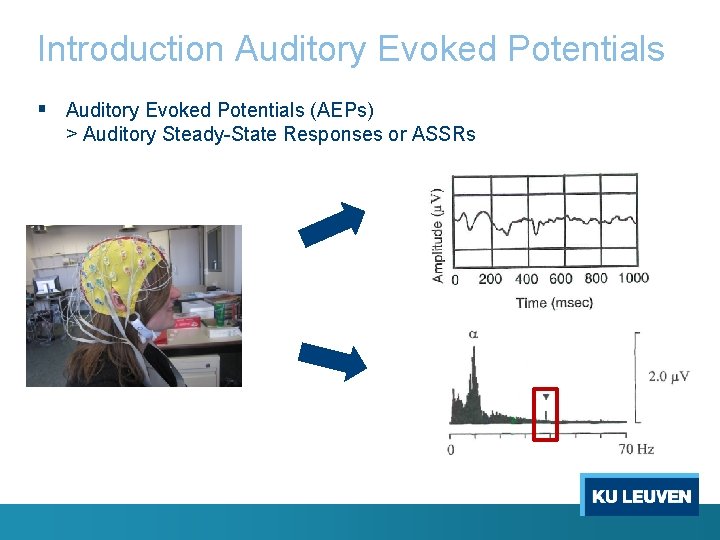
Introduction Auditory Evoked Potentials § Auditory Evoked Potentials (AEPs) > Auditory Steady-State Responses or ASSRs
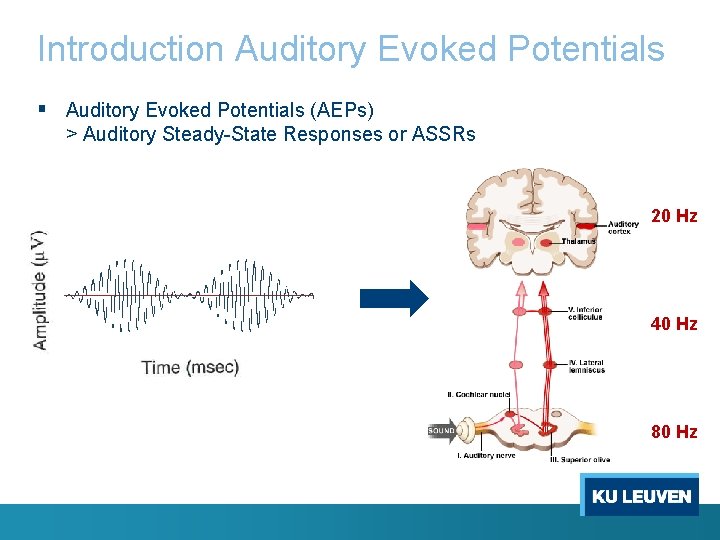
Introduction Auditory Evoked Potentials § Auditory Evoked Potentials (AEPs) > Auditory Steady-State Responses or ASSRs 20 Hz 40 Hz 80 Hz
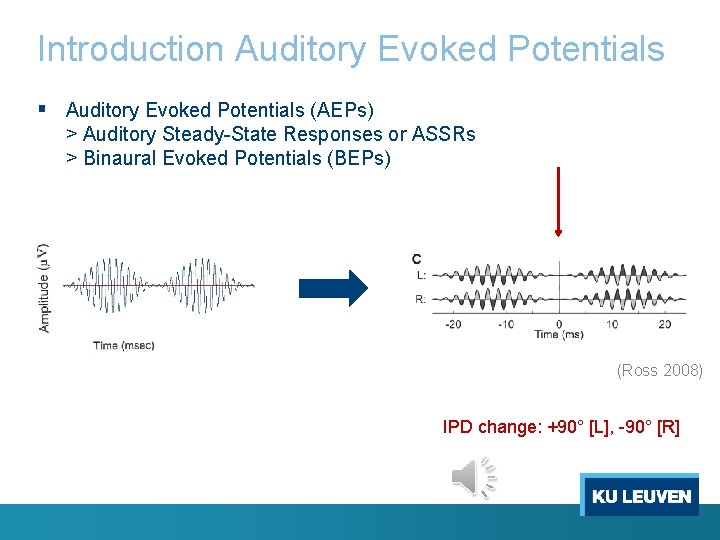
Introduction Auditory Evoked Potentials § Auditory Evoked Potentials (AEPs) > Auditory Steady-State Responses or ASSRs > Binaural Evoked Potentials (BEPs) (Ross 2008) IPD change: +90° [L], -90° [R]
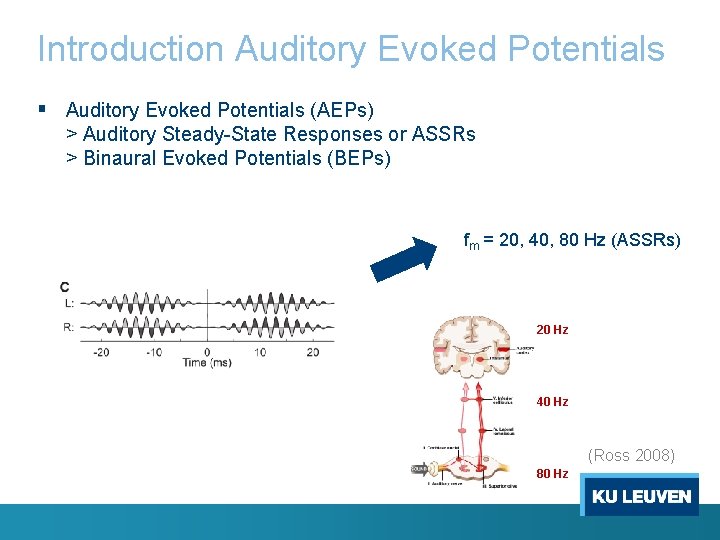
Introduction Auditory Evoked Potentials § Auditory Evoked Potentials (AEPs) > Auditory Steady-State Responses or ASSRs > Binaural Evoked Potentials (BEPs) fm = 20, 40, 80 Hz (ASSRs) 20 Hz 40 Hz (Ross 2008) 80 Hz
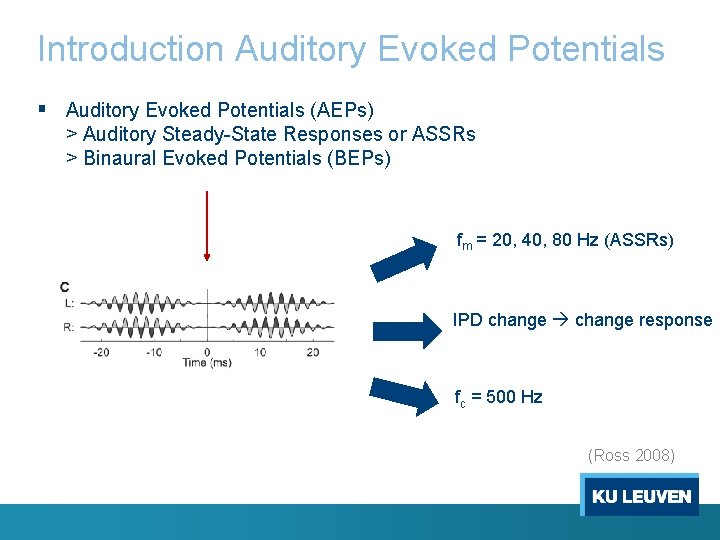
Introduction Auditory Evoked Potentials § Auditory Evoked Potentials (AEPs) > Auditory Steady-State Responses or ASSRs > Binaural Evoked Potentials (BEPs) fm = 20, 40, 80 Hz (ASSRs) IPD change response fc = 500 Hz (Ross 2008)
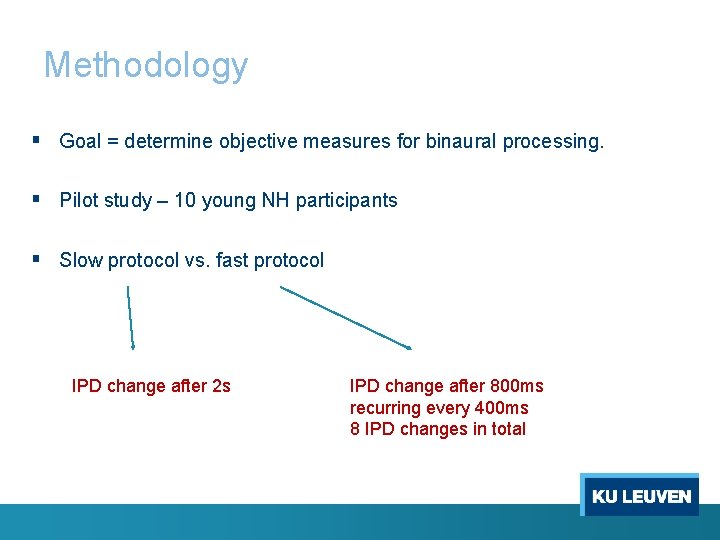
Methodology § Goal = determine objective measures for binaural processing. § Pilot study – 10 young NH participants § Slow protocol vs. fast protocol IPD change after 2 s IPD change after 800 ms recurring every 400 ms 8 IPD changes in total
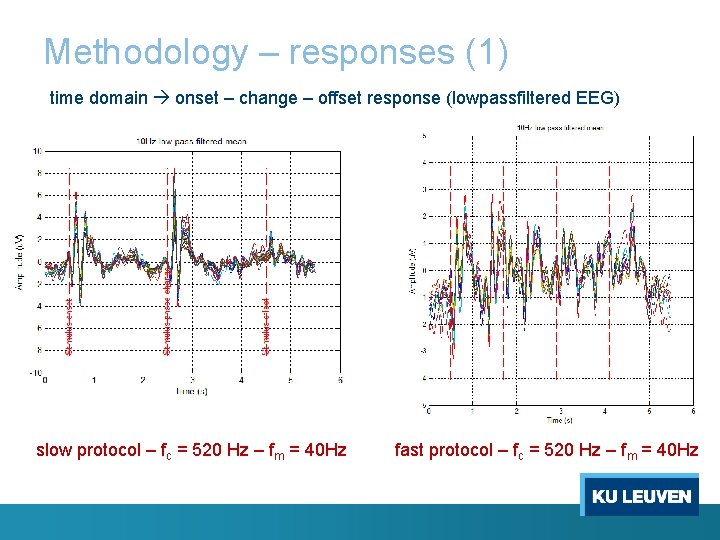
Methodology – responses (1) time domain onset – change – offset response (lowpassfiltered EEG) slow protocol – fc = 520 Hz – fm = 40 Hz fast protocol – fc = 520 Hz – fm = 40 Hz
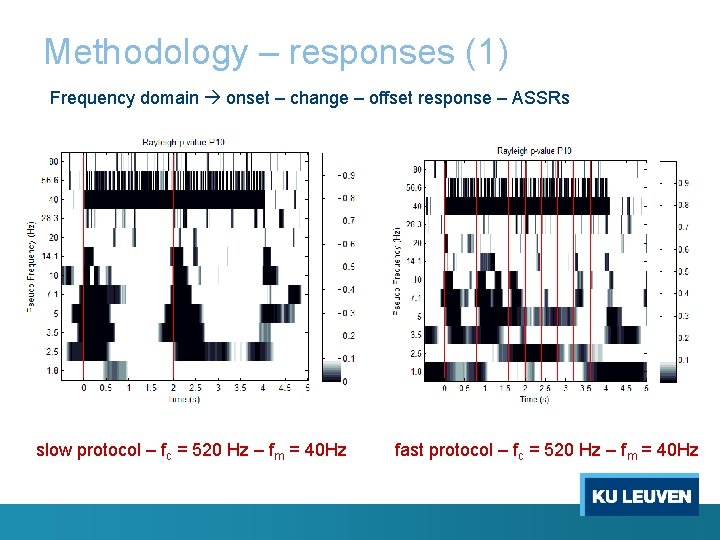
Methodology – responses (1) Frequency domain onset – change – offset response – ASSRs slow protocol – fc = 520 Hz – fm = 40 Hz fast protocol – fc = 520 Hz – fm = 40 Hz
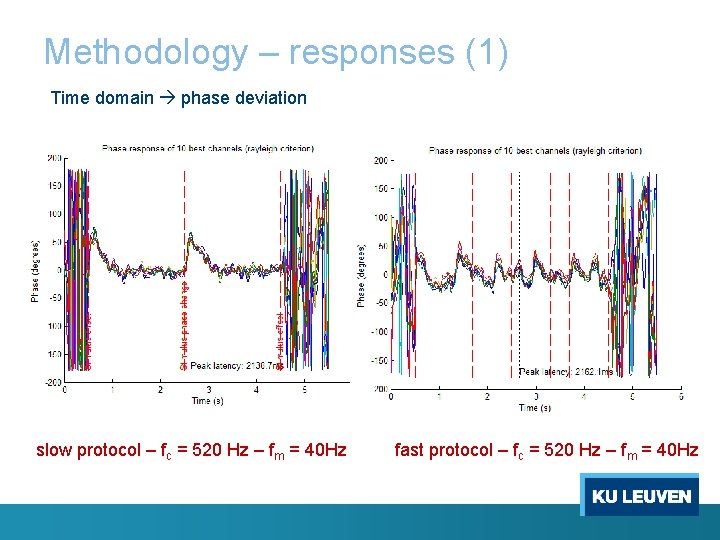
Methodology – responses (1) Time domain phase deviation slow protocol – fc = 520 Hz – fm = 40 Hz fast protocol – fc = 520 Hz – fm = 40 Hz
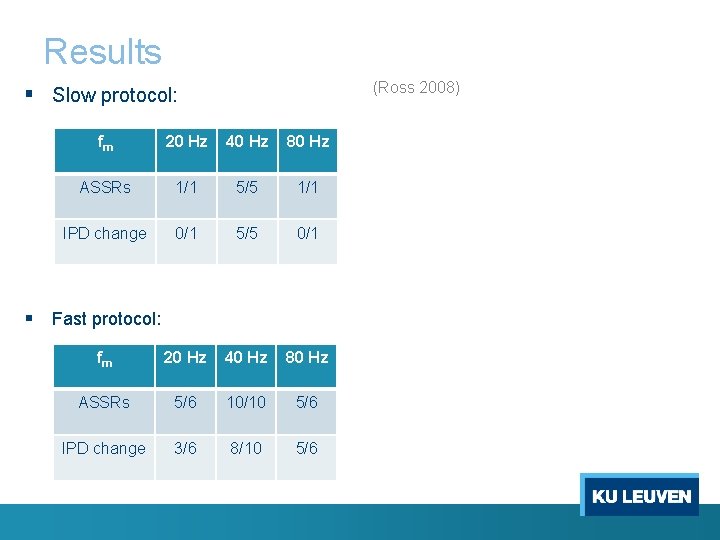
Results (Ross 2008) § Slow protocol: fm 20 Hz 40 Hz 80 Hz ASSRs 1/1 5/5 1/1 IPD change 0/1 5/5 0/1 fm 20 Hz 40 Hz 80 Hz ASSRs 5/6 10/10 5/6 IPD change 3/6 8/10 5/6 § Fast protocol:
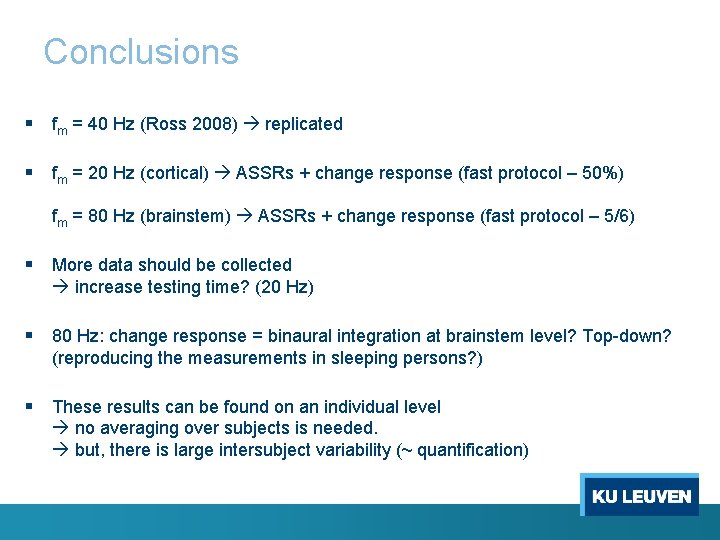
Conclusions § fm = 40 Hz (Ross 2008) replicated § fm = 20 Hz (cortical) ASSRs + change response (fast protocol – 50%) fm = 80 Hz (brainstem) ASSRs + change response (fast protocol – 5/6) § More data should be collected increase testing time? (20 Hz) § 80 Hz: change response = binaural integration at brainstem level? Top-down? (reproducing the measurements in sleeping persons? ) § These results can be found on an individual level no averaging over subjects is needed. but, there is large intersubject variability (~ quantification)
Thank you for your attention. For questions please contact: Charlotte. Vercammen@med. kuleuven. be Special thanks to: Prof. dr. Tom Francart Prof. dr. Astrid van Wieringen Prof. dr. Jan Wouters
- Slides: 19