
Billions Flow into the Digital Grocery Aisles Many
Billions Flow into the Digital Grocery Aisles § Many consumers avoided shopping at grocery stores during the initial pandemic period, but by May 2020, according to an Inmar survey, 78. 7% of respondents said they had shopped online for groceries, compared to 39% pre-pandemic. § According to the April 2020 Brick Meets Click/Symphony Retail. AI Online Grocery Survey, online grocery sales increased 37% to $5. 3 billion from March’s $4. 0 billion. Then, the May 2020 survey reported online grocery sales increased another 24% to $6. 6 billion. § Field Agent’s March 2020 survey of 1, 509 adults found 25% said they were shopping more frequently online for groceries. A May follow-up survey with 1, 010 of those same adults revealed the percentage had increased significantly, to 36%.
Online Shopping Patterns § According to Coresight Research’s 2020 US Online Grocery Survey (March 2020), consumers reported their online grocery purchases were from an average of 5 grocery categories, compared to 4. 4 categories from the equivalent 2019 survey. § Unsurprisingly, the Coresight Research survey results revealed 62. 6% of online grocery shoppers had bought from Amazon during the past 12 months, which was essentially unchanged for the previous 12 months in the 2019 survey. § Walmart was second at 52. 3%, but had increased 14. 9 percentage points from the 2019 to the 2020 survey. Target was third at 22. 9%, with an increase of 7. 2 percentage points and Costco was fourth at 15. 2%, an increase of 6. 3 percentage points.
A Flood of New Customers § Even prior to the pandemic period, online grocery buying had been increasing significantly. According to Coresight Research data, 23. 1% of respondents to its 2018 survey said they had purchased groceries online during the past 12 months. § For 2019, 36. 8% of surveyed consumers were online grocery buyers during the previous 12 months, and then the 2020 survey (conducted during mid-March) indicated an increase of 15 percentage points to 52. 0%. § More meaningful is the YOY increase of surveyed consumers who planned to buy groceries online only during the next 12 months: 2018 25. 8%, 2019 39. 5% and 2020 62. 5%. Coresight Research forecasts 2020 online grocery sales could increase 40%, or $38 billion.
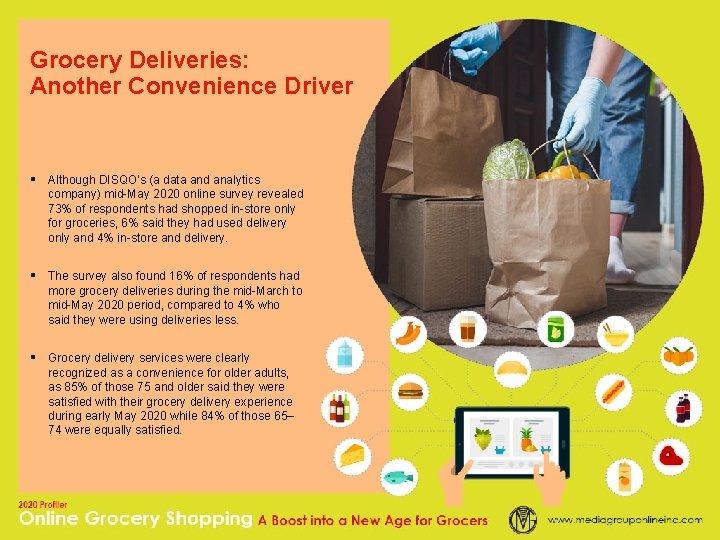
Grocery Deliveries: Another Convenience Driver § Although DISQO’s (a data and analytics company) mid-May 2020 online survey revealed 73% of respondents had shopped in-store only for groceries, 6% said they had used delivery only and 4% in-store and delivery. § The survey also found 16% of respondents had more grocery deliveries during the mid-March to mid-May 2020 period, compared to 4% who said they were using deliveries less. § Grocery delivery services were clearly recognized as a convenience for older adults, as 85% of those 75 and older said they were satisfied with their grocery delivery experience during early May 2020 while 84% of those 65– 74 were equally satisfied.
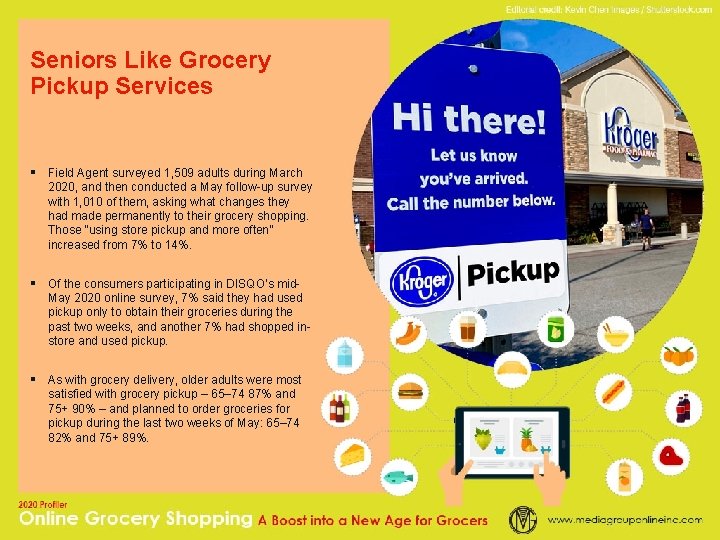
Seniors Like Grocery Pickup Services § Field Agent surveyed 1, 509 adults during March 2020, and then conducted a May follow-up survey with 1, 010 of them, asking what changes they had made permanently to their grocery shopping. Those “using store pickup and more often” increased from 7% to 14%. § Of the consumers participating in DISQO’s mid. May 2020 online survey, 7% said they had used pickup only to obtain their groceries during the past two weeks, and another 7% had shopped instore and used pickup. § As with grocery delivery, older adults were most satisfied with grocery pickup – 65– 74 87% and 75+ 90% – and planned to order groceries for pickup during the last two weeks of May: 65– 74 82% and 75+ 89%.
A Boost to Grocery. Related Technologies § The pandemic has accelerated the use of contactless-payment technology. According to Mastercard Consumer Polling, more than half (51%) of Americans used the technology during February–March 2020. § Contactless payments were used for 85% of grocery purchases, more than twice pharmacies at 39%, retail stores 38%, quick-service restaurants 36% and transit 9%. § The pandemic and surge in grocery deliveries has been a boon for Instacart, as its market share increased to 57% during April 2020 and stealing much of the increase from Walmart which had the largest share during 2019, but lost 25% of its share during March 2020.
Advertising Strategies § Online grocery shopping may not match the levels of the early-pandemic period, but more people will continue to shop online. Supermarkets are compelled, therefore, to promote their online shopping platform in their advertising in other media. § Local supermarkets are unable (and shouldn’t try) to compete with Amazon, Walmart, etc. in the online shopping channel, but they can promote unique and/or gourmet items in their standard advertising to drive people to their online platforms or in-store. § To promote themselves as forward-leaning businesses, local supermarkets should consider featuring/promoting in their advertising their use of contactless payment devices at checkout, robotics (for cleaning) and RFID technologies.
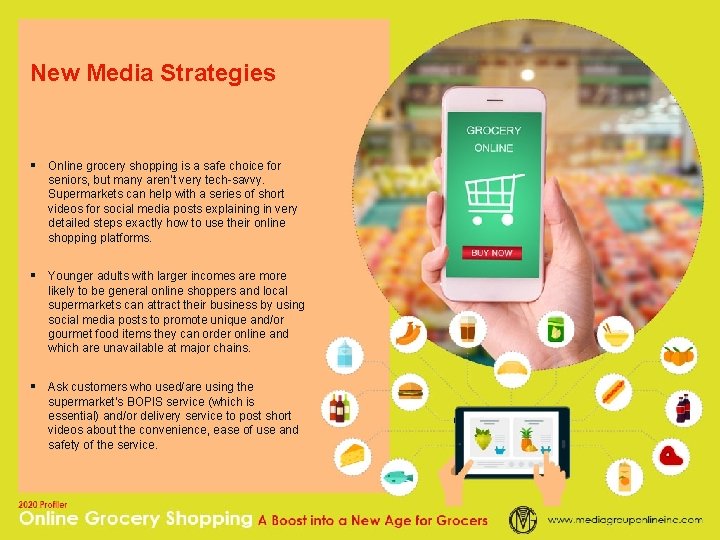
New Media Strategies § Online grocery shopping is a safe choice for seniors, but many aren’t very tech-savvy. Supermarkets can help with a series of short videos for social media posts explaining in very detailed steps exactly how to use their online shopping platforms. § Younger adults with larger incomes are more likely to be general online shoppers and local supermarkets can attract their business by using social media posts to promote unique and/or gourmet food items they can order online and which are unavailable at major chains. § Ask customers who used/are using the supermarket’s BOPIS service (which is essential) and/or delivery service to post short videos about the convenience, ease of use and safety of the service.
- Slides: 10