
Billion The Layers of the Earth Copyright 2006
Billion
The Layers of the Earth © Copyright 2006. M. J. Krech. All rights reserved.

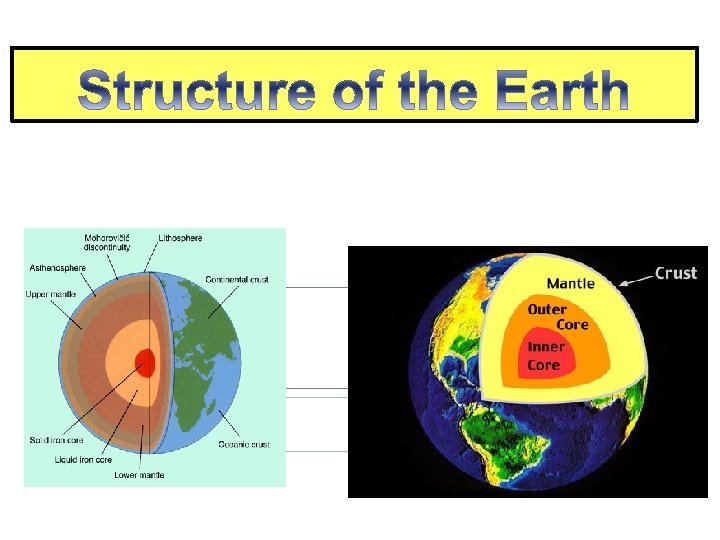
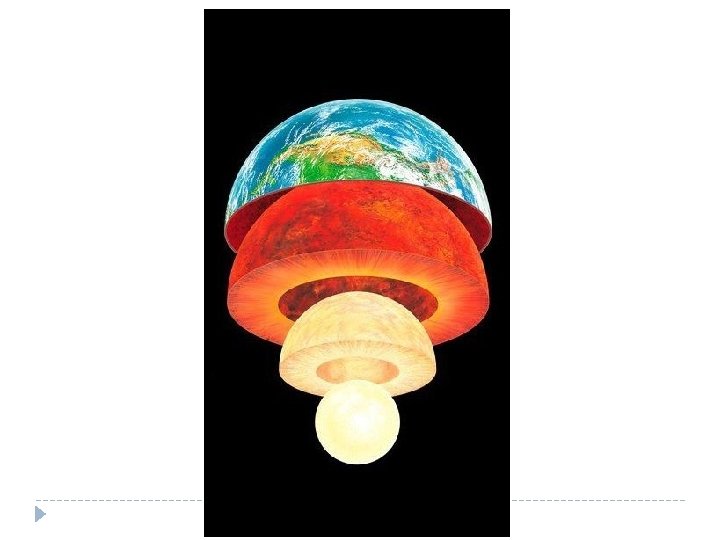
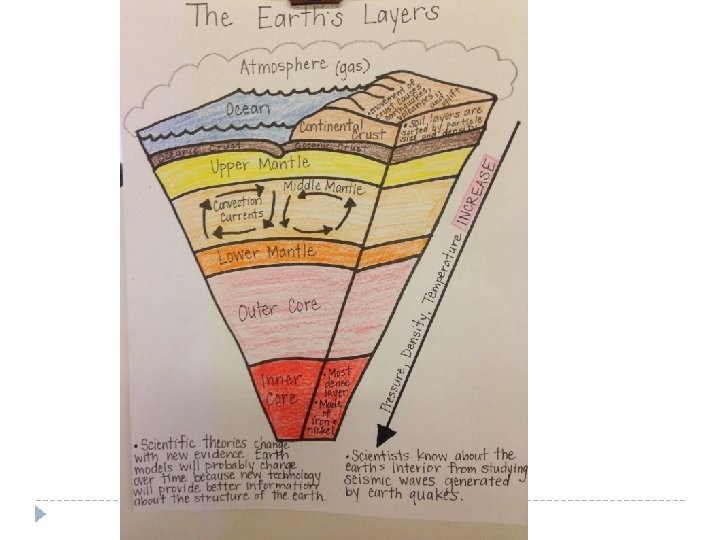
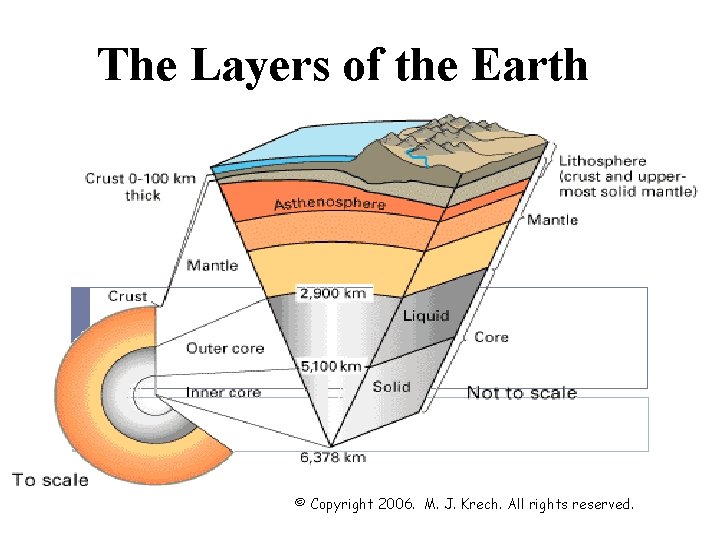
The Four Layers The Earth is composed of four different layers. The crust is the layer that you live on, and it is the most widely studied and understood. The mantle is much hotter and has the ability to flow. The outer core and inner core are even hotter with pressures so great you would be squeezed into a ball smaller than a marble if you were able to go to the center of the Earth!
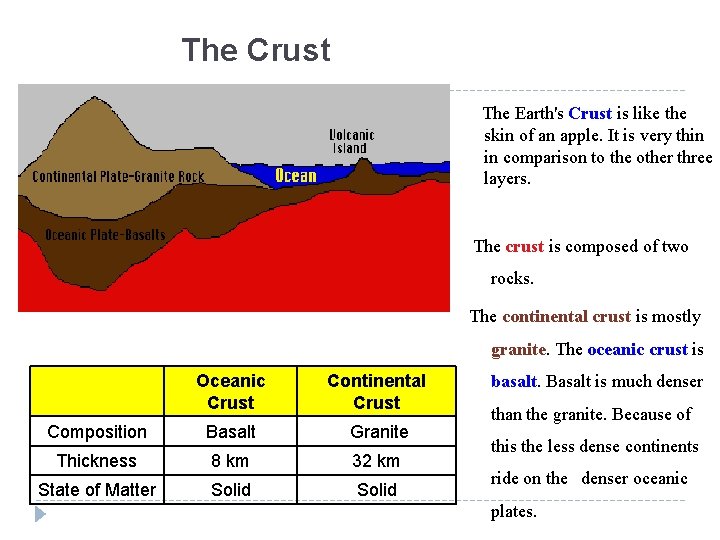
The Crust The Earth's Crust is like the skin of an apple. It is very thin in comparison to the other three layers. The crust is composed of two rocks. The continental crust is mostly granite. The oceanic crust is Oceanic Crust Continental Crust Composition Basalt Granite Thickness 8 km 32 km State of Matter Solid basalt. Basalt is much denser than the granite. Because of this the less dense continents ride on the denser oceanic plates.
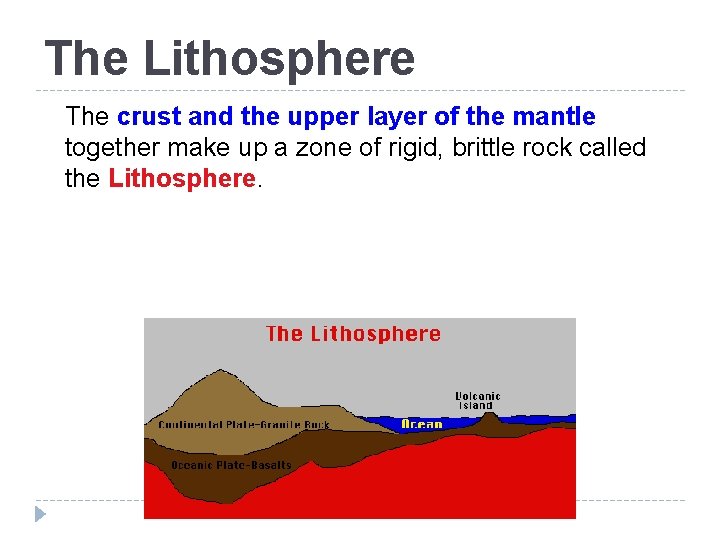
The Lithosphere The crust and the upper layer of the mantle together make up a zone of rigid, brittle rock called the Lithosphere.
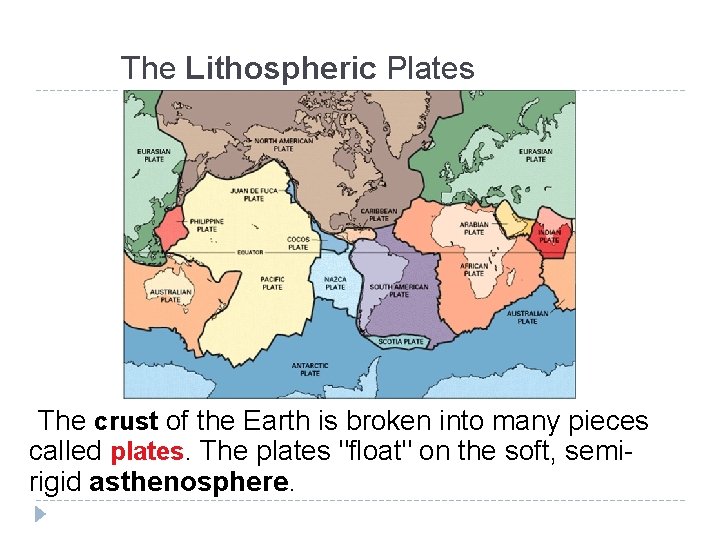
The Lithospheric Plates The crust of the Earth is broken into many pieces called plates. The plates "float" on the soft, semirigid asthenosphere.
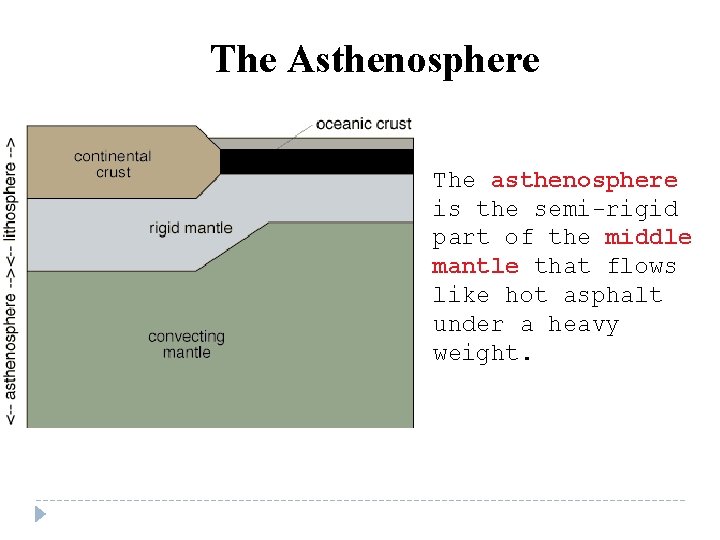
The Asthenosphere The asthenosphere is the semi-rigid part of the middle mantle that flows like hot asphalt under a heavy weight.
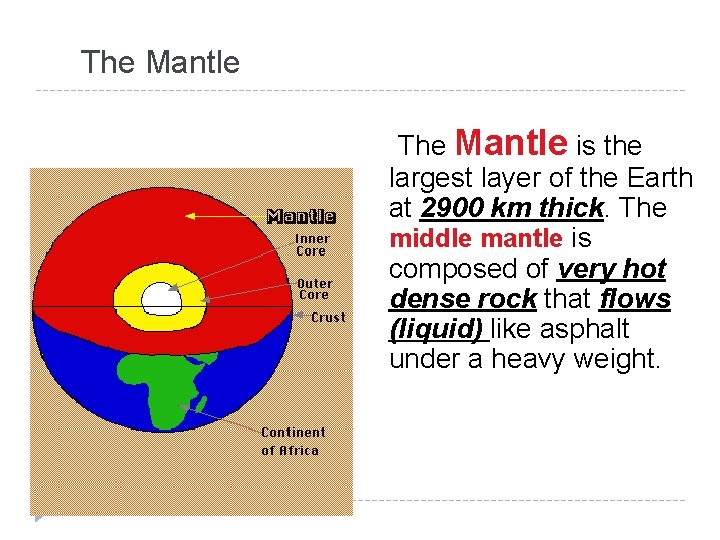
The Mantle is the largest layer of the Earth at 2900 km thick. The middle mantle is composed of very hot dense rock that flows (liquid) like asphalt under a heavy weight.
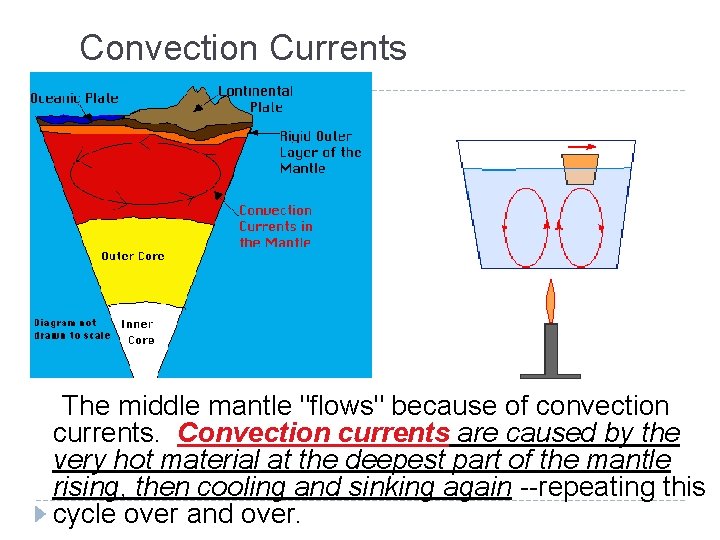
Convection Currents The middle mantle "flows" because of convection currents. Convection currents are caused by the very hot material at the deepest part of the mantle rising, then cooling and sinking again --repeating this cycle over and over.
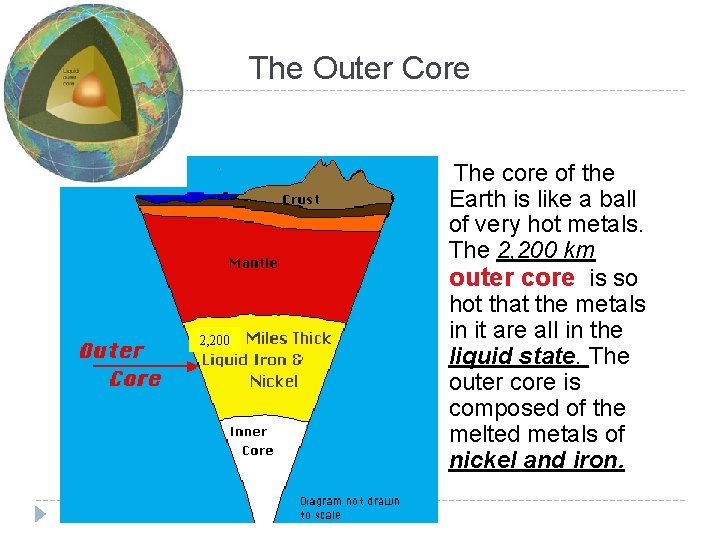
The Outer Core 2, 200 The core of the Earth is like a ball of very hot metals. The 2, 200 km outer core is so hot that the metals in it are all in the liquid state. The outer core is composed of the melted metals of nickel and iron.
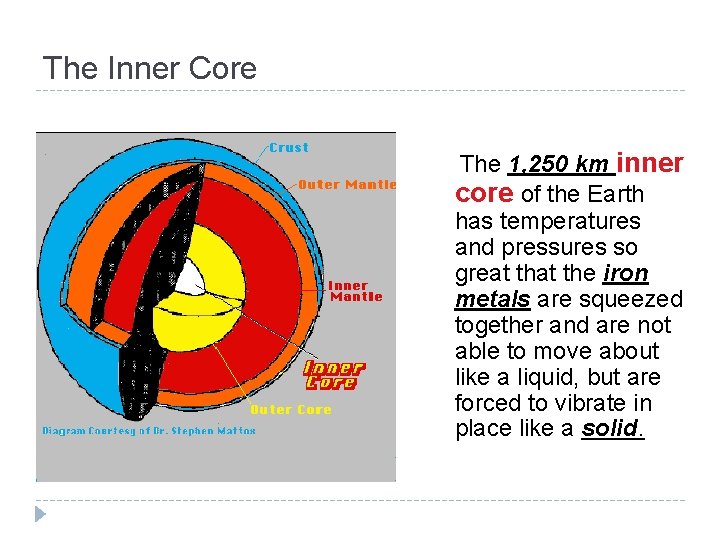
The Inner Core The 1, 250 km inner core of the Earth has temperatures and pressures so great the iron metals are squeezed together and are not able to move about like a liquid, but are forced to vibrate in place like a solid.
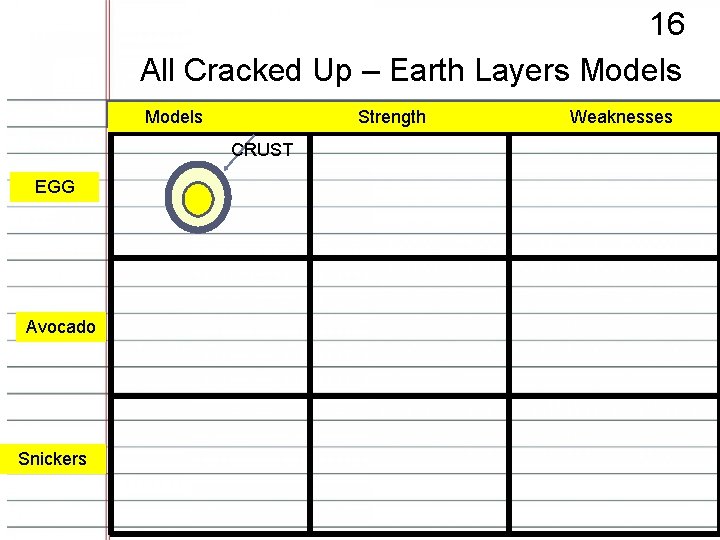
16 All Cracked Up – Earth Layers Models Strength CRUST EGG Avocado Snickers Weaknesses
16 All Cracked Up – Earth Layers Models Kiwi Apple/ Baseball Lava Lamp Strength Weaknesses
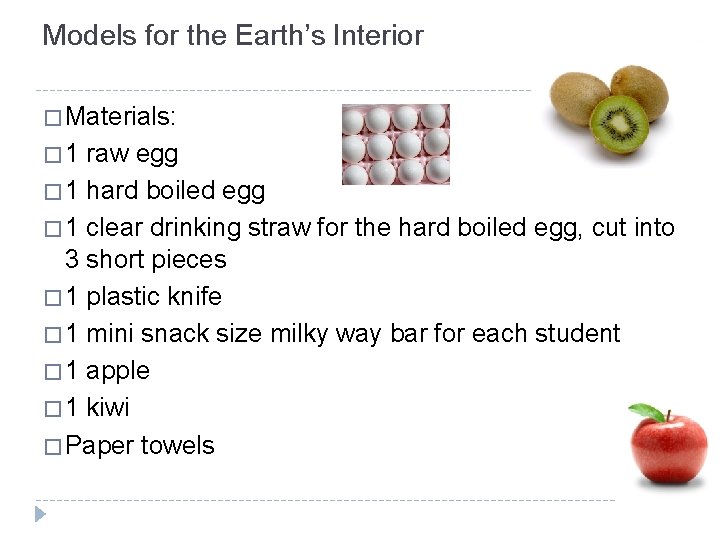
Models for the Earth’s Interior � Materials: � 1 raw egg � 1 hard boiled egg � 1 clear drinking straw for the hard boiled egg, cut into 3 short pieces � 1 plastic knife � 1 mini snack size milky way bar for each student � 1 apple � 1 kiwi � Paper towels
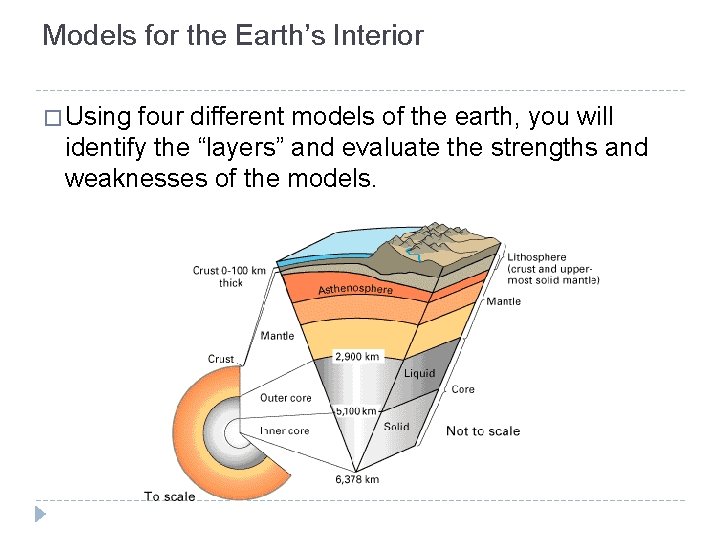
Models for the Earth’s Interior � Using four different models of the earth, you will identify the “layers” and evaluate the strengths and weaknesses of the models.
- Slides: 17