
Bill of Rights Constitution Day Overview A introduction
Bill of Rights Constitution Day
Overview A introduction to the Bill of Rights Who advocated the Bill Write your personal thoughts
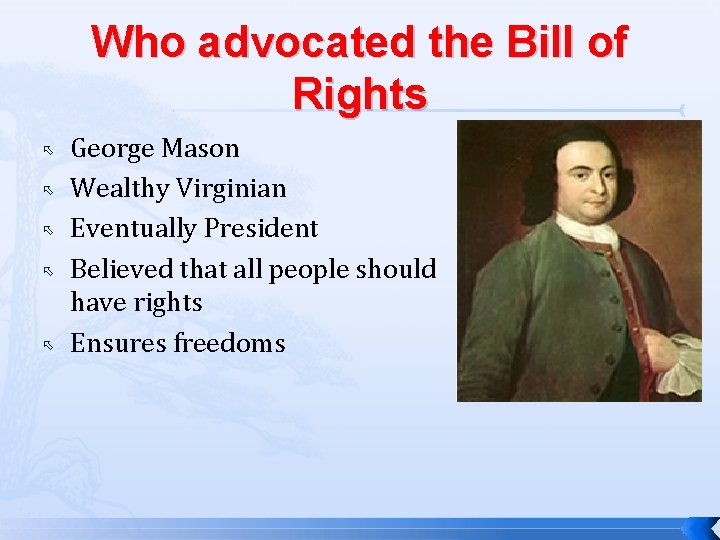
Who advocated the Bill of Rights George Mason Wealthy Virginian Eventually President Believed that all people should have rights Ensures freedoms
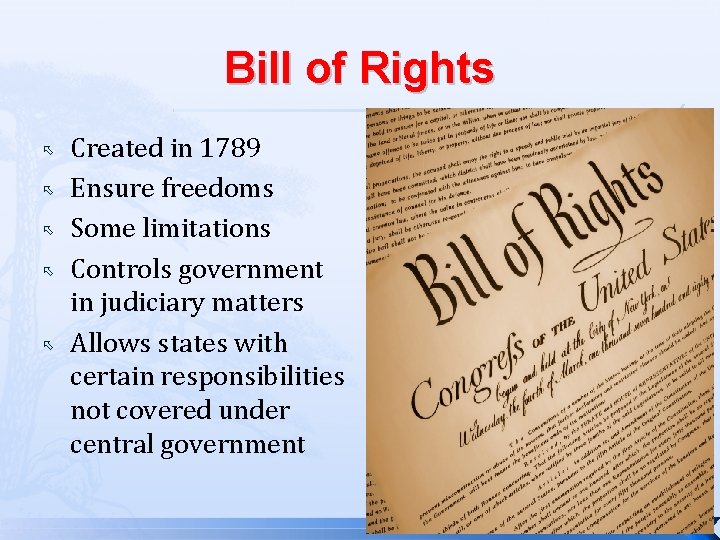
Bill of Rights Created in 1789 Ensure freedoms Some limitations Controls government in judiciary matters Allows states with certain responsibilities not covered under central government
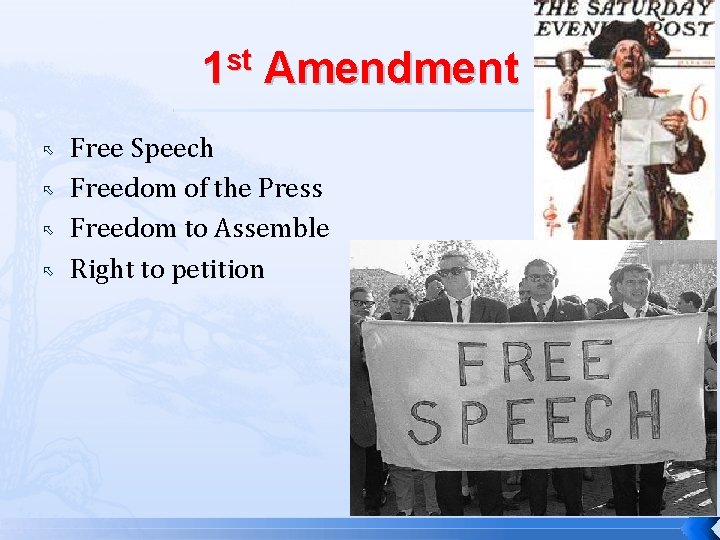
1 st Amendment Free Speech Freedom of the Press Freedom to Assemble Right to petition

1 st Amendment Cannot call out a false alarm, example calling “fire” in a theater. Cannot libel, make false statement. Cannot make terrorist threat. Cannot give state secrets.
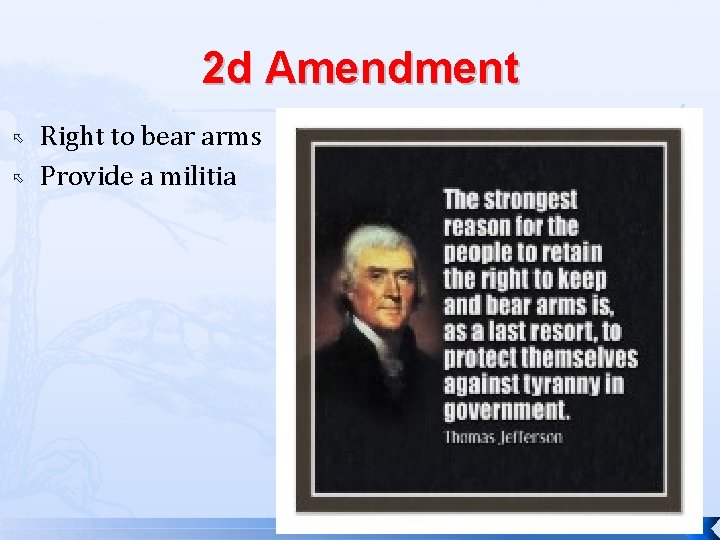
2 d Amendment Right to bear arms Provide a militia

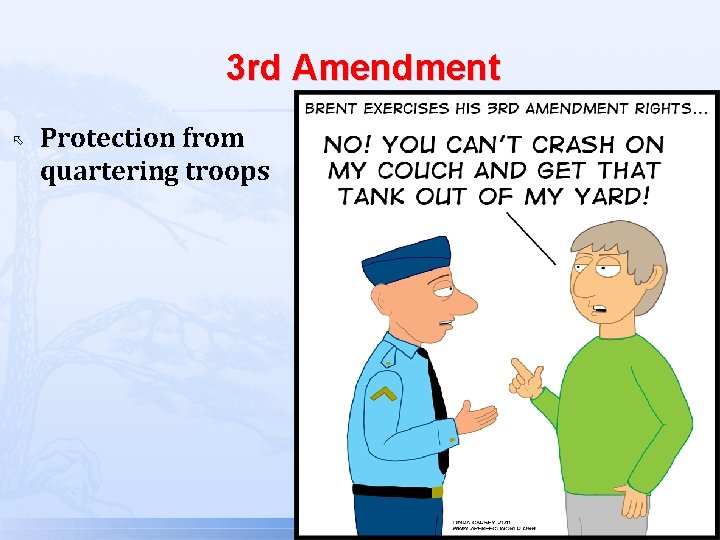
3 rd Amendment Protection from quartering troops
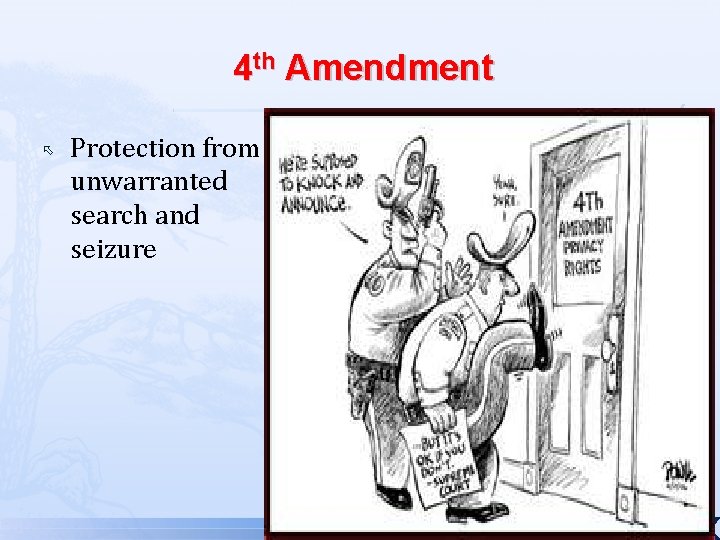
4 th Amendment Protection from unwarranted search and seizure
5 th Amendment Due Process- Trial Double Jeopardy- can’t be tried on the same offense twice Self Incrimination – you cannot be used to testify against yourself Eminent domain – land that is owned but needed by government can’t be seized, must be paid.
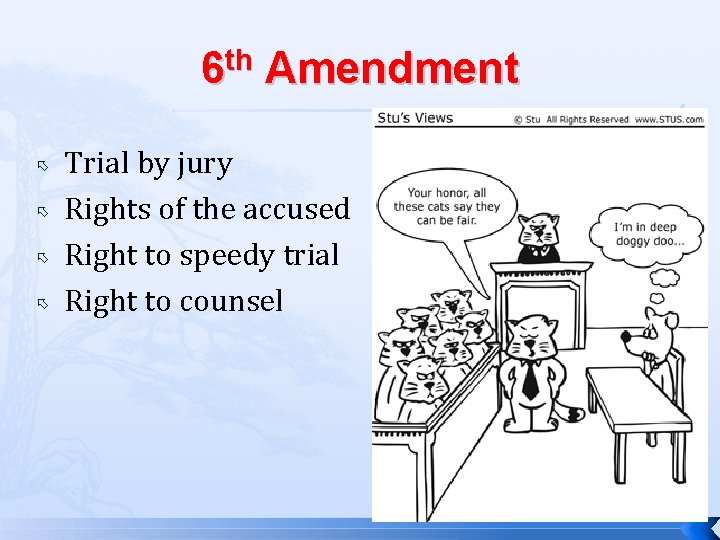
6 th Amendment Trial by jury Rights of the accused Right to speedy trial Right to counsel
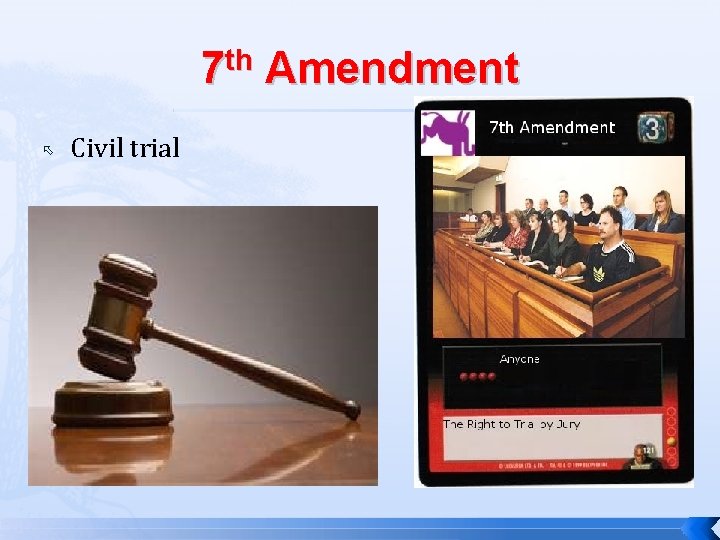
7 th Amendment Civil trial
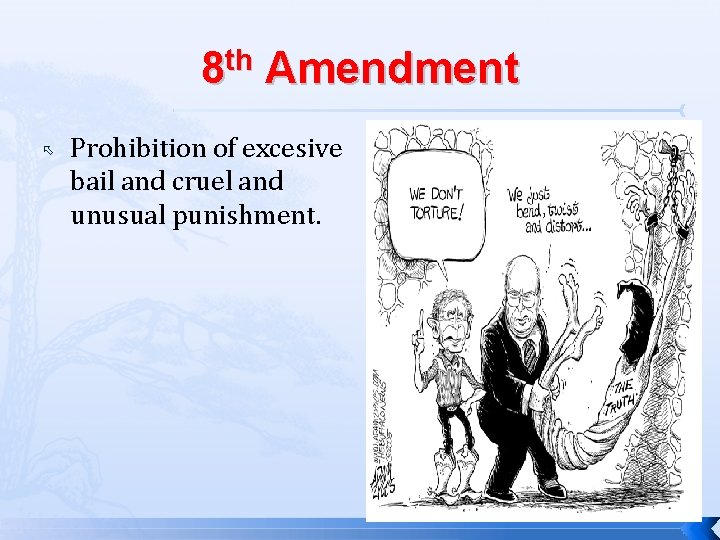
8 th Amendment Prohibition of excesive bail and cruel and unusual punishment.
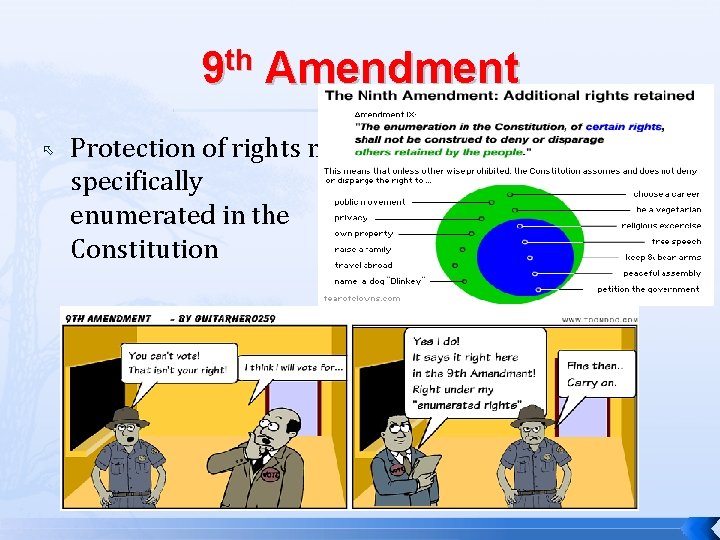
9 th Amendment Protection of rights not specifically enumerated in the Constitution
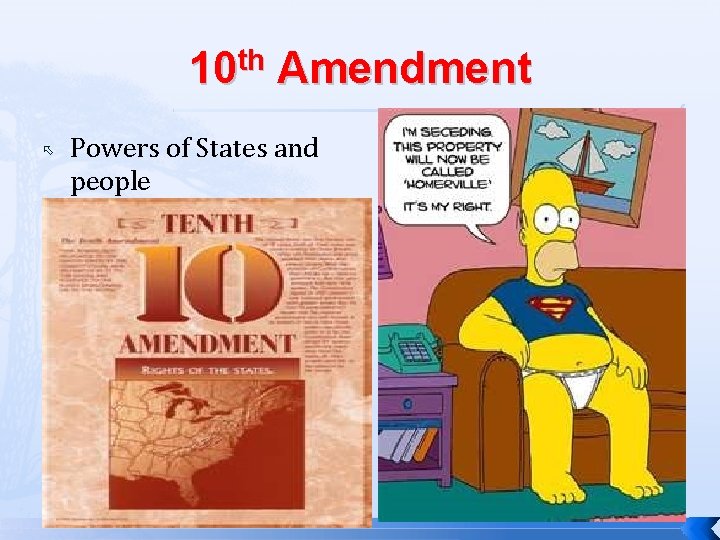
10 th Amendment Powers of States and people
Review 1 st- Freedom of Speech 2 d- Right to Bear Arms, Militia 3 d- Quartering 4 th- Search and Seizure 5 th- Due Process, Double Jeopardy, Self Incriminate 6 th and 7 th Trial, Speedy Trial 8 th- No cruel punishment 9 th – Catch all 10 th- Power to state and people
- Slides: 17