
Bill of Rights 1 st Amendment Guarantees freedom
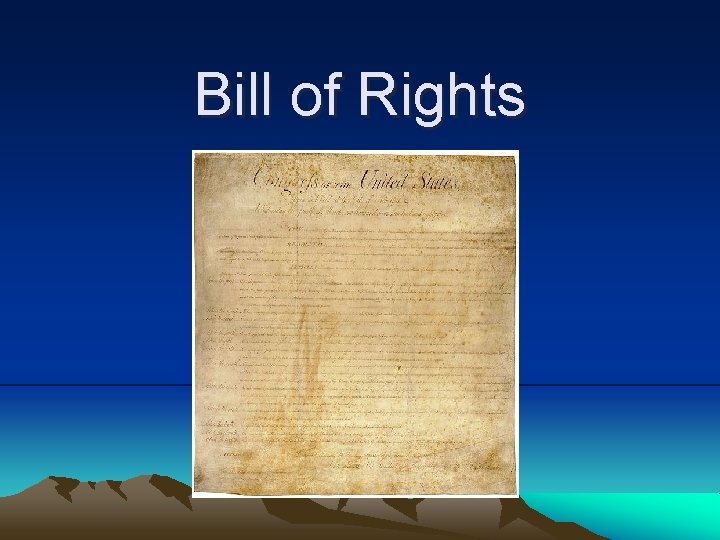
Bill of Rights

1 st Amendment • Guarantees freedom of religion, speech, and the press, and the rights of assembly and petition.
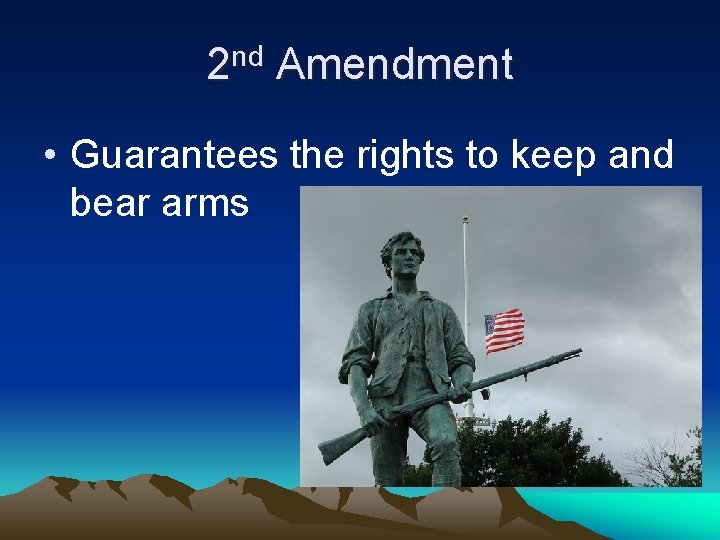
2 nd Amendment • Guarantees the rights to keep and bear arms
3 rd Amendment • Prohibits the quartering of soldiers in one’s home
4 th Amendment • Prohibits “unreasonable” searches and seizures
5 th Amendment • Provides guarantees and prohibitions: – No citizen may be deprived of life, liberty or property without due process of law (legal procedures carried out according to established rules, such as a fair trial) – Requires grand jury indictments (formal charge for committing a serious crime)
–Prohibits double jeopardy (being tried twice for the same crime) –Prohibits self-incrimination (no person can be forced to give evidence against themselves)
6 th Amendment • Guarantees that those accused of a crime have the: –Right to a speedy trial –Right to confront accusers –Right to be represented by a lawyer
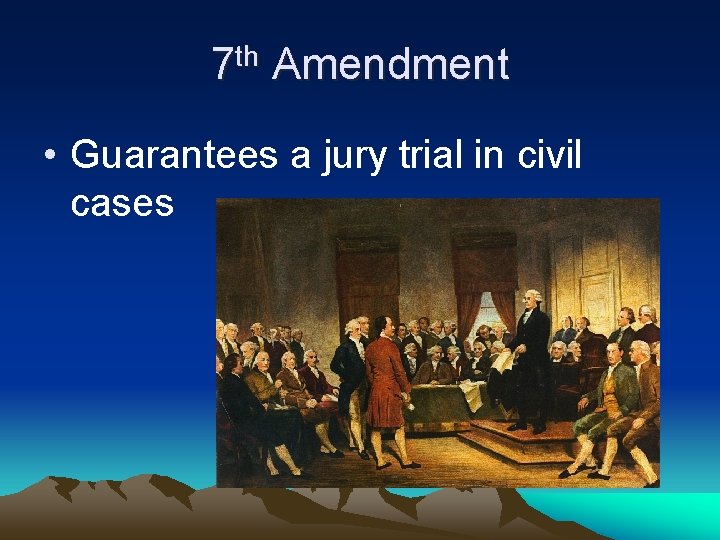
7 th Amendment • Guarantees a jury trial in civil cases
8 th Amendment • Prohibits excessive bail and cruel and unusual punishment
9 th Amendment • The listing of some Constitutional rights does not mean that people do not enjoy other rights
10 th Amendment • Reserves to the states and the people all rights not delegated to the federal government
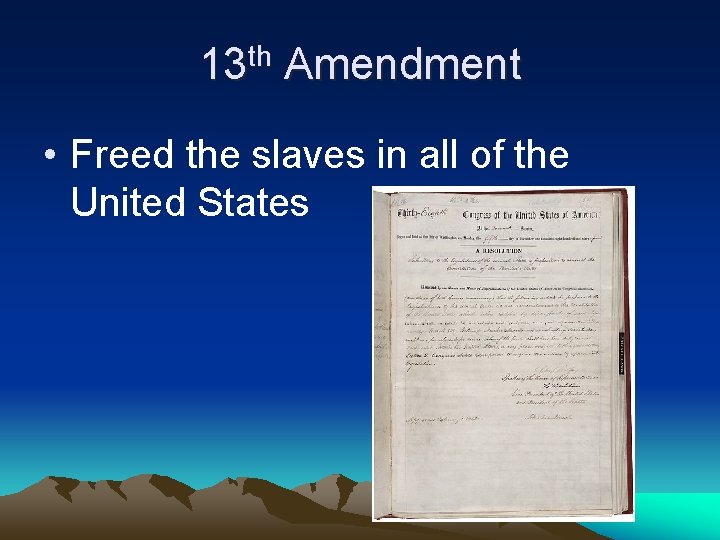
13 th Amendment • Freed the slaves in all of the United States
14 th Amendment • Said all people born in the United States are citizens, and all citizens are entitled to “equal protection under the laws”
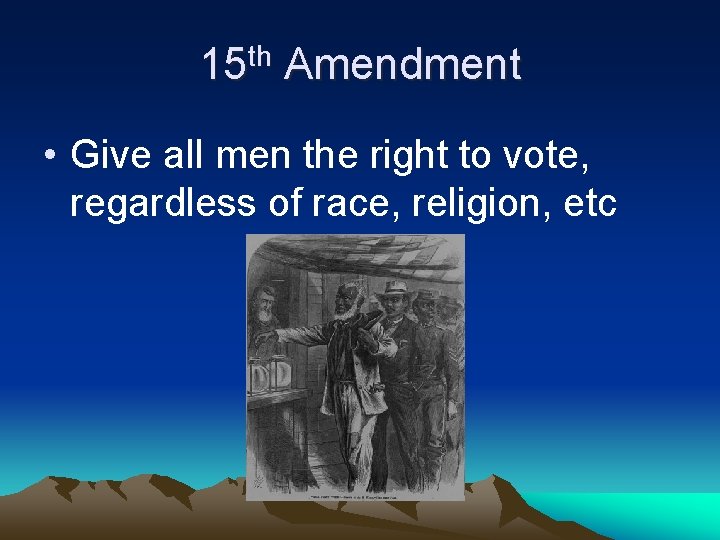
15 th Amendment • Give all men the right to vote, regardless of race, religion, etc
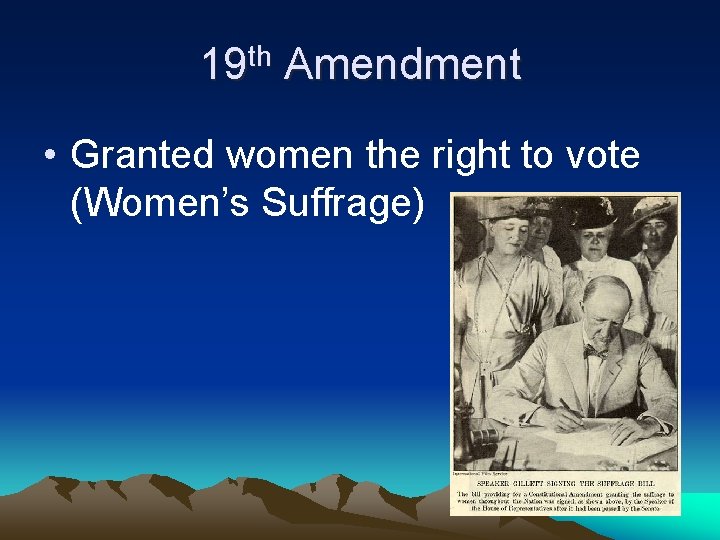
19 th Amendment • Granted women the right to vote (Women’s Suffrage)
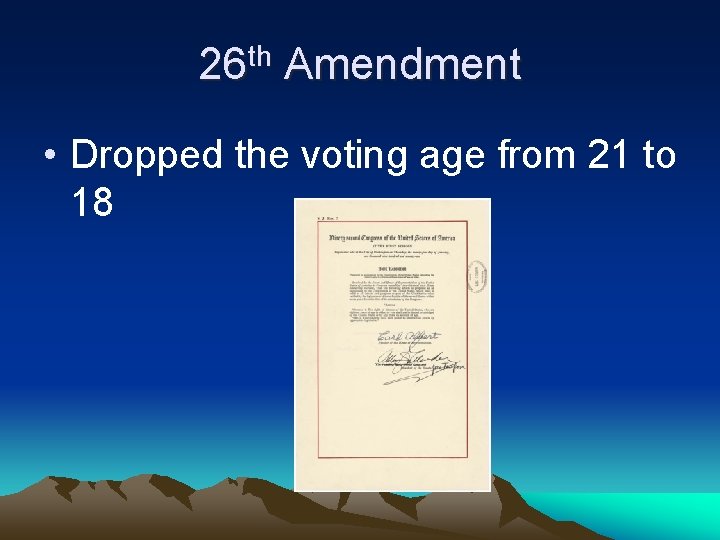
26 th Amendment • Dropped the voting age from 21 to 18
- Slides: 17