
Bilateral Diffuse Herpetic Endotheliitis Clinical Features Role of
Bilateral Diffuse Herpetic Endotheliitis Clinical Features & Role of Laboratory Diagnosis in Management Dr. Manoj Sharma, MD Radhika Tandon, MD, DNB, FRCS, FRCOphth Dr Gita Satpathy, MD* Department of Cornea, Cataract & Refractive Surgery and *Ocular Microbiology Dr Rajendra Prasad Centre For Ophthalmic Sciences, AIIMS The authors have no financial interest in the subject matter of this poster
Aim To report the clinical features and management outcome in two patients with bilateral diffuse herpetic endotheliitis

Clinical Presentation Two patients presented with acute onset bilateral diminution of vision ocular pain, redness, and photophobia Case 1: 65 -year-old male with vision of 6/36 (OU) Case 2: 55 -year-old male with vision of 1/60 (OU) & past history of keratitis in one eye (OS)
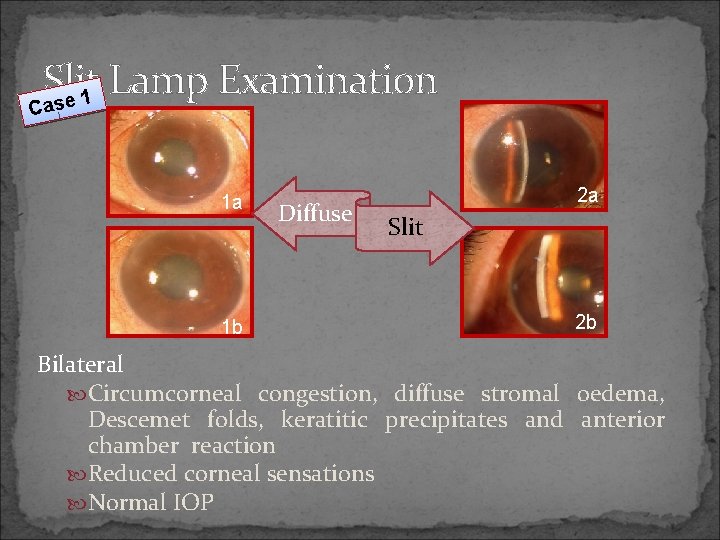
Slit Lamp Examination 1 ase C 1 a 1 b Diffuse 2 a Slit 2 b Bilateral Circumcorneal congestion, diffuse stromal oedema, Descemet folds, keratitic precipitates and anterior chamber reaction Reduced corneal sensations Normal IOP
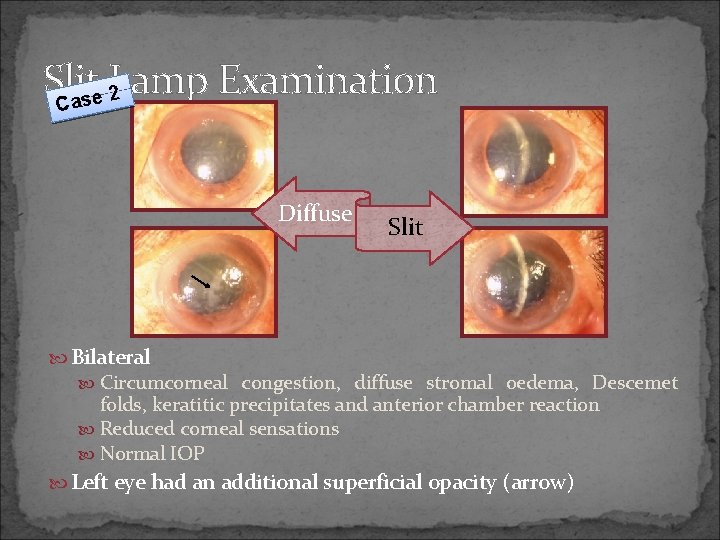
Slit Lamp Examination 2 e s Ca Diffuse Slit Bilateral Circumcorneal congestion, diffuse stromal oedema, Descemet folds, keratitic precipitates and anterior chamber reaction Reduced corneal sensations Normal IOP Left eye had an additional superficial opacity (arrow)
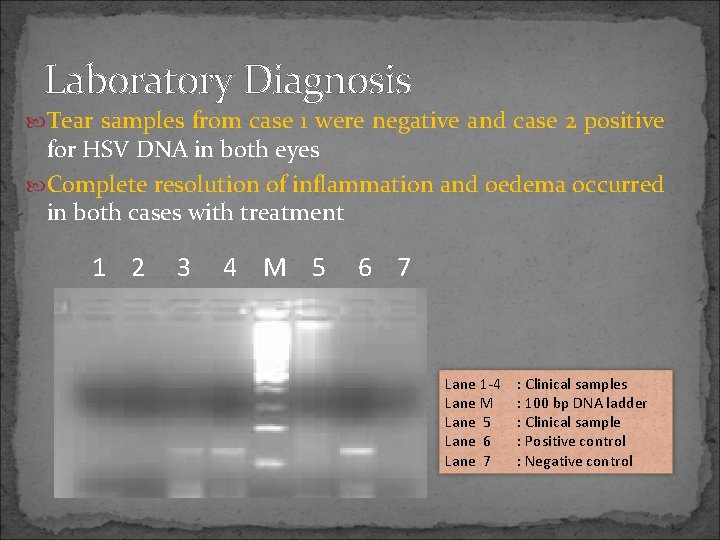
Laboratory Diagnosis Tear samples from case 1 were negative and case 2 positive for HSV DNA in both eyes Complete resolution of inflammation and oedema occurred in both cases with treatment 1 2 3 4 M 5 6 7 Lane 1 -4 Lane M Lane 5 Lane 6 Lane 7 : Clinical samples : 100 bp DNA ladder : Clinical sample : Positive control : Negative control
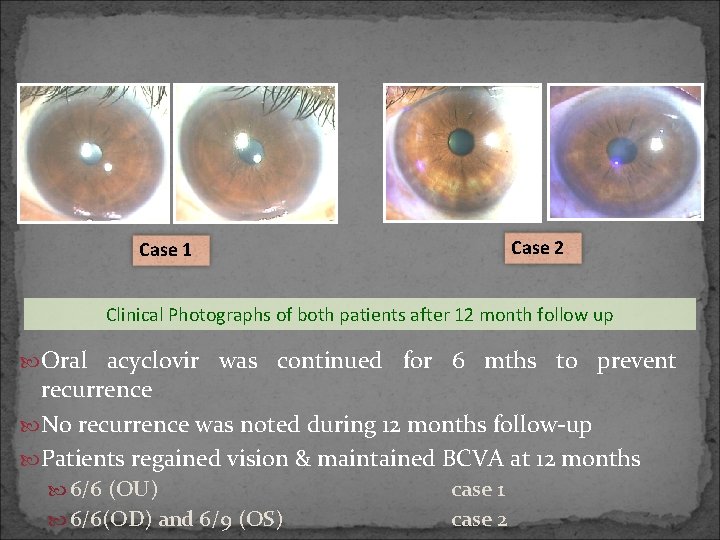
Case 2 Case 1 Clinical Photographs of both patients after 12 month follow up Oral acyclovir was continued for 6 mths to prevent recurrence No recurrence was noted during 12 months follow-up Patients regained vision & maintained BCVA at 12 months 6/6 (OU) 6/6(OD) and 6/9 (OS) case 1 case 2
Laboratory Diagnosis Before starting treatment tear samples from both eyes of patients were collected by fire polished microcapillary tube and subjected to PCR for HSV DNA detection PCR Protocol DNA extraction: commercial QI Amp DNA blood kit 2. Polymerase chain reaction 1. Primer-111 bp region of HSV 1 thymidine kinase gene (Hofgartner W T et. al Clinical chemistry, 1999) Amplification- thermal cycler (Gene Amp PCR system 9700, applied biosystem, USA) 3. Electrophoreses- in 2% agarose gel
Treatment Tab acyclovir 400 mg (5 times/day) × 7 days Tab acyclovir 400 mg (BD) × 6 months Topical steroid (1% prednisolone acetate) Adjunct therapy was given as required Topical antibiotic Topical mydriatic (2% homatropine) Topical lubricant (preservative free) Analgesics (if required)
Conclusion HSV-1 may cause bilateral diffuse corneal endotheliitis, Therefore it should be regarded as a manifestation of HSV 1 corneal infection High index of suspicion is required in such cases and patients treated appropriately PCR in tear samples may be helpful and serve as a non invasive diagnostic tool in some cases
Address for Correspondence Dr Radhika Tandon Professor of Ophthalmology radhika_tan@yahoo. com Dr. RP Centre for Ophthalmic Sciences, AIIMS New Delhi 110029 India
- Slides: 11