
Big Picture Review Biochem IMPORTANT DEFINITIONS ORGANIC COMPOUND
Big Picture Review; Biochem.
IMPORTANT DEFINITIONS • ORGANIC COMPOUND- compound that contains carbon atoms that have combined with each other
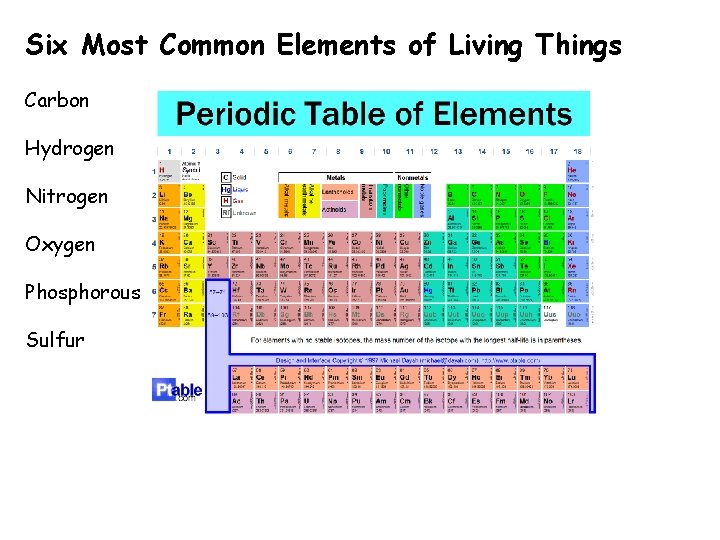
Six Most Common Elements of Living Things Carbon Hydrogen Nitrogen Oxygen Phosphorous Sulfur
Organic Compounds • All organic compounds contain the element Carbon! • There are four classes of organic molecules • • Carbohydrates – sugars Lipids – fats, oils, and waxes Proteins – enzymes, muscles, hair Nucleic Acids – DNA, RNA, and ATP
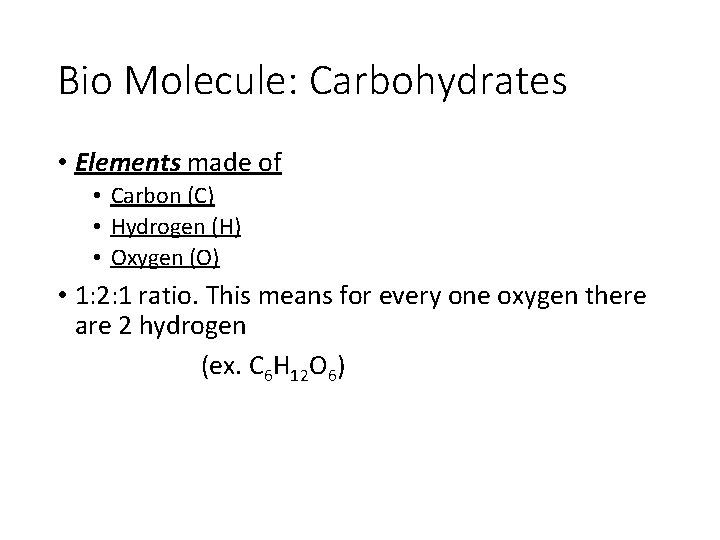
Bio Molecule: Carbohydrates • Elements made of • Carbon (C) • Hydrogen (H) • Oxygen (O) • 1: 2: 1 ratio. This means for every one oxygen there are 2 hydrogen (ex. C 6 H 12 O 6)
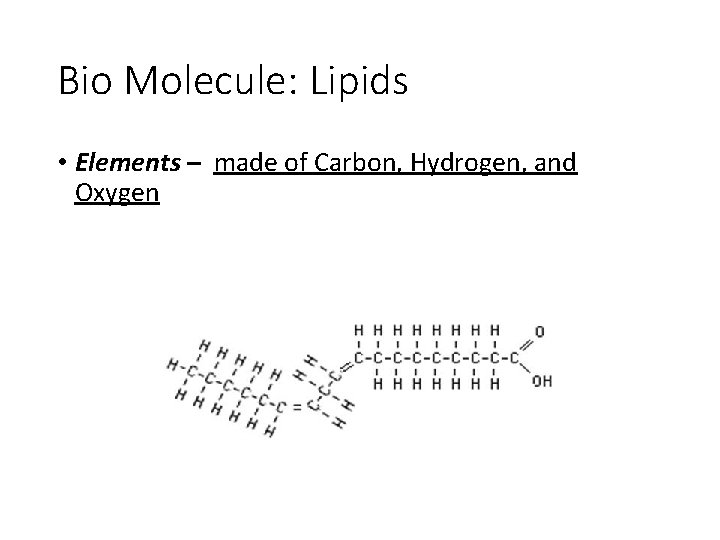
Bio Molecule: Lipids • Elements – made of Carbon, Hydrogen, and Oxygen
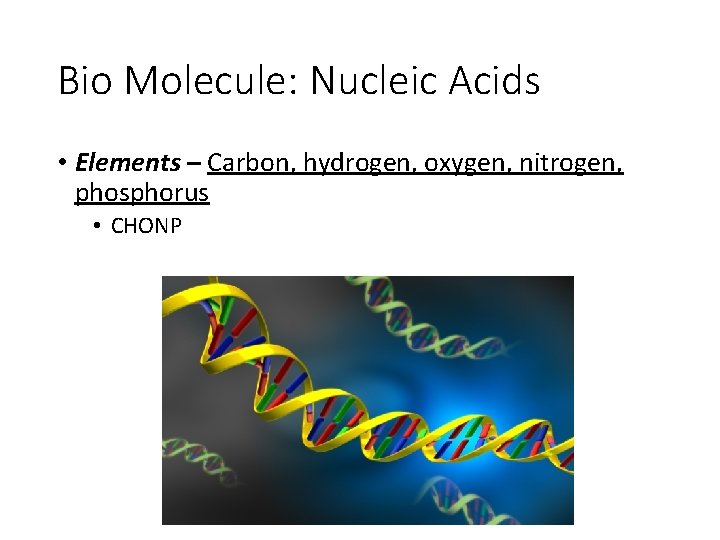
Bio Molecule: Nucleic Acids • Elements – Carbon, hydrogen, oxygen, nitrogen, phosphorus • CHONP
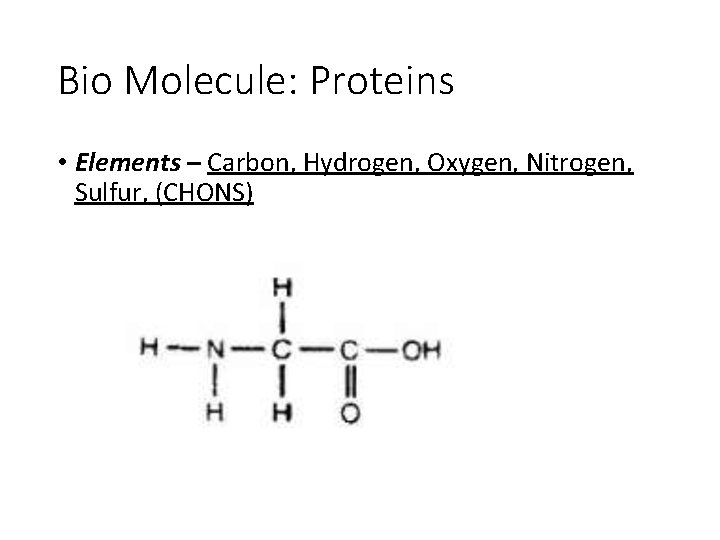
Bio Molecule: Proteins • Elements – Carbon, Hydrogen, Oxygen, Nitrogen, Sulfur, (CHONS)
MORE DEFINITIONS • MACROMOLECULE- organic molecules made from smaller parts. • AMINO ACID- building blocks that make up proteins • POLYPEPTIDE- a chain of amino acids • MONOSACCHARIDE- building block of carbohydrates • POLYSACCHARIDE- a chain of at least 3 monosaccharides • NUCLEOTIDE- building block of nucleic acids; made of a phosphate, sugar, and nitrogen base. • FATTY ACID- building block of lipids.
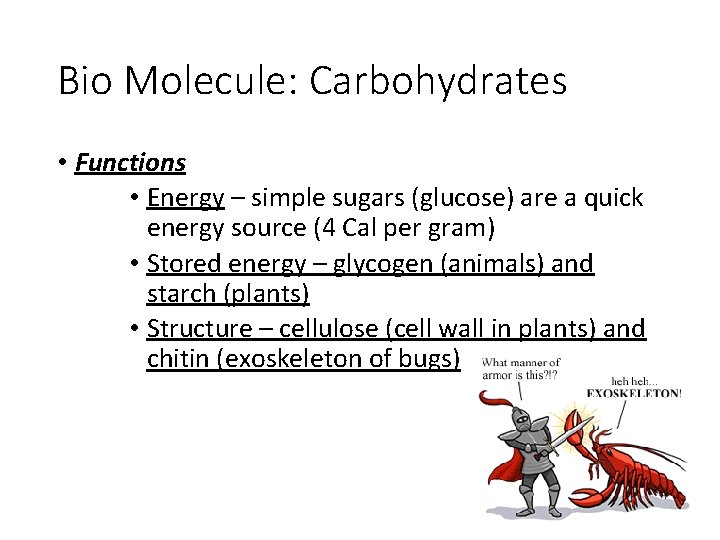
Bio Molecule: Carbohydrates • Functions • Energy – simple sugars (glucose) are a quick energy source (4 Cal per gram) • Stored energy – glycogen (animals) and starch (plants) • Structure – cellulose (cell wall in plants) and chitin (exoskeleton of bugs)
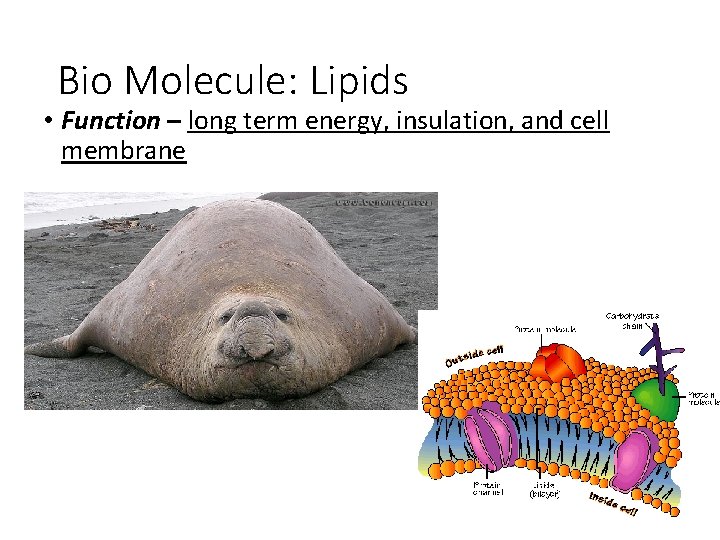
Bio Molecule: Lipids • Function – long term energy, insulation, and cell membrane
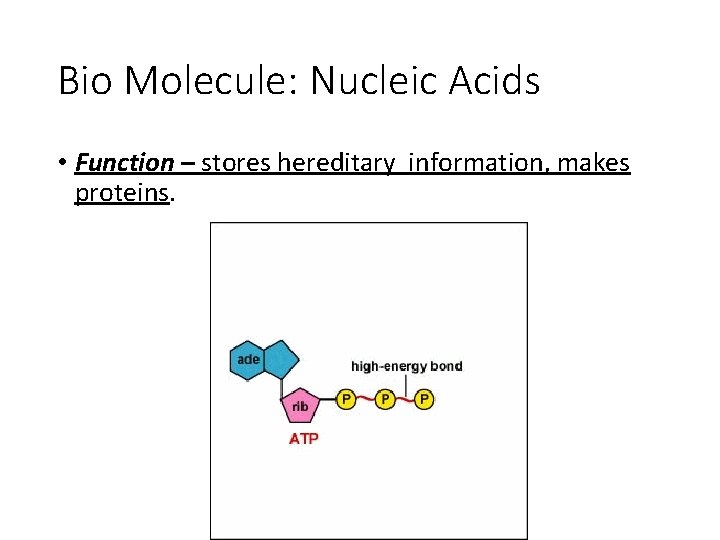
Bio Molecule: Nucleic Acids • Function – stores hereditary information, makes proteins.
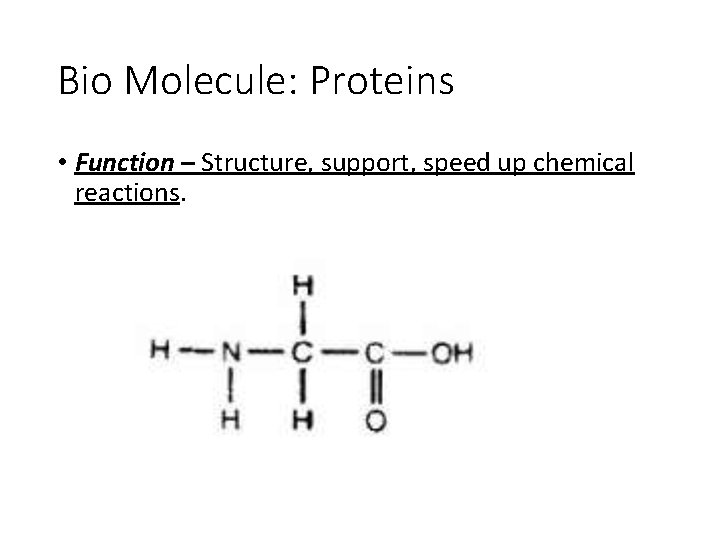
Bio Molecule: Proteins • Function – Structure, support, speed up chemical reactions.
Enzyme Definitions • CATALYST- Anything that causes a reaction to happen faster. • ENZYME- are proteins specifically designed to speed up chemical reactions • ACTIVATION ENERGY- the energy needed to start a reaction • SUBSTRATE- What an enzyme acts on; the reactants of a chemical reaction. • PRODUCT- The end result of a chemical reaction • ACTIVE SITE- a spot on an enzyme where the substrate binds
Enzyme activity is controlled by • Amount of enzyme • Amount of substrate • p. H • Temperature • Amount of time.
- Slides: 15