
Big Idea Matter is described by its properties
Big Idea: Matter is described by its properties and may undergo changes Unit 1 Lesson 2 Properties of Matter Essential Question: What are physical and chemical properties of matter? Copyright © Houghton Mifflin Harcourt Publishing Company
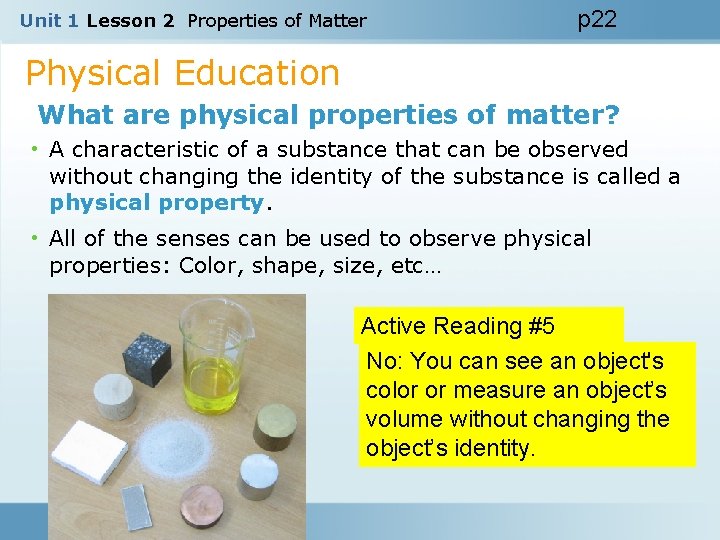
Unit 1 Lesson 2 Properties of Matter p 22 Physical Education What are physical properties of matter? • A characteristic of a substance that can be observed without changing the identity of the substance is called a physical property. • All of the senses can be used to observe physical properties: Color, shape, size, etc… Active Reading #5 No: You can see an object's color or measure an object’s volume without changing the object’s identity.
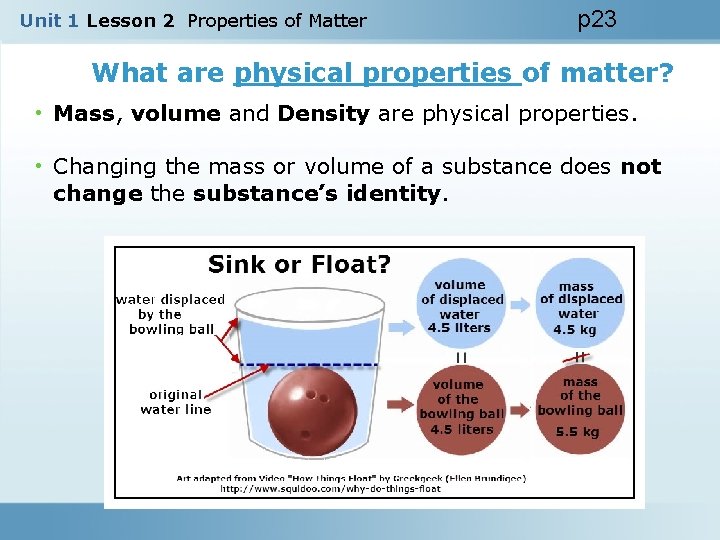
Unit 1 Lesson 2 Properties of Matter p 23 What are physical properties of matter? • Mass, volume and Density are physical properties. • Changing the mass or volume of a substance does not change the substance’s identity.
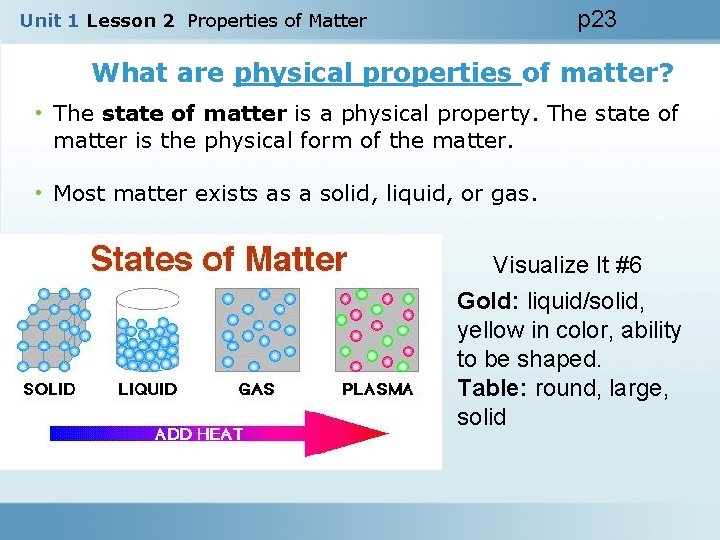
p 23 Unit 1 Lesson 2 Properties of Matter What are physical properties of matter? • The state of matter is a physical property. The state of matter is the physical form of the matter. • Most matter exists as a solid, liquid, or gas. Visualize It #6 Gold: liquid/solid, yellow in color, ability to be shaped. Table: round, large, solid
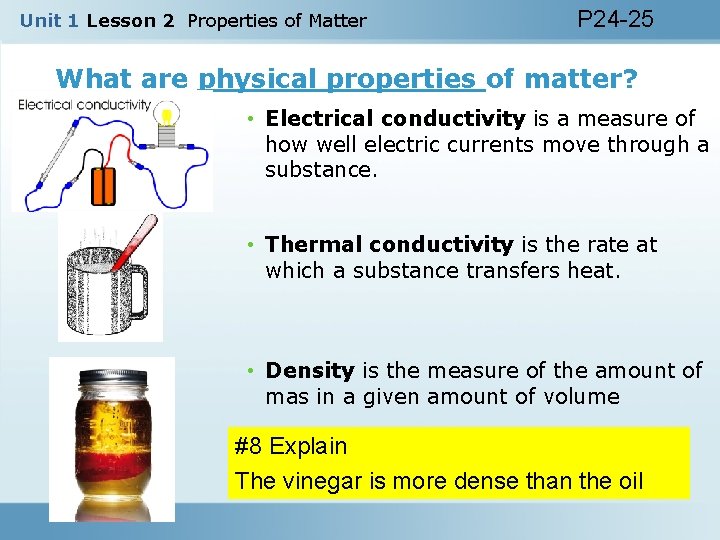
Unit 1 Lesson 2 Properties of Matter P 24 -25 What are physical properties of matter? • Electrical conductivity is a measure of how well electric currents move through a substance. • Thermal conductivity is the rate at which a substance transfers heat. • Density is the measure of the amount of mas in a given amount of volume #8 Explain The vinegar is more dense than the oil
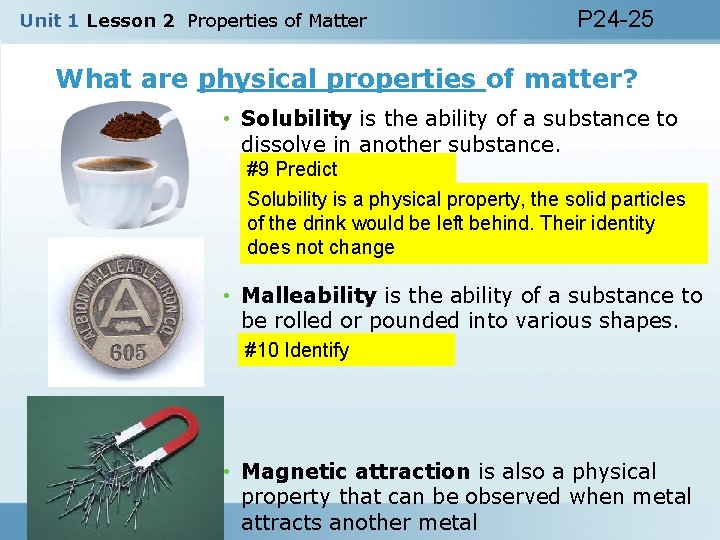
Unit 1 Lesson 2 Properties of Matter P 24 -25 What are physical properties of matter? • Solubility is the ability of a substance to dissolve in another substance. #9 Predict Solubility is a physical property, the solid particles of the drink would be left behind. Their identity does not change • Malleability is the ability of a substance to be rolled or pounded into various shapes. #10 Identify • Magnetic attraction is also a physical property that can be observed when metal attracts another metal
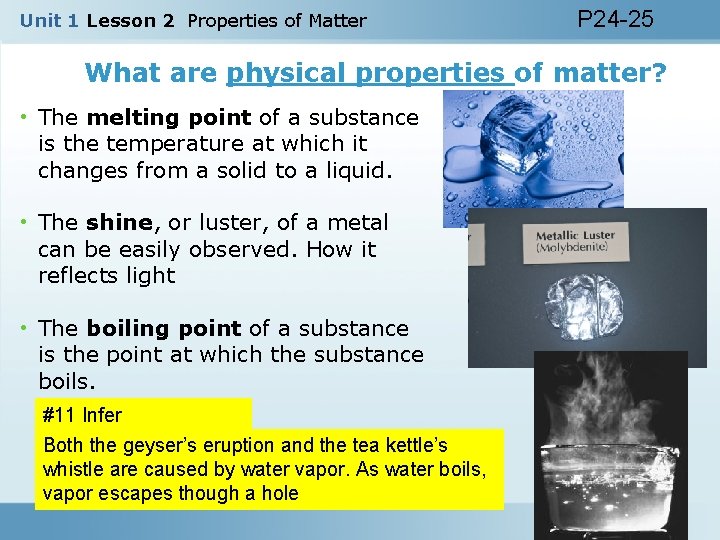
Unit 1 Lesson 2 Properties of Matter P 24 -25 What are physical properties of matter? • The melting point of a substance is the temperature at which it changes from a solid to a liquid. • The shine, or luster, of a metal can be easily observed. How it reflects light • The boiling point of a substance is the point at which the substance boils. #11 Infer Both the geyser’s eruption and the tea kettle’s whistle are caused by water vapor. As water boils, vapor escapes though a hole
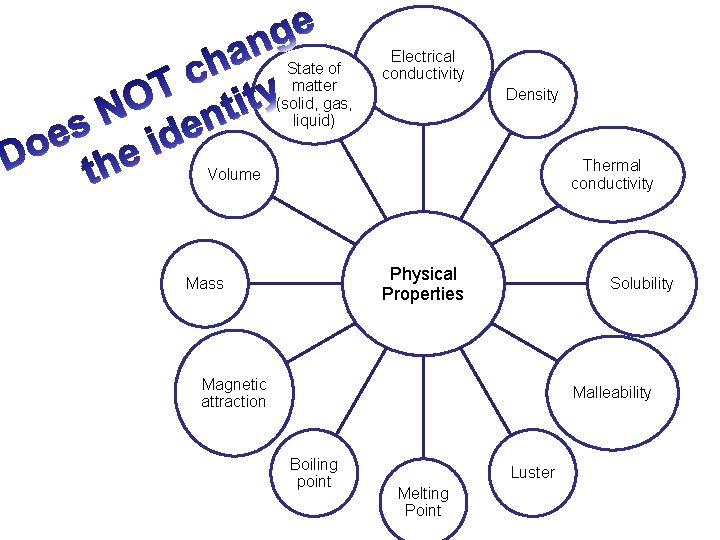
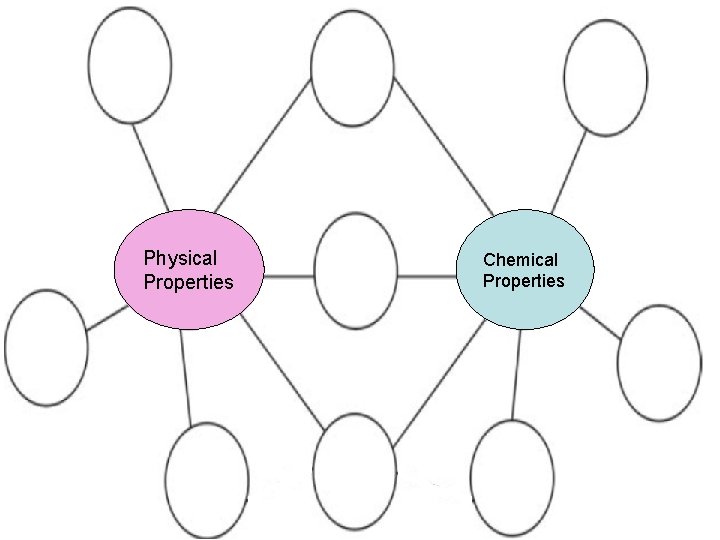
State of matter (solid, gas, liquid) Electrical conductivity Density Thermal conductivity Volume Physical Properties Mass Solubility Magnetic attraction Malleability Boiling point Luster Melting Point
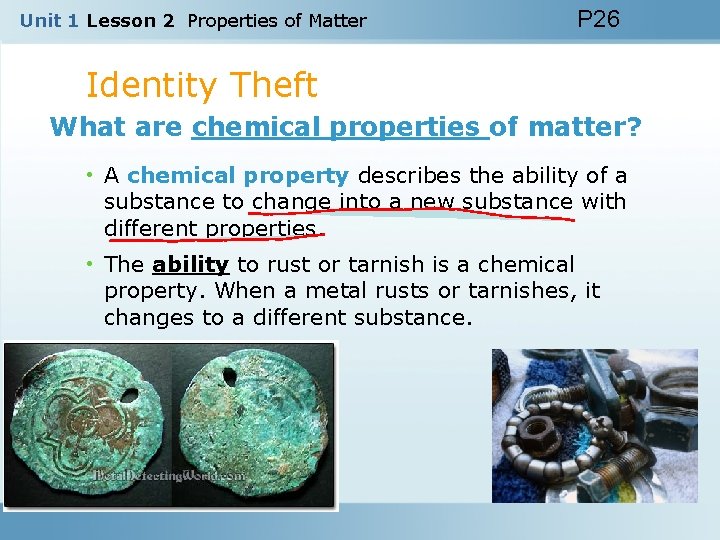
Unit 1 Lesson 2 Properties of Matter P 26 Identity Theft What are chemical properties of matter? • A chemical property describes the ability of a substance to change into a new substance with different properties. • The ability to rust or tarnish is a chemical property. When a metal rusts or tarnishes, it changes to a different substance.
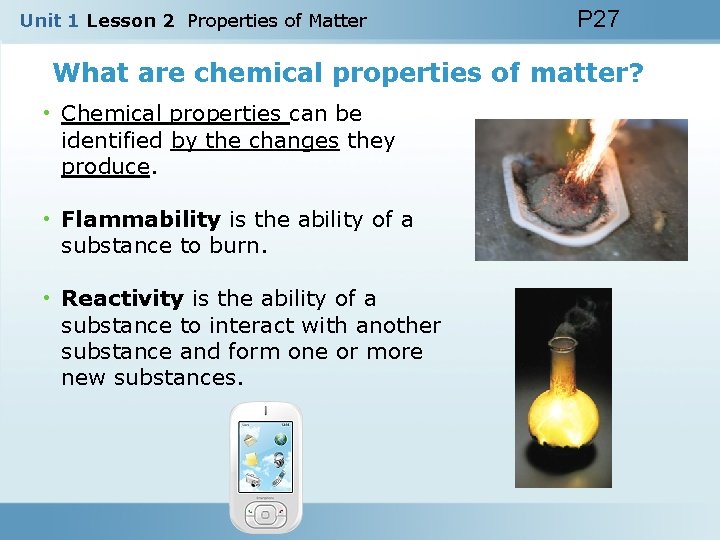
Unit 1 Lesson 2 Properties of Matter P 27 What are chemical properties of matter? • Chemical properties can be identified by the changes they produce. • Flammability is the ability of a substance to burn. • Reactivity is the ability of a substance to interact with another substance and form one or more new substances.
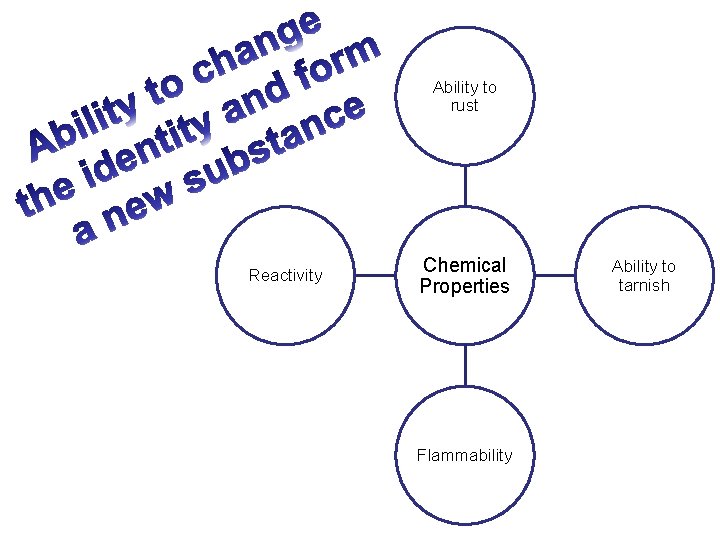
Ability to rust Reactivity Chemical Properties Flammability Ability to tarnish
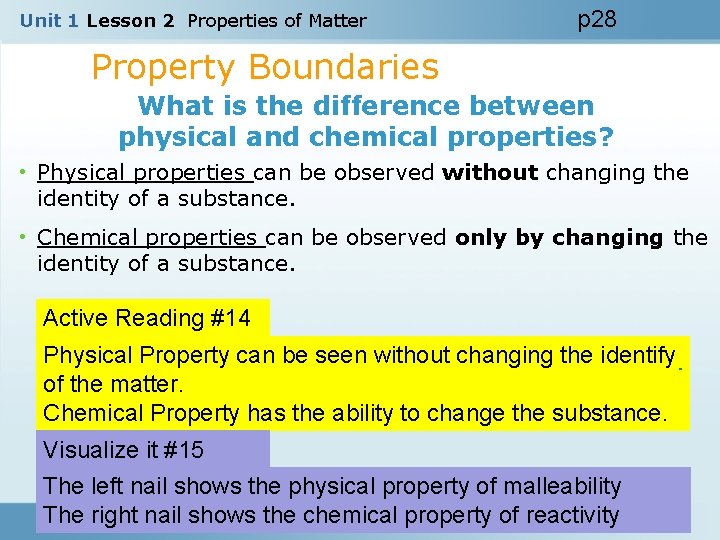
Unit 1 Lesson 2 Properties of Matter p 28 Property Boundaries What is the difference between physical and chemical properties? • Physical properties can be observed without changing the identity of a substance. • Chemical properties can be observed only by changing the identity of a substance. Active Reading #14 Physical Property can be seen without changing the identify of the matter. Chemical Property has the ability to change the substance. Visualize it #15 The left nail shows the physical property of malleability The right nail shows the chemical property of reactivity
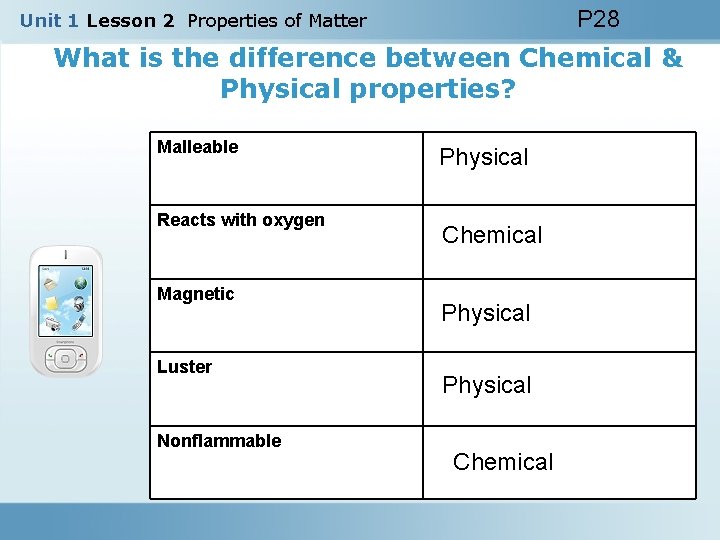
P 28 Unit 1 Lesson 2 Properties of Matter What is the difference between Chemical & Physical properties? Malleable Reacts with oxygen Magnetic Luster Nonflammable Physical Chemical
Physical Properties Chemical Properties
Unit 1 Lesson 2 Properties of Matter p 30 Property Boundaries What is the difference between physical and chemical properties? • Properties unique to a substance are its characteristic properties. • Characteristic properties stay the same regardless of the amount of the sample. (Density) • Characteristic properties can be physical properties or chemical properties.
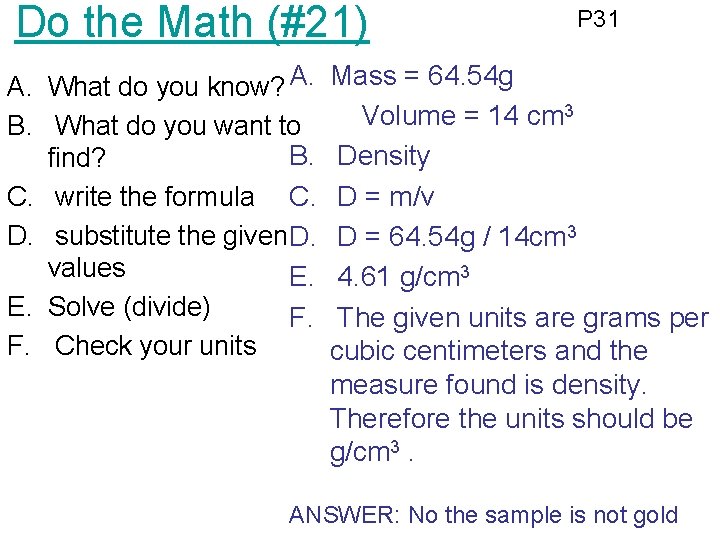
Do the Math (#21) A. What do you know? A. B. What do you want to B. find? C. write the formula C. D. substitute the given D. values E. E. Solve (divide) F. F. Check your units P 31 Mass = 64. 54 g Volume = 14 cm 3 Density D = m/v D = 64. 54 g / 14 cm 3 4. 61 g/cm 3 The given units are grams per cubic centimeters and the measure found is density. Therefore the units should be g/cm 3. ANSWER: No the sample is not gold
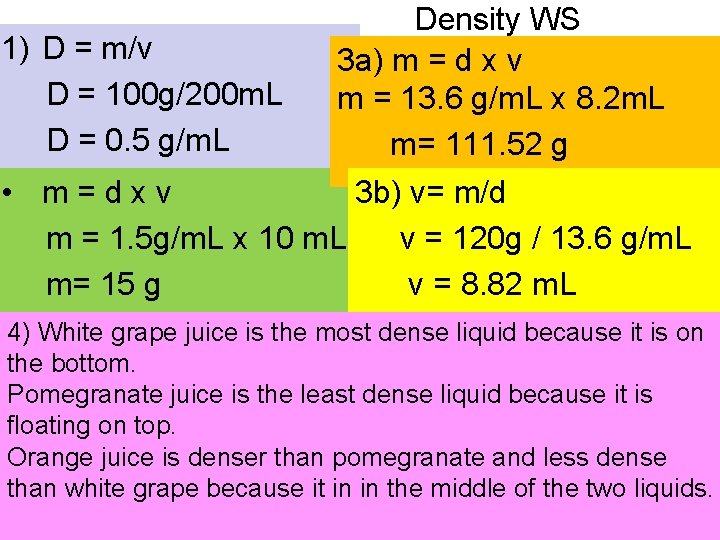
Density WS 1) D = m/v 3 a) m = d x v D = 100 g/200 m. L m = 13. 6 g/m. L x 8. 2 m. L D = 0. 5 g/m. L m= 111. 52 g • m=dxv 3 b) v= m/d m = 1. 5 g/m. L x 10 m. L v = 120 g / 13. 6 g/m. L m= 15 g v = 8. 82 m. L 4) White grape juice is the most dense liquid because it is on the bottom. Pomegranate juice is the least dense liquid because it is floating on top. Orange juice is denser than pomegranate and less dense than white grape because it in in the middle of the two liquids.
- Slides: 17