
Big Idea 2 Taylor Lord AP Biology Test

Big Idea 2 Taylor Lord AP Biology Test Review
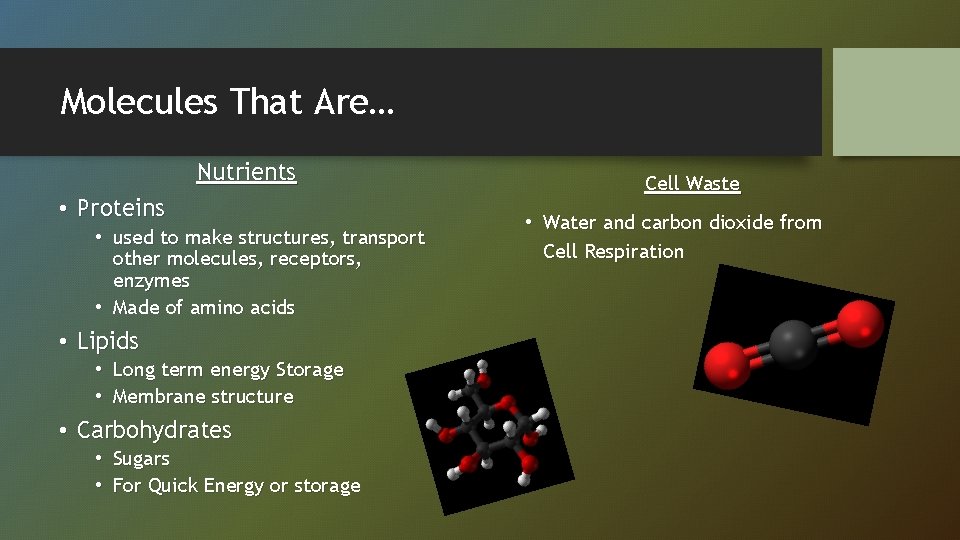
Molecules That Are… Nutrients • Proteins • used to make structures, transport other molecules, receptors, enzymes • Made of amino acids • Lipids • Long term energy Storage • Membrane structure • Carbohydrates • Sugars • For Quick Energy or storage Cell Waste • Water and carbon dioxide from Cell Respiration
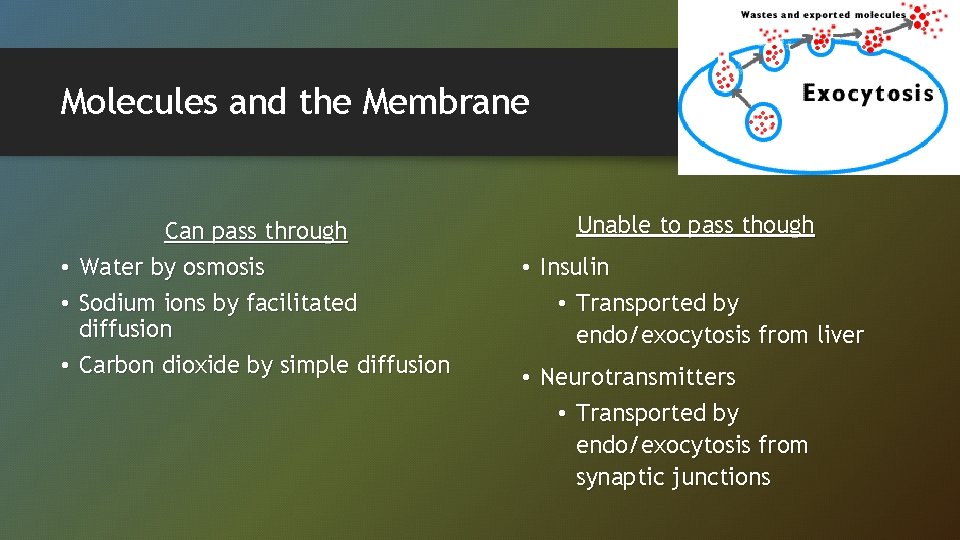
Molecules and the Membrane • • • Can pass through Water by osmosis Sodium ions by facilitated diffusion Carbon dioxide by simple diffusion Unable to pass though • Insulin • Transported by endo/exocytosis from liver • Neurotransmitters • Transported by endo/exocytosis from synaptic junctions
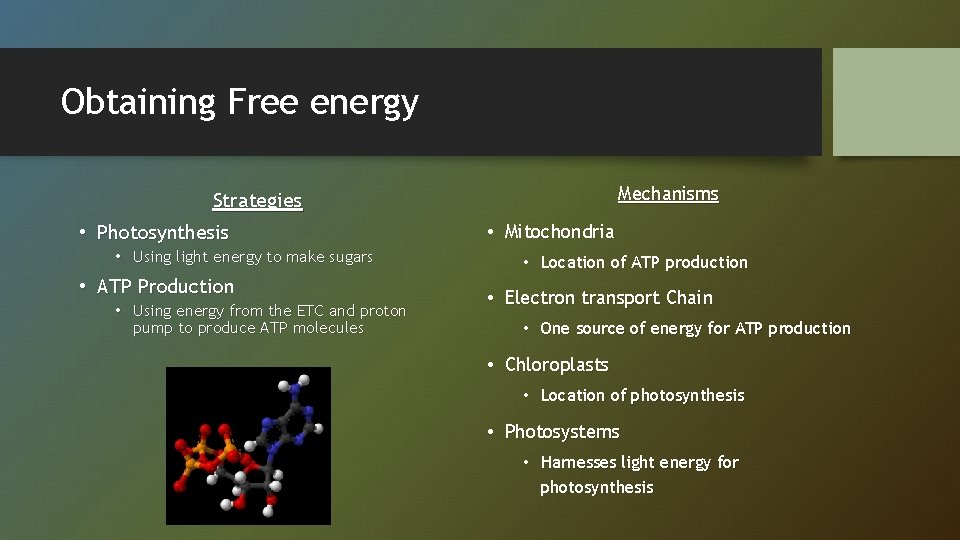
Obtaining Free energy Mechanisms Strategies • Photosynthesis • Using light energy to make sugars • ATP Production • Using energy from the ETC and proton pump to produce ATP molecules • Mitochondria • Location of ATP production • Electron transport Chain • One source of energy for ATP production • Chloroplasts • Location of photosynthesis • Photosystems • Harnesses light energy for photosynthesis

Prokaryotes vs Eukaryotes Nuclei Endomembrane system DNA Genetic Recombination ATP Synthesis location Eukaryotes membrane bound Golgi, rough, smooth ER wrapped into chromosomes fusion of gametes/meiosis mitochondria/chloroplasts Prokaryotes Absent contained in plasmids horizontal gene transfer inner membrane

Positive feedback loops • Birthing Contractions • The release of oxytocin increases rate of contractions in order to push the baby out. • The increase of contraction spurs more oxytocin to be released. • Blood Clotting • The aggregation of platelets cause more to be attracted to ruptured blood vessel • Breast Feeding • When the baby sucks on the nipple to get the milk out, a stimulus is sent into the hypothalamus of the brain, which then stimulates the pituitary gland to produce more prolactin to produce more milk
Negative Feedback loops • ATP Production • Excess ATP inhibits phosphofructokinase-1 to slow glycolysis • Body Temperature • Lower temperature causes shivering and heat production • Higher temperature causes sweating and evaporation which leads to cooling • Blood Sugar Regulation • Insulin production increases when blood sugar levels are high and glucose is stored • Glucose is released when blood sugar levels are low while insulin is stored • Estrogen Production • hypothalamus produces gonadotropin releasing hormone which tells the ovaries to produce estrogen. High levels of estrogen inhibit the production of Gn. RH.
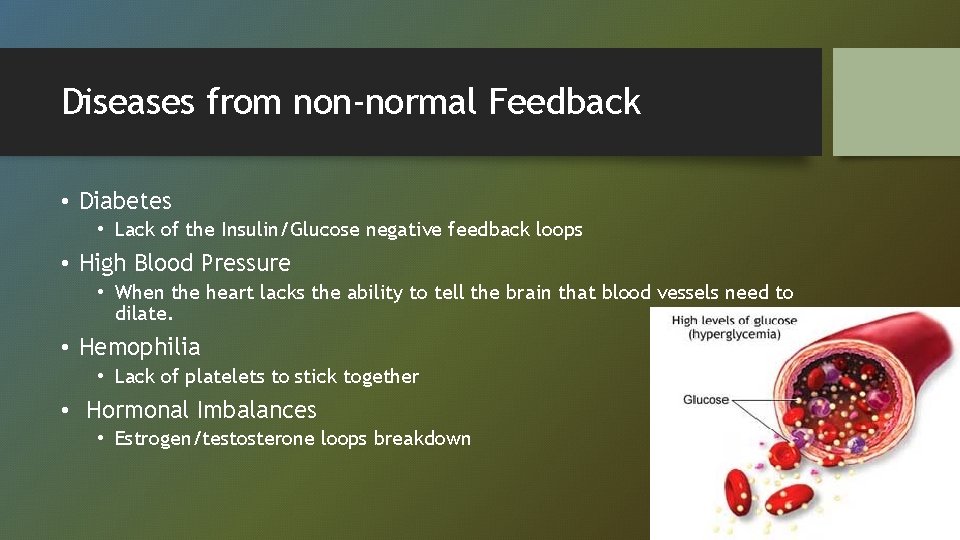
Diseases from non-normal Feedback • Diabetes • Lack of the Insulin/Glucose negative feedback loops • High Blood Pressure • When the heart lacks the ability to tell the brain that blood vessels need to dilate. • Hemophilia • Lack of platelets to stick together • Hormonal Imbalances • Estrogen/testosterone loops breakdown
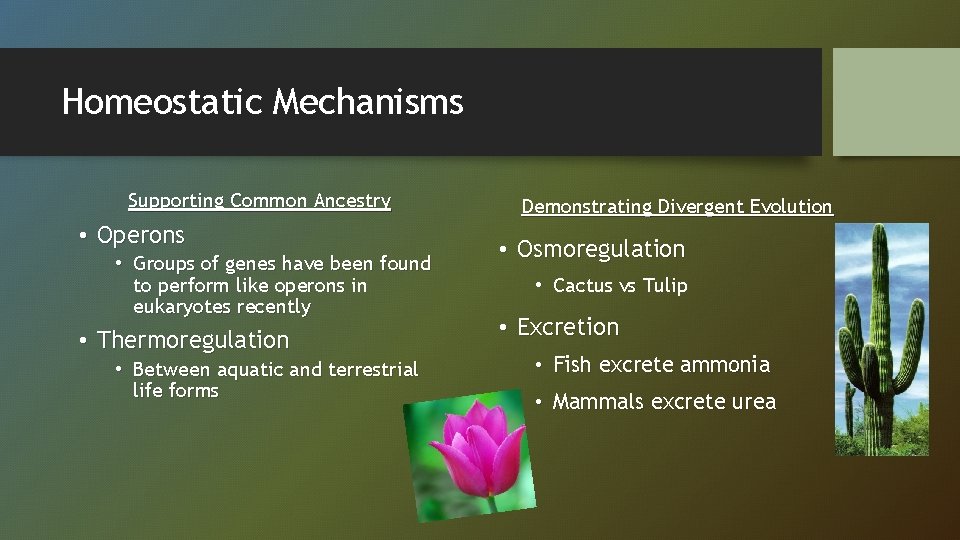
Homeostatic Mechanisms Supporting Common Ancestry • Operons • Groups of genes have been found to perform like operons in eukaryotes recently • Thermoregulation • Between aquatic and terrestrial life forms Demonstrating Divergent Evolution • Osmoregulation • Cactus vs Tulip • Excretion • Fish excrete ammonia • Mammals excrete urea
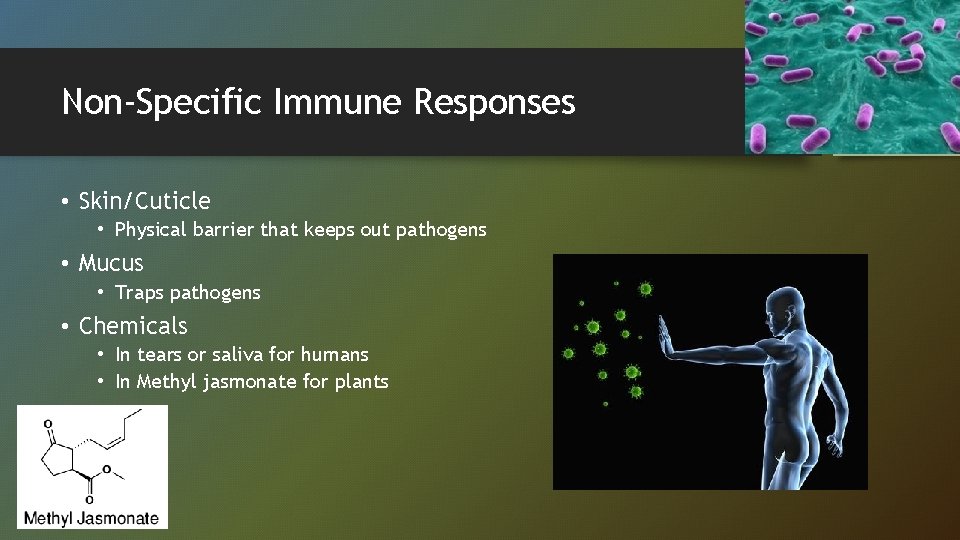
Non-Specific Immune Responses • Skin/Cuticle • Physical barrier that keeps out pathogens • Mucus • Traps pathogens • Chemicals • In tears or saliva for humans • In Methyl jasmonate for plants
Regulatory/Timed Physiological Events • Circadian Rhythm • 25 hour cycle responsive to light/dark • Related to sleep patterns and biological clocks • Heartbeat • Contraction of cardiac muscle controlled by impulses from Sinoatrial (SA)Node • Menstrual Cycle • 21 -35 day cycle for adult females • 21 -45 day cycle for teenage females • Releases egg to be fertilized (hopefully not) from ovaries into the utereus
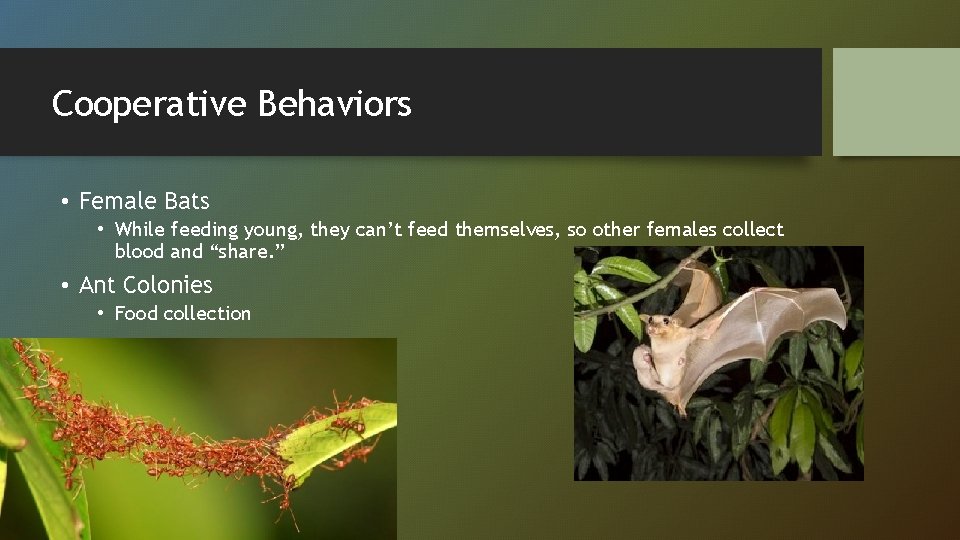
Cooperative Behaviors • Female Bats • While feeding young, they can’t feed themselves, so other females collect blood and “share. ” • Ant Colonies • Food collection
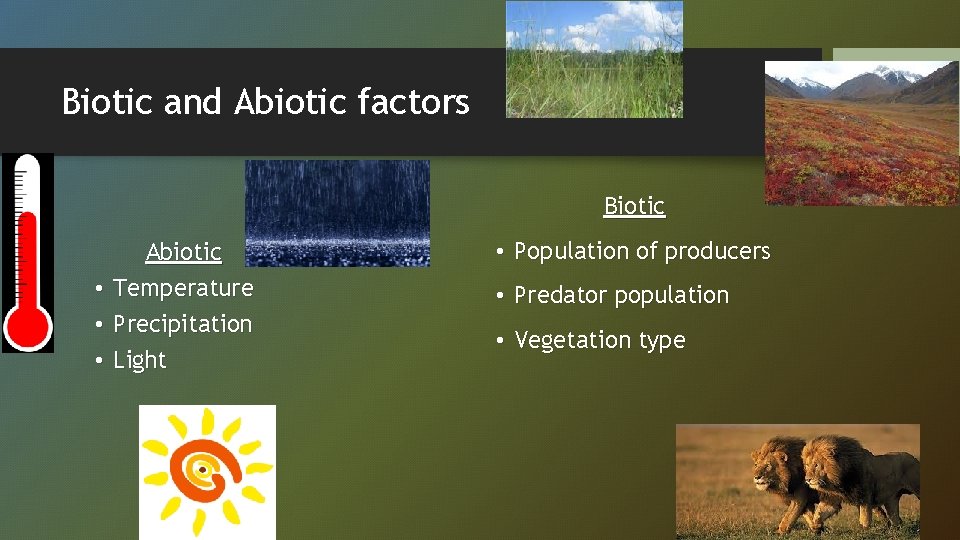
Biotic and Abiotic factors Biotic • • • Abiotic Temperature Precipitation Light • Population of producers • Predator population • Vegetation type
Bibliography in order of appearance • Reece, J. (2011). Campbell biology (9 th ed. , International ed. ). Boston: Benjamin Cummings / Pearson Education. • Prokaryoticvs. Eukaryotic. (n. d. ). Retrieved April 21, 2015, from http: //www. life. umd. edu/classroom/bsci 424/BSCI 223 Web. Site. Files/Prokaryotic • Feedback Loops. (2012, September 26). Retrieved April 21, 2015, from http: //serc. carleton. edu/introgeo/models/loops. html • Bleumenthal, T. (2004, November 3). Operons in eukaryotes. Retrieved April 20, 2015, from http: //www. ncbi. nlm. nih. gov/pubmed/15642184 • Innate or non-specific immunity. (n. d. ). Retrieved April 21, 2015, from http: //www. microbiologybook. org/ghaffar/innate. htm • Do Plants Have an Immune System? (2011, December 10). Retrieved April 22, 2015, from http: //www. howplantswork. com/2011/12/10/do-plants-have-an-immune-system
- Slides: 14