
BIG ELECTRICITY REVIEW Models of electricity Particle Theory
BIG ELECTRICITY REVIEW
Models of electricity • Particle Theory • Protons • Neutrons • Electrons
Static Electricity • Buildup of electrons • Charges do not move
Insulators and Conductors • Insulator • Material where a charge is built up on the place it was rubbed • Charges do not move freely on or through the material • Plastic • Glass • rubber • Conductor • Material where a charge can move freely • Copper • Silver • Iron
Charges • Positive • MORE PROTONS than electrons • Negative • MORE ELECTRONS than protons • Neutral • EQUAL AMOUNTS of protons and electrons
Laws of electrical charge • Two objects with a like charge will always repel one another • Two objects of opposite charge will always attract each other • Neutral objects • Attracted by charged objects
Types of charges • Charging by friction • Transferred by rubbing action • Transfer by contact • One object is charged and the other is neutral • Extra electrons are transferred from one object to the other • Charging by Induction • Charged object comes close to neutral object • Object is grounded and loses extra electrons • Becomes charged as well
Current Electricity • Q- Amount of Charge- Coulombs- C • I- Current- Amperes (Amps)- A • T- Time- Seconds- S
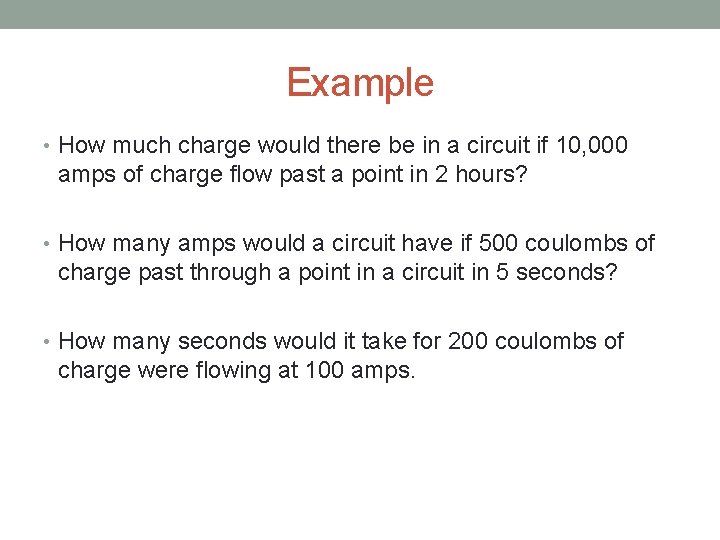
Example • How much charge would there be in a circuit if 10, 000 amps of charge flow past a point in 2 hours? • How many amps would a circuit have if 500 coulombs of charge past through a point in a circuit in 5 seconds? • How many seconds would it take for 200 coulombs of charge were flowing at 100 amps.
Voltage • Electric potential energy • Stored energy • Electric potential difference • Difference in amount of charge at one point compared to another
Electric potential difference = Voltage
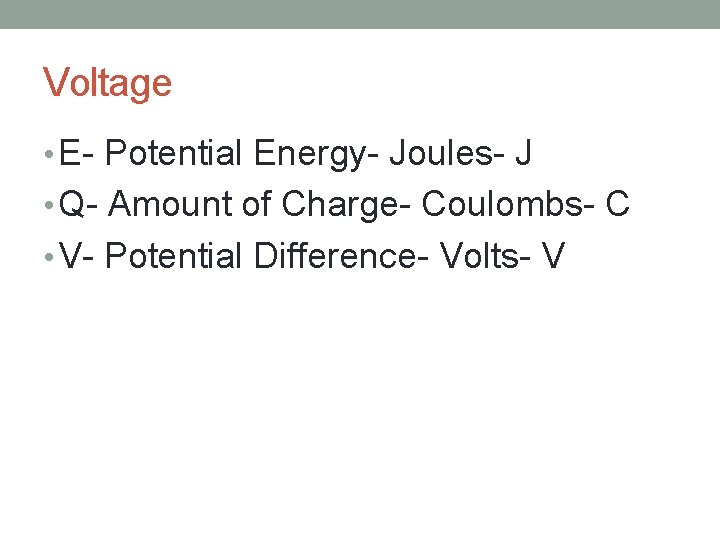
Voltage • E- Potential Energy- Joules- J • Q- Amount of Charge- Coulombs- C • V- Potential Difference- Volts- V
• If a power source puts out 800 joules of electricity, and this causes 40 coulombs of charge to pass through a circuit, what is the potential difference created by the circuit?
Resistance • The ability to slow down flow of electrons
• V- Potential Difference- voltage- V • I- Current- Amperes (Amps)- A • R- Resistance-Ohms- Ω
Parts of a Circuit • Load • Causes resistance in a circuit and preforms an action • Light (Lamp) • Motor • Switch • Interrupts the flow of electrons • Power Source • Battery • Provides a constant flow of electrons
Series Circuits • Resistance increases as more loads are added • As resistance increases- current decreases • Current is the same in all the parts of the circuit • If one part of the circuit is broken the current stops flowing • When batteries are placed in series- voltage increases
Parallel Circuits • When multiple loads are connected in a way where there multiple pathways for current to flow • If one light goes out, other lights will stay on • Each time a load is added current increases • Batteries connected in parallel have the same amount of voltage
Draw a series and a parallel circuit
Power • P- Power- Watts- w • I- Current- Amperes (Amps)- A • V-Potential Difference- Volts- V
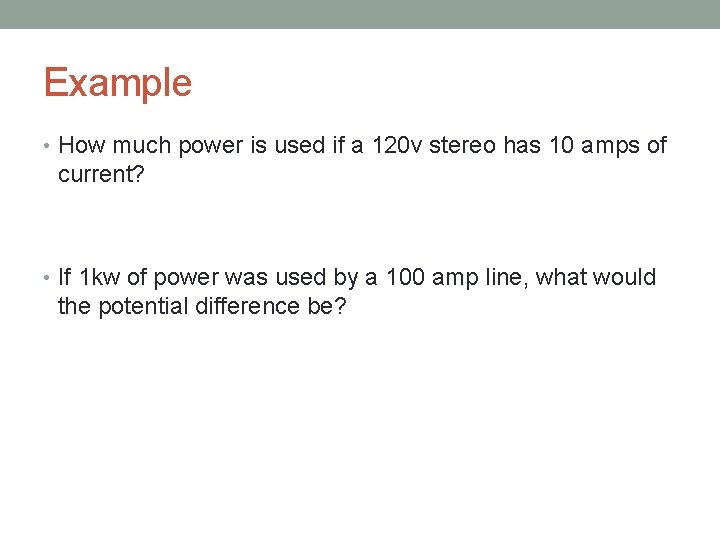
Example • How much power is used if a 120 v stereo has 10 amps of current? • If 1 kw of power was used by a 100 amp line, what would the potential difference be?
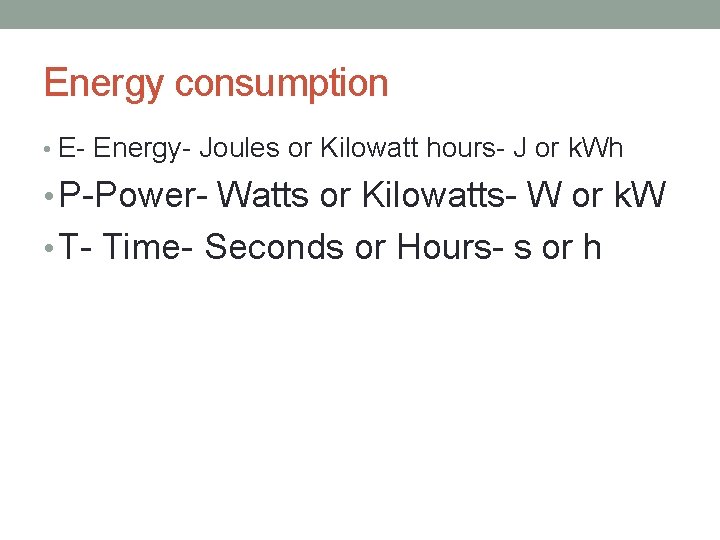
Energy consumption • E- Energy- Joules or Kilowatt hours- J or k. Wh • P-Power- Watts or Kilowatts- W or k. W • T- Time- Seconds or Hours- s or h
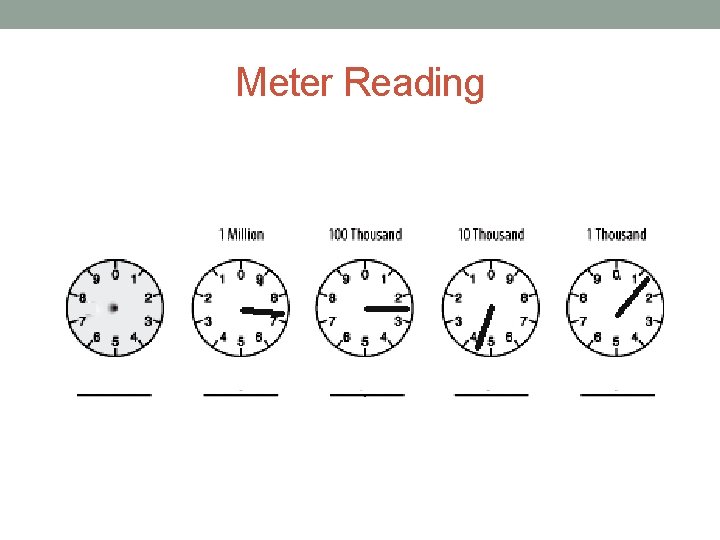
Meter Reading
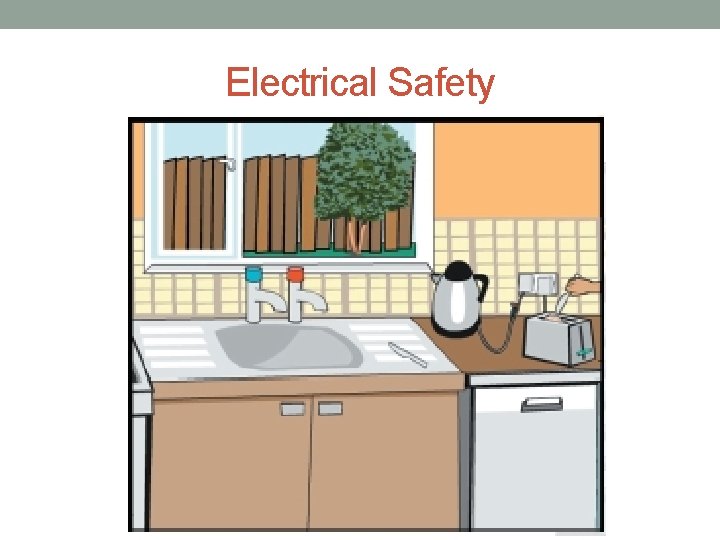
Electrical Safety
Electromotive Force • Electromagnetism • Generators • turbines • Photoelectric • Photocells • Solar panels • Thermoelectric • Thermopanels • Thermocouples • Piezoelectric • BBQ lighter • Electrochemical • Batteries
- Slides: 25