
Big Data Mining Reinforcement Learning RL 1071 BDM
Big Data Mining Reinforcement Learning (RL) 1071 BDM 13 TLVXM 1 A (M 2244) (8619) (Fall 2018) (MBA, DBETKU) (3 Credits, Required) [Full English Course] (Master’s Program in Digital Business and Economics) Mon, 9, 10, 11, (16: 10 -19: 00) (B 206) Min-Yuh Day, Ph. D. Assistant Professor Department of Information Management Tamkang University http: //mail. tku. edu. tw/myday 2018 -12 -17 Tamkang University
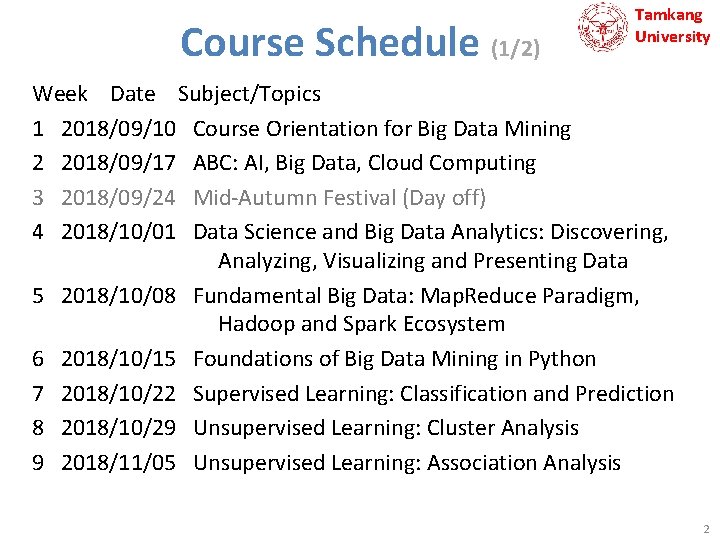
Course Schedule (1/2) Tamkang University Week Date Subject/Topics 1 2018/09/10 Course Orientation for Big Data Mining 2 2018/09/17 ABC: AI, Big Data, Cloud Computing 3 2018/09/24 Mid-Autumn Festival (Day off) 4 2018/10/01 Data Science and Big Data Analytics: Discovering, Analyzing, Visualizing and Presenting Data 5 2018/10/08 Fundamental Big Data: Map. Reduce Paradigm, Hadoop and Spark Ecosystem 6 2018/10/15 Foundations of Big Data Mining in Python 7 2018/10/22 Supervised Learning: Classification and Prediction 8 2018/10/29 Unsupervised Learning: Cluster Analysis 9 2018/11/05 Unsupervised Learning: Association Analysis 2
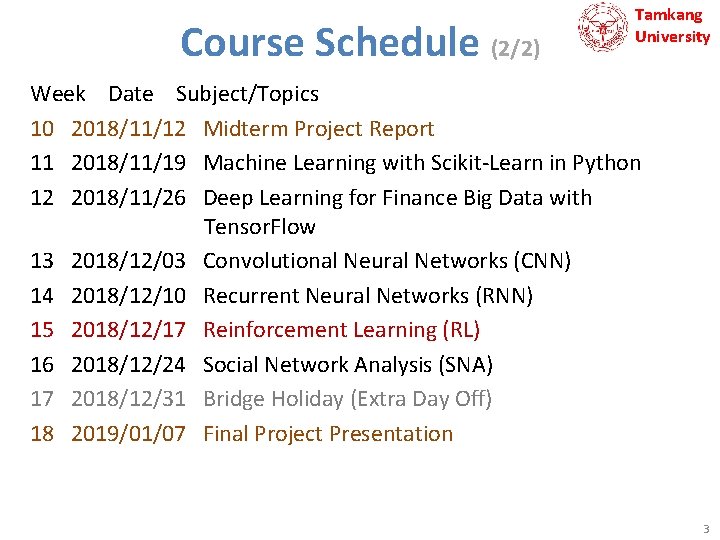
Course Schedule (2/2) Tamkang University Week Date Subject/Topics 10 2018/11/12 Midterm Project Report 11 2018/11/19 Machine Learning with Scikit-Learn in Python 12 2018/11/26 Deep Learning for Finance Big Data with Tensor. Flow 13 2018/12/03 Convolutional Neural Networks (CNN) 14 2018/12/10 Recurrent Neural Networks (RNN) 15 2018/12/17 Reinforcement Learning (RL) 16 2018/12/24 Social Network Analysis (SNA) 17 2018/12/31 Bridge Holiday (Extra Day Off) 18 2019/01/07 Final Project Presentation 3
Reinforcement Learning (RL) 4
Outline • Reinforcement Learning (RL) – Markov Decision Processes (MDP) • Deep Reinforcement Learning (DRL) Algorithms – SARSA – Q-Learning – DQN – A 3 C – Rainbow • Google Dopamine 5
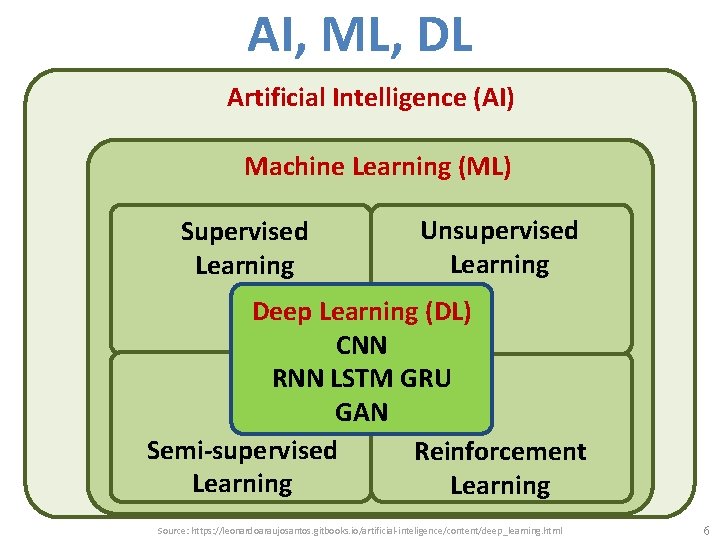
AI, ML, DL Artificial Intelligence (AI) Machine Learning (ML) Supervised Learning Unsupervised Learning Deep Learning (DL) CNN RNN LSTM GRU GAN Semi-supervised Reinforcement Learning Source: https: //leonardoaraujosantos. gitbooks. io/artificial-inteligence/content/deep_learning. html 6
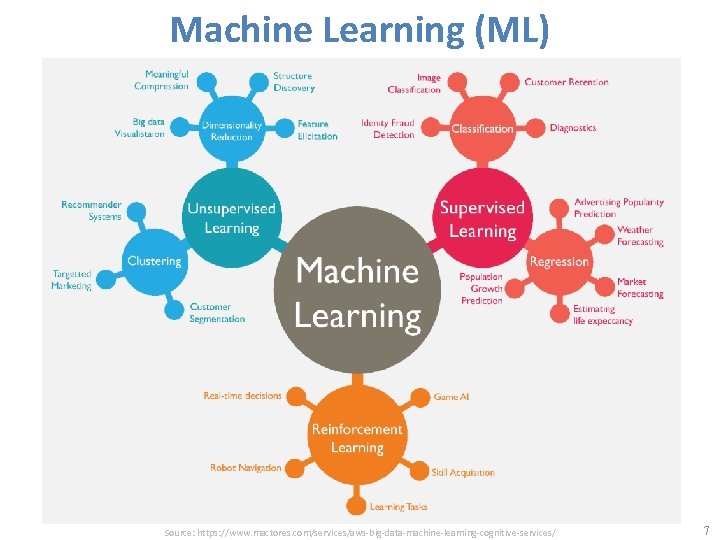
Machine Learning (ML) Source: https: //www. mactores. com/services/aws-big-data-machine-learning-cognitive-services/ 7
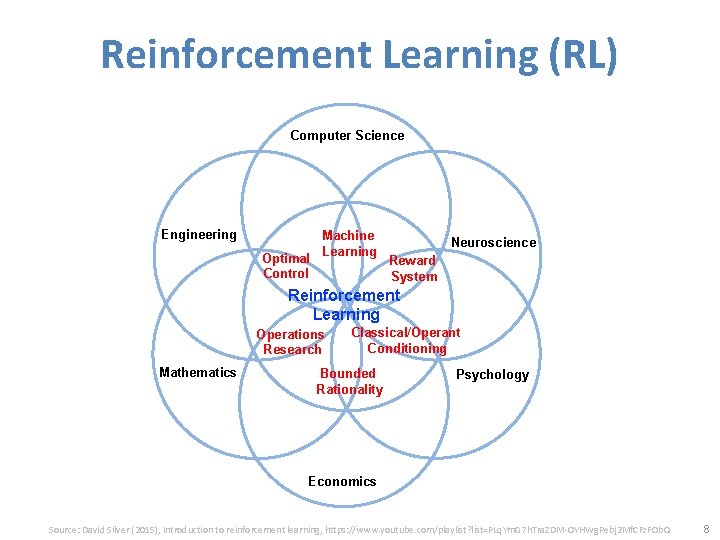
Reinforcement Learning (RL) Computer Science Engineering Optimal Control Machine Learning Neuroscience Reward System Reinforcement Learning Operations Research Mathematics Classical/Operant Conditioning Bounded Rationality Psychology Economics Source: David Silver (2015), Introduction to reinforcement learning, https: //www. youtube. com/playlist? list=PLq. Ym. G 7 h. Tra. ZDM-OYHWg. Pebj 2 Mf. CFz. FOb. Q 8
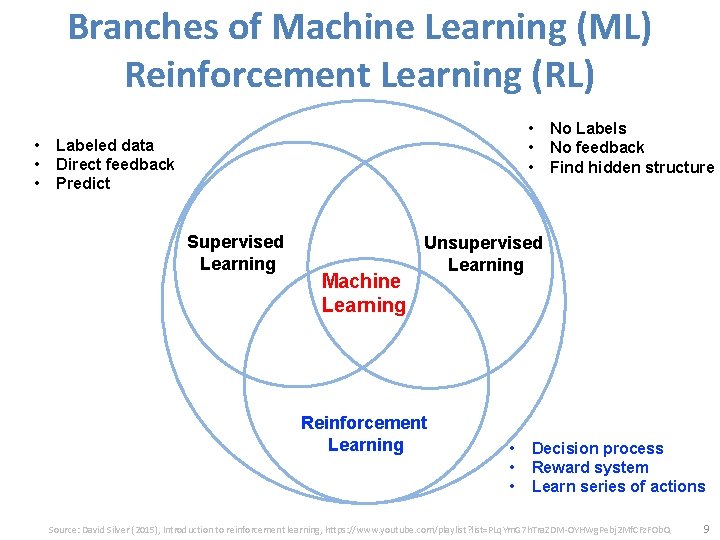
Branches of Machine Learning (ML) Reinforcement Learning (RL) • • • Labeled data Direct feedback Predict Supervised Learning Machine Learning No Labels No feedback Find hidden structure Unsupervised Learning Reinforcement Learning • • • Decision process Reward system Learn series of actions Source: David Silver (2015), Introduction to reinforcement learning, https: //www. youtube. com/playlist? list=PLq. Ym. G 7 h. Tra. ZDM-OYHWg. Pebj 2 Mf. CFz. FOb. Q 9
David Silver (2015), Introduction to reinforcement learning • Elementary Reinforcement Learning – 1: Introduction to Reinforcement Learning – 2: Markov Decision Processes – 3: Planning by Dynamic Programming – 4: Model-Free Prediction – 5: Model-Free Control • Reinforcement Learning in Practice – 6: Value Function Approximation – 7: Policy Gradient Methods – 8: Integrating Learning and Planning – 9: Exploration and Exploitation – 10: Case Study: RL in Classic Games Source: David Silver (2015), Introduction to reinforcement learning, https: //www. youtube. com/playlist? list=PLq. Ym. G 7 h. Tra. ZDM-OYHWg. Pebj 2 Mf. CFz. FOb. Q 10
Reinforcement Learning Alpha. Zero (AZ) and Alpha. Go Zero (AZ 0) • Alpha. Zero (Silver et al. , 2018) – A general reinforcement learning algorithm that masters chess, shogi, and Go through self-play. (Science) • Alpha. Go Zero (Silver et al. , 2017) – Mastering the game of Go without human knowledge (Nature) 11
Alpha. Zero: Shedding new light on the grand games of chess, shogi and Go https: //www. youtube. com/watch? v=7 L 2 s. UGc. Ogh 0 12
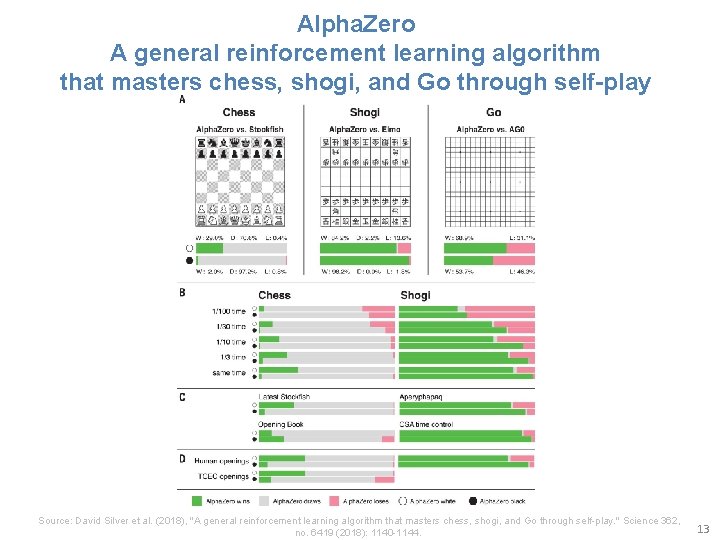
Alpha. Zero A general reinforcement learning algorithm that masters chess, shogi, and Go through self-play Source: David Silver et al. (2018), "A general reinforcement learning algorithm that masters chess, shogi, and Go through self-play. " Science 362, no. 6419 (2018): 1140 -1144. 13
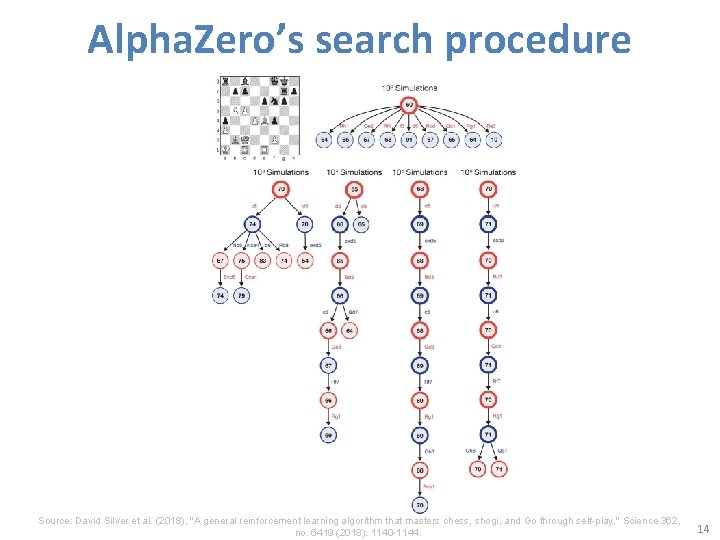
Alpha. Zero’s search procedure Source: David Silver et al. (2018), "A general reinforcement learning algorithm that masters chess, shogi, and Go through self-play. " Science 362, no. 6419 (2018): 1140 -1144. 14
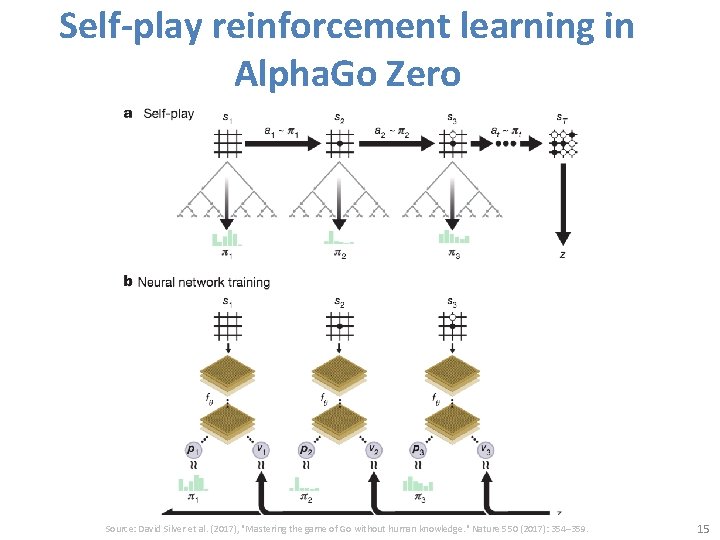
Self-play reinforcement learning in Alpha. Go Zero Source: David Silver et al. (2017), "Mastering the game of Go without human knowledge. " Nature 550 (2017): 354– 359. 15
Richard S. Sutton & Andrew G. Barto (2018), Reinforcement Learning: An Introduction, 2 nd Edition, A Bradford Book Source: Richard S. Sutton & Andrew G. Barto (2018), Reinforcement Learning: An Introduction, 2 nd Edition, A Bradford Book. https: //www. amazon. com/Reinforcement-Learning-Introduction-Adaptive-Computation/dp/0262039249 16
Reinforcement learning • Reinforcement learning is learning what to do —how to map situations to actions —so as to maximize a numerical reward signal. Source: Richard S. Sutton & Andrew G. Barto (2018), Reinforcement Learning: An Introduction, 2 nd Edition, A Bradford Book. 17
Two most important distinguishing features of reinforcement learning • trial-and-error search • delayed reward Source: Richard S. Sutton & Andrew G. Barto (2018), Reinforcement Learning: An Introduction, 2 nd Edition, A Bradford Book. 18
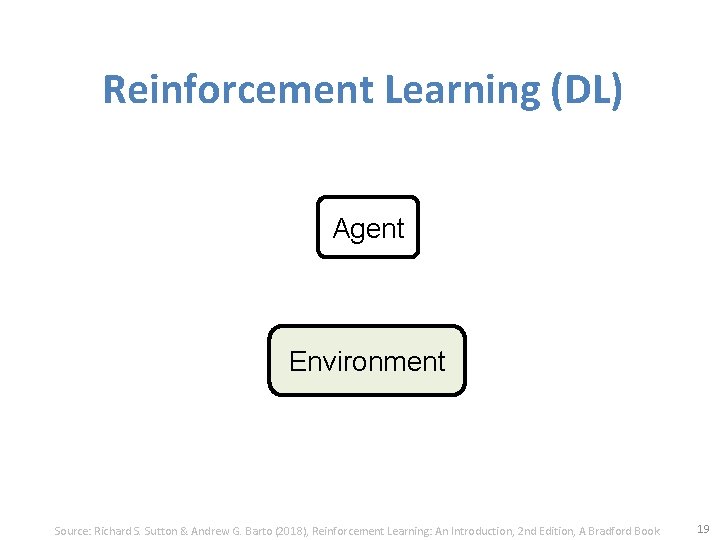
Reinforcement Learning (DL) Agent Environment Source: Richard S. Sutton & Andrew G. Barto (2018), Reinforcement Learning: An Introduction, 2 nd Edition, A Bradford Book. 19
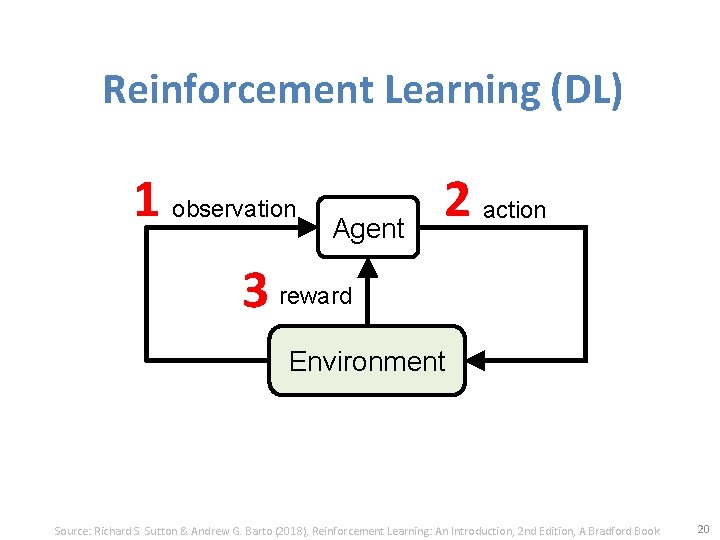
Reinforcement Learning (DL) 1 observation Agent 2 action 3 reward Environment Source: Richard S. Sutton & Andrew G. Barto (2018), Reinforcement Learning: An Introduction, 2 nd Edition, A Bradford Book. 20
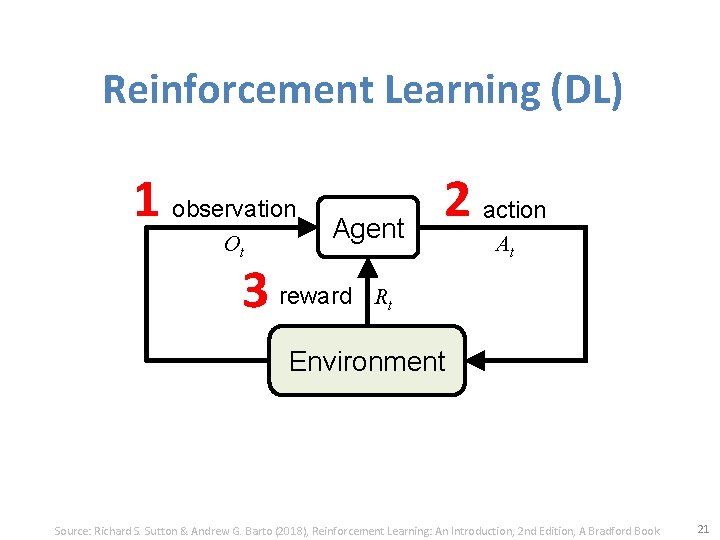
Reinforcement Learning (DL) 1 observation Ot Agent 3 reward 2 action At Rt Environment Source: Richard S. Sutton & Andrew G. Barto (2018), Reinforcement Learning: An Introduction, 2 nd Edition, A Bradford Book. 21
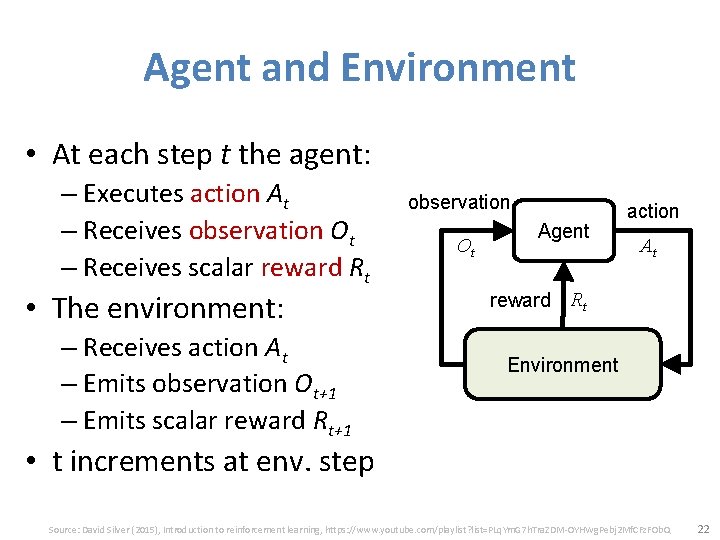
Agent and Environment • At each step t the agent: – Executes action At – Receives observation Ot – Receives scalar reward Rt • The environment: – Receives action At – Emits observation Ot+1 – Emits scalar reward Rt+1 observation Ot Agent action At reward Rt Environment • t increments at env. step Source: David Silver (2015), Introduction to reinforcement learning, https: //www. youtube. com/playlist? list=PLq. Ym. G 7 h. Tra. ZDM-OYHWg. Pebj 2 Mf. CFz. FOb. Q 22
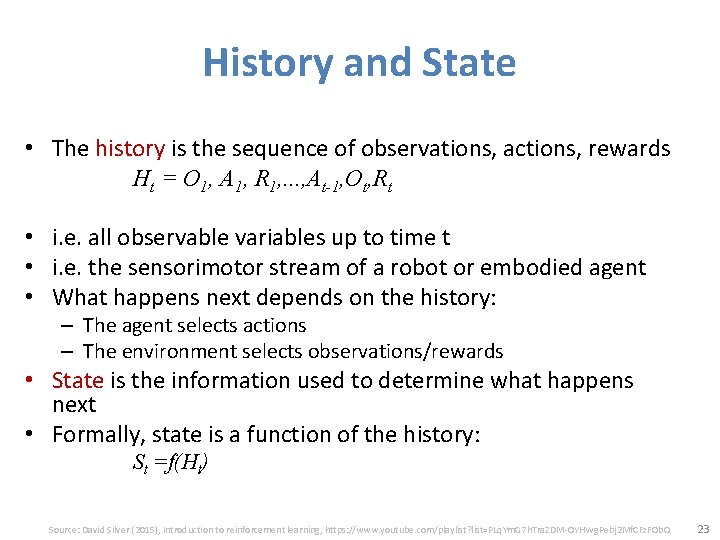
History and State • The history is the sequence of observations, actions, rewards Ht = O 1, A 1, R 1, . . . , At-1, Ot, Rt • i. e. all observable variables up to time t • i. e. the sensorimotor stream of a robot or embodied agent • What happens next depends on the history: – The agent selects actions – The environment selects observations/rewards • State is the information used to determine what happens next • Formally, state is a function of the history: St =f(Ht) Source: David Silver (2015), Introduction to reinforcement learning, https: //www. youtube. com/playlist? list=PLq. Ym. G 7 h. Tra. ZDM-OYHWg. Pebj 2 Mf. CFz. FOb. Q 23
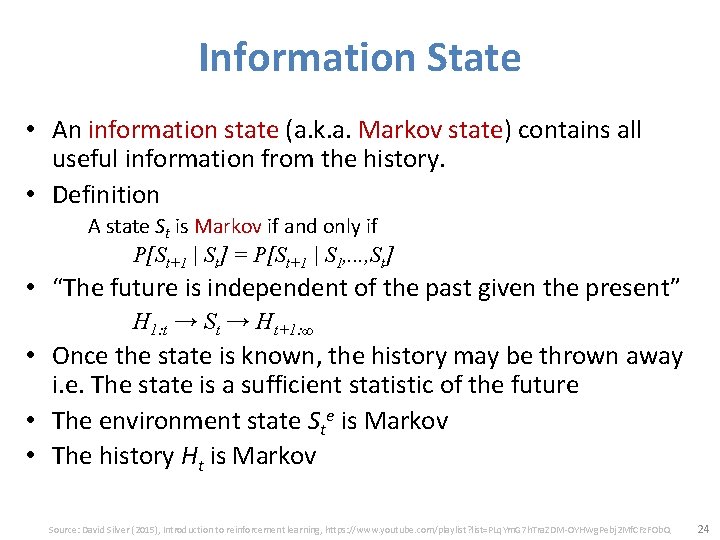
Information State • An information state (a. k. a. Markov state) contains all useful information from the history. • Definition A state St is Markov if and only if P[St+1 | St] = P[St+1 | S 1, . . . , St] • “The future is independent of the past given the present” H 1: t → St → Ht+1: ∞ • Once the state is known, the history may be thrown away i. e. The state is a sufficient statistic of the future • The environment state Ste is Markov • The history Ht is Markov Source: David Silver (2015), Introduction to reinforcement learning, https: //www. youtube. com/playlist? list=PLq. Ym. G 7 h. Tra. ZDM-OYHWg. Pebj 2 Mf. CFz. FOb. Q 24
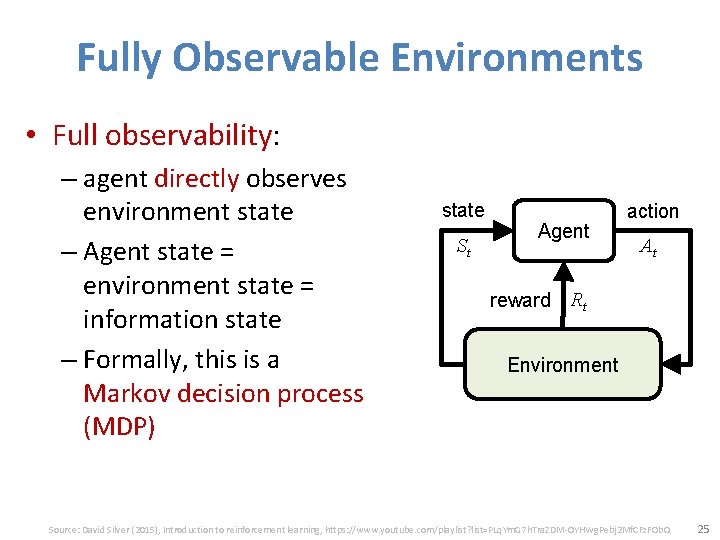
Fully Observable Environments • Full observability: – agent directly observes environment state – Agent state = environment state = information state – Formally, this is a Markov decision process (MDP) state St Agent action At reward Rt Environment Source: David Silver (2015), Introduction to reinforcement learning, https: //www. youtube. com/playlist? list=PLq. Ym. G 7 h. Tra. ZDM-OYHWg. Pebj 2 Mf. CFz. FOb. Q 25
Partially Observable Environments • Partial observability: agent indirectly observes environment – A robot with camera vision isn’t told its absolute location – A trading agent only observes current prices – A poker playing agent only observes public cards • Now agent state ≠ environment state • Formally this is a partially observable Markov decision process (POMDP) • Agent must construct its own state representation Sat, e. g. – Complete history: Sat = Ht – Beliefs of environment state: Sat = (P[Set = s 1], . . . , P[Set = sn]) – Recurrent neural network: Sat = σ(Sat-1 Ws + Ot Wo ) Source: David Silver (2015), Introduction to reinforcement learning, https: //www. youtube. com/playlist? list=PLq. Ym. G 7 h. Tra. ZDM-OYHWg. Pebj 2 Mf. CFz. FOb. Q 26
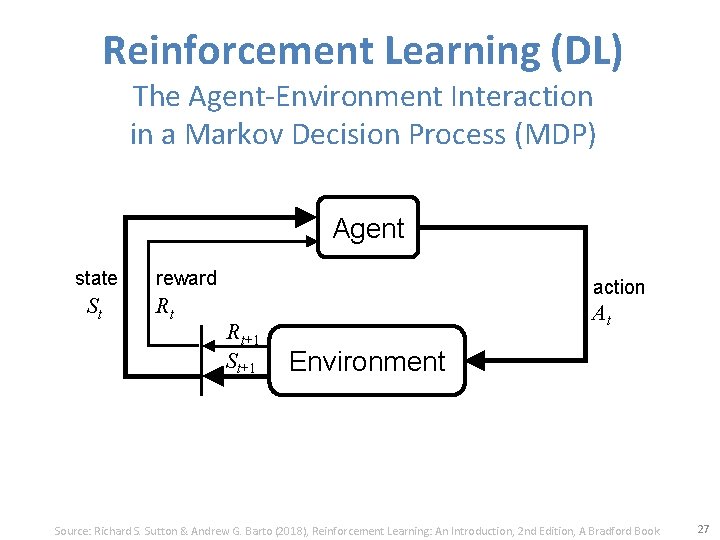
Reinforcement Learning (DL) The Agent-Environment Interaction in a Markov Decision Process (MDP) Agent state St reward Rt action Rt+1 St+1 At Environment Source: Richard S. Sutton & Andrew G. Barto (2018), Reinforcement Learning: An Introduction, 2 nd Edition, A Bradford Book. 27
• • Characteristics of Reinforcement Learning No supervisor, only a reward signal Feedback is delayed, not instantaneous Time really matters (sequential, non i. i. d data) Agent’s actions affect the subsequent data it receives Source: David Silver (2015), Introduction to reinforcement learning, https: //www. youtube. com/playlist? list=PLq. Ym. G 7 h. Tra. ZDM-OYHWg. Pebj 2 Mf. CFz. FOb. Q 28
Examples of Reinforcement Learning • Make a humanoid robot walk • Play may different Atari games better than humans • Manage an investment portfolio Source: David Silver (2015), Introduction to reinforcement learning, https: //www. youtube. com/playlist? list=PLq. Ym. G 7 h. Tra. ZDM-OYHWg. Pebj 2 Mf. CFz. FOb. Q 29
Examples of Rewards • Make a humanoid robot walk – +ve reward forward motion – -ve reward for falling over • Play may different Atari games better than humans – +/-ve reward for increasing/decreasing score • Manage an investment portfolio – +ve reward for each $ in bank Source: David Silver (2015), Introduction to reinforcement learning, https: //www. youtube. com/playlist? list=PLq. Ym. G 7 h. Tra. ZDM-OYHWg. Pebj 2 Mf. CFz. FOb. Q 30
Sequential Decision Making Goal: select actions to maximize total future reward Actions may have long term consequence Reward may be delayed It may be better to sacrifice immediate reward to gain more long-term reward • Examples: • • – A financial investment (may take months to mature) – Blocking opponent moves (might help winning chances many moves from now) Source: David Silver (2015), Introduction to reinforcement learning, https: //www. youtube. com/playlist? list=PLq. Ym. G 7 h. Tra. ZDM-OYHWg. Pebj 2 Mf. CFz. FOb. Q 31
Elements of Reinforcement Learning • • • Agent Environment Policy Reward signal Value function Model Source: Richard S. Sutton & Andrew G. Barto (2018), Reinforcement Learning: An Introduction, 2 nd Edition, A Bradford Book. 32
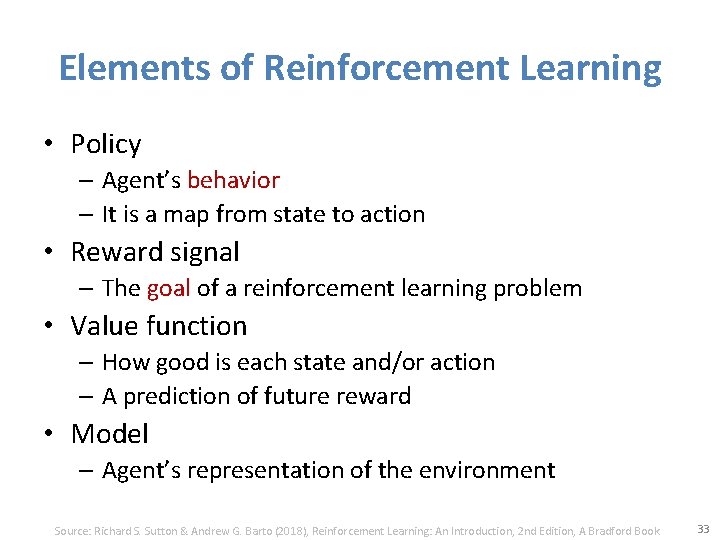
Elements of Reinforcement Learning • Policy – Agent’s behavior – It is a map from state to action • Reward signal – The goal of a reinforcement learning problem • Value function – How good is each state and/or action – A prediction of future reward • Model – Agent’s representation of the environment Source: Richard S. Sutton & Andrew G. Barto (2018), Reinforcement Learning: An Introduction, 2 nd Edition, A Bradford Book. 33
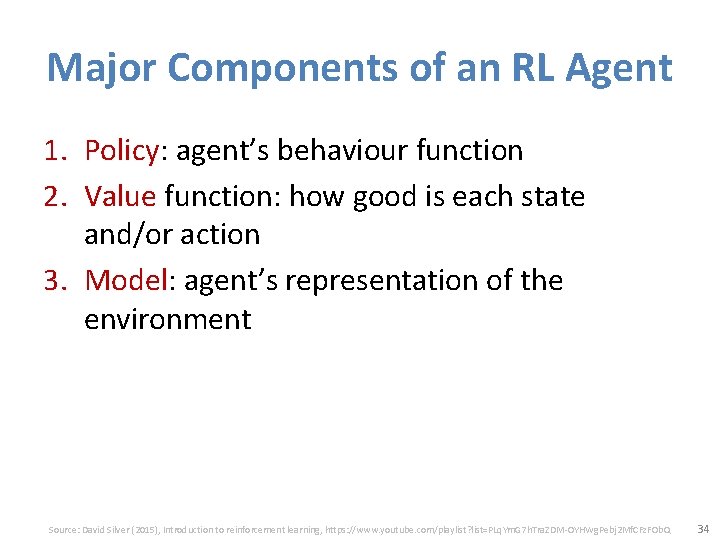
Major Components of an RL Agent 1. Policy: agent’s behaviour function 2. Value function: how good is each state and/or action 3. Model: agent’s representation of the environment Source: David Silver (2015), Introduction to reinforcement learning, https: //www. youtube. com/playlist? list=PLq. Ym. G 7 h. Tra. ZDM-OYHWg. Pebj 2 Mf. CFz. FOb. Q 34
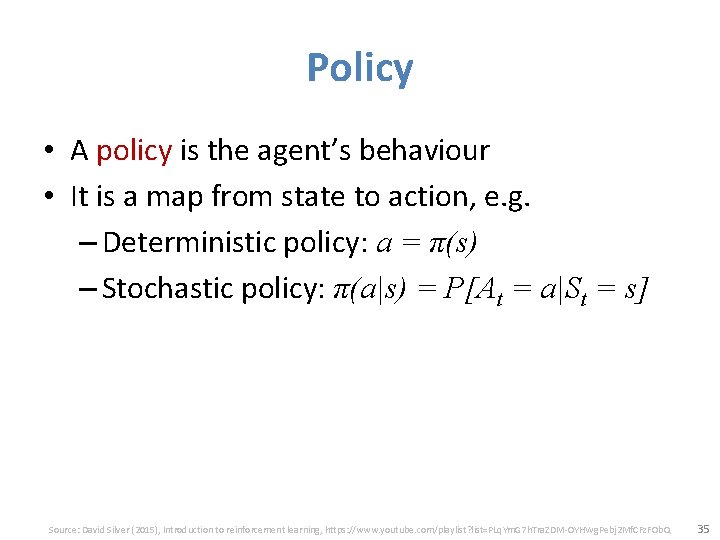
Policy • A policy is the agent’s behaviour • It is a map from state to action, e. g. – Deterministic policy: a = π(s) – Stochastic policy: π(a|s) = P[At = a|St = s] Source: David Silver (2015), Introduction to reinforcement learning, https: //www. youtube. com/playlist? list=PLq. Ym. G 7 h. Tra. ZDM-OYHWg. Pebj 2 Mf. CFz. FOb. Q 35
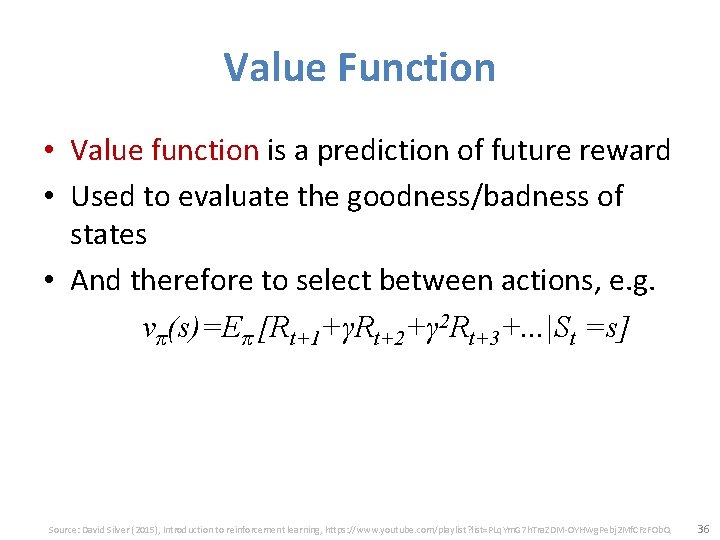
Value Function • Value function is a prediction of future reward • Used to evaluate the goodness/badness of states • And therefore to select between actions, e. g. vπ(s)=Eπ [Rt+1+γRt+2+γ 2 Rt+3+. . . |St =s] Source: David Silver (2015), Introduction to reinforcement learning, https: //www. youtube. com/playlist? list=PLq. Ym. G 7 h. Tra. ZDM-OYHWg. Pebj 2 Mf. CFz. FOb. Q 36
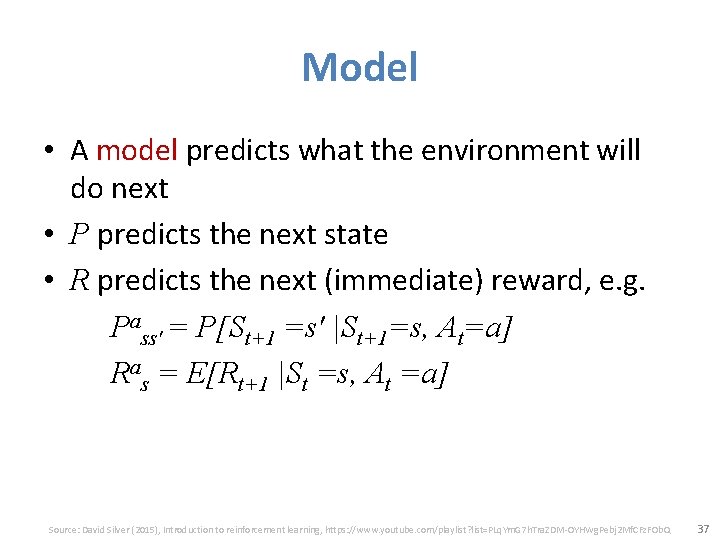
Model • A model predicts what the environment will do next • P predicts the next state • R predicts the next (immediate) reward, e. g. Pass′ = P[St+1 =s′ |St+1=s, At=a] Ras = E[Rt+1 |St =s, At =a] Source: David Silver (2015), Introduction to reinforcement learning, https: //www. youtube. com/playlist? list=PLq. Ym. G 7 h. Tra. ZDM-OYHWg. Pebj 2 Mf. CFz. FOb. Q 37
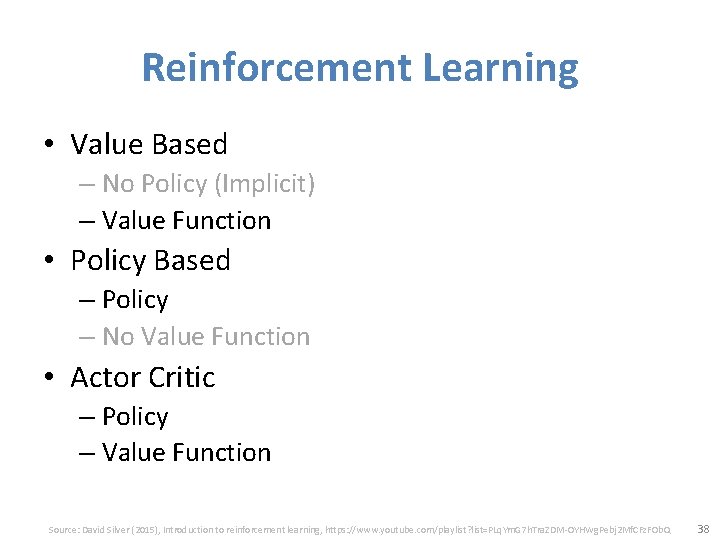
Reinforcement Learning • Value Based – No Policy (Implicit) – Value Function • Policy Based – Policy – No Value Function • Actor Critic – Policy – Value Function Source: David Silver (2015), Introduction to reinforcement learning, https: //www. youtube. com/playlist? list=PLq. Ym. G 7 h. Tra. ZDM-OYHWg. Pebj 2 Mf. CFz. FOb. Q 38
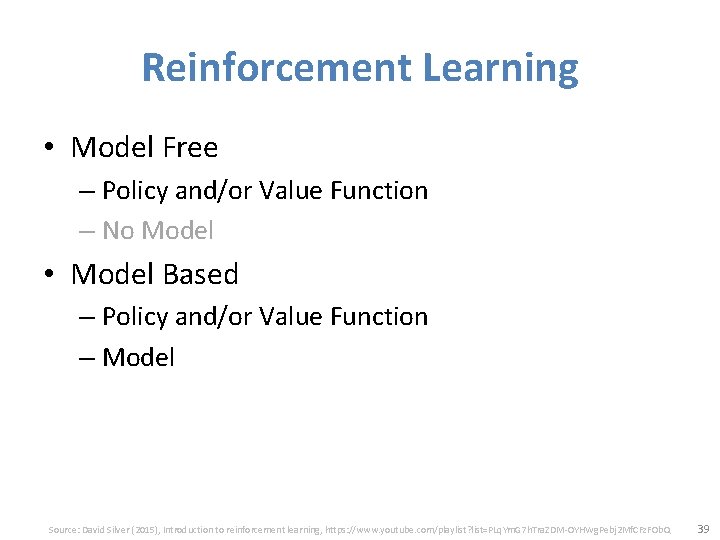
Reinforcement Learning • Model Free – Policy and/or Value Function – No Model • Model Based – Policy and/or Value Function – Model Source: David Silver (2015), Introduction to reinforcement learning, https: //www. youtube. com/playlist? list=PLq. Ym. G 7 h. Tra. ZDM-OYHWg. Pebj 2 Mf. CFz. FOb. Q 39
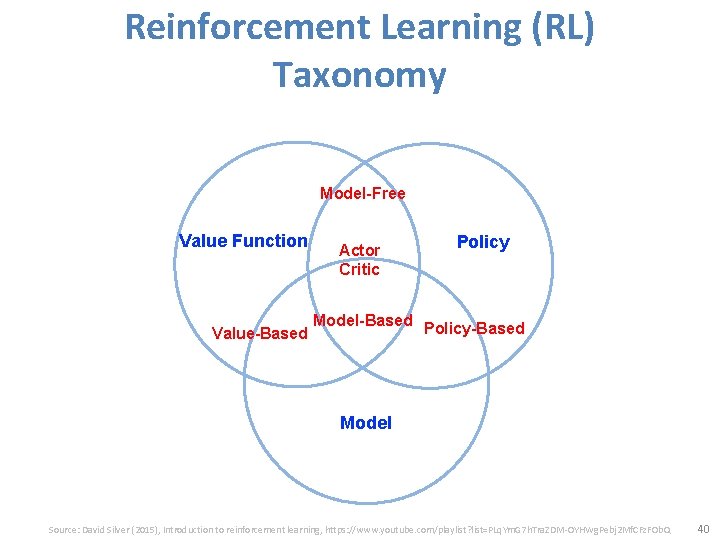
Reinforcement Learning (RL) Taxonomy Model-Free Value Function Value-Based Actor Critic Model-Based Policy-Based Model Source: David Silver (2015), Introduction to reinforcement learning, https: //www. youtube. com/playlist? list=PLq. Ym. G 7 h. Tra. ZDM-OYHWg. Pebj 2 Mf. CFz. FOb. Q 40
Learning and Planning • Two fundamental problems in sequential decision making – Reinforcement Learning • The environment is initially unknown • The agent interacts with environment • The agent improves its policy – Planning • A model of the environment is known • The agent performs computations with its model (without any external interaction) • The agent improves its policy • a. k. a deliberation, reasoning, introspection, pondering, thought, search Source: David Silver (2015), Introduction to reinforcement learning, https: //www. youtube. com/playlist? list=PLq. Ym. G 7 h. Tra. ZDM-OYHWg. Pebj 2 Mf. CFz. FOb. Q 41
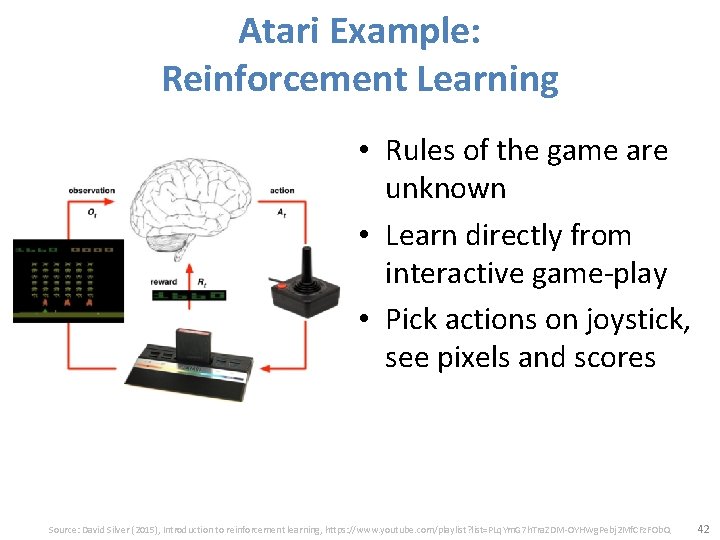
Atari Example: Reinforcement Learning • Rules of the game are unknown • Learn directly from interactive game-play • Pick actions on joystick, see pixels and scores Source: David Silver (2015), Introduction to reinforcement learning, https: //www. youtube. com/playlist? list=PLq. Ym. G 7 h. Tra. ZDM-OYHWg. Pebj 2 Mf. CFz. FOb. Q 42
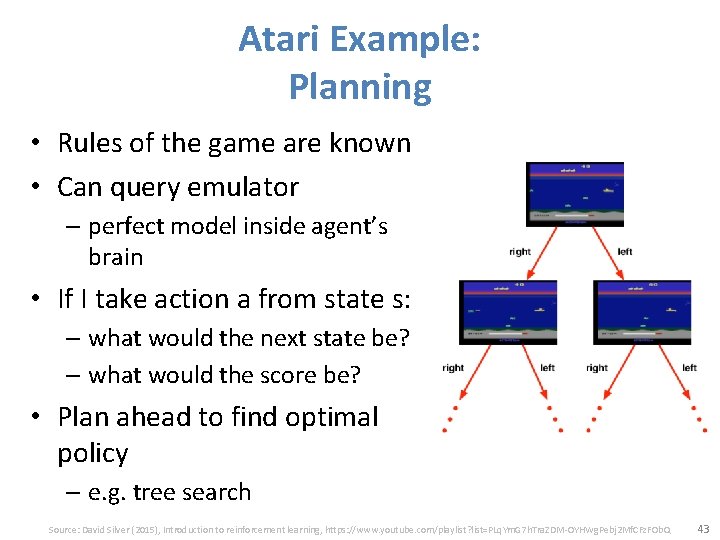
Atari Example: Planning • Rules of the game are known • Can query emulator – perfect model inside agent’s brain • If I take action a from state s: – what would the next state be? – what would the score be? • Plan ahead to find optimal policy – e. g. tree search Source: David Silver (2015), Introduction to reinforcement learning, https: //www. youtube. com/playlist? list=PLq. Ym. G 7 h. Tra. ZDM-OYHWg. Pebj 2 Mf. CFz. FOb. Q 43
Exploration and Exploitation Reinforcement learning is like trial-and-error learning The agent should discover a good policy From its experiences of the environment Without losing too much reward along the way Exploration finds more information about the environment • Exploitation exploits known information to maximise reward • It is usually important to explore as well as exploit • • • Source: David Silver (2015), Introduction to reinforcement learning, https: //www. youtube. com/playlist? list=PLq. Ym. G 7 h. Tra. ZDM-OYHWg. Pebj 2 Mf. CFz. FOb. Q 44
Exploration and Exploitation Examples • Restaurant Selection – Exploitation: Go to your favorite restaurant – Exploration: Try a new restaurant Online Banner • Advertisements – Exploitation: Show the most successful advert – Exploration: Show a different advert • Oil Drilling – Exploitation: Drill at the best known location – Exploration: Drill at a new location • Game Playing – Exploitation: Play the move you believe is best – Exploration: Play an experimental move Source: David Silver (2015), Introduction to reinforcement learning, https: //www. youtube. com/playlist? list=PLq. Ym. G 7 h. Tra. ZDM-OYHWg. Pebj 2 Mf. CFz. FOb. Q 45
Prediction and Control • Prediction: evaluate the future –Given a policy • Control: optimize the future –Find the best policy Source: David Silver (2015), Introduction to reinforcement learning, https: //www. youtube. com/playlist? list=PLq. Ym. G 7 h. Tra. ZDM-OYHWg. Pebj 2 Mf. CFz. FOb. Q 46
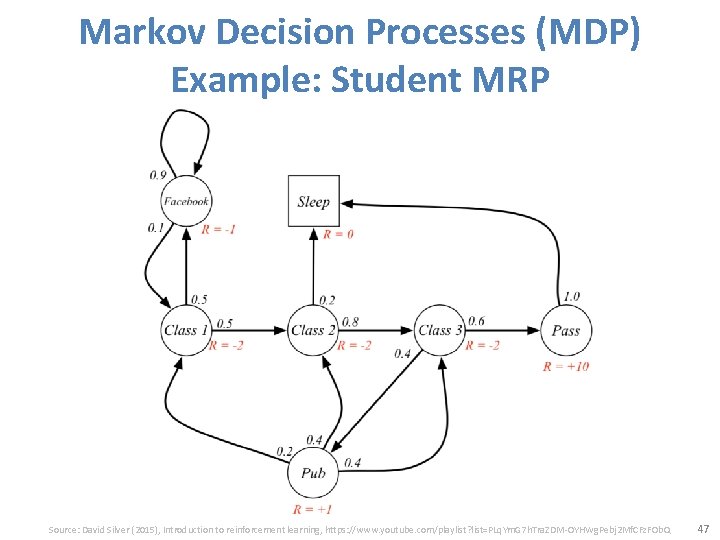
Markov Decision Processes (MDP) Example: Student MRP Source: David Silver (2015), Introduction to reinforcement learning, https: //www. youtube. com/playlist? list=PLq. Ym. G 7 h. Tra. ZDM-OYHWg. Pebj 2 Mf. CFz. FOb. Q 47
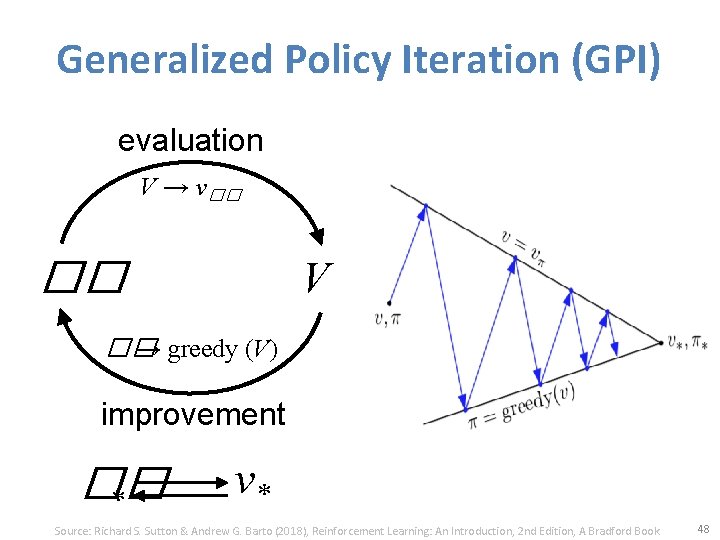
Generalized Policy Iteration (GPI) evaluation V → v�� �� V �� → greedy (V) improvement �� * v* Source: Richard S. Sutton & Andrew G. Barto (2018), Reinforcement Learning: An Introduction, 2 nd Edition, A Bradford Book. 48
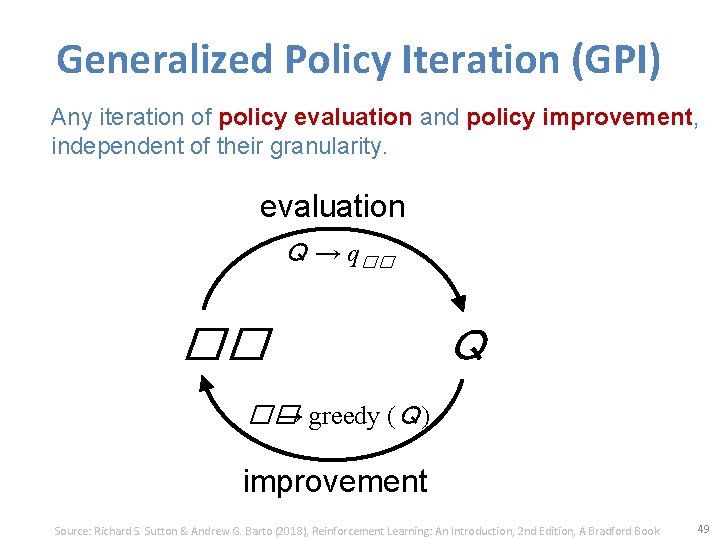
Generalized Policy Iteration (GPI) Any iteration of policy evaluation and policy improvement, independent of their granularity. evaluation Q → q�� �� Q �� → greedy (Q) improvement Source: Richard S. Sutton & Andrew G. Barto (2018), Reinforcement Learning: An Introduction, 2 nd Edition, A Bradford Book. 49
Temporal-Difference (TD) Learning • Sarsa: On-policy TD Control • Q-learning: Off-policy TD Control Source: Richard S. Sutton & Andrew G. Barto (2018), Reinforcement Learning: An Introduction, 2 nd Edition, A Bradford Book. 50
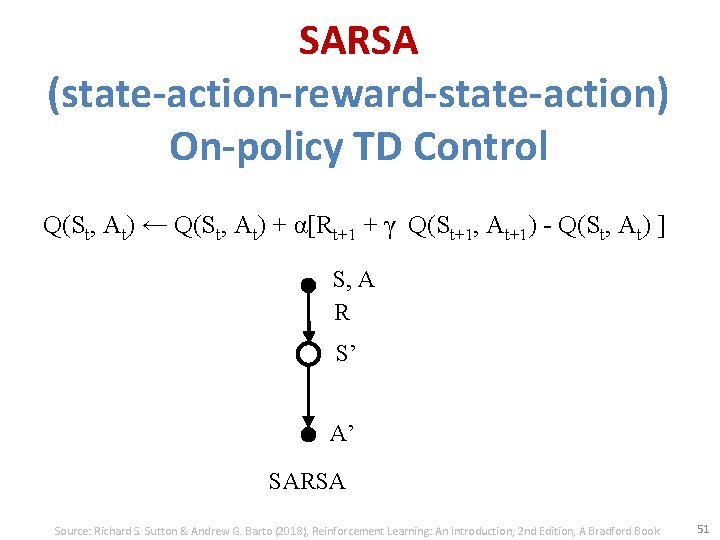
SARSA (state-action-reward-state-action) On-policy TD Control Q(St, At) ← Q(St, At) + α[Rt+1 + γ Q(St+1, At+1) - Q(St, At) ] S, A R S’ A’ SARSA Source: Richard S. Sutton & Andrew G. Barto (2018), Reinforcement Learning: An Introduction, 2 nd Edition, A Bradford Book. 51
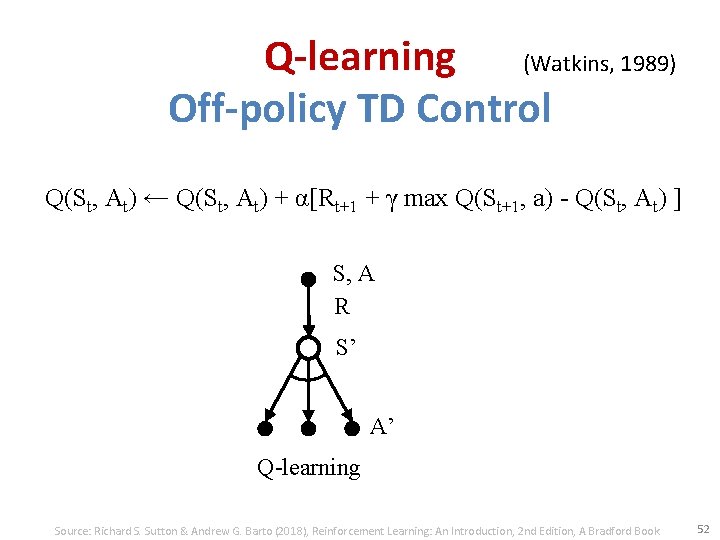
Q-learning (Watkins, 1989) Off-policy TD Control Q(St, At) ← Q(St, At) + α[Rt+1 + γ max Q(St+1, a) - Q(St, At) ] S, A R S’ A’ Q-learning Source: Richard S. Sutton & Andrew G. Barto (2018), Reinforcement Learning: An Introduction, 2 nd Edition, A Bradford Book. 52
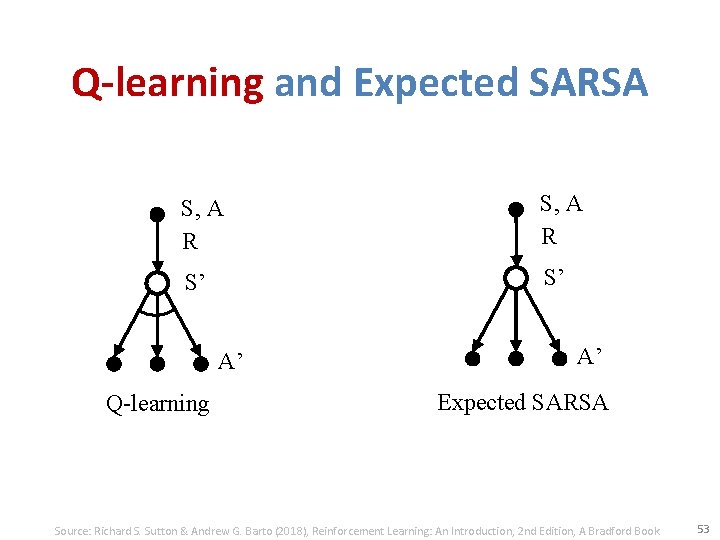
Q-learning and Expected SARSA S, A R S’ S’ A’ Q-learning A’ Expected SARSA Source: Richard S. Sutton & Andrew G. Barto (2018), Reinforcement Learning: An Introduction, 2 nd Edition, A Bradford Book. 53
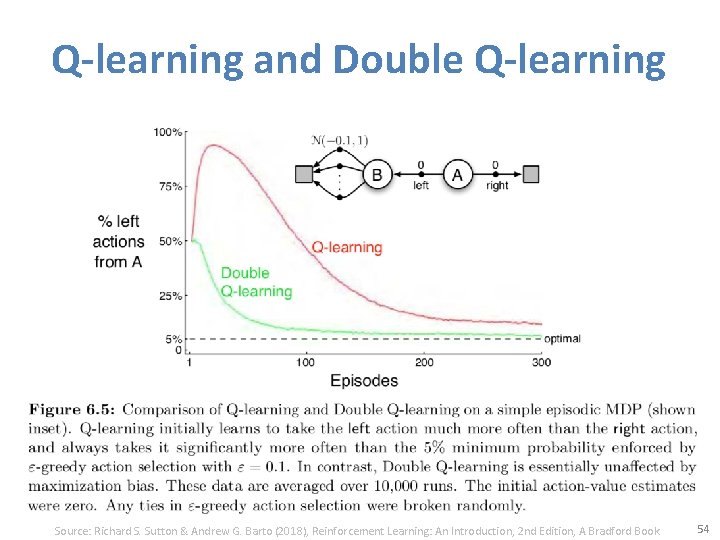
Q-learning and Double Q-learning Source: Richard S. Sutton & Andrew G. Barto (2018), Reinforcement Learning: An Introduction, 2 nd Edition, A Bradford Book. 54
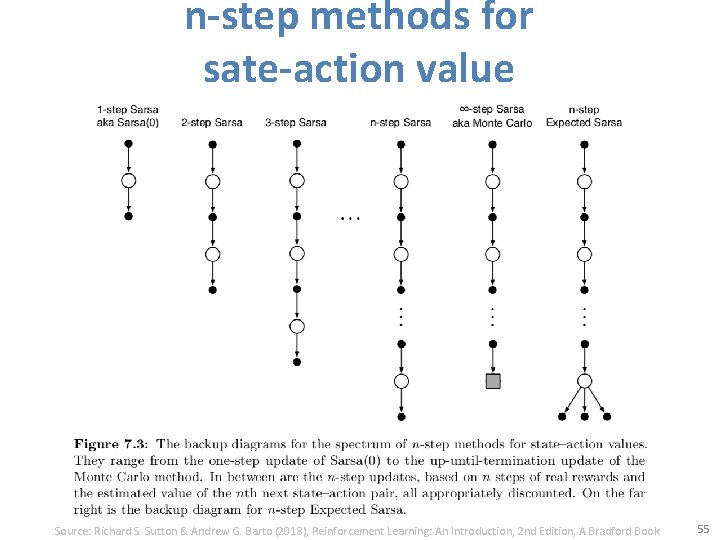
n-step methods for sate-action value Source: Richard S. Sutton & Andrew G. Barto (2018), Reinforcement Learning: An Introduction, 2 nd Edition, A Bradford Book. 55
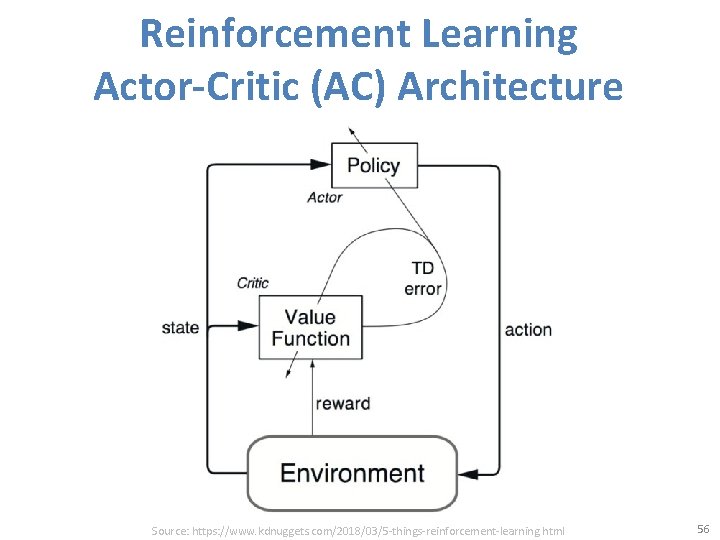
Reinforcement Learning Actor-Critic (AC) Architecture Source: https: //www. kdnuggets. com/2018/03/5 -things-reinforcement-learning. html 56
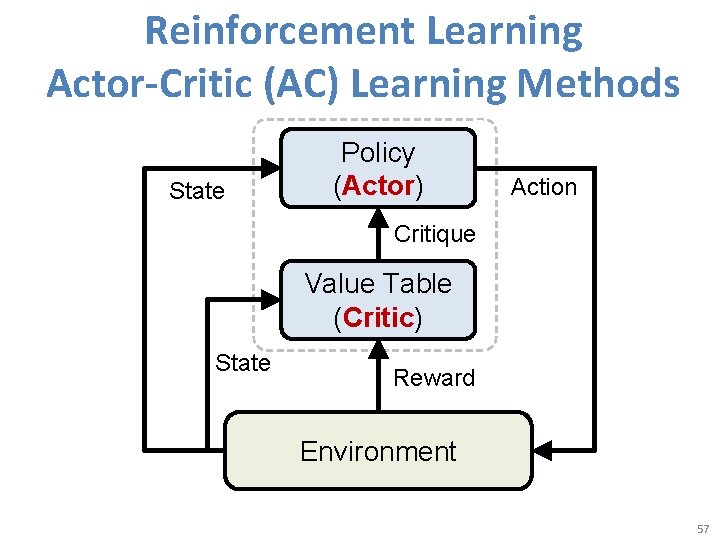
Reinforcement Learning Actor-Critic (AC) Learning Methods State Policy (Actor) Action Critique Value Table (Critic) State Reward Environment 57
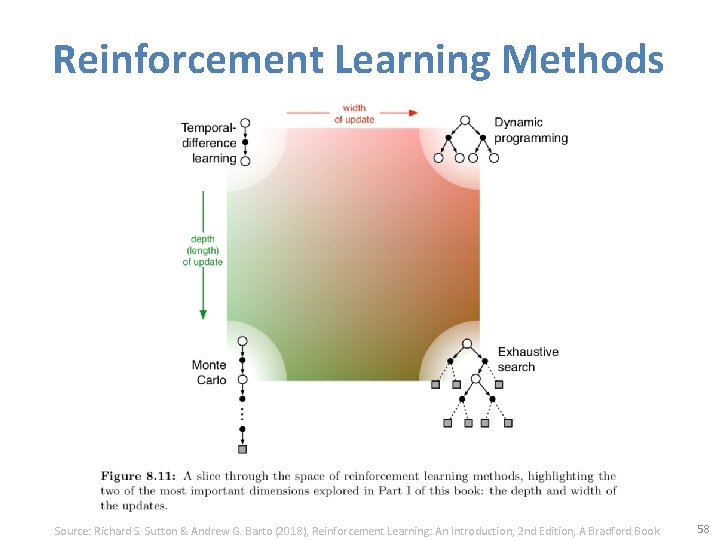
Reinforcement Learning Methods Source: Richard S. Sutton & Andrew G. Barto (2018), Reinforcement Learning: An Introduction, 2 nd Edition, A Bradford Book. 58
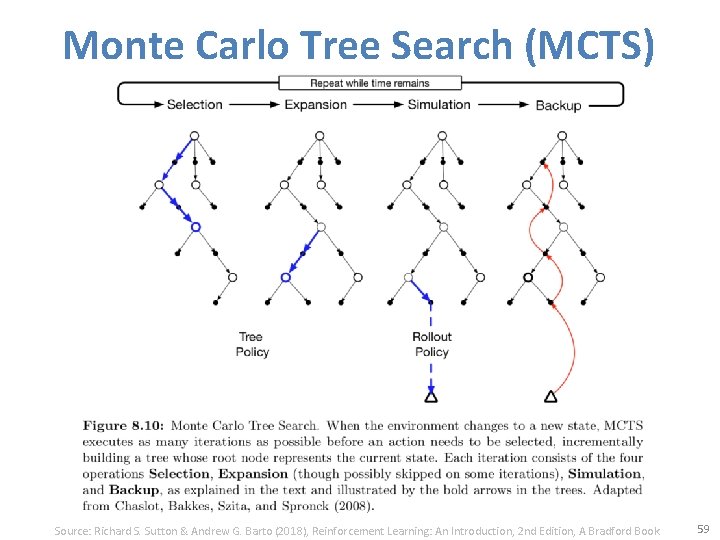
Monte Carlo Tree Search (MCTS) Source: Richard S. Sutton & Andrew G. Barto (2018), Reinforcement Learning: An Introduction, 2 nd Edition, A Bradford Book. 59
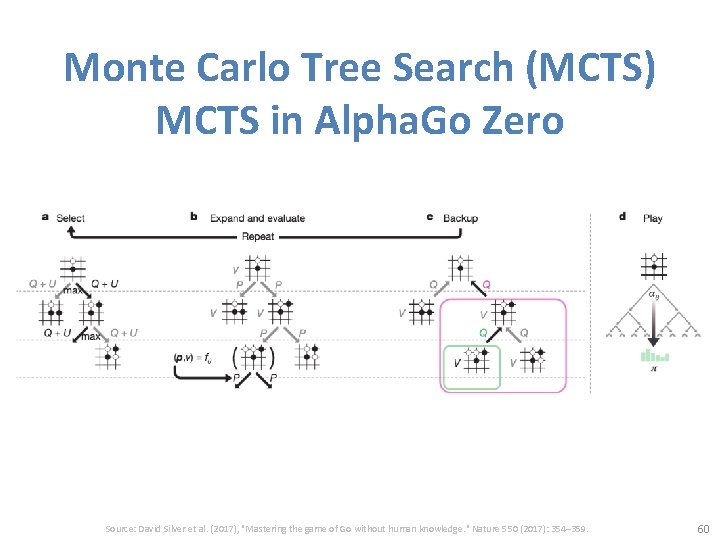
Monte Carlo Tree Search (MCTS) MCTS in Alpha. Go Zero Source: David Silver et al. (2017), "Mastering the game of Go without human knowledge. " Nature 550 (2017): 354– 359. 60
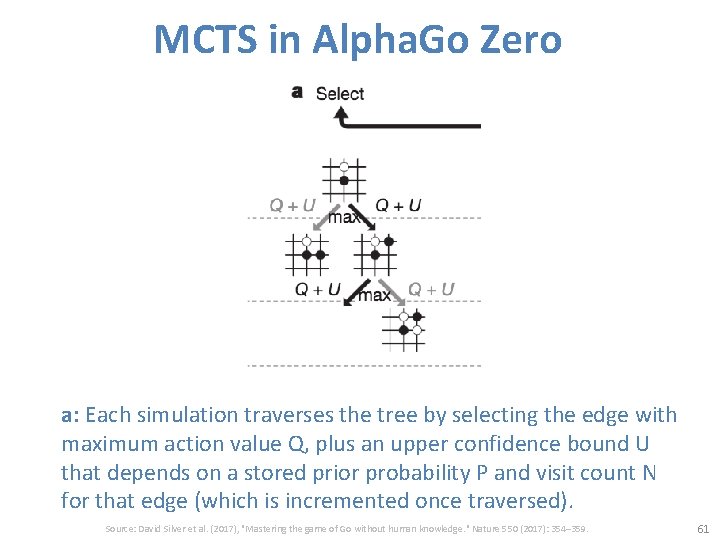
MCTS in Alpha. Go Zero a: Each simulation traverses the tree by selecting the edge with maximum action value Q, plus an upper confidence bound U that depends on a stored prior probability P and visit count N for that edge (which is incremented once traversed). Source: David Silver et al. (2017), "Mastering the game of Go without human knowledge. " Nature 550 (2017): 354– 359. 61
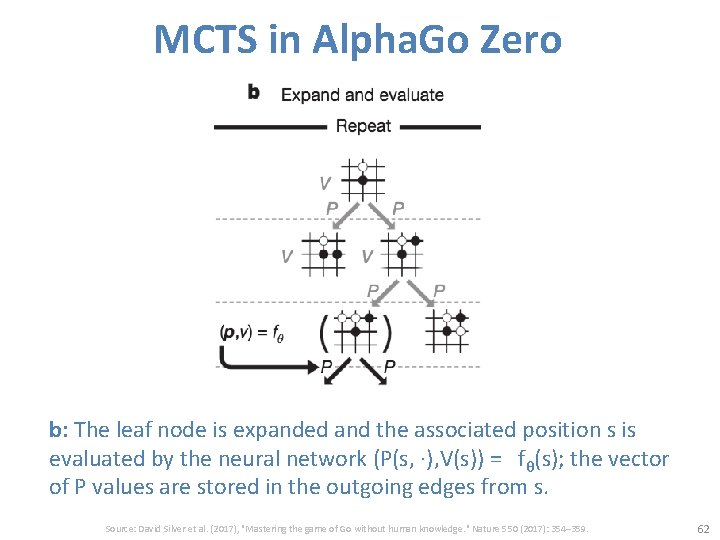
MCTS in Alpha. Go Zero b: The leaf node is expanded and the associated position s is evaluated by the neural network (P(s, ·), V(s)) = fθ(s); the vector of P values are stored in the outgoing edges from s. Source: David Silver et al. (2017), "Mastering the game of Go without human knowledge. " Nature 550 (2017): 354– 359. 62
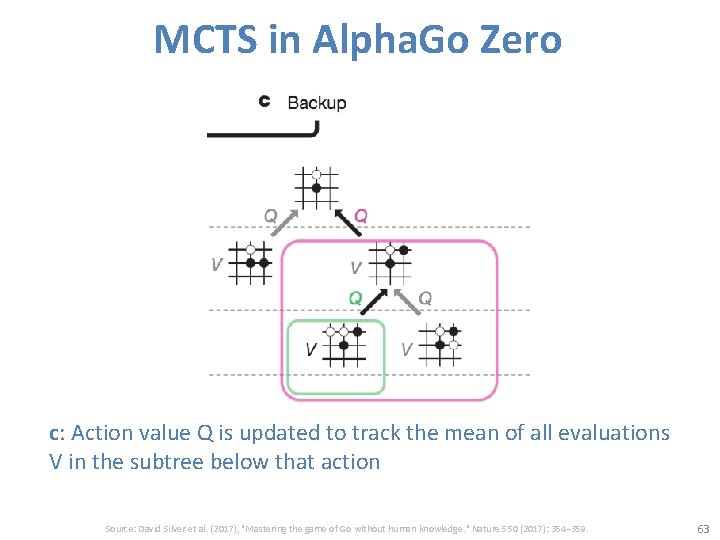
MCTS in Alpha. Go Zero c: Action value Q is updated to track the mean of all evaluations V in the subtree below that action Source: David Silver et al. (2017), "Mastering the game of Go without human knowledge. " Nature 550 (2017): 354– 359. 63
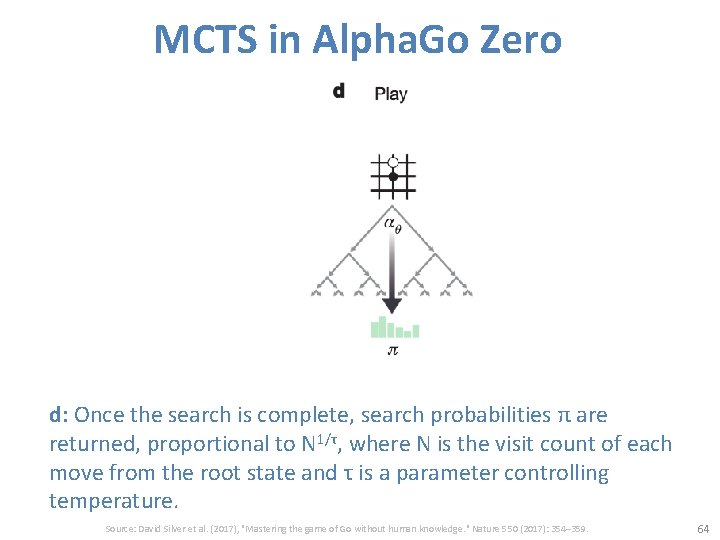
MCTS in Alpha. Go Zero d: Once the search is complete, search probabilities π are returned, proportional to N 1/τ, where N is the visit count of each move from the root state and τ is a parameter controlling temperature. Source: David Silver et al. (2017), "Mastering the game of Go without human knowledge. " Nature 550 (2017): 354– 359. 64
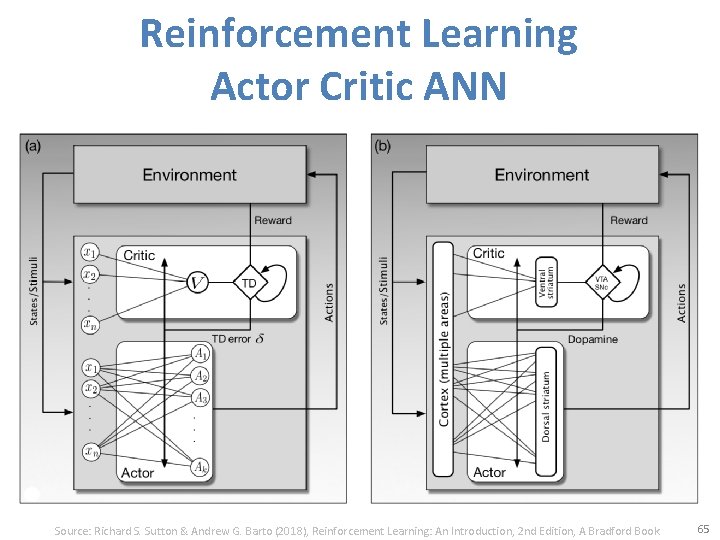
Reinforcement Learning Actor Critic ANN Source: Richard S. Sutton & Andrew G. Barto (2018), Reinforcement Learning: An Introduction, 2 nd Edition, A Bradford Book. 65
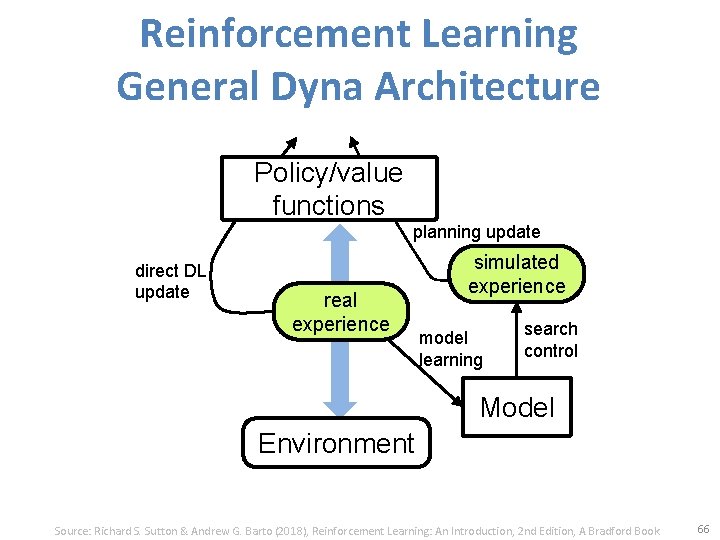
Reinforcement Learning General Dyna Architecture Policy/value functions planning update direct DL update real experience simulated experience model learning search control Model Environment Source: Richard S. Sutton & Andrew G. Barto (2018), Reinforcement Learning: An Introduction, 2 nd Edition, A Bradford Book. 66
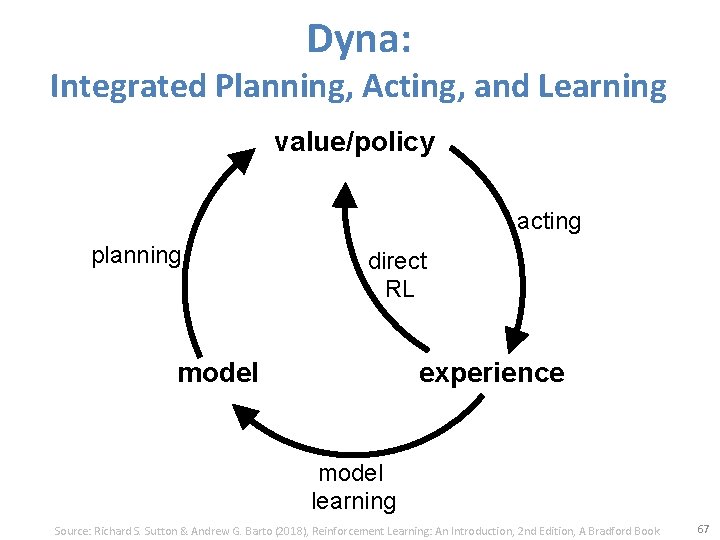
Dyna: Integrated Planning, Acting, and Learning value/policy acting planning direct RL model experience model learning Source: Richard S. Sutton & Andrew G. Barto (2018), Reinforcement Learning: An Introduction, 2 nd Edition, A Bradford Book. 67
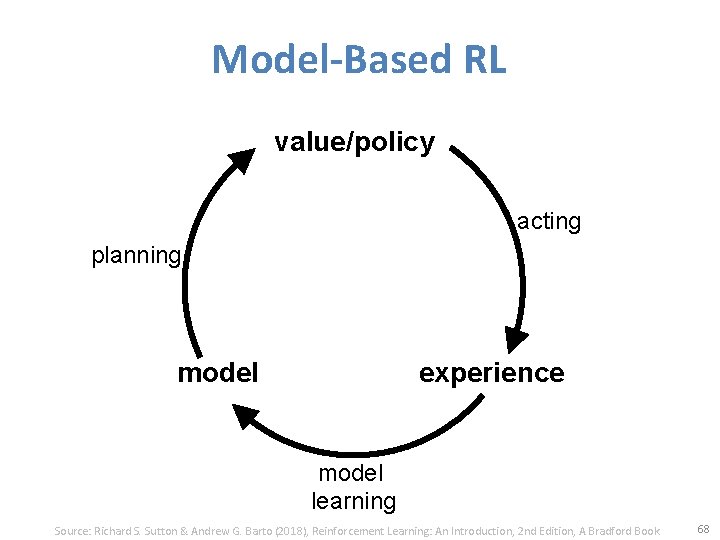
Model-Based RL value/policy acting planning model experience model learning Source: Richard S. Sutton & Andrew G. Barto (2018), Reinforcement Learning: An Introduction, 2 nd Edition, A Bradford Book. 68
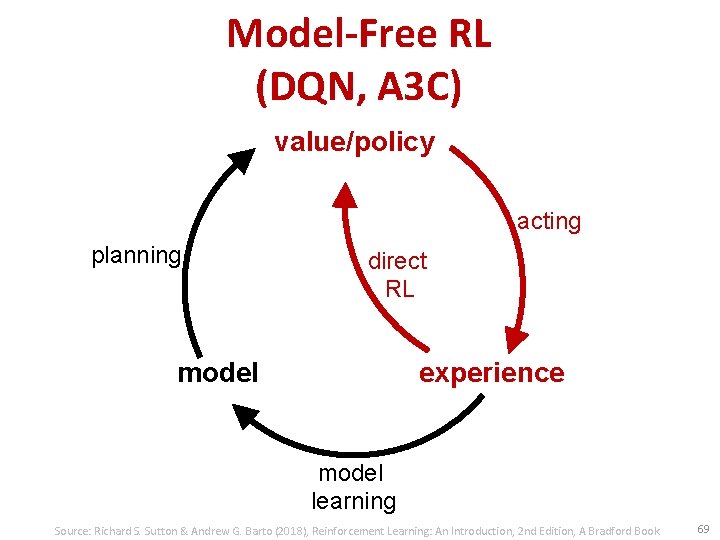
Model-Free RL (DQN, A 3 C) value/policy acting planning direct RL model experience model learning Source: Richard S. Sutton & Andrew G. Barto (2018), Reinforcement Learning: An Introduction, 2 nd Edition, A Bradford Book. 69
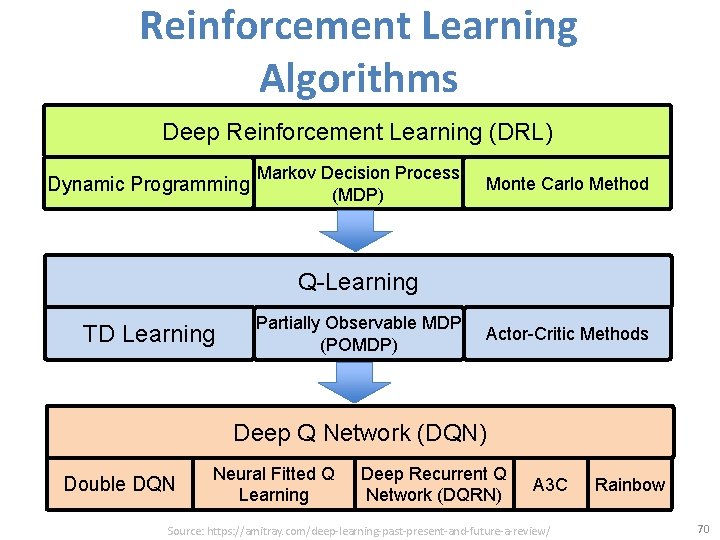
Reinforcement Learning Algorithms Deep Reinforcement Learning (DRL) Dynamic Programming Markov Decision Process (MDP) Monte Carlo Method Q-Learning TD Learning Partially Observable MDP (POMDP) Actor-Critic Methods Deep Q Network (DQN) Double DQN Neural Fitted Q Learning Deep Recurrent Q Network (DQRN) A 3 C Source: https: //amitray. com/deep-learning-past-present-and-future-a-review/ Rainbow 70
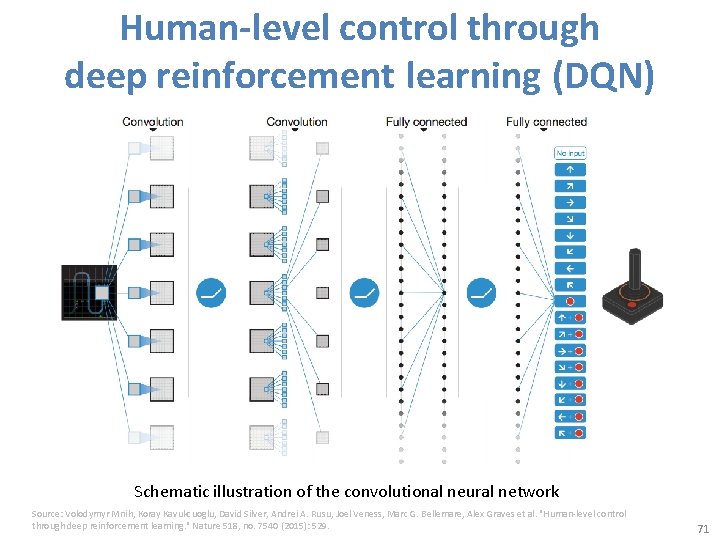
Human-level control through deep reinforcement learning (DQN) Schematic illustration of the convolutional neural network Source: Volodymyr Mnih, Koray Kavukcuoglu, David Silver, Andrei A. Rusu, Joel Veness, Marc G. Bellemare, Alex Graves et al. "Human-level control through deep reinforcement learning. " Nature 518, no. 7540 (2015): 529. 71
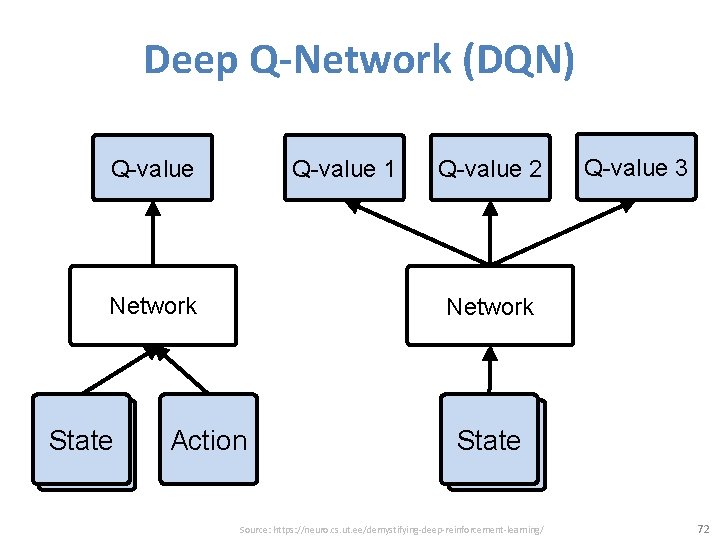
Deep Q-Network (DQN) Q-value 1 Network State Q-value 2 Q-value 3 Network Action State Source: https: //neuro. cs. ut. ee/demystifying-deep-reinforcement-learning/ 72
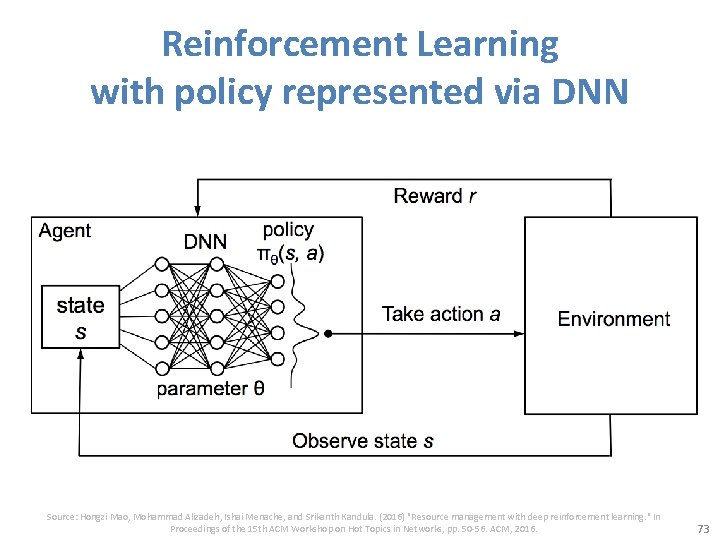
Reinforcement Learning with policy represented via DNN Source: Hongzi Mao, Mohammad Alizadeh, Ishai Menache, and Srikanth Kandula. (2016) "Resource management with deep reinforcement learning. " In Proceedings of the 15 th ACM Workshop on Hot Topics in Networks, pp. 50 -56. ACM, 2016. 73
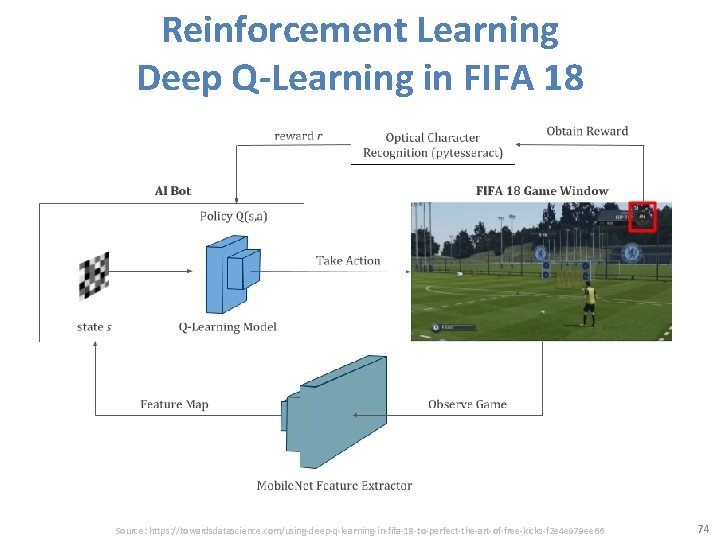
Reinforcement Learning Deep Q-Learning in FIFA 18 Source: https: //towardsdatascience. com/using-deep-q-learning-in-fifa-18 -to-perfect-the-art-of-free-kicks-f 2 e 4 e 979 ee 66 74
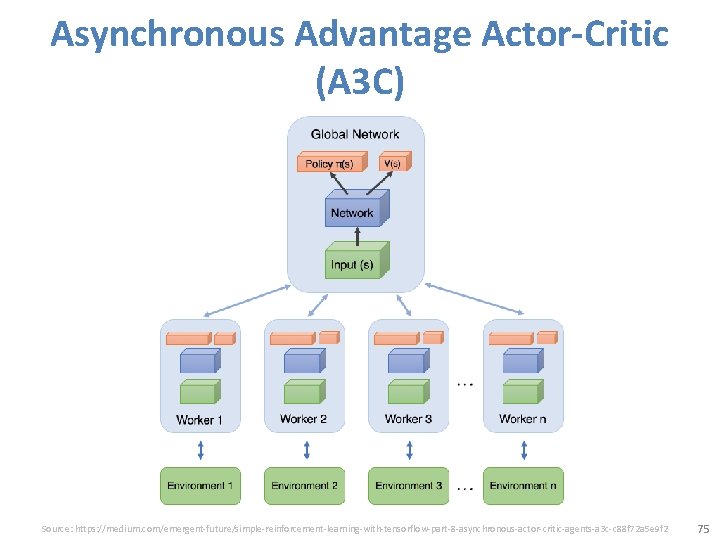
Asynchronous Advantage Actor-Critic (A 3 C) Source: https: //medium. com/emergent-future/simple-reinforcement-learning-with-tensorflow-part-8 -asynchronous-actor-critic-agents-a 3 c-c 88 f 72 a 5 e 9 f 2 75
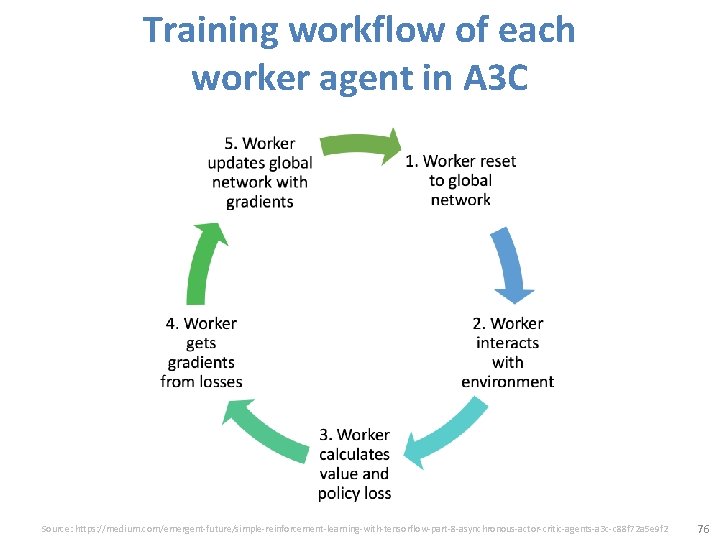
Training workflow of each worker agent in A 3 C Source: https: //medium. com/emergent-future/simple-reinforcement-learning-with-tensorflow-part-8 -asynchronous-actor-critic-agents-a 3 c-c 88 f 72 a 5 e 9 f 2 76
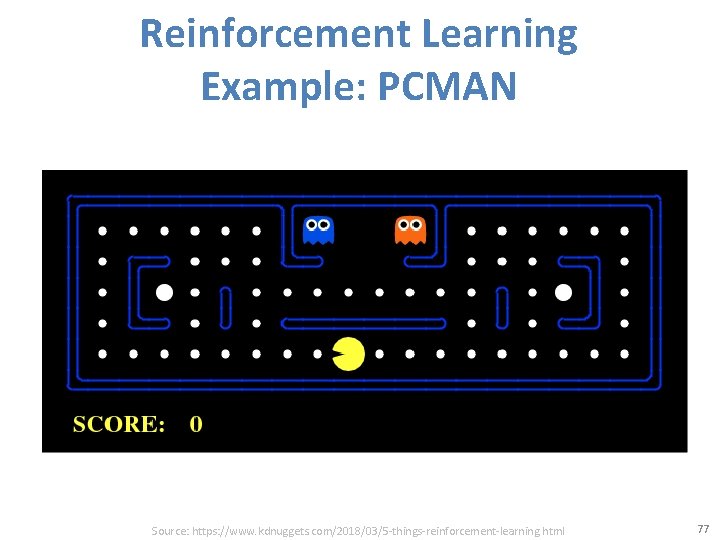
Reinforcement Learning Example: PCMAN Source: https: //www. kdnuggets. com/2018/03/5 -things-reinforcement-learning. html 77
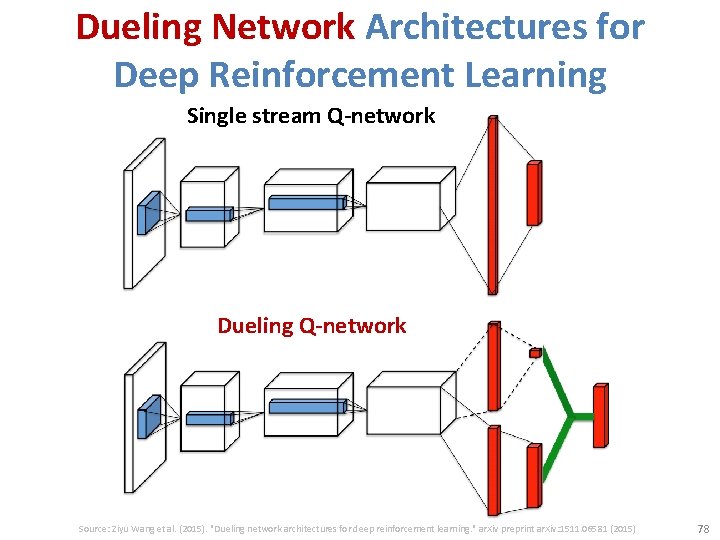
Dueling Network Architectures for Deep Reinforcement Learning Single stream Q-network Dueling Q-network Source: Ziyu Wang et al. (2015). "Dueling network architectures for deep reinforcement learning. " ar. Xiv preprint ar. Xiv: 1511. 06581 (2015) 78
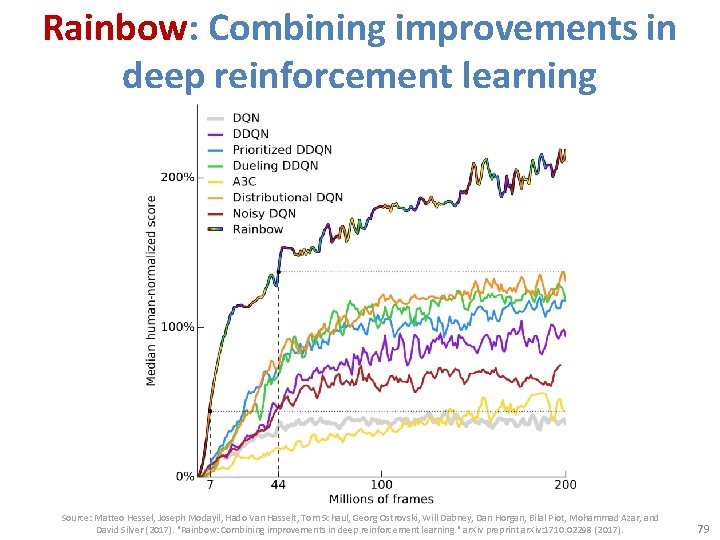
Rainbow: Combining improvements in deep reinforcement learning Source: Matteo Hessel, Joseph Modayil, Hado Van Hasselt, Tom Schaul, Georg Ostrovski, Will Dabney, Dan Horgan, Bilal Piot, Mohammad Azar, and David Silver (2017). "Rainbow: Combining improvements in deep reinforcement learning. " ar. Xiv preprint ar. Xiv: 1710. 02298 (2017). 79
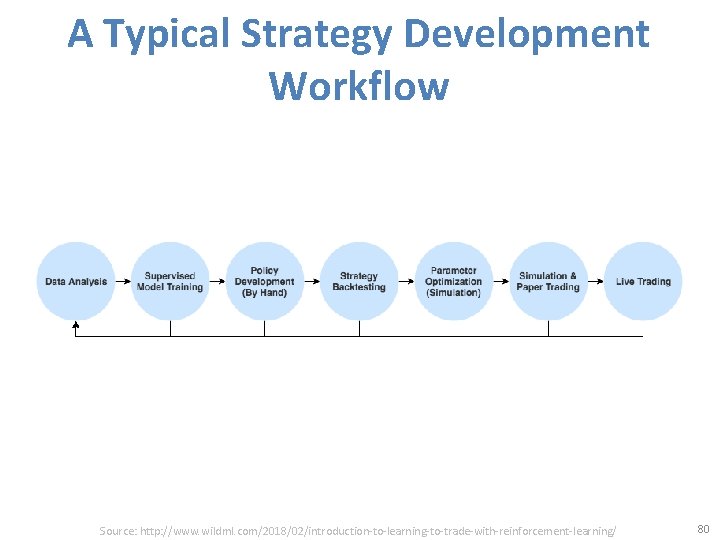
A Typical Strategy Development Workflow Source: http: //www. wildml. com/2018/02/introduction-to-learning-to-trade-with-reinforcement-learning/ 80
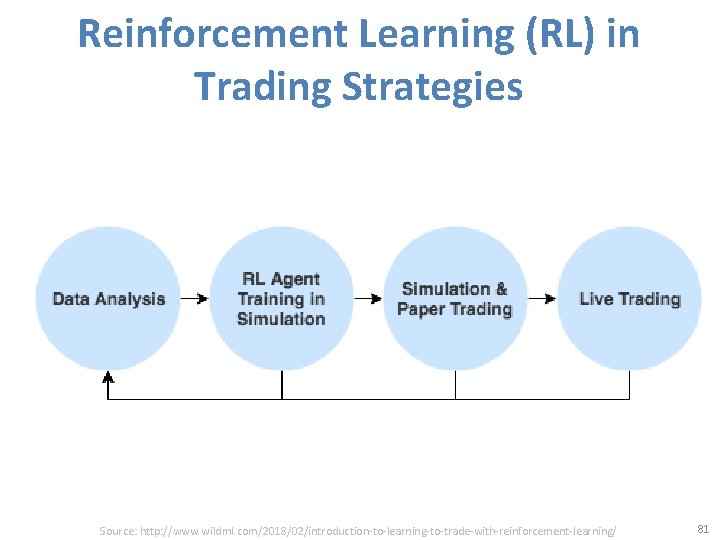
Reinforcement Learning (RL) in Trading Strategies Source: http: //www. wildml. com/2018/02/introduction-to-learning-to-trade-with-reinforcement-learning/ 81
Google Tensor. Flow https: //www. tensorflow. org/ 82
Google Dopamine is a research framework for fast prototyping of reinforcement learning algorithms. https: //github. com/google/dopamine 83
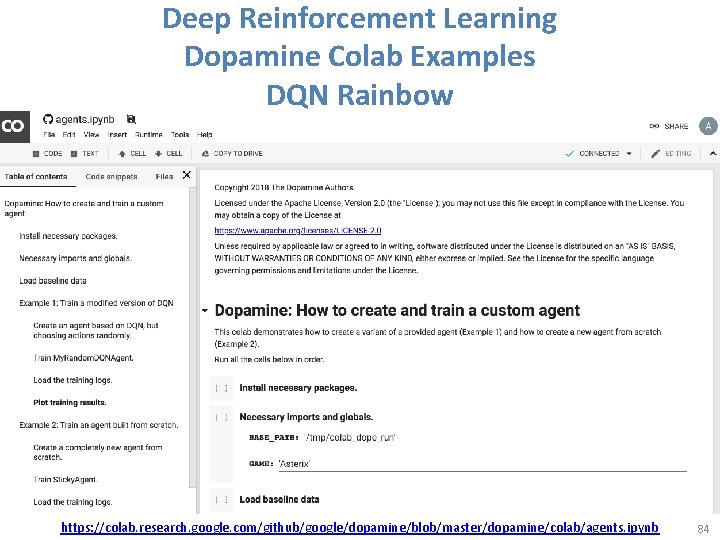
Deep Reinforcement Learning Dopamine Colab Examples DQN Rainbow https: //colab. research. google. com/github/google/dopamine/blob/master/dopamine/colab/agents. ipynb 84
Summary • Reinforcement Learning (RL) – Markov Decision Processes (MDP) • Deep Reinforcement Learning (DRL) Algorithms – SARSA – Q-Learning – DQN – A 3 C – Rainbow • Google Dopamine 85
References • • Richard S. Sutton & Andrew G. Barto (2018), Reinforcement Learning: An Introduction, 2 nd Edition, A Bradford Book. David Silver (2015), Introduction to reinforcement learning, https: //www. youtube. com/playlist? list=PLq. Ym. G 7 h. Tra. ZDM-OYHWg. Pebj 2 Mf. CFz. FOb. Q David Silver, Thomas Hubert, Julian Schrittwieser, Ioannis Antonoglou, Matthew Lai, Arthur Guez, Marc Lanctot, Laurent Sifre, Dharshan Kumaran, Thore Graepel, Timothy Lillicrap, Karen Simonyan, Demis Hassabis (2018), "A general reinforcement learning algorithm that masters chess, shogi, and Go through self-play. " Science 362, no. 6419 (2018): 1140 -1144. David Silver, Julian Schrittwieser, Karen Simonyan, Ioannis Antonoglou, Aja Huang, Arthur Guez, Thomas Hubert, Lucas Baker, Matthew Lai, Adrian Bolton, Yutian Chen, Timothy Lillicrap, Fan Hui, Laurent Sifre, George van den Driessche, Thore Graepel, and Demis Hassabis (2017), "Mastering the game of Go without human knowledge. " Nature 550 (2017): 354– 359. Hado Van Hasselt, Arthur Guez, and David Silver (2016). "Deep Reinforcement Learning with Double Q-Learning. " In AAAI, vol. 2, p. 5. 2016. Matteo Hessel, Joseph Modayil, Hado Van Hasselt, Tom Schaul, Georg Ostrovski, Will Dabney, Dan Horgan, Bilal Piot, Mohammad Azar, and David Silver (2017). "Rainbow: Combining improvements in deep reinforcement learning. " ar. Xiv preprint ar. Xiv: 1710. 02298 (2017). Volodymyr Mnih, Koray Kavukcuoglu, David Silver, Andrei A. Rusu, Joel Veness, Marc G. Bellemare, Alex Graves et al. (2015) "Human-level control through deep reinforcement learning. " Nature 518, no. 7540 (2015): 529. Ziyu Wang, Tom Schaul, Matteo Hessel, Hado Van Hasselt, Marc Lanctot, and Nando De Freitas (2015). "Dueling network architectures for deep reinforcement learning. " ar. Xiv preprint ar. Xiv: 1511. 06581 (2015). 86
- Slides: 86