
Big Data and How It Is Being Used
“Big Data and How It Is Being Used to Transform the Pharmaceutical Business Model” Applications: Microbiome David Hanzel davidkhanzel@gmail. com AAPS National Biotechnology Conference
Microbiome: 1. 2. 3. 4. What is it? How do we study it? What does the data look like? Making only original mistakes? AAPS National Biotechnology Conference
Microbiome: What is it? The human microbiome is: • The aggregate of more than 100 trillion microorganisms that live in our gut, mouth, skin and elsewhere in our bodies. • Essential for human health. • Composed of all three domains of life: Bacteria, Archea and Eukaryota. • Distributed asymmetrically: – Colon/gut is the largest. – Oral is most diverse. AAPS National Biotechnology Conference
Microbiome: What is it? The human microbiome also is: • A source of significant human disease. • Is highly variable in healthy humans. • A near infinite source of data. • A rich source of new Targets. • A function of the tools we are currently using. • What all the cool kids are studying. AAPS National Biotechnology Conference
Microbiome: How do we study it? • Our understanding is largely a function of the tools we use to examine it. – Microscope • Leeuwenhoek – 1683 – Culture dependent methods • 1880 s isolate and characterize micro organisms: In situ stains (gram -), morphology • 1932 -1985: The Great Plate Anomaly – Culture independent methods • taxonomic diversity, relative abundance, functional metagenomics AAPS National Biotechnology Conference
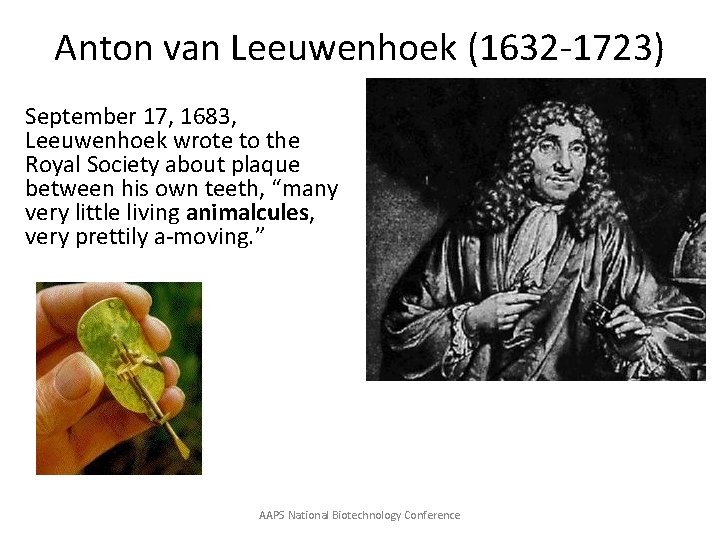
Anton van Leeuwenhoek (1632 -1723) September 17, 1683, Leeuwenhoek wrote to the Royal Society about plaque between his own teeth, “many very little living animalcules, very prettily a-moving. ” AAPS National Biotechnology Conference
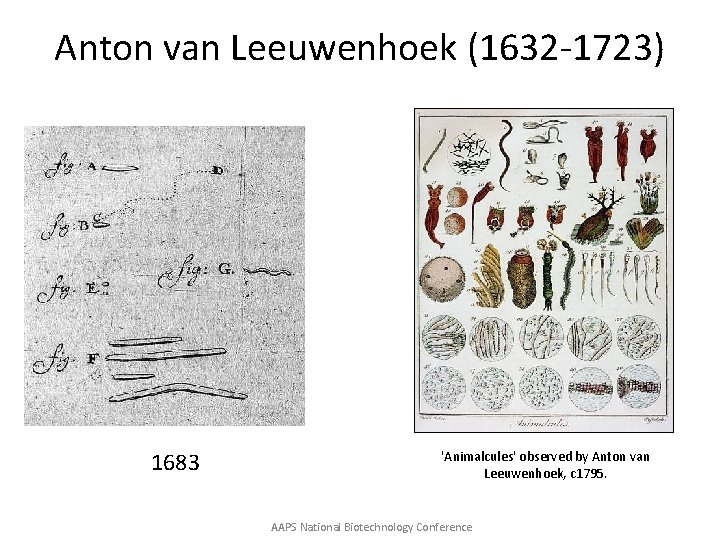
Anton van Leeuwenhoek (1632 -1723) 1683 'Animalcules' observed by Anton van Leeuwenhoek, c 1795. AAPS National Biotechnology Conference
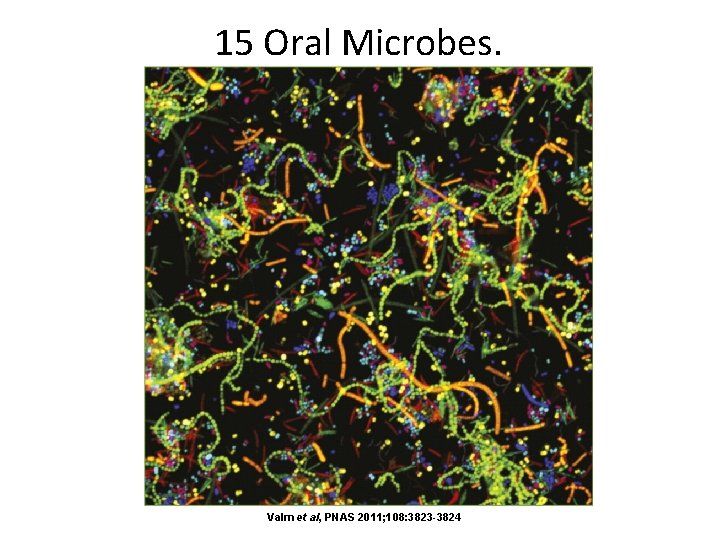
15 Oral Microbes. Valm et al, PNAS 2011; 108: 3823 -3824

Culture Methods in Microbiology • Problem: It is difficult to isolate individual stains in liquid nutrient broth. • 1882 Walther Hesse learned of agar-agar jelling agent from wife, Fanny. • Agar turned out to be an ideal gelling agent that stayed firm even in the incubator and could not be digested by any bacterial enzymes. • “Your gut is full of E coli” • E. coli is a Gram-negative, rod shaped bacteria commonly found in the lower intestine of warm-blooded organisms. AAPS National Biotechnology Conference

The Great Plate Anomaly
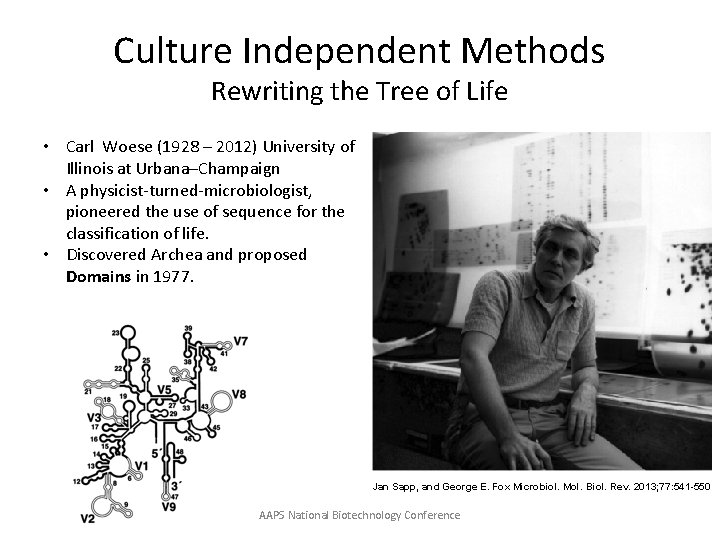
Culture Independent Methods Rewriting the Tree of Life • Carl Woese (1928 – 2012) University of Illinois at Urbana–Champaign • A physicist-turned-microbiologist, pioneered the use of sequence for the classification of life. • Discovered Archea and proposed Domains in 1977. Jan Sapp, and George E. Fox Microbiol. Mol. Biol. Rev. 2013; 77: 541 -550 AAPS National Biotechnology Conference
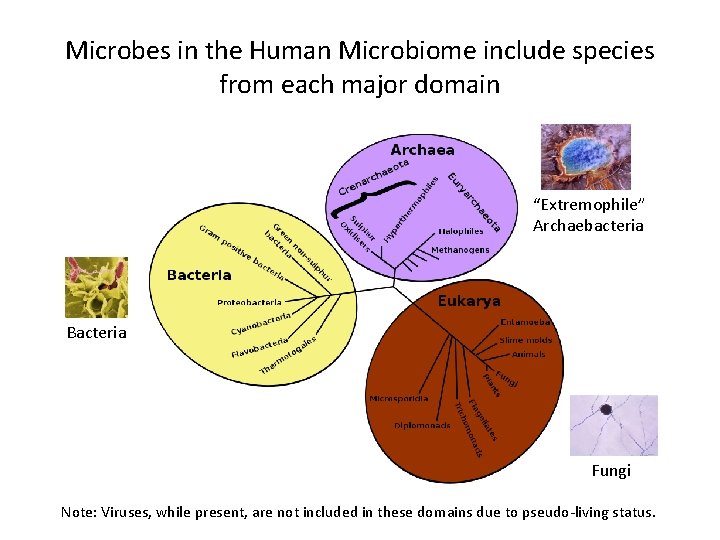
Microbes in the Human Microbiome include species from each major domain “Extremophile” Archaebacteria Bacteria Fungi Note: Viruses, while present, are not included in these domains due to pseudo-living status.
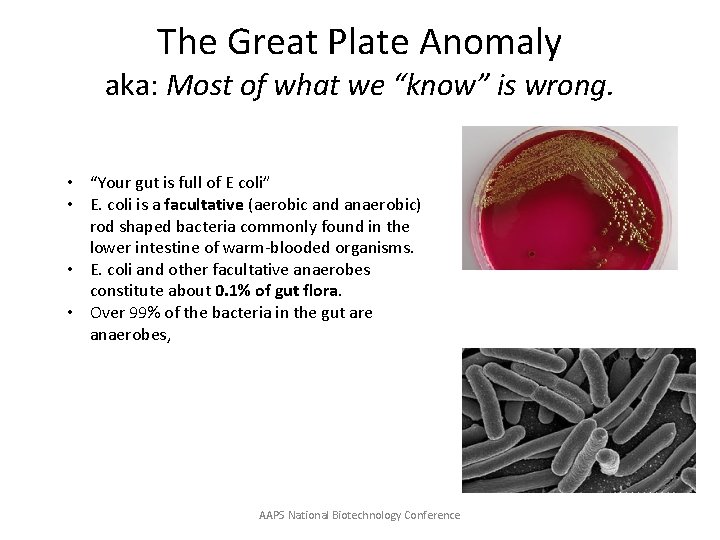
The Great Plate Anomaly aka: Most of what we “know” is wrong. • “Your gut is full of E coli” • E. coli is a facultative (aerobic and anaerobic) rod shaped bacteria commonly found in the lower intestine of warm-blooded organisms. • E. coli and other facultative anaerobes constitute about 0. 1% of gut flora. • Over 99% of the bacteria in the gut are anaerobes, AAPS National Biotechnology Conference
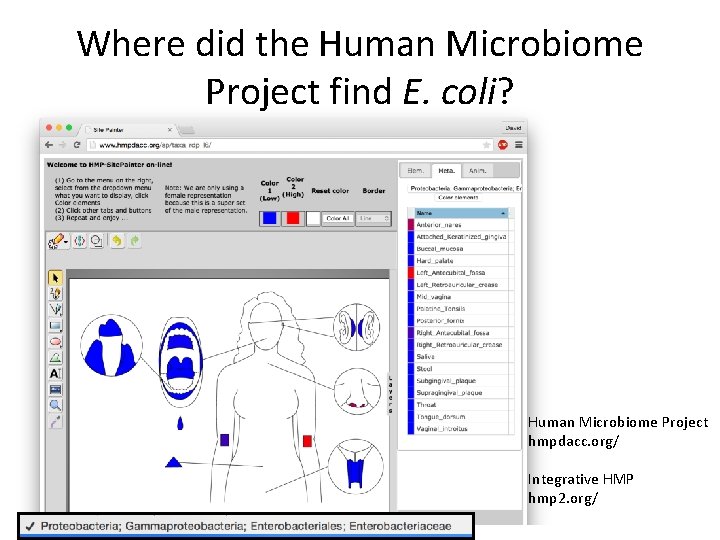
Where did the Human Microbiome Project find E. coli? Human Microbiome Project hmpdacc. org/ Integrative HMP hmp 2. org/
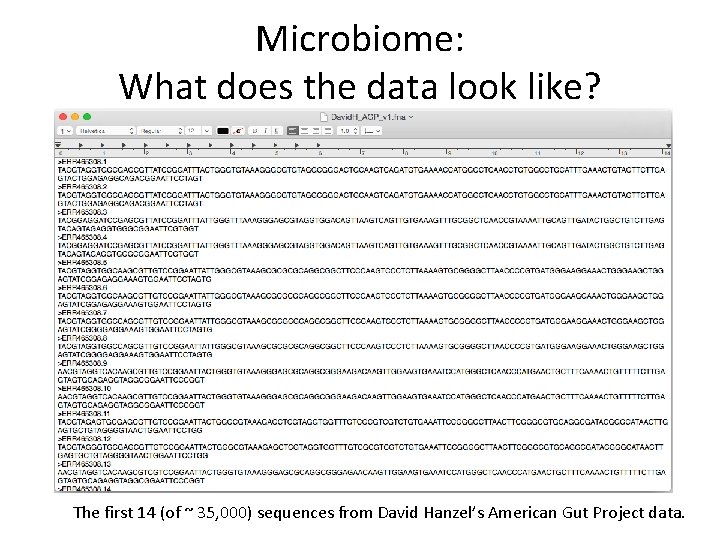
Microbiome: What does the data look like? The first 14 (of ~ 35, 000) sequences from David Hanzel’s American Gut Project data.
Data begets information which begets knowledge. • Data = DNA sequences • Information – Relative abundance – Metabolic pathways • Knowledge – Which bug or community causes or treats a disease? AAPS National Biotechnology Conference
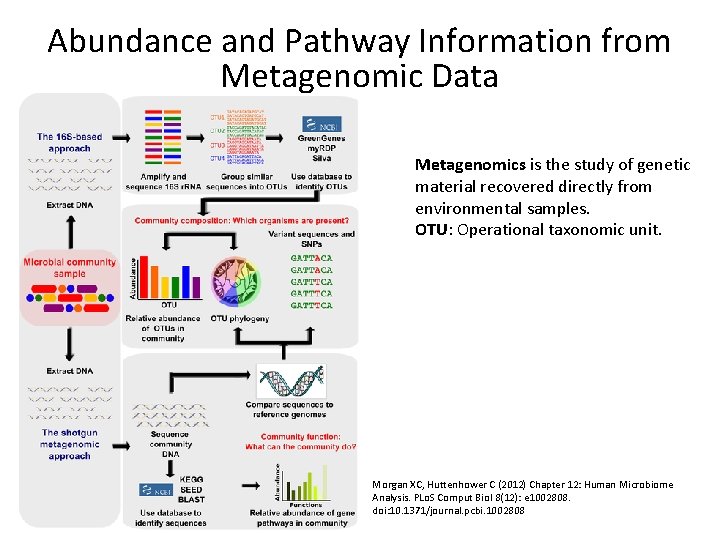
Abundance and Pathway Information from Metagenomic Data Metagenomics is the study of genetic material recovered directly from environmental samples. OTU: Operational taxonomic unit. Morgan XC, Huttenhower C (2012) Chapter 12: Human Microbiome Analysis. PLo. S Comput Biol 8(12): e 1002808. doi: 10. 1371/journal. pcbi. 1002808
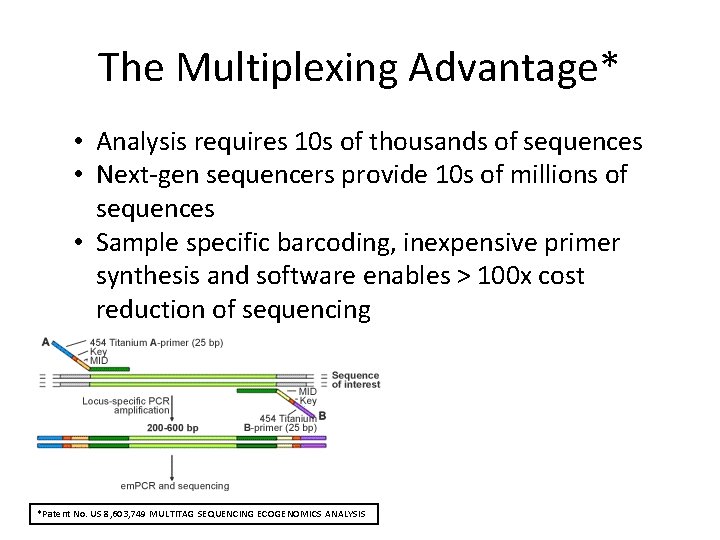
The Multiplexing Advantage* • Analysis requires 10 s of thousands of sequences • Next-gen sequencers provide 10 s of millions of sequences • Sample specific barcoding, inexpensive primer synthesis and software enables > 100 x cost reduction of sequencing *Patent No. US 8, 603, 749 MULTITAG SEQUENCING ECOGENOMICS ANALYSIS
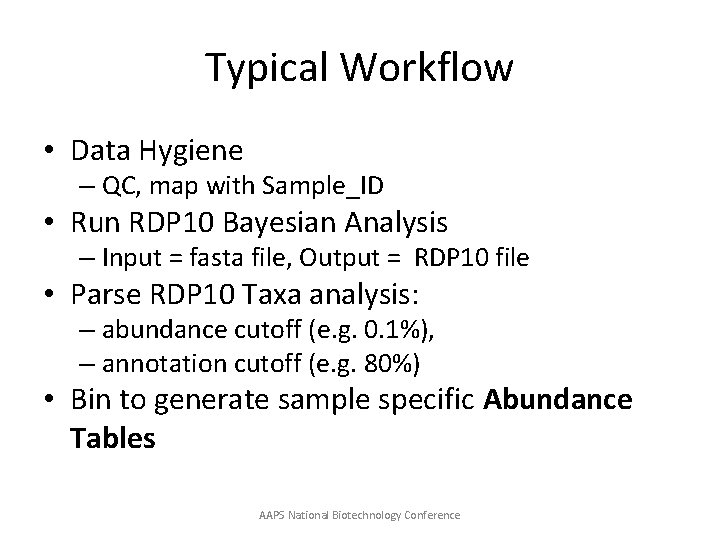
Typical Workflow • Data Hygiene – QC, map with Sample_ID • Run RDP 10 Bayesian Analysis – Input = fasta file, Output = RDP 10 file • Parse RDP 10 Taxa analysis: – abundance cutoff (e. g. 0. 1%), – annotation cutoff (e. g. 80%) • Bin to generate sample specific Abundance Tables AAPS National Biotechnology Conference
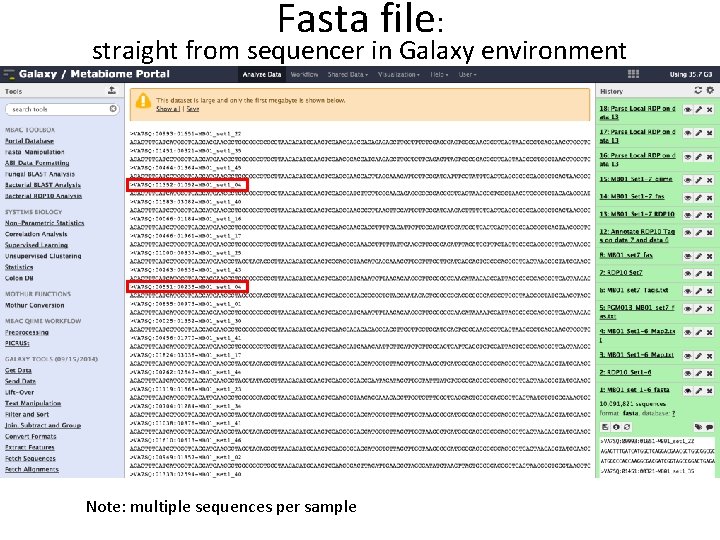
Fasta file: straight from sequencer in Galaxy environment Note: multiple sequences per sample
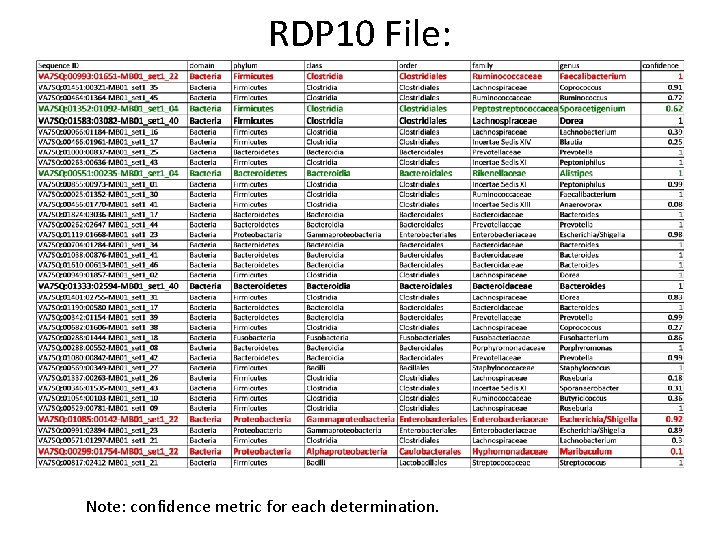
RDP 10 File: Note: confidence metric for each determination.
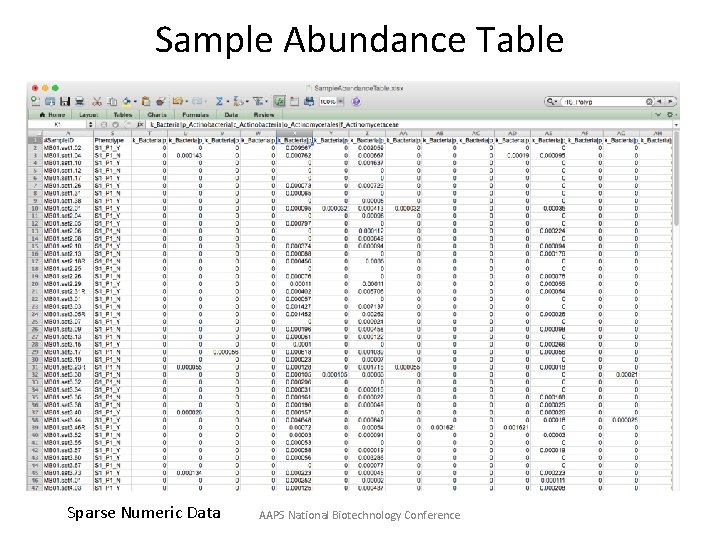
Sample Abundance Table Sparse Numeric Data AAPS National Biotechnology Conference
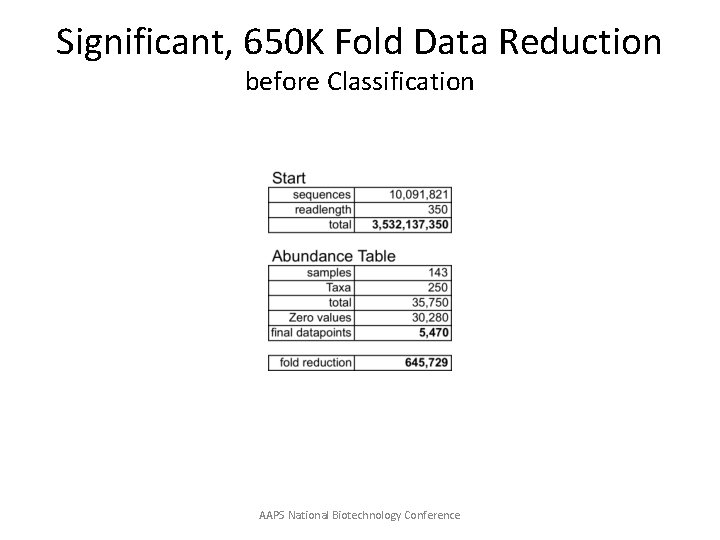
Significant, 650 K Fold Data Reduction before Classification AAPS National Biotechnology Conference
Microbiome: Making only original mistakes • Quantity v Quality – Humans – Software • Solutions from previous technologies – High Content Screening – Phred score AAPS National Biotechnology Conference
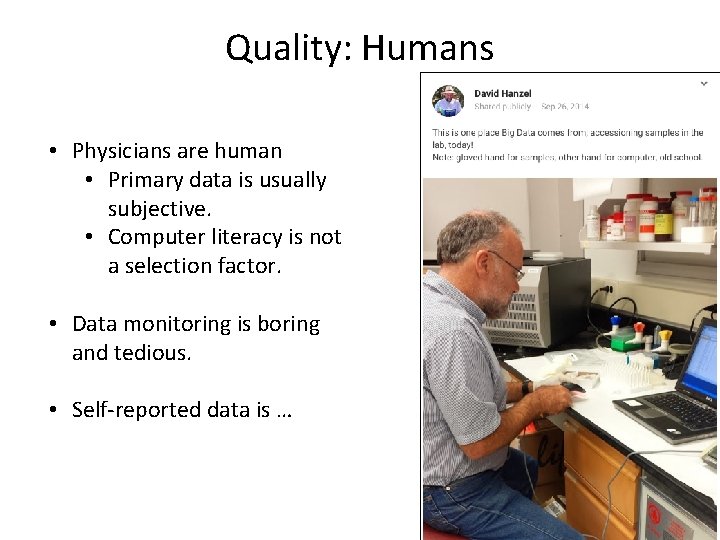
Quality: Humans • Physicians are human • Primary data is usually subjective. • Computer literacy is not a selection factor. • Data monitoring is boring and tedious. • Self-reported data is …
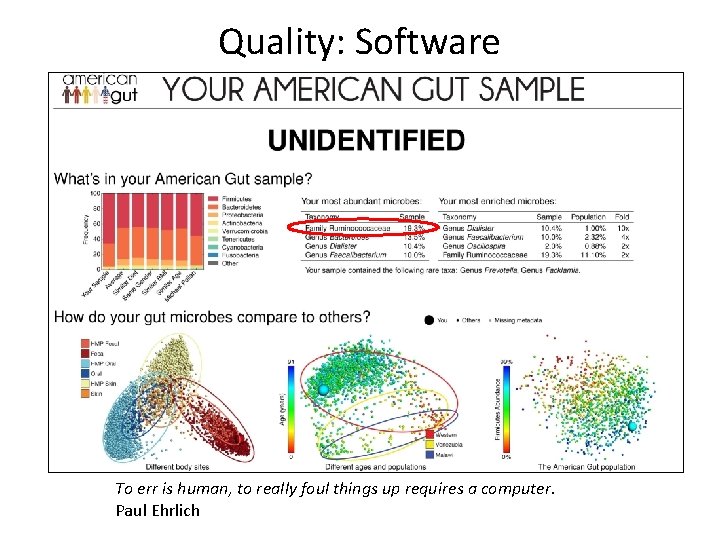
Quality: Software To err is human, to really foul things up requires a computer. Paul Ehrlich
Making only original mistakes: Solutions from previous technologies • DNA Sequencing: – Quality metrics • High Content Screening: – Quantitative microscopy AAPS National Biotechnology Conference
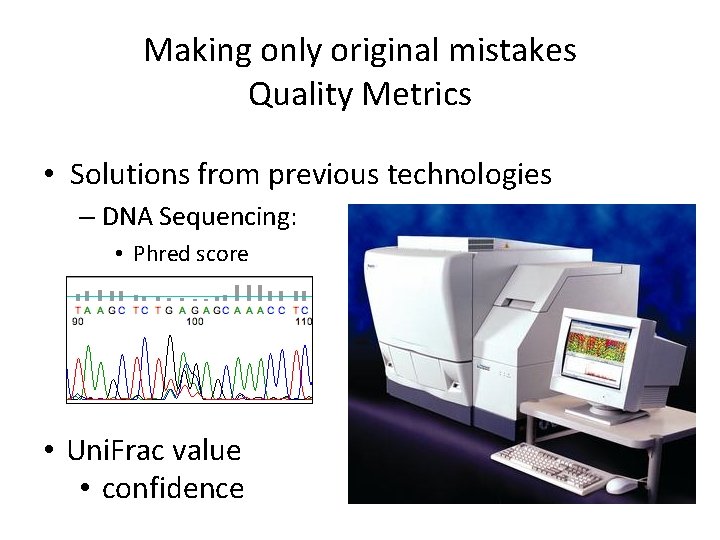
Making only original mistakes Quality Metrics • Solutions from previous technologies – DNA Sequencing: • Phred score • Uni. Frac value • confidence
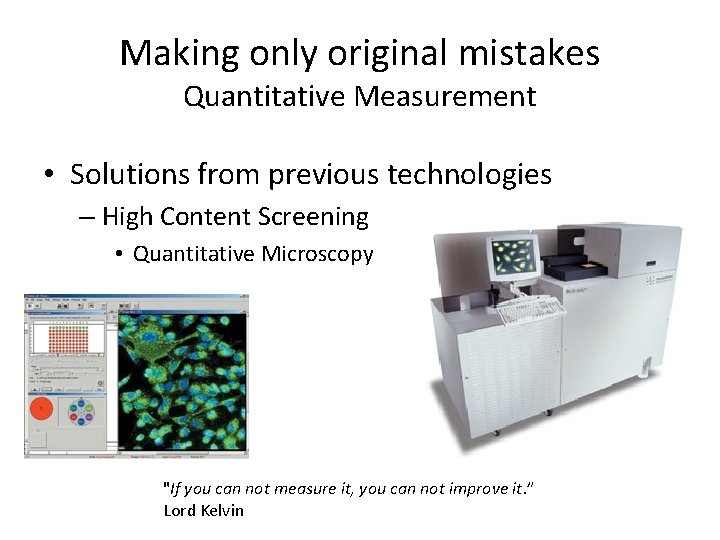
Making only original mistakes Quantitative Measurement • Solutions from previous technologies – High Content Screening • Quantitative Microscopy "If you can not measure it, you can not improve it. ” Lord Kelvin
Questions? AAPS National Biotechnology Conference
- Slides: 30