
Big Data Analytics LargeScale Data Management Data Science
Big Data Analytics Large-Scale Data Management Data Science and Analytics Big Data Analytics • How to manage very large amounts of data and extract value and knowledge from them 1
Introduction to Big Data What is Big Data? What makes data, “Big” Data? 2
Big Data Definition • No single standard definition… “Big Data” is data whose scale, diversity, and complexity require new architecture, techniques, algorithms, and analytics to manage it and extract value and hidden knowledge from it… 3
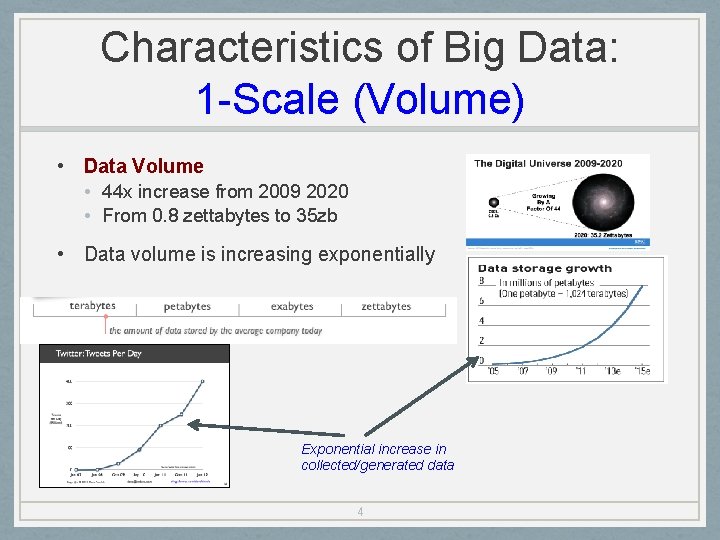
Characteristics of Big Data: 1 -Scale (Volume) • Data Volume • 44 x increase from 2009 2020 • From 0. 8 zettabytes to 35 zb • Data volume is increasing exponentially Exponential increase in collected/generated data 4

Characteristics of Big Data: 2 -Complexity (Varity) • Various formats, types, and structures • Text, numerical, images, audio, video, sequences, time series, social media data, multi-dim arrays, etc… • Static data vs. streaming data • A single application can be generating/collecting many types of data To extract knowledge all these types of data need to linked together 5
Characteristics of Big Data: 3 -Speed (Velocity) • Data is begin generated fast and need to be processed fast • Online Data Analytics • Late decisions missing opportunities • Examples • E-Promotions: Based on your current location, your purchase history, what you like send promotions right now for store next to you • Healthcare monitoring: sensors monitoring your activities and body any abnormal measurements require immediate reaction 6
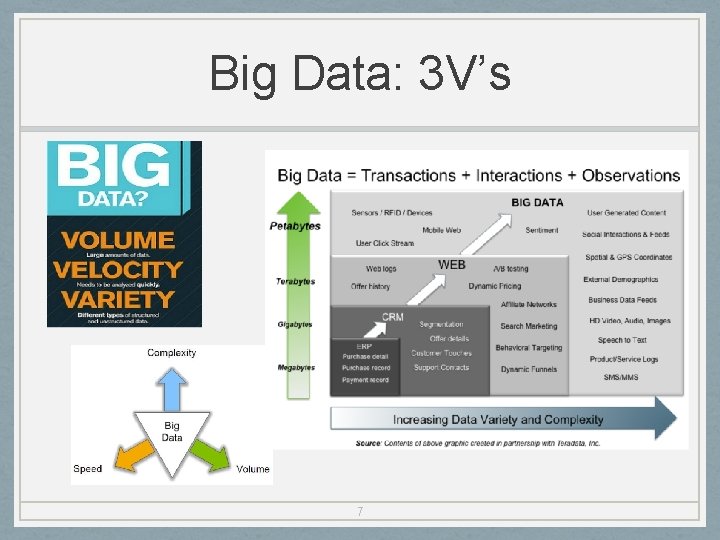
Big Data: 3 V’s 7
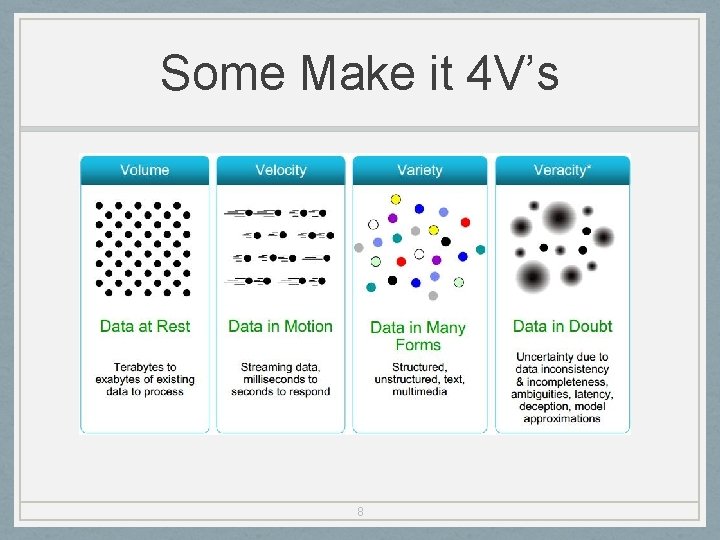
Some Make it 4 V’s 8
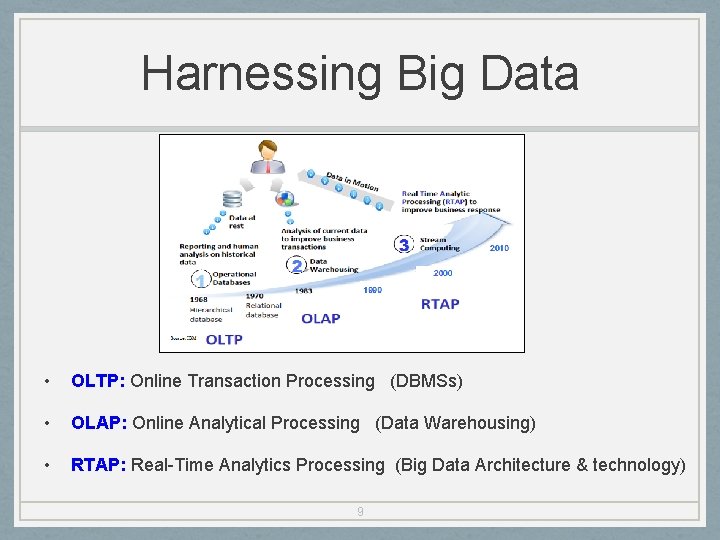
Harnessing Big Data • OLTP: Online Transaction Processing (DBMSs) • OLAP: Online Analytical Processing (Data Warehousing) • RTAP: Real-Time Analytics Processing (Big Data Architecture & technology) 9
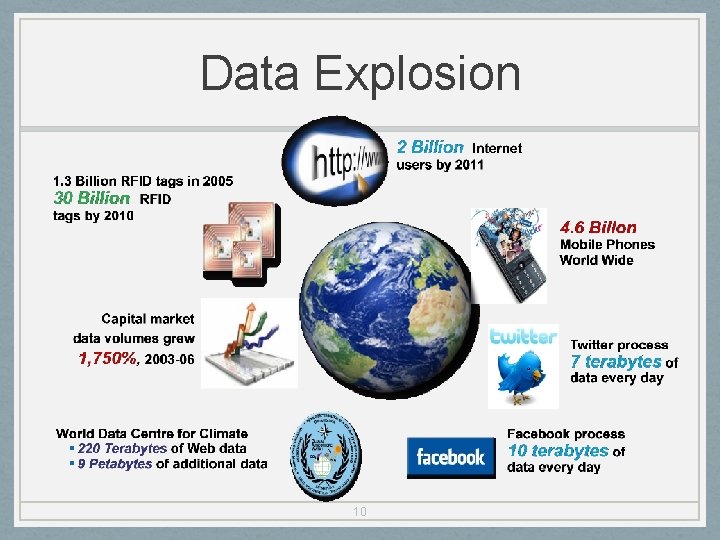
Data Explosion 10
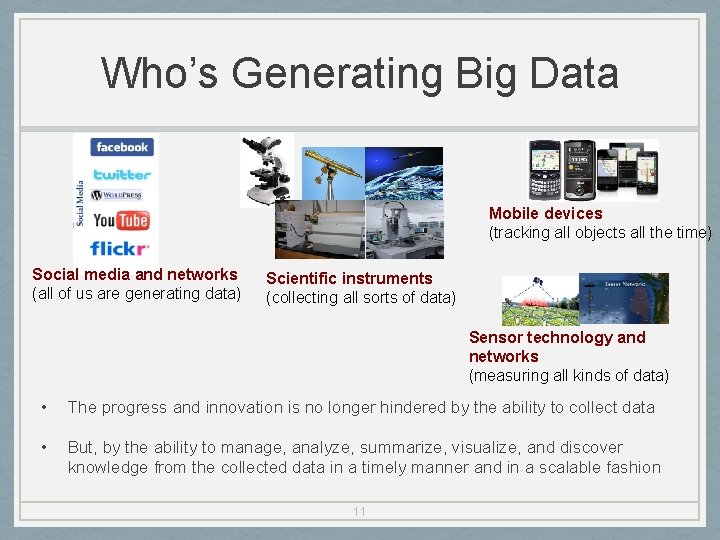
Who’s Generating Big Data Mobile devices (tracking all objects all the time) Social media and networks (all of us are generating data) Scientific instruments (collecting all sorts of data) Sensor technology and networks (measuring all kinds of data) • The progress and innovation is no longer hindered by the ability to collect data • But, by the ability to manage, analyze, summarize, visualize, and discover knowledge from the collected data in a timely manner and in a scalable fashion 11
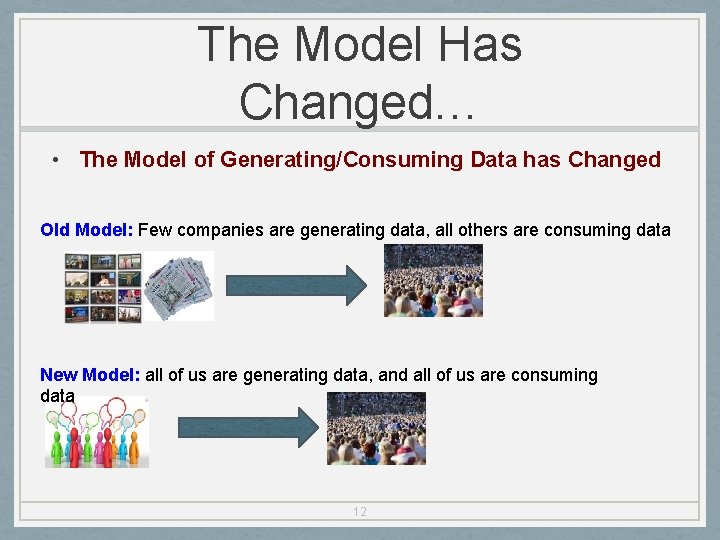
The Model Has Changed… • The Model of Generating/Consuming Data has Changed Old Model: Few companies are generating data, all others are consuming data New Model: all of us are generating data, and all of us are consuming data 12
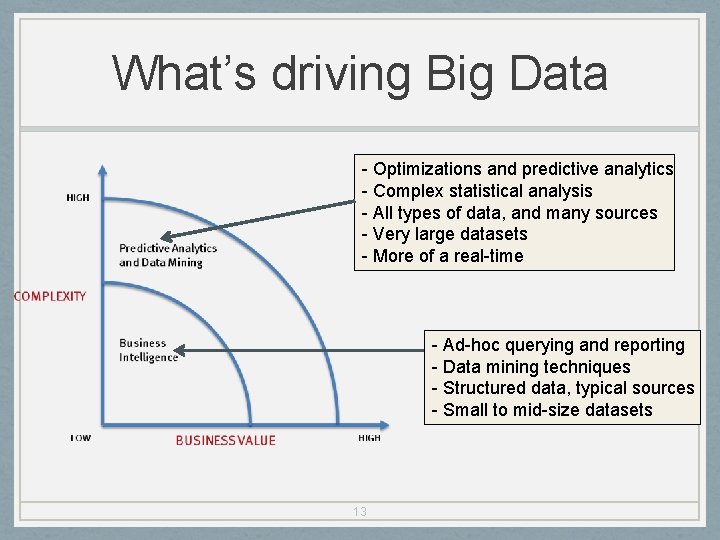
What’s driving Big Data - Optimizations and predictive analytics - Complex statistical analysis - All types of data, and many sources - Very large datasets - More of a real-time - Ad-hoc querying and reporting - Data mining techniques - Structured data, typical sources - Small to mid-size datasets 13
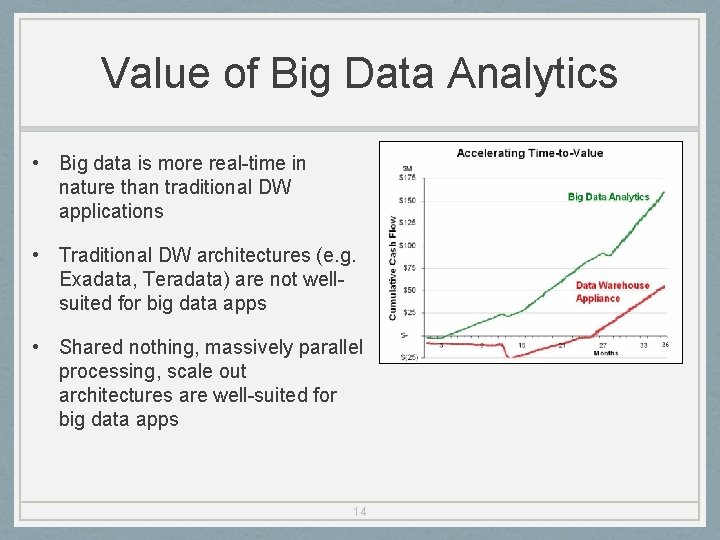
Value of Big Data Analytics • Big data is more real-time in nature than traditional DW applications • Traditional DW architectures (e. g. Exadata, Teradata) are not wellsuited for big data apps • Shared nothing, massively parallel processing, scale out architectures are well-suited for big data apps 14
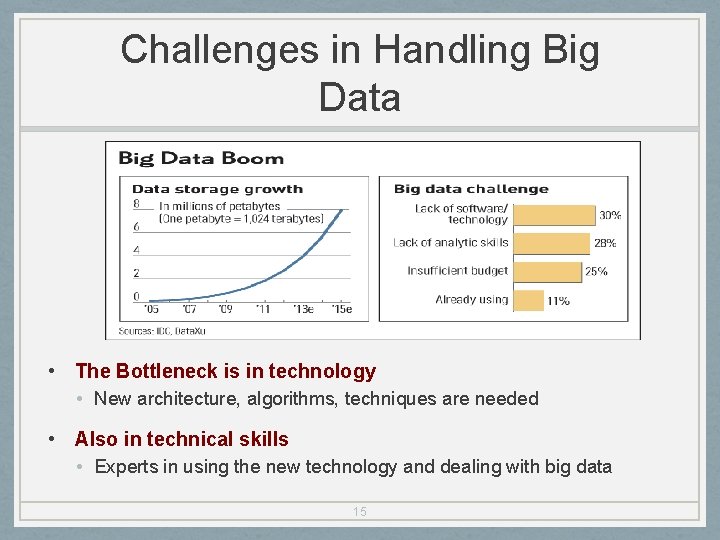
Challenges in Handling Big Data • The Bottleneck is in technology • New architecture, algorithms, techniques are needed • Also in technical skills • Experts in using the new technology and dealing with big data 15
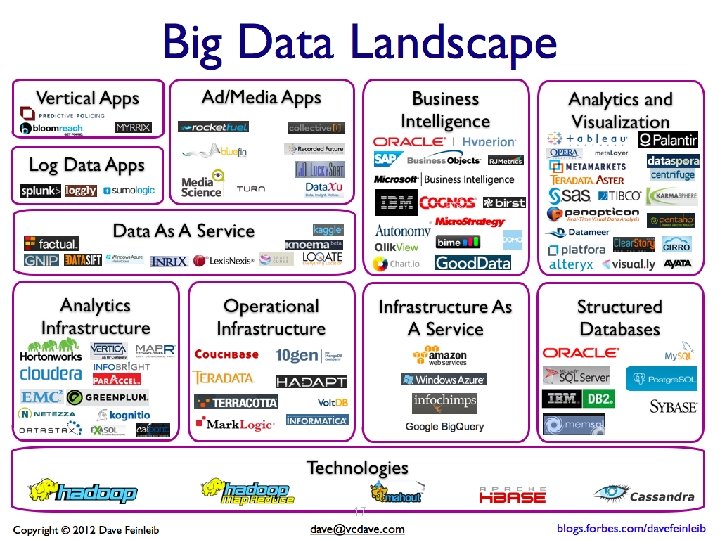
What Technology Do We Have For Big Data ? ? 16
17
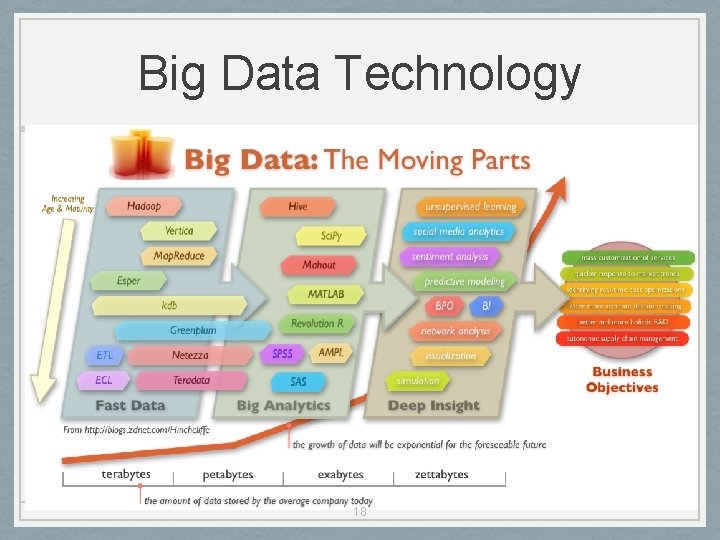
Big Data Technology 18
What You Will Learn… • We focus on Hadoop/Map. Reduce technology • Learn the platform (how it is designed and works) • How big data are managed in a scalable, efficient way • Learn writing Hadoop jobs in different languages • Programming Languages: Java, C, Python • High-Level Languages: Apache Pig, Hive • Learn advanced analytics tools on top of Hadoop • RHadoop: Statistical tools for managing big data • Mahout: Data mining and machine learning tools over big data • Learn state-of-art technology from recent research papers • Optimizations, indexing techniques, and other extensions to Hadoop 19
What You Will Learn… • Distributed Database Systems • Scalable Data Mining and Analytics 20
- Slides: 20