
BIG 6 RESEARCH How do I find the
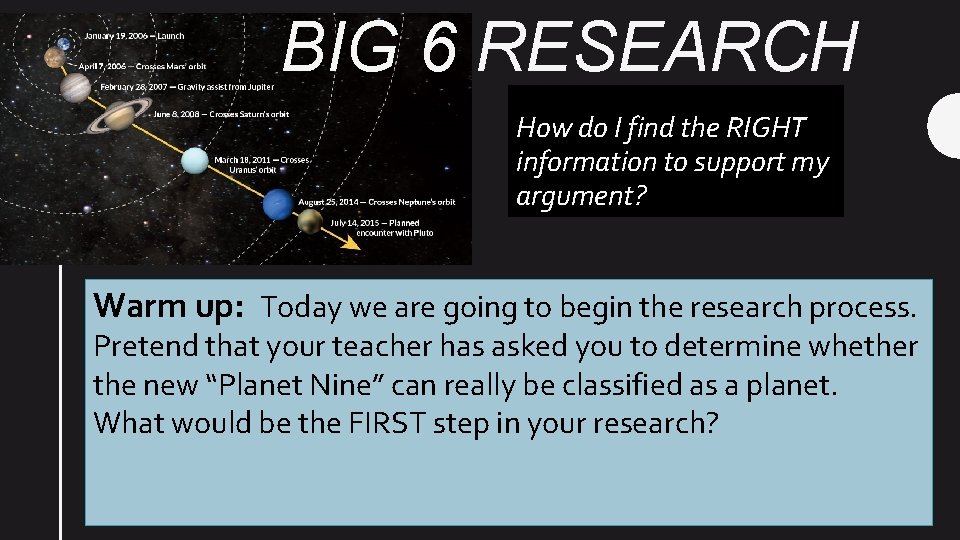
BIG 6 RESEARCH How do I find the RIGHT information to support my argument? Warm up: Today we are going to begin the research process. Pretend that your teacher has asked you to determine whether the new “Planet Nine” can really be classified as a planet. What would be the FIRST step in your research?
1. Task Definition: • Define the problem • Identify the information needed.
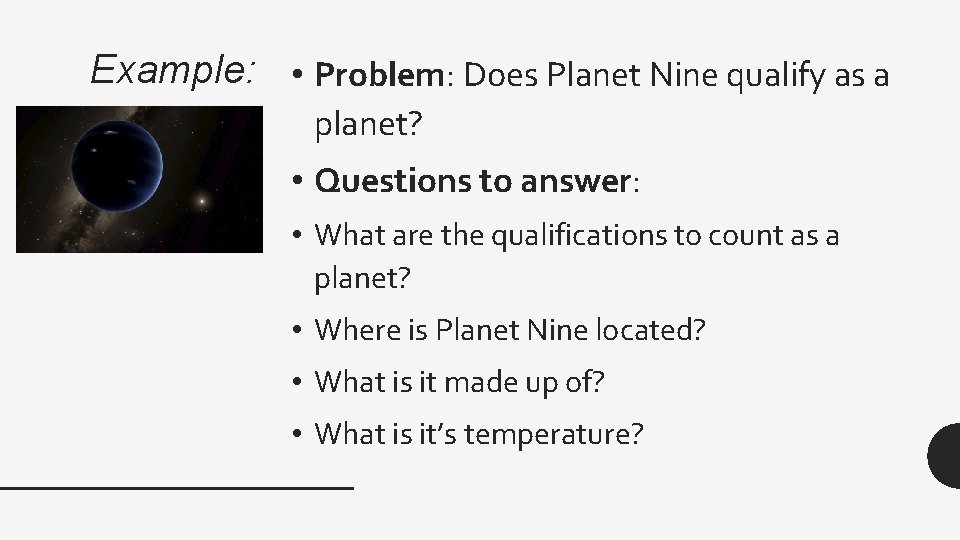
Example: • Problem: Does Planet Nine qualify as a planet? • Questions to answer: • What are the qualifications to count as a planet? • Where is Planet Nine located? • What is it made up of? • What is it’s temperature?
Your turn! 1. Identify your topic: 2. What is your task? 3. What questions need to be answered? (These may change as you conduct research)
2. Information seeking strategies: • Brainstorm all possible sources. • Select the best source.
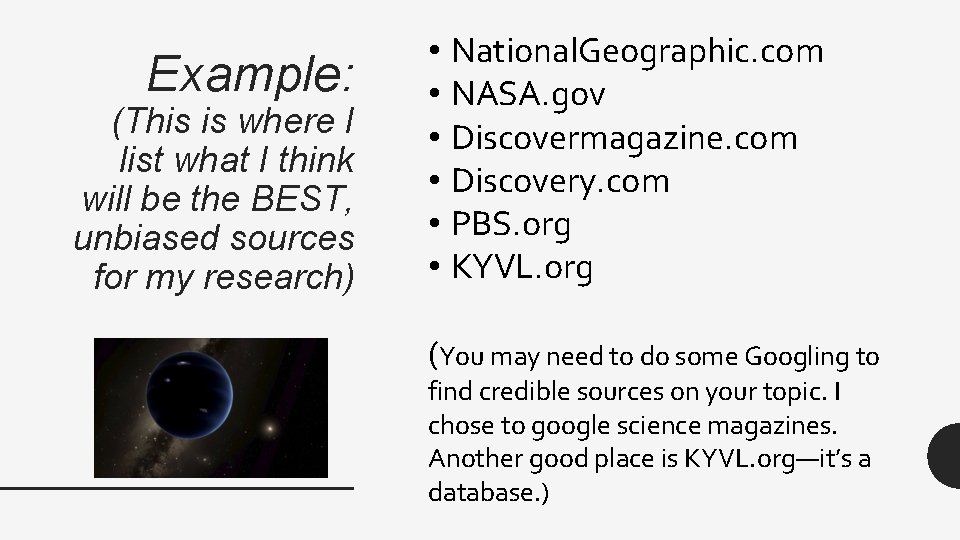
Example: (This is where I list what I think will be the BEST, unbiased sources for my research) • National. Geographic. com • NASA. gov • Discovermagazine. com • Discovery. com • PBS. org • KYVL. org (You may need to do some Googling to find credible sources on your topic. I chose to google science magazines. Another good place is KYVL. org—it’s a database. )
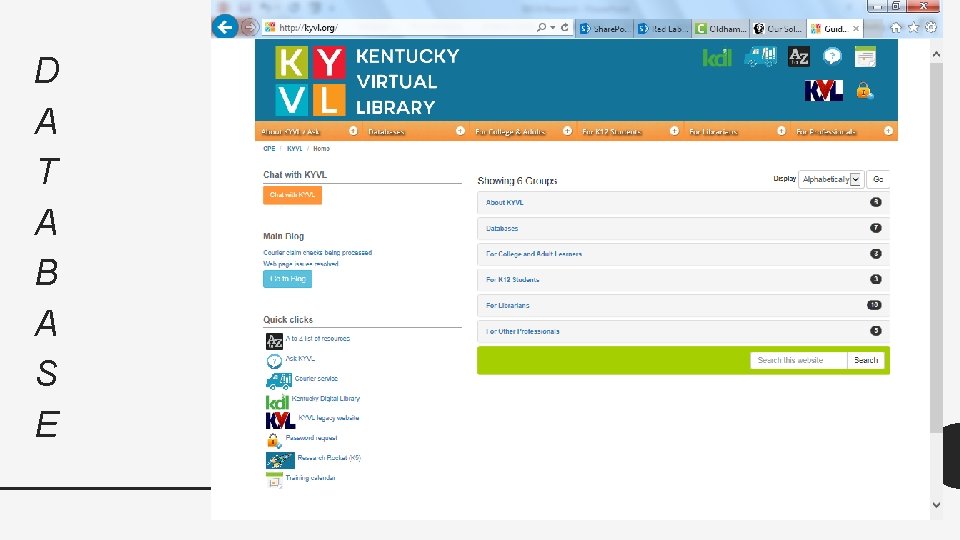
D A T A B A S E
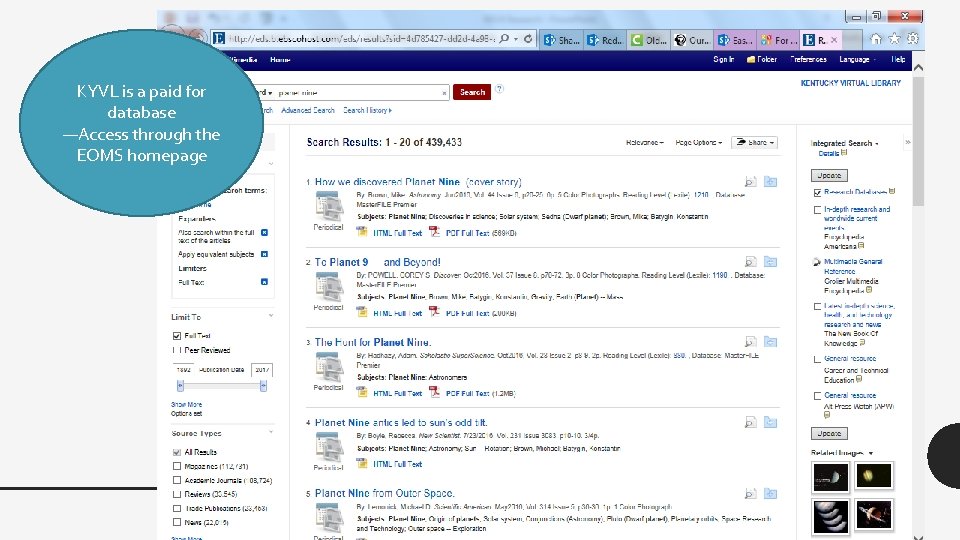
KYVL is a paid for database —Access through the EOMS homepage
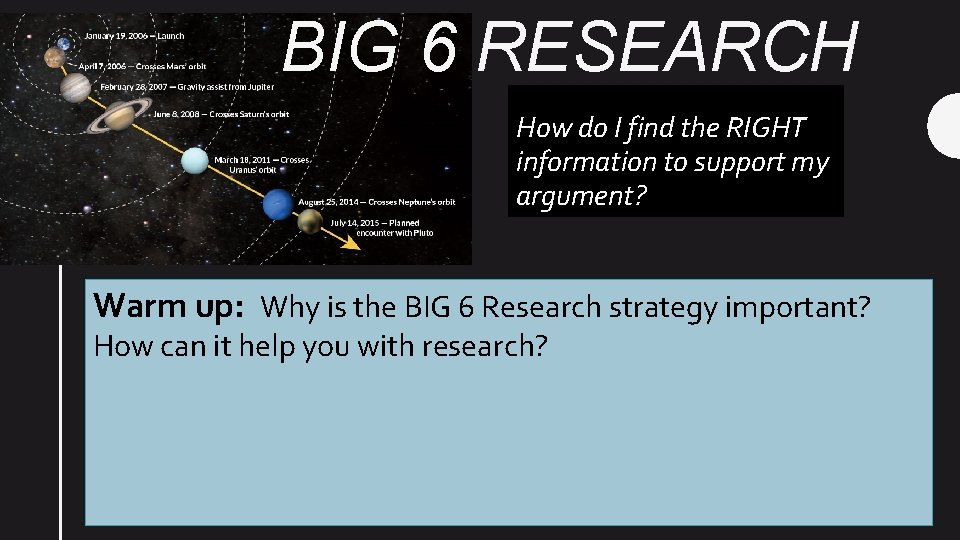
BIG 6 RESEARCH How do I find the RIGHT information to support my argument? Warm up: Why is the BIG 6 Research strategy important? How can it help you with research?
3. Location and Access: • Locate sources. • Find information within sources. Rem e look mber to b out may e on for indi bias, the inva cate a which fake lid s our ce. or
4. Use of information: • Engage (e. g. , read, hear, view). • Extract relevant information.
5. Synthesis: • Organize information from multiple sources. • Present the result.
6. Evaluation: • Judge the result (effectiveness). • Judge the process (efficiency)
- Slides: 13