
Bibliometrics Workshop For the 2020 NRF rating application
Bibliometrics Workshop For the 2020 NRF rating application
Objectives ◦ To introduce available bibliometric services ◦ To create awareness of indicators for specific research evaluation attributes and ◦ To highlight the strength and weaknesses of indicators ◦ To emphasise the role of researcher identifiers and profiles
Bibliometric services ◦ The service enables you to showcase research excellence and impact using bibliometric indicators. ◦ Bibliometric indicators are quantitative metrics ◦ Publication count ◦ Number of citations received ◦ And more
Bibliometric services Assistance is provided in ◦ setting up author IDs and profiles ◦ collating relevant metrics and generate evidence of research impact reports ◦ interpret metrics to motivate for applications
Bibliometric indicators (metrics)
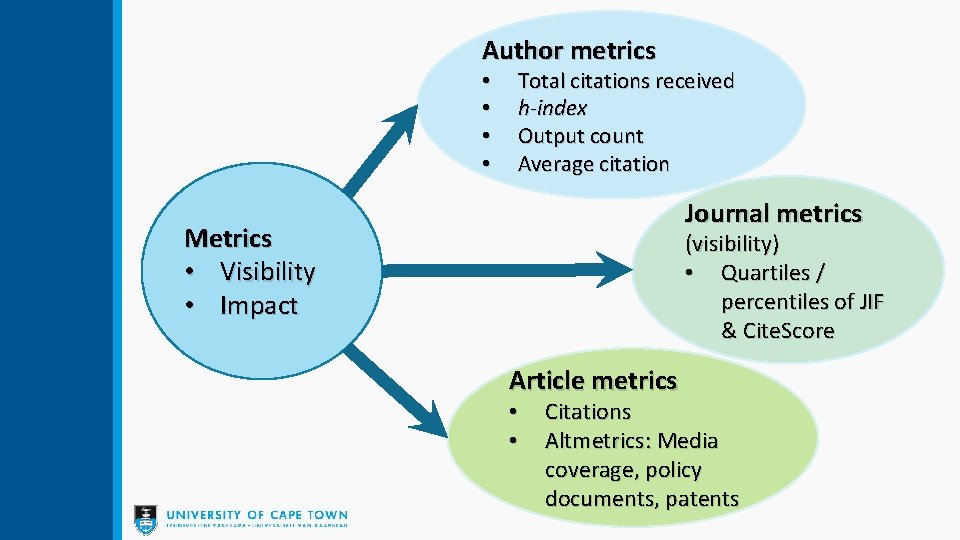
Author metrics • • Total citations received h-index Output count Average citation Journal metrics Metrics • Visibility • Impact (visibility) • Quartiles / percentiles of JIF & Cite. Score Article metrics • • Citations Altmetrics: Media coverage, policy documents, patents
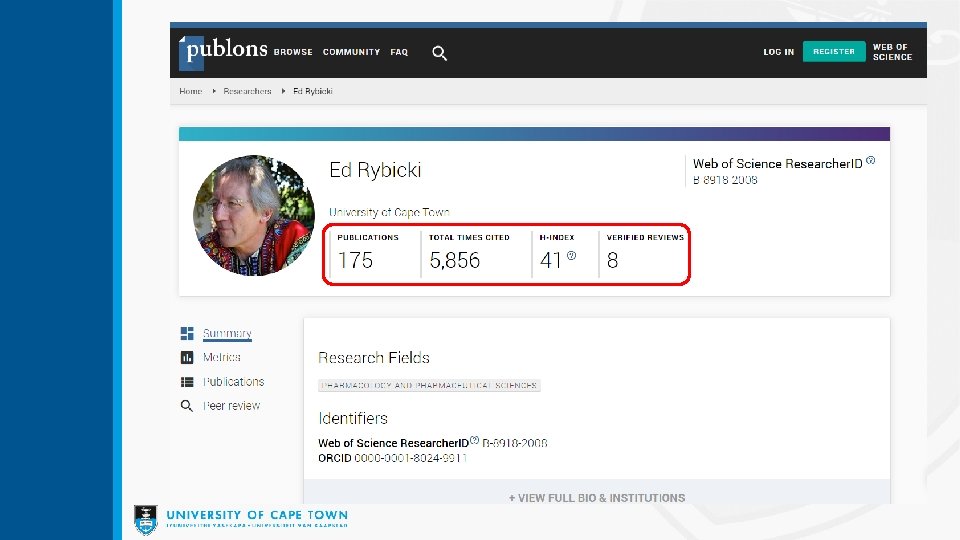
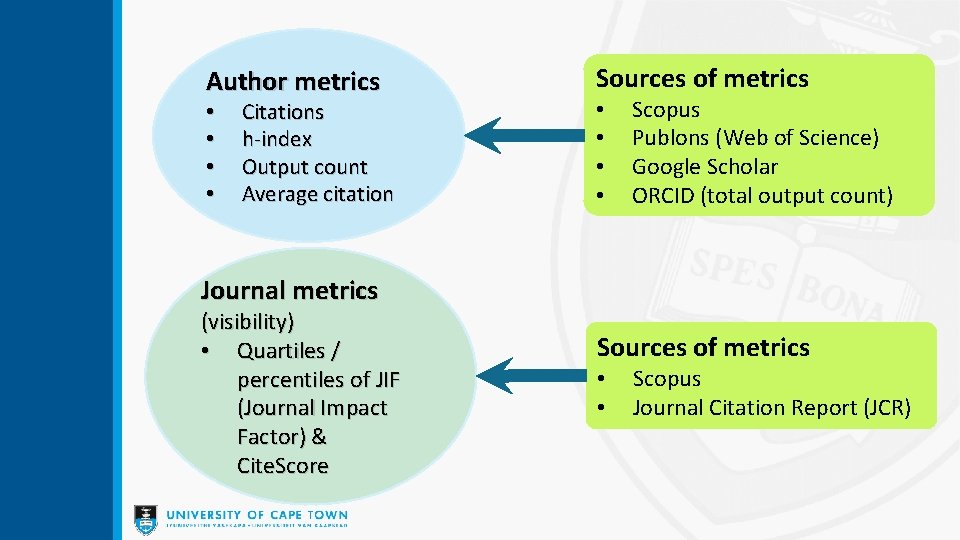
Author metrics • • Citations h-index Output count Average citation Sources of metrics • • Scopus Publons (Web of Science) Google Scholar ORCID (total output count) Journal metrics (visibility) • Quartiles / percentiles of JIF (Journal Impact Factor) & Cite. Score Sources of metrics • • Scopus Journal Citation Report (JCR)
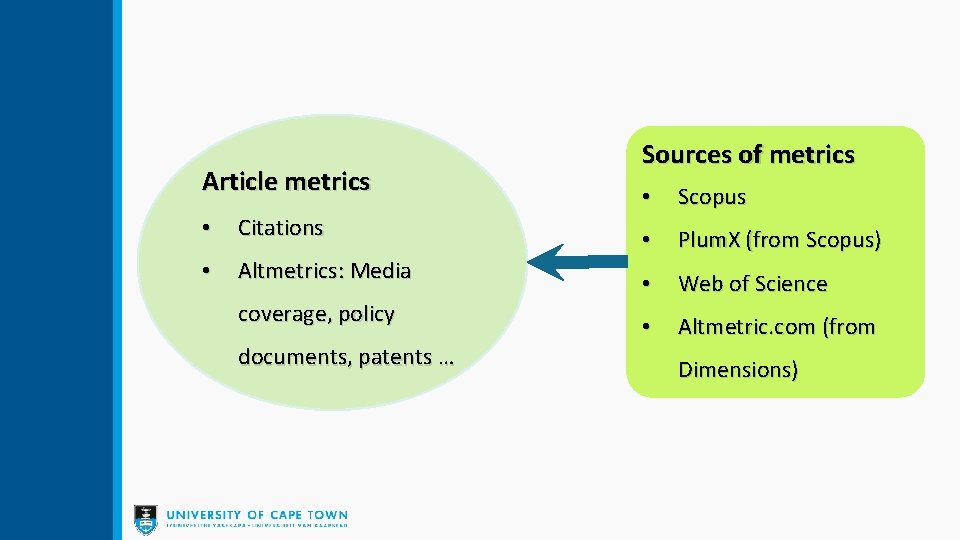
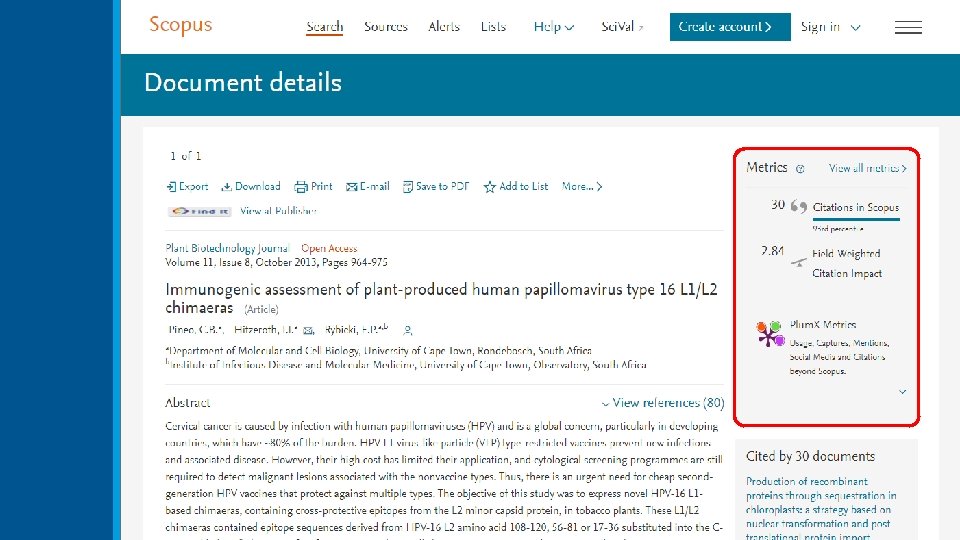
Article metrics Sources of metrics • Scopus • Citations • Plum. X (from Scopus) • Altmetrics: Media • Web of Science coverage, policy • Altmetric. com (from documents, patents … Dimensions)
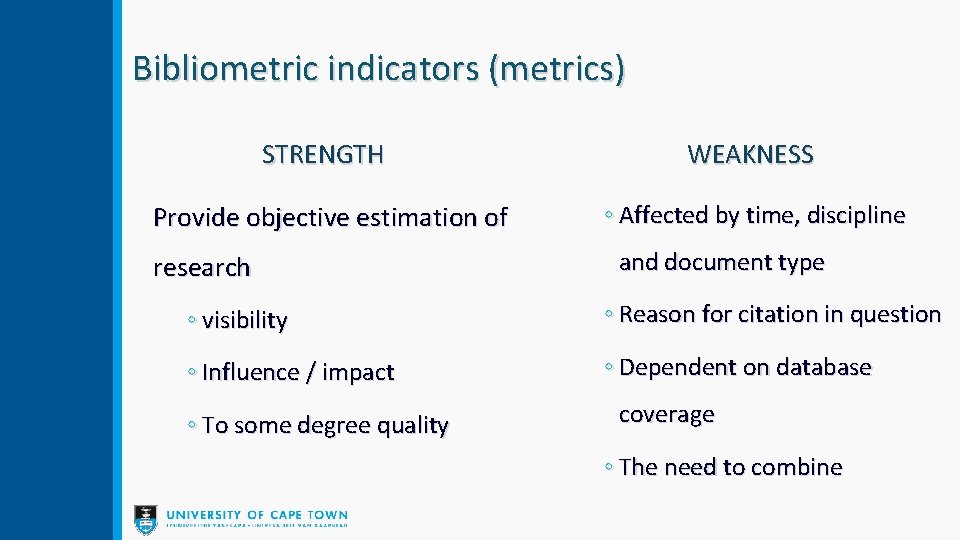
Bibliometric indicators (metrics) STRENGTH WEAKNESS Provide objective estimation of ◦ Affected by time, discipline research and document type ◦ visibility ◦ Reason for citation in question ◦ Influence / impact ◦ Dependent on database ◦ To some degree quality coverage ◦ The need to combine
Research evaluation attributes & metrics
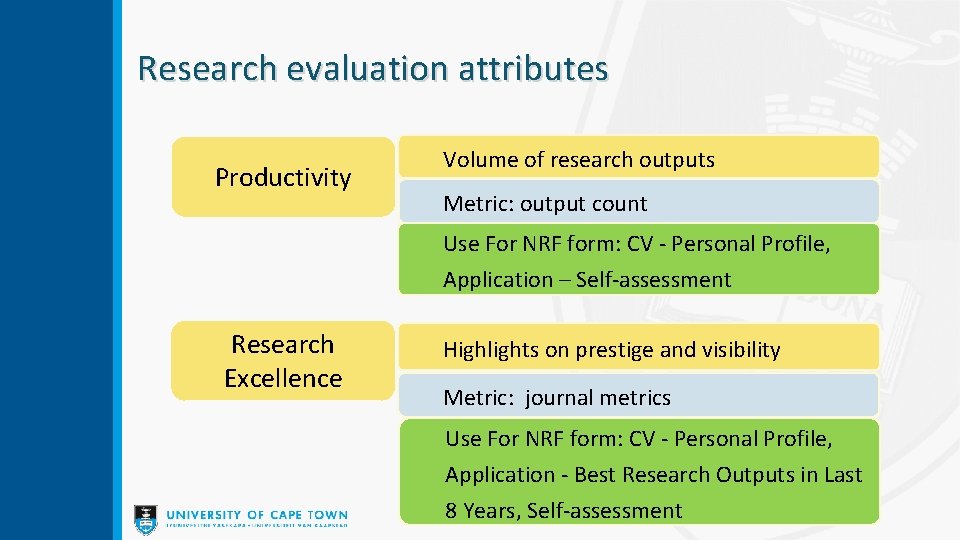
Research evaluation attributes Productivity Volume of research outputs Metric: output count Use For NRF form: CV - Personal Profile, Application – Self-assessment Research Excellence Highlights on prestige and visibility Metric: journal metrics Use For NRF form: CV - Personal Profile, Application - Best Research Outputs in Last 8 Years, Self-assessment
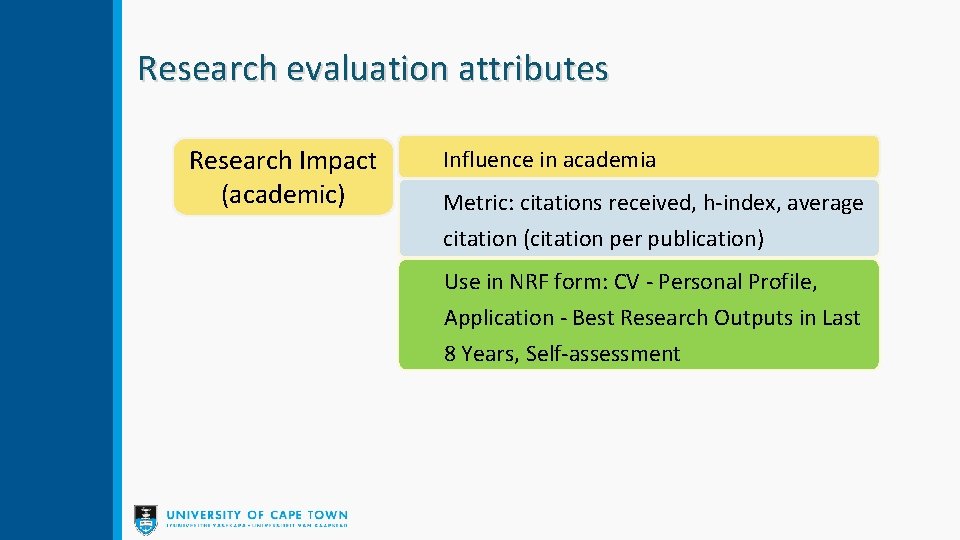
Research evaluation attributes Research Impact (academic) Influence in academia Metric: citations received, h-index, average citation (citation per publication) Use in NRF form: CV - Personal Profile, Application - Best Research Outputs in Last 8 Years, Self-assessment
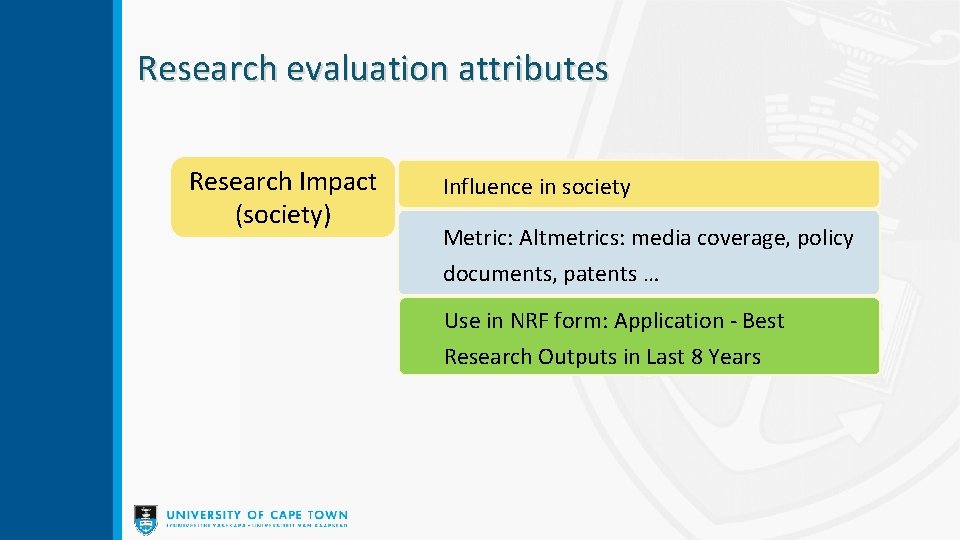
Research evaluation attributes Research Impact (society) Influence in society Metric: Altmetrics: media coverage, policy documents, patents … Use in NRF form: Application - Best Research Outputs in Last 8 Years
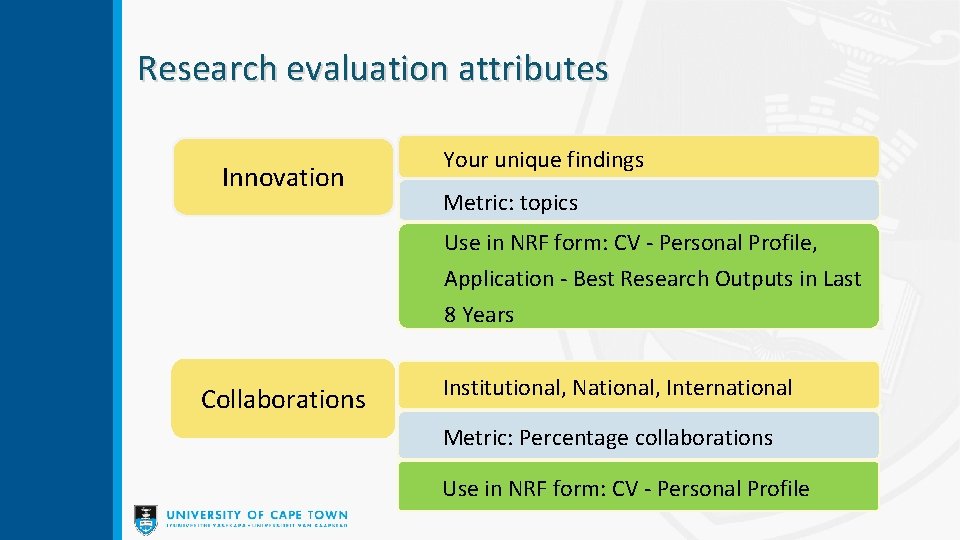
Research evaluation attributes Innovation Your unique findings Metric: topics Use in NRF form: CV - Personal Profile, Application - Best Research Outputs in Last 8 Years Collaborations Institutional, National, International Metric: Percentage collaborations Use in NRF form: CV - Personal Profile
The role of author identifiers and profiles
What is the purpose of Author IDs? To help researchers measure the impact of their research To get the necessary credit for all their research outputs
Why do researchers need Author IDs? ◦ Databases have different identification numbers/systems ◦ Funding agents’ requirements ◦ Researcher changing institution ◦ Publishing under variations of your name
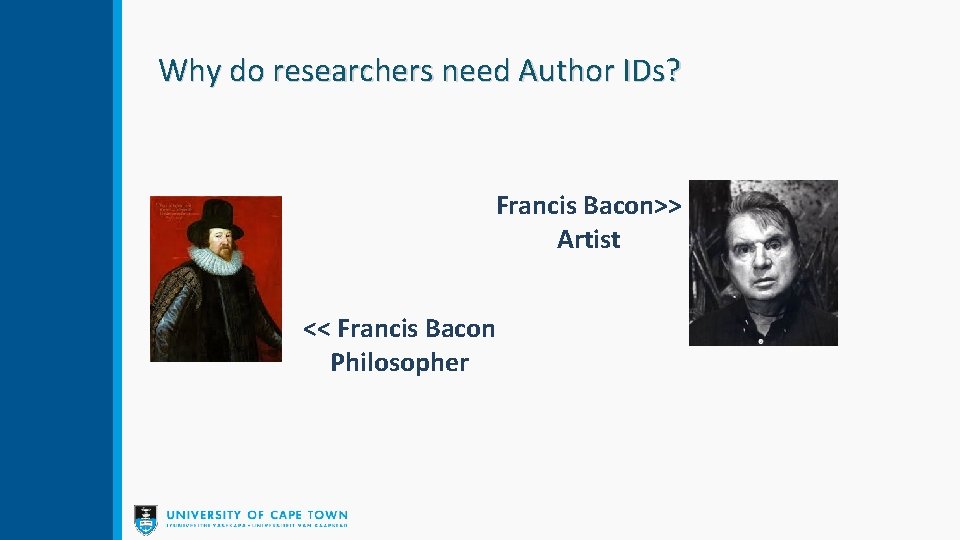
Why do researchers need Author IDs? Francis Bacon>> Artist << Francis Bacon Philosopher
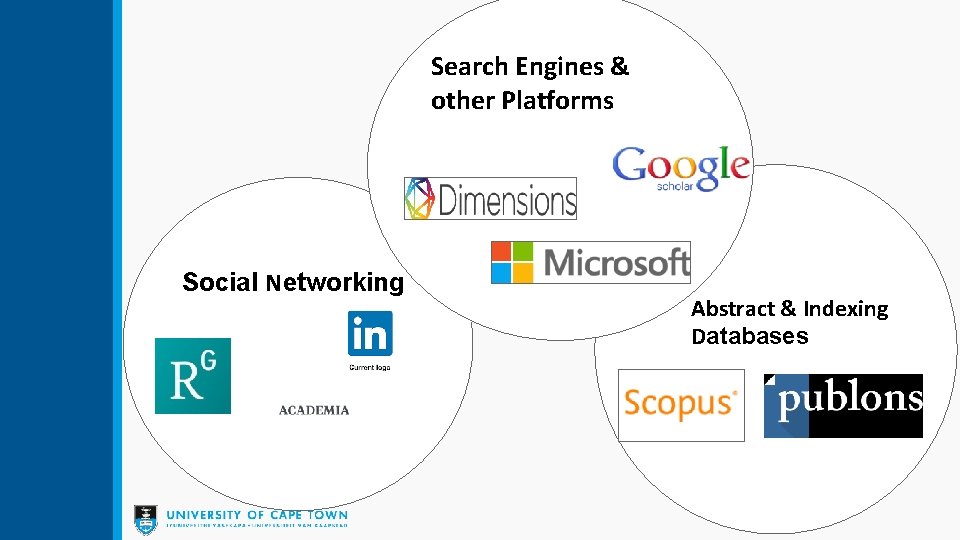
Search Engines & other Platforms Social Networking Abstract & Indexing Databases
Who creates AUTHOR IDs? Author IDs created by the publisher: ◦ Scopus ID Author IDs to be created by the author include: ◦ ORCID (Open Researcher and Contributor ID) ◦ Publons (Clarivate Analytics: Web of Science) ◦ Google Scholar Profile
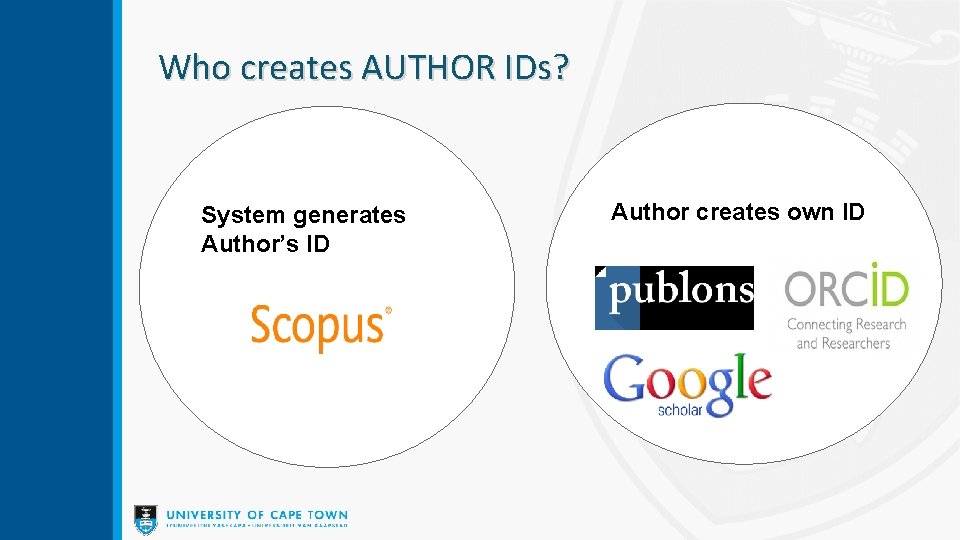
Who creates AUTHOR IDs? System generates Author’s ID Author creates own ID
ORCID - (Open Researcher and Contributor ID)
What is an ORCID? ◦ A persistent digital identifier that distinguishes researchers from each other ◦ ORCID is not a social media platform, nor a profile system, nor an online CV or content repository, but we connect with many other tools that fulfill these functions.
What is an ORCID? ◦ Often a requirement to submit manuscripts for publication ◦ Supported by research organisations and funders ◦ 7, 302, 823 ORCID i. Ds and counting (16/10/2019)
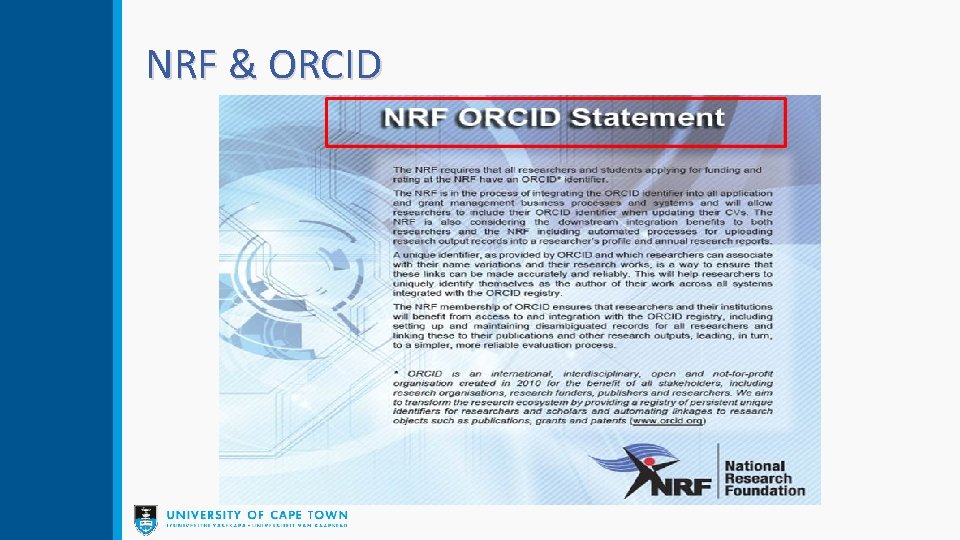
NRF & ORCID
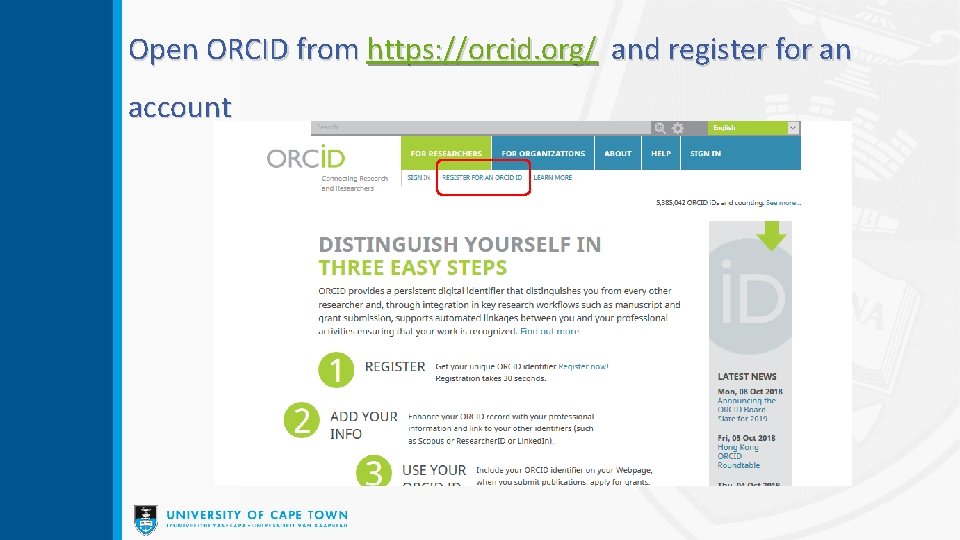
Open ORCID from https: //orcid. org/ and register for an account
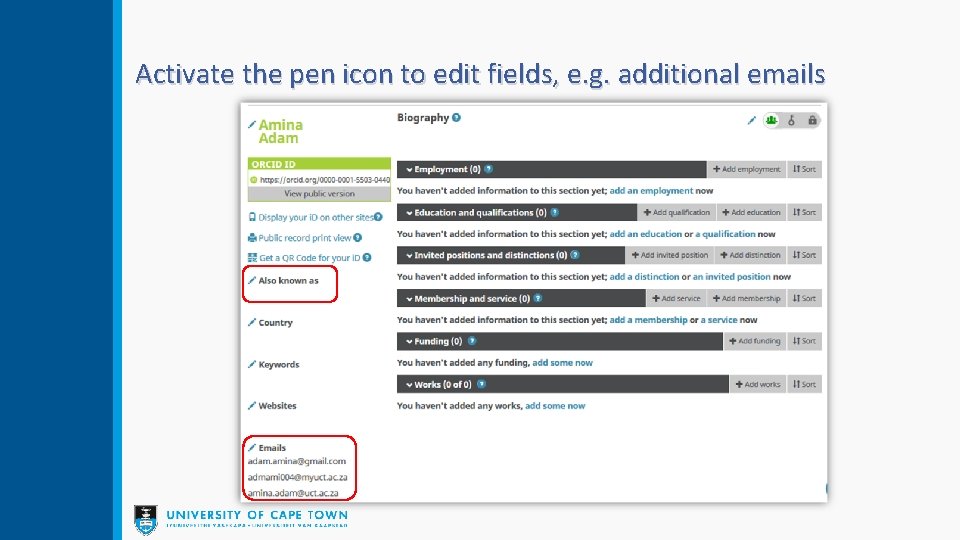
Activate the pen icon to edit fields, e. g. additional emails
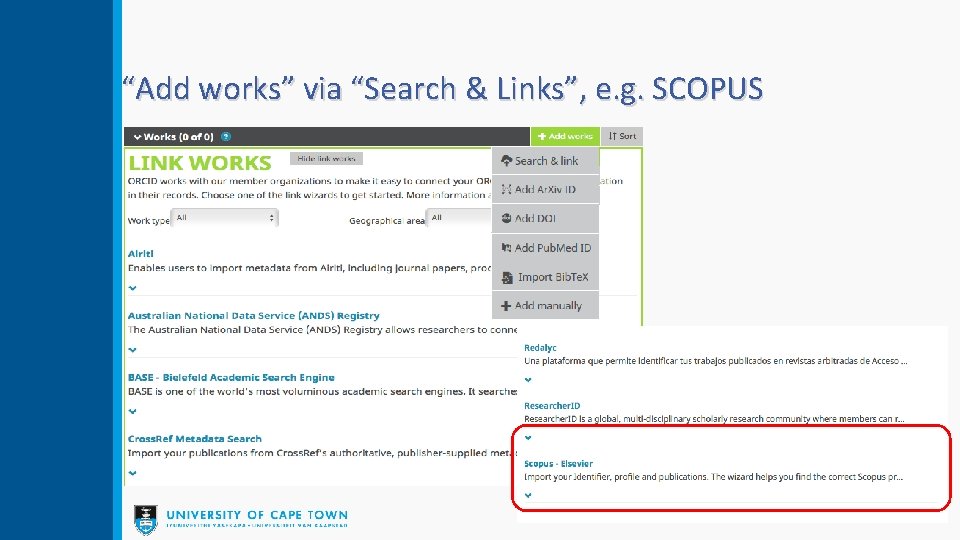
“Add works” via “Search & Links”, e. g. SCOPUS

Scopus ID
Scopus ID Scopus uses algorithmic data processing to group papers to an author’s profile based on: name, email, affiliation, subject area, citations and co-authors.
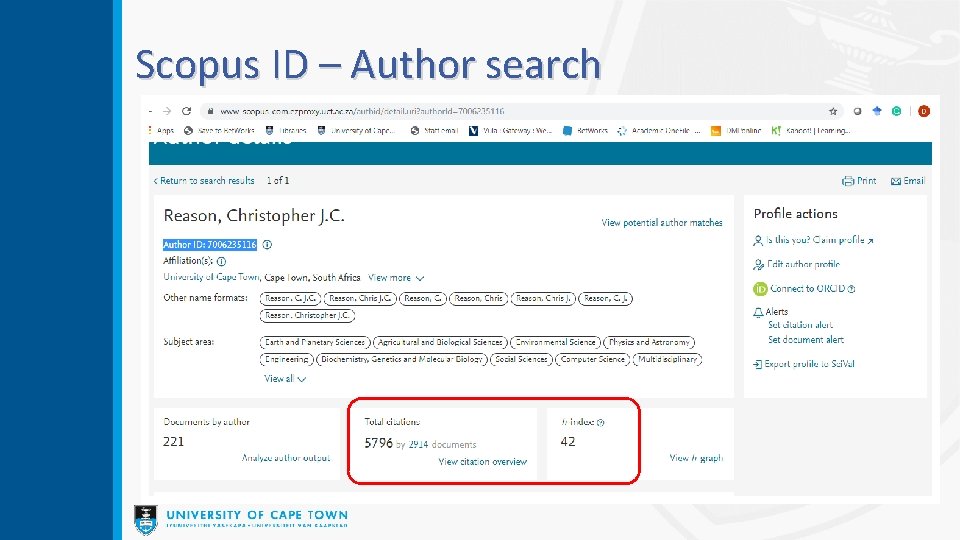
Scopus ID – Author search
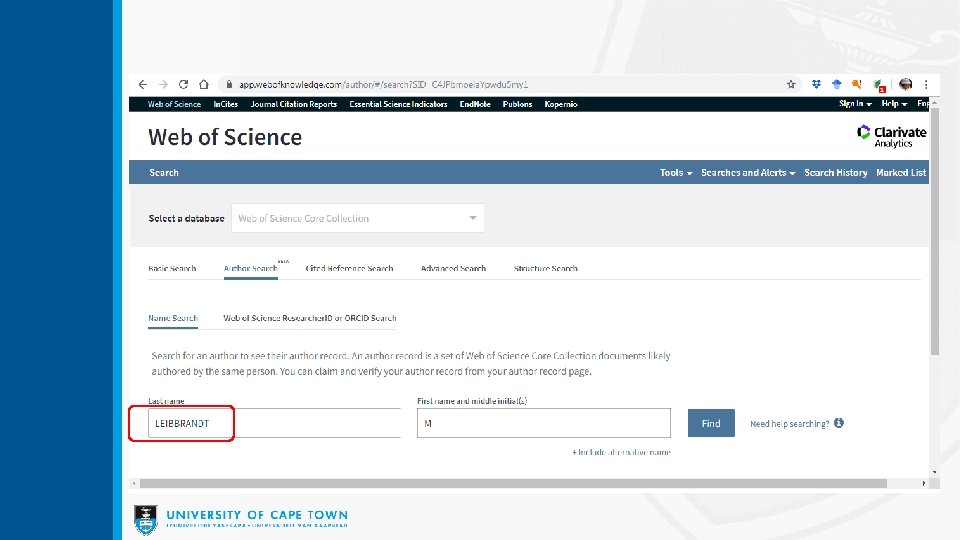
Web of Science – Publons ID
Web of Science/Clarivate Analytics: Publons ID ◦ A unique identifier that connects your works across the Web of Science ecosystem: Web of Science, Publons, and Endnote, ◦ If you previously had a Researcher. ID account, or already have an account with one of the above products, please sign in with your credentials for that service to start using Publons.
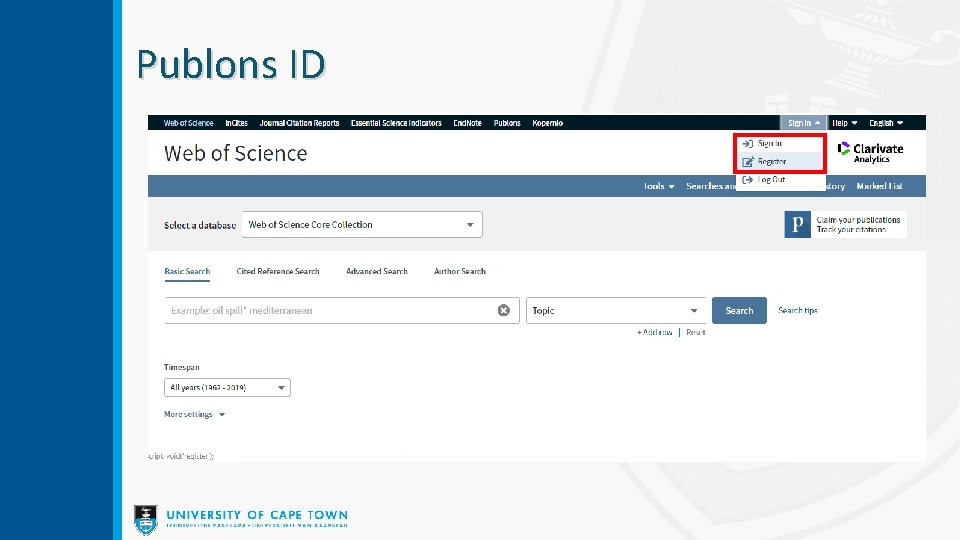
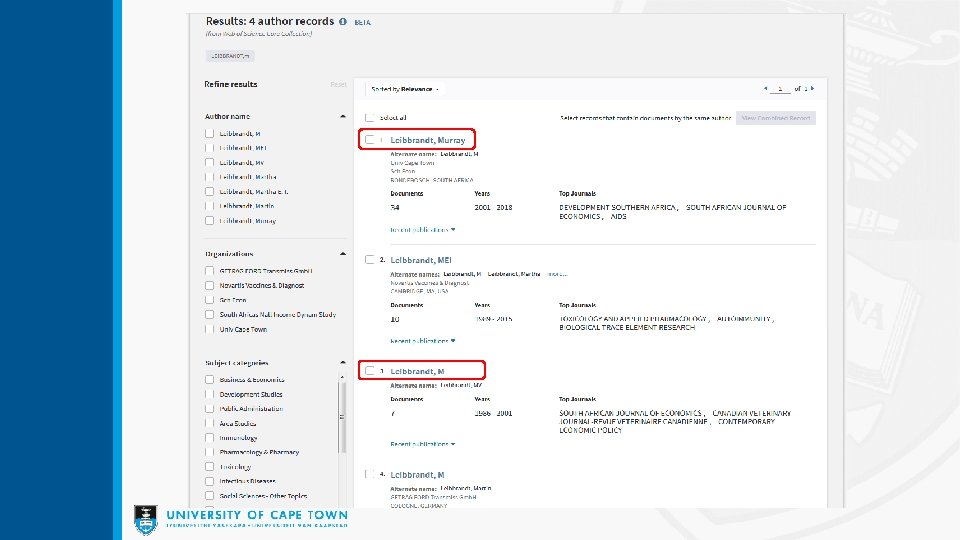
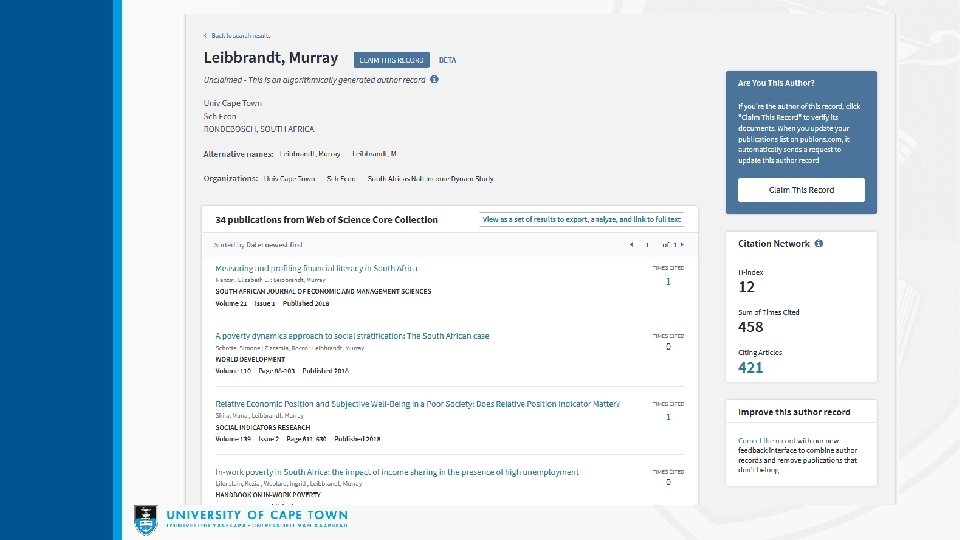
Publons ID
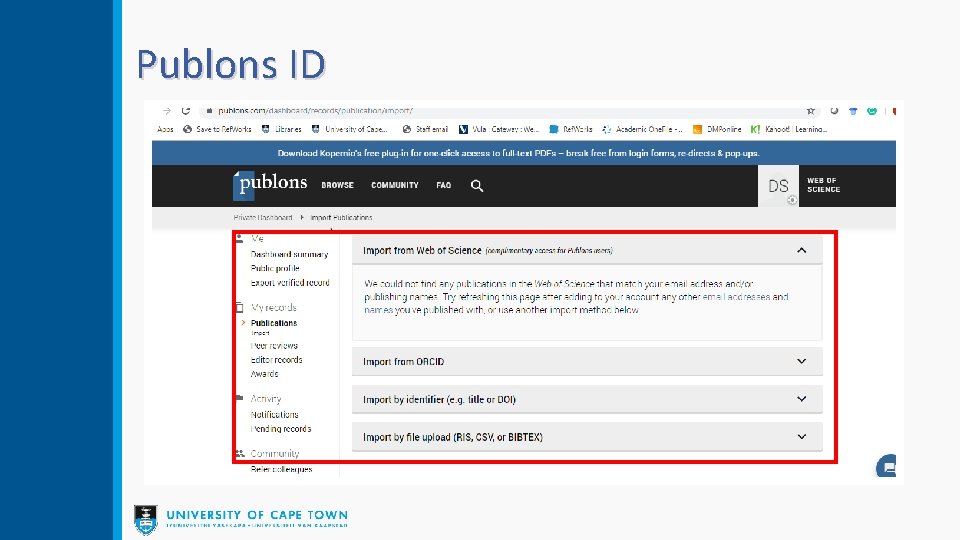
Publons ID
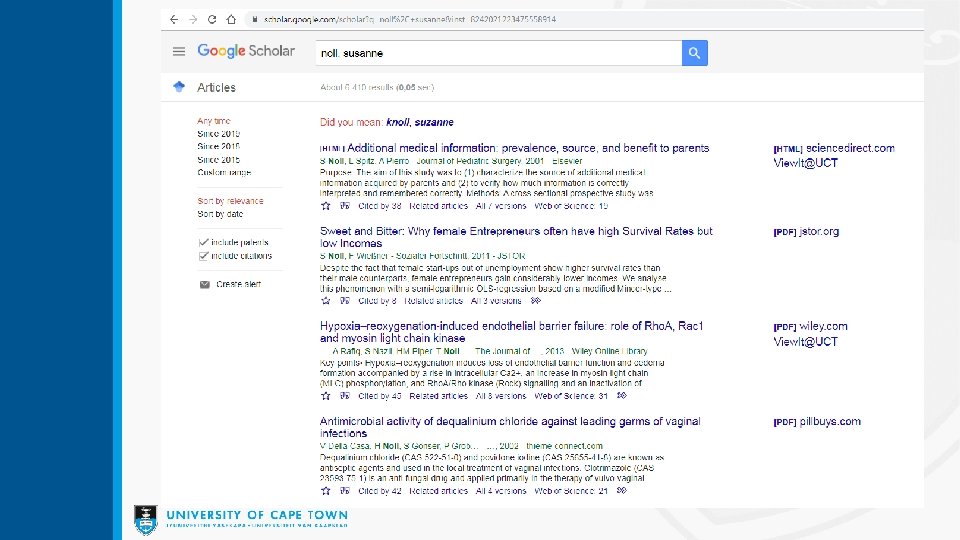
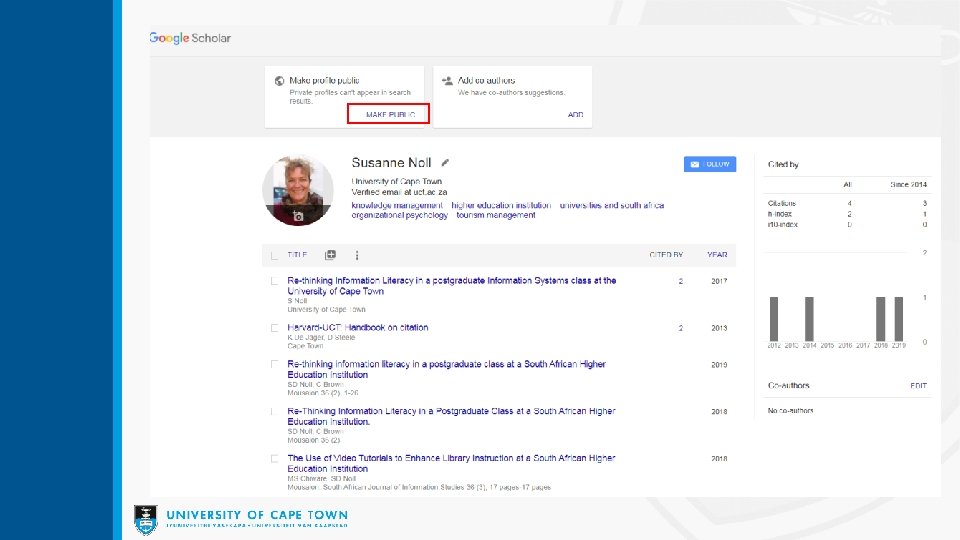
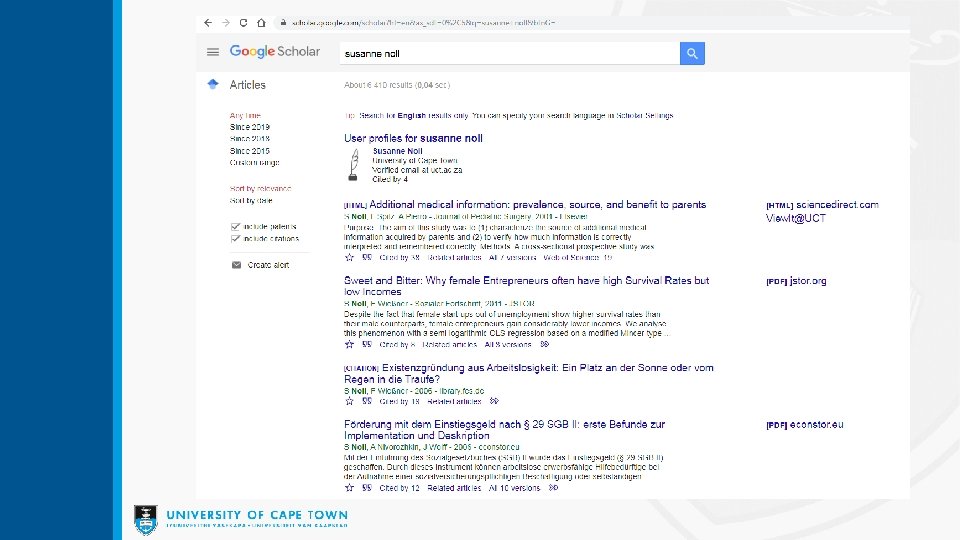
Google Scholar - profile
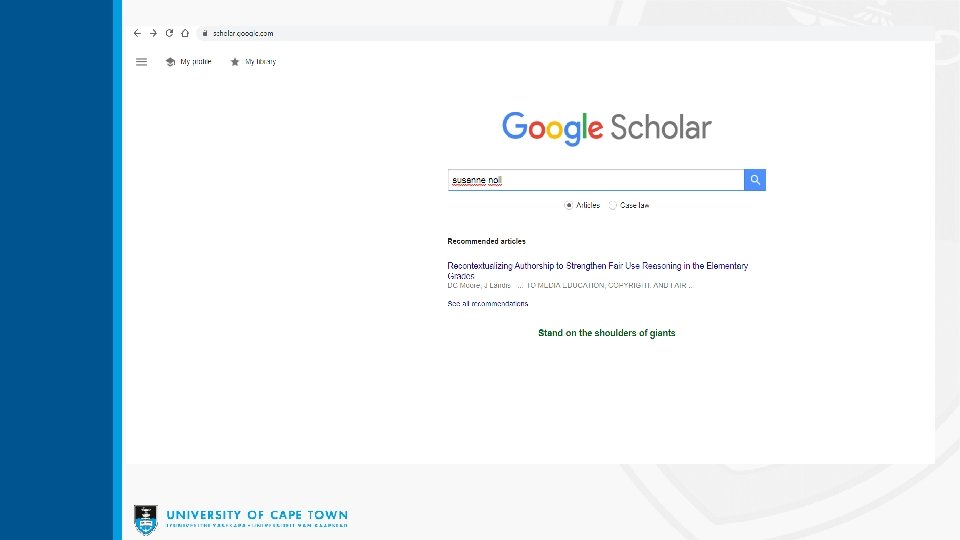
Google Scholar
Google Scholar
Possible issues: what you might encounter
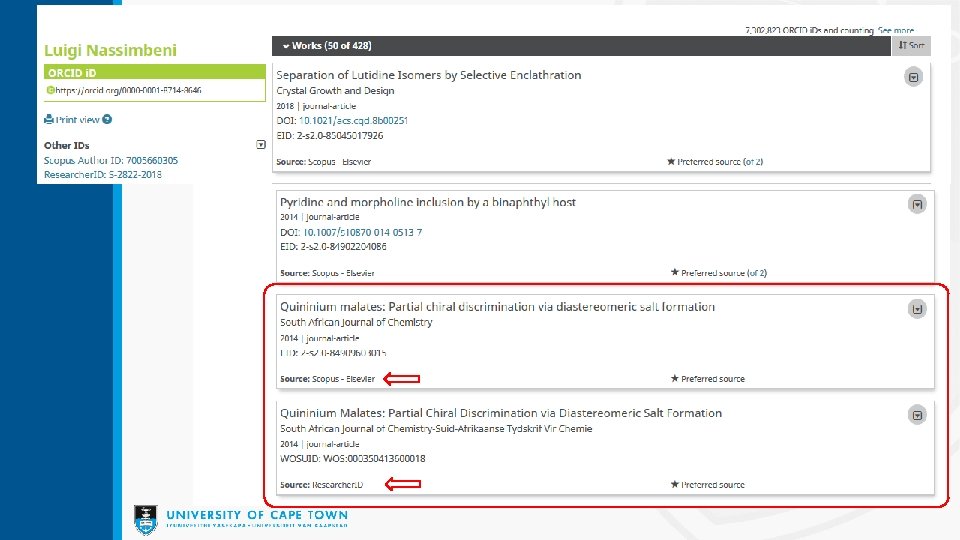
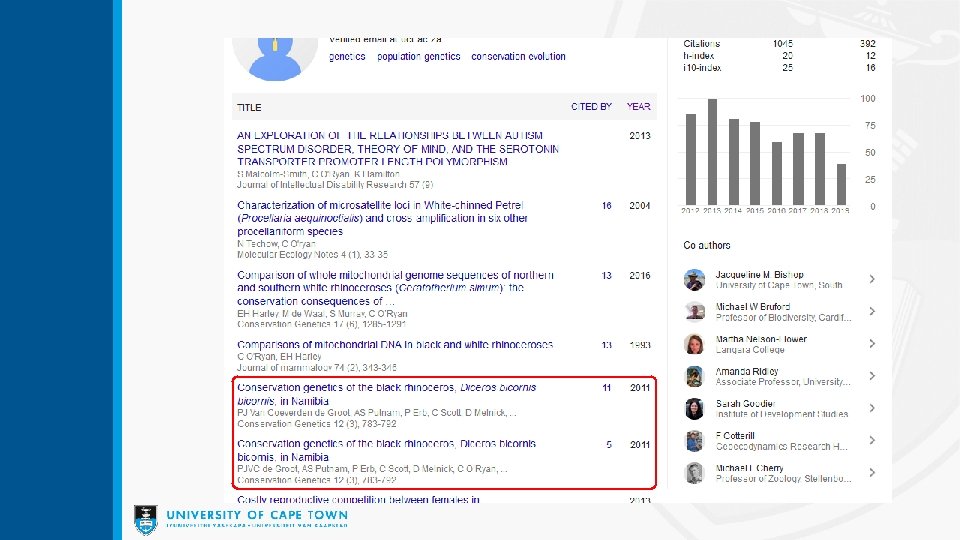
Possible issues : what you might encounter Duplication of profiles Missing publications Duplicate publications Inaccurate publication list Private and public profiles on GS
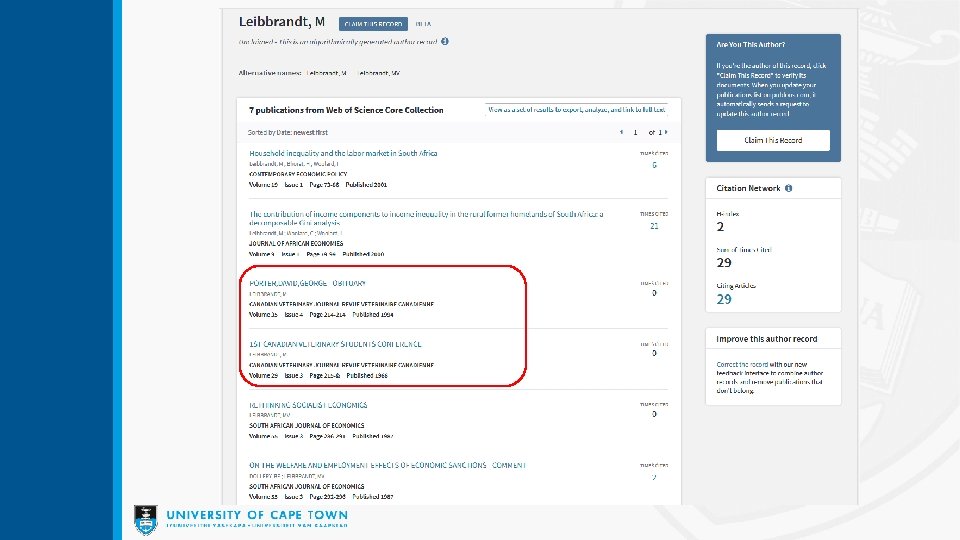
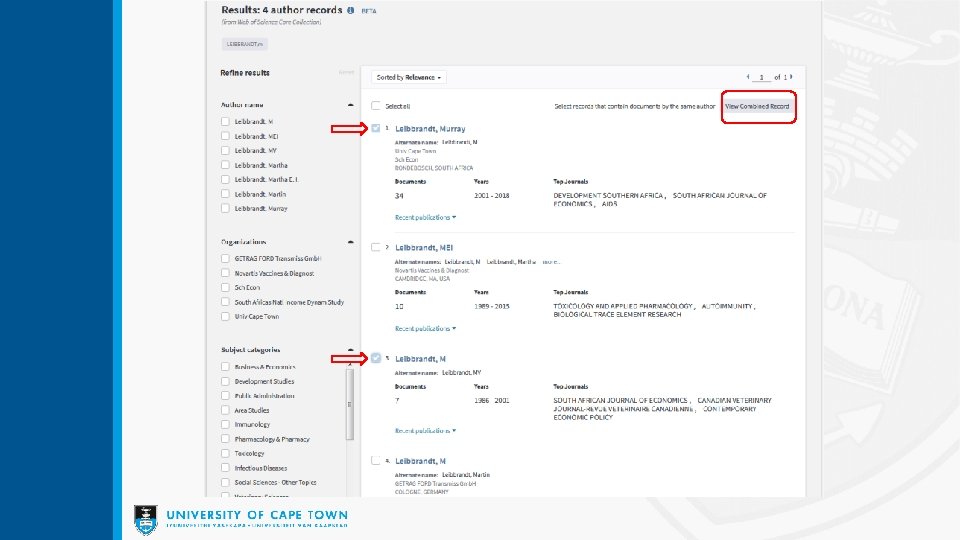
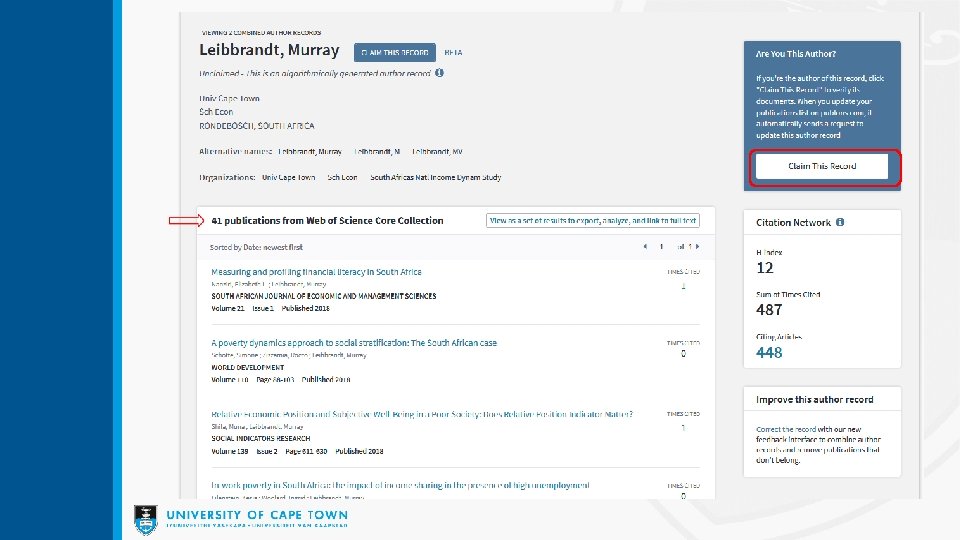
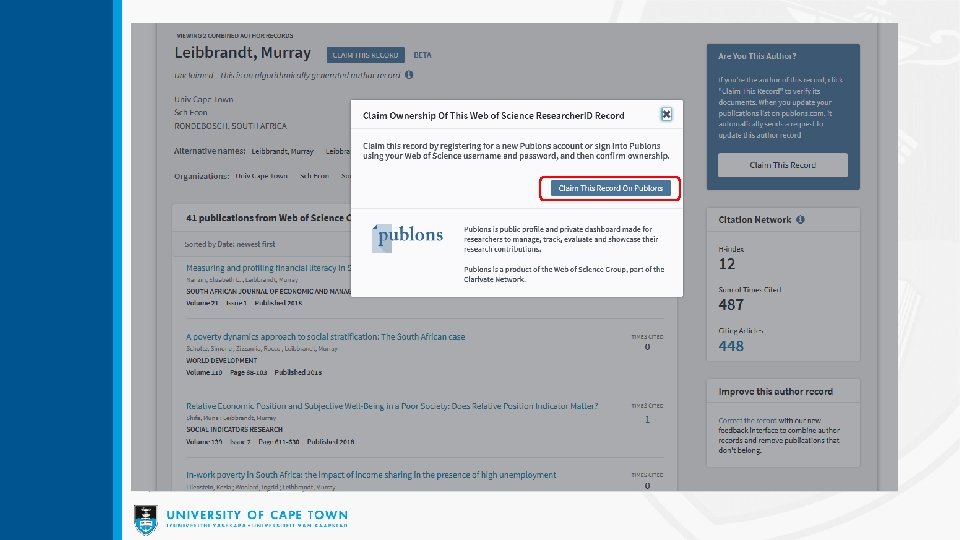
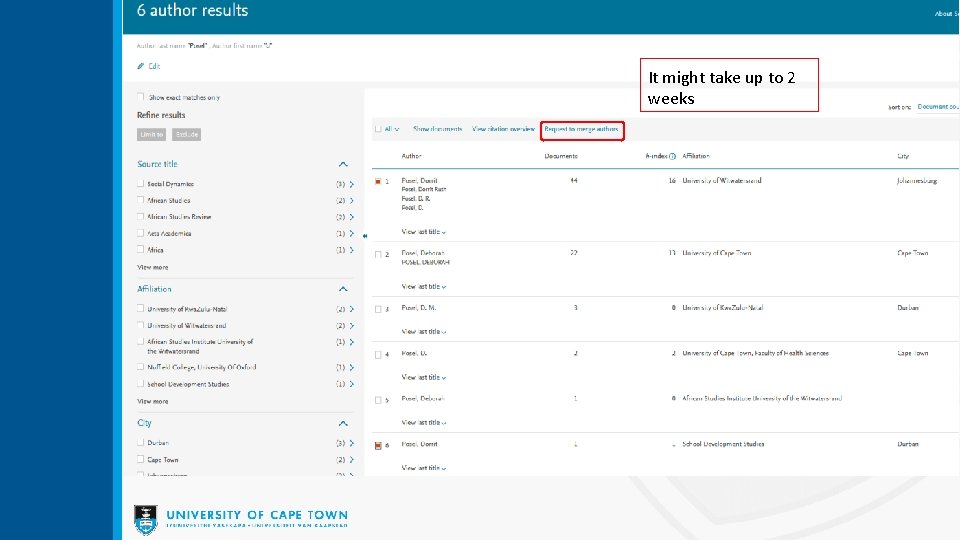
It might take up to 2 weeks
Need more help? Contact your subject librarian via: http: //www. lib. uct. ac. za/lib/su via: bject-librarians

Thank you UCT Libraries Bibliometrics Team
- Slides: 58