
Biblical Exegesis Document TX 004702 What is Exegesis
Biblical Exegesis Document #: TX 004702
What is Exegesis? • Exegesis comes from the Greek word exegeomai • Exegeomai translates as “to lead out of. ” © rasica / Shutterstock. com
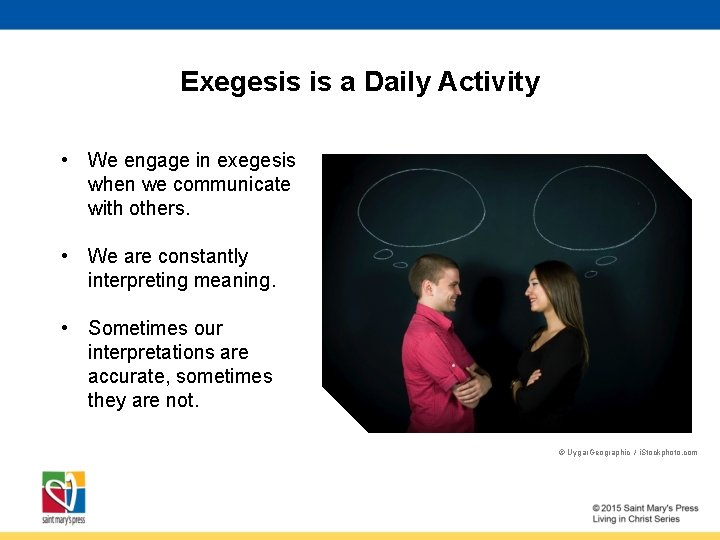
Exegesis is a Daily Activity • We engage in exegesis when we communicate with others. • We are constantly interpreting meaning. • Sometimes our interpretations are accurate, sometimes they are not. © Uygar. Geographic / i. Stockphoto. com
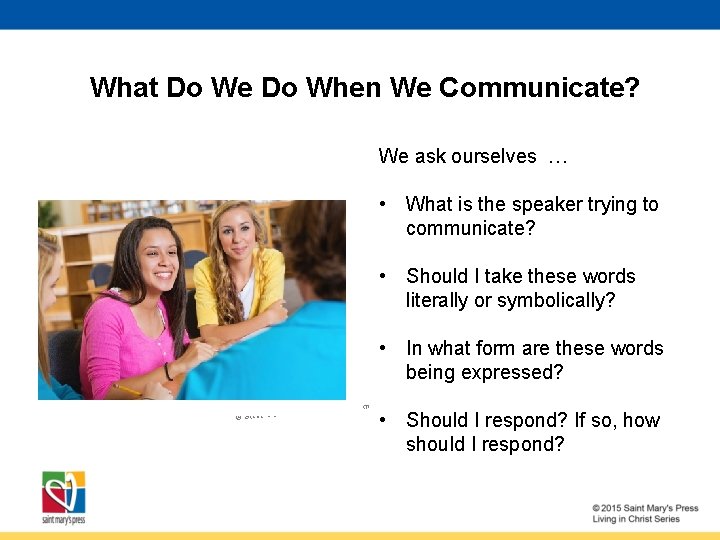
What Do We Do When We Communicate? We ask ourselves … • What is the speaker trying to communicate? • Should I take these words literally or symbolically? • In what form are these words being expressed? oto. com port / i. Stockph © Steve Deben • Should I respond? If so, how should I respond?
Analysis and Interpretation Questions Who? What? When? Why? Where? © art 4 all / Shutterstock. com
Methods of Biblical Exegesis There are three key methodologies of biblical exegesis: • Literary criticism • Socio-historical criticism • Ideological criticism © Pha tthanit / Shutt erstock. c om
Literary Criticism Literary criticism enables us to analyze a scriptural text by examining: • genre • plot • characters • symbolism © ninjaudom / Shutterstock. com
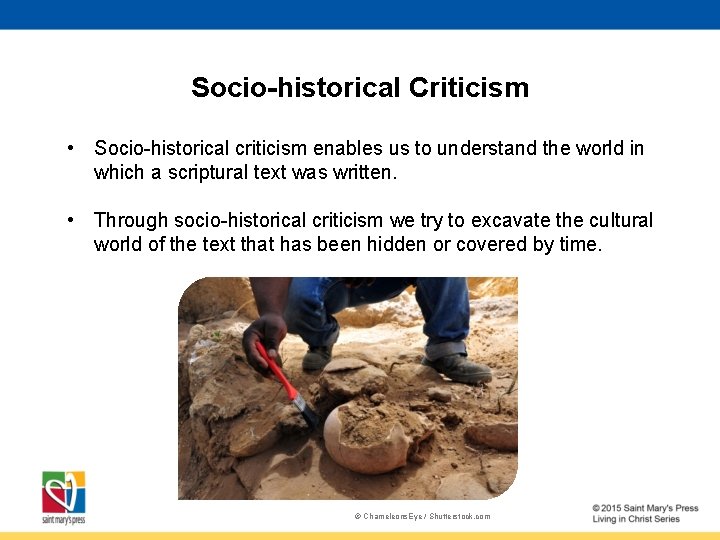
Socio-historical Criticism • Socio-historical criticism enables us to understand the world in which a scriptural text was written. • Through socio-historical criticism we try to excavate the cultural world of the text that has been hidden or covered by time. © Chameleons. Eye / Shutterstock. com
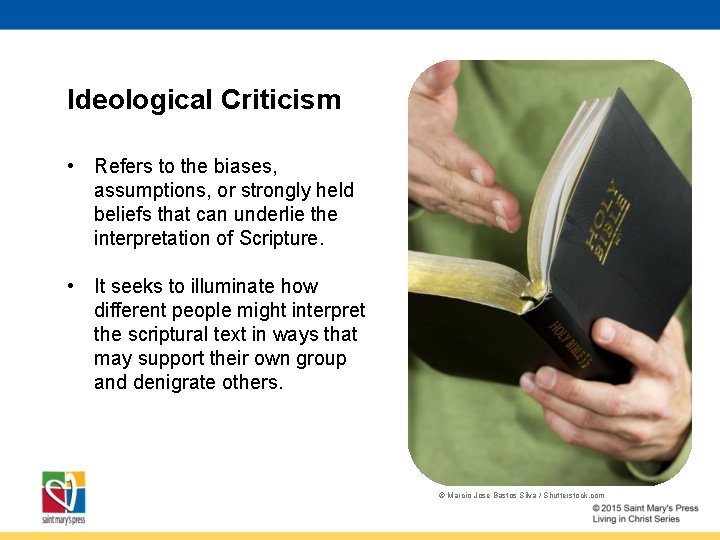
Ideological Criticism • Refers to the biases, assumptions, or strongly held beliefs that can underlie the interpretation of Scripture. • It seeks to illuminate how different people might interpret the scriptural text in ways that may support their own group and denigrate others. © Marcio Jose Bastos Silva / Shutterstock. com
- Slides: 9