
BIAS IN RESEARCH DEFINITION Bias is defined as
BIAS IN RESEARCH
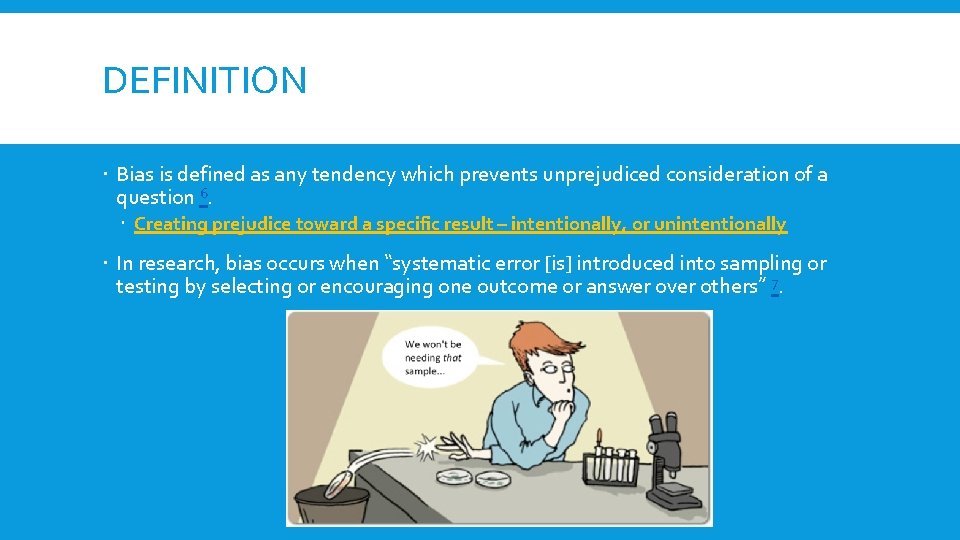
DEFINITION Bias is defined as any tendency which prevents unprejudiced consideration of a question 6. Creating prejudice toward a specific result – intentionally, or unintentionally In research, bias occurs when “systematic error [is] introduced into sampling or testing by selecting or encouraging one outcome or answer over others” 7.
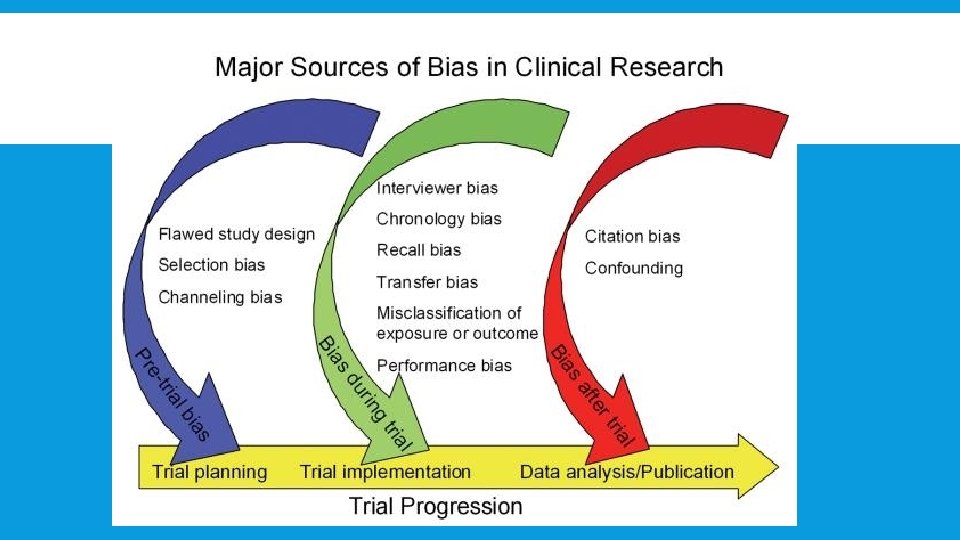
MORE ABOUT BIAS Bias can occur at any phase of research, including study design or data collection, as well as in the process of data analysis and publication (Figure 1).
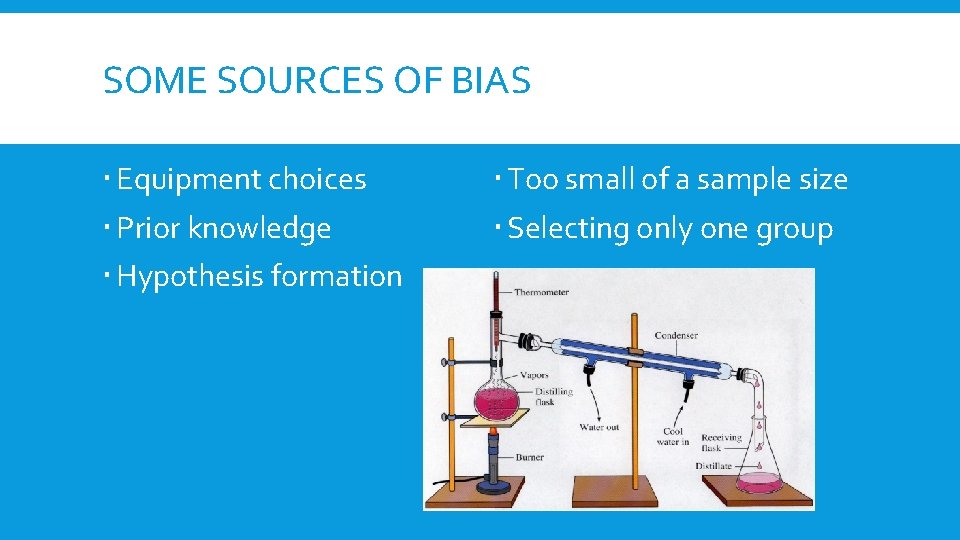
SOME SOURCES OF BIAS Equipment choices Prior knowledge Hypothesis formation Too small of a sample size Selecting only one group
IT’S ALWAYS THERE Some degree of bias is nearly always present in a published study readers must consider how bias might influence a study's conclusions Critical Thinking
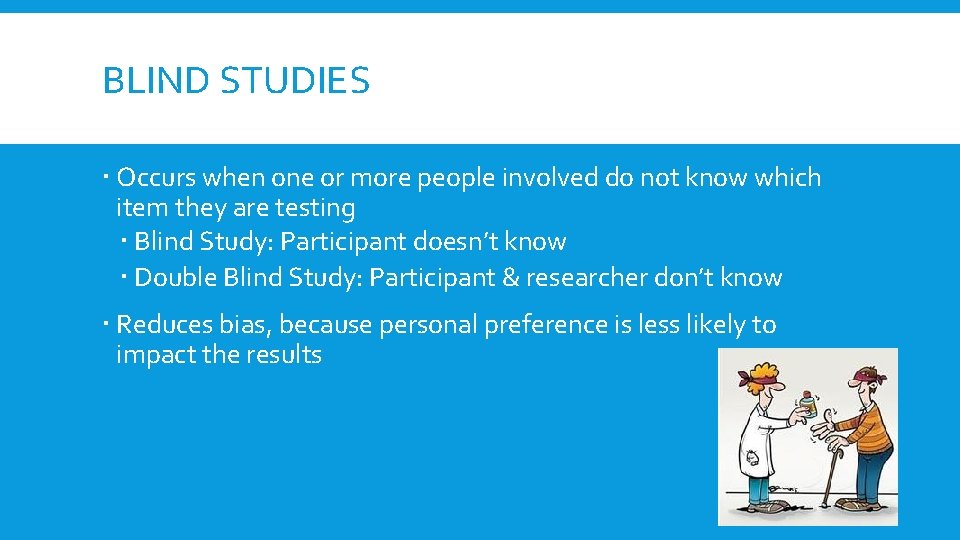
BLIND STUDIES Occurs when one or more people involved do not know which item they are testing Blind Study: Participant doesn’t know Double Blind Study: Participant & researcher don’t know Reduces bias, because personal preference is less likely to impact the results
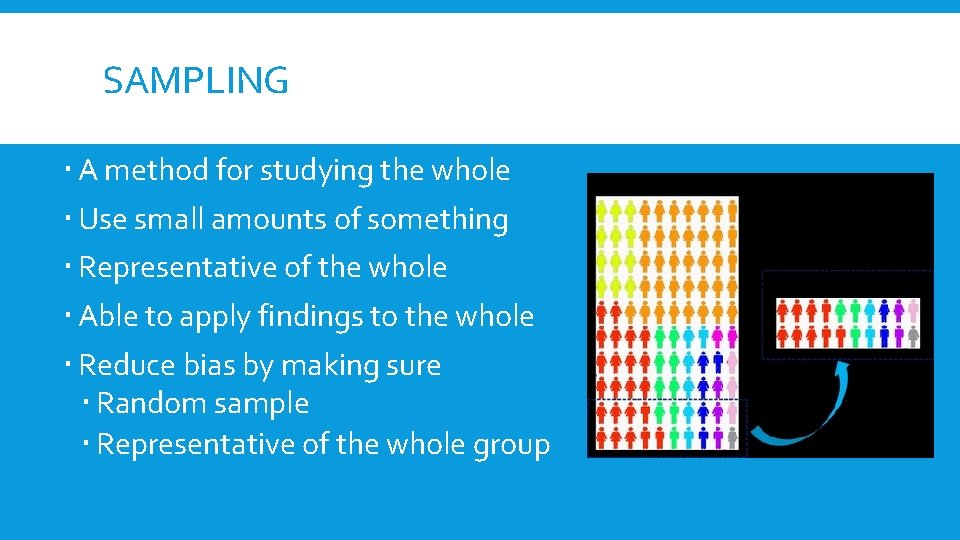
SAMPLING A method for studying the whole Use small amounts of something Representative of the whole Able to apply findings to the whole Reduce bias by making sure Random sample Representative of the whole group
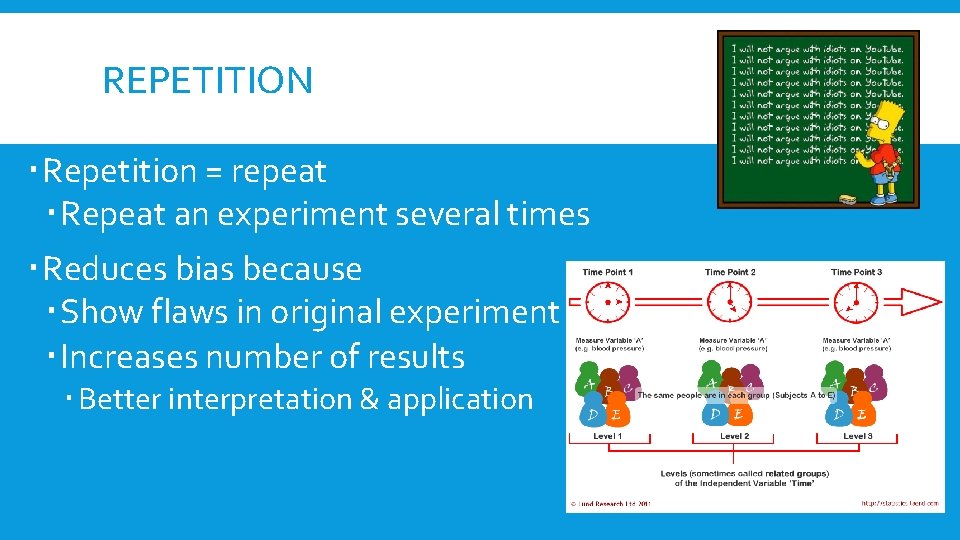
REPETITION Repetition = repeat Repeat an experiment several times Reduces bias because Show flaws in original experiment Increases number of results Better interpretation & application
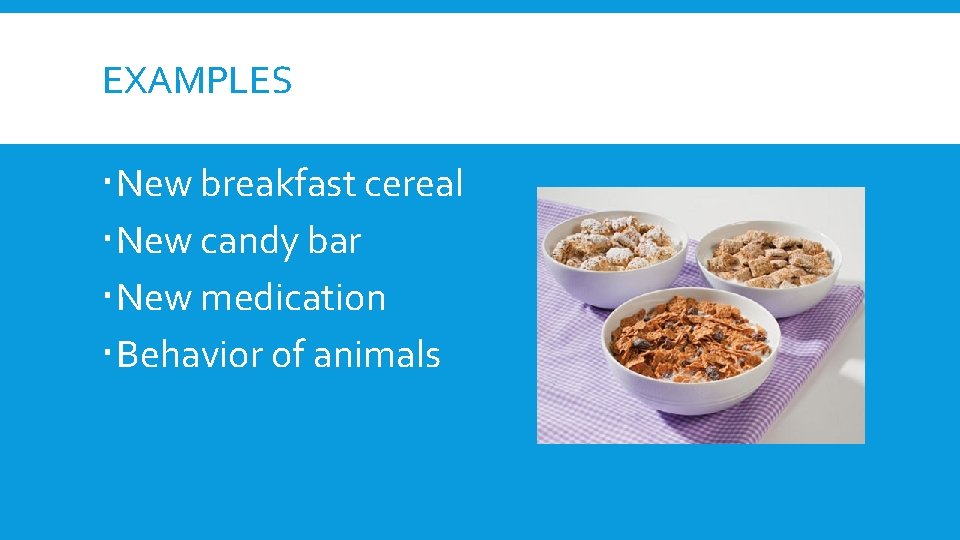
EXAMPLES New breakfast cereal New candy bar New medication Behavior of animals
- Slides: 10