
Biannual Meeting of the PPA Orlando FL 2011
Biannual Meeting of the PPA Orlando, FL, 2011 Understanding PP and treatment of Hypo. PP Frank Lehmann-Horn, Senior Research Professor
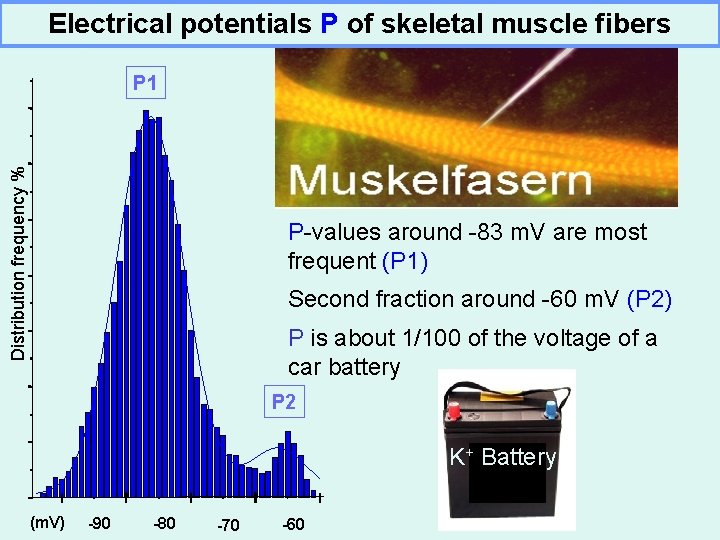
Electrical potentials P of skeletal muscle fibers Distribution frequency % P 1 P-values around -83 m. V are most frequent (P 1) Second fraction around -60 m. V (P 2) P is about 1/100 of the voltage of a car battery P 2 K+ Battery (m. V) -90 -80 -70 -60
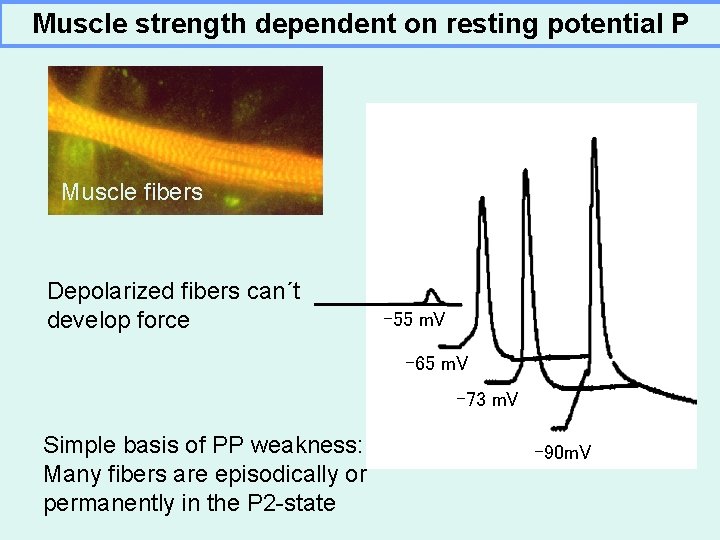
Muscle strength dependent on resting potential P Muscle fibers Depolarized fibers can´t develop force -55 m. V -65 m. V -73 m. V Simple basis of PP weakness: Many fibers are episodically or permanently in the P 2 -state -90 m. V
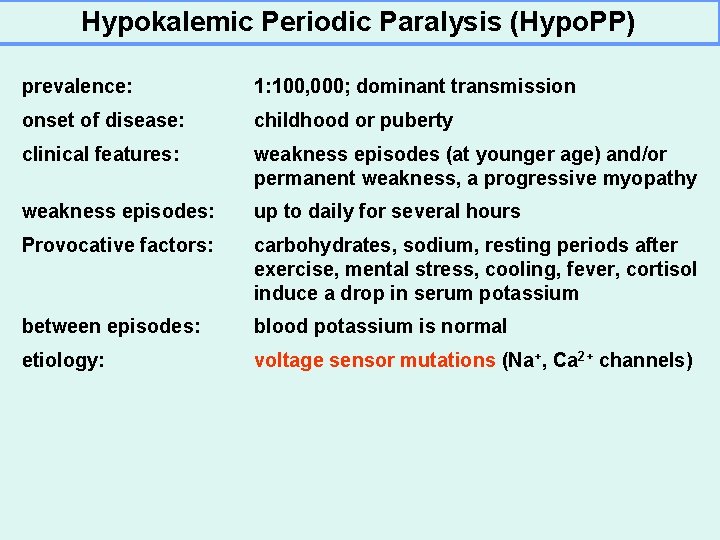
Hypokalemic Periodic Paralysis (Hypo. PP) prevalence: 1: 100, 000; dominant transmission onset of disease: childhood or puberty clinical features: weakness episodes (at younger age) and/or permanent weakness, a progressive myopathy weakness episodes: up to daily for several hours Provocative factors: carbohydrates, sodium, resting periods after exercise, mental stress, cooling, fever, cortisol induce a drop in serum potassium between episodes: blood potassium is normal etiology: voltage sensor mutations (Na+, Ca 2+ channels)
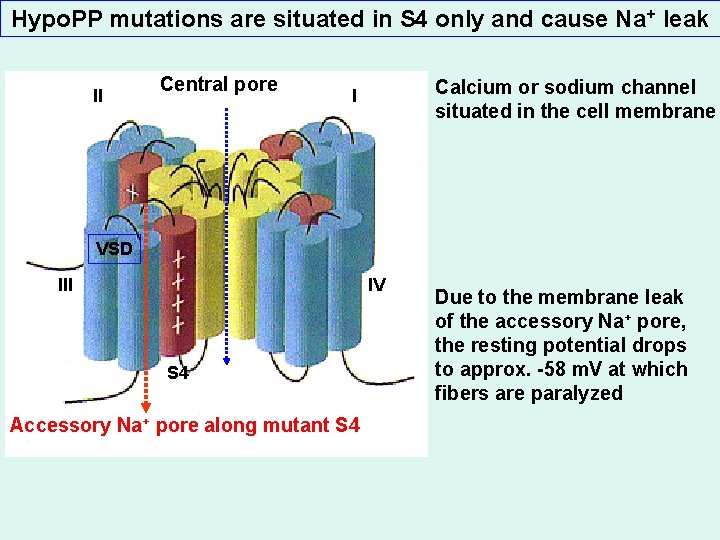
Hypo. PP mutations are situated in S 4 only and cause Na+ leak II Central pore Calcium or sodium channel situated in the cell membrane I VSD III IV S 4 Accessory Na+ pore along mutant S 4 Due to the membrane leak of the accessory Na+ pore, the resting potential drops to approx. -58 m. V at which fibers are paralyzed
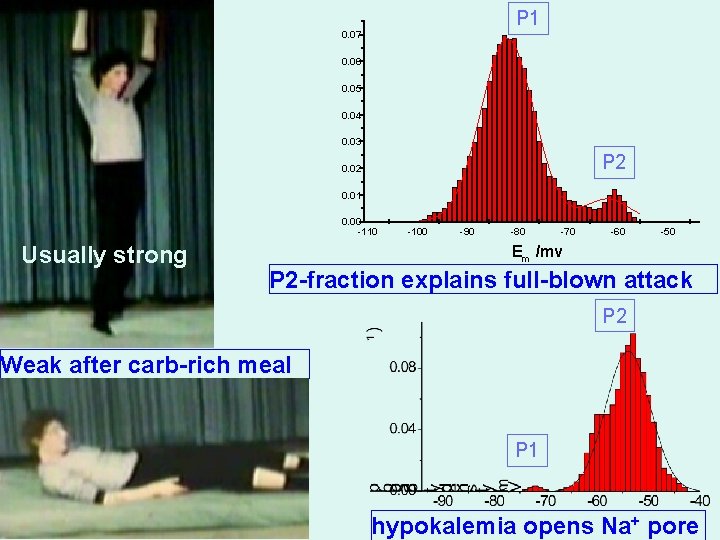
P 1 0. 07 0. 06 0. 05 0. 04 0. 03 P 2 0. 01 0. 00 -110 Usually strong -100 -90 -80 -70 -60 -50 Em /mv P 2 -fraction explains full-blown attack P 2 Weak after carb-rich meal P 1 hypokalemia opens Na+ pore
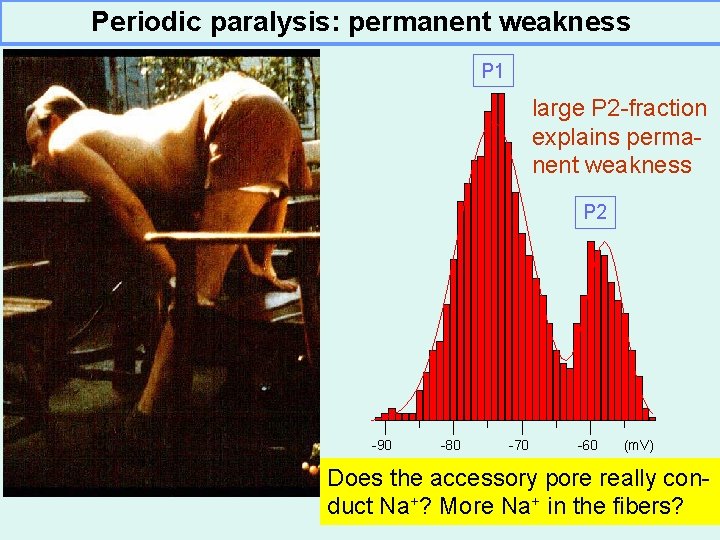
Periodic paralysis: permanent weakness P 1 large P 2 -fraction explains permanent weakness P 2 -90 -80 -70 -60 (m. V) Does the accessory pore really conduct Na+? More Na+ in the fibers?
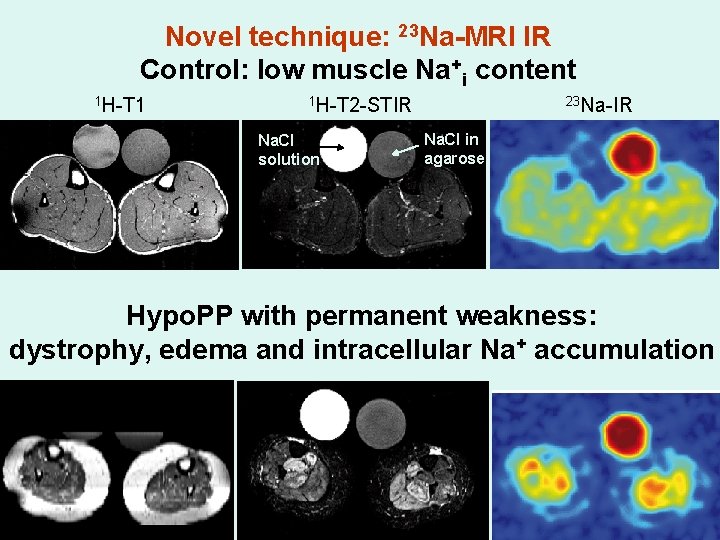
Novel technique: 23 Na-MRI IR Control: low muscle Na+i content 1 H-T 1 1 H-T 2 -STIR Na. Cl solution 23 Na-IR Na. Cl in agarose Hypo. PP with permanent weakness: dystrophy, edema and intracellular Na+ accumulation
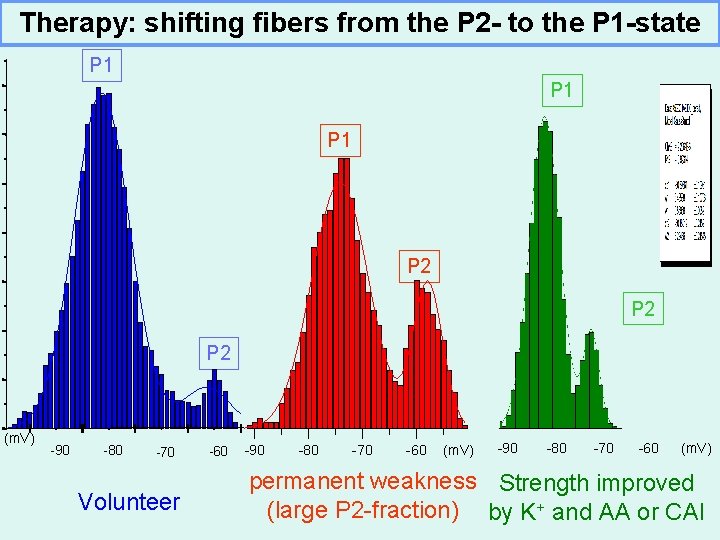
Therapy: shifting fibers from the P 2 - to the P 1 -state P 1 P 1 P 2 P 2 (m. V) -90 -80 -70 Volunteer -60 -90 -80 -70 -60 (m. V) permanent weakness Strength improved (large P 2 -fraction) by K+ and AA or CAI
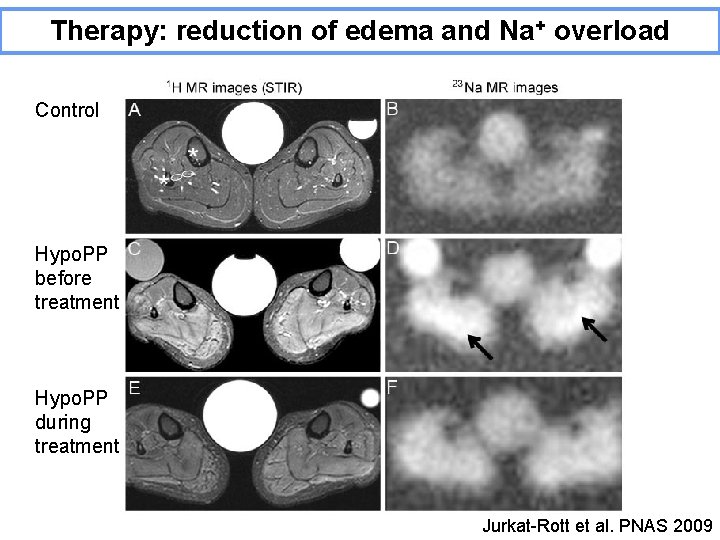
Therapy: reduction of edema and Na+ overload Control Hypo. PP before treatment Hypo. PP during treatment control untreated patient Jurkat-Rott et al. PNAS 2009
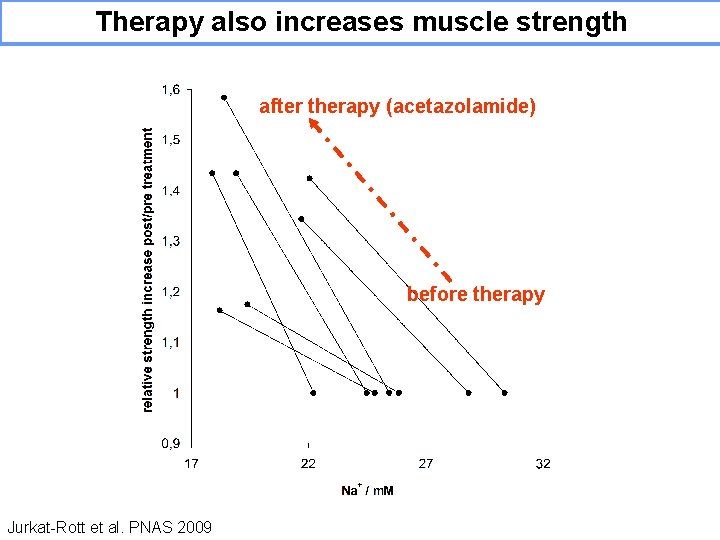
Therapy also increases muscle strength after therapy (acetazolamide) before therapy Jurkat-Rott et al. PNAS 2009
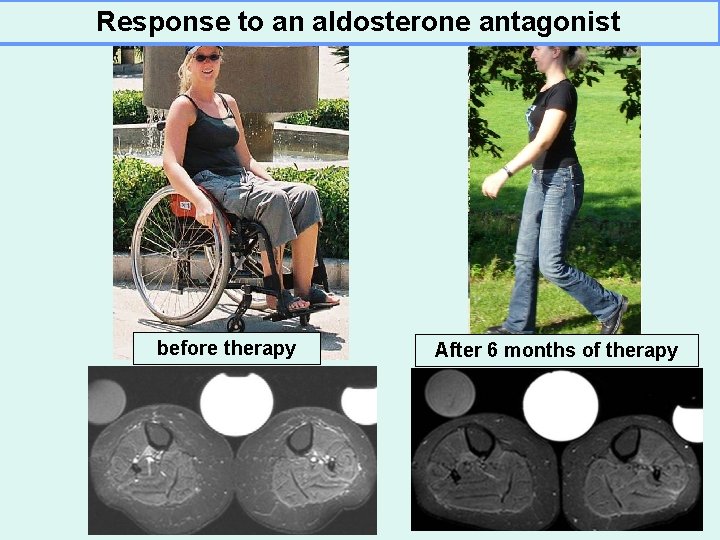
Response to an aldosterone antagonist before therapy After 6 months of therapy
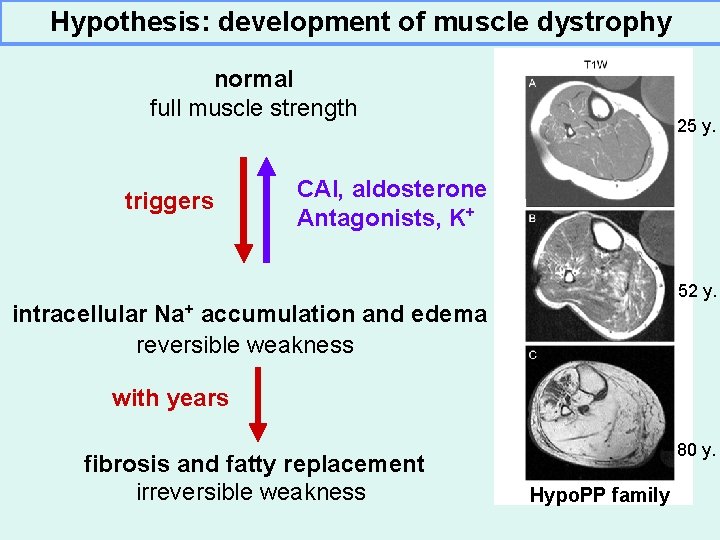
Hypothesis: development of muscle dystrophy normal full muscle strength triggers 25 y. CAI, aldosterone Antagonists, K+ 52 y. intracellular Na+ accumulation and edema reversible weakness with years fibrosis and fatty replacement irreversible weakness 80 y. Hypo. PP family
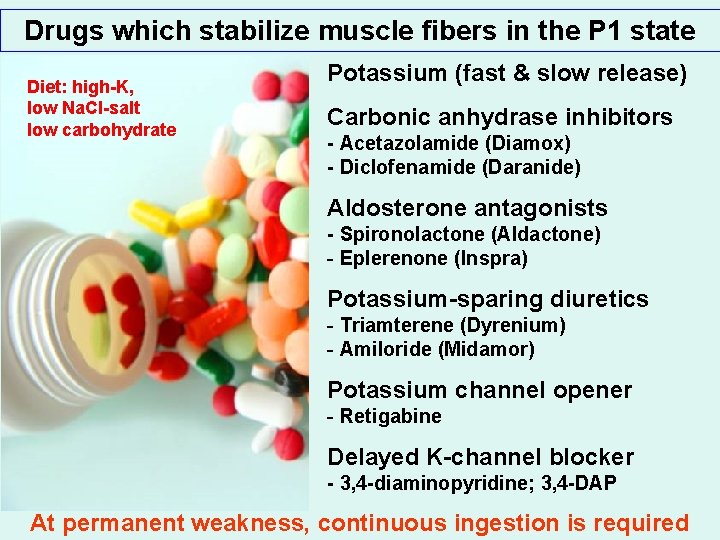
Drugs which stabilize muscle fibers in the P 1 state Diet: high-K, low Na. Cl-salt low carbohydrate Potassium (fast & slow release) Carbonic anhydrase inhibitors - Acetazolamide (Diamox) - Diclofenamide (Daranide) Aldosterone antagonists - Spironolactone (Aldactone) - Eplerenone (Inspra) Potassium-sparing diuretics - Triamterene (Dyrenium) - Amiloride (Midamor) Potassium channel opener - Retigabine Delayed K-channel blocker - 3, 4 -diaminopyridine; 3, 4 -DAP At permanent weakness, continuous ingestion is required
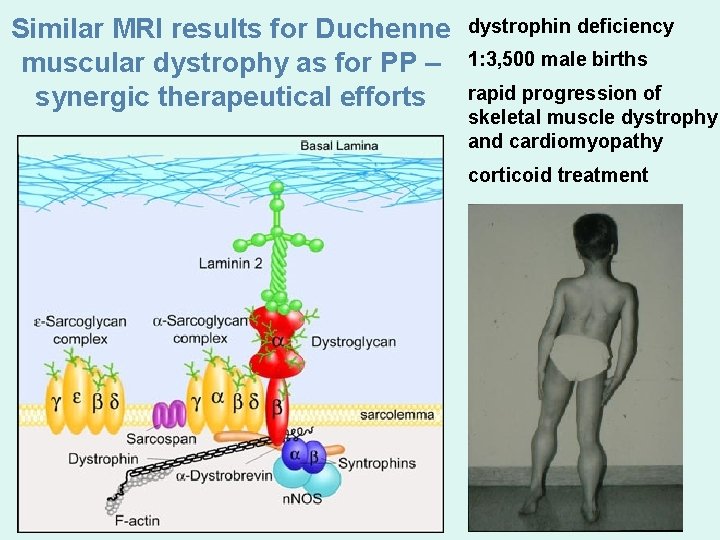
Similar MRI results for Duchenne muscular dystrophy as for PP – synergic therapeutical efforts dystrophin deficiency 1: 3, 500 male births rapid progression of skeletal muscle dystrophy and cardiomyopathy corticoid treatment
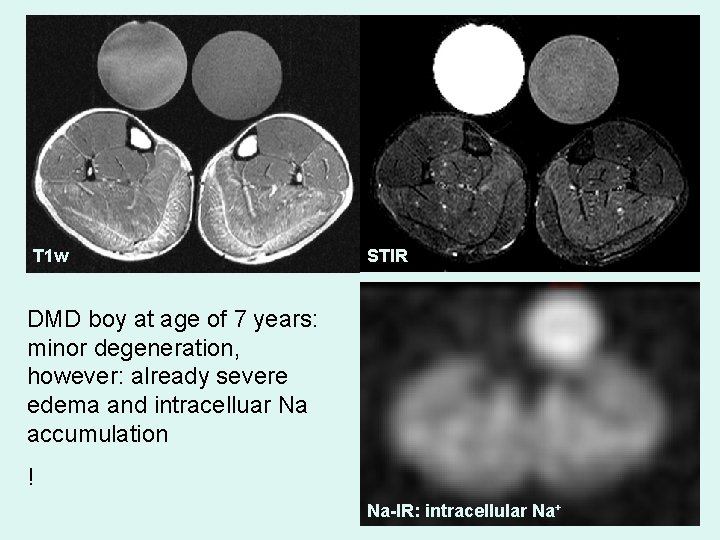
T 1 w STIR DMD boy at age of 7 years: minor degeneration, however: already severe edema and intracelluar Na accumulation ! Na-IR: intracellular Na+
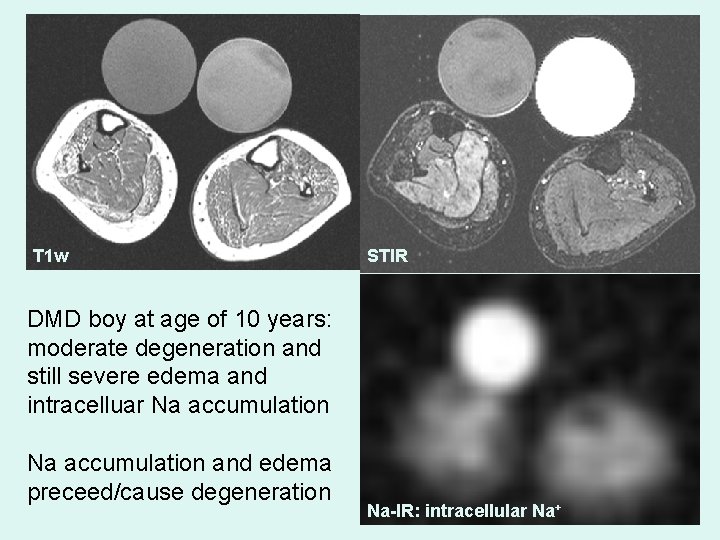
T 1 w STIR DMD boy at age of 10 years: moderate degeneration and still severe edema and intracelluar Na accumulation and edema preceed/cause degeneration [Na+] Na-IR: intracellular Na+
Thanks to Karin Jurkat-Rott (Ulm), Marc-André Weber (Heidelberg), & Eva Luise Köhler

View from Ulm University of Ulm Munster and the Alpes
- Slides: 19