
BI 233 Laboratory Urinalysis 2 Three Basics Processes
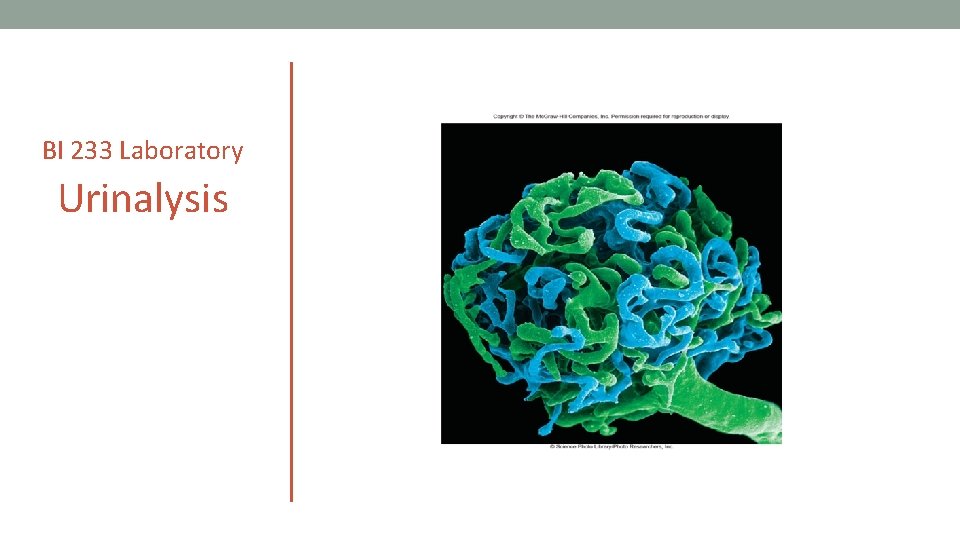
BI 233 Laboratory Urinalysis
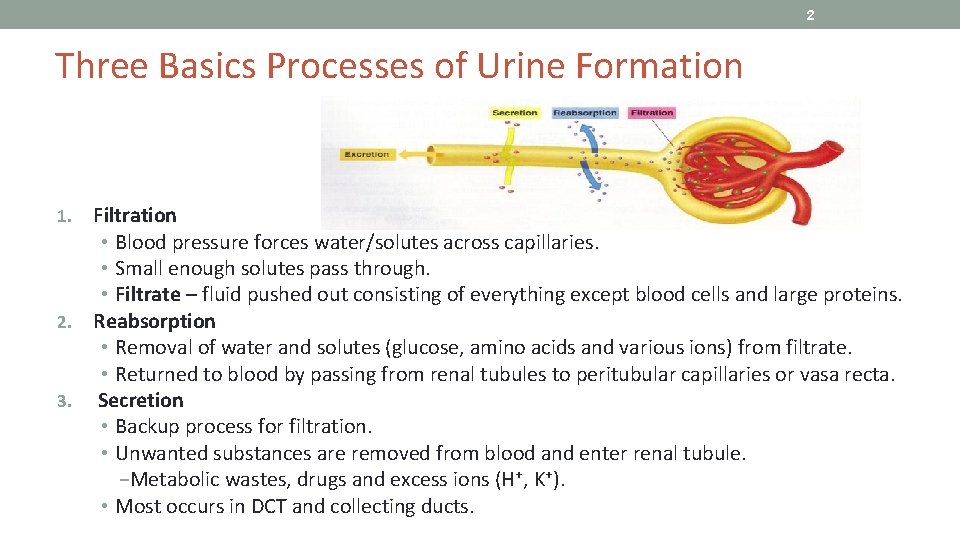
2 Three Basics Processes of Urine Formation Filtration • Blood pressure forces water/solutes across capillaries. • Small enough solutes pass through. • Filtrate – fluid pushed out consisting of everything except blood cells and large proteins. 2. Reabsorption • Removal of water and solutes (glucose, amino acids and various ions) from filtrate. • Returned to blood by passing from renal tubules to peritubular capillaries or vasa recta. 3. Secretion • Backup process for filtration. • Unwanted substances are removed from blood and enter renal tubule. −Metabolic wastes, drugs and excess ions (H⁺, K⁺). • Most occurs in DCT and collecting ducts. 1.
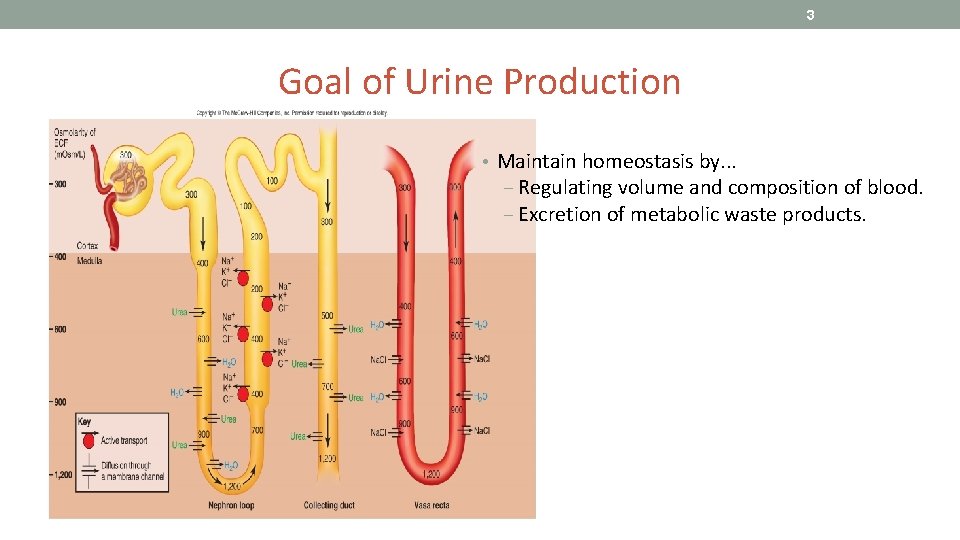
3 Goal of Urine Production • Maintain homeostasis by. . . ‒ Regulating volume and composition of blood. ‒ Excretion of metabolic waste products.
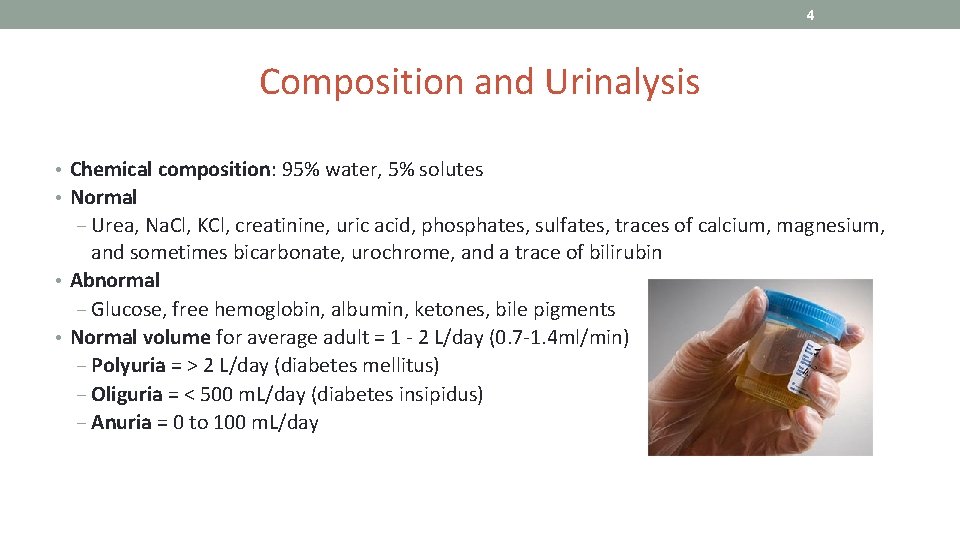
4 Composition and Urinalysis • Chemical composition: 95% water, 5% solutes • Normal ‒ Urea, Na. Cl, KCl, creatinine, uric acid, phosphates, sulfates, traces of calcium, magnesium, and sometimes bicarbonate, urochrome, and a trace of bilirubin • Abnormal ‒ Glucose, free hemoglobin, albumin, ketones, bile pigments • Normal volume for average adult = 1 - 2 L/day (0. 7 -1. 4 ml/min) ‒ Polyuria = ˃ 2 L/day (diabetes mellitus) ‒ Oliguria = ˂ 500 m. L/day (diabetes insipidus) ‒ Anuria = 0 to 100 m. L/day
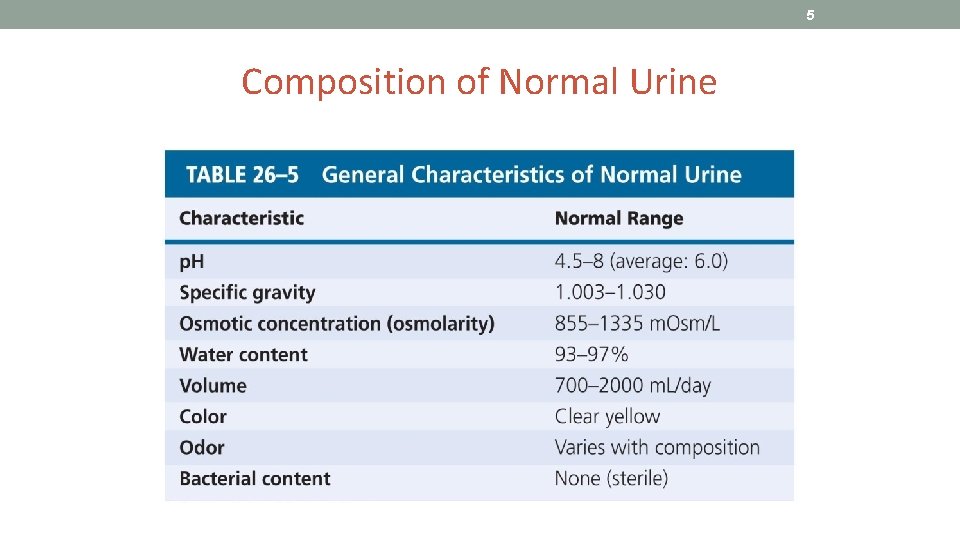
5 Composition of Normal Urine
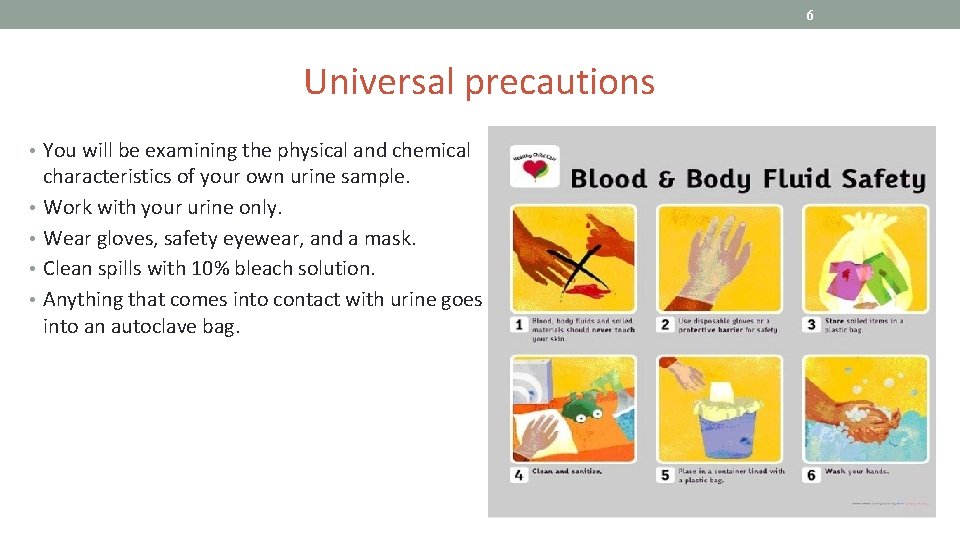
6 Universal precautions • You will be examining the physical and chemical • • characteristics of your own urine sample. Work with your urine only. Wear gloves, safety eyewear, and a mask. Clean spills with 10% bleach solution. Anything that comes into contact with urine goes into an autoclave bag.
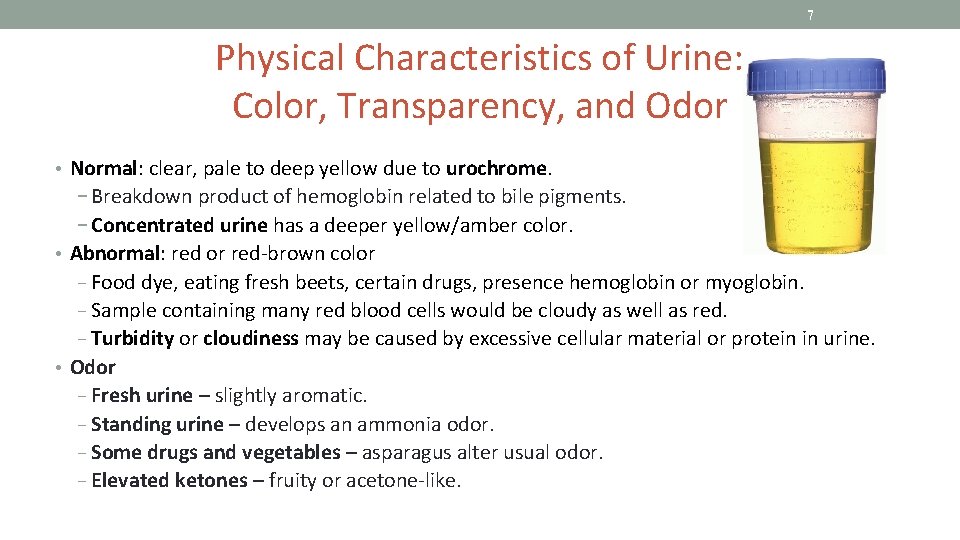
7 Physical Characteristics of Urine: Color, Transparency, and Odor • Normal: clear, pale to deep yellow due to urochrome. − Breakdown product of hemoglobin related to bile pigments. − Concentrated urine has a deeper yellow/amber color. • Abnormal: red or red-brown color − Food dye, eating fresh beets, certain drugs, presence hemoglobin or myoglobin. − Sample containing many red blood cells would be cloudy as well as red. − Turbidity or cloudiness may be caused by excessive cellular material or protein in urine. • Odor − Fresh urine – slightly aromatic. − Standing urine – develops an ammonia odor. − Some drugs and vegetables – asparagus alter usual odor. − Elevated ketones – fruity or acetone-like.
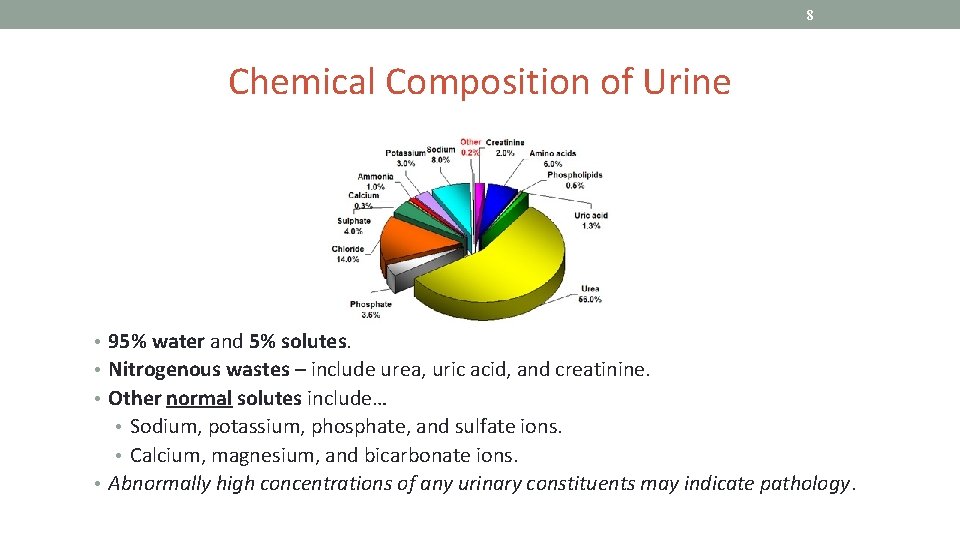
8 Chemical Composition of Urine • 95% water and 5% solutes. • Nitrogenous wastes – include urea, uric acid, and creatinine. • Other normal solutes include… • Sodium, potassium, phosphate, and sulfate ions. • Calcium, magnesium, and bicarbonate ions. • Abnormally high concentrations of any urinary constituents may indicate pathology.
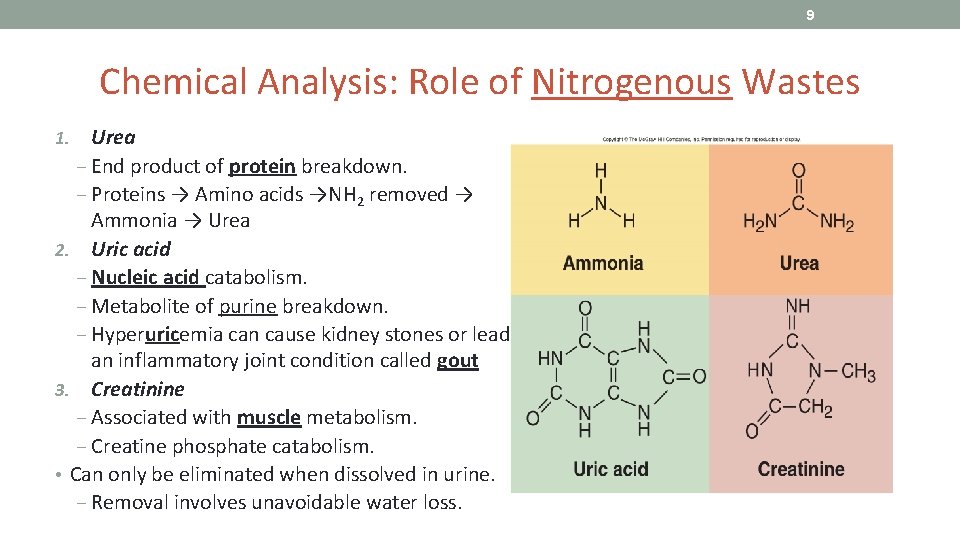
9 Chemical Analysis: Role of Nitrogenous Wastes Urea ‒ End product of protein breakdown. ‒ Proteins → Amino acids →NH 2 removed → Ammonia → Urea 2. Uric acid ‒ Nucleic acid catabolism. ‒ Metabolite of purine breakdown. ‒ Hyperuricemia can cause kidney stones or lead to an inflammatory joint condition called gout 3. Creatinine ‒ Associated with muscle metabolism. ‒ Creatine phosphate catabolism. • Can only be eliminated when dissolved in urine. ‒ Removal involves unavoidable water loss. 1.
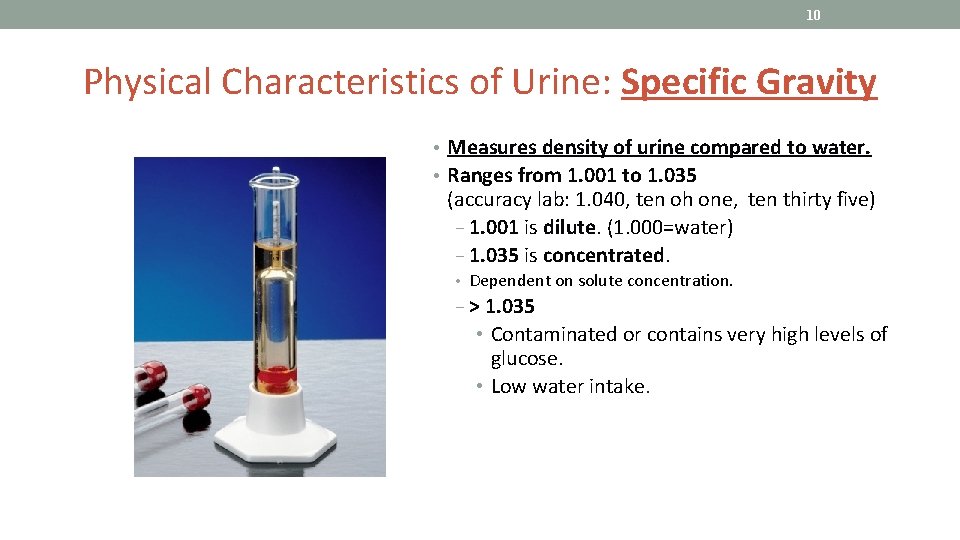
10 Physical Characteristics of Urine: Specific Gravity • Measures density of urine compared to water. • Ranges from 1. 001 to 1. 035 (accuracy lab: 1. 040, ten oh one, ten thirty five) − 1. 001 is dilute. (1. 000=water) − 1. 035 is concentrated. • Dependent on solute concentration. − > 1. 035 • Contaminated or contains very high levels of glucose. • Low water intake.
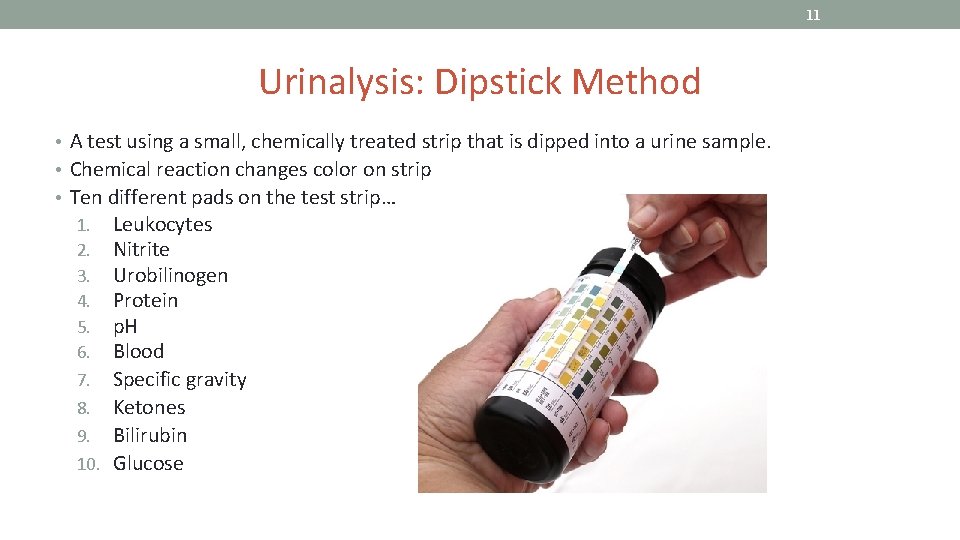
11 Urinalysis: Dipstick Method • A test using a small, chemically treated strip that is dipped into a urine sample. • Chemical reaction changes color on strip • Ten different pads on the test strip… 1. Leukocytes 2. Nitrite 3. Urobilinogen 4. Protein 5. p. H 6. Blood 7. Specific gravity Ketones 9. Bilirubin 10. Glucose 8.
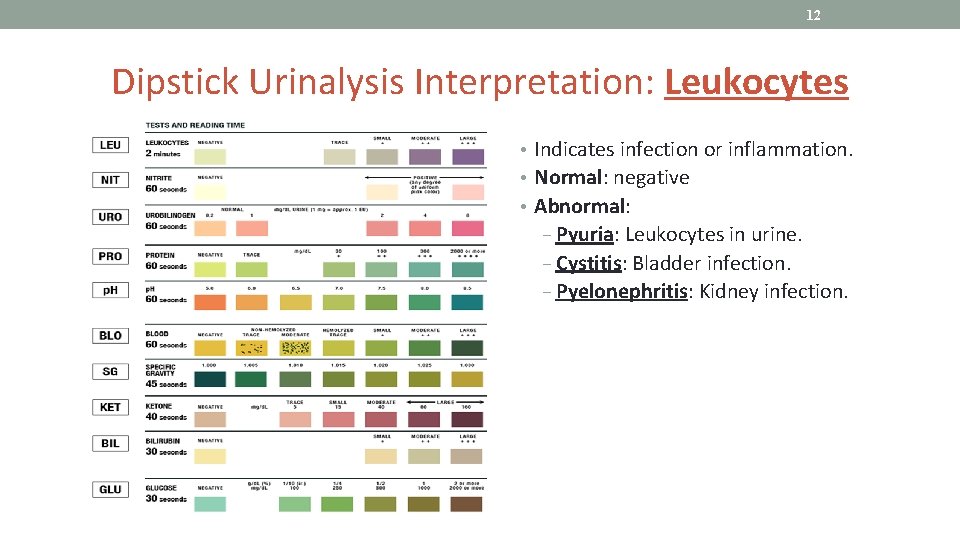
12 Dipstick Urinalysis Interpretation: Leukocytes • Indicates infection or inflammation. • Normal: negative • Abnormal: − Pyuria: Leukocytes in urine. − Cystitis: Bladder infection. − Pyelonephritis: Kidney infection.
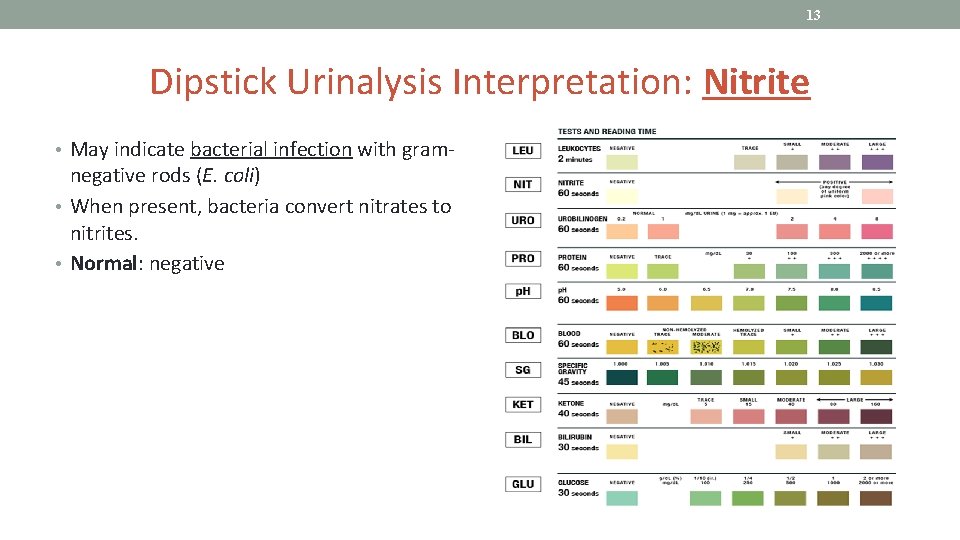
13 Dipstick Urinalysis Interpretation: Nitrite • May indicate bacterial infection with gram- negative rods (E. coli) • When present, bacteria convert nitrates to nitrites. • Normal: negative
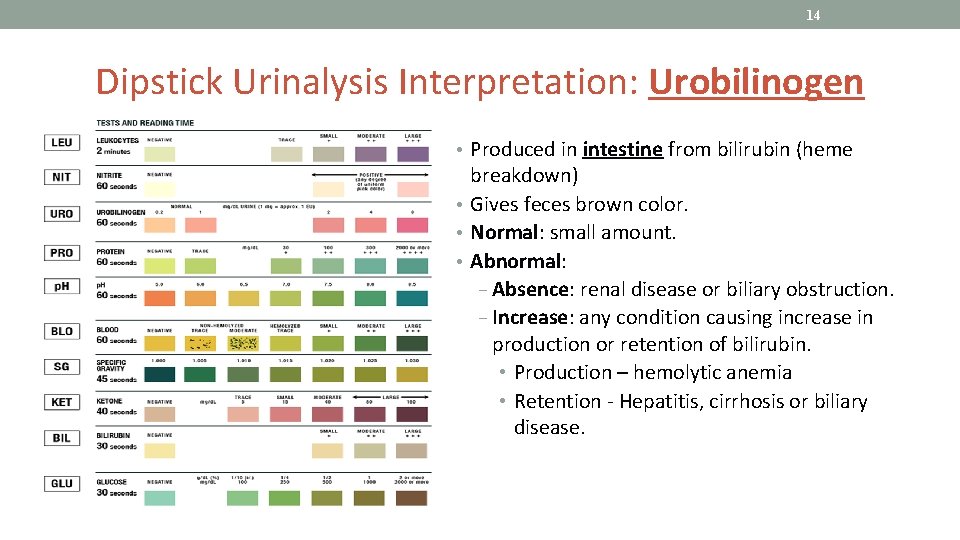
14 Dipstick Urinalysis Interpretation: Urobilinogen • Produced in intestine from bilirubin (heme breakdown) • Gives feces brown color. • Normal: small amount. • Abnormal: − Absence: renal disease or biliary obstruction. − Increase: any condition causing increase in production or retention of bilirubin. • Production – hemolytic anemia • Retention - Hepatitis, cirrhosis or biliary disease.
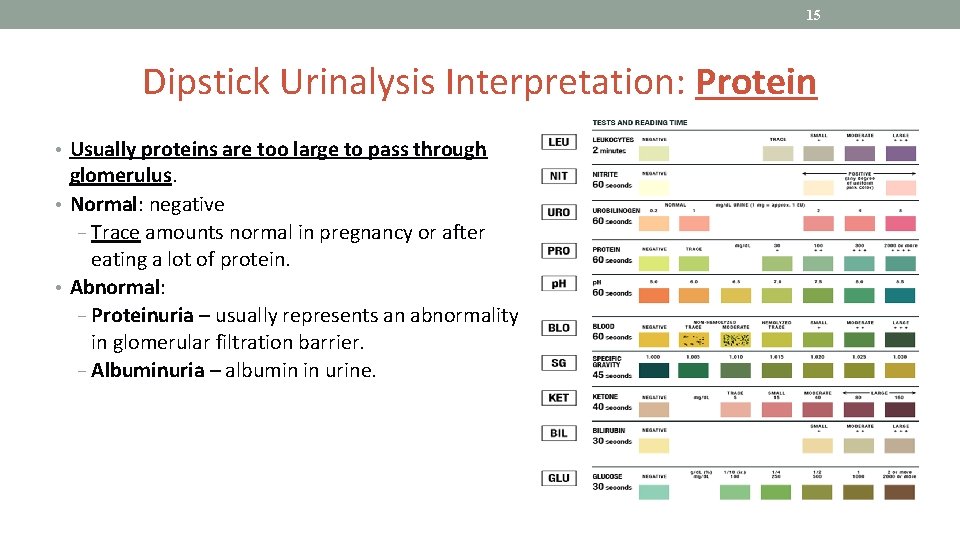
15 Dipstick Urinalysis Interpretation: Protein • Usually proteins are too large to pass through glomerulus. • Normal: negative − Trace amounts normal in pregnancy or after eating a lot of protein. • Abnormal: − Proteinuria – usually represents an abnormality in glomerular filtration barrier. − Albuminuria – albumin in urine.
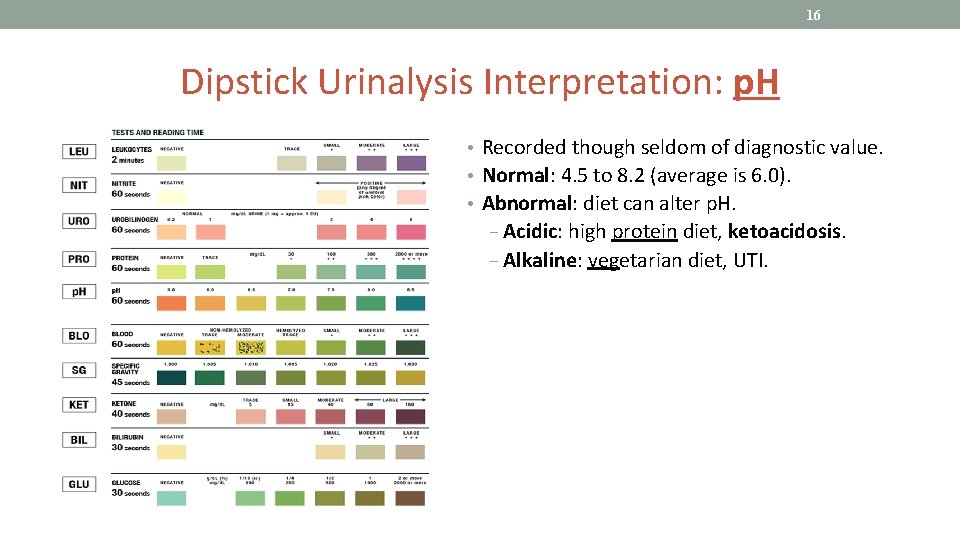
16 Dipstick Urinalysis Interpretation: p. H • Recorded though seldom of diagnostic value. • Normal: 4. 5 to 8. 2 (average is 6. 0). • Abnormal: diet can alter p. H. − Acidic: high protein diet, ketoacidosis. − Alkaline: vegetarian diet, UTI.
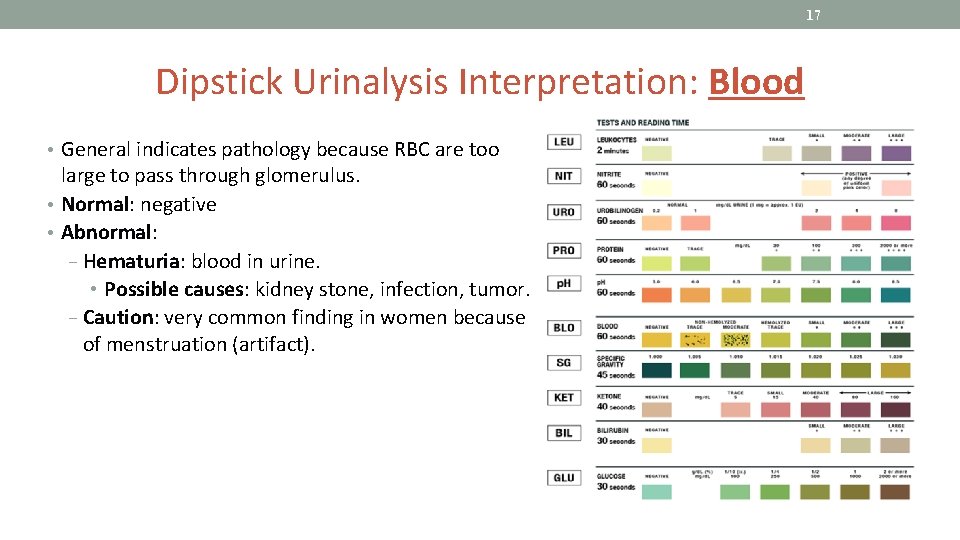
17 Dipstick Urinalysis Interpretation: Blood • General indicates pathology because RBC are too large to pass through glomerulus. • Normal: negative • Abnormal: − Hematuria: blood in urine. • Possible causes: kidney stone, infection, tumor. − Caution: very common finding in women because of menstruation (artifact).
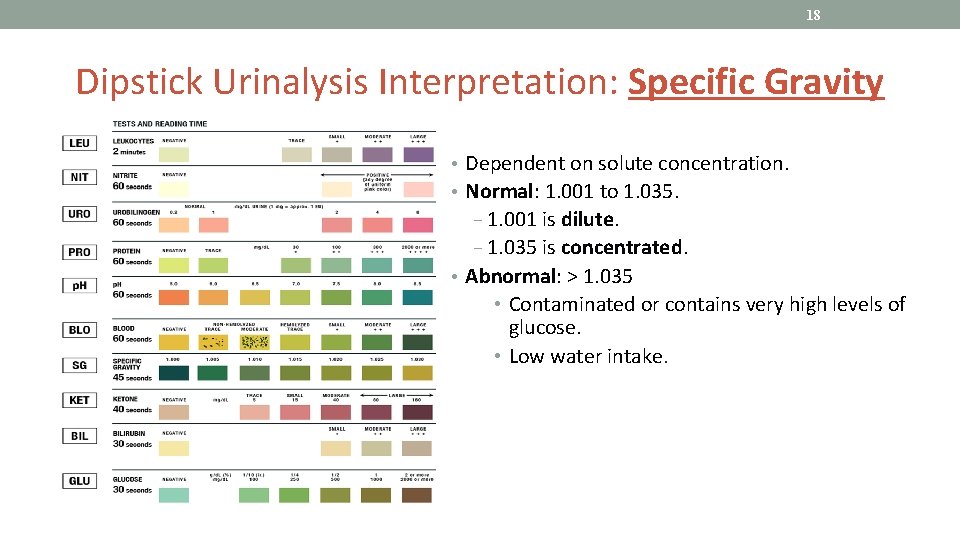
18 Dipstick Urinalysis Interpretation: Specific Gravity • Dependent on solute concentration. • Normal: 1. 001 to 1. 035. − 1. 001 is dilute. − 1. 035 is concentrated. • Abnormal: > 1. 035 • Contaminated or contains very high levels of glucose. • Low water intake.
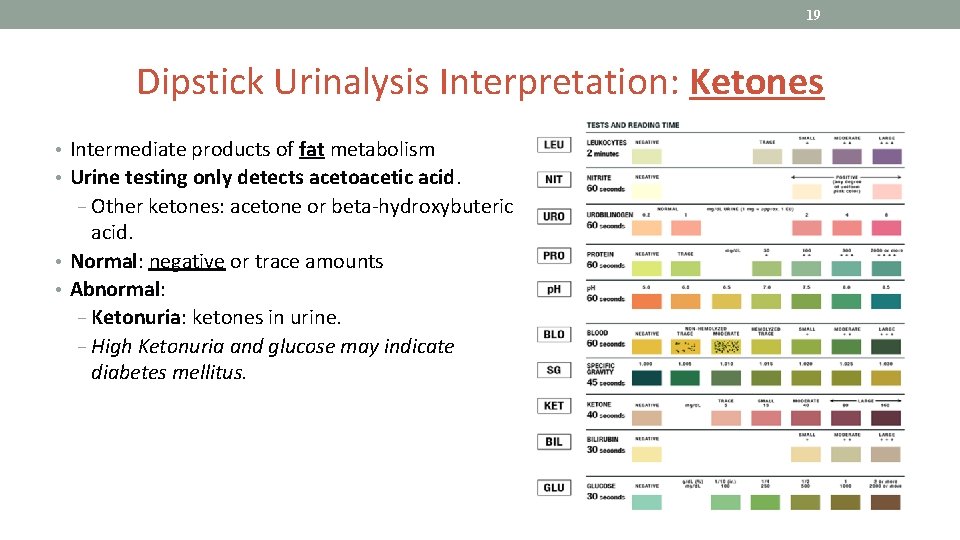
19 Dipstick Urinalysis Interpretation: Ketones • Intermediate products of fat metabolism • Urine testing only detects acetoacetic acid. − Other ketones: acetone or beta-hydroxybuteric acid. • Normal: negative or trace amounts • Abnormal: − Ketonuria: ketones in urine. − High Ketonuria and glucose may indicate diabetes mellitus.
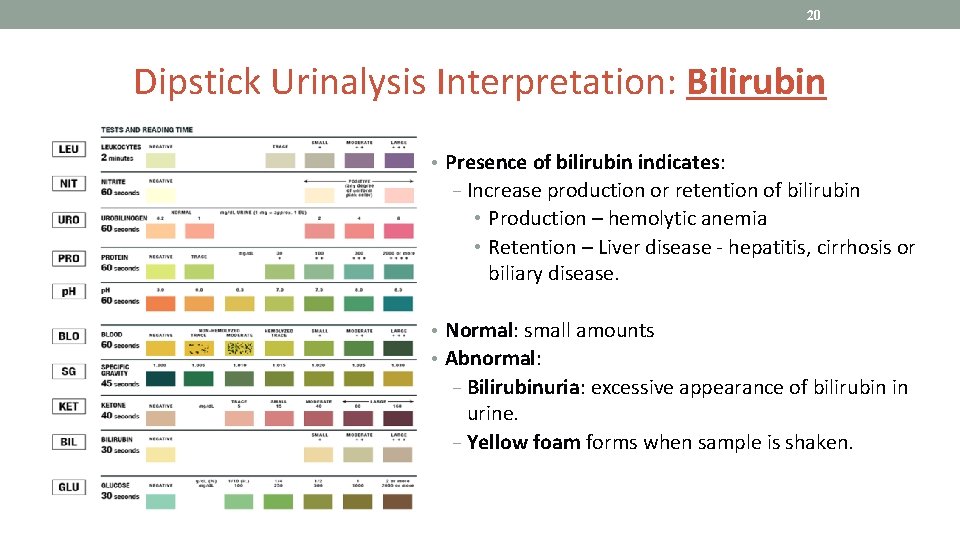
20 Dipstick Urinalysis Interpretation: Bilirubin • Presence of bilirubin indicates: − Increase production or retention of bilirubin • Production – hemolytic anemia • Retention – Liver disease - hepatitis, cirrhosis or biliary disease. • Normal: small amounts • Abnormal: − Bilirubinuria: excessive appearance of bilirubin in urine. − Yellow foam forms when sample is shaken.
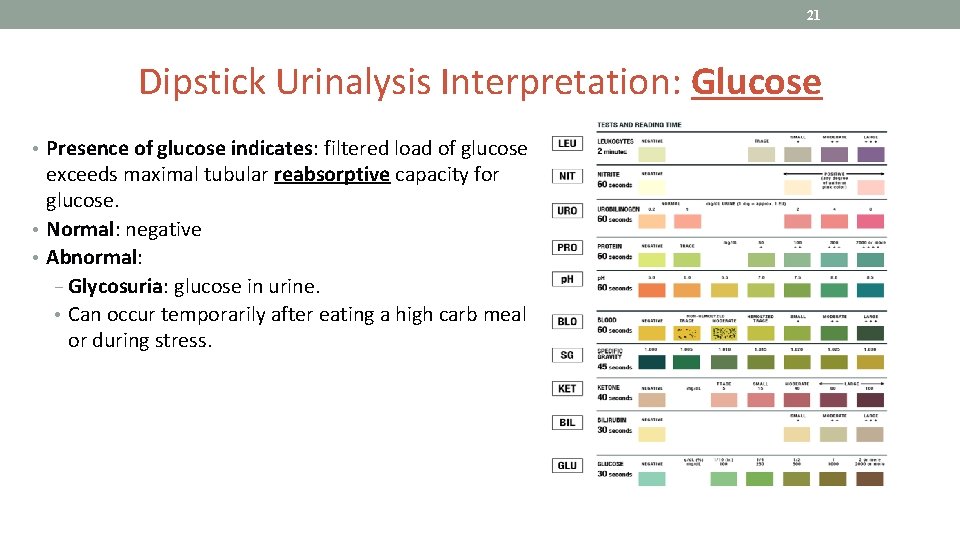
21 Dipstick Urinalysis Interpretation: Glucose • Presence of glucose indicates: filtered load of glucose exceeds maximal tubular reabsorptive capacity for glucose. • Normal: negative • Abnormal: − Glycosuria: glucose in urine. • Can occur temporarily after eating a high carb meal or during stress.
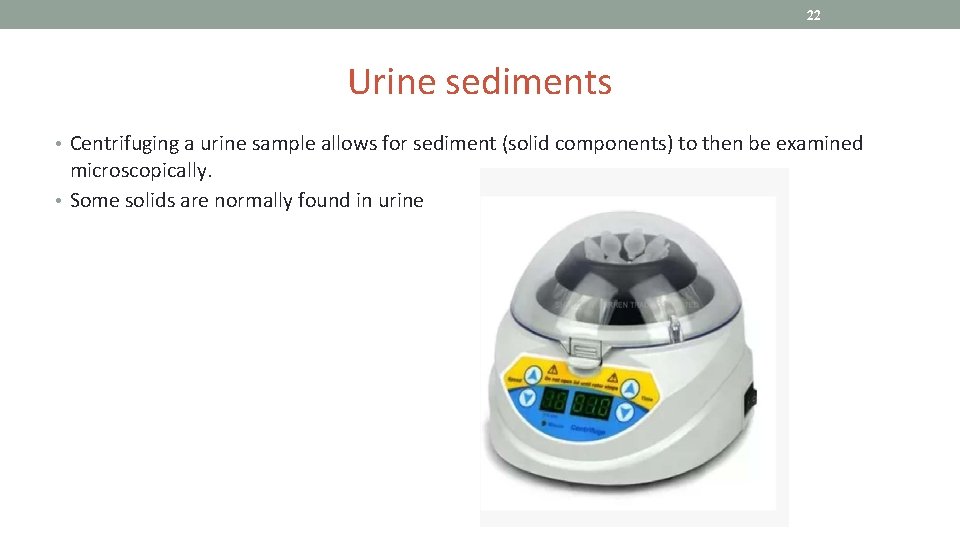
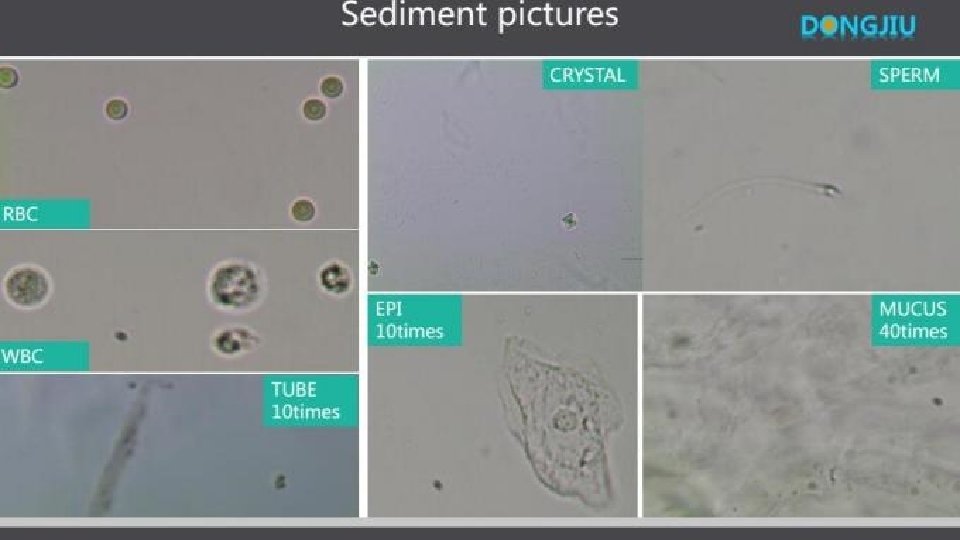
22 Urine sediments • Centrifuging a urine sample allows for sediment (solid components) to then be examined microscopically. • Some solids are normally found in urine
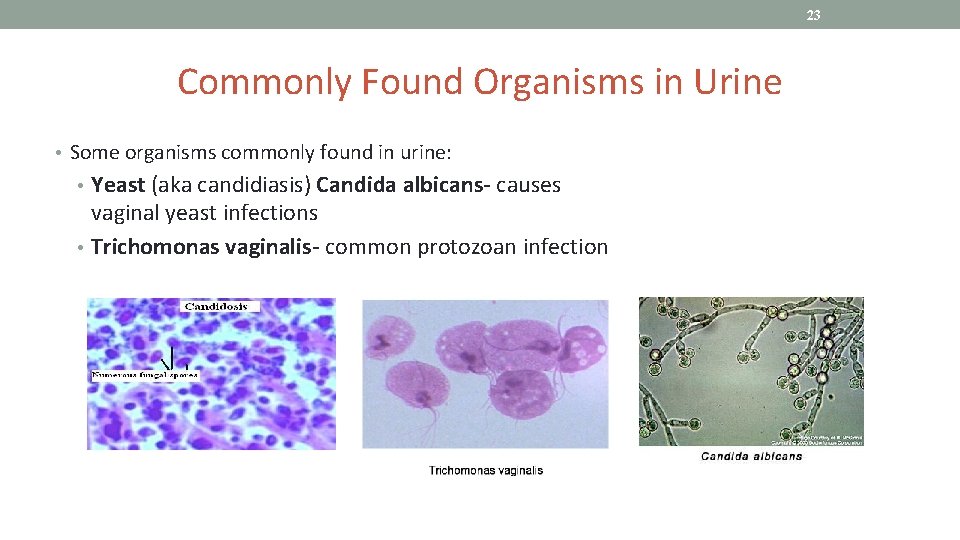
23 Commonly Found Organisms in Urine • Some organisms commonly found in urine: • • Yeast (aka candidiasis) Candida albicans- causes vaginal yeast infections Trichomonas vaginalis- common protozoan infection
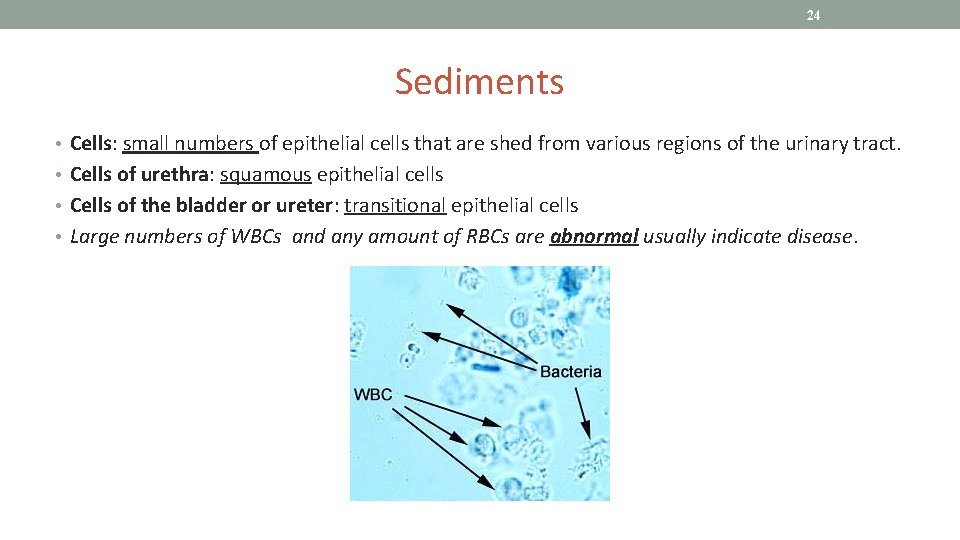
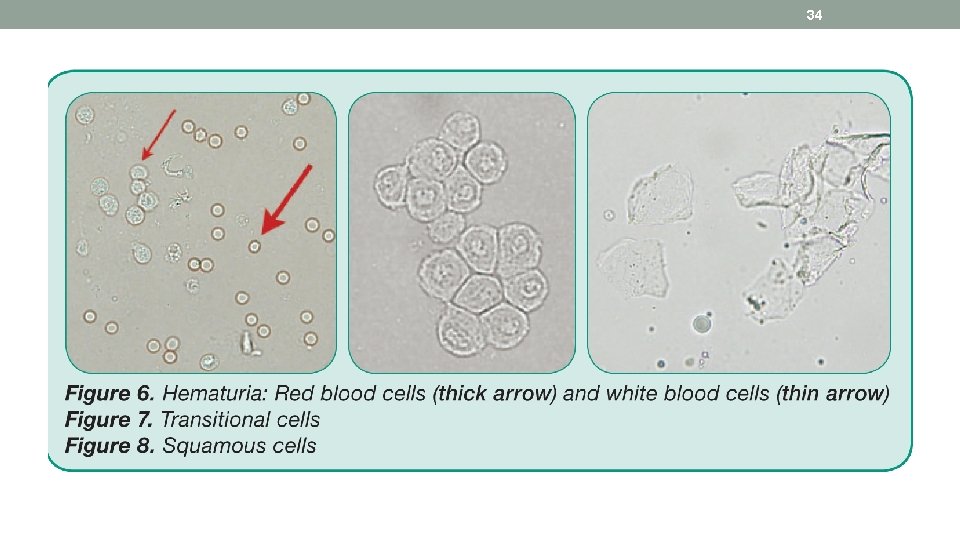
24 Sediments • Cells: small numbers of epithelial cells that are shed from various regions of the urinary tract. • Cells of urethra: squamous epithelial cells • Cells of the bladder or ureter: transitional epithelial cells • Large numbers of WBCs and any amount of RBCs are abnormal usually indicate disease.
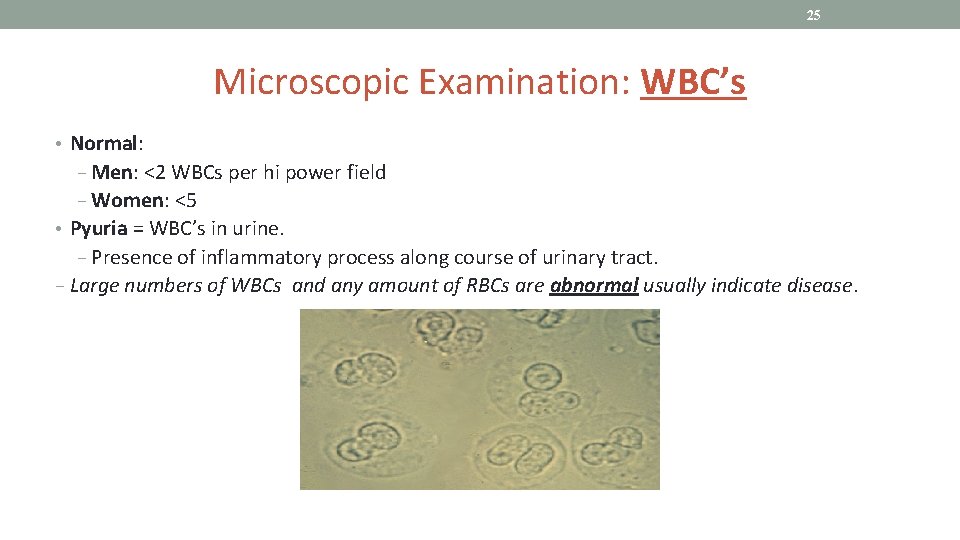
25 Microscopic Examination: WBC’s • Normal: − Men: <2 WBCs per hi power field − Women: <5 • Pyuria = WBC’s in urine. − Presence of inflammatory process along course of urinary tract. − Large numbers of WBCs and any amount of RBCs are abnormal usually indicate disease.
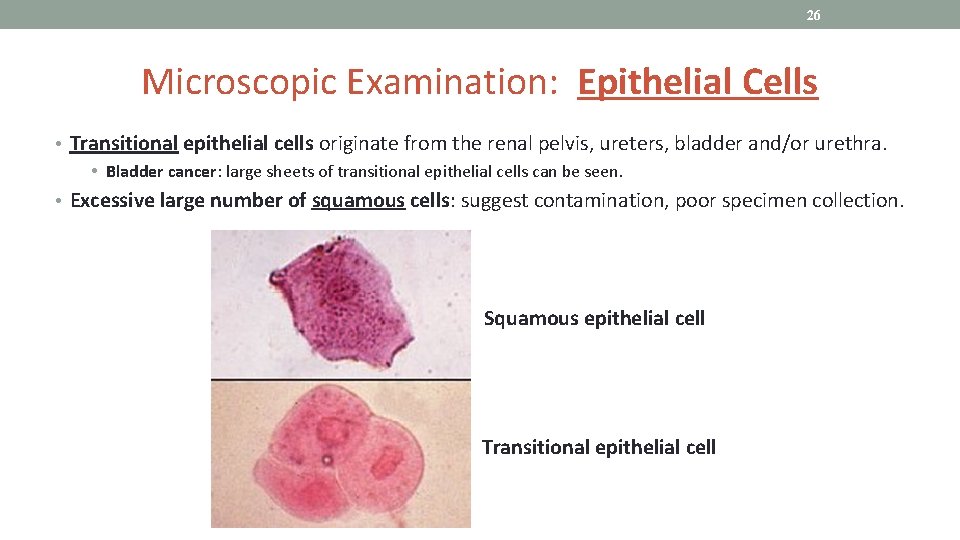
26 Microscopic Examination: Epithelial Cells • Transitional epithelial cells originate from the renal pelvis, ureters, bladder and/or urethra. • Bladder cancer: large sheets of transitional epithelial cells can be seen. • Excessive large number of squamous cells: suggest contamination, poor specimen collection. Squamous epithelial cell Transitional epithelial cell
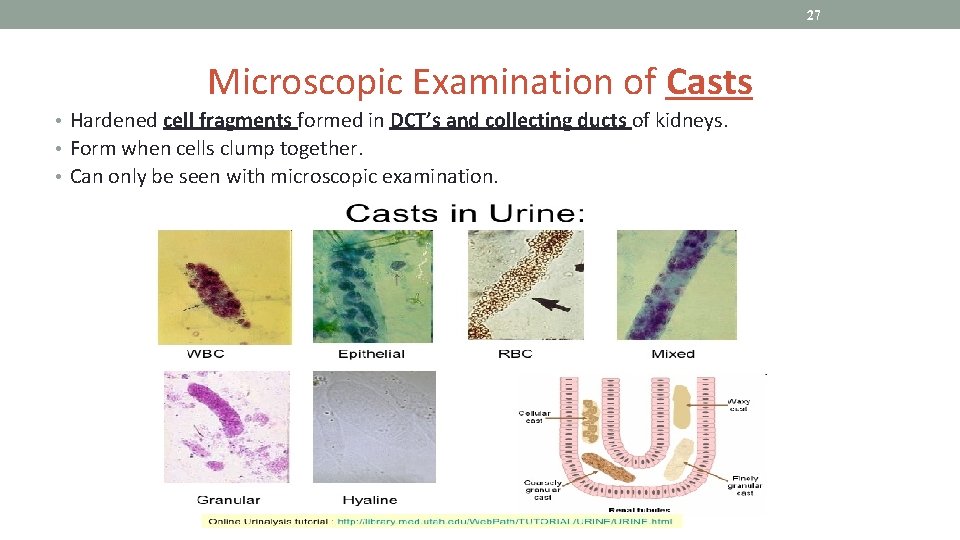
27 Microscopic Examination of Casts • Hardened cell fragments formed in DCT’s and collecting ducts of kidneys. • Form when cells clump together. • Can only be seen with microscopic examination.
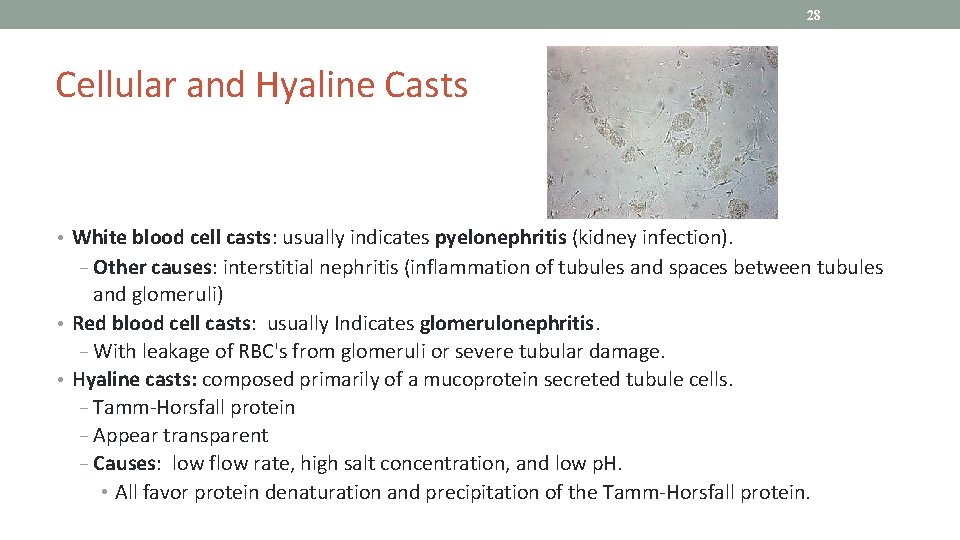
28 Cellular and Hyaline Casts • White blood cell casts: usually indicates pyelonephritis (kidney infection). − Other causes: interstitial nephritis (inflammation of tubules and spaces between tubules and glomeruli) • Red blood cell casts: usually Indicates glomerulonephritis. − With leakage of RBC's from glomeruli or severe tubular damage. • Hyaline casts: composed primarily of a mucoprotein secreted tubule cells. − Tamm-Horsfall protein − Appear transparent − Causes: low flow rate, high salt concentration, and low p. H. • All favor protein denaturation and precipitation of the Tamm-Horsfall protein.
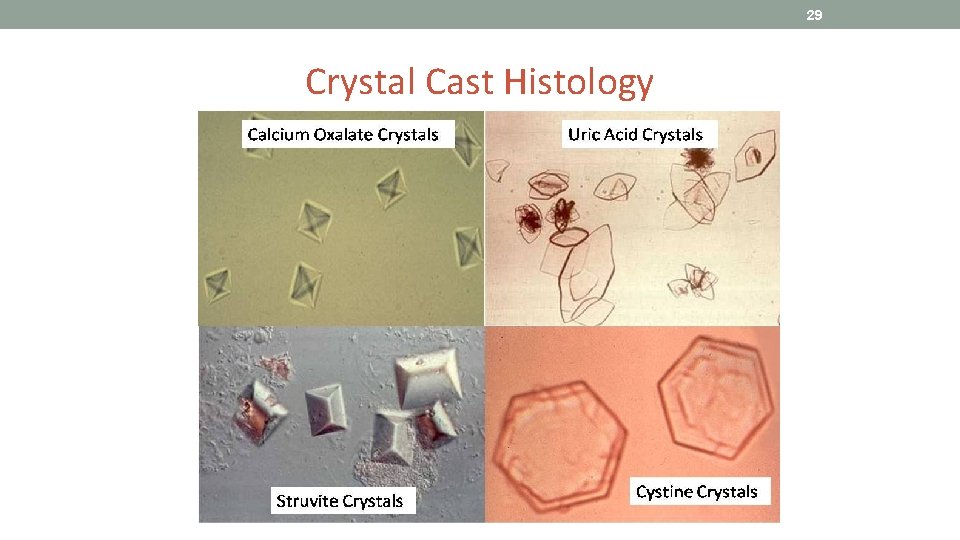
29 Crystal Cast Histology
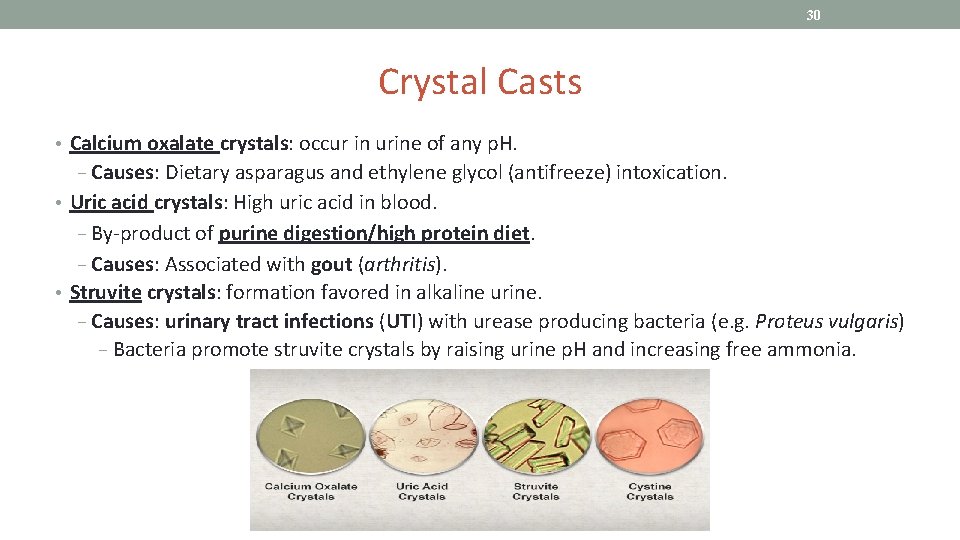
30 Crystal Casts • Calcium oxalate crystals: occur in urine of any p. H. − Causes: Dietary asparagus and ethylene glycol (antifreeze) intoxication. • Uric acid crystals: High uric acid in blood. − By-product of purine digestion/high protein diet. − Causes: Associated with gout (arthritis). • Struvite crystals: formation favored in alkaline urine. − Causes: urinary tract infections (UTI) with urease producing bacteria (e. g. Proteus vulgaris) − Bacteria promote struvite crystals by raising urine p. H and increasing free ammonia.
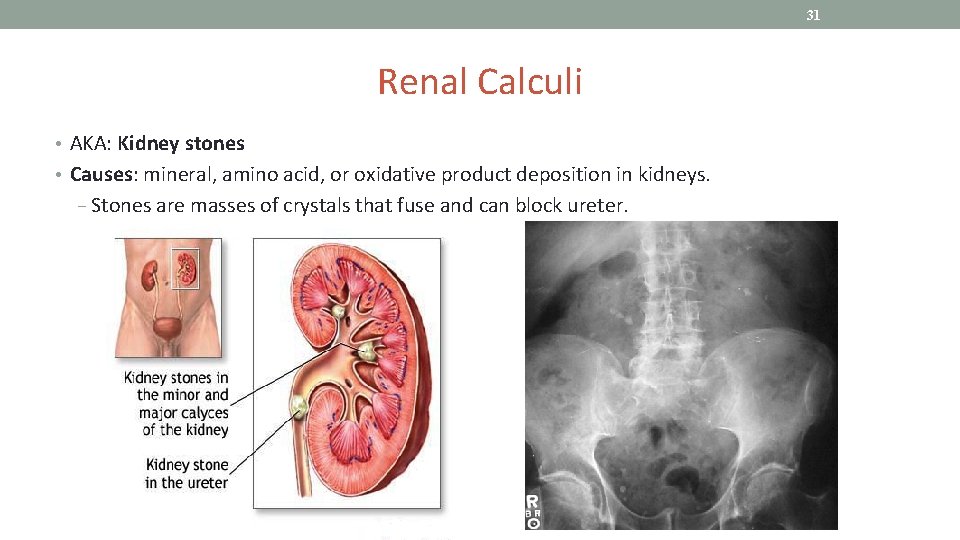
31 Renal Calculi • AKA: Kidney stones • Causes: mineral, amino acid, or oxidative product deposition in kidneys. − Stones are masses of crystals that fuse and can block ureter.
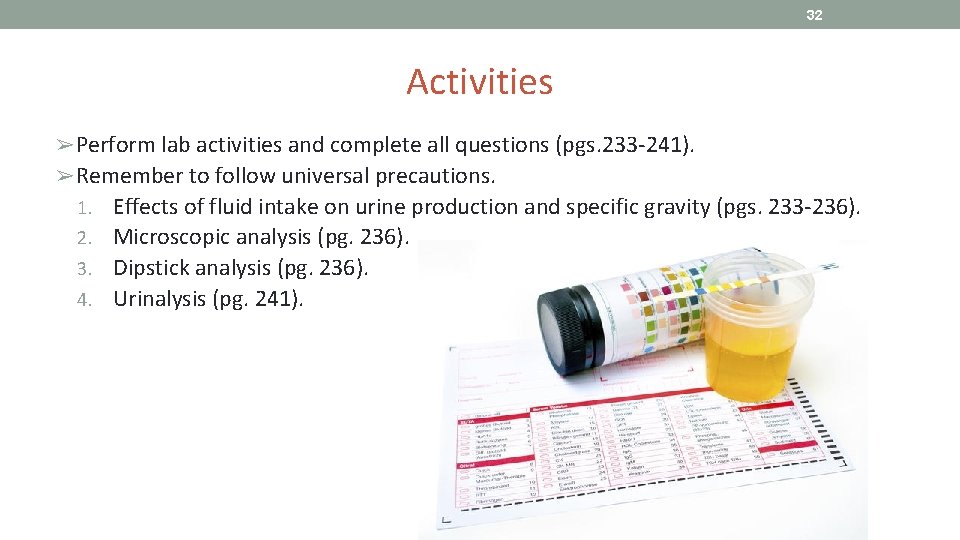
32 Activities ➢Perform lab activities and complete all questions (pgs. 233 -241). ➢Remember to follow universal precautions. Effects of fluid intake on urine production and specific gravity (pgs. 233 -236). 2. Microscopic analysis (pg. 236). 3. Dipstick analysis (pg. 236). 4. Urinalysis (pg. 241). 1.
33
34
35 Urinalysis Lab Everybody urinate • THEN, Students 1, 2 & 3 – drink fluid (timer record time) • Everybody test their urine (time 0) • 1. 2. 3. • specific gravity – pipette 2 drops Dipstick - wet sediment – spin, dump, one drop urine sed + one drop stain Students 1, 2 & 3 empty bladder at time 30, 60 and 90 minutes & record 1. 2. Urine Output – measure volume – graduated cylinders back of room Urine Concentration – measure specific gravity While you wait, do questions in survival guide • Written test • Disposal – Disinfectant, Autoclave, Metal Bucket (see key on tables) •

36 References Marieb, E. N. (2012). Essentials of human anatomy & physiology (6 th ed. ). Boston: Pearson Education, Inc. Marieb, E. N. , Mitchell, S. J. & Smith, L. A. (2012). Human anatomy and physiology laboratory manual (10 th ed. ). Boston: Pearson Education, Inc. Martini, F. , Nath, J. & Bartholomew, E. F. (2012). Fundamentals of anatomy & physiology (9 th ed. ). Boston: Pearson Education, Inc. Mc. Phee, J. & Papadakis, M. (2012) Current medical diagnosis & treatment (51 st ed. ). New York: Mc. Graw Hill. Patton, T. & Thibodeau, G. (2013). Anatomy & physiology (8 th ed. ). St. Louis: Mosby Elsevier. Saladin, K. S. (2012). Anatomy & physiology: The unity of form and function (6 th ed. ). New York: Mc. Graw Hill. Tortora, G. J. & Derrickson, B. H. (2012). Principles of anatomy and physiology (13 th ed. ). Hoboken, NJ: Wiley
- Slides: 36