
Bhskarcrya Ahead of his times 1114 1185 Avinash
Bhāskarācārya Ahead of his times 1114 -1185 Avinash Sathaye Professor of Mathematics University of Kentucky sathaye@uky. edu
Introduction to Zero • Idea of zero as a number. • Power of the right terminology. The model of money, versus lengths of lines. • Creation of numbers: The whole universe of numbers, born out of nothing! Compare: The modern Peano axioms.
The concept of zero as a number • Idea of zero as a number is now established. • You can add/subtract/multiply using 0. • Why is it a no-no for division?
The contrasting disciplines • Geometry and analysis mainly tied down to the real world. • Algebra, the first bold adventure into the unknown. • My favorite quote to elementary algebra students who are afraid of “x”. Bhaskara’s comment on Algebra: It is good for the dimwitted!!
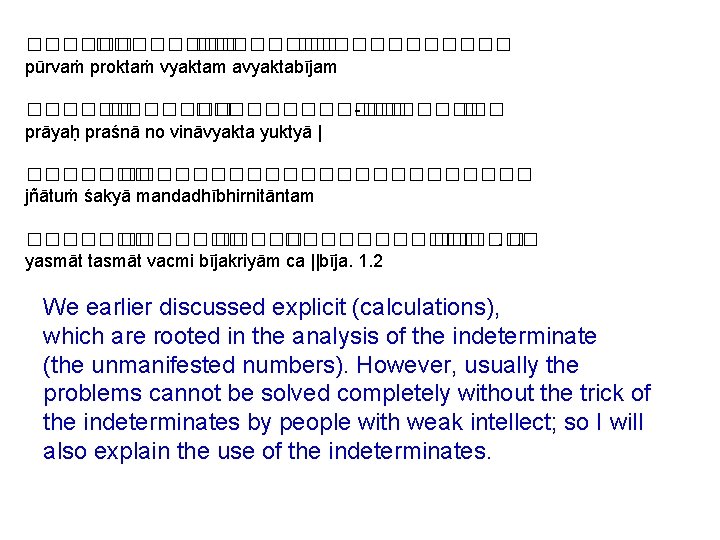
�������� ������ pūrvaṁ proktaṁ vyaktam avyaktabījam ������� -���� � prāyaḥ praśnā no vināvyakta yuktyā | ���������� jñātuṁ śakyā mandadhībhirnitāntam ������������. �. � yasmāt tasmāt vacmi bījakriyām ca ||bīja. 1. 2 We earlier discussed explicit (calculations), which are rooted in the analysis of the indeterminate (the unmanifested numbers). However, usually the problems cannot be solved completely without the trick of the indeterminates by people with weak intellect; so I will also explain the use of the indeterminates.
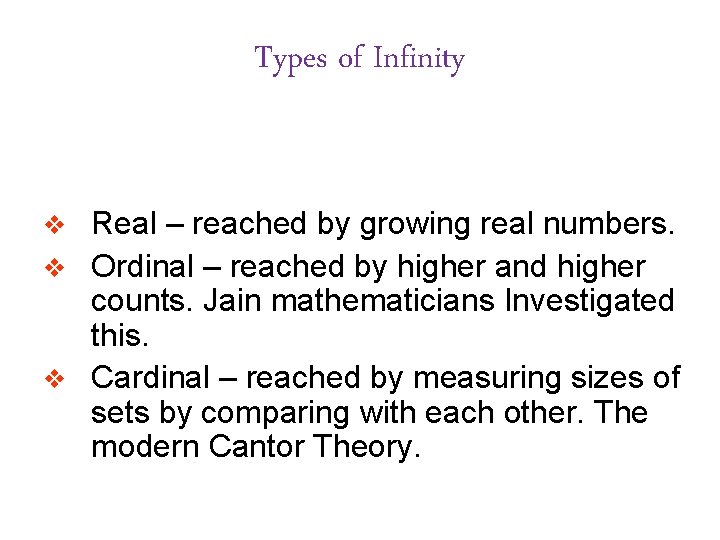
Types of Infinity Real – reached by growing real numbers. v Ordinal – reached by higher and higher counts. Jain mathematicians Investigated this. v Cardinal – reached by measuring sizes of sets by comparing with each other. The modern Cantor Theory. v
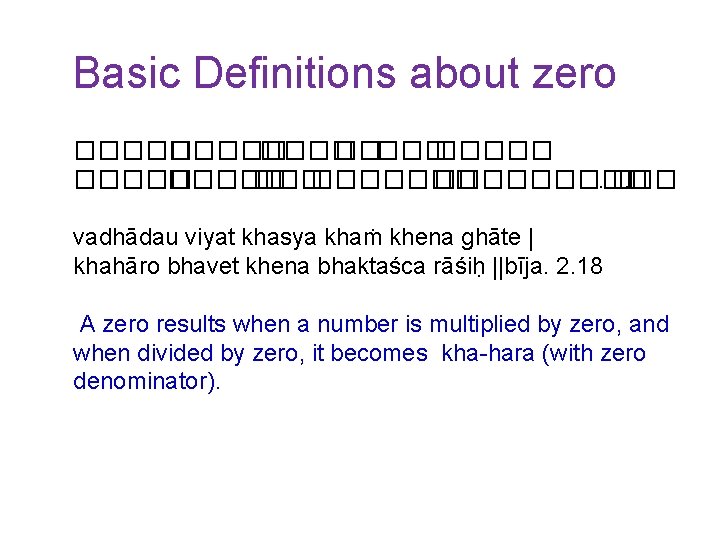
Basic Definitions about zero ����� ����� �������. �. �� vadhādau viyat khasya khaṁ khena ghāte | khahāro bhavet khena bhaktaśca rāśiḥ ||bīja. 2. 18 A zero results when a number is multiplied by zero, and when divided by zero, it becomes kha-hara (with zero denominator).
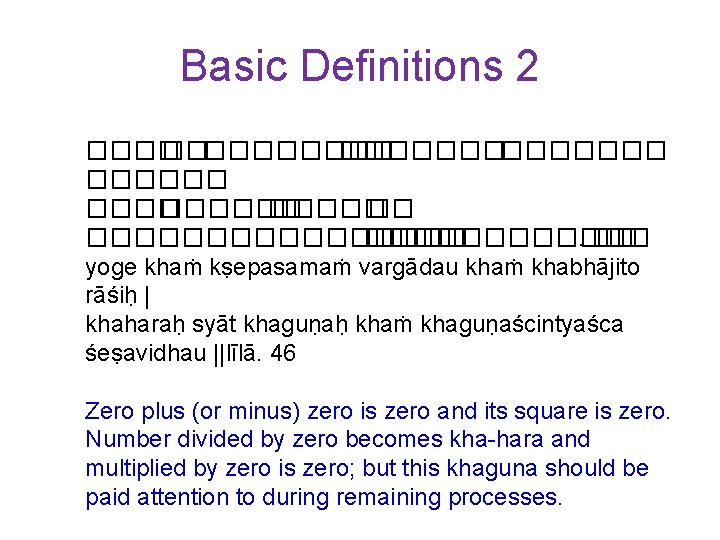
Basic Definitions 2 ���������� ����� �� ��������. �� yoge khaṁ kṣepasamaṁ vargādau khaṁ khabhājito rāśiḥ | khaharaḥ syāt khaguṇaḥ khaṁ khaguṇaścintyaśca śeṣavidhau ||līlā. 46 Zero plus (or minus) zero is zero and its square is zero. Number divided by zero becomes kha-hara and multiplied by zero is zero; but this khaguna should be paid attention to during remaining processes.
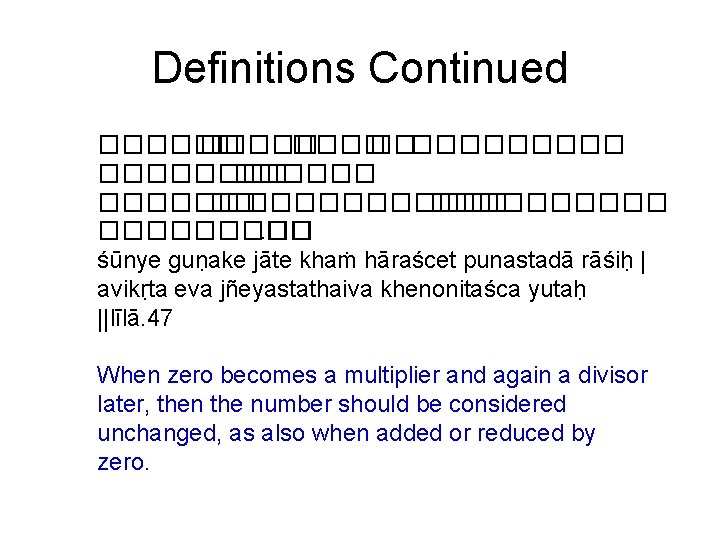
Definitions Continued ������ �������� �� ����������. �� śūnye guṇake jāte khaṁ hāraścet punastadā rāśiḥ | avikṛta eva jñeyastathaiva khenonitaśca yutaḥ ||līlā. 47 When zero becomes a multiplier and again a divisor later, then the number should be considered unchanged, as also when added or reduced by zero.
Special algebraic terms! Effectively, Bhaskaracharya is creating two new algebraic objects called khahara (��� )and khaguṇa (���� ). These go back to Brahmagupta as well, but they were not elaborated as clearly with discussions and examples as by Bhaskaracharya.
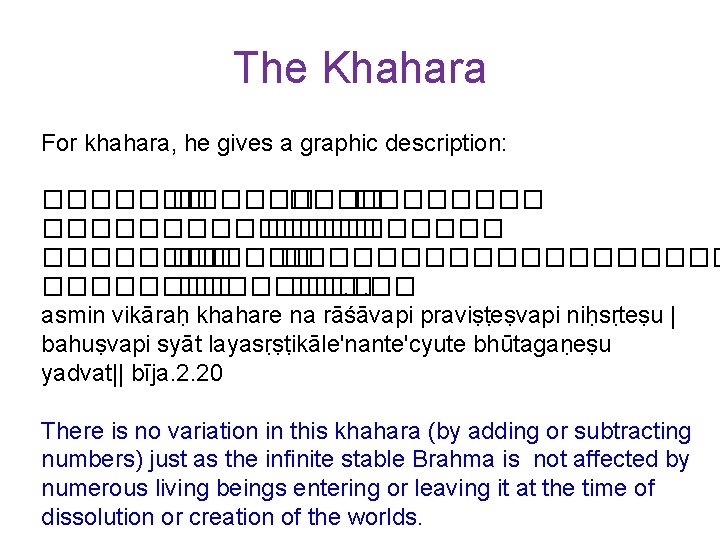
The Khahara For khahara, he gives a graphic description: ������� �������������� ������� ���. �. �� asmin vikāraḥ khahare na rāśāvapi praviṣṭeṣvapi niḥsṛteṣu | bahuṣvapi syāt layasṛṣṭikāle'nante'cyute bhūtagaṇeṣu yadvat|| bīja. 2. 20 There is no variation in this khahara (by adding or subtracting numbers) just as the infinite stable Brahma is not affected by numerous living beings entering or leaving it at the time of dissolution or creation of the worlds.
Our Plan We shall now set up some formal notation and discuss three exercises created by Bhaskaracharya. The first of these is explained as an introduction of limits, a precursor to Calculus. The other two, however, are often described as a blemish on the otherwise great work of Bhaskaracharya. We propose to give a new justification of these exercises.
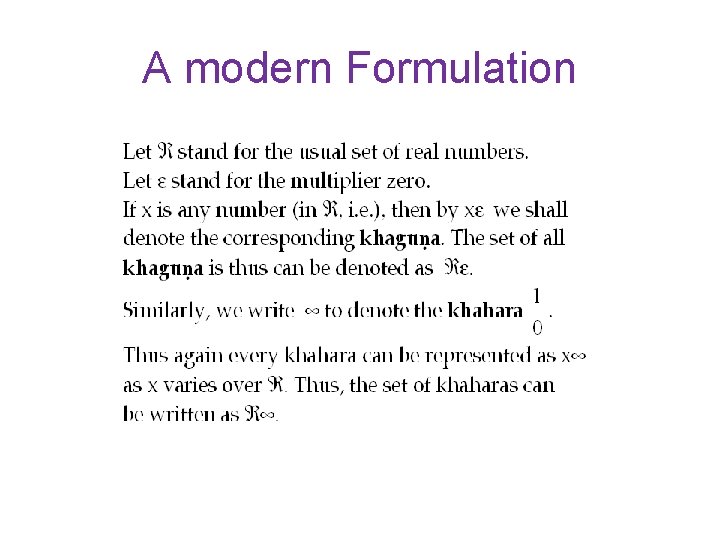
A modern Formulation
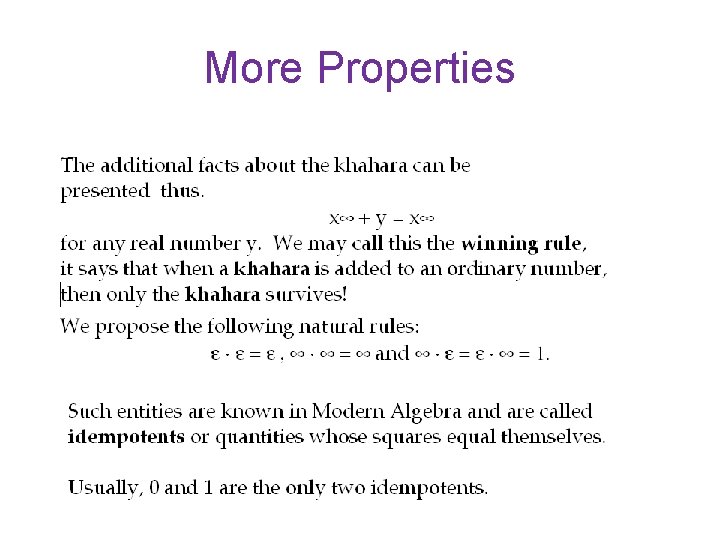
More Properties
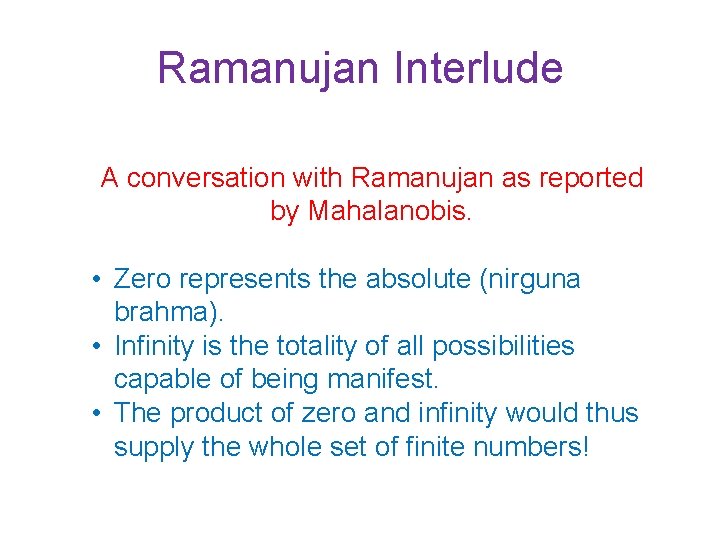
Ramanujan Interlude A conversation with Ramanujan as reported by Mahalanobis. • Zero represents the absolute (nirguna brahma). • Infinity is the totality of all possibilities capable of being manifest. • The product of zero and infinity would thus supply the whole set of finite numbers!
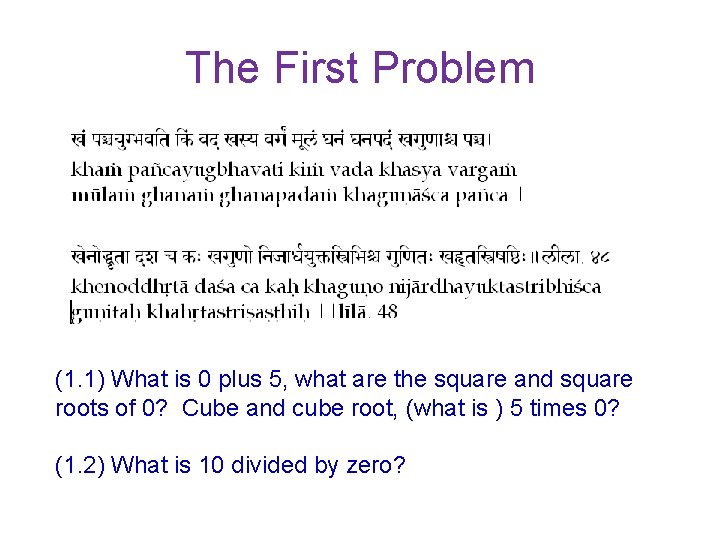
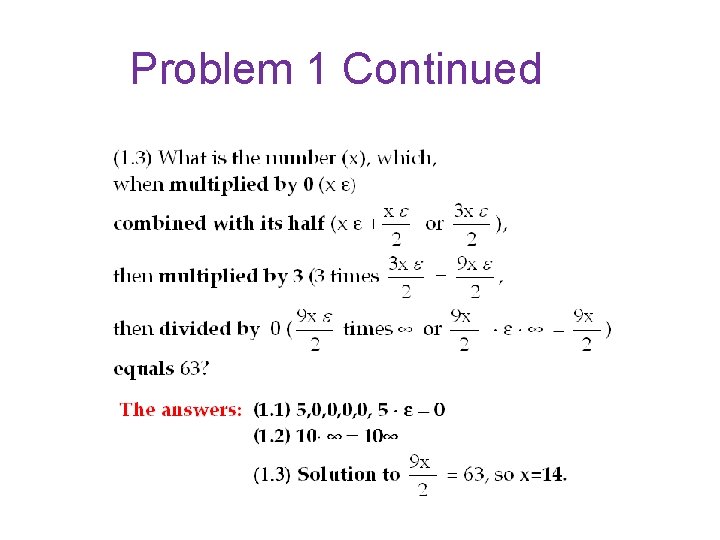
The First Problem (1. 1) What is 0 plus 5, what are the square and square roots of 0? Cube and cube root, (what is ) 5 times 0? (1. 2) What is 10 divided by zero?
Problem 1 Continued
Motivation Old and modern commentators explain the process as a limiting process. The multiplier zero and divisor zero can be both imagined as quantities approaching zero at the same rate, so the limit of their ratio is 1. Indeed Bhaskaracharya certainly had ideas of such limiting processes and is known to have figured out what we may describe as d(sin(x)) = cos(x)dx.
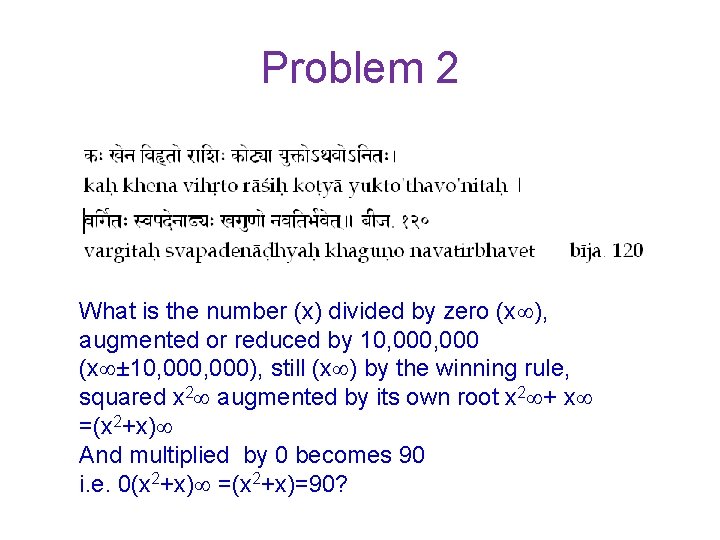
Problem 2 What is the number (x) divided by zero (x ), augmented or reduced by 10, 000 (x ± 10, 000), still (x ) by the winning rule, squared x 2 augmented by its own root x 2 + x =(x 2+x) And multiplied by 0 becomes 90 i. e. 0(x 2+x) =(x 2+x)=90?
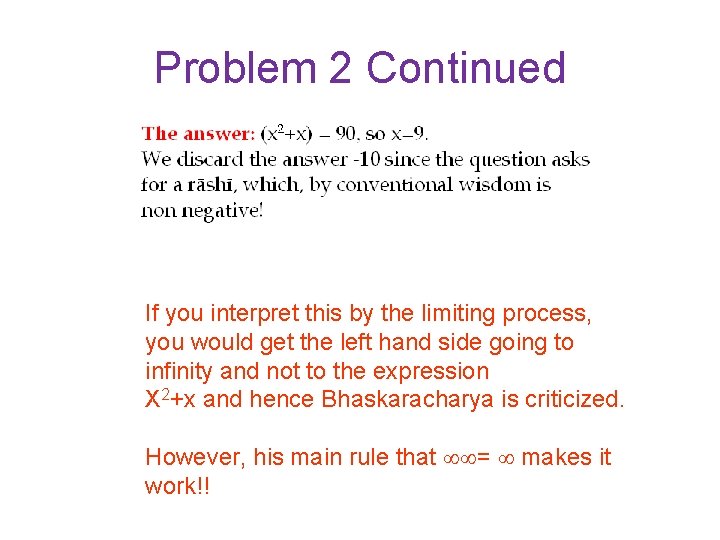
Problem 2 Continued If you interpret this by the limiting process, you would get the left hand side going to infinity and not to the expression X 2+x and hence Bhaskaracharya is criticized. However, his main rule that = makes it work!!
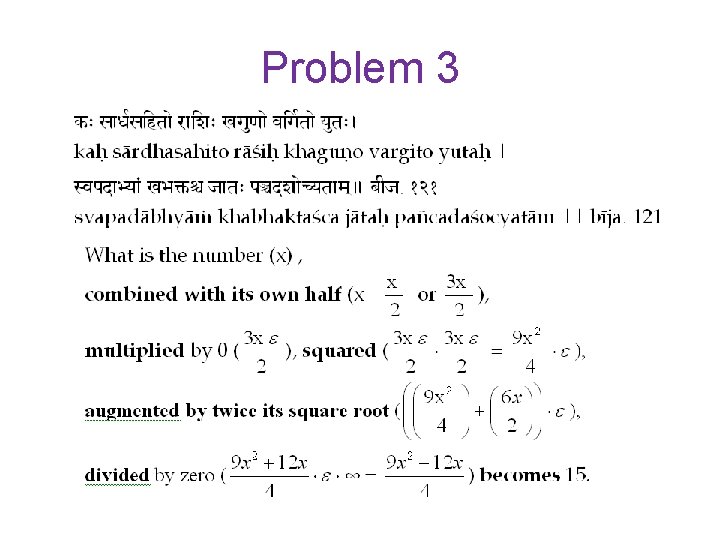
Problem 3
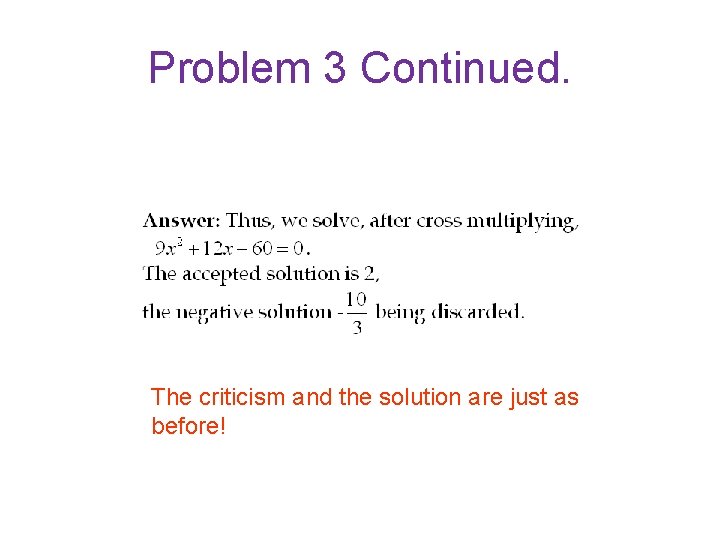
Problem 3 Continued. The criticism and the solution are just as before!
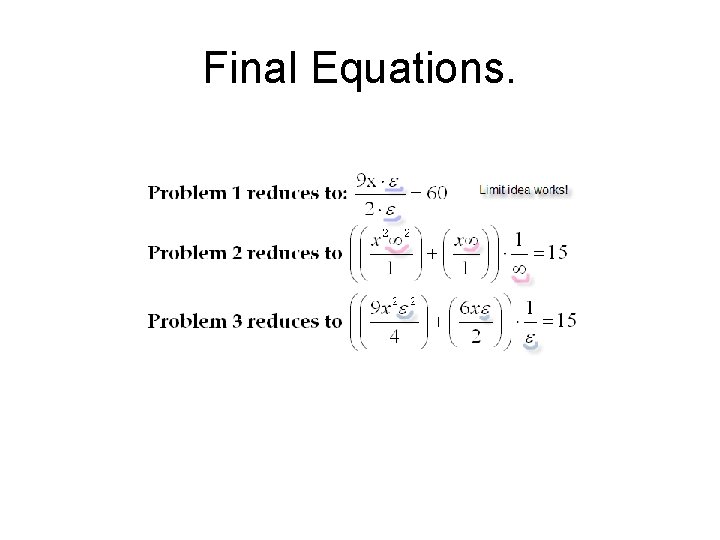
Final Equations.
Final Conclusions. In modern Mathematics, people have found numerous techniques to accommodate infinity. q. The projective geometry adds a whole line at infinity to the usual plane. For the real line, it associates only one point at infinity – same on the positive or negative side. q. In Complex Analysis, it is customary to add a single infinite point for the whole plane, making the Riemann Sphere. However, unlike Bhaskaracharya, it does not make an idempotent!
Final Conclusions continued. q. In Modern Algebra, the localization process does allow zero (or something which behaves like it, namely a zero divisor) in the denominator. But the resulting fraction is reduced to zero. This is like Brahmaguptas declaration of 0/0=0. However, it does not produce the rich structure of Bhaskaracharya. q. In the development of Calculus, the infinitesimals were quantities which have the dual nature of being non zero during calculations but zero at the end. As suggested the first problem fits this idea.
Final Conclusions continued. q But, as explained, the added infinity which is an idempotent is a very different idea. q. The closest analog of this idea can be seen in theory of valuations. For valuations of rank one, it is customary to add an infinity to the field which has the property of idempotence. Valuations of higher rank even produces higher and higher infinities with enhanced winning rules. q. Naturally, such details are best left for a written document!
Dedicated to Bhaskaracharya [1114 -1185] In celebration of his 900 th birth year.
- Slides: 27