
BFT 321 SERVICES MARKETING POSITIONING SERVICES IN COMPETITIVE
BFT 321 SERVICES MARKETING POSITIONING SERVICES IN COMPETITIVE MARKETS By: Nor Irwani Abdul Rahman School of Business Innovation & Technopreneurship Universiti Malaysia Perlis
Chapter Overview � Focus Strategies for Services � Market Segmentation � Service Attributes and Levels � Positioning Distinguishes a Brand from its Competitors � Changing Competitive Positioning
Focus Underlies The Search For Competitive Advantage A meaningful value proposition Value for money? Service quality? People? or Convenience? Positioning is process of creating, communicating, and maintaining the distinctive difference. Why do we need to position our products/ services? What are the competitive advantages?
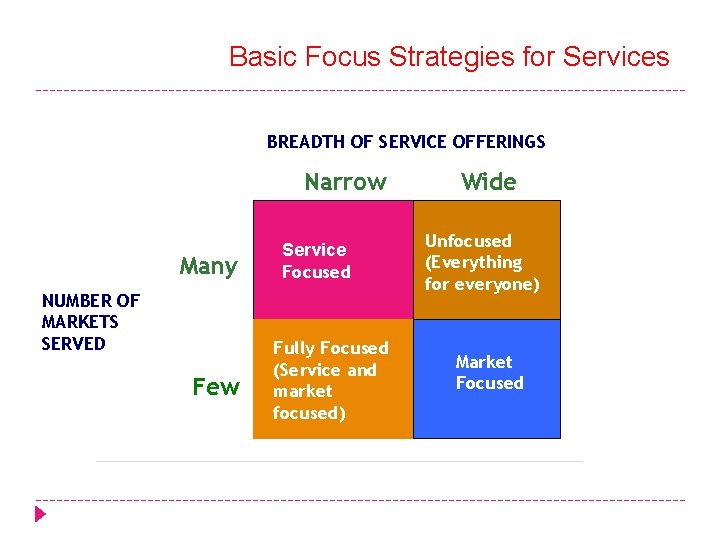
Basic Focus Strategies for Services BREADTH OF SERVICE OFFERINGS Narrow Many NUMBER OF MARKETS SERVED Few Service Focused Fully Focused (Service and market focused) Wide Unfocused (Everything for everyone) Market Focused
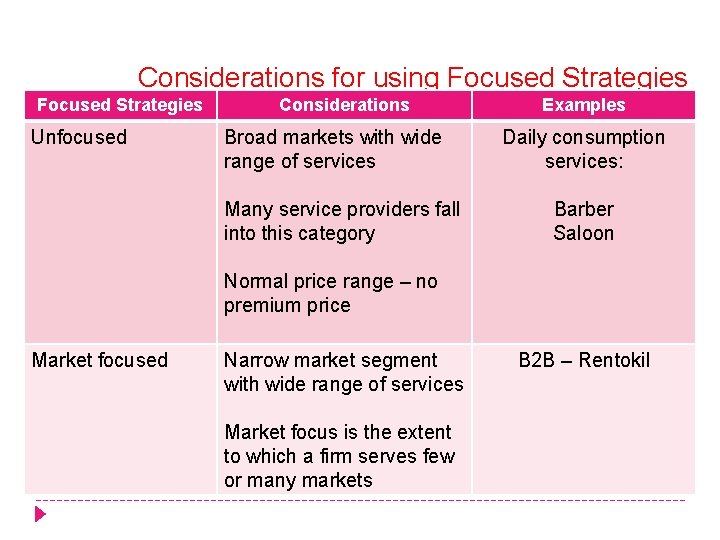
Considerations for using Focused Strategies Unfocused Considerations Broad markets with wide range of services Many service providers fall into this category Examples Daily consumption services: Barber Saloon Normal price range – no premium price Market focused Narrow market segment with wide range of services Market focus is the extent to which a firm serves few or many markets B 2 B – Rentokil
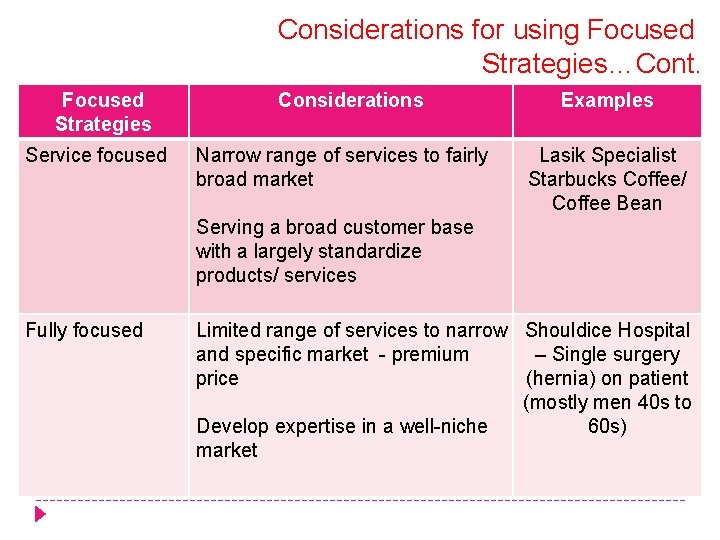
Considerations for using Focused Strategies…Cont. Focused Strategies Service focused Considerations Narrow range of services to fairly broad market Examples Lasik Specialist Starbucks Coffee/ Coffee Bean Serving a broad customer base with a largely standardize products/ services Fully focused Limited range of services to narrow Shouldice Hospital and specific market - premium – Single surgery price (hernia) on patient (mostly men 40 s to Develop expertise in a well-niche 60 s) market
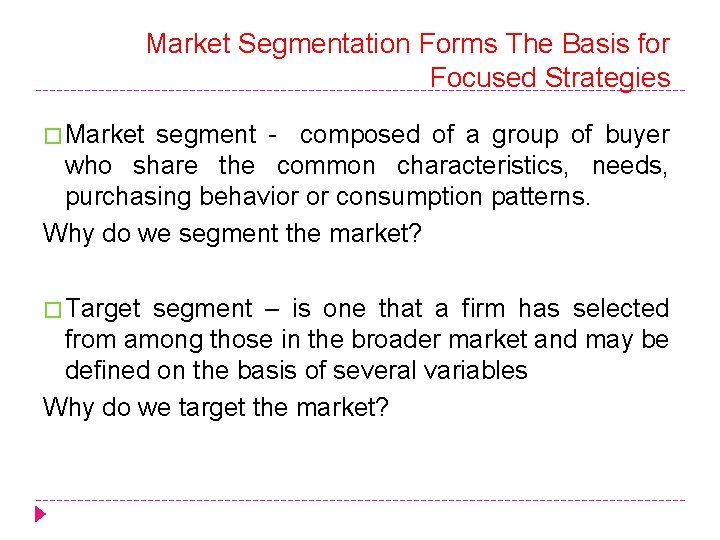
Market Segmentation Forms The Basis for Focused Strategies � Market segment - composed of a group of buyer who share the common characteristics, needs, purchasing behavior or consumption patterns. Why do we segment the market? � Target segment – is one that a firm has selected from among those in the broader market and may be defined on the basis of several variables Why do we target the market?
Service Attributes and Levels
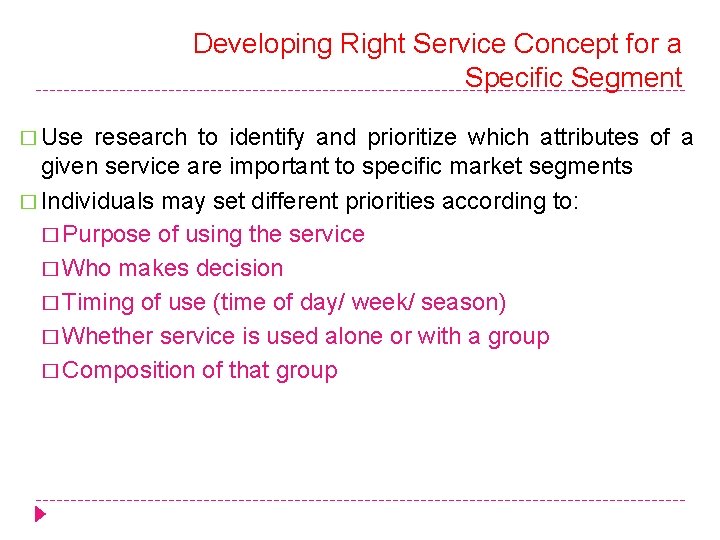
Developing Right Service Concept for a Specific Segment � Use research to identify and prioritize which attributes of a given service are important to specific market segments � Individuals may set different priorities according to: � Purpose of using the service � Who makes decision � Timing of use (time of day/ week/ season) � Whether service is used alone or with a group � Composition of that group
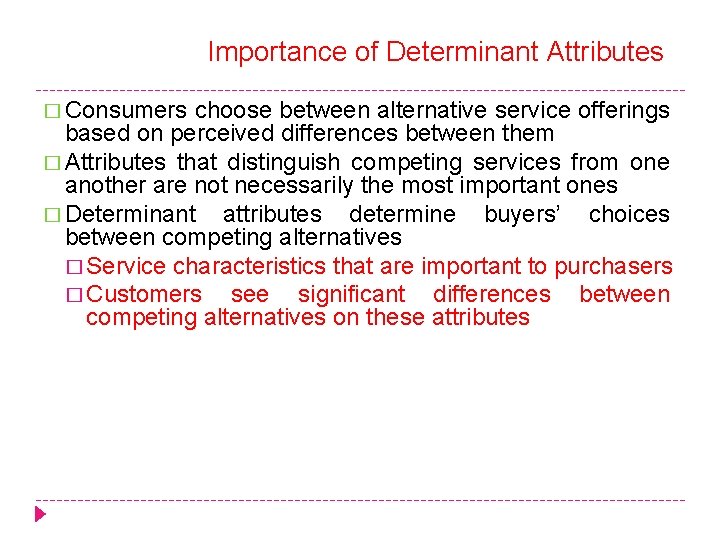
Importance of Determinant Attributes � Consumers choose between alternative service offerings based on perceived differences between them � Attributes that distinguish competing services from one another are not necessarily the most important ones � Determinant attributes determine buyers’ choices between competing alternatives � Service characteristics that are important to purchasers � Customers see significant differences between competing alternatives on these attributes
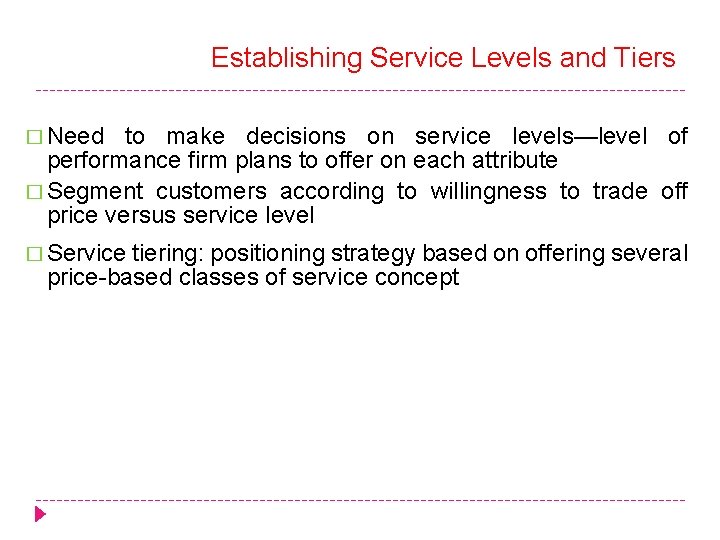
Establishing Service Levels and Tiers � Need to make decisions on service levels—level of performance firm plans to offer on each attribute � Segment customers according to willingness to trade off price versus service level � Service tiering: positioning strategy based on offering several price-based classes of service concept
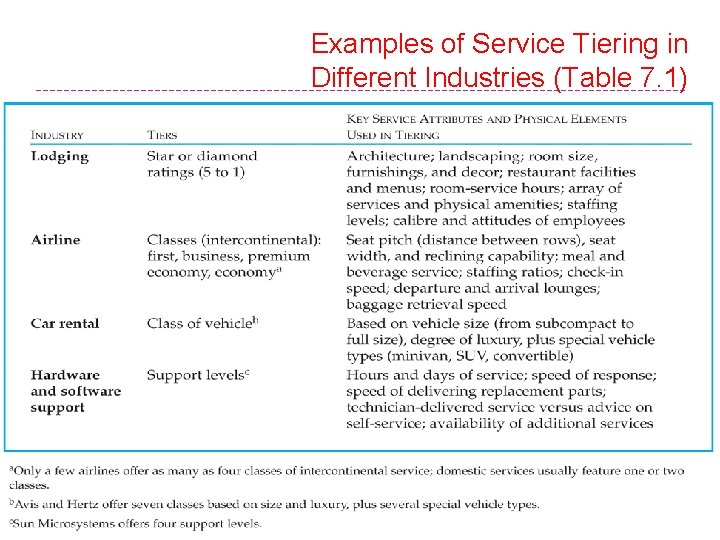
Examples of Service Tiering in Different Industries (Table 7. 1)
INTERNAL, MARKET AND COMPETITOR ANALYSIS
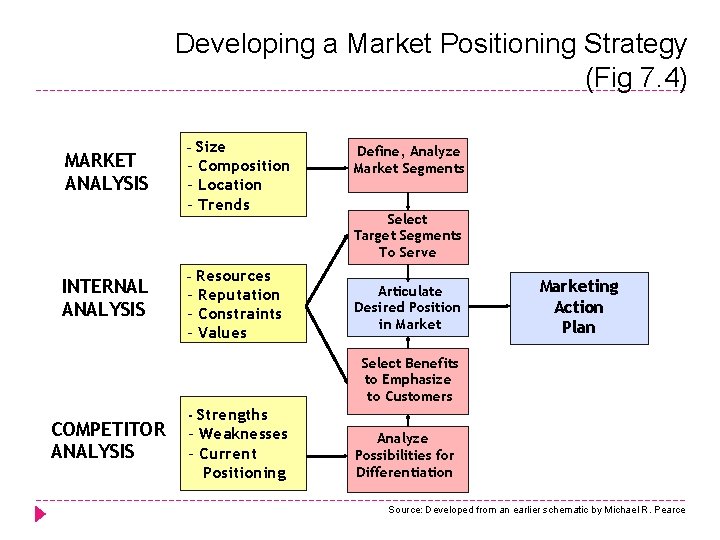
Developing a Market Positioning Strategy (Fig 7. 4) MARKET ANALYSIS INTERNAL ANALYSIS - Size - Composition - Location - Trends - Resources - Reputation - Constraints - Values Define, Analyze Market Segments Select Target Segments To Serve Articulate Desired Position in Marketing Action Plan Select Benefits to Emphasize to Customers COMPETITOR ANALYSIS - Strengths - Weaknesses - Current Positioning Analyze Possibilities for Differentiation Source: Developed from an earlier schematic by Michael R. Pearce
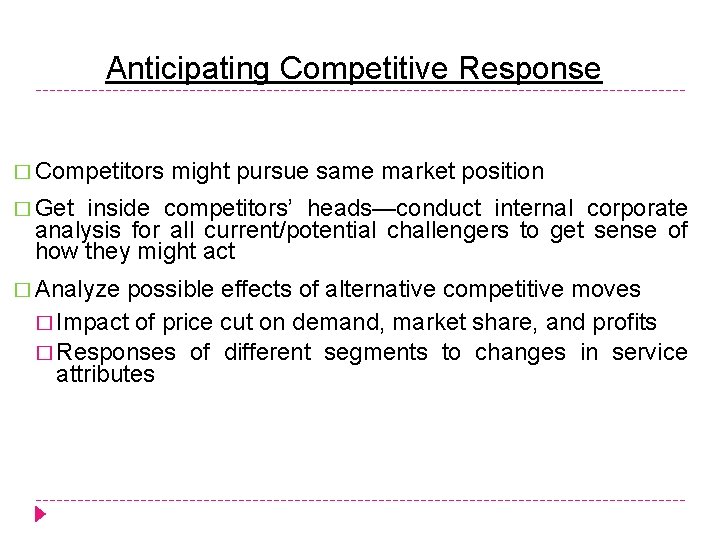
Anticipating Competitive Response � Competitors might pursue same market position � Get inside competitors’ heads—conduct internal corporate analysis for all current/potential challengers to get sense of how they might act � Analyze possible effects of alternative competitive moves � Impact of price cut on demand, market share, and profits � Responses of different segments to changes in service attributes
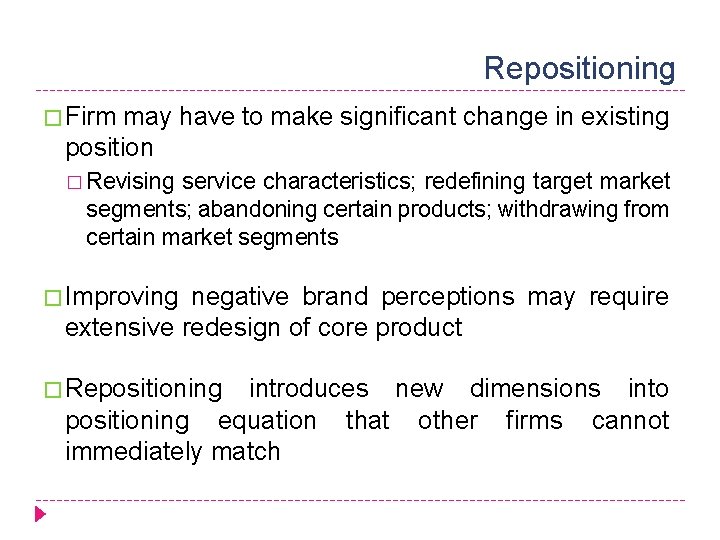
Repositioning � Firm may have to make significant change in existing position � Revising service characteristics; redefining target market segments; abandoning certain products; withdrawing from certain market segments � Improving negative brand perceptions may require extensive redesign of core product � Repositioning introduces new dimensions into positioning equation that other firms cannot immediately match

To be continued… 17
- Slides: 17