
Beyond the Furniture Space CREATING A LEARNERCENTERED ENVIRONMENT
Beyond the Furniture: Space CREATING A LEARNER-CENTERED ENVIRONMENT Ben Wagner, Resource Teacher Office of Digital Learning
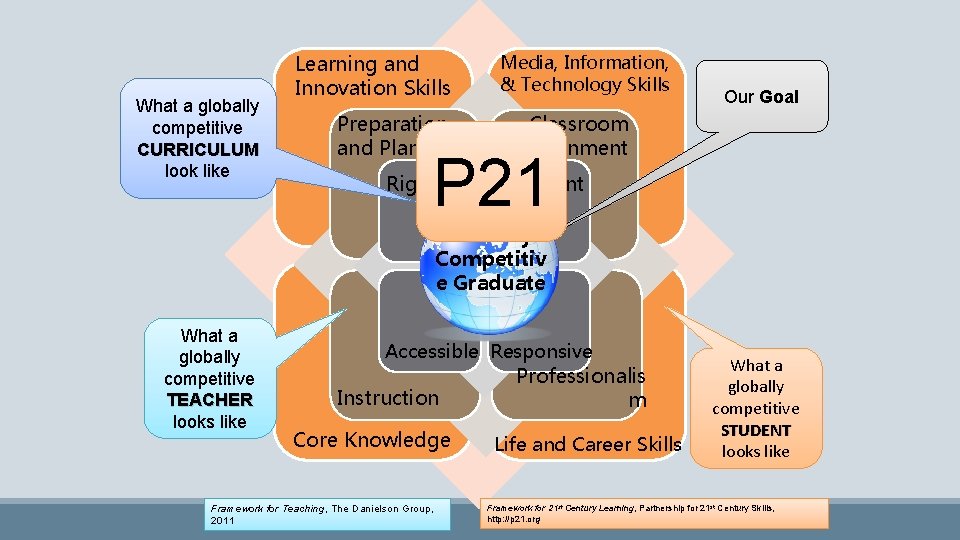
What a globally competitive CURRICULUM look like Learning and Innovation Skills Preparation and Planning Media, Information, & Technology Skills Our Goal Classroom Environment P 21 Rigorous Relevant Globally Competitiv e Graduate What a globally competitive TEACHER looks like Accessible Responsive Instruction Core Knowledge Framework for Teaching, The Danielson Group, 2011 Professionalis m Life and Career Skills What a globally competitive STUDENT looks like Framework for 21 st Century Learning, Partnership for 21 st Century Skills, http: //p 21. org
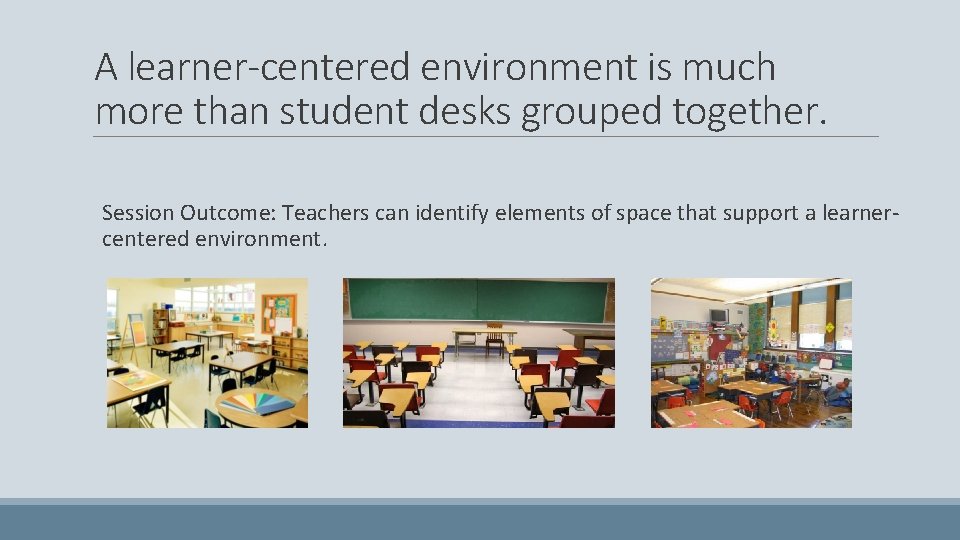
A learner-centered environment is much more than student desks grouped together. Session Outcome: Teachers can identify elements of space that support a learnercentered environment.
We will discover: How we are using space to support learnercentered instruction How our spaces are showing evidence of learnercentered instruction What we can do to show more evidence
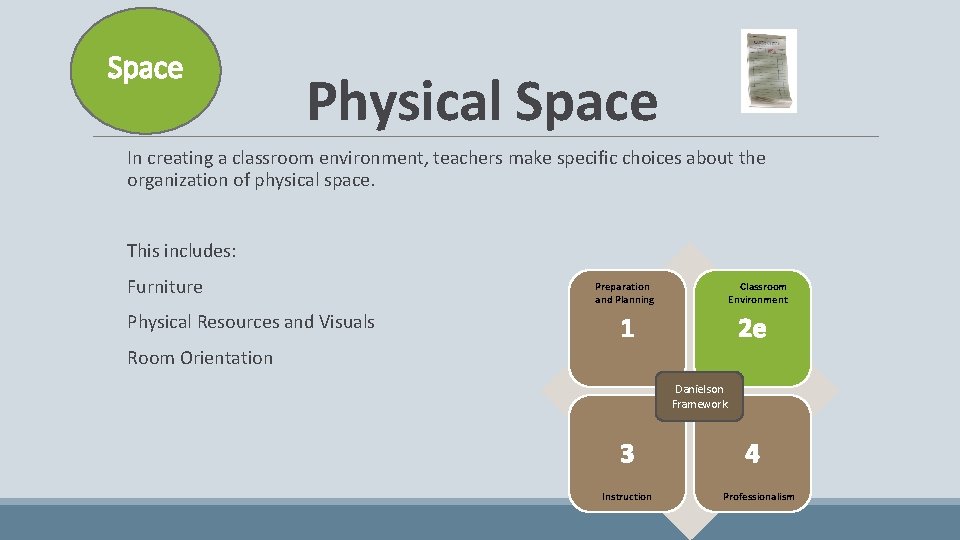
Space Physical Space In creating a classroom environment, teachers make specific choices about the organization of physical space. This includes: Furniture Physical Resources and Visuals Preparation and Planning Classroom Environment 1 2 e Room Orientation Danielson Framework 3 Instruction 4 Professionalism
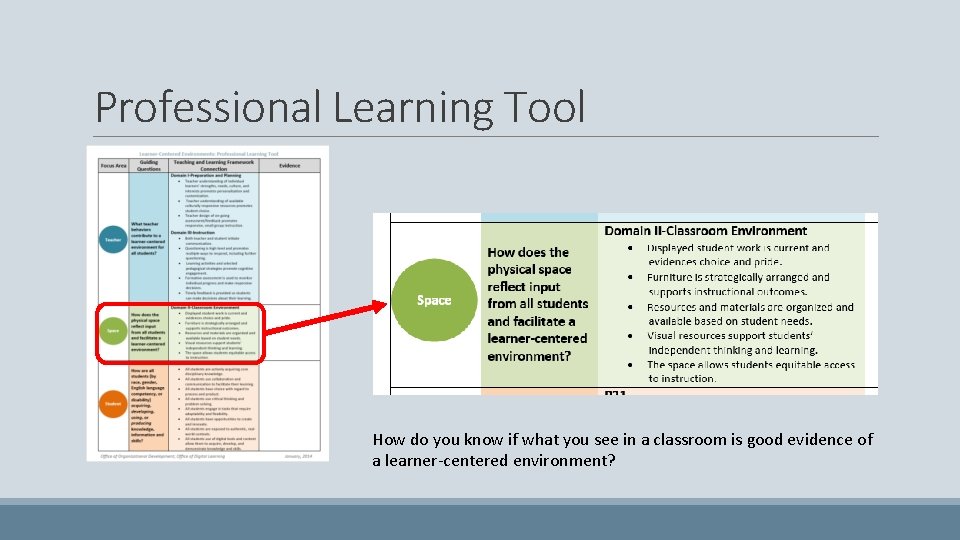
Professional Learning Tool How do you know if what you see in a classroom is good evidence of a learner-centered environment?
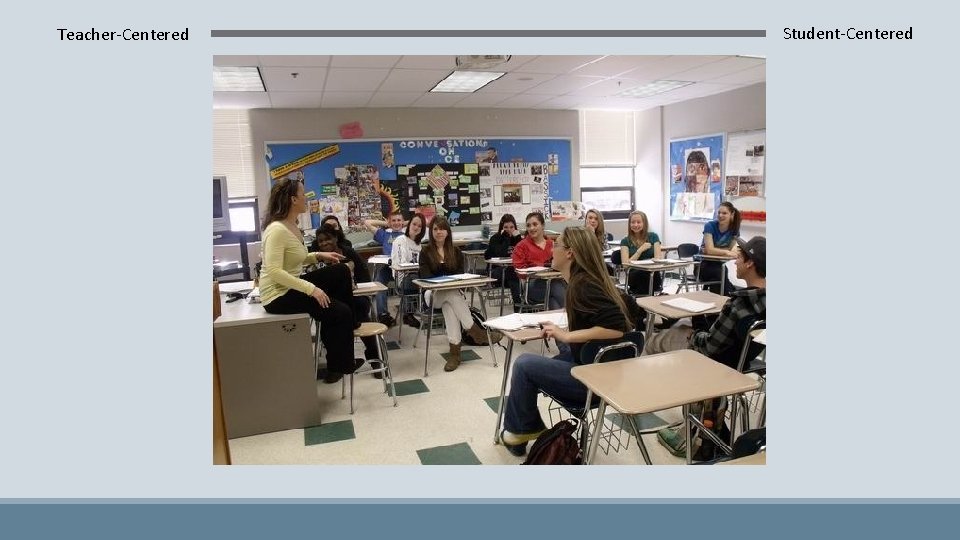
Teacher-Centered Student-Centered
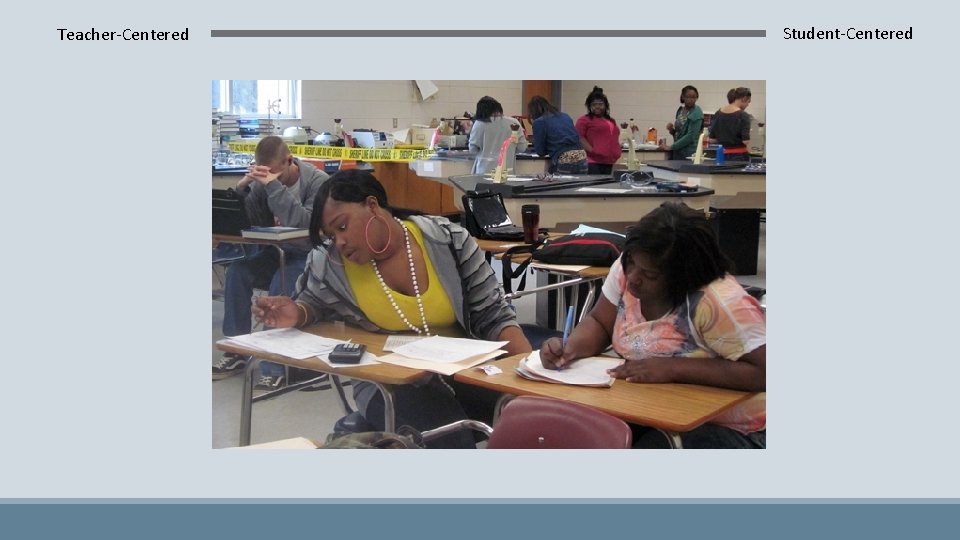
Teacher-Centered Student-Centered
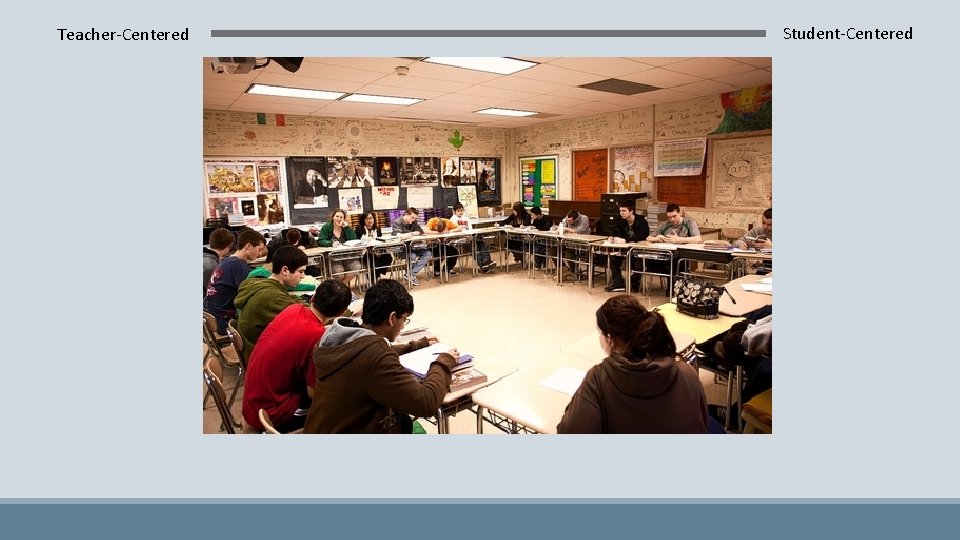
Teacher-Centered Student-Centered
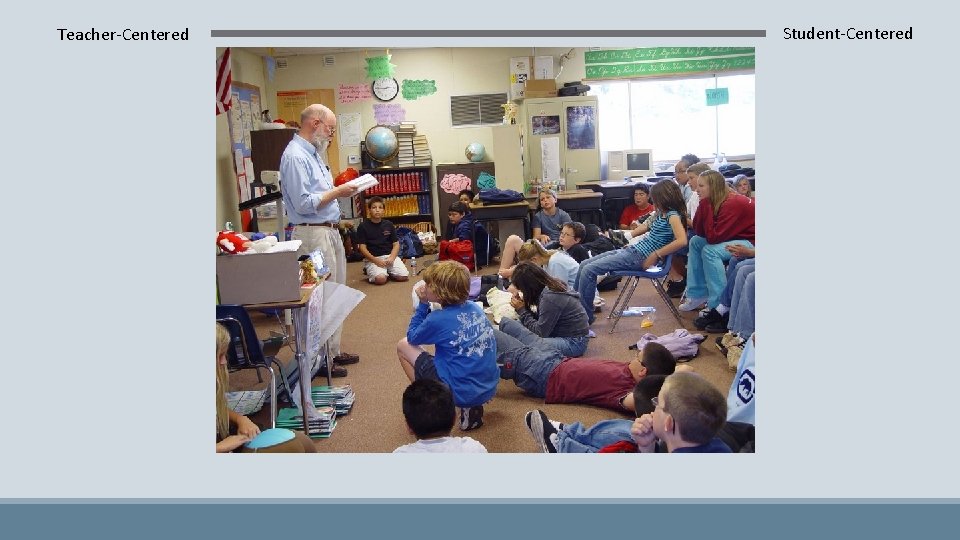
Teacher-Centered Student-Centered
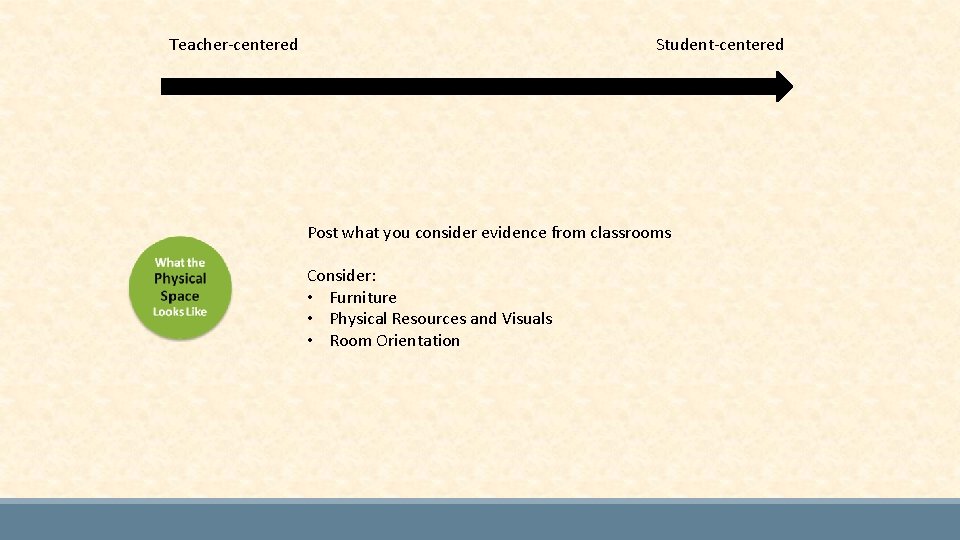
Teacher-centered Student-centered Post what you consider evidence from classrooms Consider: • Furniture • Physical Resources and Visuals • Room Orientation
Digging deeper into the Professional Learning Tool How do you know what is good evidence of a Learner-Centered Environment? ◦ Displayed student work is current and evidences choice and pride ◦ Furniture is strategically arranged and supports instructional outcomes ◦ Resources and materials are organized and available based on student needs ◦ Visual resources support students’ independent thinking and learning ◦ The space allows students equitable access to instruction
Teacher-centered Student-centered Revise your thinking. Consider: • Moving notes left or right • Add additional ideas (use a different color)
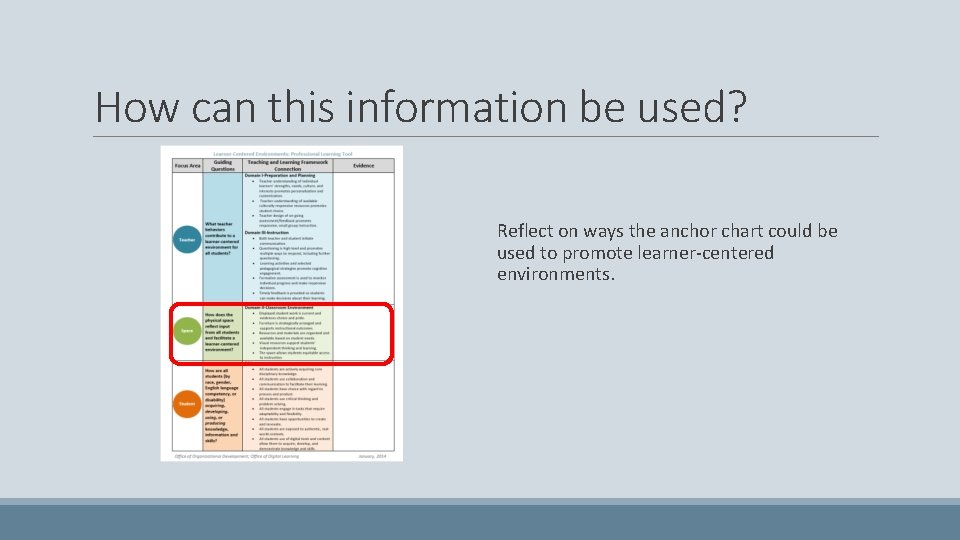
How can this information be used? Reflect on ways the anchor chart could be used to promote learner-centered environments.
- Slides: 14