
Beyond Science and Decisions From Problem Formulation to
Beyond Science and Decisions: From Problem Formulation to Dose-Response - Framework 1
Workshop Objectives • Additionally develop the content of the NAS (2009) report on improving the risk assessment process to develop a compendium of practical, problem-driven approaches for “fit for purpose” risk assessments – linking methods with specific problem formulations (e. g. , prioritization, screening, and in-depth assessment) for use by risk managers at a variety of levels (e. g. , states, regional managers, people in a variety of agencies, and in the private sector) • Implement a multi-stakeholder approach to share information, ideas and techniques in support of developing practical problem-driven risk assessment methods compendium. 2
Case Study Process • Process encouraged engagement from wide variety of stakeholders • Proposed in brainstorming prior to first workshop • Initial vetting and review in breakout groups at first workshop • Presentations at second workshop • Additional case studies and issues identified at second workshop • 30+ case studies proposed • 24 case studies presented and reviewed by panel 3
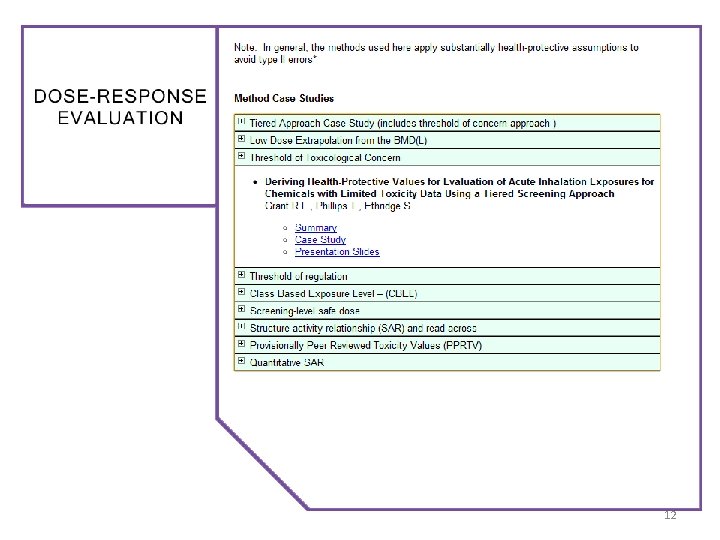
Case Study Process & Dose-Response Framework • Need for systematic organization of methods and ability to identify gaps • Need for framework as a resource for risk assessors • An interactive tool – draft framework - was developed by panel members and interested workshop participants to aid in selecting dose-response methods based on: – Problem formulation; data availability; regulatory context • The framework was used by the panel to prioritize new case studies for third workshop, focusing on 3 topic areas: – Problem formulation – Mode of action – Endogenous & background exposures 4
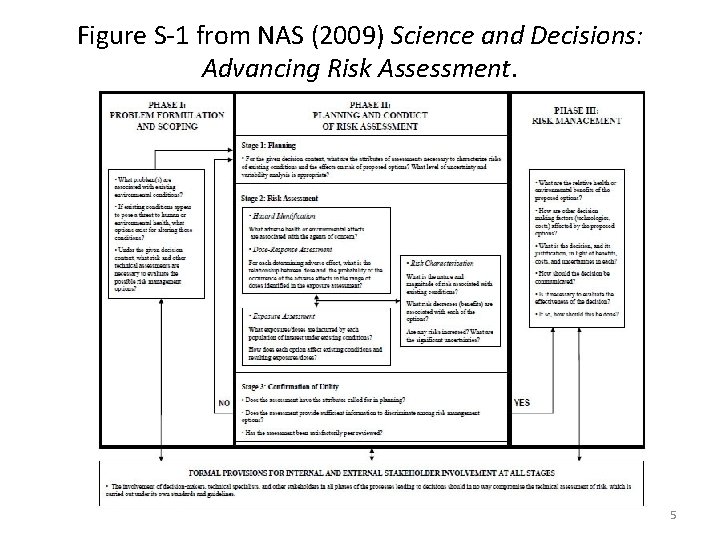
Figure S-1 from NAS (2009) Science and Decisions: Advancing Risk Assessment. 5
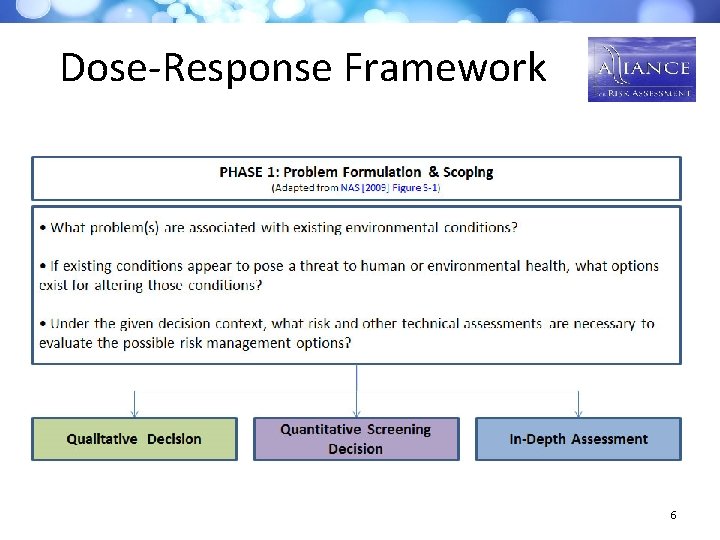
Dose-Response Framework 6
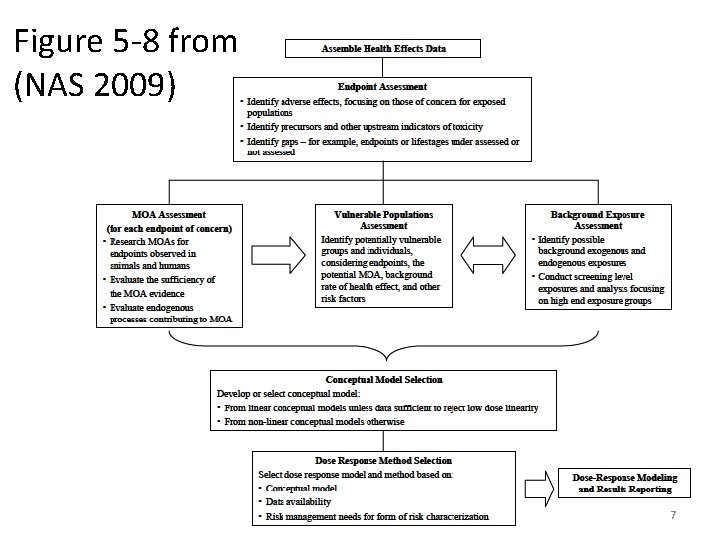
Figure 5 -8 from (NAS 2009) 7
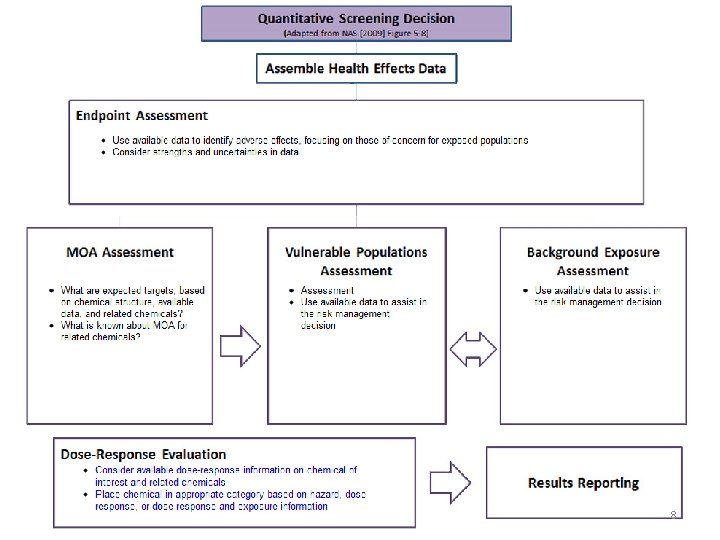
8
Dose Response Framework The risk assessor is guided to methods that address key issues, such as: – Mode of action assessment – Vulnerable population assessment – Endogenous/background exposure – Dose-response methods reflecting different • Conceptual models • Data availability • Risk management needs 9
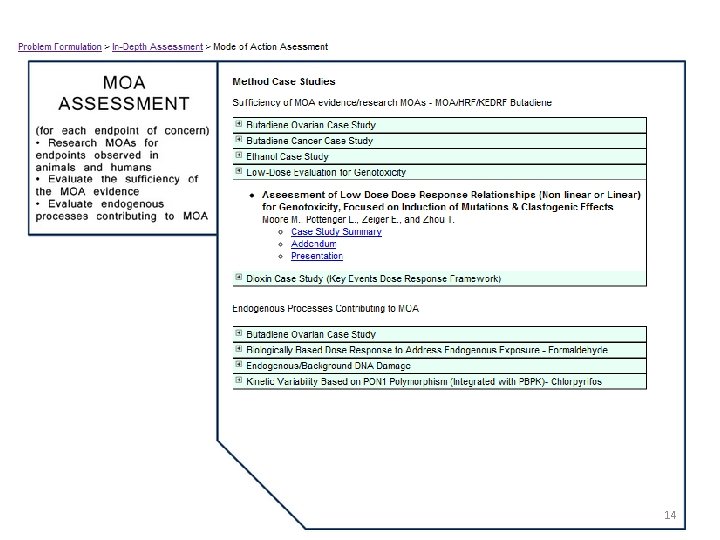
Methods Presentation Methods linked to case studies to illustrate realworld application • Summaries that briefly describe method, provide key references, outline the minimum data requirements, describe strengths and weaknesses – Summary addresses the method’s potential to address human variability, sensitive populations, and background exposures or responses. • In depth full case study • Workshop presentation slides • Future: Linking to key guidance documents 10
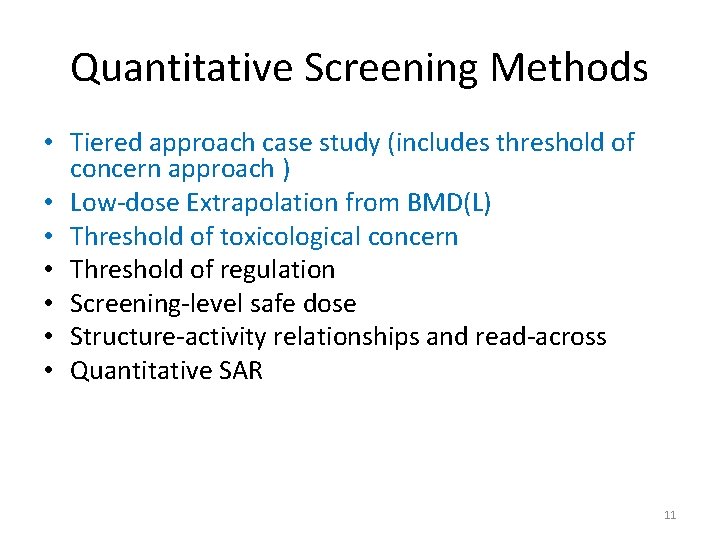
Quantitative Screening Methods • Tiered approach case study (includes threshold of concern approach ) • Low-dose Extrapolation from BMD(L) • Threshold of toxicological concern • Threshold of regulation • Screening-level safe dose • Structure-activity relationships and read-across • Quantitative SAR 11
12
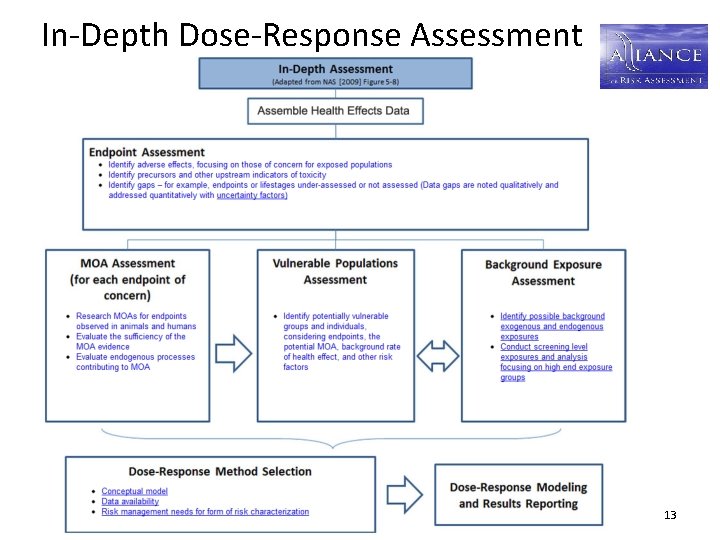
In-Depth Dose-Response Assessment 13
14
Workshop Results • 24 case studies were developed by outside parties and reviewed by the expert panel. – Additionally evolved methodologies in specific areas – Explored crosscutting issues raised by NAS (2009), including---but not limited to---problem formulation, Mode of Action (MOA), background & endogenous exposures, & dose response methods • Paper on workshop series and framework in preparation 15
Workshop Results • The expert panel determined that: – A wide range of problem formulations or decision contexts exist for which different dose-response analysis techniques are needed. – It is important for risk assessors to explain criteria applied in the choice of a particular dose-response or risk assessment approach, and how the dose-response results will be used in a risk management decision. – Additional dissemination of dose-response analysis techniques for a wide range of problem formulations or decision contexts is needed – Additional case studies would be useful on topics such as: • Combined exposures • Value of information • Illustrating an entire risk assessment, from problem formulation to conclusion • In vitro to in vivo extrapolation 16
Next Steps • Framework will be “evergreen, ” growing and evolving over time. It will be updated with additional methods and guidance documents, illustrated by case studies and with papers addressing and resolving cross-cutting issues. • The National Library of Medicine has expressed interest in hosting the Framework. • A standing panel has been created to meet twice a year to review additional case studies and issue/resolution papers. • Workshop 4 scheduled for May 22 -24 in Austin, Texas at TCEQ. Additional sponsors/participants will be invited to join in the overall effort. 17
Collaborators 18
Framework • ARA Dose Response Framework – (working beta) http: //www. allianceforrisk. org/workshop/fra mework/ problemformulation. html • Monday, 9: 30 -12: 15: Poster Board -415. Where the rubber meets the road: A practical methods compendium for risk assessors. • Workshop 4 scheduled for May 22 -24 in Austin, Texas at TCEQ 19
- Slides: 19