
Beyond doing the job Governance and Professional Issues
Beyond doing the job: Governance and Professional Issues Prof. Ray Miller Retired Professional Advisor for Psychology, NHS Lothian Past President, BPS
Governance The Governator 29 January 2010 Professional Issues Prof Ray Miller 2
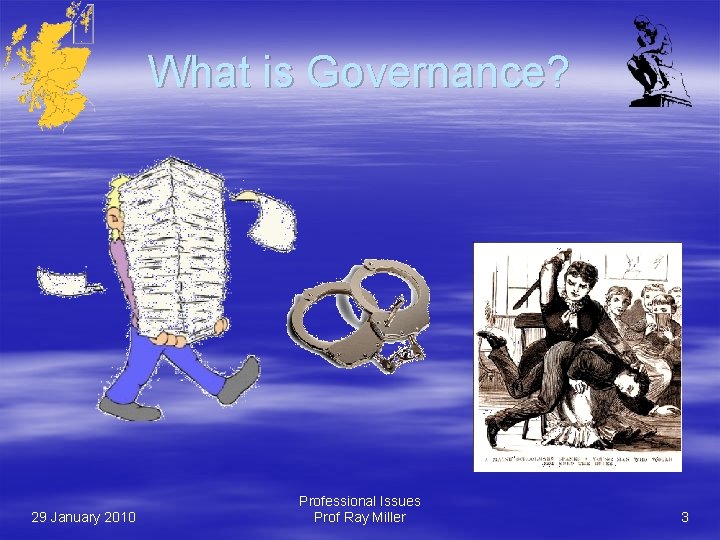
What is Governance? 29 January 2010 Professional Issues Prof Ray Miller 3
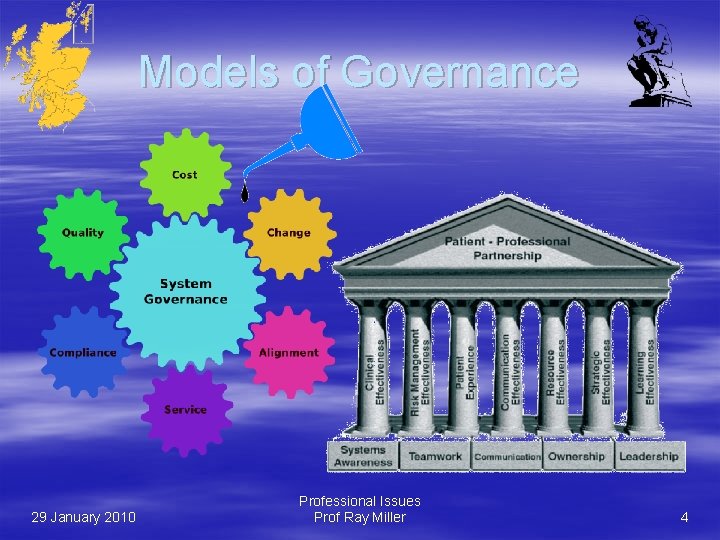
Models of Governance 29 January 2010 Professional Issues Prof Ray Miller 4
Dimensions of Governance § Corporate Governance § Professional Governance § Clinical Governance § Self Governance 29 January 2010 Professional Issues Prof Ray Miller - policies & regulations - conduct & ethics - procedures (NICE, ICPs) - integrity & reflection 5
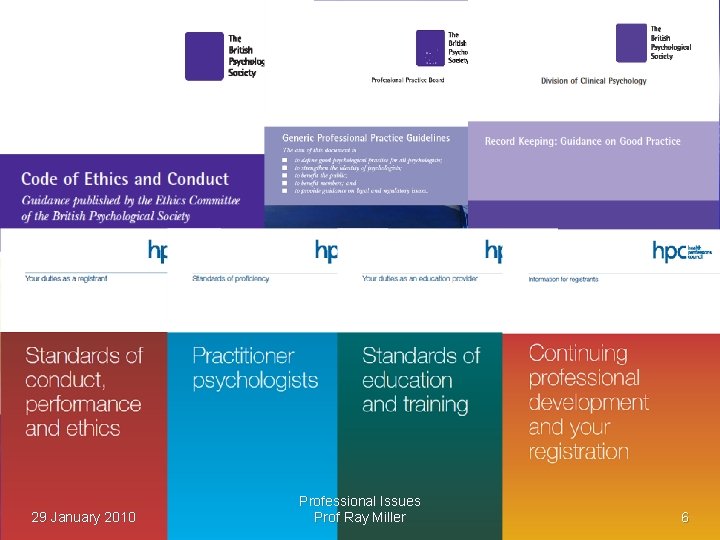
Professional Governance 29 January 2010 Professional Issues Prof Ray Miller 6
HPC www. hpc-uk. org § HPC only deals with the registration of Qualified Practitioner Psychologists § It does not cover: Assistants Trainees Clinical Associates Psychological Therapists § There are special arrangements for Grandparenting and Overseas Qualifications 29 January 2010 Professional Issues Prof Ray Miller 7
HPC www. hpc-uk. org § § § Fees - £ 152 every 2 years Newly qualified - £ 76 for first 2 years Registration ONLY on graduation – must be registered to be employed in NHS! § What does HPC do for you ? : It does NOT - It DOES - promote psychology develop psychology defend psychology police psychologists § If you want a robust professional body that acts on behalf of psychology and psychologists: join the BPS! 29 January 2010 Professional Issues Prof Ray Miller 8
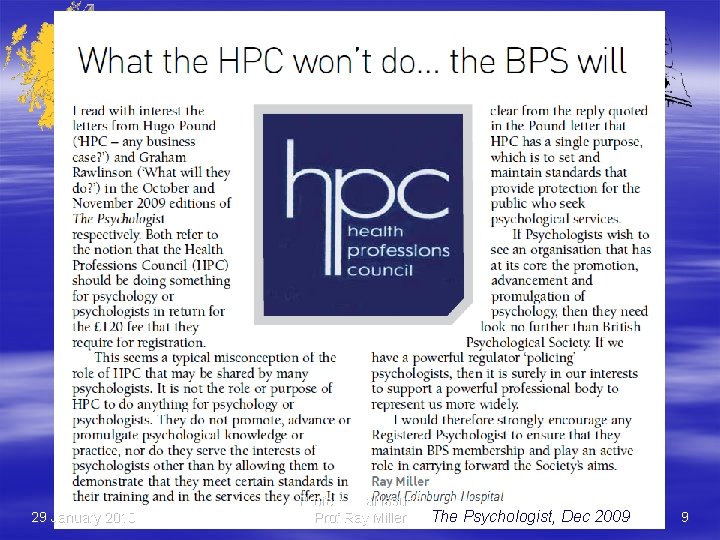
Psychologist Dec 2009 29 January 2010 Professional Issues The Psychologist, Dec 2009 Prof Ray Miller 9
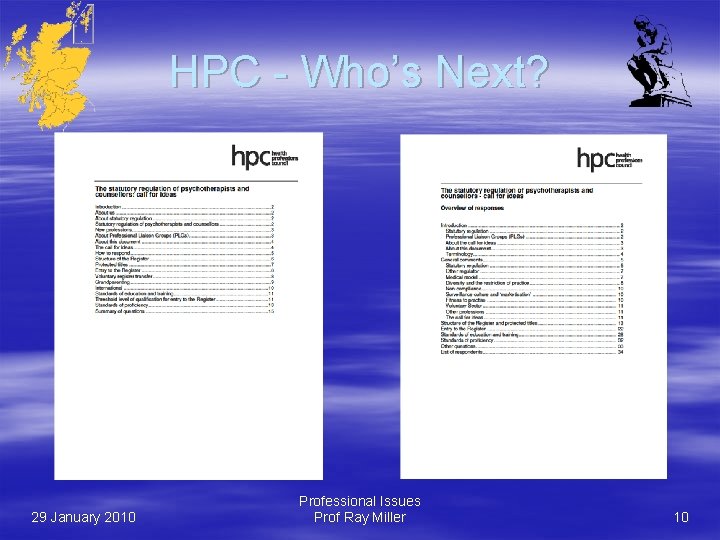
HPC - Who’s Next? 29 January 2010 Professional Issues Prof Ray Miller 10
Accessing key documents § www. bps. org. uk § www. hpc-uk. org 29 January 2010 Professional Issues Prof Ray Miller 11
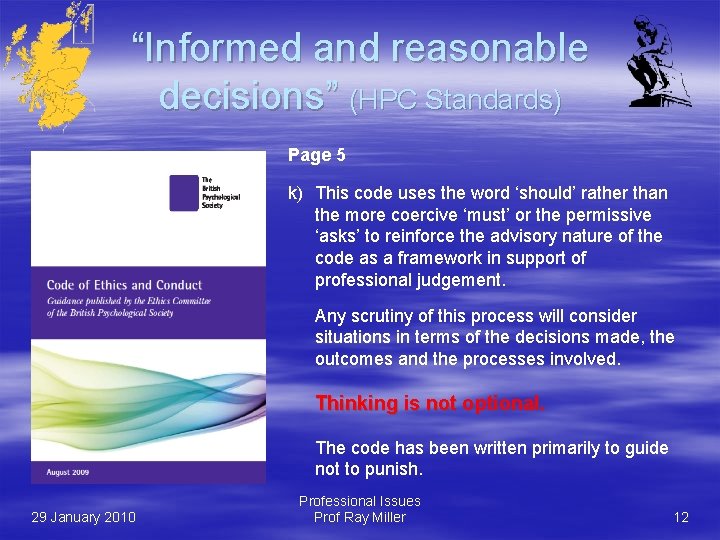
“Informed and reasonable decisions” (HPC Standards) Page 5 k) This code uses the word ‘should’ rather than the more coercive ‘must’ or the permissive ‘asks’ to reinforce the advisory nature of the code as a framework in support of professional judgement. Any scrutiny of this process will consider situations in terms of the decisions made, the outcomes and the processes involved. Thinking is not optional. The code has been written primarily to guide not to punish. 29 January 2010 Professional Issues Prof Ray Miller 12
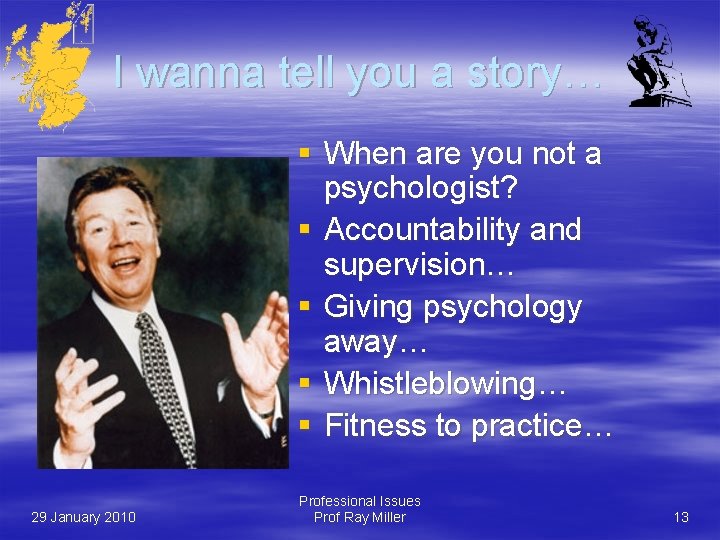
I wanna tell you a story… § When are you not a psychologist? § Accountability and supervision… § Giving psychology away… § Whistleblowing… § Fitness to practice… 29 January 2010 Professional Issues Prof Ray Miller 13
A good idea… son! § Never make decisions on tricky ethical, governance or professional issues on your own! § Always seek the advice of an experienced and, usually, senior colleague. 29 January 2010 Professional Issues Prof Ray Miller 14
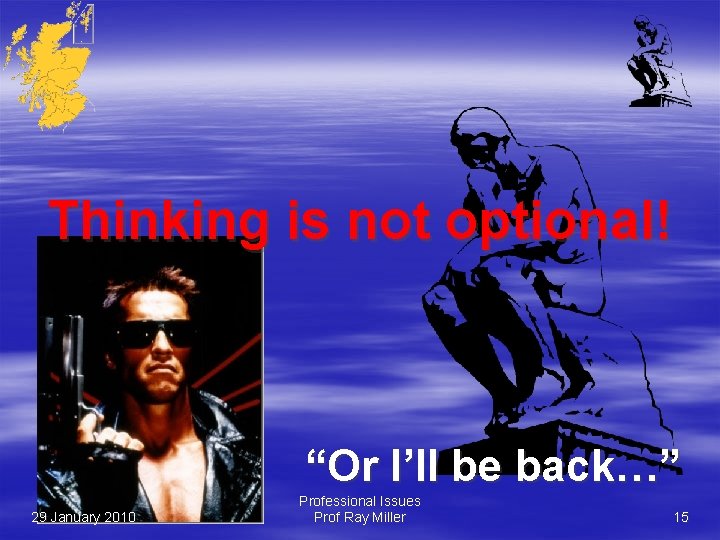
Thinking is not optional! “Or I’ll be back…” 29 January 2010 Professional Issues Prof Ray Miller 15
- Slides: 15