
BEYOND BIOPHILIA EXPLORING THE SOCIAL ROOTS OF NATURE
BEYOND BIOPHILIA: EXPLORING THE SOCIAL ROOTS OF NATURE PROTECTION CSA (Kris) van Koppen Environmental Policy Group, Wageningen University The Netherlands
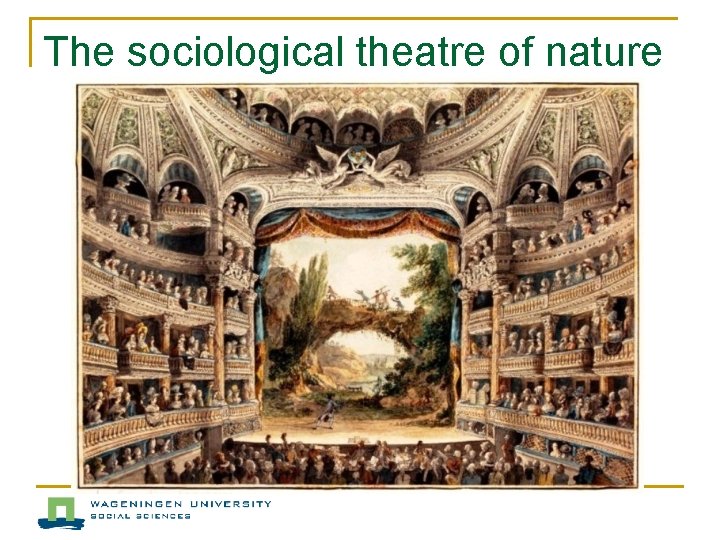
The sociological theatre of nature
Redefining the scene of the play Sociology and natural science do NOT (principally) differ in empirical domains: they both can (and will) study phenomena of society and nature Natural science and sociology differ because of method: the underlying logic (Foucault: episteme) of sociology is different from that of natural science
Different underlying logics Natural science: effective causation; exact (mathematical) relationships; continuity from physics to human evolution and neurobiology Sociology: systematization and refinement of facts and explanations that are shared by and meaningful to human actors in society (improving 'lifeworld knowledge')
How do children develop an interest in nature? Issue receiving growing attention of nature conservation organizations "Widespread evidence suggests that the strongest environmental sensibilities in adulthood stem from childhood experiences of unstructured play in natural environments" (Moss, 2012, in a report for the UK National Trust)

Natural science: Biophilia Edward O. Wilson: "innate tendency to focus on life and lifelike processes" (animals, trees, landscapes) Acknowledging cultural diversity, so: "Genetically prepared", "Learning rules"
Sociological meaning of 'being genetically prepared' Fascination, emotional satisfaction, being attracted to (or repelled by) animals, landscapes Possibly, developing within a 'critical period' of life (cf. language acquisition) Parallel with Collins': interaction ritual chains, symbols, emotional energy
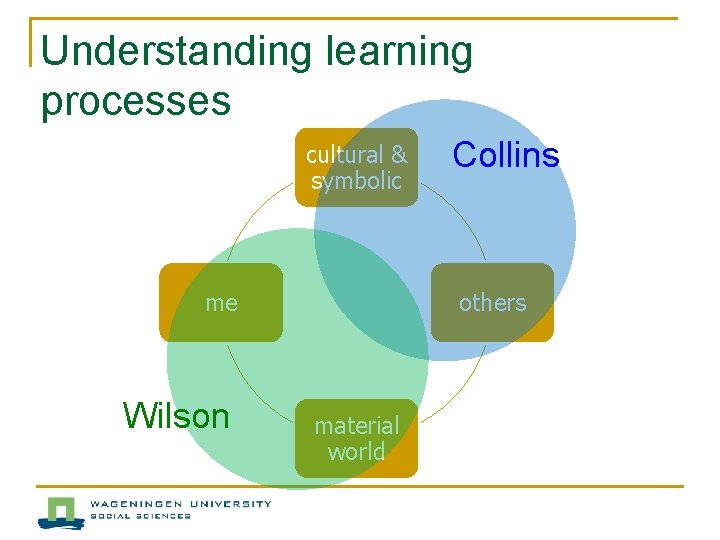
Understanding learning processes cultural & symbolic me Wilson Collins others material world
Issues for (sociological) investigation Is there a critical period? What is the role of repetition, rituals, and symbols? What is the role of others (how social is our love for nature? ) Does love for nature feed into environmental concern (and how)?
- Slides: 9