
Beyond Bias An Introduction to Implicit Bias Dushaw
Beyond Bias: An Introduction to Implicit Bias Dushaw Hockett Executive Director dushaw@thespacesproject. org 202 -360 -7787

OBJECTIVES: 1. Introduce the science of implicit bias; 2. Share examples of how implicit bias shows up in daily life; 3. Practice strategies for reducing and interrupting implicit bias. 2
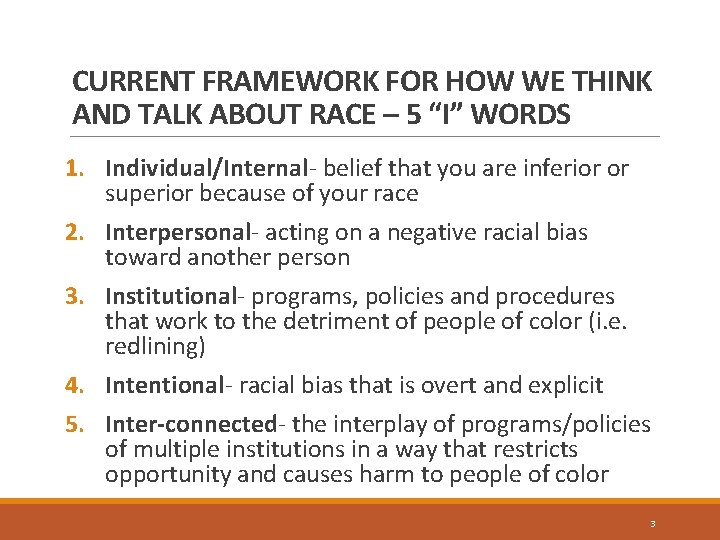
CURRENT FRAMEWORK FOR HOW WE THINK AND TALK ABOUT RACE – 5 “I” WORDS 1. Individual/Internal- belief that you are inferior or superior because of your race 2. Interpersonal- acting on a negative racial bias toward another person 3. Institutional- programs, policies and procedures that work to the detriment of people of color (i. e. redlining) 4. Intentional- racial bias that is overt and explicit 5. Inter-connected- the interplay of programs/policies of multiple institutions in a way that restricts opportunity and causes harm to people of color 3
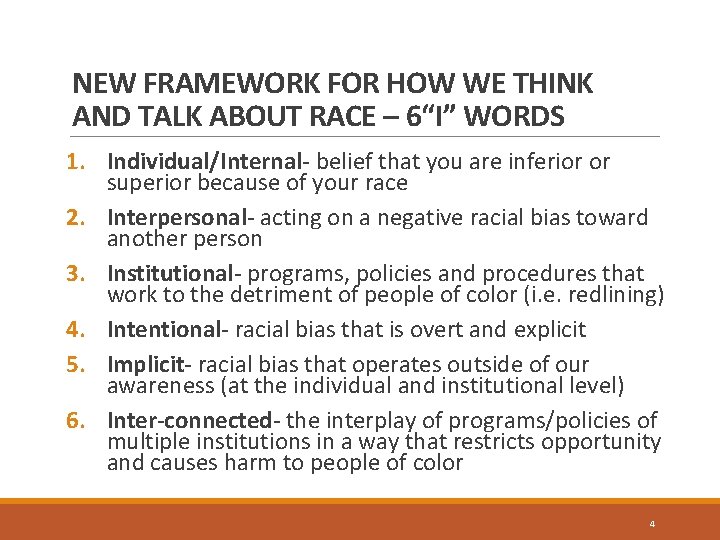
NEW FRAMEWORK FOR HOW WE THINK AND TALK ABOUT RACE – 6“I” WORDS 1. Individual/Internal- belief that you are inferior or superior because of your race 2. Interpersonal- acting on a negative racial bias toward another person 3. Institutional- programs, policies and procedures that work to the detriment of people of color (i. e. redlining) 4. Intentional- racial bias that is overt and explicit 5. Implicit- racial bias that operates outside of our awareness (at the individual and institutional level) 6. Inter-connected- the interplay of programs/policies of multiple institutions in a way that restricts opportunity and causes harm to people of color 4
THE HUMAN BRAIN & BIAS “…the human mind takes in 11 million bits of information every second. But is consciously aware of only 40. ” Timothy Wilson, University of Virginia 5
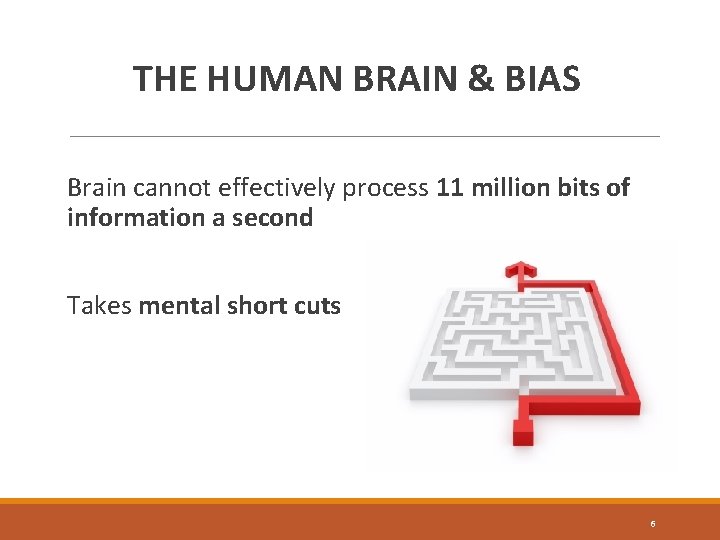
THE HUMAN BRAIN & BIAS Brain cannot effectively process 11 million bits of information a second Takes mental short cuts 6
WHAT IS IMPLICIT BIAS? An Implicit Bias is a preference for OR prejudice against a person or group of people. 7
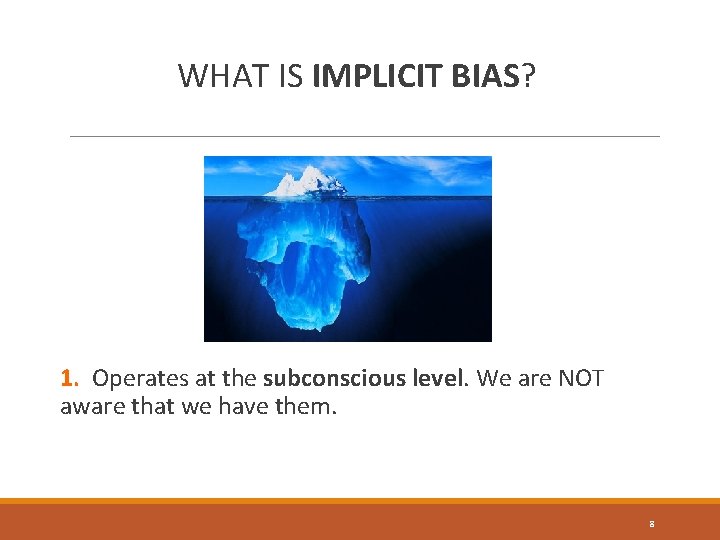
WHAT IS IMPLICIT BIAS? 1. Operates at the subconscious level. We are NOT aware that we have them. 8
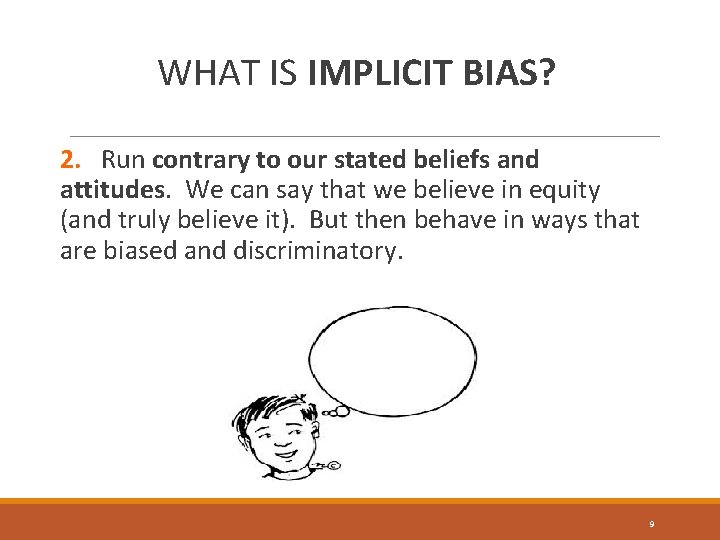
WHAT IS IMPLICIT BIAS? 2. Run contrary to our stated beliefs and attitudes. We can say that we believe in equity (and truly believe it). But then behave in ways that are biased and discriminatory. 9
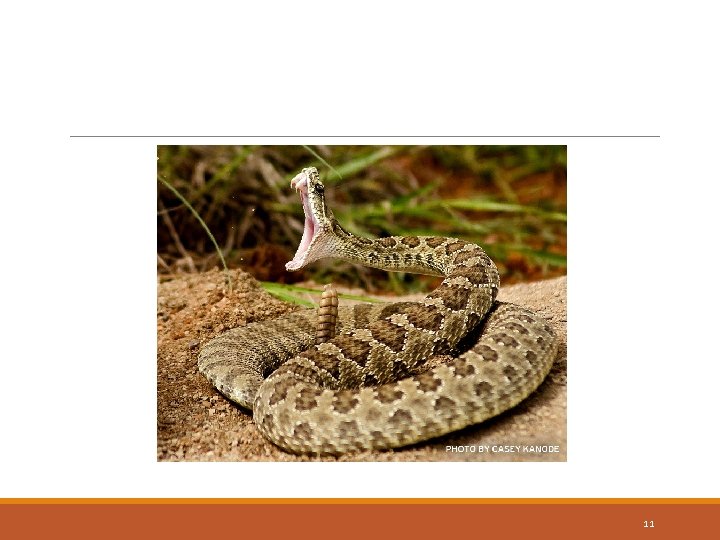
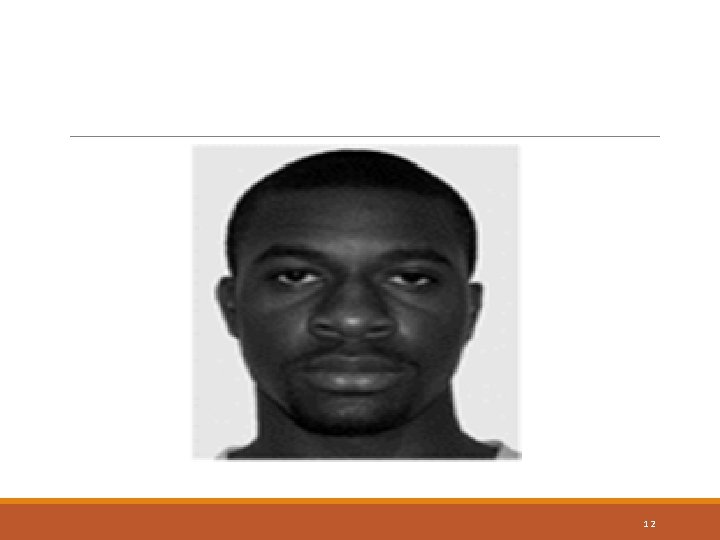
WHAT IS IMPLICIT BIAS? 3. Triggered automatically through the rapid association of people/groups/objects and our attitudes AND stereotypes about them. 10
11
12
WHAT IS IMPLICIT BIAS? 4. Operate at both the individual and institutional level including the areas of education and healthcare. 13
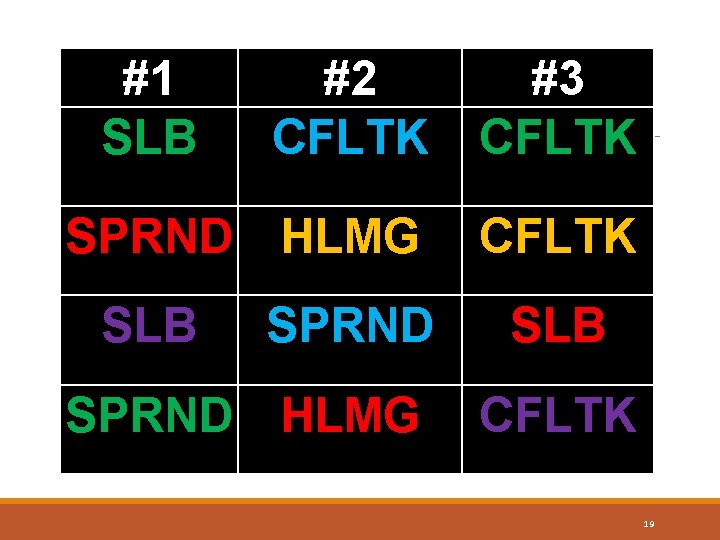
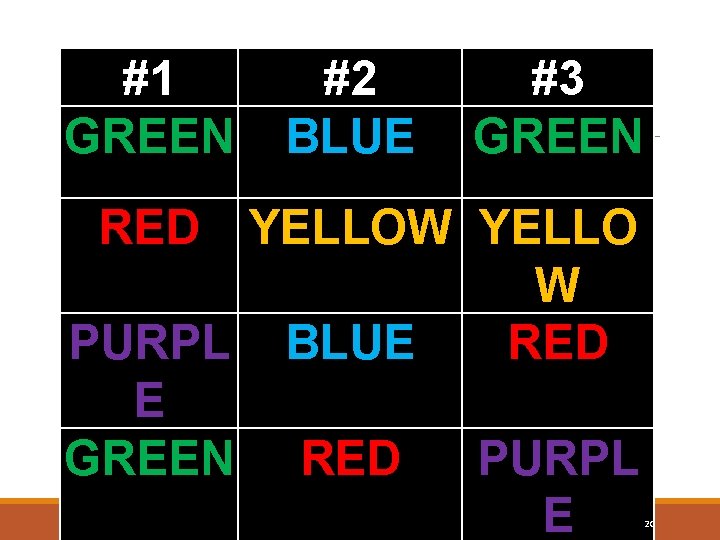
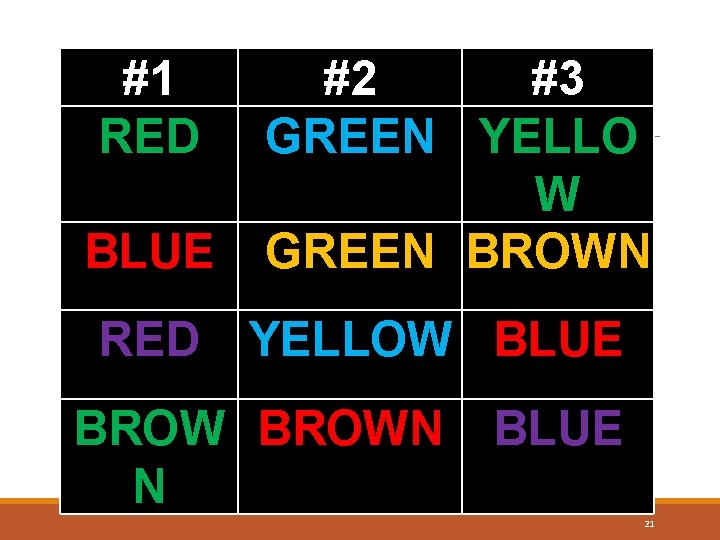
IMPLICIT BIAS IN DAILY LIFE CONFIRMATION BIAS — WE SEE WHAT WE EXPECT TO SEE • Legal Research Memo • 60 law firm partners • Partners found more errors when memo was perceived to be written by African American firm associate Source: Written in Black and White 14
IMPLICIT BIAS IN DAILY LIFE CONFIRMATION BIAS CONTINUED • Mock hiring study • Highly credentialed resume for candidate applying for a mid-level marketing position • Resumes had mixture of male and female gendered names • Some resumes noted that applicant was "coordinator of the Parent. Teacher Association (PTA); ” others noted that applicant was "fundraiser for a neighborhood association. " • Results — PTA applicants were viewed as less competent, less committed and received a lower salary recommendation -- $137 k versus $148 k and were less likely to be recommended for hire — 46. 8% versus 84%. Source: Getting a Job: Is There a Motherhood Penalty? American Journal of Sociology. 15
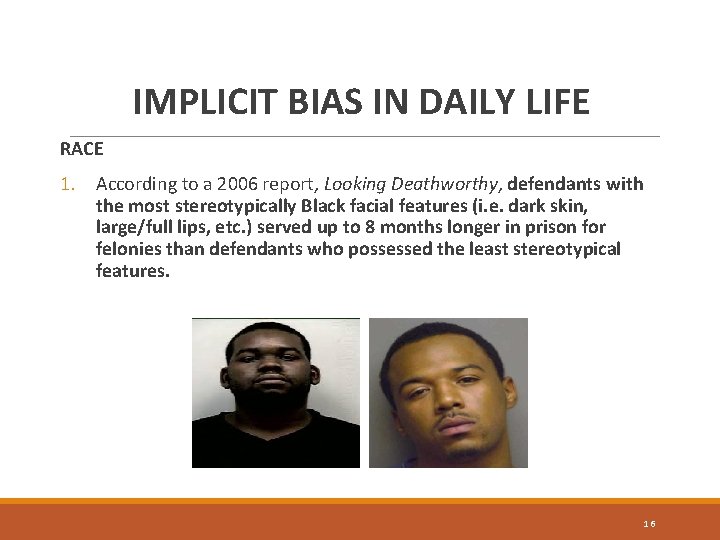
IMPLICIT BIAS IN DAILY LIFE RACE 1. According to a 2006 report, Looking Deathworthy, defendants with the most stereotypically Black facial features (i. e. dark skin, large/full lips, etc. ) served up to 8 months longer in prison for felonies than defendants who possessed the least stereotypical features. 16
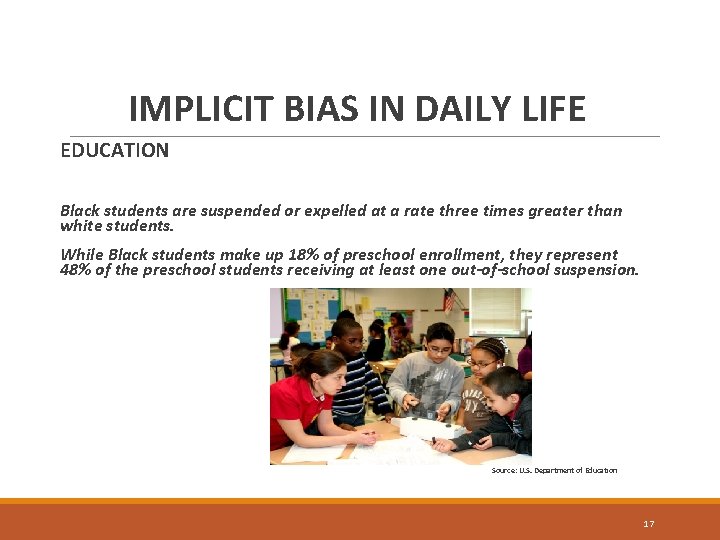
IMPLICIT BIAS IN DAILY LIFE EDUCATION Black students are suspended or expelled at a rate three times greater than white students. While Black students make up 18% of preschool enrollment, they represent 48% of the preschool students receiving at least one out-of-school suspension. Source: U. S. Department of Education 17
“The Role of Time, Cognitive Busyness and Biased Decision-Making” https: //www. youtube. com/watch? v=Uf. A 3 iv. LK_t. E 18
#1 SLB #2 CFLTK #3 CFLTK SPRND HLMG CFLTK SLB SPRND HLMG SLB CFLTK 19
#1 GREEN #2 BLUE #3 GREEN RED YELLOW YELLO W PURPL BLUE RED E GREEN RED PURPL E 20
#1 RED BLUE #2 #3 GREEN YELLO W GREEN BROWN RED YELLOW BLUE BROWN N BLUE 21
“The Role of Priming and Stereotypes” https: //www. youtube. com/watch? v=q. SElm. Ejb 4 22
“The world is complicated. But does every problem require a complicated solution? ” - Stephen J. Dubner 23
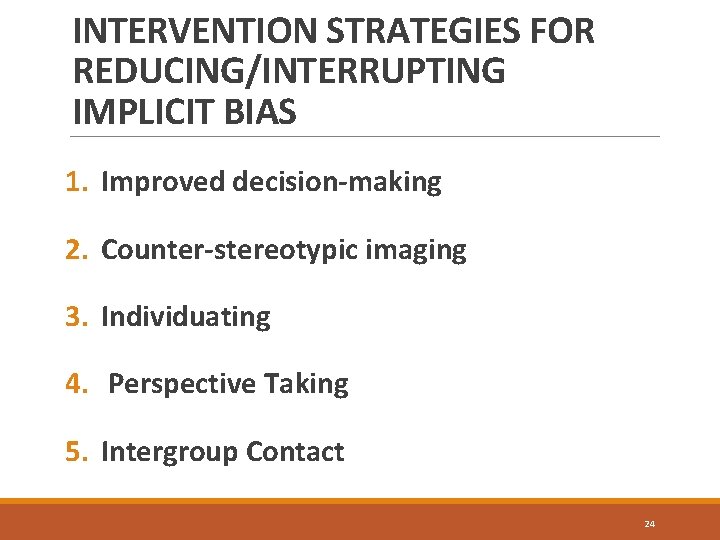
INTERVENTION STRATEGIES FOR REDUCING/INTERRUPTING IMPLICIT BIAS 1. Improved decision-making 2. Counter-stereotypic imaging 3. Individuating 4. Perspective Taking 5. Intergroup Contact 24
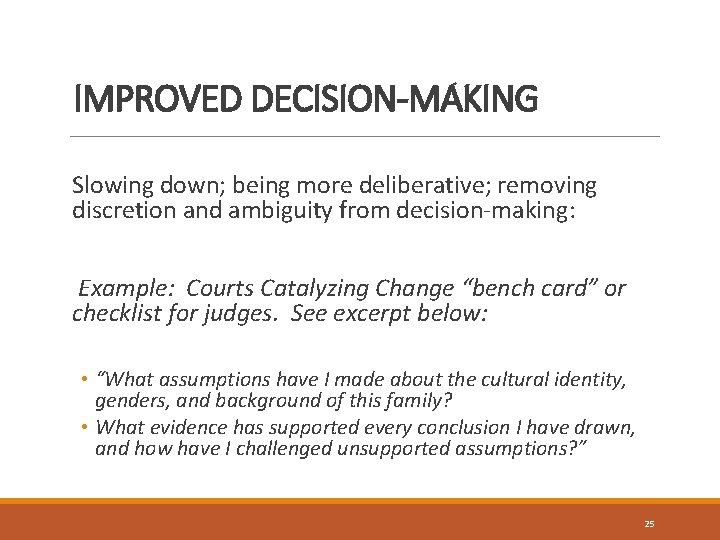
IMPROVED DECISION-MAKING Slowing down; being more deliberative; removing discretion and ambiguity from decision-making: Example: Courts Catalyzing Change “bench card” or checklist for judges. See excerpt below: • “What assumptions have I made about the cultural identity, genders, and background of this family? • What evidence has supported every conclusion I have drawn, and how have I challenged unsupported assumptions? ” 25
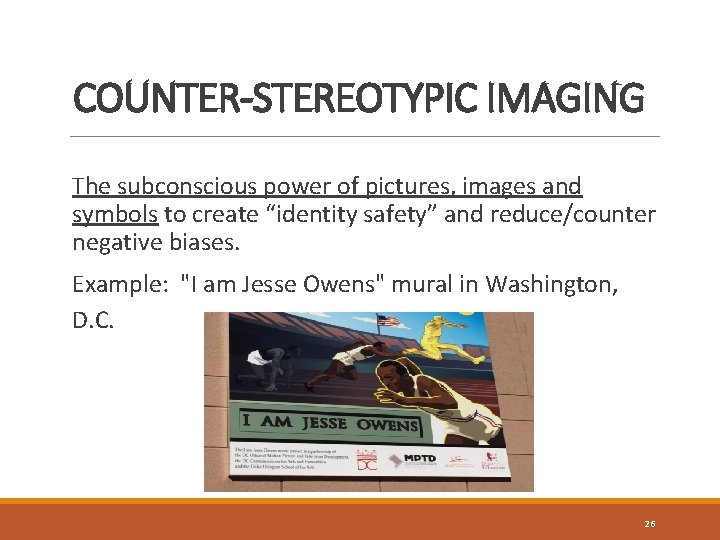
COUNTER-STEREOTYPIC IMAGING The subconscious power of pictures, images and symbols to create “identity safety” and reduce/counter negative biases. Example: "I am Jesse Owens" mural in Washington, D. C. 26
INDIVIDUATING Using the power of regular, one-on-one conversations to see people for their individual qualities and attributes versus seeing them as part of a stereotypic group. • Church-based organizing networks requiring organizers to conduct 20 -35 in-person meetings each week 27
PERSPECTIVE TAKING Walking in the shoes – taking on the first hand perspective -- of others (or the perceived other) Examples: • Federal Judge Mark Bennet spending time in a solitary confinement cell; • Former Newark Mayor Cory Booker living on food stamps for a week 28
INTER-GROUP CONTACT Using the power of positive, sustained dialogue across different identity groups to support individuation, perspective taking and group re-categorization. Example: • National Park Service (NPS) Allies for Inclusion Program; training NPS staff to be dialogue facilitators; using 60 -90 minute monthly "brown bags" as the strategy. 29
Why This Work Is Important? 1. Most of the racialized harm impacting communities of color stems from implicit forms of bias, NOT explicit; 30
Why This Work Is Important? 2. Yet, our current tools/interventions are primarily focused on overt and explicit forms of bias; this partly explains why we are NOT seeing/feeling much progress with respect to issues of bias, difference and equity; 31
Why This Work Is Important? 3. Finding a new place, a better place on race (and other forms of difference) DOES NOT require a lot of money. But it WILL REQUIRE TIME, INTERNAL MOTIVATION AND SUSTAINED PRACTICE in order to form new individual and organizational habits. 32
REFLECTION – ASSESSING IMPLICIT BIAS Question: What are people’s first impressions (or stereotypes) of you when they first meet or interact with you? What’s the truth about who you are? Sample script -- When people first meet or interact with me, I think they believe that _______. But the truth is ___________. 33
REFLECTION EXERCISE — IMPROVED DECISION-MAKING Interrupting/reducing bias requires that we learn how to pause, slow down or be more mindful in how we make decisions and relate to others (or those that we perceive to be "the other"). Question: What's one thing you're willing to take off of your plate — or do differently — in your personal and/or work life in order to slow down and be more mindful of how you make decisions and interact with others? 34
REFLECTION EXERCISE — IMPROVED DECISION-MAKING Interrupting/reducing bias requires that we learn how to pause, slow down or be more mindful in how we make decisions and relate to others (or those that we perceive to be "the other"). Question: What one area of your work for which a "checklist" can help slow down decision-making and/or help you and/or the organization be more objective in your decision-making? 35
REFLECTION EXERCISE — COUNTER-STEREOTYPIC IMAGING Question: If you could redesign your office, program or common space, what is one specific picture or image you would display to counter negative stereotypes about women, people of color and/or others who may feel negatively stereotyped or marginalized within the larger society? 36
REFLECTION EXERCISE – INDIVIDUATION Question — List 3 to 5 people (in your work or personal circles) who don't look like you (race/ethnicity), think like you (worldview) and haven't lived like you (lived experience) -- who you would be willing to do an in-person, one-on-one meeting with as a way of practicing individuation. Remember, individuation is about learning to see people for their individual qualities versus as a stereotypic group. 37
REFLECTION EXERCISE – PERSPECTIVE TAKING 1. What’s at least one activity that community residents can engage in to better understand the day-to-day realities of being a law enforcement/public safety officer? 2. What’s at least one activity that law enforcement/public safety officers can engage in to better understand the day-to-day realities of what it’s like to live in the communities they serve? 38
39
40
41
- Slides: 41