
Between Mode and Key Analyzing Early 17 thCentury
Between Mode and Key: Analyzing Early 17 th-Century Music
The Tonal Language of the Early Baroque • Test Case: – Claudio Monteverdi, “Zefiro torna, e’l bel tempo rimana” (from the Sixth Book of Madrigals)
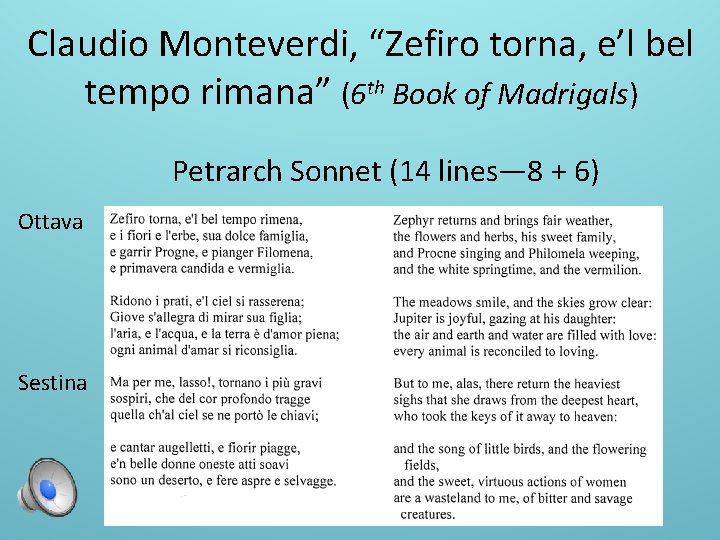
Claudio Monteverdi, “Zefiro torna, e’l bel tempo rimana” (6 th Book of Madrigals) Petrarch Sonnet (14 lines— 8 + 6) Ottava Sestina
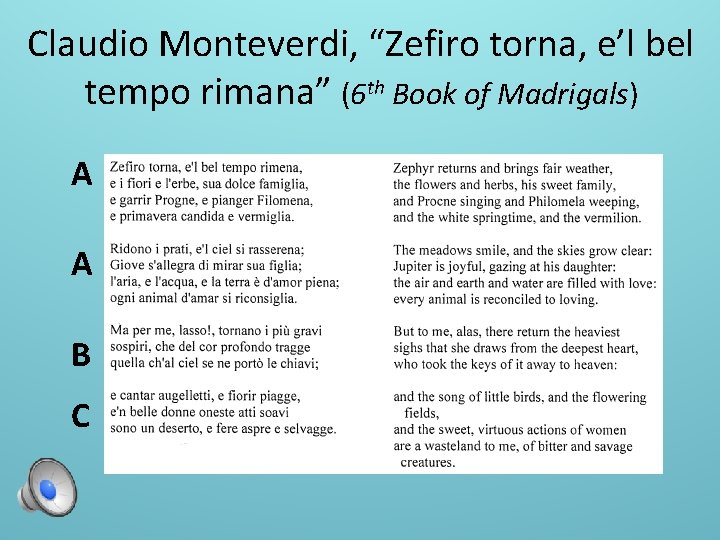
Claudio Monteverdi, “Zefiro torna, e’l bel tempo rimana” (6 th Book of Madrigals) A A B C
I. Signatures (Cantus)
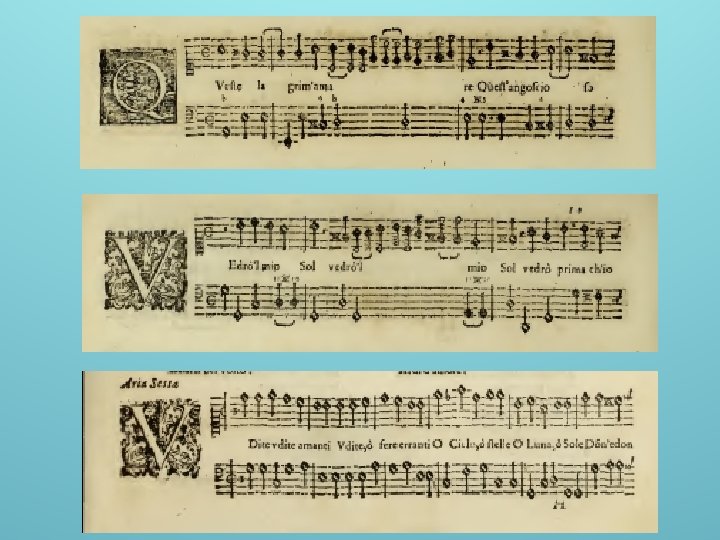
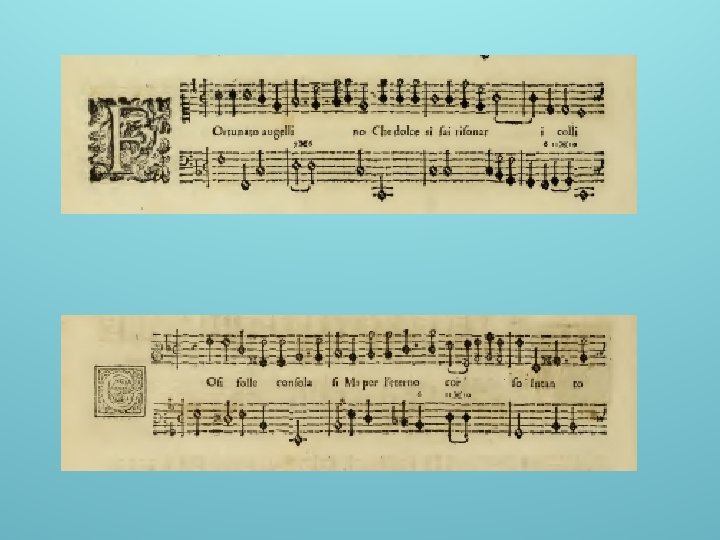
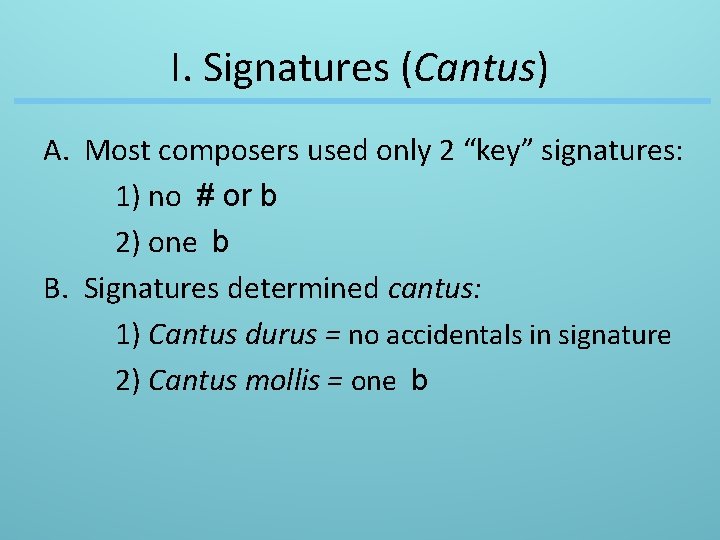
I. Signatures (Cantus) A. Most composers used only 2 “key” signatures: 1) no # or b 2) one b B. Signatures determined cantus: 1) Cantus durus = no accidentals in signature 2) Cantus mollis = one b
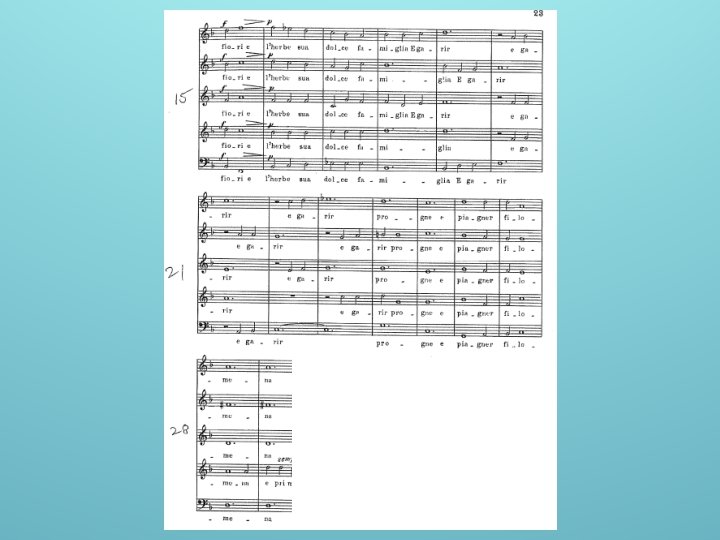
Why did Monteverdi change cantus in “Zefiro torna”?
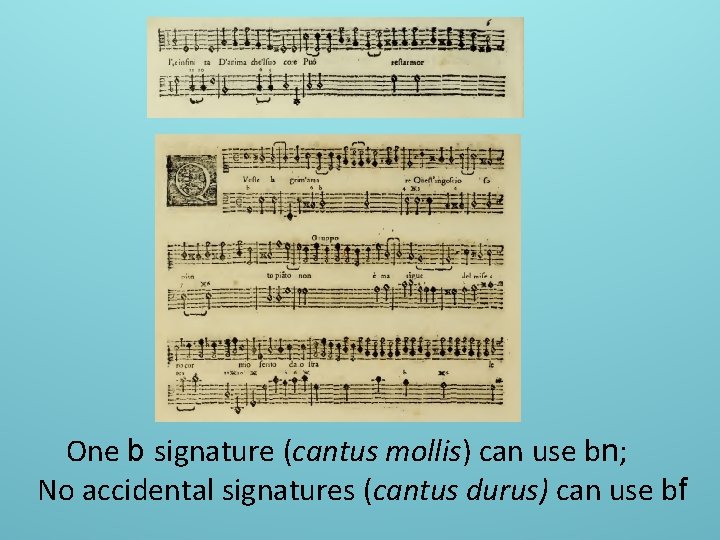
One b signature (cantus mollis) can use bn; No accidental signatures (cantus durus) can use bf
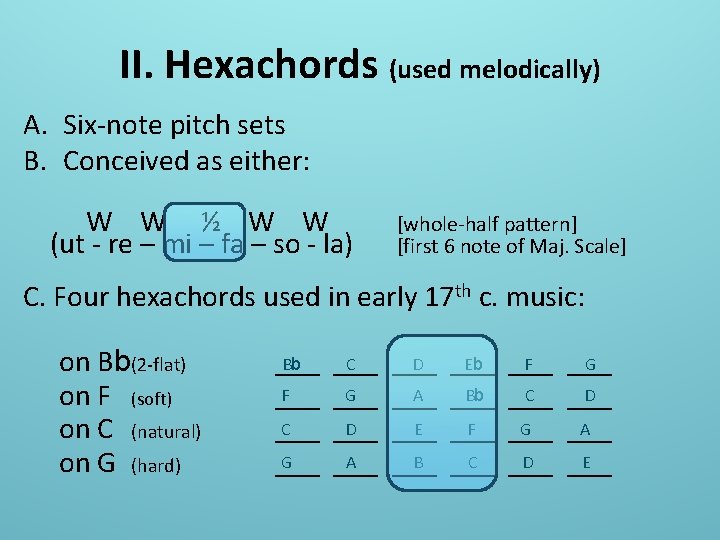
II. Hexachords (used melodically) A. Six-note pitch sets B. Conceived as either: W W ½ W W (ut - re – mi – fa – so - la) [whole-half pattern] [first 6 note of Maj. Scale] C. Four hexachords used in early 17 th c. music: on Bb(2 -flat) on F (soft) on C (natural) on G (hard) Bb ___ F ___ C ___ G ___ D ___ A ___ E ___ B ___ Eb ___ Bb ___ F ___ C ___ G ___ D ___ A ___ E ___
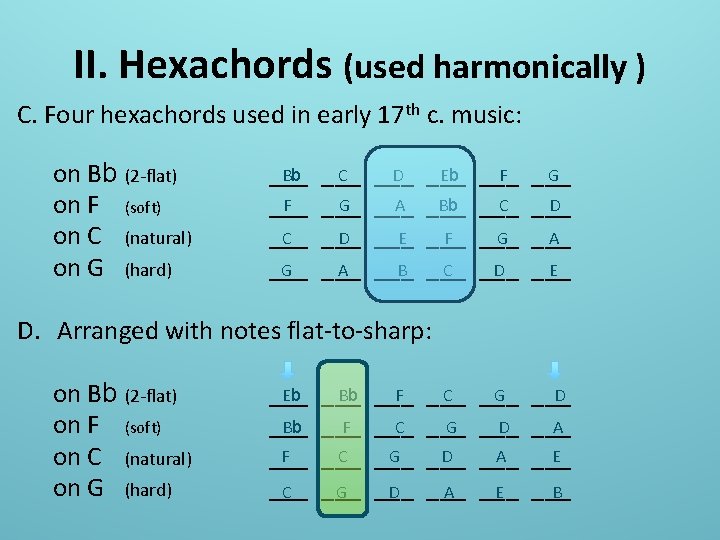
II. Hexachords (used harmonically ) C. Four hexachords used in early 17 th c. music: on Bb (2 -flat) on F (soft) on C (natural) on G (hard) Bb ___ F ___ C ___ G ___ D ___ A ___ E ___ B ___ Eb ___ Bb ___ F ___ C ___ G ___ D ___ A ___ E D ___ A ___ E ___ B D. Arranged with notes flat-to-sharp: on Bb (2 -flat) on F (soft) on C (natural) on G (hard) Eb ___ Bb ___ F ___ C ___ G F ___ C ___ G ___ D ___ A
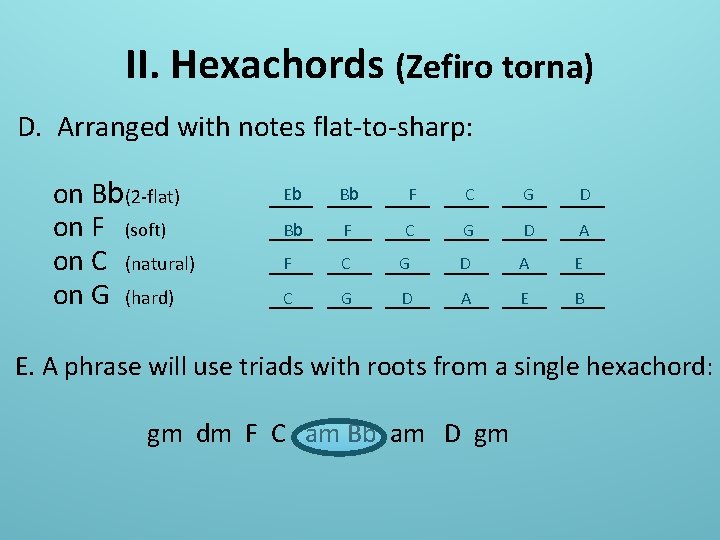
II. Hexachords (Zefiro torna) D. Arranged with notes flat-to-sharp: on Bb(2 -flat) on F (soft) on C (natural) on G (hard) Eb ___ Bb ___ F ___ C ___ G ___ D ___ A ___ G ___ D ___ A ___ E ___ B ___ E. A phrase will use triads with roots from a single hexachord: gm dm F C am Bb am D gm
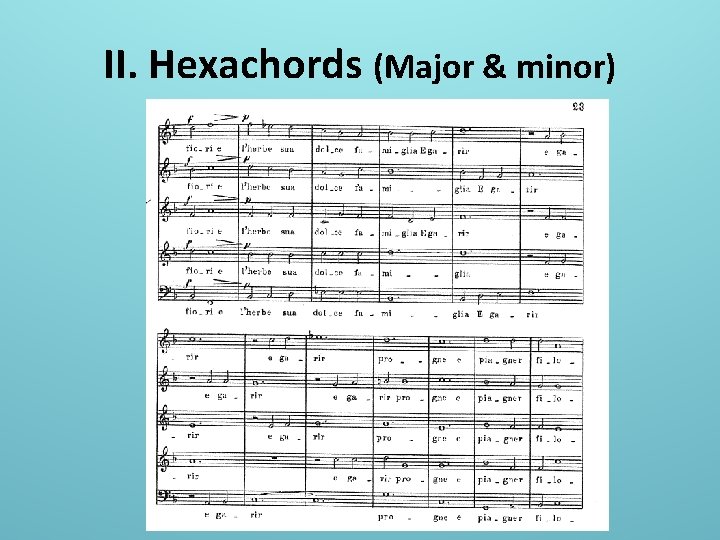
II. Hexachords (Major & minor)
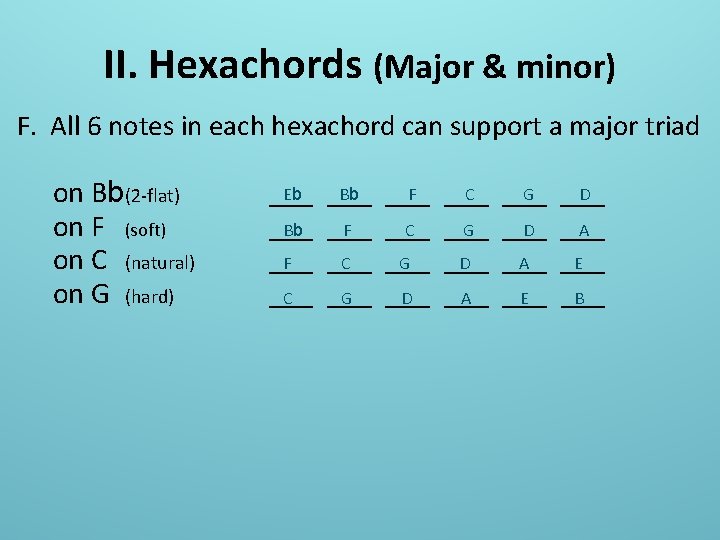
II. Hexachords (Major & minor) F. All 6 notes in each hexachord can support a major triad on Bb(2 -flat) on F (soft) on C (natural) on G (hard) Eb ___ Bb ___ F ___ C ___ G F ___ C ___ G ___ D ___ A G ___ D ___ A ___ E ___ B
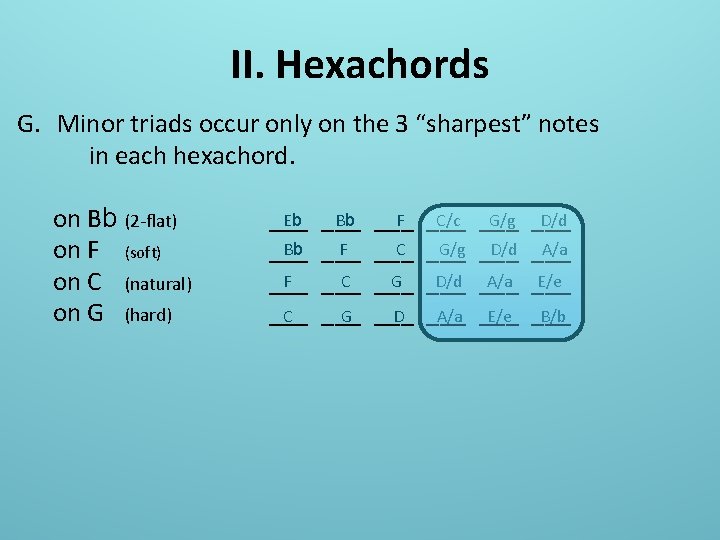
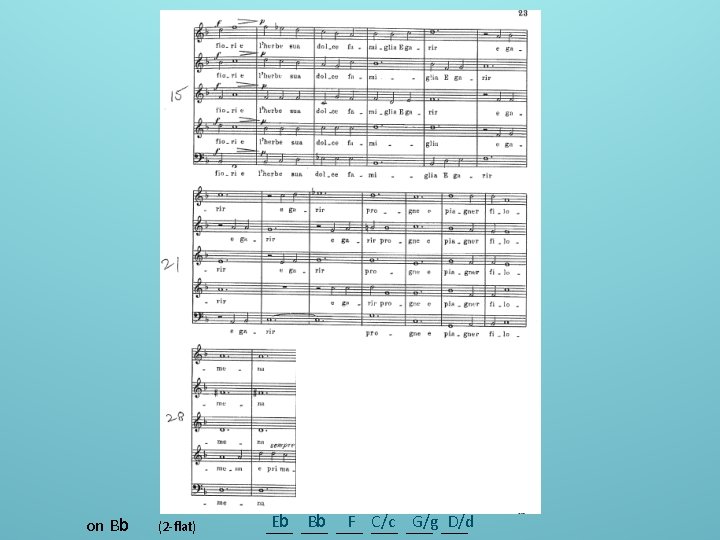
II. Hexachords G. Minor triads occur only on the 3 “sharpest” notes in each hexachord. on Bb (2 -flat) on F (soft) on C (natural) on G (hard) Eb ___ Bb ___ F ___ C ___ G F ___ C ___ G ___ D C/c ___ G/g ___ D/d ___ A/a ___ E/e D/d ___ A/a ___ E/e ___ B/b
on Bb (2 -flat) Eb ___ Bb ___ F ___ C/c ___ G/g ___ D/d ___
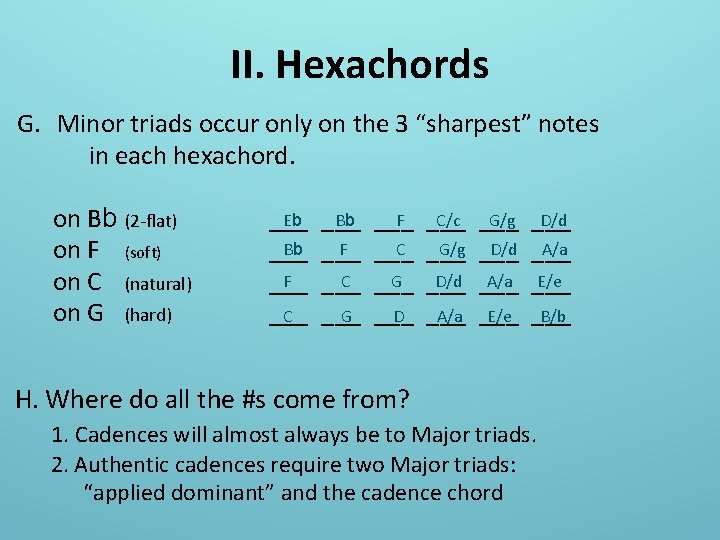
II. Hexachords G. Minor triads occur only on the 3 “sharpest” notes in each hexachord. on Bb (2 -flat) on F (soft) on C (natural) on G (hard) Eb ___ Bb ___ F ___ C ___ G F ___ C ___ G ___ D C/c ___ G/g ___ D/d ___ A/a ___ E/e D/d ___ A/a ___ E/e ___ B/b H. Where do all the #s come from? 1. Cadences will almost always be to Major triads. 2. Authentic cadences require two Major triads: “applied dominant” and the cadence chord
Why did Monteverdi change cantus in “Zefiro torna”?
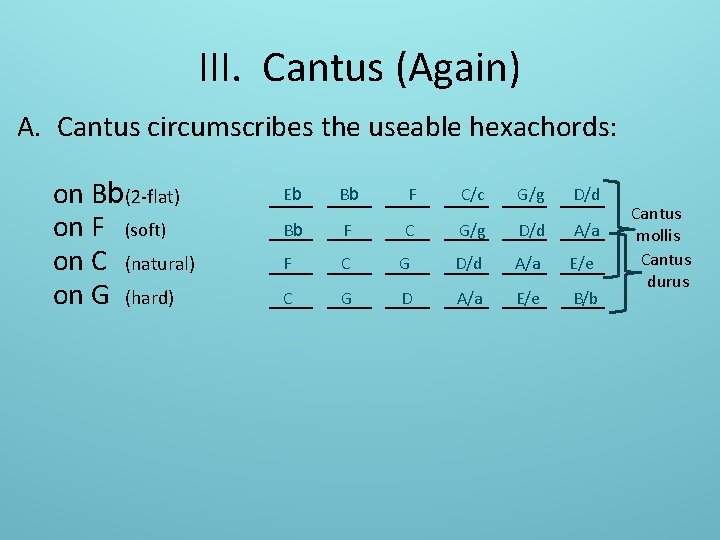
III. Cantus (Again) A. Cantus circumscribes the useable hexachords: on Bb(2 -flat) on F (soft) on C (natural) on G (hard) Eb ___ Bb ___ F ___ C ___ G ___ D ___ C/c ___ G/g ___ D/d ___ A/a ___ E/e ___ B/b ___ Cantus mollis Cantus durus
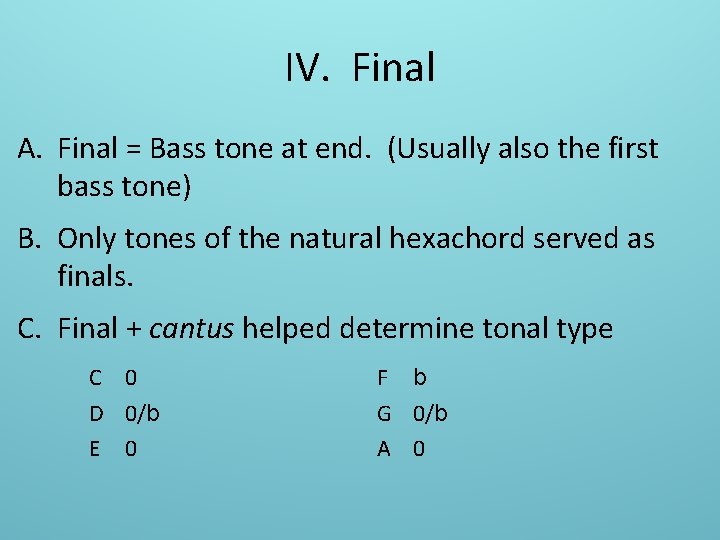
IV. Final A. Final = Bass tone at end. (Usually also the first bass tone) B. Only tones of the natural hexachord served as finals. C. Final + cantus helped determine tonal type C 0 F D 0/b E 0 G 0/b A 0 b
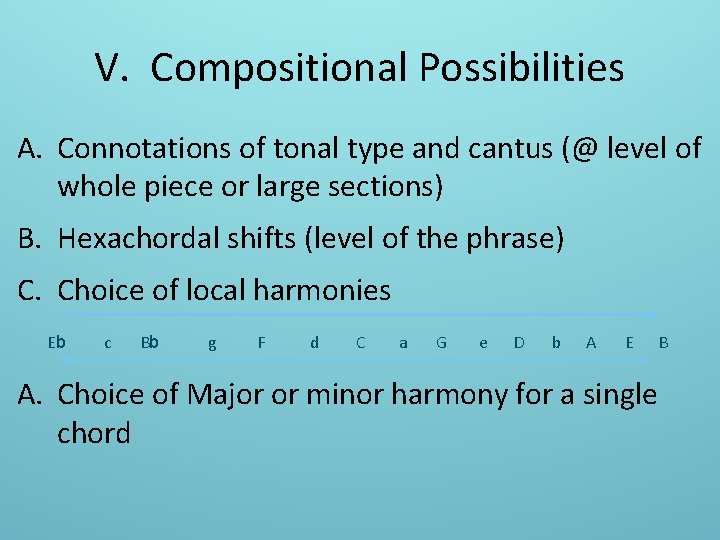
V. Compositional Possibilities A. Connotations of tonal type and cantus (@ level of whole piece or large sections) B. Hexachordal shifts (level of the phrase) C. Choice of local harmonies Eb c Bb g F d C a G e D b A E A. Choice of Major or minor harmony for a single chord B

- Slides: 24