
Beth Cooper Definition of Digital Literacy According to
Beth Cooper
Definition of Digital Literacy According to www. techlearning. com Digital literacy is a means for ascertaining the computer skills competency of an individual to function in the workplace.
Definition of Digital Literacy According to Beth Cooper Having the skills to discern reliable information from nonreliable information on the Internet.
Unreliable websites can range from playful to painful. . . End of the Internet Tree Octopus Holocaust Denial
Unfortunately Many Students. . . • do not critically analyze the information they find on the internet • use only one website to complete their research.
There are more unreliable websites students can find on the Internet.
DHMO Activity A good in-class activity you can do with your students.
What is DHMO? Dihydrogen Monoxide http: //www. dhmo. org/facts. html
The name of the award winning scientist who conducted research on DHMO. Nathan Zohner http: //www. dhmo. org/facts. html
Two dangers associated with DHMO. • Death due to accidental inhalation • Prolonged exposure to solid DHMO causes severe tissue damage. http: //www. dhmo. org/facts. html
Well-known uses for DHMO. • in nuclear power plants, • by elite athletes to improve performance, • in the production of Styrofoam http: //www. dhmo. org/facts. html
Symptoms of accidental overdose. • Excessive sweating • Excessive urination • Bloated feeling http: //www. dhmo. org/facts. html
DHMO is water Look Again
Local Officials nearly fall for H 2 O Hoax ALISO VIEJO, Calif. - City officials were so concerned about the potentially dangerous properties of dihydrogen monoxide that they considered banning foam cups after they learned the chemical was used in their production.
Other Hoax Websites: Aluminum Foil Deflector Beanie Boilerplate Feline Reactions to Bearded Men
We need to teach students how to evaluate the reliability of website information.
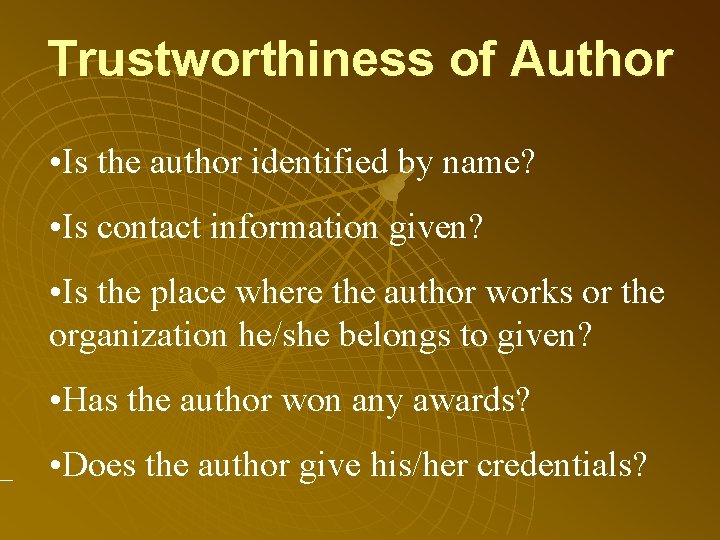
Trustworthiness of Author • Is the author identified by name? • Is contact information given? • Is the place where the author works or the organization he/she belongs to given? • Has the author won any awards? • Does the author give his/her credentials?
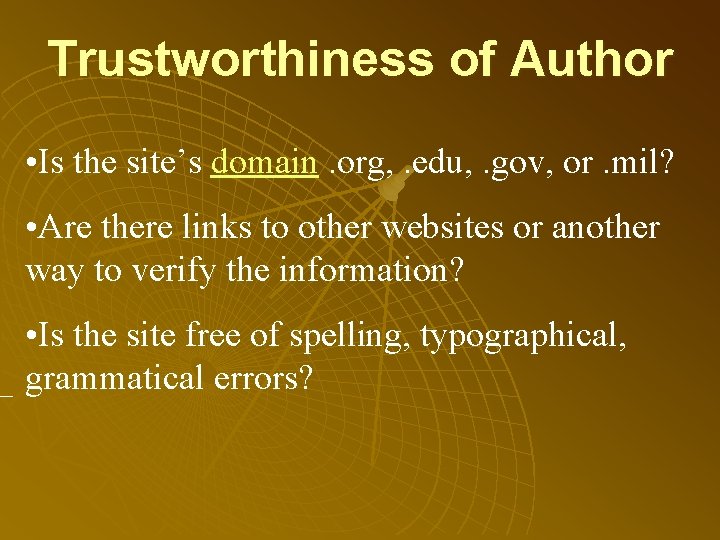
Trustworthiness of Author • Is the site’s domain. org, . edu, . gov, or. mil? • Are there links to other websites or another way to verify the information? • Is the site free of spelling, typographical, grammatical errors?
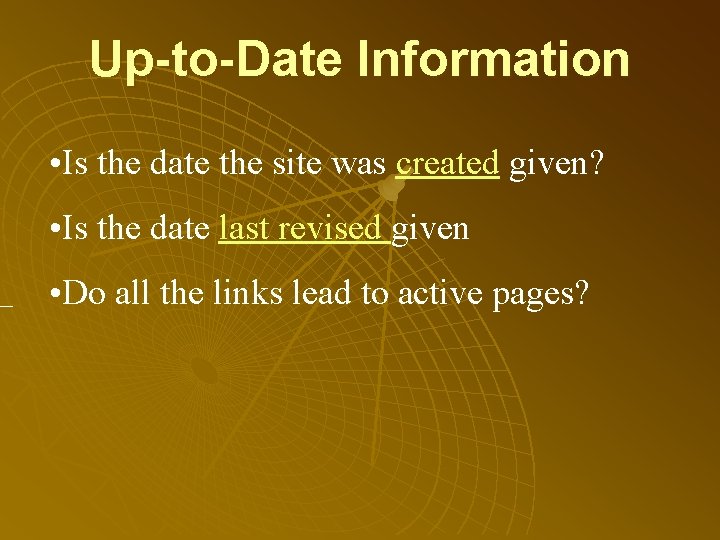
Up-to-Date Information • Is the date the site was created given? • Is the date last revised given • Do all the links lead to active pages?
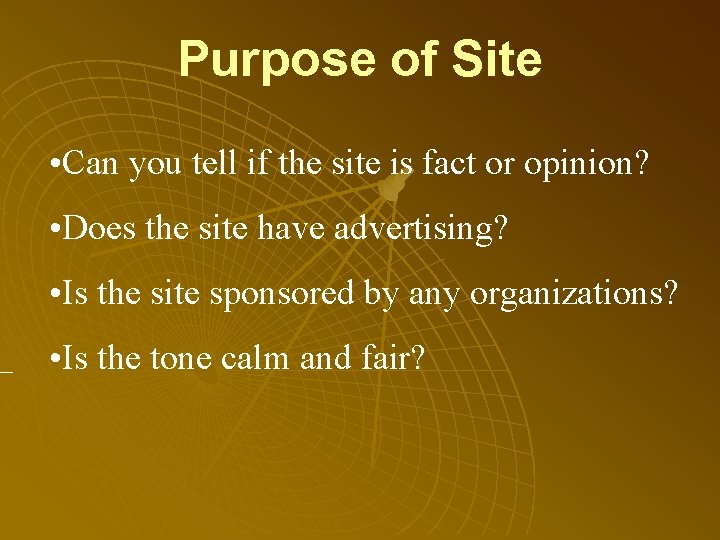
Purpose of Site • Can you tell if the site is fact or opinion? • Does the site have advertising? • Is the site sponsored by any organizations? • Is the tone calm and fair?
Ease of Use • Is the type easy to see? • Is there a “What’s New” section? • Is there a site map? • Is there a tool for searching the site? • Are links labeled clearly and go where you expect them to go?
Compare Two Websites on Ozone Environmental Protection Agency The Whole Truth about the Ozone Activities obtained from Classroom Zone Mc. Dougal Littell http: //www. classzone. com/books/research_guide/page_build. cfm? state=none&content=web_eval&u=1

You could have your students design their own evaluation form. . .
Another element of digital literacy is. . .
teaching students how to investigate an email before forwarding it to their entire address book.
Here is a common email myth: Deep breaths get oxygen into the lungs and coughing movements squeeze the heart and keep the blood circulating. The squeezing pressure on the heart also helps it regain normal rhythm. In this way, heart attack victims can get to a phone and, between breaths, call for help. Verify this email. . .
Other elements of Digital Literacy include verifying hoax emails. Common Urban Legends http: //www. trendmicro. com/vinfo/hoaxes/hoax 2. asp http: //www. stopthathoax. com/ Hoax Virus E-mail: http: //www. symantec. com/avcenter/hoax. html
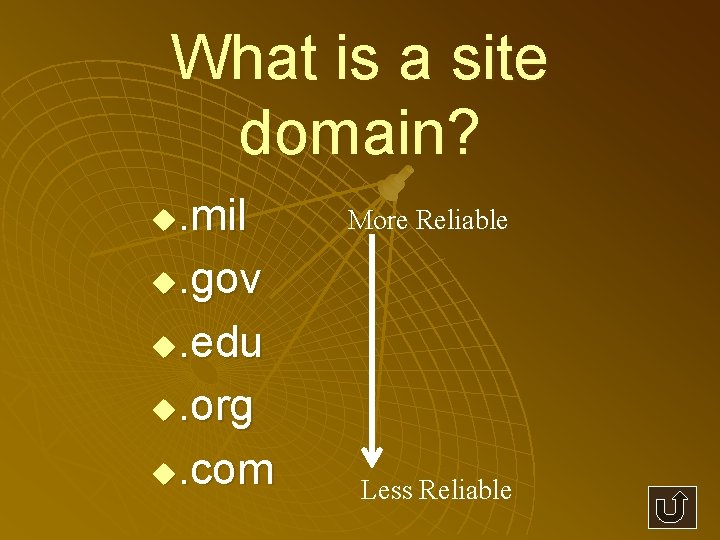
What is a site domain? . mil u. gov u. edu u. org u. com u More Reliable Less Reliable
- Slides: 28