
Beta decay rates of highly ionized atoms in
Beta decay rates of highly ionized atoms in stellar environment A Mengoni ENEA and INFN Bologna PANDORA meeting 2019, Perugia, 31 -31 October 2019
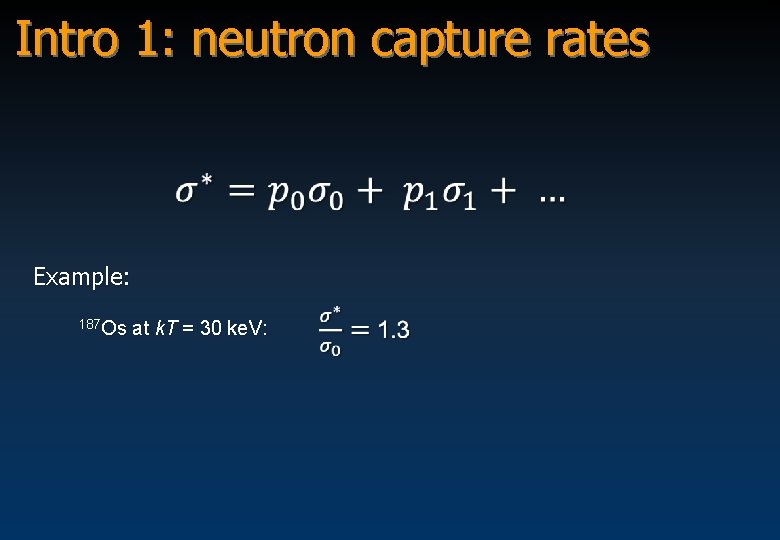
Intro 1: neutron capture rates Example: 187 Os at k. T = 30 ke. V:
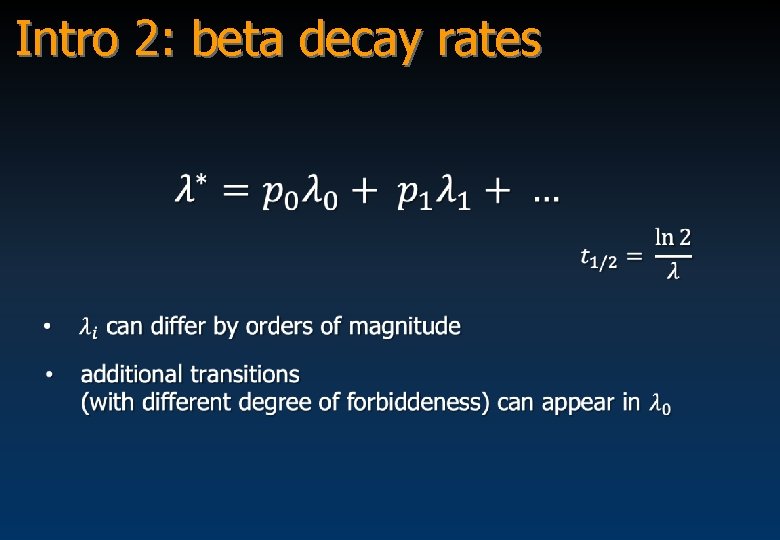
Intro 2: beta decay rates
Example 1: Stellar 187 Os(n, g) rate SE Woosley and WA Fowler, Ap. J 233 (1979) 411 alberto. mengoni@cern. ch
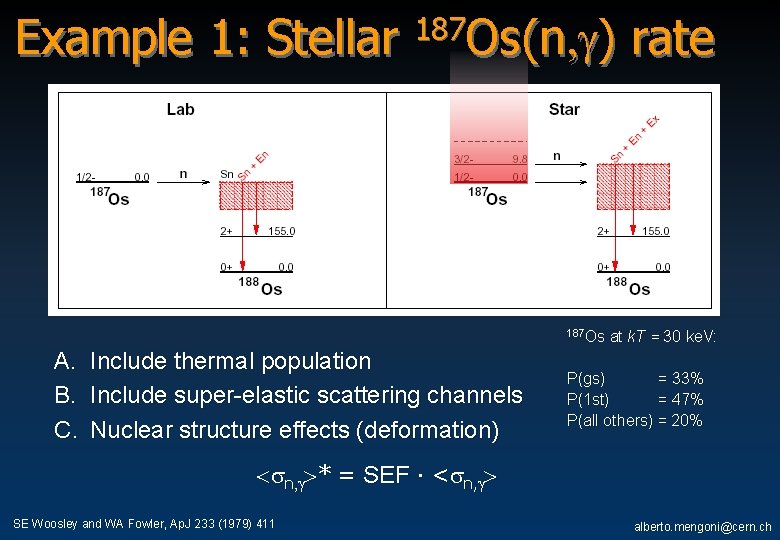
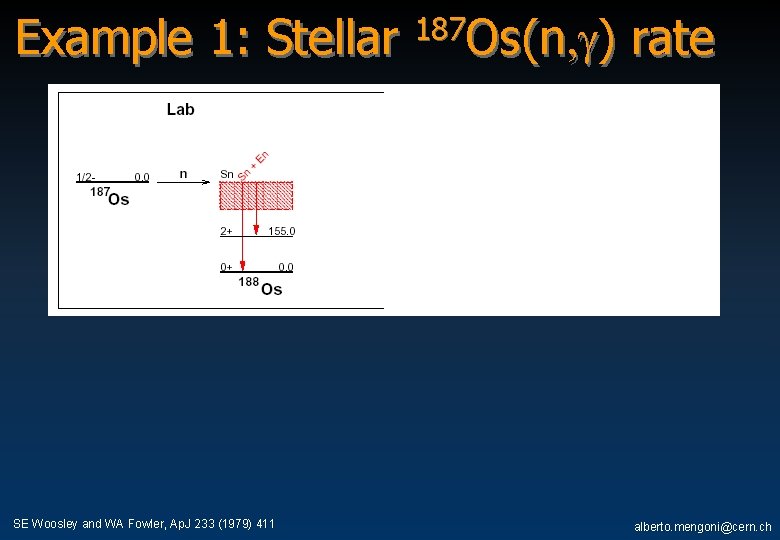
Example 1: Stellar 187 Os(n, g) rate 187 Os A. B. C. Include thermal population Include super-elastic scattering channels Nuclear structure effects (deformation) at k. T = 30 ke. V: P(gs) = 33% P(1 st) = 47% P(all others) = 20% <sn, g>* = SEF ∙ <sn, g> SE Woosley and WA Fowler, Ap. J 233 (1979) 411 alberto. mengoni@cern. ch
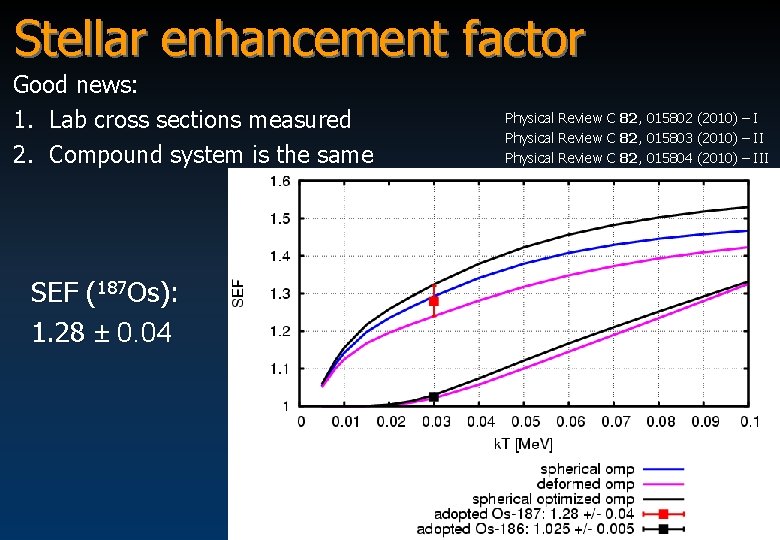
Stellar enhancement factor Good news: 1. Lab cross sections measured 2. Compound system is the same SEF (187 Os): 1. 28 ± 0. 04 Physical Review C 82, 015802 (2010) – I Physical Review C 82, 015803 (2010) – II Physical Review C 82, 015804 (2010) – III
Conclusion 1 Neutron capture rates in stellar environments mostly derived from a combination of measurements and modeling. Direct measurements of stellar rates never performed so far.
Weak interaction rates (b- decay)
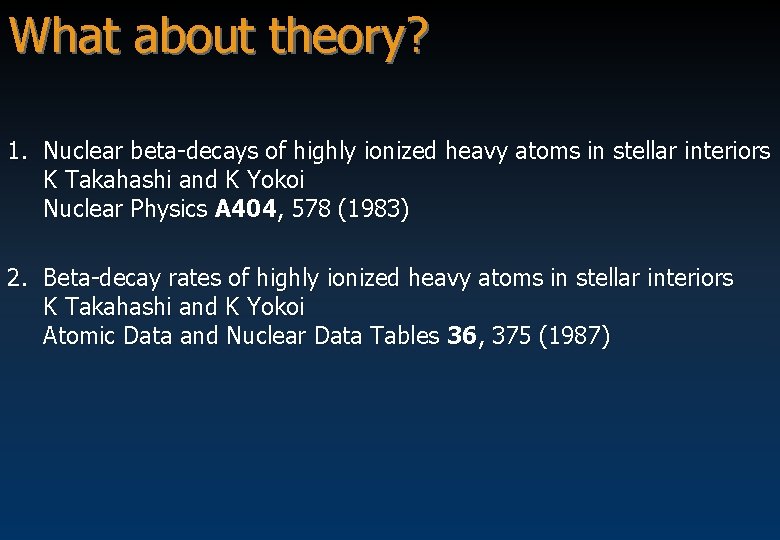
What about theory? 1. Nuclear beta-decays of highly ionized heavy atoms in stellar interiors K Takahashi and K Yokoi Nuclear Physics A 404, 578 (1983) 2. Beta-decay rates of highly ionized heavy atoms in stellar interiors K Takahashi and K Yokoi Atomic Data and Nuclear Data Tables 36, 375 (1987)
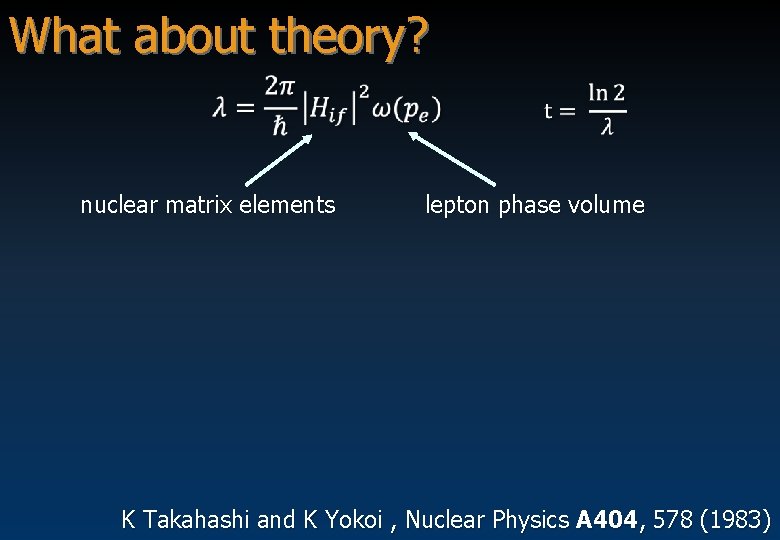
What about theory? nuclear matrix elements lepton phase volume K Takahashi and K Yokoi , Nuclear Physics A 404, 578 (1983)
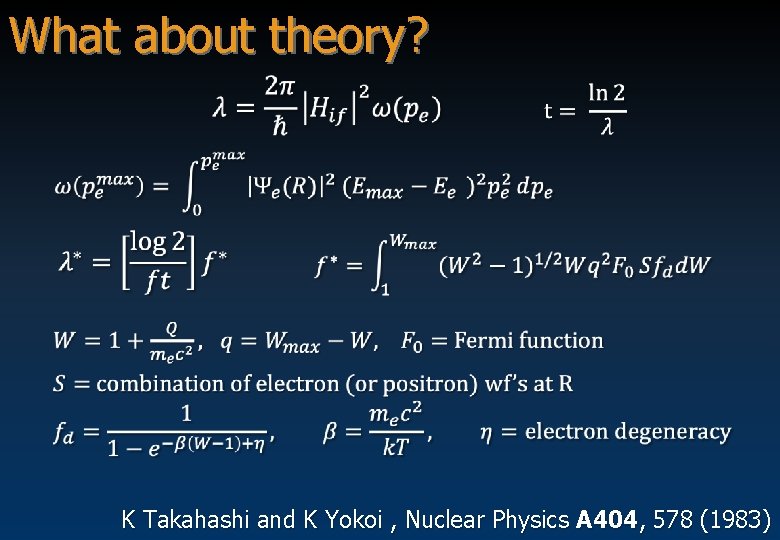
What about theory? K Takahashi and K Yokoi , Nuclear Physics A 404, 578 (1983)
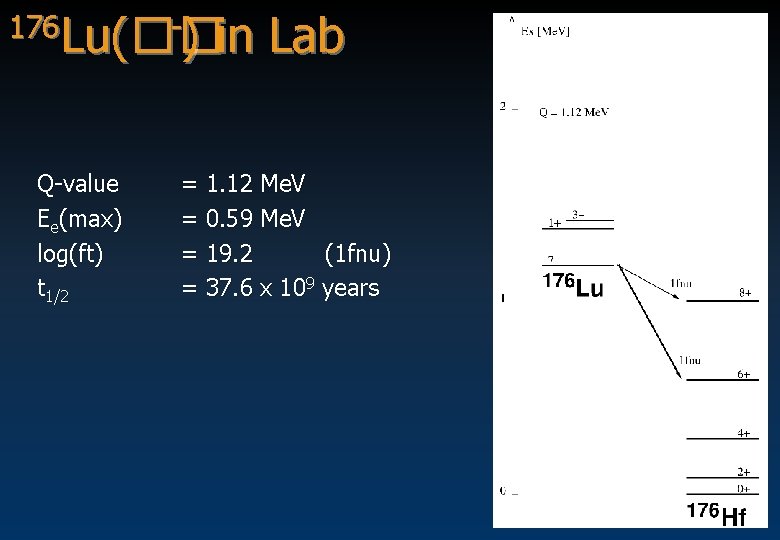
176 Lu(�� -) in Q-value Ee(max) log(ft) t 1/2 Lab = 1. 12 Me. V = 0. 59 Me. V = 19. 2 (1 fnu) = 37. 6 x 10⁹ years
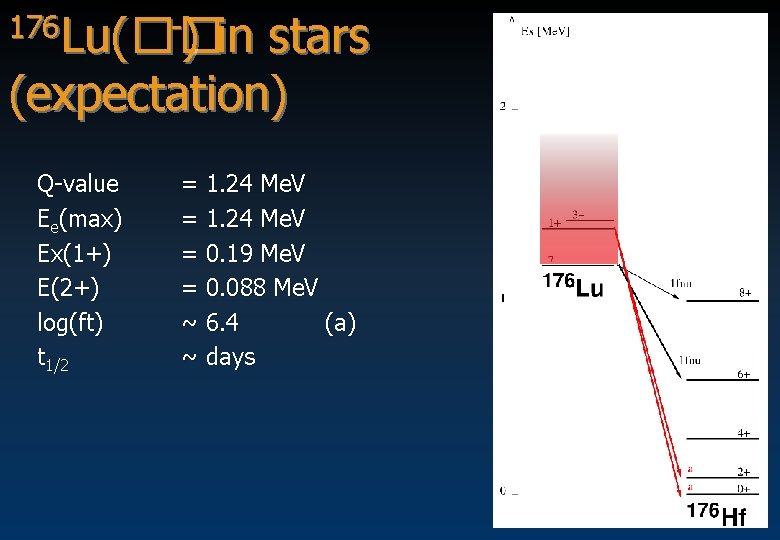
176 Lu(�� -) in stars (expectation) Q-value Ee(max) Ex(1+) E(2+) log(ft) t 1/2 = 1. 24 Me. V = 0. 19 Me. V = 0. 088 Me. V ~ 6. 4 (a) ~ days
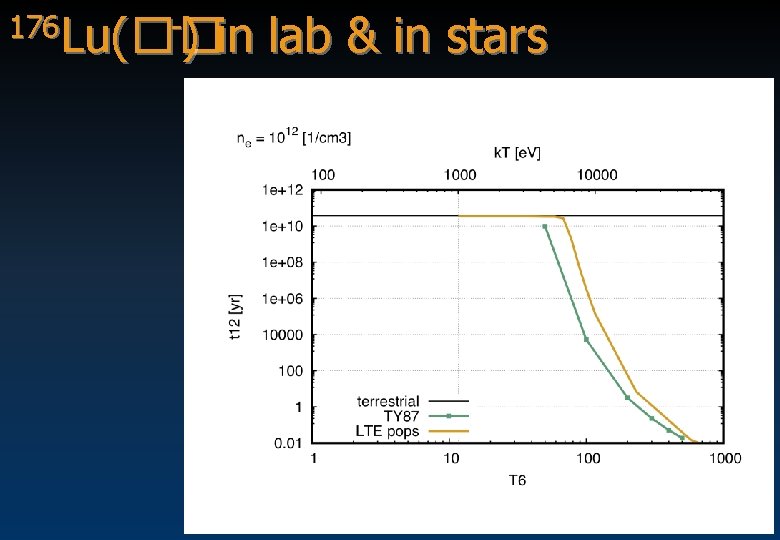
176 Lu(�� -) in lab & in stars
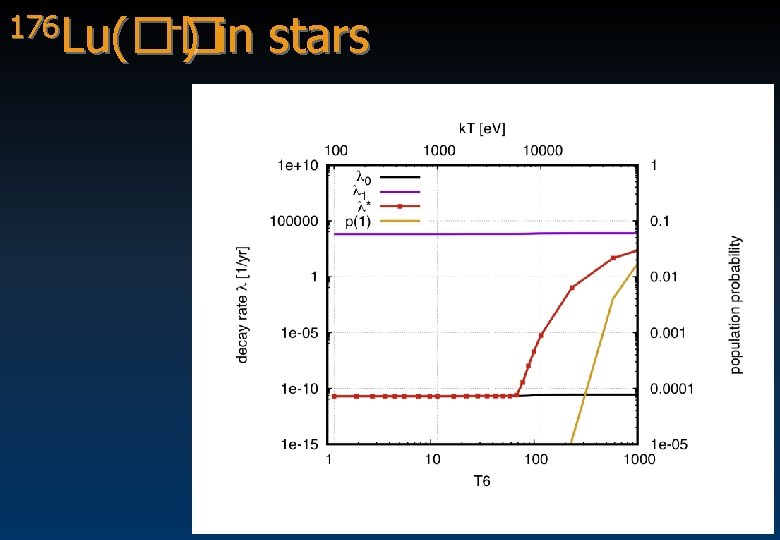
176 Lu(�� -) in stars
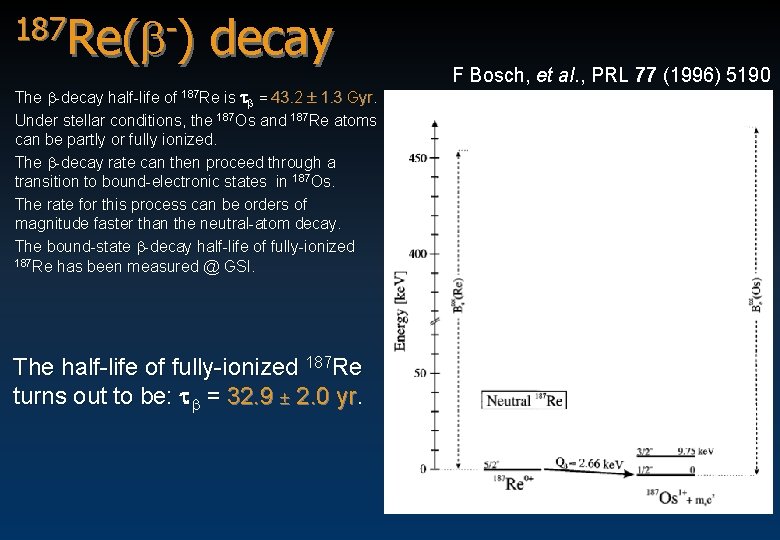
187 Re(b-) decay The b-decay half-life of 187 Re is tb = 43. 2 1. 3 Gyr. Under stellar conditions, the 187 Os and 187 Re atoms can be partly or fully ionized. The b-decay rate can then proceed through a transition to bound-electronic states in 187 Os. The rate for this process can be orders of magnitude faster than the neutral-atom decay. The bound-state b-decay half-life of fully-ionized 187 Re has been measured @ GSI. The half-life of fully-ionized 187 Re turns out to be: tb = 32. 9 2. 0 yr. F Bosch, et al. , PRL 77 (1996) 5190
INFN-LNL INFN-Bo INFN-Pg Laboratori Nazionali del Sud Catania courtesy of David Mascali (LNS, Catania) The PANDORA project: an experimental setup for measuring in-plasma β-decays of astrophysical interest
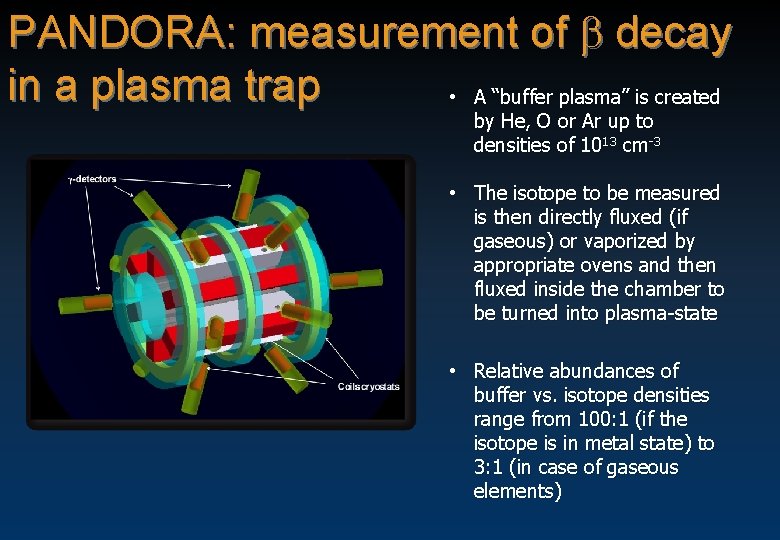
PANDORA: measurement of b decay in a plasma trap • A “buffer plasma” is created by He, O or Ar up to densities of 1013 cm-3 • The isotope to be measured is then directly fluxed (if gaseous) or vaporized by appropriate ovens and then fluxed inside the chamber to be turned into plasma-state • Relative abundances of buffer vs. isotope densities range from 100: 1 (if the isotope is in metal state) to 3: 1 (in case of gaseous elements)
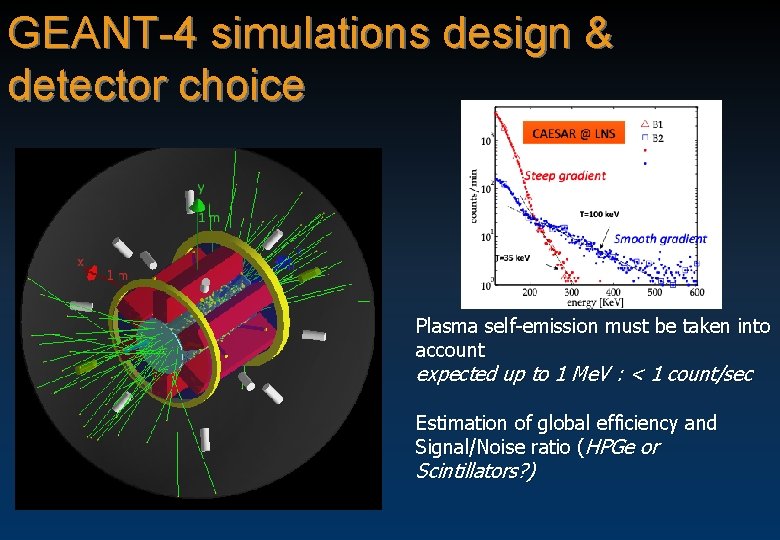
GEANT-4 simulations design & detector choice Plasma self-emission must be taken into account expected up to 1 Me. V : < 1 count/sec Estimation of global efficiency and Signal/Noise ratio (HPGe or Scintillators? )
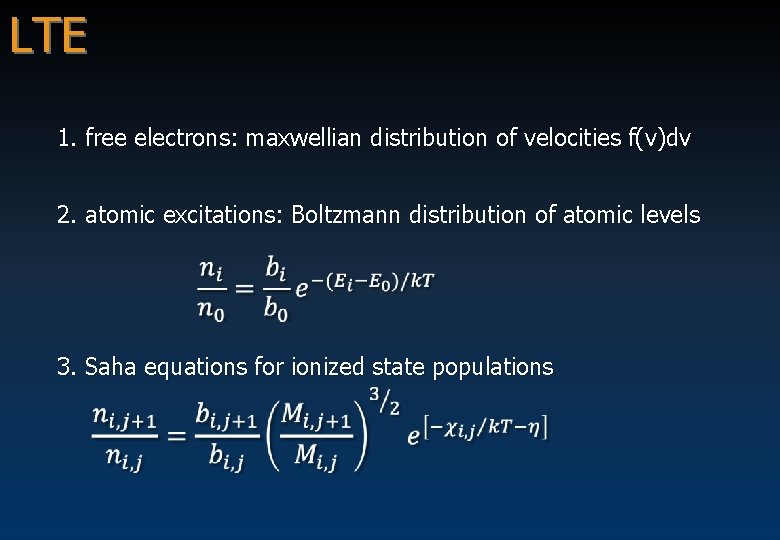
LTE 1. free electrons: maxwellian distribution of velocities f(v)dv 2. atomic excitations: Boltzmann distribution of atomic levels 3. Saha equations for ionized state populations
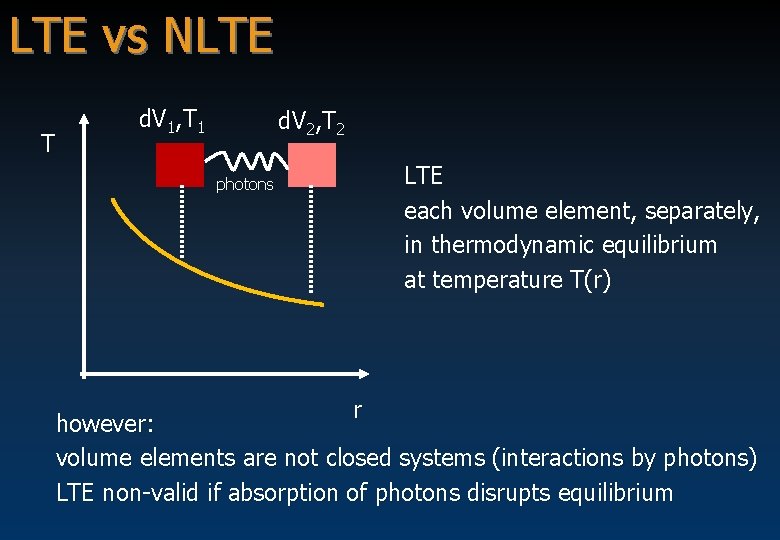
LTE vs NLTE T d. V 1, T 1 d. V 2, T 2 photons LTE each volume element, separately, in thermodynamic equilibrium at temperature T(r) r however: volume elements are not closed systems (interactions by photons) LTE non-valid if absorption of photons disrupts equilibrium
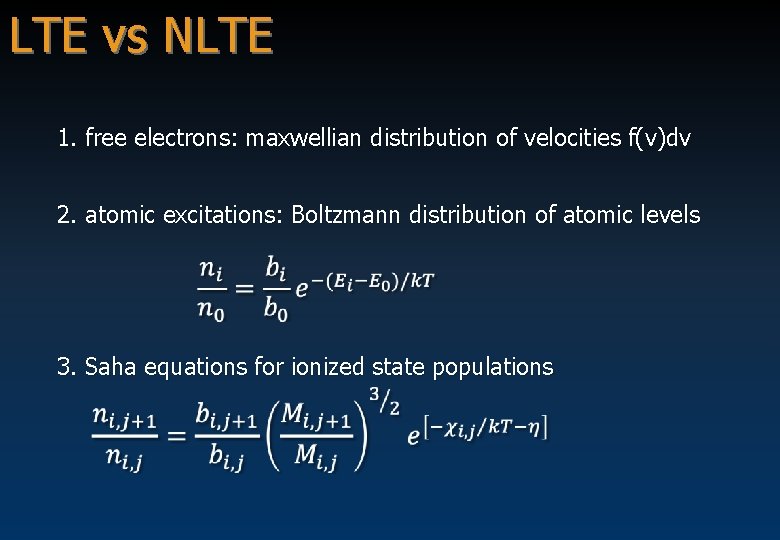
LTE vs NLTE 1. free electrons: maxwellian distribution of velocities f(v)dv 2. atomic excitations: Boltzmann distribution of atomic levels 3. Saha equations for ionized state populations
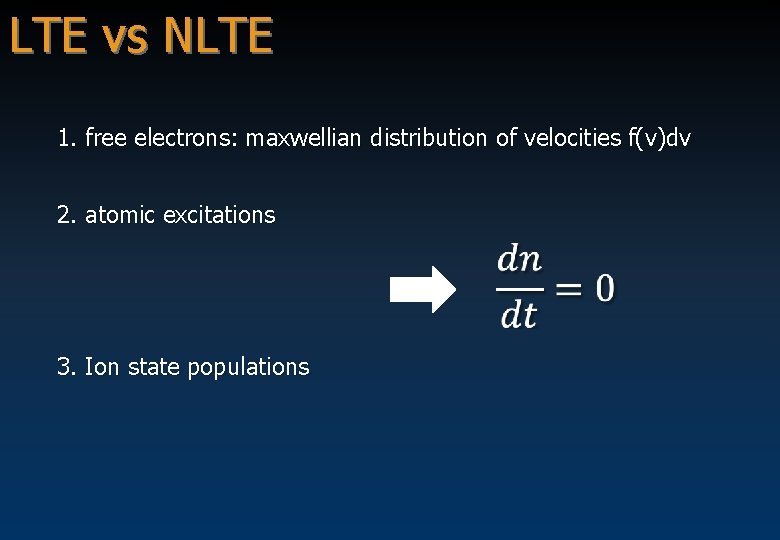
LTE vs NLTE 1. free electrons: maxwellian distribution of velocities f(v)dv 2. atomic excitations 3. Ion state populations
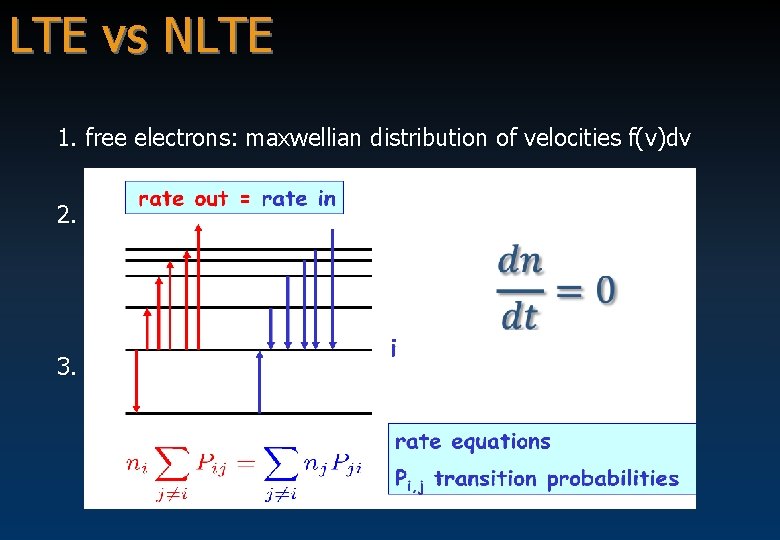
LTE vs NLTE 1. free electrons: maxwellian distribution of velocities f(v)dv 2. atomic excitations 3. Ion state populations
What about theory? From LTE to NLTE low temperatures & high densities NLTE low densities & high temperatures
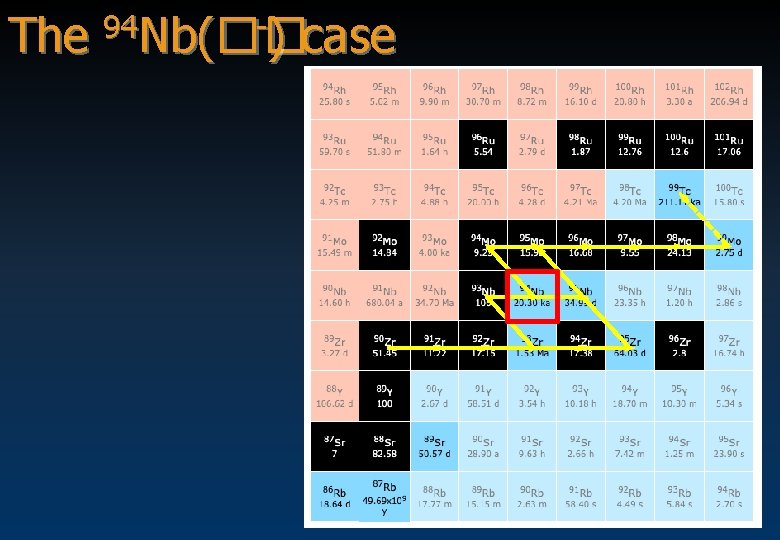
The 94 Nb(�� -) case
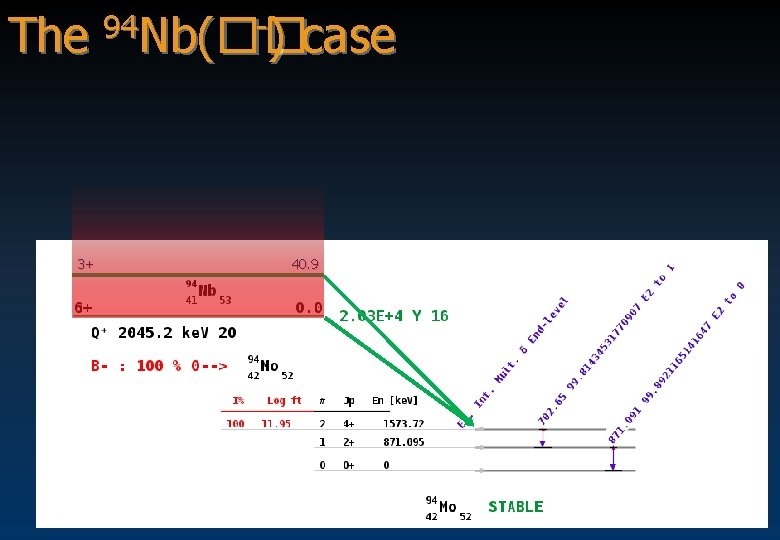
The 3+ 94 Nb(�� -) case 40. 9
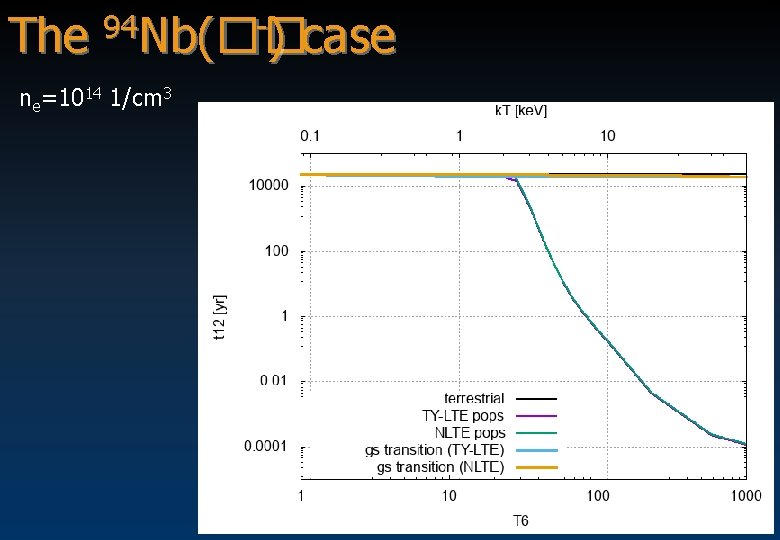
The 94 Nb(�� -) case ne=1014 1/cm 3
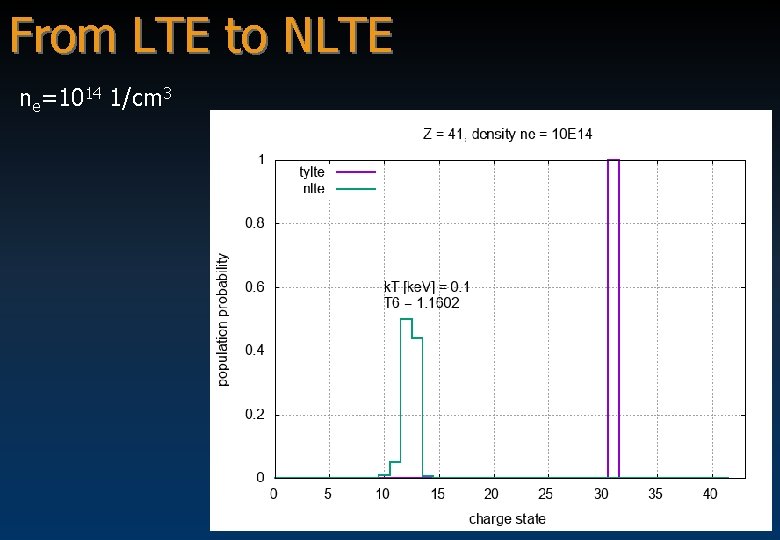
From LTE to NLTE ne=1014 1/cm 3
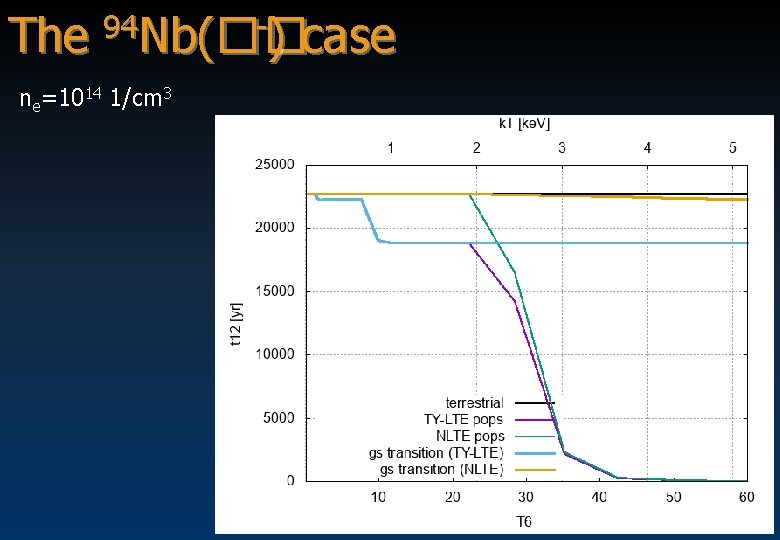
The 94 Nb(�� -) case ne=1014 1/cm 3
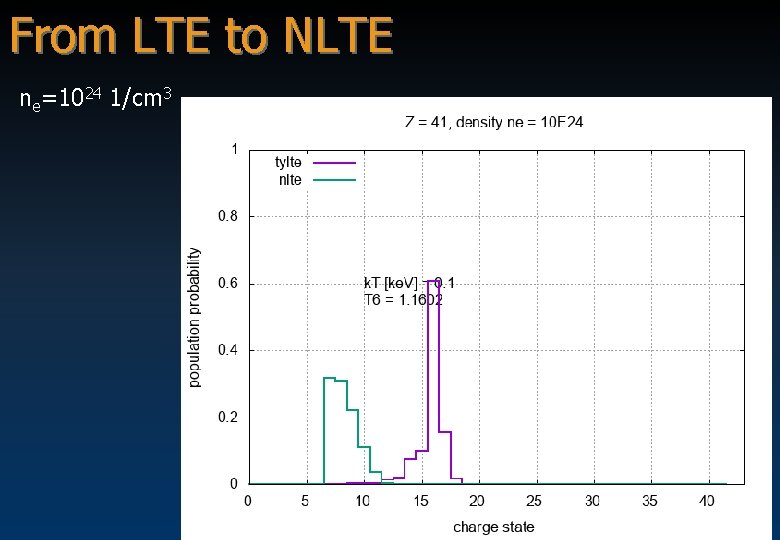
From LTE to NLTE ne=1024 1/cm 3
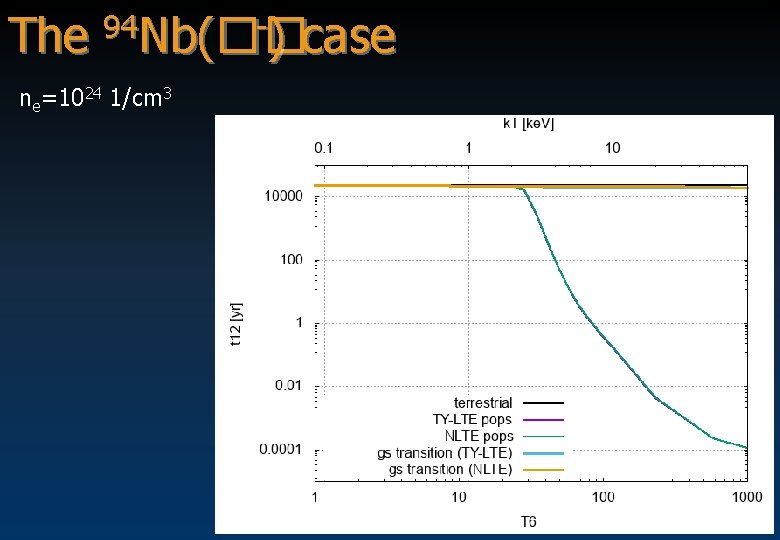
The 94 Nb(�� -) case ne=1024 1/cm 3
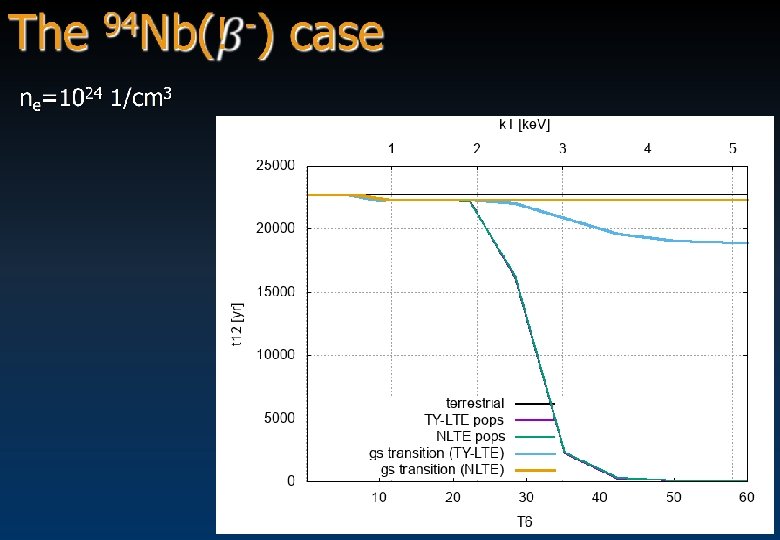
The 94 Nb(�� -) case ne=1024 1/cm 3
Conclusions 1. Neutron capture rates in stellar environments mostly derived from a combination of measurements and modeling. Direct measurements of stellar rates never performed so far. 2. For very special cases some of the transitions from excited states could be measured by inverse reactions 3. The large effects of stellar conditions in β- decays have been measured in a few cases at storage rings 4. New perspectives on measurements of nuclear β-decays in highly ionized atoms by the PANDORA experiment at INFN-LNS

End alberto. mengoni@bo. infn. it
- Slides: 35