
Best Practices in the Question Formulation Technique QFT
+ Best Practices in the Question Formulation Technique (QFT) Cuyahoga County ESC Independence, OH January 10, 2018 Sarah Westbrook & John Sessler The Right Question Institute Cambridge, MA
+ 1) 2) 3) 4) 5) 6) 7) 8) Today’s Agenda Welcome and Community Building Collaborative Learning with the Question Formulation Technique (QFT) Active Work with a Lesson Planning Tool Lunch Facilitation Principles & The Art and The Science of the QFT Self-organized Working Groups Moving into Action Reflection & Evaluation #QFT
+ To Access Today’s Materials: http: //rightquestion. org/educators/ seminar-resources/ Join our Educator Network for: Templates you can use tomorrow in class § Classroom Examples § Instructional Videos § Forums and Discussions with other Educators §
+ QFT: An ART and a SCIENCE The Science: A rigorous protocol, with specific steps and sequence, that produces consistent results The QFT 1. Discuss the rules 2. Present a Question Focus 3. Improve questions 4. Prioritize questions 5. Discuss next steps 6. Reflect
+ QFT: An ART and a SCIENCE The Art: Tailoring the QFT process to the specific content and students you are teaching. Tailor the QFT through: n. Design of the Question Focus (Qfocus) n. Instructions prioritizing for n. Next steps for using the questions n. Reflection questions n. Facilitation
+ Five Areas Related to the Art of the QFT 1. Facilitation 2. Linking the QFT to Teaching and Learning Goals 3. QFocus Design 4. Prioritization Instructions 5. Reflection Questions
+ Four Principles of Facilitation 1. Monitor student adherence to the process 2. Do not give examples 3. Do not get pulled into group discussion 4. Acknowledge all contributions equally ØDiscuss: What could be challenging about each principle? What might be important about each?
+ Five Areas Related to the Art of the QFT 1. Facilitation 2. Linking the QFT to Teaching and Learning Goals 3. QFocus Design 4. Prioritization Instructions 5. Reflection Questions
+ The QFT as a Shortcut, Not a Detour
+ Various Teaching Purposes n. Engagement n. Knowledge n. Formative acquisition assessment n. Summative n. Peer n. Skill assessment review development
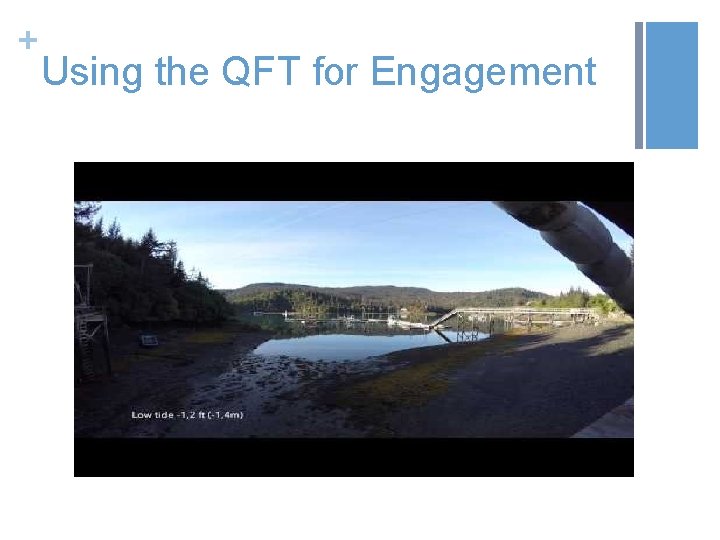
+ Using the QFT for Engagement
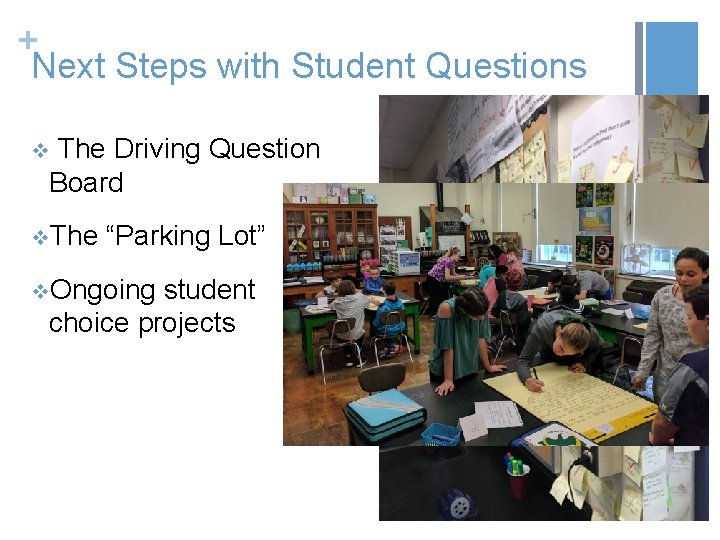
+ Next Steps with Student Questions The Driving Question Board v v. The “Parking Lot” v. Ongoing student choice projects
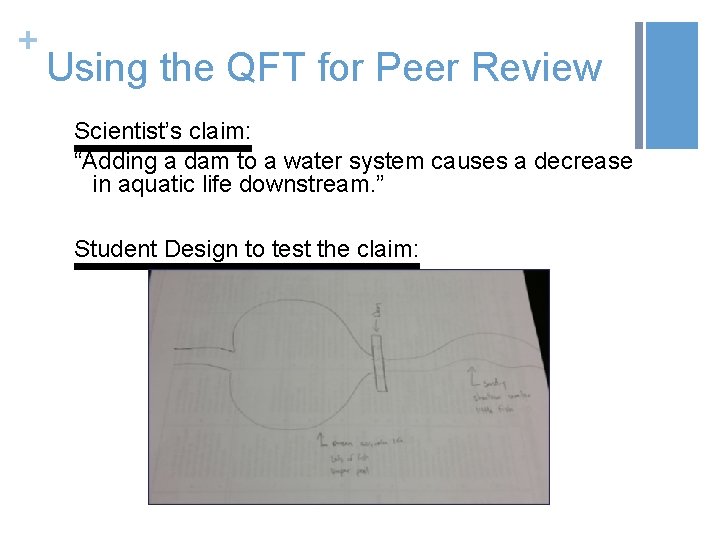
+ Using the QFT for Peer Review Scientist’s claim: “Adding a dam to a water system causes a decrease in aquatic life downstream. ” Student Design to test the claim:
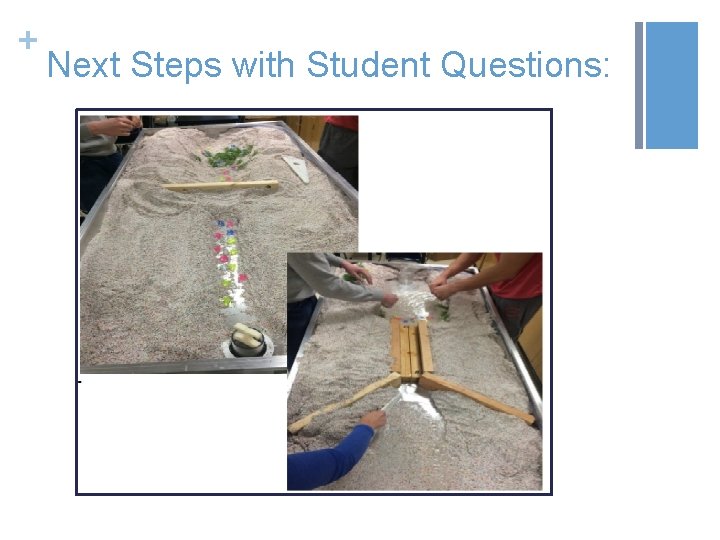
+ Next Steps with Student Questions:
+ Using the QFT for Skill Development (Students were assigned a complex molecular biology article) QFocus: Ask as many questions as you can about the reading
+ Next Steps with Student Questions: v Students generate questions as homework then bring in to class v Students discuss key attributes of a good biological research question and compare to other types of questions v Students form groups and improve their questions, based on these attributes v These questions are discarded or kept in notebooks (up to the student) v Students apply this skill to designing their own research project later in the semester
+ Various Teaching Purposes n. Engagement n. Knowledge n. Formative acquisition assessment n. Summative n. Peer n. Skill assessment review development
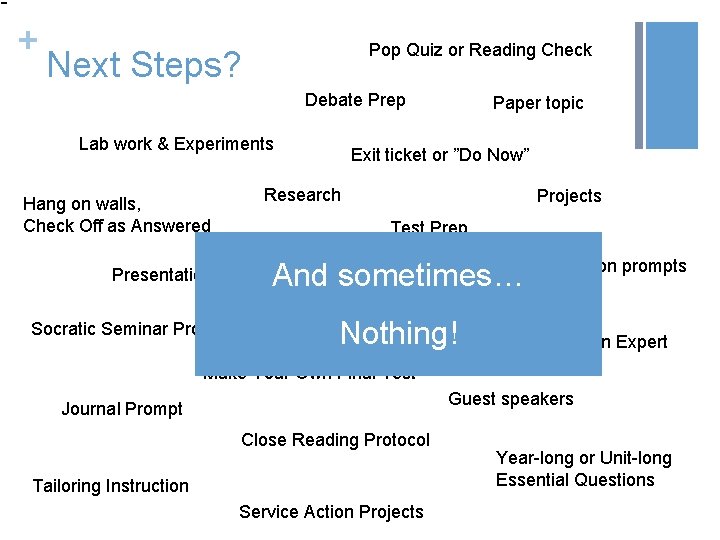
+ Pop Quiz or Reading Check Next Steps? Debate Prep Lab work & Experiments Paper topic Exit ticket or ”Do Now” Research Hang on walls, Check Off as Answered Projects Test Prep Homework Class discussion prompts And sometimes… Presentations Socratic Seminar Prompts Student Choice Projects Nothing! Interview an Expert Make Your Own Final Test Guest speakers Journal Prompt Close Reading Protocol Tailoring Instruction Service Action Projects Year-long or Unit-long Essential Questions
+ Five Areas Related to the Art of the QFT 1. Facilitation 2. Linking the QFT to Teaching and Learning Goals 3. QFocus Design 4. Prioritization Instructions 5. Reflection Questions
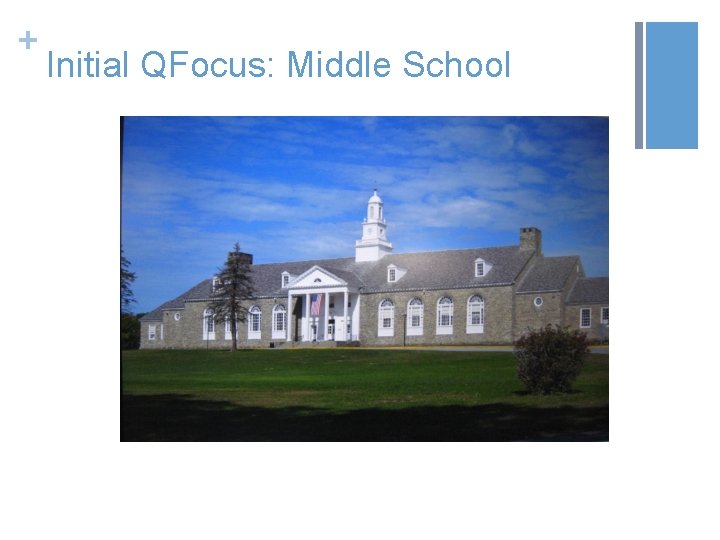
+ Initial Qfocus: Middle School
+ Initial QFocus: Middle School
+ Revising the Question Focus Picture of the School Building “As a member of the Haviland Middle School 6 th grade, you will have numerous opportunities to grow and learn. ”
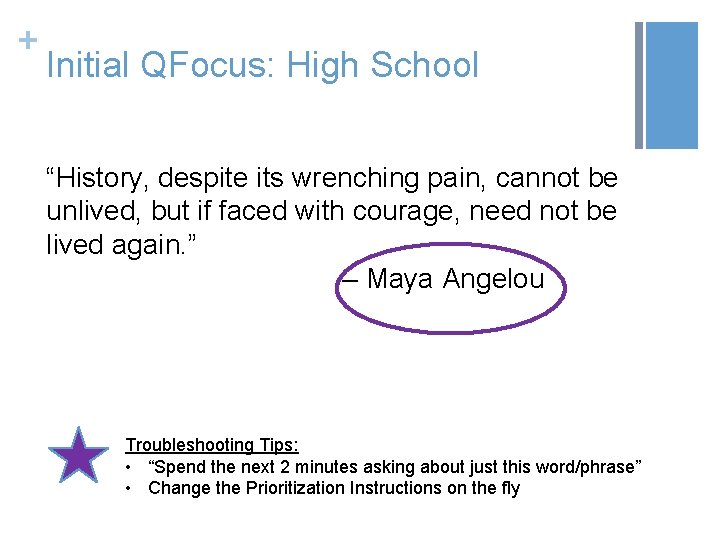
+ Initial QFocus: High School “History, despite its wrenching pain, cannot be unlived, but if faced with courage, need not be lived again. ” – Maya Angelou Troubleshooting Tips: • “Spend the next 2 minutes asking about just this word/phrase” • Change the Prioritization Instructions on the fly
+ Five Areas Related to the Art of the QFT 1. Facilitation 2. Linking the QFT to Teaching and Learning Goals 3. QFocus Design 4. Prioritization Instructions 5. Reflection Questions
+ Prioritization Instructions Choose three most important questions Choose three questions you consider most important.
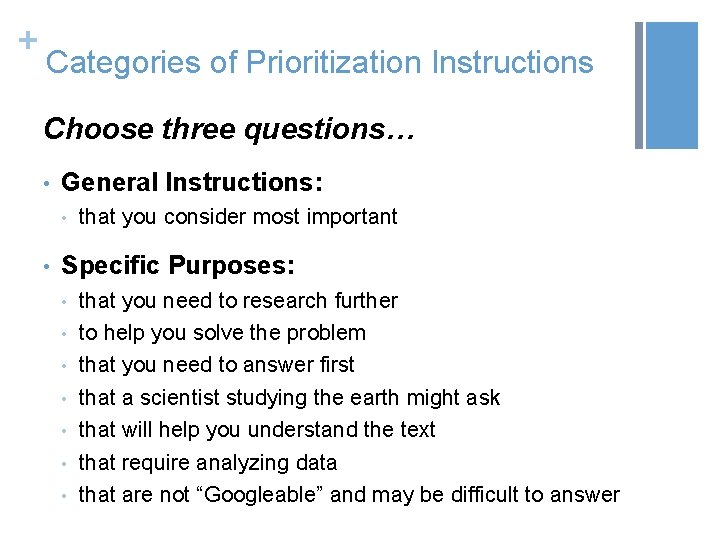
+ Categories of Prioritization Instructions Choose three questions… • General Instructions: • • that you consider most important Specific Purposes: • • that you need to research further to help you solve the problem that you need to answer first that a scientist studying the earth might ask that will help you understand the text that require analyzing data that are not “Googleable” and may be difficult to answer
+ Five Areas Related to the Art of the QFT 1. Facilitation 2. Linking the QFT to Teaching and Learning Goals 3. QFocus Design 4. Prioritization Instructions 5. Reflection Questions
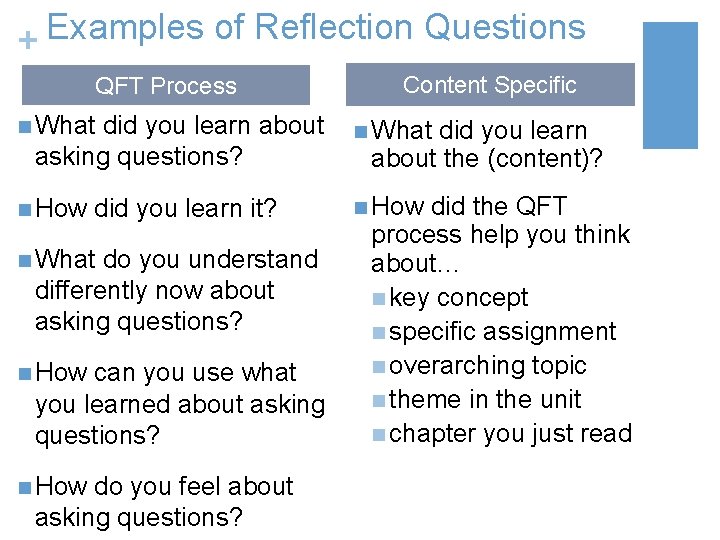
Examples of Reflection Questions + QFT Process did you learn about asking questions? Content Specific n What n How did you learn it? n What do you understand differently now about asking questions? n How can you use what you learned about asking questions? n How do you feel about asking questions? did you learn about the (content)? did the QFT process help you think about… n key concept n specific assignment n overarching topic n theme in the unit n chapter you just read
+ The Science of the QFT: a protocol The Art of the QFT: You
+ Putting it into Practice
+ 1) 2) 3) 4) 5) 6) 7) 8) Today’s Agenda Welcome and Community Building Collaborative Learning with the Question Formulation Technique (QFT) Active Work with a Lesson Planning Tool Lunch Facilitation Principles & The Art and The Science of the QFT Self-organized Working Groups Moving into Action Reflection & Evaluation #QFT
+ 1) 2) 3) 4) 5) 6) 7) 8) Today’s Agenda Welcome and Community Building Collaborative Learning with the Question Formulation Technique (QFT) Active Work with a Lesson Planning Tool Lunch Facilitation Principles & The Art and The Science of the QFT Self-organized Working Groups Moving into Action Reflection & Evaluation #QFT
+ Planning Your Next Steps With your group, plan the 3 next steps you will take with the QFT after your work here today. Then, create a poster about your next steps with the QFT. Be as artistic and creative as possible! Be prepared to share.
+ Gallery Walk n As you read what other groups have written, consider which ideas might be useful to you. What most interests or surprises you about the ideas that come up? Why? n Be prepared to share out with the group.
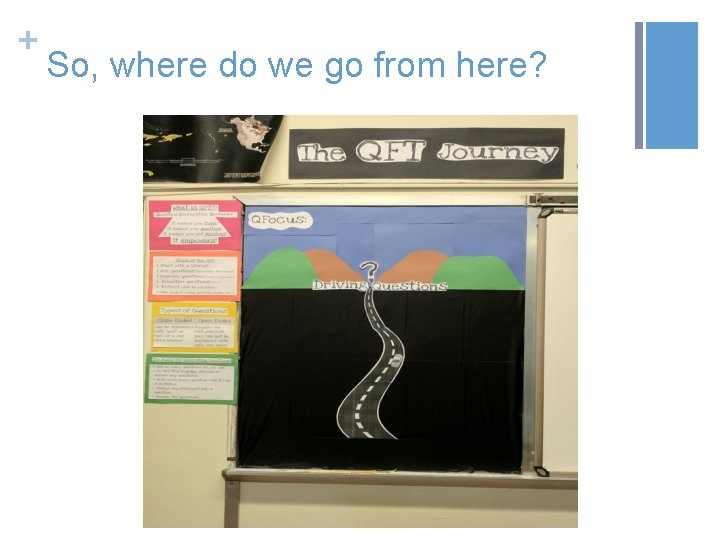
+ So, where do we go from here?
+ Now, Educators Lead the Work The Right Question Institute offers materials through a Creative Commons License and we encourage you to make use of and/or share this resource. Please reference the Right Question Institute and rightquestion. org as the source on any materials you use.
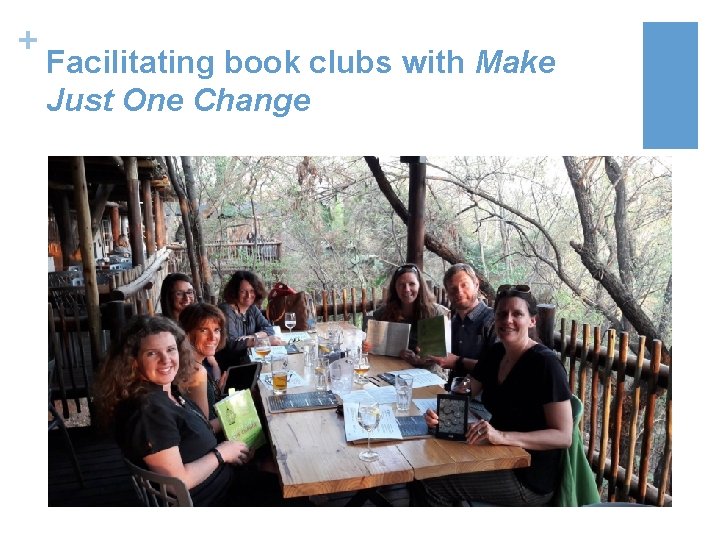
+ Facilitating book clubs with Make Just One Change
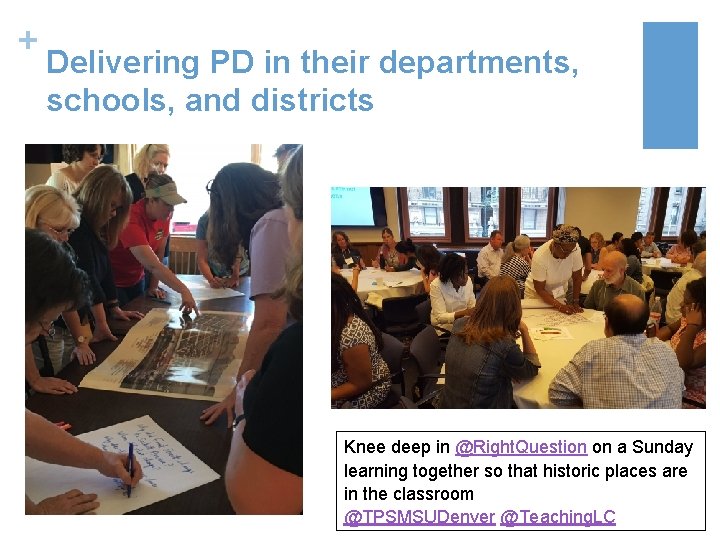
+ Delivering PD in their departments, schools, and districts Knee deep in @Right. Question on a Sunday learning together so that historic places are in the classroom @TPSMSUDenver @Teaching. LC
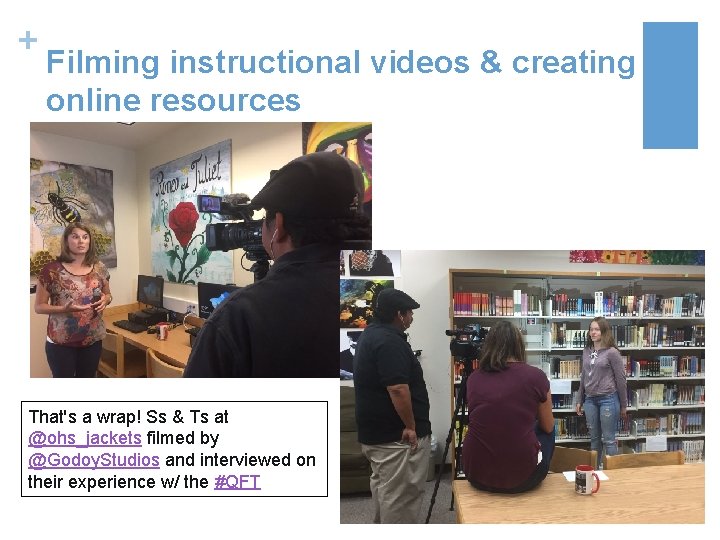
+ Filming instructional videos & creating online resources ‘[‘; // That's a wrap! Ss & Ts at @ohs_jackets filmed by @Godoy. Studios and interviewed on their experience w/ the #QFT
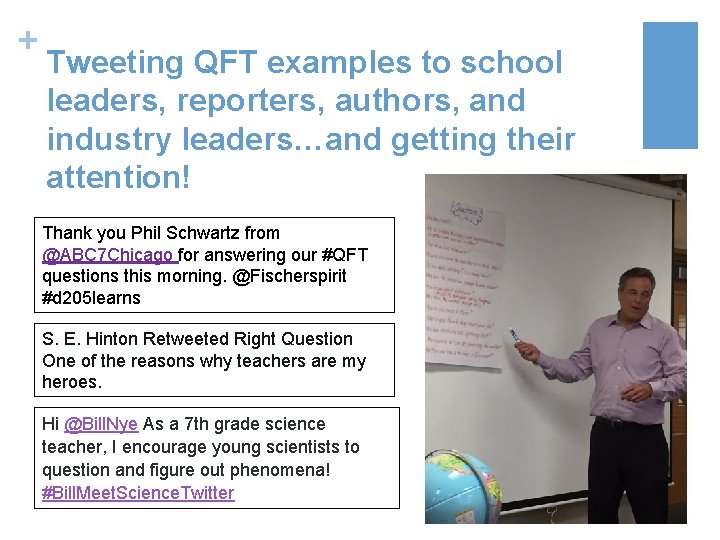
+ Tweeting QFT examples to school leaders, reporters, authors, and industry leaders…and getting their attention! Thank you Phil Schwartz from @ABC 7 Chicago for answering our #QFT questions this morning. @Fischerspirit #d 205 learns S. E. Hinton Retweeted Right Question One of the reasons why teachers are my heroes. Hi @Bill. Nye As a 7 th grade science teacher, I encourage young scientists to question and figure out phenomena! #Bill. Meet. Science. Twitter
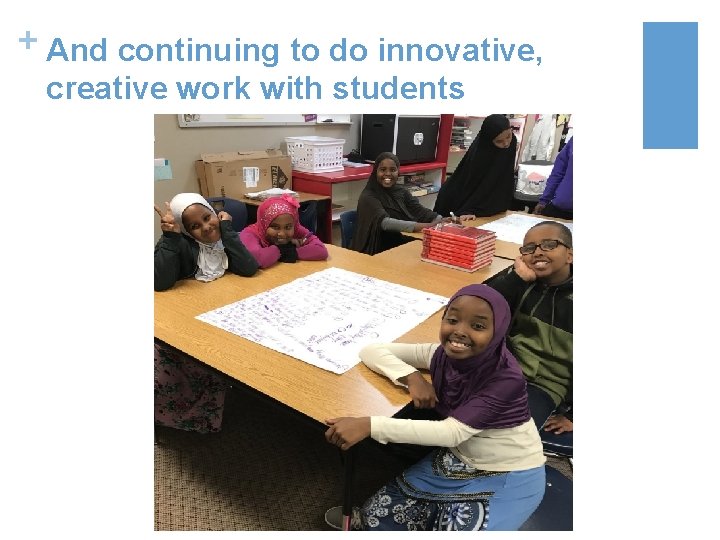
+ And continuing to do innovative, creative work with students
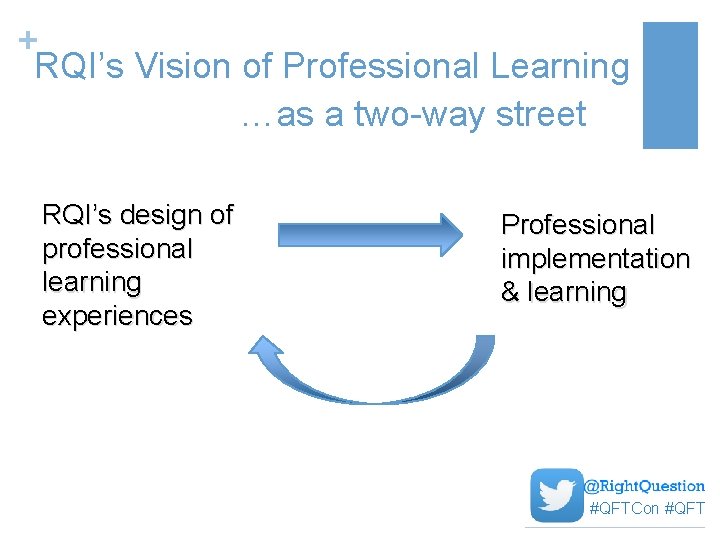
+ RQI’s Vision of Professional Learning …as a two-way street RQI’s design of professional learning experiences Professional implementation & learning #QFTCon #QFT
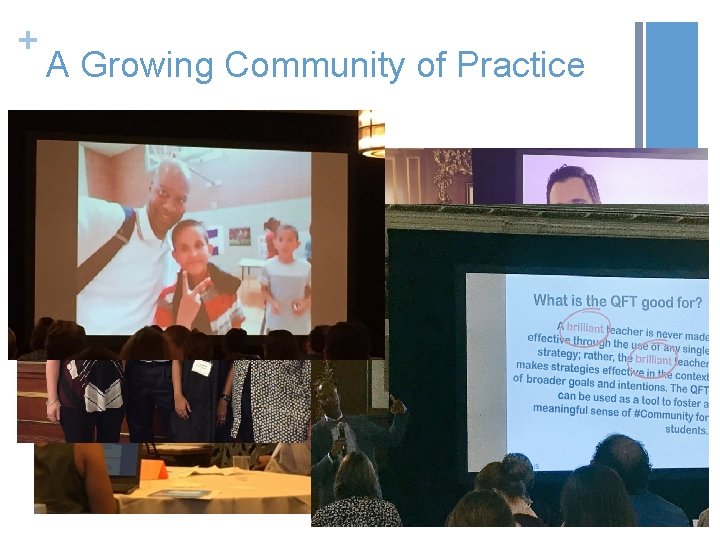
+ A Growing Community of Practice
+ 1) 2) 3) 4) 5) 6) 7) 8) Today’s Agenda Welcome and Community Building Collaborative Learning with the Question Formulation Technique (QFT) Active Work with a Lesson Planning Tool Lunch Facilitation Principles & The Art and The Science of the QFT Self-organized Working Groups Moving into Action Reflection & Evaluation #QFT
+ Closing Reflections We shall not cease from exploration And the end of all our exploring Will be to arrive where we started And know the place For the first time. --T. S. Eliot
+ Closing Reflections 1. What did you learn? 2. An “a-ha moment” or a meaningful take away from your experience today 3. A key question that will guide your work
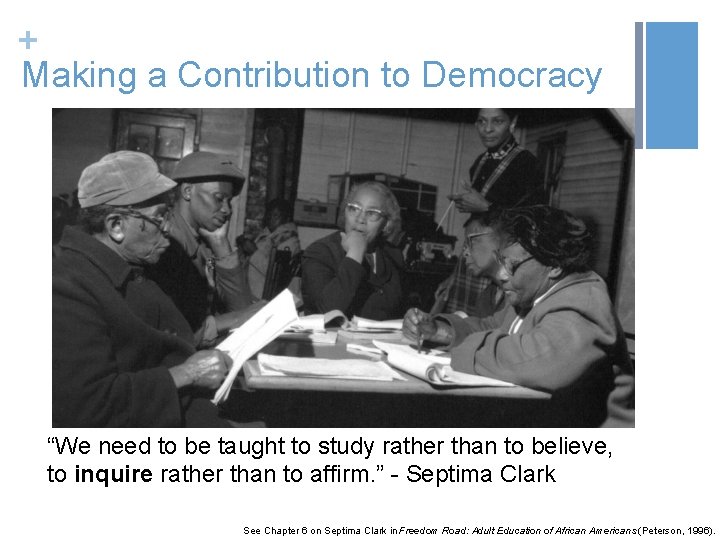
+ Making a Contribution to Democracy “We need to be taught to study rather than to believe, to inquire rather than to affirm. ” - Septima Clark See Chapter 6 on Septima Clark in Freedom Road: Adult Education of African Americans (Peterson, 1996).
- Slides: 47